护城河理论

Search documents
聊聊外卖的护城河
Hu Xiu· 2025-09-02 13:46
Core Viewpoint - The competitive moat of Meituan's food delivery service is considered very wide, especially when compared to WeChat's moat, which is perceived to be even wider [1][12]. Group 1: Competitive Landscape - The food delivery business operates on a three-sided network effect, connecting users, merchants, and delivery personnel, where the increase in any one party enhances the value for the others [5][6]. - The food delivery market is characterized by a "winner-takes-all" dynamic, where companies with higher market shares can achieve better monetization rates, lower subsidy rates, and reduced fulfillment costs [8]. - The second-place player in the food delivery market faces significant challenges, making it difficult for new entrants like JD to compete effectively [10][11]. Group 2: Market Dynamics - Users primarily order food from within a 3km radius, where price, delivery service, and variety are crucial factors influencing their choices [9]. - The competitive environment in e-commerce is likened to the liquor industry, where despite intense competition, market share remains fragmented, and leading players are still profitable [7]. Group 3: Strategic Considerations - Even the widest moats must consider pricing strategies, as excessively high prices can create vulnerabilities [14]. - Long-term profitability should be evaluated, taking into account not just pricing but also the importance of corporate culture in sustaining service quality for users and merchants [16]. - Warren Buffett emphasized the need for companies to continuously strengthen and widen their moats, suggesting that a company's ability to do so is a key indicator of its greatness [17].
每日钉一下(投资中的护城河理念,是啥意思?)
银行螺丝钉· 2025-08-23 14:03
Group 1 - The article discusses the importance of investing in index funds and offers a free course on investment techniques for better returns [2] - It emphasizes the concept of "moat" in investing, which refers to a company's competitive advantage and its sustainability [6] - The article outlines that a strong moat can protect a company from intense competition and "involution," which can lead to lower profit margins [8] Group 2 - Five types of moats that can provide good returns to investors are identified: scale advantages, network effects, intangible assets (such as brand and technology), and switching costs [8][10]


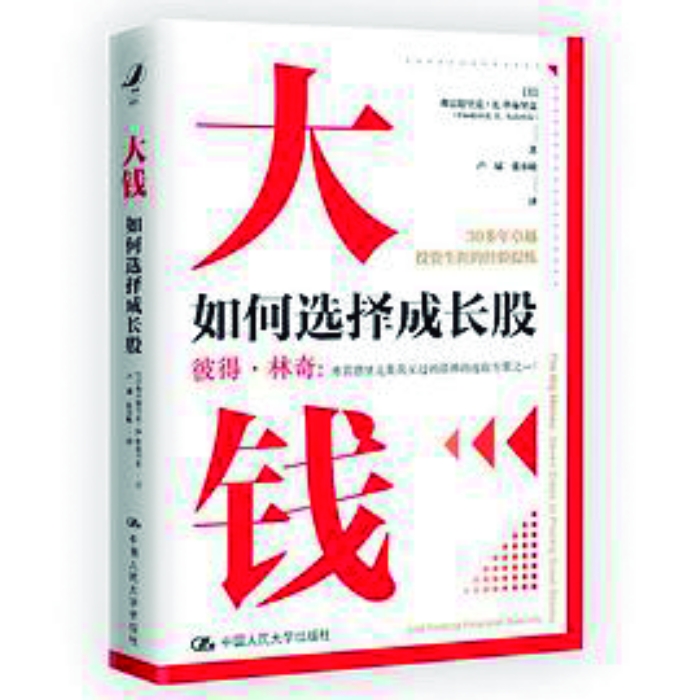
从平凡到非凡:与明日巨头共同成长 ——读《大钱:如何选择成长股》
Shang Hai Zheng Quan Bao· 2025-06-29 19:13
Core Investment Philosophy - The core investment philosophy of Frederick R. Kobrick emphasizes long-term holding of exceptional companies, as illustrated by the story of Anne Johnson discovering her father's investments in Walmart, Home Depot, and Microsoft, which grew to over $2.8 million from an initial investment of $3,000 [4][5]. Identifying Potential Growth Companies - Kobrick argues that investors often chase flashy stories while overlooking true opportunities hidden in the ordinary, highlighting the example of Starbucks, which turned a $10,000 investment in 1975 into over $15 million [6][7]. Business Model Analysis - The focus should be on the business model rather than just the product, with Kobrick using McDonald's as a prime example of a successful business model that ensures consistency across locations [8][9]. Leadership Evaluation - Exceptional companies are often led by outstanding leaders, and Kobrick places significant importance on assessing management quality, as it can differentiate between mediocre investments and extraordinary returns [10][11]. Strategic Vision and Assumptions - Investors must cultivate the ability to foresee a company's strategic trajectory over the long term, as demonstrated by Kodak's failure due to incorrect assumptions about its market position [13][14]. Long-Term Holding Strategy - The key to wealth creation lies in identifying and holding onto companies with replicable success models, as illustrated by the contrasting fates of technology companies over the past decades [18][19]. Market Volatility and Understanding - Market volatility is not the real risk; rather, the true risk stems from a lack of understanding of the invested companies, as evidenced by the contrasting responses to Apple's stock during the 2008 financial crisis [20][21].





解码巴菲特万亿财富密码:5大护城河重构投资底层逻辑
Sou Hu Cai Jing· 2025-06-25 13:40
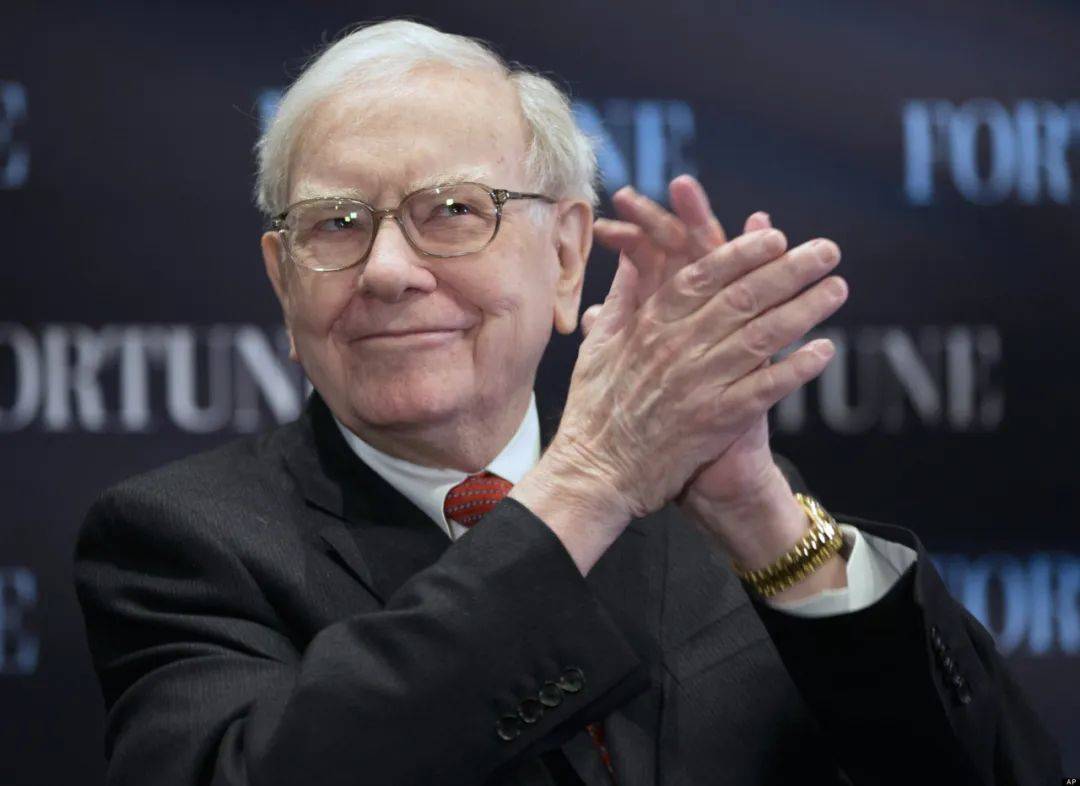
Core Concept - Warren Buffett's wealth, exceeding $100 billion, exemplifies the ultimate practice of recognizing competitive advantages in businesses, with the "moat" theory serving as a core framework for value investing [2] Group 1: Economic Essence of Moat Theory - The moat represents a "monopolistic competition barrier" that allows companies to achieve long-term excess profits, contrasting with the traditional economic assumption of perfect competition [3] - Companies with a moat act as "micro-monopolists," leveraging differentiated competition strategies to break the diminishing marginal returns [3] - Tiffany's blue box exemplifies brand premium, where brand value and price discrimination theory combine to create a significant competitive barrier, with brand premium contribution in the luxury sector exceeding 60% [3] Group 2: Five Types of Moats - **Brand Moat**: Strong brands create cognitive monopolies, with brand loyalty increasing profits by 25%-85% for every 5% increase in loyalty [4] - **Switching Cost Moat**: High switching costs, such as those in the banking sector, create natural barriers to customer turnover, with retention rates in high switching cost industries being 3-5 times higher than in others [5] - **Network Effect Moat**: The success of platforms like Microsoft Windows illustrates the network effect, where value increases with user numbers, creating a self-reinforcing cycle [6] - **Economies of Scale Moat**: Walmart's "Everyday Low Price" strategy is based on scale economies, with logistics costs controlled at one-third of the industry average [7] - **Scale Moat**: Companies like Apple and Walmart leverage scale advantages and network effects to create high user migration costs and comprehensive cost control systems [8] Group 3: Dynamic Evolution of Moat Theory - In the digital economy, the forms of moats are evolving, with data monopolies and algorithmic advantages reshaping competitive landscapes, yet the essence remains in building sustainable competitive advantages for long-term excess profits [8] Group 4: Investment Insights - Investors should identify moats by analyzing financial statements and understanding the economic substance of competitive advantages, focusing on dimensions like brand value and cost structures [9] - Buffett's investment philosophy embodies the practice of moat theory, emphasizing the importance of finding companies with enduring moats for value growth [9]
百亿投资经理连续十年跑赢大盘!徐志敏教你识别好公司,克服人性弱点做决策
Hua Er Jie Jian Wen· 2025-06-07 06:53
Core Viewpoint - The global trade and financial landscape is undergoing significant changes in 2025, leading to increased volatility in the A-share market, characterized by rapid sector rotations [1] Group 1: Market Dynamics - A-share and Hong Kong stocks have experienced dramatic fluctuations since April due to the impact of the Trump tariff war [1] - On June 6, A-shares attempted to rise above 3400 points after a period of volatility [1] Group 2: Investment Strategies - Xu Zhimin, Chief Investment Officer at Zhongtai Securities, will share his methods for achieving Alpha excess returns during a masterclass on June 21 [1][6] - Xu has over 20 years of experience and manages over 10 billion yuan, consistently outperforming the market for ten consecutive years [1][3] Group 3: Investment Philosophy - Xu focuses on high-quality companies, exemplified by his contrarian investment in oil and gas stocks during a time when the market favored renewable energy [3] - His investment framework is influenced by renowned investors like Buffett and Taleb, emphasizing the importance of companies with supply constraints as indicators of long-term investment value [3][4] Group 4: Decision-Making Approach - Xu avoids making decisions based on market emotions and does not attempt to time the market perfectly, acknowledging the difficulty of "buying low and selling high" [4][6] - He plans to discuss strategies for overcoming human biases in investment decisions during the masterclass [6] Group 5: Future Outlook - Xu will provide insights on the outlook for A-shares and Hong Kong stocks in the second half of the year, along with potential Alpha opportunities [7]
连续十年跑赢沪深300,如何识别好公司?华尔街见闻对话徐志敏,我们精选了这些问答
中泰证券资管· 2025-06-05 08:07
Core Viewpoint - The article discusses investment strategies in the context of increasing uncertainty in global trade and finance, emphasizing the importance of identifying high-quality assets that can withstand market fluctuations [2]. Group 1: Identifying Good Companies - Investment fundamentally involves a series of trade-offs, focusing on business models, competitive advantages (moats), and margin of safety [4]. - A strong moat is crucial, with supply constraints being a significant factor that overlaps with the concept of a moat [5]. - A good business model creates substantial value for customers while allowing the company to capture some of that value, requiring pricing power [4][5]. - Examples of good business models include high-end liquor, which has strong customer willingness to pay and retains value over time [5][6]. Group 2: Quality Company Standards - High-quality companies are the most competitive in their industry, not necessarily the largest, and should consistently generate high return on equity (ROE) [7]. - Companies with potential for significant future ROE increases can also be considered high-quality [7]. Group 3: Industry Competition and Supply Dynamics - The focus of research should be on supply dynamics rather than demand, as supply is more critical for reliable analysis [8]. - Understanding the causes of competitive advantages (moats) is essential, including cost leadership and economies of scale [8][9]. Group 4: Investment Philosophy and Market Conditions - The company emphasizes the importance of maintaining a diversified portfolio and focusing on high-quality assets to withstand market downturns [11][12]. - The approach to investment should be proactive, focusing on the inherent value of assets rather than market trends [14]. Group 5: Future Opportunities and Risks - The company identifies consumer and pharmaceutical sectors as key areas of focus for potential investment opportunities over the next 3-5 years, driven by rising disposable incomes and recent innovations [18][19]. - Structural risks are associated with chasing hot trends without solid backing, highlighting the need for a focus on genuine value creation [19].

连续十年跑赢沪深300,如何识别好公司?华尔街见闻对话徐志敏,我们精选了这些问答
中泰证券资管· 2025-06-05 08:07
Core Viewpoint - The article discusses investment strategies in the context of increasing uncertainty in global trade and finance, emphasizing the importance of identifying high-quality assets that can withstand market fluctuations [2]. Group 1: Identifying Good Companies - The essence of investment is a series of trade-offs, focusing on business models, competitive advantages (moats), and margin of safety [4]. - A strong moat is crucial, with supply constraints being a significant factor that overlaps with the concept of a moat [5]. - A good business model creates substantial value for customers while allowing the company to capture some of that value, requiring pricing power [4][5]. Group 2: Characteristics of High-Quality Companies - High-quality companies are typically the most competitive in their industry, not necessarily the largest, and should consistently generate high return on equity (ROE) [7]. - Companies with potential for significant future ROE increases can also be considered high-quality [7]. Group 3: Industry Competition and Its Impact - The focus of research should be on supply rather than demand, as supply dynamics provide more reliable insights into competitive landscapes [8]. - Understanding the causes of a company's moat is essential, including factors like cost leadership and economies of scale [8][9]. Group 4: Learning from Failures - A notable failure involved a sofa company that, despite being competitive, lacked a deep moat, leading to intense competition and a lack of differentiation [10]. - This case highlights the need to focus on high-quality companies rather than merely competitive ones [10]. Group 5: Investment Strategy and Market Trends - The investment framework has evolved, moving away from outdated theories like PEG investing, focusing instead on sustainable growth and avoiding forced trades [15]. - Future structural opportunities in the A-share market are seen in consumption and pharmaceuticals, driven by rising disposable incomes and recent innovations [16][17]. - Structural risks arise from chasing hot themes without solid backing, emphasizing the importance of focusing on value creation [17].

巴菲特捡烟蒂到投资优质公司,对投资A股的启发
雪球· 2025-05-15 08:57
Investment Philosophy Evolution and Core Insights - The transition from "cigar butt" strategy to focusing on "quality companies" reflects a self-renewal of value investment theory and adaptation to market conditions and capital scale changes [2][3] - Early "cigar butt" strategy emphasized safety margin and liquidation logic, with investments based on market price being lower than liquidation value, but these companies often lacked growth potential [3][4] - The mid-term shift to "quality companies" highlighted the importance of economic moats and pricing power, exemplified by the acquisition of See's Candies, which contributed over $1.3 billion in profits [5][6] - The later phase of large-scale investment utilized low-cost long-term funds to build investment leverage, with Berkshire's cash reserves reaching $334.2 billion in 2024 [7][8] Core Insights and Investment Implications - The evolution of investment philosophy from "price" to "quality" emphasizes that intrinsic value, such as brand and management, is more decisive than short-term financial data [9] - Risk control involves a dynamic balance of leverage and scale, with a shift away from leveraged investments as capital scales increased [10] - A long-term perspective is crucial, as demonstrated by Buffett's holdings in Coca-Cola and Apple, which underline the importance of holding quality assets for compounding returns [11] Applicable Methods and Cases for A-shares - Core methodology includes selecting companies with economic moats, such as brand premium exemplified by Kweichow Moutai with a gross margin of 91.5% and ROE of 33% [12][17] - Dynamic assessment of safety margins involves evaluating low valuations with high growth potential, as seen in Hengrui Medicine, which has a dynamic PE of approximately 44 times [14] - Long-term holding and contrarian positioning are illustrated by Wuliangye, currently valued at a dynamic PE of about 8.7 times, with strong brand resilience and expected profit growth [15][16] Practical Cases - Kweichow Moutai demonstrates brand monopoly and cash flow strength, with projected revenue of 170.9 billion in 2024, reflecting a year-on-year increase of 15.7% [17][18] - Contemporary leaders in the new energy sector, such as CATL, hold a global market share of 37% in power batteries, with production capacity planned to reach 670 GWh in 2024 [19][20] - Longi Green Energy, a leader in photovoltaic technology, is expected to benefit from efficiency breakthroughs in HJT battery production [20] Conclusion - The evolution of Buffett's investment approach signifies a shift from "valuation arbitrage" to "value creation," emphasizing the focus on economic moats and dynamic valuation assessments [21] - The insights gained can guide A-share investors to select targets in consumption, healthcare, and new energy sectors, aiming for "reasonable price entry and long-term holding" to achieve compounding growth [21]





护城河崩塌之后:AI时代的"意义创新"战略革命
3 6 Ke· 2025-05-12 07:08
Core Insights - The article discusses the decline of traditional competitive advantages in the AI era, emphasizing the need for companies to adopt a new paradigm of "meaning construction" to maintain strategic depth amidst homogenization of products and services [1][3][11]. Group 1: Traditional Competitive Advantages - Traditional competitive advantages such as technological barriers, legal protections, operational advantages, and brand assets are becoming less effective in the face of rapid AI-driven replication and knowledge accessibility [1][3][4]. - The once-revered concept of "moats" is losing its significance as differentiation and scarcity are quickly eroded by competitors [3][4][11]. Group 2: The Role of Meaning Construction - In a hyper-competitive market where technology and functionality can be rapidly copied, long-term differentiation increasingly relies on the depth of narrative rather than capability advantages [11][18]. - Companies like Tesla exemplify how a strong narrative can create a unique identity that transcends mere product features, with their mission-driven approach serving as a strategic asset [18][19]. Group 3: Meaning Innovation - Meaning innovation, as defined by Roberto Verganti, focuses on redefining the problems worth addressing and reshaping the relationship between products and users, rather than merely optimizing existing solutions [19][22]. - Examples such as the redefinition of candles and the transformation of plastic materials by Kartell illustrate how shifting the symbolic meaning of products can open new market spaces [22][25]. Group 4: Open Innovation and Strategic Implications - Companies should evolve their innovation ecosystems into spaces for co-creating meaning rather than merely providing tools, emphasizing the importance of understanding the value context in which products exist [27][28]. - The strategic focus should shift from merely developing functional products to exploring deeper narratives that resonate with users, ensuring that investments align with the overarching brand philosophy [31][33].

解析巴菲特商业成功的秘籍:理性、长期主义与价值创造的底层逻辑
Sou Hu Cai Jing· 2025-05-09 04:39
Core Insights - The essence of Warren Buffett's business philosophy is a belief in "value creation" [1] - Buffett's investment success is attributed to a combination of investment wisdom, business philosophy, human insight, and rational decision-making [1] Value Investment Philosophy - The core principles of Buffett's investment philosophy include the margin of safety and the circle of competence [2][3] - The margin of safety principle emphasizes buying assets at prices significantly below their intrinsic value, focusing on high-quality companies at reasonable prices [2] - Buffett avoids high-volatility sectors and invests only in areas he understands, such as insurance and consumer goods [3] Market Behavior - Buffett views market fluctuations as emotional expressions of "Mr. Market," advising investors to focus on intrinsic value rather than short-term noise [4] Business Model Focus - The business model is the primary consideration in investment decisions, with a preference for companies with strong economic moats [6] - Economic moats include brand effects, cost advantages, network effects, and economic franchises, which allow companies to maintain pricing power [6] - Buffett favors companies that generate stable cash flows, such as insurance and utilities, which provide a foundation for investment expansion [7] Long-Term Strategy - Buffett's long-term holding strategy is a key driver of wealth accumulation, emphasizing the power of compounding [10] - He has held stocks like Coca-Cola and American Express for over 30 years, demonstrating confidence in their long-term value [11] - Buffett capitalizes on economic cycles, making strategic investments during downturns for significant returns [12] Financial Leverage and Capital Allocation - Buffett utilizes float from insurance operations as a source of low-cost long-term capital, with over $140 billion in float as of 2024 [14] - Efficient capital allocation focuses on maximizing returns, investing in high-return sectors [15] - Maintaining cash reserves allows Buffett to seize opportunities during market downturns, with $189 billion in cash reserves in Q1 2024 [16] Rationality and Emotional Management - Buffett's success is rooted in extreme restraint against greed and fear, emphasizing independent thinking and emotional isolation [18][19] - He acknowledges mistakes and demonstrates rational correction, as seen in his decision to exit airline stocks [20] Diversified Structure - Berkshire Hathaway's success is attributed to its diversified business structure, which includes insurance, energy, and manufacturing [22] - The combination of full acquisitions and minority stakes balances control and liquidity [23] - Recent investments in Japanese trading companies and Canadian firms reflect a global perspective to mitigate U.S. market risks [24] Conclusion - Buffett's success is not based on complex models but on a value-driven philosophy that integrates rationality, patience, and long-term thinking [26]