政策博弈

Search documents
黄金,3400近在咫尺!
Sou Hu Cai Jing· 2025-08-06 05:20
Core Viewpoint - After the non-farm payroll report, gold prices have shifted direction, with prices rising from approximately $3,260 to above $3,380, approaching the $3,400 mark [1] Group 1 - Gold prices have faced resistance around $3,450, indicating a struggle between bulls and bears, influenced by uncertain policy maneuvers from various countries [1] - The market has shown strong buying interest, with $3,300 acting as a pivotal support level, demonstrating that bullish sentiment in gold remains intact despite temporary pullbacks [1] Group 2 - Since April, the U.S. dollar index has been on a continuous decline, which may be contributing to the upward movement in gold prices [1]
非农疲软下的美债走高与政策博弈
Hua Tai Qi Huo· 2025-08-03 09:00
Report Industry Investment Rating - Not provided in the content Core Viewpoints - The Fed's meeting signaled policy divergence, making the short - term interest - rate cut path uncertain. After the weak non - farm employment data on August 1st, the market's expectation of a Fed rate cut in September increased, with the probability of a 25bp cut exceeding 85%. The overall labor market showed structural weakness, and after the data release, the US Treasury yields declined across the board [12]. - The US Treasury maintains a stable long - and medium - term bond issuance rhythm, but the increase in the proportion of short - term bonds has a greater impact on liquidity. The market sentiment swings between "economic recession" and "policy game", and the short - term volatility of US Treasury assets has increased. It is expected that the US Treasury market will face intensified fluctuations around September [13][16]. Summary by Related Catalogs 1. US Treasury Yield Review - As of August 1st, the 10 - year US Treasury yield dropped 21bp in two weeks, falling to 4.23%. Compared with two weeks ago, the 2 - year yield decreased by 19bp, and the 30 - year yield dropped 19bp [5]. 2. US Treasury Market Changes - In actual bond issuance, the duration of US Treasury issuance declined slightly in late July, with 68.44 billion for 2 - year, 69.88 billion for 5 - year, and 43.92 billion for 7 - year bonds. The US had a fiscal surplus of 27.01 billion dollars in June, and the 12 - month cumulative deficit slightly declined to 1.90 trillion dollars [5]. 3. Derivatives Market Structure - The net short position in US Treasury futures decreased slightly. As of July 29th, the net short positions of speculators, leveraged funds, asset management companies, and primary dealers rose to 5.681 million lots. The federal funds rate futures market shifted from a net long to a net short position of - 0.13 million lots, reflecting an increased demand for hedging against the expected decline in interest rates [5]. 4. US Dollar Liquidity and US Economy - **Monetary Policy**: In July 2025, the Fed kept the federal funds rate between 4.25% and 4.50%, in line with market expectations. The policy statement recognized a slowdown in economic activity in the first half of the year, and there was a divergence of opinions within the Fed, with two governors advocating a 25 - basis - point rate cut being rejected [6]. - **Fiscal Policy**: As of July 30th, the US Treasury's TGA deposit balance increased by 107.361 billion dollars in two weeks, and the Fed's reverse repurchase tool contracted by 49 billion dollars in two weeks, leading to uncertainty in the short - term liquidity buffer space [6]. - **Economic Situation**: As of July 26th, the Fed's weekly economic indicator was 2.56 (2.34 two weeks ago), indicating a short - term improvement in the economy after stability [6]. 5. US Treasury Yield Trends - The Fed's meeting signaled policy divergence, and the short - term rate - cut path is uncertain. After the weak non - farm employment data on August 1st, the market's expectation of a September rate cut increased, and the US Treasury yields declined across the board, with the 2 - year yield dropping 25bp in a single day [12]. 6. US Treasury Issuance Policy - The US Treasury maintains a stable long - and medium - term bond issuance rhythm but increases the proportion of short - term bonds. The new refinancing plan is 125 billion dollars, with an increase in short - term Treasury issuance and a decrease in long - and medium - term bonds. Relying more on short - term debt financing may increase fiscal financing volatility and weaken the efficiency of monetary policy transmission [13].
【MACRO 时势】黄金走强背后:财政风险、政策博弈与市场重构的多重驱动
Sou Hu Cai Jing· 2025-07-10 10:05
Group 1: Core Logic Supporting Gold Prices - The increasing fiscal situation in the U.S. is a fundamental factor supporting gold prices, with the potential addition of $3.4 trillion in debt over the next decade due to the "Build Back Better" plan, and a debt ceiling increase of $5 trillion, exacerbating the current $36.2 trillion debt level [3][6] - The dual accumulation of fiscal and political risks has triggered a global capital reallocation, influenced by the rising political atmosphere following Musk's announcement of forming the "American Party" [3][6] Group 2: Trade Frictions and Policy Volatility - Trump's trade policies, including a recent 50% tariff on copper imports, have stirred market sentiment and raised concerns about global economic slowdown, leading to increased inflows of safe-haven funds into the gold market [7][9] - The uncertainty in trade policies is impacting consumer confidence and business investment, prompting a reallocation of global capital away from U.S. assets towards gold as an alternative safe-haven [9] Group 3: Federal Reserve Policies and Interest Rate Dynamics - The traditional inverse relationship between interest rates and gold prices is being restructured, as gold prices have risen despite actual U.S. interest rates exceeding 2% [10][13] - Market expectations regarding the Federal Reserve's potential shift in policy, including possible interest rate cuts due to inflation concerns, are contributing to the current dynamics where both gold and interest rates may rise simultaneously [10][13] Group 4: Central Bank Gold Purchases and Market Structure - Continuous gold purchases by central banks, particularly in emerging markets, are becoming a significant support for gold prices, driven by motives such as diversification of foreign exchange reserves and hedging against geopolitical risks [13] - The shift in demand from private investors to official institutions marks a structural change in the gold market, reflecting a trend of "de-dollarization" in response to U.S. fiscal deficits [13] Group 5: Short-term Volatility and Long-term Trends - Short-term fluctuations in gold prices are influenced by technical and sentiment factors, with current prices nearing key resistance levels around $3,335 per ounce [14] - Long-term drivers for gold remain rooted in structural uncertainties in the global economy and politics, including ongoing U.S. fiscal deficits and fluctuating trade policies, reinforcing gold's role as a "backup safe-haven asset" [17]


地产股反弹!绿地控股涨停,地产ETF(159707)拉升逾1.5%!机构:关注7月中旬政策博弈机会
Xin Lang Ji Jin· 2025-07-10 02:24
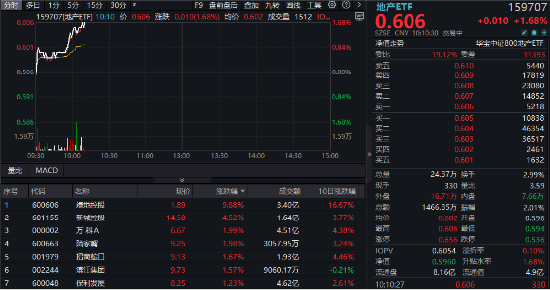
Group 1 - The real estate sector is showing strong performance, with the CSI 800 Real Estate Index rising over 1% as of July 10, 2023, at 10:04 AM [1] - Notable stocks include Greenland Holdings hitting the daily limit, New Town Holdings increasing over 4%, and Vanke A, China Merchants Shekou, and Poly Developments all rising over 1% [1] - The real estate ETF (159707), which represents leading A-share real estate stocks, saw an increase of over 1.5% with a trading volume exceeding 14 million yuan [1] Group 2 - The Ministry of Housing and Urban-Rural Development has conducted research in Guangdong and Zhejiang provinces, emphasizing the need for multi-faceted approaches to stabilize expectations, activate demand, optimize supply, and mitigate risks in the real estate market [3] - Zhongyin Securities indicates that the upcoming Politburo meeting in July is expected to adopt a more proactive stance, potentially leading to a rally in the real estate sector mid-July [3] - The report suggests that local governments will intensify efforts to implement existing policies effectively, including support for urban renewal and special bond storage [3] Group 3 - Zhongyin Securities recommends focusing on real estate companies with strong liquidity, high concentration in major cities, and robust product offerings, as they may exhibit alpha characteristics [3] - The report also highlights the potential for significant valuation recovery in companies benefiting from debt resolution, policy relief, and improved sales [3] - The real estate ETF (159707) tracks the CSI 800 Real Estate Index, comprising 13 leading real estate companies, with over 90% weight in the top ten constituents, indicating a high concentration of quality firms [3]





新能源及有色金属日报:政策及情绪影响继续发酵,多晶硅盘面触及涨停-20250709
Hua Tai Qi Huo· 2025-07-09 05:15
1. Report Industry Investment Rating - Industrial silicon: Short - term neutral, upstream is recommended to sell hedging at high prices [3] - Polysilicon: Long - term suitable for low - level layout of long positions, short - term neutral [6][8] 2. Report's Core View - The influence of policies and emotions on the new energy and non - ferrous metals industry continues to ferment, with the polysilicon futures hitting the daily limit [1] - The fundamentals of industrial silicon are short - term improved slightly, but the overall situation is still weak, and its futures price increase is affected by polysilicon [3] - Polysilicon prices are expected to rise significantly due to policy disturbances, and mid - to long - term investment opportunities exist [6] 3. Summary by Related Catalogs Industrial Silicon Market Analysis - On July 8, 2025, the industrial silicon futures price was strong. The main contract 2509 opened at 8060 yuan/ton and closed at 8215 yuan/ton, up 2.82% from the previous settlement. The position of the main contract was 387122 lots, and the number of warehouse receipts was 51077 lots, down 272 lots from the previous day [2] - The spot price of industrial silicon remained stable. The price of East China oxygen - passing 553 silicon was 8700 - 8800 yuan/ton, 421 silicon was 8900 - 9200 yuan/ton, Xinjiang oxygen - passing 553 silicon was 8000 - 8200 yuan/ton, and 99 silicon was 8000 - 8100 yuan/ton [2] - The consumption side: The price of silicone DMC was 10300 - 10600 yuan/ton. In June, the domestic silicone DMC production increased by 13.75% month - on - month and decreased by 1.60% year - on - year. It is estimated that the silicone production in July will increase by 1.53% month - on - month [2] Strategy - The short - term fundamentals have slightly improved, but the industry inventory is high, and there is hedging pressure after the rebound. It is recommended to wait and see in the short term. If there is no policy promotion, upstream enterprises should sell hedging at high prices [3] Polysilicon Market Analysis - On July 8, 2025, the main contract 2508 of polysilicon futures hit the daily limit, opening at 36505 yuan/ton and closing at 38385 yuan/ton, up 7.00% from the previous day. The position was 110547 lots, and the trading volume was 634366 lots [4] - The spot price of polysilicon remained stable, except for the increase in N - type materials. The polysilicon manufacturers' inventory increased slightly, and the silicon wafer inventory decreased slightly. The weekly polysilicon production was 24000.00 tons, up 1.69% week - on - week, and the silicon wafer production was 11.90GW, down 11.46% week - on - week [4][5] - The prices of silicon wafers, battery cells, and components remained stable [5] Strategy - Recently, affected by policies and capital emotions, the prices of futures and spot have risen sharply. The market expects the polysilicon price to be above 39 - 40 yuan/kg. In the long - term, it is suitable to lay out long positions at low levels [6]
贺博生:7.3黄金原油暴涨最新行情走势分析及今日独家操作建议指导
Sou Hu Cai Jing· 2025-07-02 23:26
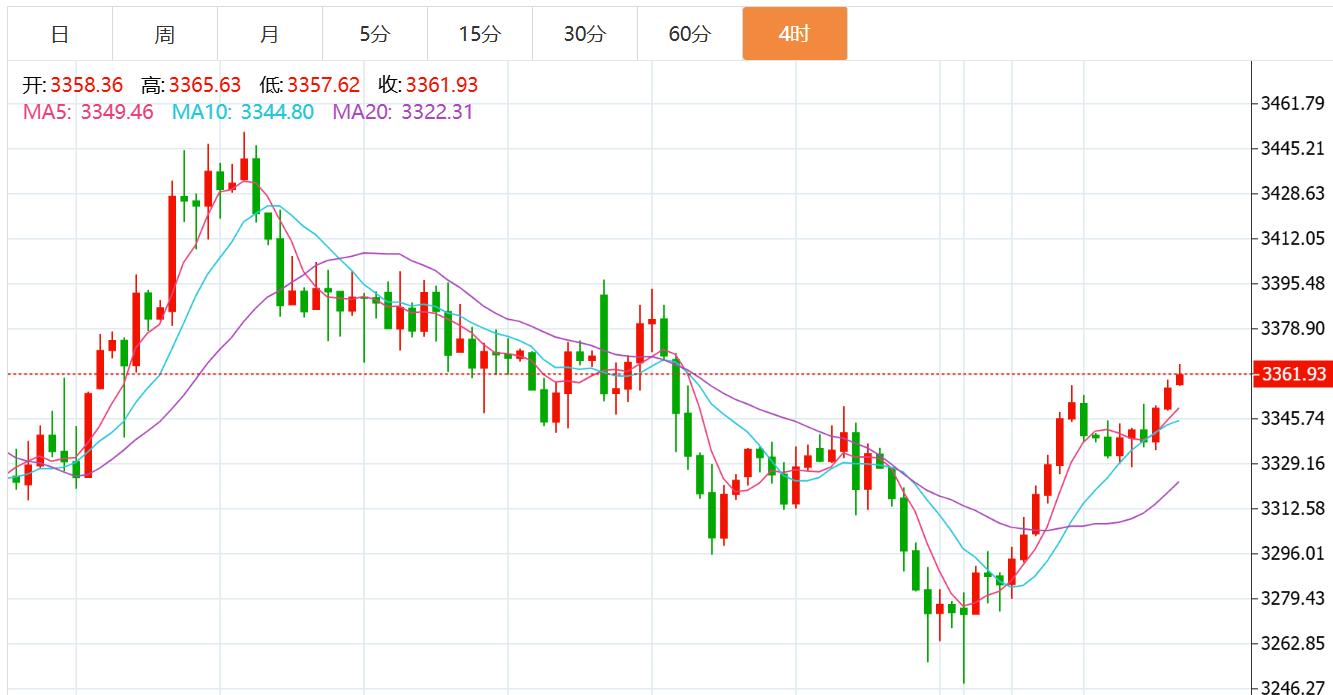
Group 1: Gold Market Analysis - Gold prices surged over 1% on July 2, reaching a recent high of $3358 before closing at $3338, marking two consecutive days of gains [2] - The increase in gold prices is attributed to heightened market risk aversion following the U.S. Senate's approval of Trump's tax and spending bill [2] - The upcoming non-farm payroll report is expected to be a key indicator for investors regarding the Federal Reserve's policy direction, with economists predicting an increase of 110,000 jobs and a slight rise in the unemployment rate from 4.2% to 4.3% [2] - A weak employment report could lead to increased expectations for interest rate cuts, potentially boosting gold prices, while a strong report may hinder short-term gains [2][3] - Technical analysis indicates that gold formed a double bottom at $3245 and has shown a bullish trend, with a significant focus on the non-farm data impacting short-term price movements [3][5] Group 2: Oil Market Analysis - As of July 2, U.S. crude oil prices were trading around $67.32 per barrel, with a slight decline of approximately 0.05%, while Brent crude was at $67.09, down about 0.14% [6] - The oil market is currently characterized by cautious balance due to multiple factors, including supply plans from major oil-producing countries and fluctuations in the U.S. dollar [6] - The market is influenced by OPEC+'s continuous production increases, which have led to a more relaxed supply environment, alongside recovering demand from Asian manufacturing and potential interest rate cuts by the Federal Reserve [6] - The upcoming OPEC+ meeting on July 6 and the impact of U.S. employment data on monetary policy are critical variables that may determine future oil price movements [6][7] - Technical indicators suggest that while the medium-term trend for oil remains upward, there is a potential for high-level fluctuations, with short-term strategies focusing on buying on dips and selling on rebounds [7]
贺博生:7.2黄金晚间小非农数据如何布局,原油暴涨空单如何解套
Sou Hu Cai Jing· 2025-07-02 10:29
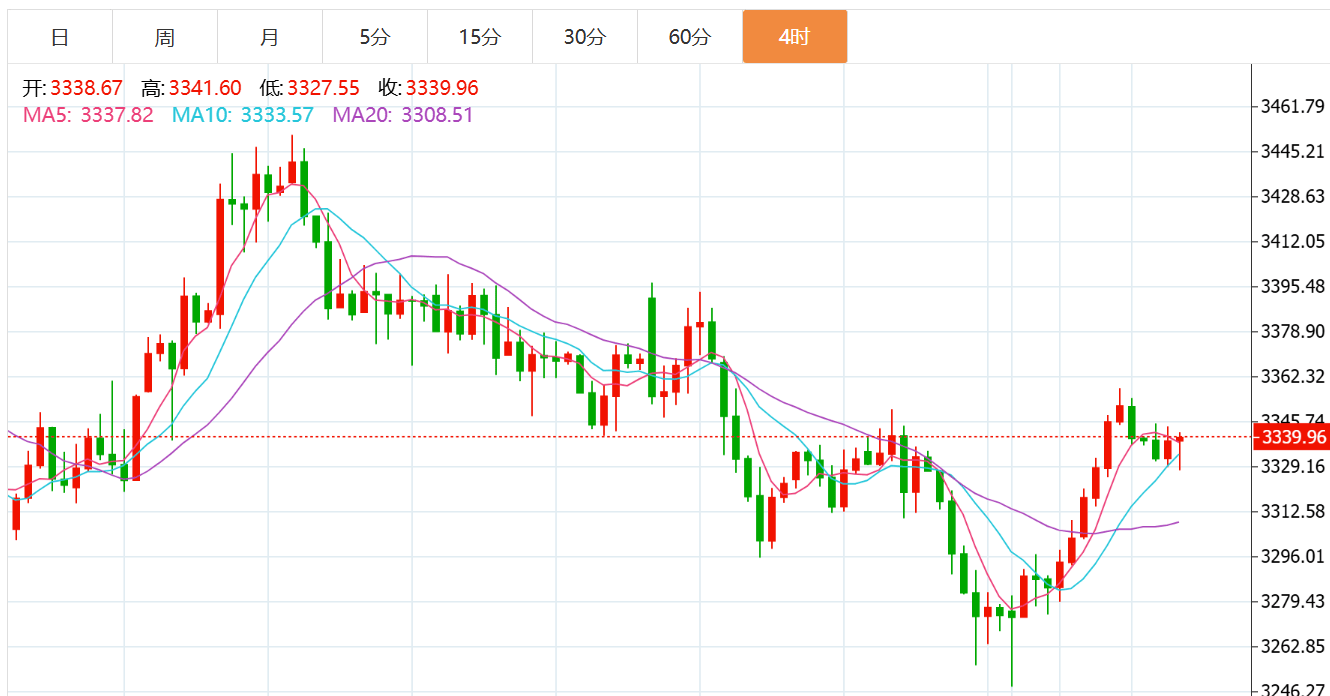
Group 1: Gold Market Analysis - The current gold price is around $3340 per ounce, with a significant increase of 1.1% on the previous day, closing at $3338.70 per ounce after a rise of $35.99 [1] - The market is anticipating the ADP employment data, which is expected to influence gold prices significantly [1] - The Federal Reserve Chairman Jerome Powell indicated that more economic data is needed before initiating monetary easing, but did not rule out the possibility of a rate cut in July, which could enhance gold's appeal as it does not yield interest [1] Group 2: Technical Analysis of Gold - The recent upward trend in gold prices suggests a potential short-selling opportunity, as the market has seen a significant number of short positions being liquidated [2] - The critical resistance level for gold is identified at $3358, while a support level is noted at $3326, with a potential downward movement towards $3300 if the support is breached [4] Group 3: Oil Market Analysis - Current oil prices are stable, with WTI at $65.42 per barrel and Brent at $67.09 per barrel, reflecting a cautious balance among multiple market factors [5] - The market is closely monitoring OPEC+ supply plans and U.S. economic data, which are pivotal in shaping oil price movements [5] - The upcoming OPEC+ meeting on July 6 and potential Fed rate cuts are key variables that could influence future oil prices [5] Group 4: Technical Analysis of Oil - The medium-term outlook for oil remains bullish, with a potential upward test towards $78, although short-term momentum indicators suggest a high-level consolidation phase [6] - The recommended trading strategy for oil includes buying on dips and selling on rebounds, with resistance levels at $68.0-$69.0 and support levels at $64.5-$63.5 [6]
邓正红能源软实力:供需动态平衡支撑短期油价 夏季需求高峰与降息预期共振
Sou Hu Cai Jing· 2025-06-08 03:51
Core Viewpoint - The short-term oil price is expected to experience a volatile upward trend due to the summer demand peak and interest rate cut expectations, but caution is advised regarding OPEC's production increase and fluctuating trade policies [1][2][3] Supply and Demand Dynamics - The current oil price rebound is supported by a dynamic balance between supply and demand, with OPEC planning to increase production by 411,000 barrels per day in July, alongside potential overproduction risks from countries like Kazakhstan [2] - Seasonal demand is expected to rise due to increased travel during the summer, but overall demand may be constrained by weak global economic recovery, creating a tug-of-war between strong seasonal demand and weak macroeconomic conditions [2][3] - Supply disruptions from events like Canadian wildfires and geopolitical conflicts (e.g., reduced Russian exports) are providing short-term support against the pressures of increased production [2][3] Policy Influence - The expectation of interest rate cuts by the Federal Reserve is strengthening demand-side dynamics, as lower borrowing costs could stimulate energy consumption and provide a core upward driver for oil prices [2] - Recent U.S. employment data indicates a stable job market, reinforcing the likelihood of a rate cut, which could further enhance oil demand [2] - Trade policy uncertainties, including delays in U.S.-EU negotiations and unilateral U.S. actions (e.g., sanctions on Venezuela), are creating volatility in market confidence and could negatively impact long-term oil demand resilience [2][3] Geopolitical Risks - Geopolitical tensions are amplifying supply disruption risks, with events such as the Ukraine conflict and U.S.-Iran nuclear negotiations contributing to increased oil price volatility [3] - The potential for OPEC's production increases to exceed expectations and the unpredictability of U.S. trade policies are highlighted as key risks for the oil market [3] Market Outlook - The short-term outlook for oil prices is characterized by a volatile upward trend driven by seasonal demand peaks, interest rate cut expectations, and geopolitical premiums, while mid to long-term pressures may arise from non-OPEC supply increases and potential oversupply by 2025 [3]

原油与黄金陷入“冰火两重天”
Qi Huo Ri Bao Wang· 2025-05-29 16:06
Core Viewpoint - The global commodity market will continue to experience significant volatility into 2025, driven by policy dynamics and supply-demand imbalances, with U.S. policy movements being the largest variable affecting the market [1]. Oil Market - Oil prices are expected to gradually find a bottom, having fallen from $85 per barrel in January to $60 per barrel currently, exceeding previous expectations [1]. - The increase in oil supply in 2021 and 2022, coupled with a mismatch in supply and demand, has led to a sustained decline in oil prices [1]. - The U.S. government's aim to lower inflation by reducing oil prices and increasing energy production has been highlighted as a significant factor [2]. Demand Dynamics - Global oil demand remains strong, with a noted decline in U.S. demand, particularly in air travel, which decreased by approximately 2% from April to May [2]. - Despite the weakening demand in the U.S., international travel demand, especially from Europe, has reached new highs [2]. Geopolitical Factors - The geopolitical situation in the Middle East is stabilizing, with countries like Saudi Arabia and the UAE diversifying their economies to reduce reliance on energy revenues [2]. - Investments in tourism, fintech, and logistics are becoming focal points for these regions, decreasing the likelihood of escalating regional conflicts [2]. Gold Market - Gold prices are projected to enter a long-term bull market, driven by central bank purchases and safe-haven demand [3]. - Central banks have significantly increased gold purchases, from 400 tons annually to 800 tons in 2022 and 1000 tons in 2023, with expectations of continued high demand [3][4]. - The emergence of new investors, particularly overseas holders of U.S. financial assets, is contributing to increased gold purchases, with a potential 0.5% shift of their $57 trillion in assets into gold leading to an additional 500 tons of demand annually [4]. Metal Market - The metal market, particularly copper, is facing challenges due to high prices and potential trade tensions, with copper currently priced at $9,500 per ton [4]. - The metal market is expected to be significantly impacted by U.S. policy changes, contrasting with the more stable outlook for oil prices [4].
金价突然大涨!金荣中国提示:这三大信号正在酝酿回调风险
Sou Hu Cai Jing· 2025-05-22 09:35
Group 1 - The international gold market has experienced significant volatility since May, with a notable surge in early May followed by a recent pullback, yet there remains a consensus on gold's long-term allocation value [1] - On May 5, gold prices saw a daily increase of over 2.7%, reaching a peak of $3,320 per ounce, marking a new high in two weeks, reflecting deep global economic and geopolitical dynamics [1][3] - The weakening of the US dollar and policy uncertainties have driven demand for gold, with the dollar index dropping to 99.684, enhancing gold's appeal [3] Group 2 - Market expectations for potential interest rate cuts by the Federal Reserve have fluctuated, with strong economic data delaying these expectations and causing increased volatility in gold prices [4] - Central banks globally have been net buyers of gold for six consecutive years, with a notable increase of 244 tons in Q1 2025, while investment demand surged by 170% year-on-year, highlighting gold's growing financial attributes [5] Group 3 - For ordinary investors, the current volatility in the gold market presents both risks and opportunities, with recommendations to closely monitor policy signals and consider strategic positions around key support levels [7] - A suggested allocation of 5%-15% of household assets to gold, utilizing gold ETFs or physical gold bars for risk diversification, is advised, as institutional holdings in domestic gold ETFs have increased by 327% since the beginning of the year [7] - Investors are encouraged to choose compliant platforms to reduce trading costs and manage risks effectively, with some platforms offering low spreads and zero transaction fees [8] Group 4 - The fluctuations in gold prices reflect the uncertainty in the global economy, suggesting that investors should focus on long-term value through diversified allocations and risk awareness rather than chasing short-term volatility [11]