
油价预测

Search documents
瑞银下调油价预测:布伦特2025年底或跌至62美元/桶,供应增加成主因
Zhi Tong Cai Jing· 2025-08-11 13:07
Core Viewpoint - UBS has revised its international oil price forecast downward, expecting Brent crude prices to remain near the upper limit of $60 to $70 per barrel, with a potential drop to the lower limit later this year [1] Price Forecast Summary - UBS predicts Brent crude oil prices will decline to $62 per barrel by the end of 2025 and March 2026, down from a previous forecast of $68 per barrel, a reduction of $6 [1] - By mid-2026, prices are expected to recover to $65 per barrel, maintaining this level in the second half of the year [1] - The spread between WTI and Brent crude is expected to narrow from $4 per barrel to $3 per barrel [1] Factors Influencing Price Adjustments - The increase in oil supply from South America (e.g., Brazil, Guyana) is a key factor in the price adjustment [1] - Production from countries under international sanctions, such as Iran, Venezuela, and Russia, has exceeded expectations, alleviating concerns about significant declines [1] - Recent growth in oil demand from India has not met institutional expectations, impacting price assessments [1] OPEC+ Production Policy - UBS suggests that unless there are prolonged unexpected supply disruptions globally, OPEC+ may pause further adjustments to its production policy [1] - The firm holds a relatively optimistic view on oil prices for mid-2026 and the second half of the year, anticipating improvements in market supply-demand dynamics [1] Current Market Conditions - As of the latest report, WTI crude futures rose by 0.44% to $64.16 per barrel, while Brent crude futures increased by 0.42% to $66.87 per barrel [2] - Despite the slight daily recovery, oil prices faced the largest weekly decline since June due to OPEC+ plans to increase production by 547,000 barrels per day and concerns over global economic growth stemming from U.S. tariff policies [2]
突发!全线大跌!
中国基金报· 2025-08-04 13:59
Core Viewpoint - International oil prices have experienced a significant decline, with Brent crude futures dropping by 2% to $68.28 per barrel and WTI crude futures falling by 2.33% to $65.76 per barrel [2]. Group 1: OPEC+ Production Decisions - OPEC+ has agreed to increase oil production by 547,000 barrels per day starting in September, marking a strategic shift towards regaining market share [6]. - This decision indicates an early completion of the current phase of supply recovery, moving away from the 2.2 million barrels per day production cut agreement initiated in 2023 [6]. - The increase in production is expected to mitigate the impact of geopolitical tensions and seasonal demand peaks on oil prices, leading to expectations of a global supply surplus in the second half of the year [6]. Group 2: Goldman Sachs Oil Price Forecast - Goldman Sachs has maintained its oil price forecast, projecting an average price of $64 per barrel for Brent crude in Q4 2025 and $56 per barrel in 2026 [6]. - The firm acknowledges increased risks to its baseline forecast due to potential supply disruptions from Russia and Iran, alongside declining oil demand risks stemming from U.S. tariffs and economic weakness [6]. - Goldman Sachs anticipates that OPEC+ will likely keep its production quotas unchanged after September, as OECD commercial inventories are expected to rise and seasonal demand is projected to decline [6]. Group 3: Market Dynamics and Risks - The oil market is currently characterized by a contradiction between rising supply expectations and stagnant demand growth, with geopolitical risks acting as key disruptors [7]. - Potential military escalations from the breakdown of ceasefire negotiations in Gaza and uncertainties from the Russia-Ukraine conflict could heighten concerns over oil supply disruptions, leading to upward pressure on prices [7]. - However, if these geopolitical risks do not materialize, there may be short-term downward pressure on oil prices [7].


高盛维持布伦特原油预测
Huan Qiu Wang· 2025-08-04 05:41
Group 1 - Goldman Sachs reaffirmed its oil price forecast, predicting an average of $64 per barrel for Brent crude in Q4 2025 and $56 per barrel in 2026, but noted increasing risks to its baseline estimates due to recent developments [1] - The bank highlighted downward risks to its forecast of 800,000 barrels per day demand growth for 2025-2026, citing rising U.S. tariff rates, additional secondary tariff threats, and weak U.S. economic activity data [3] - Goldman Sachs' economists indicated that the weak data suggests the U.S. economy is currently growing below potential, increasing the likelihood of a recession in the next 12 months [3] Group 2 - OPEC+ agreed to increase oil production by 547,000 barrels per day in September, marking the latest move in a series of accelerated production increases to regain market share [3] - Goldman Sachs assumes that OPEC+ will maintain its production quotas unchanged after September, anticipating a faster pace of OECD commercial inventory builds and a decline in seasonal demand support [3]

油气行业2025年7月月报:7月油价小幅上涨,国内启动石化行业老旧产能摸排评估-20250801
Guoxin Securities· 2025-08-01 07:36
Investment Rating - The oil and gas industry is rated as "Outperform" [4][6] Core Views - In July 2025, Brent crude oil futures averaged $69.4 per barrel, a slight decrease of $0.4 from the previous month, while WTI averaged $67.1 per barrel, down $0.6 [1][13] - OPEC+ announced an accelerated production increase of 548,000 barrels per day for August, with plans to complete the remaining increase by September 2025 [2][17] - Global oil demand is expected to grow by 700,000 to 1.3 million barrels per day in 2025, with similar growth projected for 2026 [3][18] - The expected price range for Brent crude oil in 2025 is between $65 and $75 per barrel, while WTI is projected to be between $60 and $70 per barrel [3][19] Summary by Sections July Oil Price Review - Brent crude oil futures closed at $73.2 per barrel at the end of July, while WTI closed at $70.0 per barrel [1][13] - The oil price experienced fluctuations due to geopolitical tensions and seasonal demand [1][13] Oil Price Outlook - OPEC+ has extended its voluntary production cuts and announced an increase in production rates [2][17] - The demand for oil is expected to rise significantly, with major energy agencies forecasting increases in daily consumption [3][18] Key Data Tracking - As of July 30, 2025, WTI crude oil futures settled at $70.00 per barrel, reflecting a 7.5% increase from the previous month [40] - U.S. crude oil production averaged 13.337 million barrels per day in July, showing a slight decrease [46] - The average operating rate of U.S. refineries was 94.9% in July, indicating strong demand for refined products [56]




高盛:石油和炼油行业下半年展望及其对股票的影响
Goldman Sachs· 2025-07-25 00:52
Investment Rating - The report upgrades the Brent crude oil price forecast for the remainder of 2025 to $66 per barrel, with expectations of further price increases due to rising price premiums and shifting market risk concerns towards supply disruptions [1][2]. Core Insights - The cautious outlook for oil prices in 2026 is based on anticipated oversupply of approximately 1.7 million barrels per day due to the ramp-up of non-OPEC projects and the development of U.S. shale oil [1][2]. - The refining industry is currently in an upward cycle, driven by supply factors, with a projected net increase in global refining capacity of only 0.2 million barrels per day in 2025 and 0.4 million barrels per day in 2026 [8]. Summary by Sections Oil Price Forecast - The Brent crude oil price is expected to rise to $66 per barrel for the remainder of 2025, supported by low global inventory levels, particularly in OECD countries, and concerns over supply disruptions [2][3]. - A cautious forecast for 2026 predicts a decline to around $50 per barrel due to oversupply from non-OPEC projects [1][2]. Refining Industry Dynamics - The refining sector is experiencing high profit margins, particularly in diesel, driven by low inventory levels and the permanent closure of several refineries [7][8]. - The global refining system is under pressure due to a tight supply-demand balance, with significant growth expected in the demand for middle distillates like diesel and jet fuel [8]. Geopolitical and Supply Risks - Current market risks include supply disruptions and geopolitical instability, with a recommendation for conservative yet flexible trading strategies, such as purchasing call options and utilizing spot and forward contracts for hedging [5][6]. - The impact of Iranian oil production on market prices is significant, with potential price spikes if production increases dramatically [6]. OPEC and Non-OPEC Supply - The report highlights the uncertainty surrounding OPEC's spare capacity, which supports forward oil prices, and the potential for oversupply if new projects come online as planned [3][4]. - The refining industry is expected to benefit from the complexities of companies like Reliance Industries, which can leverage OPEC supply increases while also growing in other sectors [8].
7月23日电,阿塞拜疆中央银行预测,2025年平均油价为每桶68.6美元,天然气价格为每1000立方米299美元。
news flash· 2025-07-23 07:41
Group 1 - The Central Bank of Azerbaijan predicts an average oil price of $68.6 per barrel for 2025 [1] - The forecast for natural gas prices is set at $299 per 1000 cubic meters for 2025 [1]
黄金大消息!全球央行又出手
Zhong Guo Ji Jin Bao· 2025-07-05 00:26
Group 1: Global Gold Market - In May, global central banks net purchased 20 tons of gold, which is close to but still below the 12-month average of 27 tons [6] - The ongoing geopolitical tensions in the Middle East may enhance the strategic appeal of gold for central banks, as countries seek to bolster their gold reserves to mitigate geopolitical shocks [6] - A recent survey by the World Gold Council indicates that 95% of central banks expect their official gold reserves to continue growing, up from 81% last year, with a record 43% of central bank officials planning to increase their gold reserves in the next 12 months [6] Group 2: Oil Market - On July 4, international oil prices fell across the board, with West Texas Intermediate (WTI) down 0.75% to $66.5 per barrel, while Brent crude dropped 0.42% to $68.51 per barrel [2] - OPEC's crude oil production increased by 270,000 barrels per day in June compared to May, reaching 27.02 million barrels per day, raising concerns about oversupply in the market [2] - Barclays raised its 2025 Brent crude oil price forecast to $72 per barrel, indicating an improved demand outlook [3] Group 3: Precious Metals - On July 4, international precious metal futures saw slight gains, with COMEX gold futures rising 0.11% to $3346.5 per ounce, marking a weekly increase of 1.79% [4] - COMEX silver futures also rose by 0.14% to $37.135 per ounce, with a weekly increase of 2.1% [5] - Factors driving the rise in gold prices include a decline in the US dollar index, concerns over the US fiscal deficit, geopolitical risk premiums, technical corrections, and capital flows [5]
美国打击伊朗后,国际油价怎么走?高盛推演了四种可能
Hua Er Jie Jian Wen· 2025-06-23 08:52
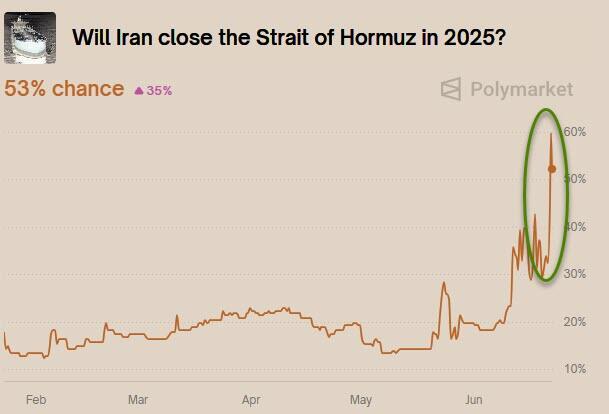
Core Viewpoint - The escalation of geopolitical tensions between the U.S. and Iran could significantly impact international oil prices, potentially driving them to a range of $120-150 per barrel in extreme scenarios [1][8]. Group 1: Geopolitical Tensions and Oil Prices - Goldman Sachs' commodity research team has reassessed risk scenarios due to Iran's threats to block the Strait of Hormuz, indicating that current oil prices include a geopolitical risk premium of about $10 per barrel [2]. - The market is preparing for a significant increase in oil prices over the coming months, although long-term expectations remain largely unchanged [2][3]. - In the event of a supply disruption, Brent crude oil prices could peak slightly above $90 per barrel, depending on the recovery of Iranian supply and OPEC+ production adjustments [2]. Group 2: Potential Disruption Scenarios - Four potential conflict escalation scenarios have been constructed by Goldman Sachs, with varying impacts on oil prices [4]. - In the baseline scenario, if geopolitical tensions persist without significant supply disruptions, Brent crude is expected to maintain a risk premium of $5-7, trading around $72 per barrel [5]. - If Israel attacks Iranian oil-related assets, oil prices could rise to the $80-90 per barrel range due to expected Iranian retaliation [6]. - In a scenario where Iran retaliates against regional assets, oil prices could clearly rise towards $100 per barrel [8]. - The most severe scenario involves Iran closing the Strait of Hormuz, affecting 15-17 million barrels of oil supply daily, which could push prices to the $120-150 range [8]. Group 3: Market Reactions and Implications - The geopolitical tensions have led to a strengthening of the U.S. dollar, impacting currencies like the Australian and Canadian dollars [10]. - A rapid increase in oil prices to $100 could negatively impact risk assets, with the S&P 500 potentially facing a decline of 200-300 points, particularly affecting AI-related stocks due to high concentration [10]. - The response in interest rate markets is complex, with potential inflation concerns from rising oil prices, but the Federal Reserve may overlook temporary price changes [10].
石油化工行业周报:年内原油供需趋于宽松,EIA维持今年66美元的油价预测-20250622
Shenwan Hongyuan Securities· 2025-06-22 12:14
Investment Rating - The report maintains a positive outlook on the oil and petrochemical industry, with a price forecast of $66 per barrel for 2025 [3][5]. Core Insights - The report indicates a trend towards a looser supply-demand balance for crude oil in 2025, with the EIA projecting a global oil supply surplus of approximately 820,000 barrels per day this year [4][19]. - The report highlights that the upstream sector is showing signs of recovery, with drilling day rates expected to increase as global capital expenditures rise [4][21]. - The refining sector is experiencing improved profitability due to rising product price spreads, although current levels remain low [4][21]. - The polyester sector is underperforming, with PTA and polyester filament profits declining, but a gradual improvement is anticipated as new capacities come online [4][21]. Summary by Sections Upstream Sector - Brent crude oil futures closed at $77.01 per barrel, a 3.75% increase week-on-week, while WTI futures rose by 1.18% to $73.84 per barrel [4][25]. - U.S. commercial crude oil inventories decreased to 421 million barrels, down 11.47 million barrels from the previous week, marking a 10% decline compared to the same period last year [4][27]. Refining Sector - The Singapore refining margin for major products increased to $11.58 per barrel, up $6.18 from the previous week [4]. - The report notes that while refining product spreads have improved, they remain at low levels, with expectations for gradual enhancement as economic recovery progresses [4][21]. Polyester Sector - The report states that PTA prices have turned from decline to increase, with the average price in East China reaching 5,084 RMB per ton, a 4.69% increase week-on-week [4]. - The overall performance of the polyester industry is described as average, with a need to monitor demand changes closely [4][21]. Investment Recommendations - The report recommends focusing on high-quality refining companies such as Hengli Petrochemical, Rongsheng Petrochemical, and Sinopec, as well as upstream service companies like CNOOC Services and Haiyou Engineering [4][21][22]. - It also suggests that the polyester sector may see long-term improvements, advocating for investments in leading companies like Tongkun Co. and Wankai New Materials [4][21][22].


花旗预计,近期布油价格将在70-80美元/桶左右
news flash· 2025-06-16 09:46
Core Viewpoint - Citigroup expects Brent crude oil prices to trade around $70-80 per barrel in the near term due to ongoing Middle East conflicts, while maintaining a long-term price forecast of $60-65 per barrel [1] Group 1 - Citigroup analysts indicate that the rise in oil prices is primarily reflecting an increase in risk premium to address potential production and export disruptions [1] - The impact of rising oil prices on oil production and exports is currently very limited or non-existent [1]
