消费分化

Search documents
“消费信心跌至数十年最差水平”!高盛警告美国中产消费“失速”,25-35岁人群“捂紧钱包”
华尔街见闻· 2025-11-01 11:10
Core Viewpoint - Goldman Sachs has issued a "red" warning regarding the health of American consumers, indicating that consumer fatigue has spread from low-income groups to the middle class, with many executives reporting the lowest consumer confidence levels in decades [2][3]. Consumer Health Status - The discussion around consumer health is shifting, with more companies reporting a slowdown in consumption that now affects middle-income groups, particularly consumers aged 25-35 [4][9]. - Recent weeks have seen significant sell-offs in consumer stocks, with the non-essential consumer goods sector underperforming the market by 500 basis points [5][12]. Corporate Earnings and Consumer Behavior - Companies like Kraft Heinz have drastically lowered their annual sales guidance, expecting a decline of 3% to 3.5%, attributing this to inflationary pressures and cuts in food assistance [6]. - The latest earnings reports reveal a widening gap in consumer spending, with companies like Chipotle and CAVA experiencing stock price drops of 17% and 11% respectively, as lower-income customers reduce spending frequency [8]. Market Trends and Stock Performance - The consumer discretionary sector has underperformed the market by 400 basis points this week and 500 basis points over the past two weeks, indicating a fundamental deterioration in the market [13]. - Despite some companies exceeding earnings expectations, the overall market response has been negative, reflecting a broader concern about consumer spending [13][14]. Resilience in High-End Consumption - Despite pressures on the middle class, some high-end market companies continue to show resilience, with Visa reporting strong performance across various spending categories [15]. - Starbucks and Brinker International's Chili's brand have reported positive growth, particularly among lower-income households, contrasting with trends seen in other sectors [15].



“数十年来最糟糕”!高盛警告美国中产消费“失速”,25-35岁人群“捂紧钱包”
Hua Er Jie Jian Wen· 2025-11-01 05:56
Core Viewpoint - Goldman Sachs issues a "red alert" regarding the health of American consumers, indicating that consumption weakness has spread from low-income groups to the middle class, with consumer confidence at its lowest level in decades [1][3] Group 1: Consumer Health and Spending Trends - The discussion around consumer health is shifting, with more companies reporting a slowdown in consumption that now affects middle-income groups, particularly consumers aged 25-35 [1][3] - Companies like Kraft Heinz have significantly lowered their annual sales guidance, expecting a decline of 3% to 3.5%, attributing this to inflationary pressures and cuts in food assistance [1][3] - The consumer discretionary sector has seen a substantial sell-off, with non-essential consumer goods underperforming the market by 500 basis points [1][7] Group 2: Impact on Specific Companies - Chipotle's stock plummeted 17% as it reported a decrease in spending frequency among lower-income customers, who are facing pressures from unemployment and stagnant wage growth [3] - Other companies like CAVA and SG also reported significant declines in stock prices, indicating a broader trend of reduced spending among middle-income consumers [3] - Even traditional defensive sectors are not immune, with companies like Mondelez International and Hershey's noting that economic uncertainty is leading consumers to tighten their spending [3] Group 3: Performance of High-End and Resilient Brands - Despite pressures on the middle class, some high-end brands and companies with scale are still performing well, as indicated by Visa's report of strong spending across various categories [7] - Starbucks reported positive growth in transaction volume, particularly in its university and campus business, suggesting resilience among certain consumer segments [7] - Brinker International's Chili's brand is experiencing sales growth across all income levels, with the fastest growth seen among households earning less than $60,000 [7]


人均消费912元:消费分化的两极,在国庆体现的淋漓尽致
Sou Hu Cai Jing· 2025-10-16 16:35
Core Insights - The National Day holiday revealed a significant polarization in consumer behavior, with overall retail and catering sales increasing by 2.7% year-on-year, while the willingness to spend has decreased among many consumers [1][3]. Consumer Trends - There is a notable increase in cross-regional mobility, with an average of 30.4 million people traveling daily, reflecting a 6.2% year-on-year growth [1][3]. - The travel preferences are diverging, with outbound tourism thriving while county-level tourism is also gaining traction, indicating a dual trend in consumer spending [3][4]. - Young people are becoming the primary demographic for holiday travel, while older individuals tend to avoid peak travel times [9][10][11]. Entertainment Consumption - The entertainment sector is experiencing a shift, with live performances gaining popularity while the movie market is declining. During the holiday, live performance attendance increased by 39.5% year-on-year, while movie attendance dropped by 4% [6][7]. - The average ticket price for live performances is significantly higher than that of movies, which may explain the shift in consumer preference towards experiences that offer greater emotional value [6][8]. Economic Context - Domestic consumption is increasingly vital for economic growth, especially amid uncertainties in real estate and external trade [3][14]. - Despite a record number of travelers during the holiday, the average spending per person decreased by 12.84% compared to the previous year, indicating a potential concern for future consumer spending [19][20]. - The total expenditure for domestic travel reached approximately 809 billion yuan, a 15.3% increase year-on-year, but this growth is attributed to the increase in traveler numbers rather than higher per capita spending [19]. Future Outlook - The overall consumer price index has shown a decline of 0.3% from January to August compared to the previous year, suggesting ongoing challenges in consumer spending [13][14]. - The importance of consumer spending is underscored by the need for both financial resources and leisure time, with the National Day holiday serving as a critical indicator of consumer sentiment and spending trends [12][16].

国泰海通|宏观:生产热度回升,出口量价分化——国内高频指标跟踪(2025年第37期)
国泰海通证券研究· 2025-09-15 13:43
Group 1 - The core viewpoint of the article indicates a mixed performance in consumption, investment, and production, with service consumption declining and durable goods showing weak performance [1] - In terms of investment, the real estate sector remains weak despite policy optimizations in major cities, with new home sales not improving significantly [1] - The export market is experiencing a rise in port capacity demand due to the upcoming Christmas stocking season, while domestic export freight rates are declining, indicating a retreat from technical rush shipments [1] Group 2 - Overall production activity is showing signs of recovery, with a stable Consumer Price Index (CPI) and a majority decline in the Producer Price Index (PPI) [1] - The 10-year government bond yield has risen to its highest level since 2025, likely linked to strong equity market performance and improved inflation data [1]

9月起国内经济出现4大趋势,影响民众生活和未来发展?
Sou Hu Cai Jing· 2025-09-14 02:34
Core Viewpoint - China's economy is at a significant turning point, with four major trends reshaping the livelihood landscape and influencing future national development [1] Group 1: Rural Revitalization - A "transportation revolution" is underway in rural China, with fixed asset investment growing by 4.8% in the first eight months of 2025, and infrastructure investment up by 5.3% [2] - The construction of 280,000 kilometers of new rural roads is expected to benefit 3,500 administrative villages and directly increase the income of 1.5 million rural residents [2] - The government has allocated 325 billion yuan for this initiative, a 21% increase from 2024, with 15,300 kilometers of rural roads already completed by the end of August [2][3] - Logistics costs in rural areas have decreased from 0.98 yuan per ton-kilometer in 2024 to 0.85 yuan in 2025, a reduction of 13.3%, leading to an estimated 8.5% increase in farmers' income [3] Group 2: Real Estate Market - The real estate market is at a critical juncture, with new residential prices in 70 major cities declining by 0.3% month-on-month and 2.5% year-on-year as of August 2025 [4] - The market has seen a 15.3% decrease in sales area in the first half of 2025, but signs of recovery are emerging, particularly in first-tier cities where new home sales increased by 6.8% in July [4] - The market concentration among the top 100 real estate companies has risen to 65.3%, with state-owned enterprises holding a 43.7% market share, acting as stabilizers [4] Group 3: Monetary Policy - The People's Bank of China has adopted a more accommodative monetary policy, lowering the reserve requirement ratio by 0.5 percentage points, releasing approximately 1.2 trillion yuan in long-term funds [5] - The one-year Loan Prime Rate (LPR) has been reduced by 10 basis points to 3.35%, the lowest since 2020, indicating a supportive environment for the real economy [5] - In August 2025, the social financing scale increased by 2.85 trillion yuan, with a notable 11.3% growth in medium- and long-term loans for enterprises, reflecting a recovery in investment confidence [5] Group 4: Consumption Trends - From January to August 2025, retail sales of consumer goods grew by 4.6%, with significant disparities across sectors [6] - Basic consumption, such as food and beverages, grew by 3.2%, while smart home appliances surged by 15.3%, and new consumption areas like smart wearables and electric vehicles saw growth rates of 28.5% and 22.6%, respectively [6][9] - Rural consumption is outpacing urban growth, with rural online shopping increasing by 18.3% in the first half of 2025, compared to 11.2% in urban areas, indicating a significant market potential [9]
布米普特拉北京投资基金管理有限公司:美国中产消费信心降温 多个行业感受寒意
Sou Hu Cai Jing· 2025-09-02 14:36
Group 1 - The consumer confidence index in the U.S. dropped nearly 6% in August, interrupting a two-month recovery trend [1] - Middle-income households, particularly those earning between $50,000 and $100,000, have shown a significant shift in attitude, now exhibiting a more pessimistic outlook similar to low-income groups [3] - Retail giants like Walmart report that low- to middle-income shoppers are tightening their spending, with a noticeable reduction in non-essential items in their shopping carts [3] Group 2 - The restaurant industry is feeling the pressure, with middle-income customers actively seeking discounts and opting for cheaper menu items [6] - Fast food chains have seen an increase in traffic as middle-income customers avoid high-priced restaurants, while low-income customer visits have declined [6] - High-income consumers continue to spend, with strong sales in premium airline tickets and high-end sneakers, indicating a clear divide in consumer behavior across income levels [6] Group 3 - Over 70% of surveyed consumers plan to cut budgets for significant purchases in the coming year, surpassing the spending reductions seen during the inflation spike in 2022 [9] - High-income groups are more likely to maintain their spending habits, while middle- to low-income families are forced to adjust their spending structures [9] - This trend of consumer spending differentiation is expected to persist and significantly impact the overall economy [9]

“抠搜”年轻人,抢空高价演唱会门票
Hu Xiu· 2025-08-04 00:30
Group 1 - The core idea of the article revolves around the shift in consumer behavior from traditional value-for-money considerations to a focus on "emotional value" in purchasing decisions [2][5][10] - Younger consumers are increasingly willing to spend on experiences and products that provide emotional resonance, indicating a change in the underlying motivations for consumption [3][9][12] - The concept of "emotional consumption" is framed as a necessary aspect of modern life, addressing emotional needs rather than just practical ones [4][10][25] Group 2 - The evolution of media from text-based platforms to short videos reflects a broader trend towards valuing emotional satisfaction over logical reasoning in consumer behavior [7][11] - Interviews with young consumers reveal a pattern of spending less on everyday items while allocating more funds to emotional experiences, such as concerts [8][9] - The distinction between functional consumption and emotional consumption highlights the growing importance of internal emotional needs in purchasing decisions [10][12] Group 3 - The role of social media and influencers in shaping consumer behavior is significant, as trends often emerge from elite endorsements that are then followed by the middle class and replicated by the masses [14][15][16] - Emotional value can lead to products being priced above their practical utility, as seen in luxury goods that provide a sense of identity and status [25] - The relationship between consumers and influencers is characterized by a blend of authenticity and performance, where emotional connections drive commercial value [20][22] Group 4 - The impact of algorithms and platform dynamics on consumer emotions is nuanced, with algorithms reflecting user sentiments rather than creating them [23][24] - The rise of AI companionship and new technologies may fill emotional voids in society, but their effectiveness will depend on existing social structures and emotional needs [27][28]
如何让品牌增长摆脱偶然成为必然?这场对话全讲透了
Nan Fang Du Shi Bao· 2025-07-11 08:47
Group 1 - The conference "2025 High-Quality Consumption Brand TOP100 Innovation Ecosystem Conference" was held in Shanghai, focusing on exploring new paths for brand growth amidst economic cycles [2] - The "2025 High-Quality Consumption Brand TOP100 Trend Insight Report" was released, providing insights into consumer market trends [2] Group 2 - Companies with higher barriers to entry are better positioned to navigate economic cycles, as they can effectively combine supply chain, distribution, and consumer perception capabilities [4][6] - A strong supply chain ensures product innovation, quality, and user experience, while deep distribution makes products easily accessible to consumers [6] - Brands should consider counter-trend strategies, such as adopting retro methods in product development, to attract consumer interest [6] Group 3 - Companies in the beauty industry can navigate economic cycles by creating a matrix of different brand images and price points to cater to diverse consumer preferences [7][9] - Key strategies include enhancing core competencies, achieving a balanced online and offline presence, and investing in international expansion [9] - Providing emotional value through products is essential, as seen in the development of products that resonate with consumer psychological needs [9] Group 4 - Understanding the supply-demand relationship during economic cycles is crucial for identifying market opportunities [10][12] - Companies should focus on emerging consumer segments, such as the wellness market for younger demographics, to drive growth [12] - The introduction of innovative services, like personalized massage robots, can enhance customer experience and address health concerns [12] Group 5 - Standardizing service delivery is vital for adapting to changing consumer demographics, from "80s" to "00s" generations [13][15] - The challenge lies in meeting diverse consumer expectations through a standardized service model [15] - Implementing a digital management system can improve service delivery efficiency and responsiveness to consumer needs [15]


25Q1,几个有意思的经济“转折点”
Hu Xiu· 2025-06-09 00:18
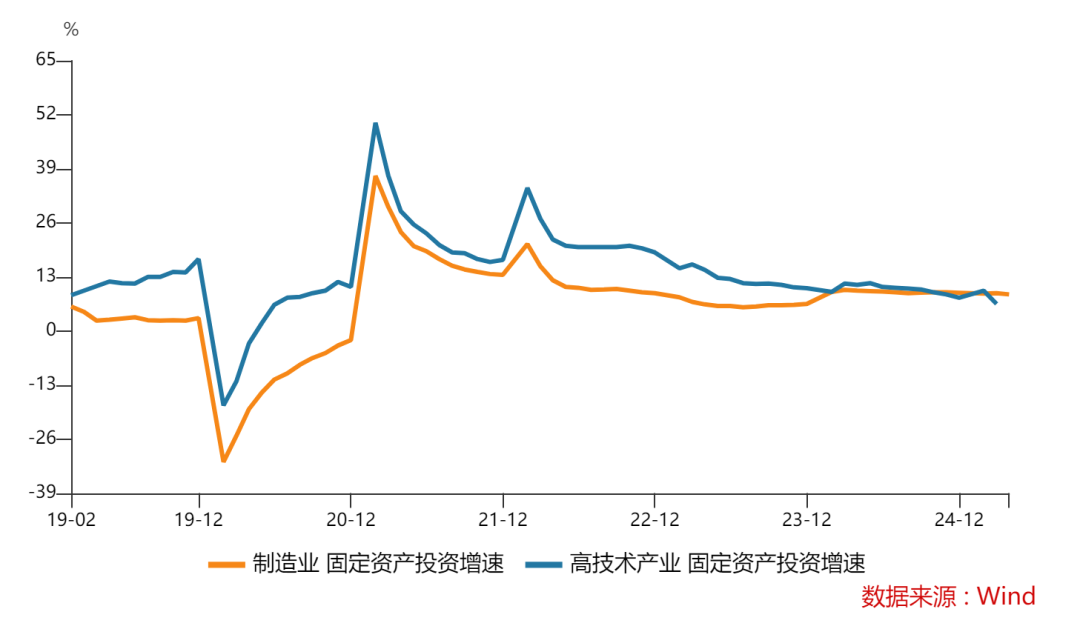
Group 1 - Investment in high-tech industries has been surpassed by overall manufacturing investment for the first time, indicating a shift in trends after three years of low returns on investments [1][3][4] - Many sectors, including new energy and semiconductors, are showing signs of overcapacity, with rapid technological iterations leading to outdated "new" technologies [3][4] - Private investments focused on financial returns have lagged behind state-owned enterprises, highlighting a disparity in investment strategies [4] Group 2 - Corporate profits are finally showing signs of recovery, with many sectors experiencing profit rebounds, although the automotive industry continues to struggle [5][9] - The gap between fixed asset investment in manufacturing and overall profits is narrowing, suggesting a potential shift towards prioritizing shareholder returns [9][11] - Regulatory pressures in the automotive sector and tightening capital constraints are contributing to a more sustainable investment environment [11] Group 3 - The growth rate of high-tech service industries remains strong, outperforming the manufacturing sector [14] - Consumer spending on services is lagging behind goods due to supply constraints and a lack of quality offerings, impacting overall consumption patterns [17][19] - New consumption trends, particularly those with emotional and differentiated attributes, are gaining traction, indicating a shift in consumer preferences [21]
行业观察:“消费分化”趋势露头,纸品&卫生巾市场如何洗牌?
Jin Tou Wang· 2025-05-19 09:21
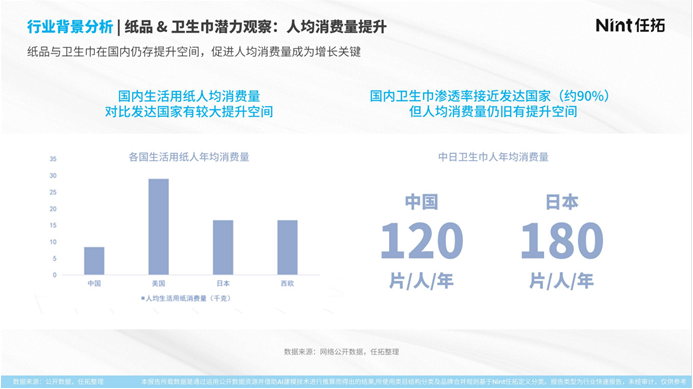
Industry Overview - The paper and sanitary napkin industry in China is experiencing rapid growth, with a market size of 157.1 billion yuan and a consumption volume of 11.85 million tons in 2022, reflecting a compound annual growth rate (CAGR) of 8.1% and 7.0% respectively from 2015 to 2022 [1] - The sanitary napkin market reached a size of 99.1 billion yuan in 2022, with a CAGR of 5.9% from 2012 to 2022 [1] Consumption Potential - China's per capita consumption of paper products is significantly lower than that of developed countries, with the U.S. at approximately 30 kg and Japan at around 15 kg, while China is below 10 kg, indicating at least 50% growth potential in the market [2] - The sanitary napkin market also shows considerable room for growth in per capita consumption [2] E-commerce Growth - E-commerce channels are identified as the main growth driver for the industry, with projected CAGR for the paper/wet wipes and sanitary napkin sectors at 16% and 17% respectively from 2021 to 2024 [4] Market Trends and Consumer Insights - The paper products market is characterized by a significant trend towards scenario-based usage, with a projected sales volume exceeding 26 billion yuan in 2024 and an annual growth rate of 18% [4] - The wet wipes segment is leading in growth, with a 28% increase in sales in Q1 2025 compared to the previous year, driven by consumer expectations for product efficacy [7] - The sanitary napkin market is also showing strong performance, with a 38% increase in sales and a 24% increase in volume in Q1 2025 compared to the previous year [9] Product Development and Challenges - The sanitary napkin market is seeing a shift towards higher quality materials, with cotton material market share rising from 74.08% to 76.33%, while non-woven fabric has gained a 4.03% share [10] - The industry faces challenges related to value reconstruction, as consumer demands evolve towards more specialized and higher-quality products [10] Market Opportunities - The paper and sanitary napkin industries are perceived as having untapped potential, with increasing consumer demand for diverse products being a key driver for brand differentiation and growth [12] - Innovations such as specialized sanitary napkins for sports and pH-balanced options for sensitive skin are emerging in response to unmet consumer needs [12] - The introduction of new standards and safety regulations is creating opportunities for niche brands to enter the market and for existing brands to innovate [12]