社会消费品零售总额

Search documents
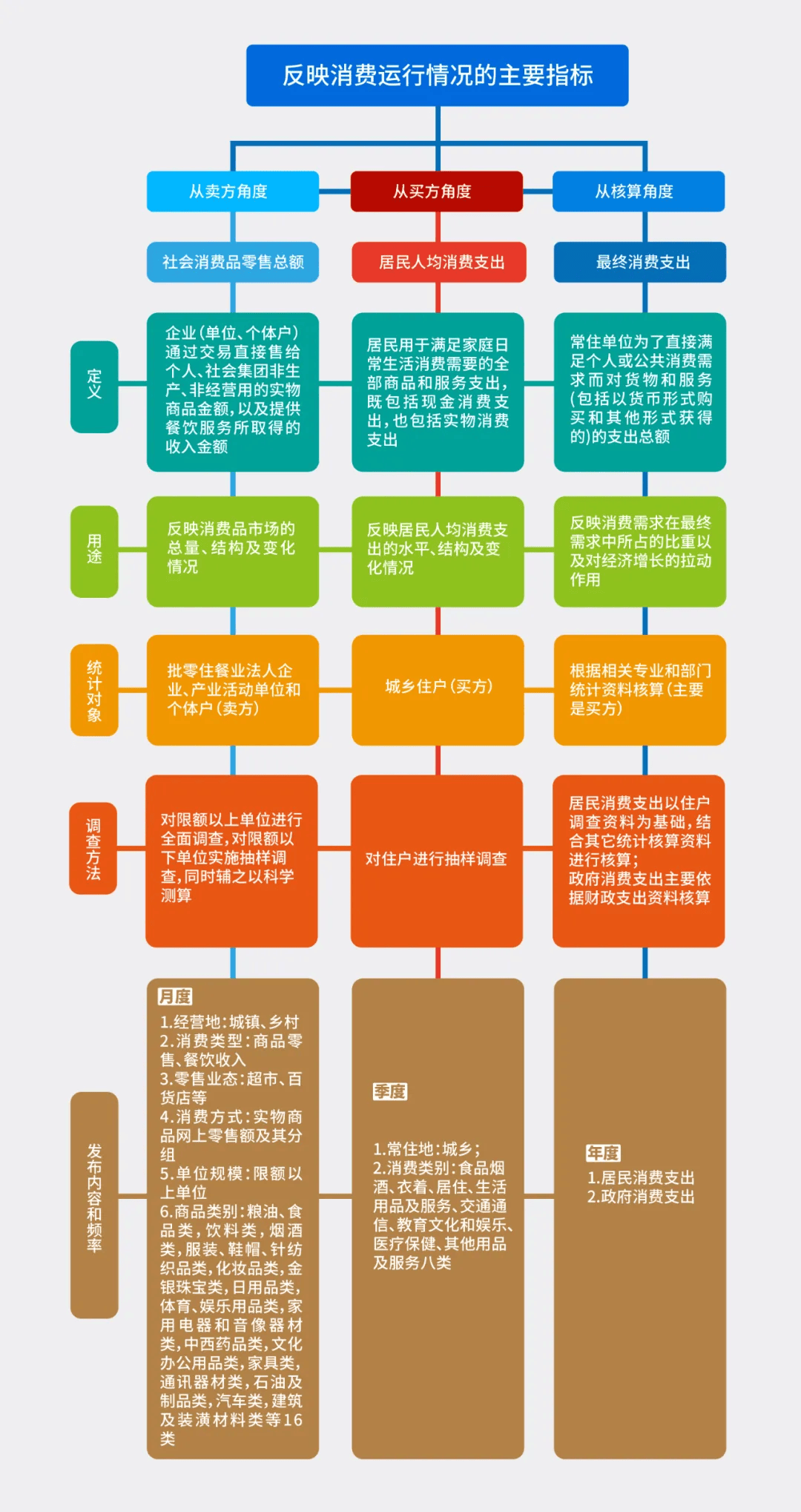
2025年全省经济运行总体平稳
Xin Lang Cai Jing· 2026-01-25 18:14
Economic Overview - In 2025, the overall economic operation of Liaoning Province is stable, with a GDP of 33,182.9 billion yuan, representing a 3.7% increase from the previous year [1] - The primary industry added value is 2,763.0 billion yuan, growing by 3.4%; the secondary industry added value is 11,027.6 billion yuan, growing by 0.7%; and the tertiary industry added value is 19,392.4 billion yuan, growing by 5.2% [1] Agricultural Performance - The primary industry saw a 3.4% increase in added value, with significant growth in planting, leading to a record grain output of 25,778 million tons, an increase of 3.1% [1] Retail and Consumption - The total retail sales of consumer goods reached 10,371.3 billion yuan, a 1.4% increase from the previous year, with urban retail sales at 9,004.3 billion yuan (up 1.5%) and rural retail sales at 1,366.9 billion yuan (up 1.0%) [1] - Retail sales of basic living goods grew rapidly, with grain and oil, and food retail sales increasing by 10.9%, and daily necessities retail sales growing by 8.2% [2] - There was a significant increase in the consumption of upgraded goods, with wearable smart devices sales increasing by 1,470%, computer and related products sales growing by 200%, and smartphone sales increasing by 110% [2] Income Growth - The per capita disposable income of residents reached 41,703 yuan, a 4.7% increase from the previous year, with urban residents earning 50,057 yuan (up 4.3%) and rural residents earning 23,942 yuan (up 5.3%) [2]
【策略周报】行稳致远,市场节奏如何把握?
华宝财富魔方· 2026-01-25 13:37
Key Points Summary Economic Overview - In 2025, China's GDP is projected to exceed 140 trillion yuan, reaching 1401879 billion yuan, with a year-on-year growth of 5.0% at constant prices. In Q4, GDP was 387911 billion yuan, growing 4.5% year-on-year. December's industrial added value increased by 5.9% year-on-year, while fixed asset investment declined by 3.8% for the year. Retail sales in December grew by 0.9% year-on-year [2][4]. Fiscal Policy - The Ministry of Finance indicated that the fiscal deficit, total debt, and expenditure levels will be maintained at necessary levels in 2026, ensuring that overall expenditure will "only increase" and key areas will be "strengthened" [2]. Monetary Policy - The People's Bank of China announced that the Loan Prime Rate (LPR) for one year is 3.0% and for five years or more is 3.5%, remaining unchanged for eight consecutive months since June 2025 [2]. Market Trends - The bond market has seen a collective recovery as funds shift from the stock market seeking stability. The issuance of local government bonds has started smoothly, and the results of the 7-year treasury bond auction were favorable, leading to a decline in interest rates and boosting market sentiment [6]. - The A-share market has shown overall growth, supported by proactive fiscal policies and the emergence of incremental policies, while geopolitical uncertainties have driven funds towards RMB assets [7].


实现地区生产总值24763.6亿元 2025年成都GDP同比增长5.8%
Si Chuan Ri Bao· 2026-01-25 01:27
Economic Performance - Chengdu's GDP reached 24,763.6 billion yuan in 2025, growing by 5.8% year-on-year at constant prices [1] - The primary industry added value was 541.1 billion yuan, with a year-on-year increase of 3.3% [1] - The secondary industry added value was 6,903.9 billion yuan, growing by 5.4% year-on-year [1] - The tertiary industry added value was 17,318.6 billion yuan, with a year-on-year growth of 6.1% [1] Sectoral Growth - Agricultural production showed positive trends, with total grain output reaching 2.371 million tons, up by 1.1% year-on-year [1] - Industrial economy grew rapidly, with above-scale industrial added value increasing by 7.0% year-on-year, with 25 out of 37 major industries reporting positive growth [1] - High-tech industries accelerated development, with above-scale high-tech manufacturing added value increasing by 8.9% year-on-year [1] - Key industrial products saw significant production increases: new energy vehicles up by 181.0%, lithium-ion batteries up by 33.9%, and integrated circuits up by 23.3% [1] Service Sector Performance - The service sector's added value grew by 6.1% year-on-year, with leasing and business services increasing by 13.6% and information transmission, software, and IT services growing by 9.6% [1] Consumer Market - The total retail sales of consumer goods in Chengdu reached 11,434.1 billion yuan in 2025, growing by 5.5% year-on-year [2] - Urban retail sales amounted to 10,035.0 billion yuan, with a year-on-year increase of 5.4%, while rural retail sales reached 1,399.1 billion yuan, growing by 6.2% [2] - Dining revenue was 1,425.8 billion yuan, up by 5.2% year-on-year, and commodity retail sales reached 10,008.3 billion yuan, increasing by 5.6% [2] - Among commodity retail, above-limit enterprises achieved online retail sales of 1,903.3 billion yuan, growing by 17.6% year-on-year [2]
天津2025年GDP达18539.82亿元 同比增长4.8%
Zhong Guo Xin Wen Wang· 2026-01-22 10:40
Core Insights - Tianjin's GDP is projected to reach 1,853.98 billion yuan in 2025, with a year-on-year growth of 4.8% [1] - The economic performance remains stable across various sectors, with the service industry showing the highest growth rate [1] Economic Performance - The primary industry added value is 29.36 billion yuan, growing by 3.0% [1] - The secondary industry added value is 615.45 billion yuan, growing by 3.5% [1] - The tertiary industry added value is 1,209.18 billion yuan, growing by 5.4%, outpacing the overall GDP growth by 0.6 percentage points [1] Sectoral Highlights - Modern service sectors, particularly information transmission, software, and IT services, saw significant growth, with increases of 18.6% and 13.4% in added value for related services [1] - Agricultural production remains strong, with a total grain output of 2.79 million tons, marking a 3.2% increase [1] - Industrial production is stable, with a growth of 4.2% in the added value of large-scale industries [1] Investment and Consumption - Fixed asset investment increased by 1.6%, with infrastructure investment growing by 9.7% [1] - Retail sales of social consumer goods grew by 0.3%, indicating a recovery in market demand [2] - The per capita disposable income for residents reached 55,918 yuan, a 4.4% increase from the previous year [2]
中信建投期货:1月22日黑色系早报
Xin Lang Cai Jing· 2026-01-22 01:46
Economic Overview - In 2025, China's GDP is projected to grow by 5.0%, reaching 140.19 trillion yuan, with industrial added value increasing by 5.9% year-on-year [4][14] - The total retail sales of consumer goods are expected to grow by 3.7%, while fixed asset investment is forecasted to decline by 3.8%, particularly in real estate development, which is expected to drop by 17.2% [4][14] - By the end of 2025, China's population is estimated to be 1.40489 billion, with a net decrease of 3.39 million people due to 7.92 million births and 11.31 million deaths [4][14] Steel Production and Consumption - In 2025, China's crude steel production is expected to be 96.081 million tons, a decrease of 4.4% year-on-year, while steel output is projected to increase by 3.1% to 144.612 million tons [4][14] - The total steel exports for 2025 are anticipated to reach 11.9019 million tons, marking a 7.5% increase and setting a historical record [4][14] Market Dynamics - As of January 21, 2025, the national main port iron ore transactions were 812,000 tons, a decrease of 30.3% compared to the previous period, while the transaction volume of construction steel by 237 mainstream traders was 76,300 tons, down by 2.2% [4][14] - The capacity utilization rate of iron-making furnaces in 247 steel mills was 85.48%, a decrease of 0.56 percentage points week-on-week, while the profit rate for steel mills increased by 2.17 percentage points to 39.83% [5][15] Steel Inventory and Demand - The supply of five major steel products was 8.1921 million tons, with a slight week-on-week increase of 0.62 million tons, while total inventory decreased by 0.6% to 12.4701 million tons [5][15] - The apparent consumption of steel was 8.2612 million tons, reflecting a week-on-week increase of 3.7% [5][15] Specific Steel Products Analysis - Rebar production decreased by 0.74 million tons to 1.903 million tons, with total inventory slightly down by 0.04 million tons to 4.3807 million tons, while demand showed a recovery of 0.1528 million tons [6][16] - Hot-rolled steel production increased by 2.85 million tons to 3.0836 million tons, with inventory decreasing by 5.8 million tons to 3.6233 million tons, indicating a cautious market outlook among traders [7][17] Price Strategy - The short-term price range for rebar is expected to be between 3,100 and 3,200 yuan per ton, while hot-rolled steel is projected to range from 3,250 to 3,350 yuan per ton [8][18]


格林期货早盘提示:国债-20260122
Ge Lin Qi Huo· 2026-01-22 01:05
1. Report Industry Investment Rating - No specific industry investment rating is provided in the report. 2. Core View of the Report - The short - term trend of Treasury bond futures may be volatile, and the impact of stock indices should continue to be monitored. Trading - type investors are advised to conduct band operations. [2] 3. Summary by Relevant Catalogs 3.1 Market Performance - On Wednesday, the opening prices of the main contracts of Treasury bond futures varied. The 30 - year variety opened significantly higher. Most main contracts fluctuated horizontally in the morning and rose in the afternoon. The 30 - year Treasury bond futures main contract TL2603 rose 0.75%, the 10 - year T2603 rose 0.03%, the 5 - year TF2603 rose 0.01%, and the 2 - year TS2603 fell 0.01%. [1] - On Wednesday, the Wande A - share index opened slightly lower, rose in the morning and then fluctuated horizontally. It closed 0.57% higher than the previous trading day, with a small positive line. The trading volume was 2.62 trillion yuan, a slight decrease from 2.80 trillion yuan in the previous trading day. [2] 3.2 Important Information - In the open market, the central bank conducted 363.5 billion yuan of 7 - day reverse repurchase operations on Wednesday. With 240.8 billion yuan of reverse repurchases maturing on the same day, the net investment was 122.7 billion yuan. [1] - In the money market, the overnight interest rate in the inter - bank money market declined on Wednesday. The weighted average of DR001 was 1.32%, compared with 1.37% in the previous trading day; the weighted average of DR007 was 1.50%, compared with 1.49% in the previous trading day. [1] - In the cash bond market, the closing yields of inter - bank Treasury bonds on Wednesday showed mixed changes compared with the previous trading day. The yield to maturity of 2 - year Treasury bonds rose 0.45 BP to 1.40%, the 5 - year rose 0.19 BP to 1.60%, the 10 - year fell 0.14 BP to 1.83%, and the 30 - year fell 3.25 BP to 2.30%. [1] - The Minister of the Ministry of Housing and Urban - Rural Development, Ni Hong, stated that the policy of implementing measures according to the city, precise policies, and one - city - one - policy will continue. The focus is on controlling increments, reducing inventories, and optimizing supplies. The "white - list" system for real - estate financing will be utilized to support the reasonable financing needs of real - estate enterprises and the rigid and improved housing needs of residents. [1] 3.3 Market Logic - In 2025, China's GDP was 1,401,879 billion yuan, a year - on - year increase of 5.0%, achieving the target set at the beginning of the year. In the fourth quarter, China's GDP increased by 1.2% quarter - on - quarter. In December, the growth rates of fixed - asset investment and total retail sales of consumer goods were lower than market expectations. The year - on - year actual growth rates of export and industrial added value above designated size both exceeded market expectations. The year - on - year growth rate of the service production index in December rebounded by 0.8 percentage points compared with November. [1] - In December last year, the year - on - year sales volume and housing prices of domestic real estate continued to decline, and the data from the first half of January this year also showed the same trend. The central bank announced a 0.25 - percentage - point reduction in the rediscount and re - loan interest rates starting from January 19, 2026, and stated that there is still room for reserve - requirement ratio cuts and interest - rate cuts throughout the year. [1] - On January 20, the Ministry of Finance stated that in 2026, the fiscal deficit, total debt, and total expenditure will be maintained at a necessary level to ensure that the overall expenditure intensity "only increases and does not decrease" and the guarantee of key areas "only strengthens and does not weaken". [1] 3.4 Trading Strategy - Trading - type investors are advised to conduct band operations. [2]
二〇二五年社会消费品零售总额突破五十万亿元
Ren Min Ri Bao· 2026-01-21 23:25
Group 1 - The total retail sales of consumer goods in China is projected to exceed 50.1 trillion yuan by 2025, with a growth rate of 3.7% [2] - Retail sales of goods are expected to grow by 3.8%, while catering revenue is anticipated to increase by 3.2% [2] - Final consumption expenditure is expected to contribute 52% to economic growth, continuing to serve as a primary engine for economic development [2] Group 2 - The "old-for-new" policy has significantly boosted retail sales, with home appliances and communication equipment retail sales both surpassing 1 trillion yuan in 2025, marking a historical high [2] - In 2025, over 129 million units of 12 categories of home appliances are expected to be replaced, and more than 91 million digital products are projected to be purchased [2] - Retail sales of household appliances and audio-visual equipment, as well as communication equipment, are expected to grow by 11% and 20.9%, respectively [2] Group 3 - The trend of consumption upgrading is evident, with sales of smart glasses, smartwatches, and smart bands increasing by over 40% [2] - The release of new products in fields such as smart connected vehicles and smartphones is accelerating, with domestic and international brands rapidly establishing flagship stores [2] - The "IP + consumption" trend is thriving, with sales of movie derivatives during the summer season in 2025 expected to double year-on-year [2] Group 4 - The "old-for-new" policy is facilitating industrial transformation and upgrading, effectively promoting the development of new productive forces [3] - Sales of first-level energy-efficient or water-efficient products among the 12 categories of home appliances account for over 90% [3] - The number of new types of home appliances is increasing, with 17.78 million new products expected in 2025, representing a year-on-year growth of 28.89% [3] - Home appliance companies are utilizing "5G + industrial internet" technology to significantly shorten order cycles, while smartphone companies are innovating in imaging, battery life, and AI technologies to enhance product value [3]

经济大省陆续发布年报,沪浙川豫去年GDP增速均跑赢全国
Xin Lang Cai Jing· 2026-01-21 12:21
Group 1 - The core viewpoint of the articles highlights the economic performance of major provinces in China for the year 2025, with GDP growth rates exceeding the national average of 5.0% [1][2][4] - Shanghai achieved a GDP of 56,709 billion yuan, growing by 5.4%, driven by the service sector which contributed 4.5 trillion yuan, growing by 6.0% [1] - Zhejiang's GDP reached 94,545 billion yuan, with a growth rate of 5.5%, where the third industry contributed over 60% to GDP growth [2] - Henan's GDP was 66,633 billion yuan, growing by 5.6%, with significant contributions from domestic consumption, which increased by 5.6% [4] - Sichuan's GDP was 67,665 billion yuan, growing by 5.5%, with a notable recovery in private investment, which increased by 2.1% [5] Group 2 - Shanghai's fixed asset investment grew by 4.6%, surpassing the national average by 8.4 percentage points, with retail sales reaching 16,601 billion yuan, also growing by 4.6% [1] - In Zhejiang, the number of new enterprises and individual businesses reached 1.646 million, with a year-end total of 11.64 million, marking a 6.3% increase [2] - Henan's fixed asset investment grew by 4.0%, exceeding the national average by 7.8 percentage points, with private investment increasing by 5.9% [5] - Sichuan's private investment growth was driven by infrastructure and social welfare projects, which grew by 29% and 18.9% respectively [5]
贵州去年GDP为23562.17亿元,同比增长4.9%
Xin Lang Cai Jing· 2026-01-21 11:18
Economic Overview - In 2025, Guizhou Province's GDP is projected to be 23,562.17 billion yuan, reflecting a year-on-year growth of 4.9% at constant prices [1] - The primary industry is expected to contribute 3,023.35 billion yuan, growing by 4.4% [1] - The secondary industry is anticipated to add 7,298.24 billion yuan, with a growth rate of 5.1% [1] - The tertiary industry is forecasted to reach 13,240.58 billion yuan, also growing by 4.9% [1] Industrial Performance - The industrial added value above designated size is projected to grow by 7.0% compared to the previous year [1] - Fixed asset investment is expected to decline by 3.7%, with industrial investment increasing by 0.5% and real estate development investment decreasing by 1.6% [1] Trade Dynamics - The total import and export volume is estimated to be 848.36 billion yuan, showing a decrease of 1.2% year-on-year [1] - Exports are projected to total 517.74 billion yuan, down by 10.4% [1] - Imports are expected to reach 330.62 billion yuan, reflecting a growth of 17.7% [1]
【统统告诉你】消费统计指标怎么用
Sou Hu Cai Jing· 2026-01-21 10:11
Core Viewpoint - The National Bureau of Statistics of China emphasizes the importance of various consumption statistics to analyze consumer behavior and economic conditions, highlighting the need for a multi-faceted approach to understanding consumption trends [1]. Group 1: Supply-side Indicators - Key supply-side indicators include total retail sales of consumer goods and service retail sales, which reflect the scale and distribution of domestic consumption and the status of trade circulation [2]. - The total retail sales of consumer goods focus on physical goods consumption, while service retail sales capture the performance of the service sector, indicating a shift towards balanced consumption of goods and services as living standards improve [2]. Group 2: Demand-side Indicators - The demand-side indicator is the per capita consumption expenditure of residents, which encompasses all household spending on daily needs across eight categories, providing insights into living costs and consumption quality [3]. - This indicator serves as a crucial basis for analyzing improvements in living standards and changes in consumption structure [3]. Group 3: Accounting Perspective - Final consumption expenditure is a key component of GDP calculation, reflecting the total consumption demand and its role in economic growth, including spending by residents and government [4]. - This macro-level indicator is essential for analyzing domestic demand structure and formulating macroeconomic policies [4]. Group 4: Summary of Consumption Indicators - Important consumption indicators include total retail sales of consumer goods, service retail sales, per capita consumption expenditure, and final consumption expenditure, each providing unique insights into economic activities [8]. - Total retail sales serve as a "barometer" for the goods market, while service retail sales act as an "indicator" for the service market, and per capita consumption expenditure reflects individual consumption structure and living standards [9].