
自动驾驶

Search documents
Sora宣布关停;泡泡玛特去年营收首破300亿元丨Going Global
创业邦· 2026-03-29 11:15
Core Insights - The article highlights significant developments in the global expansion of Chinese companies, focusing on partnerships, market entries, and strategic initiatives aimed at enhancing international competitiveness. Group 1: Major Events - DHL and SHEIN signed a "GoGreen Plus" agreement to use sustainable aviation fuel in international express air transport, aiming to reduce carbon emissions in cross-border e-commerce logistics [5][6] - AliExpress and Austrian Post signed a Memorandum of Understanding (MOU) to enhance local fulfillment services in Central and Eastern Europe, focusing on local warehousing and logistics solutions [8][10] - Pinduoduo announced the launch of its "New Pinduoduo" strategy, aiming to invest 100 billion yuan over three years to build a self-operated brand model targeting global markets [12][13] - BYD officially entered the Canadian market, planning to open 20 stores within a year, benefiting from a recent trade agreement that significantly reduced tariffs on Chinese electric vehicles [15][16] - Pony.ai is set to launch Europe’s first commercial Robotaxi service in Zagreb, Croatia, in collaboration with Verne and Uber, marking a significant step towards commercializing autonomous driving [17][18] Group 2: Company Performance - Pop Mart reported a revenue of 37.12 billion yuan for 2025, a year-on-year increase of 184.7%, with a net profit of 13.01 billion yuan, reflecting a growth of 293.3% [20][21] - Geely officially launched its operations in Spain, planning to introduce at least nine models over the next three years, focusing on electric and hybrid vehicles [24][25][26] Group 3: Notable Developments in the Tech Sector - Elon Musk previously invited Mark Zuckerberg to consider bidding for OpenAI's intellectual property, indicating ongoing strategic maneuvers in the tech industry [28][29] - OpenAI announced the shutdown of its Sora video generation service due to high operational costs, as part of a strategy to streamline its product offerings ahead of a potential IPO [30][33]






盈利跑通,全球落子:小马智行进入Robotaxi规模化新阶段
Guang Zhou Ri Bao· 2026-03-27 09:24
Core Insights - The company has demonstrated significant growth in its Robotaxi business, with Q4 revenue reaching $6.7 million, a 160% year-over-year increase, and total annual revenue of $16.6 million, up 129% [1] - The launch of the seventh-generation Robotaxi has led to profitability in individual vehicles in cities like Guangzhou and Shenzhen, with a fleet size exceeding 1,400 vehicles and over 1 million users [1][2] - The CEO has ambitious plans to triple Robotaxi revenue by 2026 and expand operations to over 20 cities domestically and internationally [1][3] Financial Performance - The company achieved its first-ever quarterly profit in Q4, primarily due to strategic investment gains, and has a cash reserve of $1.5 billion to support R&D and market expansion [3] - In Shenzhen, daily average revenue per vehicle reached 394 yuan, with paid order volume in the first two months of 2026 surpassing the total for 2025 [2] Expansion Strategy - The company is implementing a "China + Overseas" dual-engine expansion strategy, targeting over 20 cities, with nearly half of the focus on international markets [3] - The "co-building fleet model" will be a key driver for expansion, allowing partners to invest in vehicles while the company earns revenue through profit-sharing and technology licensing [5][6] Technological Advancements - The company maintains a commitment to L4 native technology and continues to invest in the PonyWorld model, showcasing strong adaptability across various vehicle platforms [2] - The next-generation Robotruck is set to begin mass production in 2026, with a 70% reduction in costs compared to the previous generation, indicating potential for significant revenue growth [4] Market Positioning - The company emphasizes that L4 technology is not a simple extension of L2, highlighting the complexity and the need for a robust ecosystem for successful deployment [7] - The CEO asserts that the entry of new players into the Robotaxi market reflects confidence in its long-term potential, while the company’s unique advantages lie in its comprehensive self-research capabilities and extensive real-world experience [8]
小马智行:联合Uber与Verne欧洲首个商业化Robotaxi服务落地萨格勒布
Zhong Guo Qi Che Bao Wang· 2026-03-27 09:08
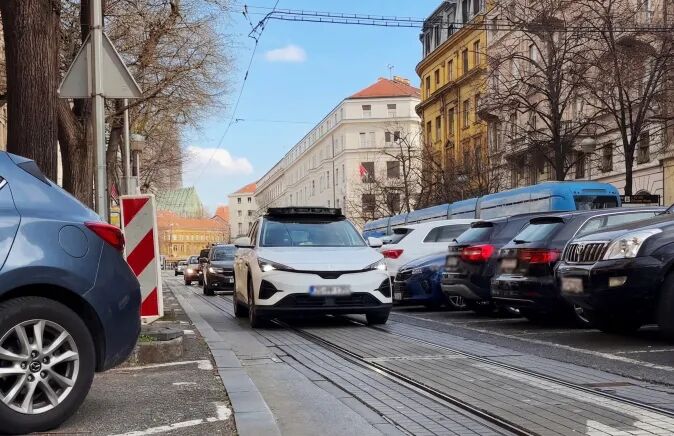
Core Insights - The collaboration between Pony.ai, Verne, and Uber aims to commercialize Robotaxi services in Europe, starting with Zagreb, Croatia, marking a significant step in the global autonomous driving landscape [1][4] Group 1: Partnership Structure - Pony.ai will provide the core autonomous driving technology, while Verne will manage fleet operations and market entry, and Uber will integrate the service into its global ride-hailing network [1][2] - The partnership is designed to create a replicable framework for expanding Robotaxi services across Europe and other global markets, with plans to scale the fleet to thousands of vehicles in the coming years [1][2] Group 2: Market Strategy - The initial deployment in Zagreb will involve road testing of Pony.ai's seventh-generation Robotaxi, specifically the BAIC Arcfox Alpha T5 model, to validate technology performance in European conditions [1] - Verne will lead the regulatory approval process and ensure consistent service quality across platforms, while Uber plans to invest in Verne to support its business expansion [2] Group 3: Executive Perspectives - Pony.ai's CEO emphasized that this partnership is crucial for the company's international expansion, leveraging successful experiences from operations in China [4] - Verne's CEO highlighted the need to transition autonomous driving technology from testing to commercial services in Europe, with Zagreb as the starting point [4] - Uber's CEO noted that the collaboration will enhance the scalability of autonomous ride-hailing services, reaching a broader user base [5]

Robotaxi告别“烧钱时代”:文远与小马打响国内海外错位战
创业邦· 2026-03-27 07:18
Core Viewpoint - The profitability of Robotaxi has crossed a critical threshold, marking the beginning of a new phase for WeRide and Pony.ai, as they face intensified competition from major tech companies and ride-hailing platforms [3][5][21]. Financial Performance - WeRide achieved total revenue of 685 million RMB in 2025, a year-on-year increase of 89.6%, with a gross margin of 30.2% and a net loss of 1.7 billion RMB, reduced by 34.2% [6][7]. - Pony.ai reported total revenue of approximately 630 million RMB (90 million USD) in 2025, a year-on-year growth of 20.0%, with a gross margin of 15.7% and a net loss of 768 million RMB [6][7]. Revenue Breakdown - WeRide's Robotaxi revenue surged by 209.6% to 148 million RMB, while Pony.ai's Robotaxi revenue grew by 128% to approximately 116 million RMB (16.6 million USD) [7]. - WeRide also saw significant growth in sales of unmanned buses and sanitation vehicles, while Pony.ai focused on providing core components to partners, resulting in a 600% increase in related revenue [8][9]. Operational Efficiency - WeRide achieved unit economic profitability in Abu Dhabi, while Pony.ai reached profitability in Shenzhen and Guangzhou, with a record daily net income of 394 RMB per vehicle [7][19]. - WeRide's total cost of ownership (TCO) in China decreased by 38%, with remote monitoring efficiency improving from 1:10 to 1:40 [16]. Market Strategy - WeRide is expanding internationally, focusing on partnerships with platforms like Uber, while Pony.ai is concentrating on domestic markets before pursuing international expansion [12][13]. - Both companies are competing in a landscape defined by four major camps, including tech giants and traditional automakers, each with distinct strategies [20][21]. Competitive Landscape - The Robotaxi market is characterized by a shift from pure technology competition to a more complex battle involving operations, scale, policy, and partnerships [5][21]. - Major players like Waymo and Baidu are also entering the market, emphasizing the importance of scale and market share in the future of Robotaxi [27][28].
对话文远知行韩旭:智驾终局论是妄想,不存在必赢的技术路线
晚点LatePost· 2026-03-27 03:35
Core Viewpoint - The autonomous driving industry is still in its early stages, and the notion of a "final conclusion" is premature. Continuous technological advancements are expected, and the competition will persist beyond 2026, contrary to some industry predictions [3][30][31]. Group 1: Company Developments - WeRide has emerged as a significant player in the autonomous driving sector, achieving a 90% revenue growth to 690 million yuan in the past year, driven by its Robotaxi business and the introduction of an end-to-end model [4][5]. - The company has developed a simulation platform called WeRide GENESIS, which generates high-quality training data for autonomous driving, addressing the industry's data bottleneck [5][9]. - WeRide GENESIS is designed to create realistic driving scenarios, enhancing the training of autonomous models by simulating complex environments and interactions [8][9]. Group 2: Technological Innovations - The end-to-end model developed by WeRide is seen as a breakthrough, allowing for direct decision-making from sensor data without predefined rules, which contrasts with traditional methods [6][7]. - The platform's ability to generate diverse and realistic scenarios is crucial for training autonomous systems, as it overcomes the limitations of real-world data collection [8][9]. - The company emphasizes that the quality of data is critical for the success of the end-to-end model, and WeRide GENESIS provides a solution to generate high-quality synthetic data [27][10]. Group 3: Industry Perspectives - The industry is characterized by ongoing debates about the future of autonomous driving technology, with some leaders expressing skepticism about the emergence of new paradigms [3][31]. - WeRide's leadership believes that the competition will remain fierce, and the notion of a few companies dominating the market by 2026 is overly optimistic [30][31]. - The company aims to balance its focus on both high-level autonomous driving (L4) and advanced driver-assistance systems (ADAS), indicating a strategic approach to market demands [35][36].

小马智行共建车队破局出海 中国智驾“样板间”改写全球格局
Huan Qiu Wang Zi Xun· 2026-03-27 01:45
Group 1 - The core viewpoint of the news is the strategic collaboration between Pony.ai, Verne, and Uber to establish a commercial Robotaxi fleet in Zagreb, Croatia, marking a significant step for China's autonomous driving industry in global expansion [1] - This project is the first in Europe expected to achieve paid operations for Robotaxi services, showcasing the maturity of Pony.ai's co-built fleet model and its replicable experience in the global market [1][2] - The collaboration involves a comprehensive framework of "full-stack technology output + local operational implementation + global platform traffic," which is essential for replicating the Chinese "model room" in different markets [1] Group 2 - Pony.ai's seventh-generation autonomous driving solution is being tested in Zagreb, demonstrating its adaptability to complex urban environments, which reinforces the technical foundation for the overseas fleet [2] - The co-built fleet model is characterized by a "light asset, multi-win" approach, creating a clear and robust multi-revenue system that allows for rapid scaling and reduces financial pressure on Pony.ai [2] - The successful implementation of this model in China, evidenced by partnerships with local taxi and ride-hailing companies, has validated its feasibility and scalability [3] Group 3 - Pony.ai's global strategy focuses on regions with open policies and well-developed infrastructure, having already established a presence in markets like the Middle East, Singapore, and South Korea, replicating the domestic co-built fleet model [3] - The launch of the Zagreb project represents a critical breakthrough in the overseas replication of this model, confirming the global applicability of Chinese autonomous driving solutions [3] - Pony.ai's international expansion signifies a shift from being a technology follower to a leader in the autonomous driving industry, contributing to the global discourse on smart mobility and establishing a competitive edge for Chinese innovation [3]
今日新闻丨零跑A10、宋Ultra EV上市!智己LS8、与众08、一汽奥迪A6L e-tron、风云T9L开启预售!文远知行2025年营收6.9亿元!
电动车公社· 2026-03-26 19:27
Core Viewpoint - The article discusses the recent launches and pre-sales of several electric vehicles (EVs) in the Chinese market, highlighting their pricing, specifications, and features, indicating a competitive landscape in the EV sector. Group 1: New Vehicle Launches - Leapmotor A10 was launched with a price range of 65,800 to 86,800 yuan, featuring a youthful design and compact SUV dimensions of 4270/1810/1635mm [1][3] - BYD Song Ultra EV was launched with a price range of 151,900 to 179,900 yuan, offering advanced features such as a dual-zone climate control and a second-generation blade battery [4][11] - IM LS8 began pre-sales with a price range of 259,800 to 309,800 yuan, showcasing a spacious interior and high-tech features like a Thor chip and laser radar [19][21] - With U 08 started pre-sales at a price range of 239,900 to 299,900 yuan, it features a design inspired by previous concept models and advanced driver assistance systems [4][29] - Audi A6L e-tron commenced pre-sales with a price range of 313,000 to 443,000 yuan, maintaining Audi's design language while integrating new technologies [34][37] - Chery Fengyun T9L began pre-sales at a price range of 139,900 to 169,900 yuan, emphasizing high value for money in the competitive SUV market [44][51] Group 2: Vehicle Specifications and Features - Leapmotor A10 features a dual-motor setup with 70/90kW motors and a range of 403/505 km, with acceleration times of 12.2/10.6 seconds [8][10] - BYD Song Ultra EV offers a dual-motor configuration with 240/270kW motors and a range of 605/710 km, achieving acceleration in 6.8/7.2 seconds [16][18] - IM LS8 is equipped with a 114kW 1.5T range extender and offers a range of 355/430 km, with fuel consumption rates of 5.9/6.2L/100km [25] - With U 08 features a dual-motor option with 230kW or 340kW motors, providing a range of 630/700/730 km and acceleration as fast as 4.9 seconds [33] - Audi A6L e-tron includes multiple motor options ranging from 215 to 405kW, with a range of 720 to 815 km and acceleration times between 4.5 to 5.9 seconds [41] - Chery Fengyun T9L features a combination of a 1.5L engine and electric motors, with a range of 135/230 km [49] Group 3: Market Trends and Company Performance - Leapmotor aims to enhance its market presence with the A10, which offers competitive pricing and advanced features like laser radar and full-scene driving assistance [10] - BYD continues to innovate with its second-generation blade battery technology, enhancing charging speed and performance across its models [18] - IM LS8 has received positive market feedback, with over 10,000 orders within 45 minutes of pre-sale, indicating strong consumer interest [27] - With U 08 represents a collaboration between Volkswagen and local partner Xpeng, showcasing traditional brand recognition of local EV technology [35] - Audi's A6L e-tron reflects the brand's adaptation to the EV market, integrating advanced technologies to meet local consumer demands [43] - WeRide, a player in the autonomous driving sector, projects a revenue of 690 million yuan for 2025, marking a 90% year-on-year growth [52][55]



豪恩汽电:公司的机器人域控系统是基于英伟达Jetson Thor芯片平台打造的
Zheng Quan Ri Bao Zhi Sheng· 2026-03-26 13:40
Core Insights - The company, Haon Qidian, has developed a robot domain control system based on the NVIDIA Jetson Thor chip platform, achieving a computing power of 2070 TOPS, which significantly exceeds the current mainstream chip levels for autonomous driving [1] - The system features a compact design tailored for the narrow waist and abdomen space of humanoid robots and includes a custom-developed cooling module [1] - The domain control system supports up to 16 channels of 8-megapixel cameras and accommodates customer customization requests [1]


贾鹏说24年底和特斯拉团队交流多,V14思路和理想一模一样
理想TOP2· 2026-03-26 13:37
Core Insights - The article discusses the similarities between the autonomous driving strategies of Tesla and Li Auto, particularly focusing on the development of their respective models, V14 and VLA, which share a common vision for integrated vehicle architecture [1][2]. Group 1: Tesla and Li Auto Comparison - Li Auto's CEO, Jia Peng, expressed surprise and disappointment upon discovering that Tesla's V14 development aligns closely with their own vision, indicating a shared approach to integrating world models with vehicle architecture [1]. - The timeline for Tesla's advancements shows that while they are adopting similar methodologies, Li Auto plans to achieve mass production of their technology by 2024, ahead of Tesla's timeline [1]. Group 2: Cultural and Technical Insights - Huang Renxun highlighted the unique social culture in China, emphasizing the importance of family and friends, which fosters a rapid information-sharing environment that supports open-source contributions [3][4]. - The article notes that the advancements in autonomous driving technology are becoming less about new methodologies and more about enhancing existing capabilities, with a focus on increasing computational power and model size [5]. Group 3: Future of Autonomous Driving - The article discusses the potential for vehicles to achieve human-like driving capabilities by addressing latency, comfort, safety, and efficiency, which are critical for the success of autonomous driving [7]. - It mentions that the performance of models will improve with increased computational resources and data, following the scaling laws that suggest a power-law relationship between model performance and resource allocation [8]. Group 4: Industry Developments and Predictions - The article suggests that while achieving Level 4 (L4) autonomy by 2027 may be uncertain, the direction of development is crucial, with rapid advancements in AI expected to continue influencing the industry [9].
大摩闭门会-参访特斯拉超级工厂-探讨Robotaxi赛博出租车-Optimus人形机器人-能源储能-Terafab及分部加总估值法
2026-03-26 13:20
Summary of Key Points from the Conference Call Company and Industry Overview - The conference call primarily discusses Tesla's developments in the autonomous driving taxi business, the Optimus humanoid robot, energy storage solutions, and the Terrafab chip manufacturing project [1][2][3][4][5][6][7][8]. Core Insights and Arguments Autonomous Driving Taxi Business - Tesla plans to launch operations in 7 new cities by mid-2026, focusing on optimizing the Austin launch and data collection for pick-up and drop-off scenarios [1][2]. - The fleet is expected to grow by 1,000 vehicles in 2026, primarily Model Y, reaching 30,000 by 2030 and 1 million by 2035 [1][3]. - The Full Self-Driving (FSD) technology is central to the valuation, with the autonomous taxi and FSD network services contributing 85% to the target price of $415 [1][8]. - The company aims to prove the scalability of unsupervised driving technology, which will also enhance personal consumer vehicles [2][3]. Optimus Humanoid Robot - The third-generation Optimus robot's release may be delayed to Q2 2026, with mass production starting in the second half of 2026 at the Fremont factory [1][4]. - Initial sales are projected at 5,000 units in 2027, with a price range of $200,000 to $250,000, primarily targeting industrial applications [4][5]. - The cost is expected to decrease significantly as production scales up, potentially reaching $30,000 to $40,000 per unit when annual production hits 5 to 10 million units [5]. Energy Business - Tesla's energy business, primarily driven by Megapack, has a gross margin exceeding 30% and has grown by approximately 40%-50% over the past year [6]. - Despite its growth potential, profit margins are expected to compress by 300 basis points in 2026 and 200 basis points in 2027 due to competition and tariffs, stabilizing around 20% in the long term [6]. - The company is exploring localizing battery production and may build a 100 GW solar manufacturing facility in the U.S. [6]. Terrafab Chip Manufacturing Project - The Terrafab project aims to address geopolitical risks and meet the anticipated 7-10 times increase in chip demand due to the Optimus robot's production [7][8]. - The total investment for the project is estimated at $35 billion to $45 billion, with capital expenditures expected to rise significantly if the project proceeds [8]. - Tesla's capital expenditure for 2026 is projected at $20 billion, excluding Terrafab, necessitating strong automotive demand to support increased spending [8]. Other Important Insights - The autonomous taxi business is not isolated; it serves as a testing platform for FSD technology, which will eventually be applied to consumer vehicles [2]. - The company is focused on markets with favorable weather conditions for autonomous driving, which may pose challenges in more complex urban environments [4]. - The target price of $415 is composed of contributions from various business segments: core automotive ($45), energy ($40), autonomous taxi ($125), FSD services ($145), and humanoid robots ($60) [8]. - A neutral rating may change if unsupervised technology demonstrates scalability and safety, potentially supporting a stock price increase beyond $500 [8].
