资本战

Search documents
今夜!股债汇三杀!
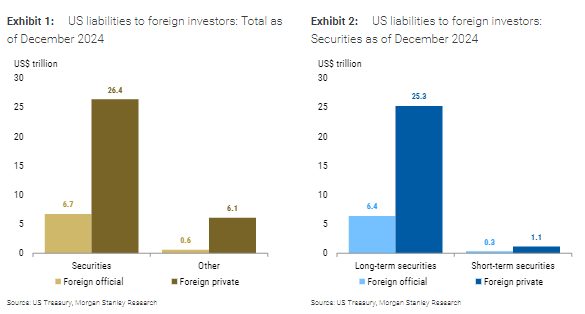
Zhong Guo Ji Jin Bao· 2026-01-20 16:23
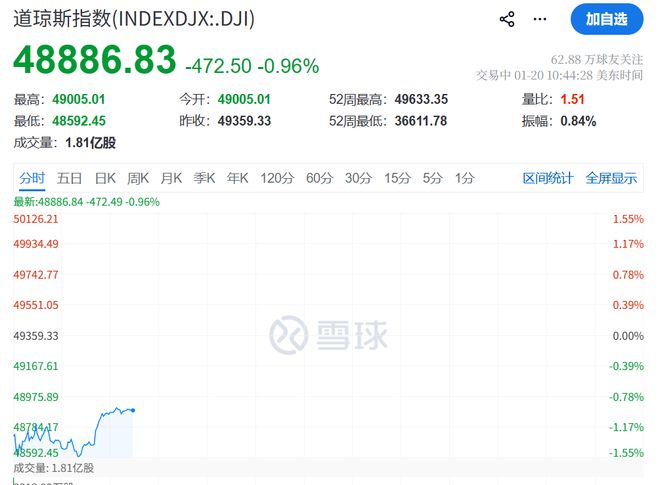
Group 1 - The U.S. stock market experienced a significant drop, with the S&P 500 index falling by 1.5%, erasing all gains since 2026 [9] - The Chicago Board Options Exchange Volatility Index (VIX), known as Wall Street's "fear index," surged to 20.69, the highest level since November 25, 2025 [9] - U.S. Treasury yields reached a four-month high, influenced by a sell-off in Japanese bonds and news of a Danish pension fund planning to exit U.S. Treasuries [11][12] Group 2 - The U.S. dollar recorded its worst two-day performance in about a month, reflecting market volatility and geopolitical tensions [11] - European Parliament responded to President Trump's threats by freezing the approval process of a trade agreement with the U.S., indicating rising geopolitical tensions [6] - Concerns arose regarding potential European asset sales in response to U.S. tariffs, although such actions would be complicated due to the private ownership of most assets [12][13] Group 3 - Storage chip stocks saw significant gains, with companies like Sandisk Corporation rising by 7.27%, while other tech stocks generally declined [14] - Major tech companies such as Apple, Amazon, and Meta Platforms experienced declines, with Apple down by 1.76% and Amazon down by 2.13% [14]

格陵兰岛问题或令欧洲启动“资本武器”反制美国?全球投资者转向非美资产
第一财经· 2026-01-19 10:14
2026.01. 19 本文字数:2378,阅读时长大约4分钟 作者 | 第一财经 后歆桐 "美国净国际投资头寸已跌至创纪录的负值极值,欧美金融市场的相互依存度正处于历史高点。"萨拉维诺斯称,"相比贸易流动,资本的武器化才是当前 对市场最具颠覆性的威胁。" 据央视新闻,当地时间1月17日,美总统特朗普发文称,将对8个反对其收购格陵兰岛的欧洲国家加征10%的关税,数月后还将增至25%,直至就"完 全、彻底购买格陵兰岛"达成协议,引发了市场对贸易战的担忧。 受此影响,19日全球市场避险情绪升温,黄金、美债等避险资产上涨,现货黄金站上4690美元/盎司关口,刷新历史高点,现货白银站上94美元/盎司关 口,创历史新高。美股期货走低。 高盛提示,欧盟内部可能呼吁启动反胁迫工具(Anti-Coercion Instrument,ACI)。德银报告更警示欧洲抛售持有的八万亿美元资产的风险。不论如 何,在特朗普政策不确定性迭起之下,全球投资者转向非美资产投资的趋势越来越显著。 图源:新华社 机构警告欧洲报复风险 德意志银行的外汇策略全球主管萨拉维诺斯(George Saravelos)在周日的致客户报告中警示,尽管特朗普就格 ...

格陵兰岛问题或令欧洲启动“资本武器”反制美国?全球投资者转向非美资产
Di Yi Cai Jing· 2026-01-19 09:13
Core Viewpoint - The geopolitical tensions and uncertainty surrounding U.S. policies are prompting a shift in global investment strategies, with a notable trend towards non-U.S. assets as investors seek diversification and better returns outside the U.S. market [1][6][7]. Group 1: U.S.-Europe Trade Relations - Goldman Sachs warns that the EU may call for the activation of the Anti-Coercion Instrument (ACI) in response to U.S. trade threats, particularly regarding President Trump's proposed tariffs on European nations opposing the Greenland acquisition [1][4]. - Deutsche Bank highlights the risk of Europe selling off its $8 trillion in U.S. assets, emphasizing the strategic leverage Europe holds as the largest creditor to the U.S. [1][3]. - The potential activation of ACI could lead to a range of non-tariff retaliatory measures from the EU, indicating a shift from traditional trade disputes to capital and regulatory confrontations [5][4]. Group 2: Investment Trends - There is a growing emphasis on non-U.S. investments due to high valuations in the U.S. market and a saturated allocation of U.S. stocks in many portfolios, leading investors to seek opportunities in other regions [6][7]. - Emerging markets, particularly in Asia (Malaysia and India), Latin America (Mexico and Brazil), and Africa (South Africa and Egypt), are gaining attention as they present high-yield opportunities despite facing risks from U.S. trade policies [8]. - The trend of reallocating investments away from the U.S. is expected to accelerate, as investors recognize the potential for better returns in non-U.S. markets, creating a self-reinforcing cycle of capital flow [7][6].


特朗普“强夺格陵兰”,欧洲开始考虑“反胁迫工具”,“资本战”一触即发?
Hua Er Jie Jian Wen· 2026-01-19 01:24
Core Viewpoint - The recent statement by President Trump linking tariffs to the purchase of Greenland has escalated tensions between the U.S. and its European allies, marking a significant shift from traditional trade negotiations to geopolitical coercion [1][2]. Group 1: Tariff Implications - Trump announced a 10% tariff on goods exported from Denmark, Norway, Sweden, France, Germany, the UK, the Netherlands, and Finland starting February 1, until an agreement on the "complete and total purchase of Greenland" is reached [1]. - HSBC noted that this represents a major escalation, as tariffs are now being used as a tool for territorial negotiations rather than just trade discussions [2]. Group 2: European Response - European leaders, including EU Commission President Ursula von der Leyen and French President Emmanuel Macron, have condemned the tariffs, warning of potential damage to transatlantic relations [6]. - There is a serious discussion within Europe about potential countermeasures, including the suspension of a previously negotiated EU-U.S. trade agreement and the implementation of reciprocal tariffs [6][7]. Group 3: Anti-Coercion Instrument (ACI) - The EU is considering activating the Anti-Coercion Instrument (ACI), designed to counter economic coercion from third countries, which could involve a range of non-tariff measures [7][8]. - The initiation of ACI signals a shift in strategy, moving beyond simple tariff retaliation to a broader consideration of capital and regulatory responses [8]. Group 4: Economic Impact - Goldman Sachs estimates that a 10% tariff could reduce the GDP of affected countries by approximately 0.1% to 0.2%, with Germany facing a larger impact [9]. - The potential for tariffs to rise to 25% could increase the GDP impact to 0.25% to 0.5% [9]. Group 5: Market Uncertainty - The primary concern for markets is not the immediate tariff changes but the resurgence of trade and geopolitical uncertainty, which could lead to increased risk premiums and volatility in asset pricing [12]. - Geopolitical risk premiums are already being factored into asset prices, with the euro declining against the dollar and increased volatility expected as deadlines approach [12].

中美两国元首通话,市场信心改善
Hua Tai Qi Huo· 2025-06-06 03:07
Report Investment Rating - The overall rating for commodities and stock index futures is neutral, waiting for fundamental verification; gold is recommended for long - position allocation on dips [4] Core Viewpoints - Market confidence has improved after the phone call between the leaders of China and the United States on June 5th. Before July, the macro - situation is expected to revolve around economic fact verification, especially whether there will be a new round of "rush to export" after the tariff negotiations [1] - Trump's tariff policies are inconsistent. The US International Trade Court ruled that Trump's tariff executive order was over - stepped, but Trump later announced to raise the steel import tariff. The Trump administration has issued an emergency letter, asking countries to submit the best trade negotiation plan before June 4th [2] - There are potential liquidity risks in the US. Moody's has downgraded the US sovereign rating. The US debt is expected to rise, and the "sell US" trade is heating up. In the commodity market, long - term stagflation allocation should be considered, and short - term energy is in a game around the fact of production increase [3] Summary by Related Catalogs Market Analysis - In April, China's export was slightly better than expected, with re - export being a significant support. Investment data weakened, especially in the real estate sector. Fiscal revenue and expenditure both increased, with land transfer fees supporting the revenue. Consumption was under pressure. China's Caixin Services PMI in May rose to 51.1, but corporate profit was under pressure due to rising costs and falling selling prices. The China - US Geneva economic and trade talks made substantial progress, and the leaders of the two countries had a phone call, improving market confidence [1] Tariff Policies - On May 28th, the US International Trade Court ruled that Trump's tariff executive order was over - stepped. On May 30th, Trump announced to raise the steel import tariff from 25% to 50%, effective on June 4th. The Trump administration has asked countries to submit trade negotiation plans before June 4th, or face high - penalty measures. Different countries have different responses to US tariffs [2] Risk and Market Outlook - Moody's has downgraded the US sovereign rating, and the US debt is expected to rise, leading to an increase in the "sell US" trade. The eurozone's May composite PMI fell below the boom - bust line, and the European Central Bank cut interest rates by 25 basis points on June 5th. The US May Markit PMI improved to some extent, but the ADP employment number in May was far lower than expected. The US House of Representatives' tax clause in the "Big Beautiful Act" may escalate the trade war into a capital war [3] Commodity Market - In the commodity market, long - term stagflation allocation should be considered. For industrial products such as black and non - ferrous metals, beware of the emotional impact from the adjustment of the US stock market. The price of agricultural products is more likely to rise due to tariffs. In the energy market, OPEC decided to increase production, but the actual production has not increased as of early June. Gold should be watched for low - level opportunities [3] Strategy - The overall strategy for commodities and stock index futures is neutral, waiting for fundamental verification; gold is recommended for long - position allocation on dips [4] Important News - On June 5th, the European Central Bank cut the deposit mechanism rate by 25 basis points to 2%, the main refinancing rate to 2.15%, and the marginal lending rate to 2.4%. China's Ministry of Commerce responded to the US new restrictions on China, opposing the US 301 tariffs. China's Caixin Services PMI in May rose to 51.1. Trump has restricted the entry of citizens from some countries and the visas of foreign students at Harvard University [6]
特朗普“大漂亮”法案中埋着“资本税地雷”,大摩:参议院若不澄清,市场将面临冲击
华尔街见闻· 2025-06-03 02:57
Core Viewpoint - The article discusses the potential impact of the tax provision 899 in the "Big Beautiful Act," warning that it could lead to the largest capital tax shock in history for Wall Street, particularly affecting foreign investors in U.S. assets [1][3][12]. Group 1: Tax Provision 899 - Provision 899 introduces a punitive tax structure for investors from countries deemed to have "discriminatory" tax policies, starting with a 5% increase in tax rates, escalating by 5% annually, up to a maximum of 20% [3][4]. - The provision's scope is broad, potentially affecting various forms of income, including passive income, real estate investments, and business profits, which could impact previously exempt entities like foreign central banks and sovereign wealth funds [3][4]. Group 2: Market Implications - If the provision applies to U.S. Treasury bonds, it could lead to a steepening of the yield curve, a weakening of the dollar, and an expansion of credit spreads, as foreign investors may react quickly to tax changes [2][8][12]. - The report indicates that foreign investors hold a significant portion of U.S. debt, with total liabilities to foreign entities reaching $39.8 trillion, of which 83% are securities [4][6]. Group 3: Sector-Specific Effects - The tax changes could disproportionately affect corporate bonds, where foreign investors hold about 25% of the market, potentially leading to liquidity pressures and increased volatility [12][13]. - Commercial real estate (CRE) could see greater valuation impacts due to the higher foreign buyer percentage compared to residential real estate [15]. Group 4: Hedge Fund Risks - Hedge funds may face significant challenges as the tax rate increase could eliminate arbitrage opportunities, fundamentally disrupting the business models of those relying on cross-border arbitrage in U.S. markets [17]. Group 5: Legislative Outlook - The Senate is viewed as a critical player in clarifying the applicability of provision 899, with potential adjustments to the scope and implementation timeline [20][21]. - There is uncertainty regarding the worst-case scenario of the provision's implementation, with estimates of revenue generation potentially being significantly underestimated if all foreign-held assets are taxed [18][19].


历史最差!美元刚刚跌出“新纪录”,“资产税”引发新忧虑
Hua Er Jie Jian Wen· 2025-06-03 01:51
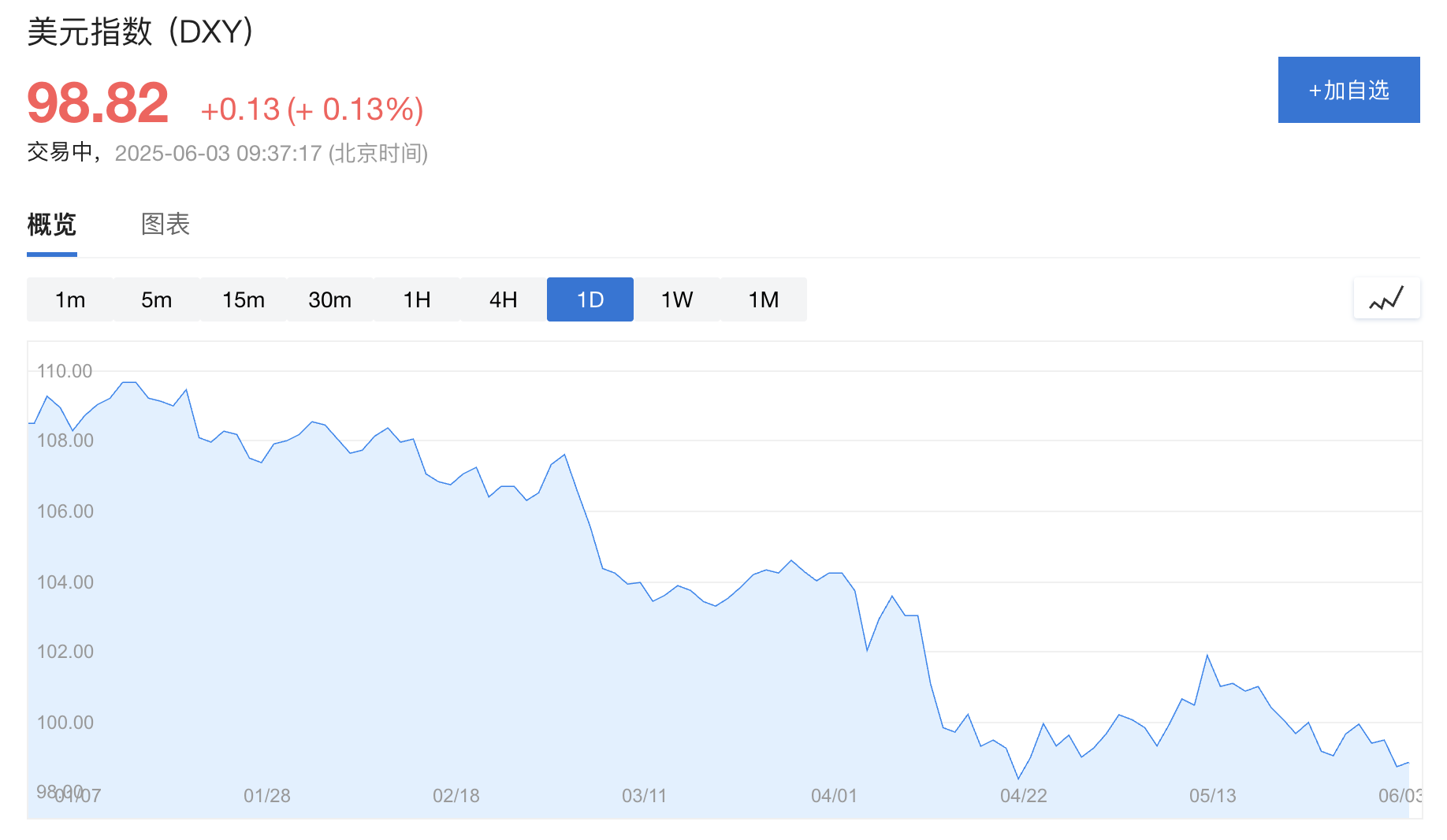
Group 1 - The US dollar has experienced its worst year-to-date performance on record, with an 8.4% decline in the first five months of the year, marking the worst start against a basket of global currencies [1][2] - The dollar index is currently trading near its lowest level since spring 2022, indicating a significant depreciation [1][2] Group 2 - A controversial provision in the recently passed federal tax and spending bill, known as the "retribution tax," could escalate trade tensions into a capital war by imposing new taxes on foreign investments from countries with perceived unfair tax systems [3] - This provision poses a direct threat to foreign investors holding trillions of dollars in US assets, potentially leading to a mass withdrawal of foreign investments [3] Group 3 - The proposed "asset tax" could impose additional costs on investors from Europe and other regions when repatriating capital gains, dividends, or interest payments from US Treasury securities [4] - Major market participants are already reacting, with the euro appreciating by 11% this year despite a weak eurozone economy, while the Japanese yen and British pound have also seen increases of 9% and 8%, respectively [4]
特朗普“大漂亮”法案中埋着“资本税地雷”,大摩:参议院若不澄清,市场将面临冲击
Hua Er Jie Jian Wen· 2025-06-03 01:20
Core Viewpoint - The introduction of Section 899 of the "Big Beautiful Act" poses a significant threat to Wall Street, potentially leading to the largest capital tax impact in history, particularly affecting foreign investors in the U.S. market [1][2]. Tax Implications - Section 899 introduces a "progressive penalty tax" for investors from countries deemed to have "discriminatory" tax policies, starting with a 5% increase in tax rates, escalating by 5% annually, with a maximum additional burden of 20% [2]. - The scope of this tax is extensive, potentially impacting passive income, real estate investments, business profits, and even foreign central banks and sovereign wealth funds that previously enjoyed tax exemptions [2]. Market Impact - The ambiguity surrounding whether financial assets will be included in the tax scope raises concerns among experts, despite current indications suggesting fixed income assets may be excluded [3]. - As of December 2024, U.S. liabilities to foreign entities are projected to reach $39.8 trillion, accounting for 134% of nominal GDP, with securities holdings comprising 83% and long-term securities at 96% [3]. Foreign Investment Dynamics - Foreign official investors hold a significantly larger share of U.S. fixed income markets compared to equities, meaning any tax policy changes could directly affect U.S. Treasury yield curves [6]. - The report indicates that foreign private investors tend to hold longer-term Treasuries, while official investors prefer shorter maturities, suggesting that rising tax costs could lead to greater selling pressure on long-term bonds [8]. Regional Effects - Europe is likely to be the biggest "victim" of these tax changes, with $3.5 trillion of the $5.39 trillion in foreign direct investment in the U.S. coming from Europe, making Eurozone countries the largest holders of U.S. fixed income and equity securities [11]. Currency and Credit Market Effects - The tax implications signal a negative outlook for the U.S. dollar, as the 4% current account deficit heavily relies on foreign capital inflows, and the new tax could deter foreign investment, leading to a weaker dollar against G10 currencies [14]. - In the corporate bond market, liquidity pressures and credit spreads may widen, with foreign investors holding about 25% of U.S. corporate debt, which could face volatility if additional tax burdens are imposed [14]. Securitized Products and Real Estate - Foreign investors show a stronger demand for agency bonds compared to securitized credit; unfavorable tax policies on non-government-backed assets could benefit GNMA mortgage-backed securities (MBS) [15]. - In commercial real estate (CRE), where foreign buyers account for 5-10% of transactions, tax changes could have a more pronounced impact on valuations compared to residential real estate [15]. Hedge Fund Risks - The definition of "applicable persons" in the tax clause could significantly affect hedge funds, as a 20% tax rate increase could eliminate arbitrage opportunities, fundamentally disrupting the business models of quantitative hedge funds reliant on U.S. markets [17]. Legislative Outlook - The likelihood of the worst-case scenario materializing from Section 899 remains uncertain, with the primary aim of the clause being to provide leverage in tax and trade negotiations [18][21]. - The Senate is seen as a potential "lifeline" to clarify the applicability of Section 899, with expectations that it may review the details, including income scope and applicable entities [22].
特朗普要搞资本战?华尔街怒喷:这就是“自残”!
Jin Shi Shu Ju· 2025-05-30 01:37
Group 1 - The U.S. Congress is advancing a budget proposal that includes a progressive tax of up to 20% on passive income from foreign investors, which may suppress demand for U.S. Treasury securities and the dollar [1] - The tax provision, included in Section 899 of the bill, targets entities or individuals from countries deemed to have "unfair tax practices," with an estimated revenue increase of $116 billion over the next decade if passed by the Senate [1] - The new tax could escalate the trade war into a capital war, potentially negatively impacting demand for U.S. government debt at a time when reliance on foreign investment is critical due to rising fiscal deficits [1] Group 2 - Analysts warn that the proposed tax could lead to a significant reduction in foreign investment in U.S. assets, thereby weakening the dollar [2] - European investors with passive income in the U.S. are expected to be the most affected, although specific impact estimates have not been provided [2] - The tax could have severe long-term implications for international companies operating in the U.S., affecting American workers rather than foreign bureaucrats [2] Group 3 - The legal ambiguity surrounding the potential taxation of U.S. Treasury interest has caused panic among foreign investors, with concerns that borrowing costs could rise significantly if such taxes are implemented [2] - Foreign clients are reportedly expressing concern and seeking clarification regarding the implications of the new tax provisions on U.S. debt [2]
关税战后是资本战?隐藏“资本税”伏笔,特朗普“大漂亮”法案引发市场强烈警惕
华尔街见闻· 2025-05-30 00:49
Core Viewpoint - The article discusses the potential implications of a hidden tax provision, known as Section 899, embedded in the recent U.S. tax and spending bill, which could escalate the trade war into a capital war, threatening foreign investors holding trillions of dollars in U.S. assets [1][2]. Group 1: Legislative Impact - Section 899 introduces significant changes to the tax treatment of foreign capital in the U.S., marking the most extensive unfavorable changes since the 1984 Deficit Reduction Act and the 1966 Foreign Investors Tax Act [2]. - The provision targets countries with "discriminatory" tax policies, imposing a punitive tax on passive income (such as interest and dividends) from these nations, starting with a 5% increase and potentially rising to 20% above the statutory rate [1][4]. Group 2: Market Reactions - Analysts highlight that this legislation creates a framework for the U.S. government to weaponize capital markets, challenging the open nature of U.S. capital markets and mirroring tactics used in the ongoing trade war [6]. - The low threshold for triggering retaliatory taxes means that many developed market countries could be affected, with the potential for significant disruptions in global capital markets [6]. Group 3: Economic Consequences - The legislation poses a threat to U.S. Treasury demand, as it could lead to a decline in actual yields on U.S. debt by nearly 100 basis points, particularly affecting foreign government holdings of U.S. debt [6]. - If passed, Section 899 could generate an estimated $116 billion in revenue over ten years, but it risks prompting a mass withdrawal of foreign investors from U.S. assets, further undermining the attractiveness of U.S. financial markets [8]. Group 4: Broader Implications - The provision is seen as a tool for the Trump administration to negotiate against countries imposing digital service taxes, which are perceived as unfairly targeting U.S. multinational companies [7]. - The potential for increased long-term interest rates and a weakening dollar is highlighted, as the unfavorable tax environment could deter foreign investment, exacerbating existing challenges in the U.S. financial landscape [8][9].