
AI技术革命

Search documents
1月20日每日研选 | A股行情换挡 后市如何布局?
Sou Hu Cai Jing· 2026-01-20 00:06
Core Viewpoint - The A-share market has entered a phase of oscillation and adjustment after reaching a historical high in trading volume, with intensified sector rotation and capital competition. Institutions are optimistic about the continuation of the "transformation-driven market" in 2026, driven by economic transformation and industrial upgrades [1][2]. Group 1: Market Dynamics - Since January 2026, the total trading volume in the A-share market has repeatedly set new highs, indicating signs of overheating in certain areas. Institutions believe that regulatory improvements will lead to healthier long-term market development [1]. - The market is currently experiencing a shift in industry leadership, with previous hot sectors cooling down and capital moving towards areas with fundamental support [1][2]. Group 2: Policy and Economic Environment - The current market is characterized by a cycle of policy easing, industrial upgrades, and capital resonance, similar to the early stages of a "transformation-driven market." Key supportive factors include targeted interest rate cuts by the central bank and ongoing capital market reforms [2]. - The improvement in supply-demand dynamics in sectors such as AI computing power, new energy, and non-ferrous metals is forming a clear prosperity line [2]. Group 3: Investment Strategy - Institutions recommend a balanced investment strategy focusing on "performance certainty + high prosperity tracks," with an emphasis on sectors like non-bank financials, cyclical industries, and high-growth technology areas [3]. - Short-term focus should be on sectors with positive earnings forecasts and valuation recovery opportunities, while mid-term strategies should target high-prosperity industries such as AI, semiconductors, and new energy [3].
信达证券:涨价或是重要的景气主线
Xin Lang Cai Jing· 2026-01-18 07:29
Core Conclusion - The market's upward momentum has slowed down this week, with active trading funds causing turnover rates to spike, surpassing the high point of August 2025. The spring market is still in progress, and a period of sideways consolidation after excessive short-term trading is normal. Although there are indications of a short-term cooling in policy, the overall stance remains accommodative [1][5]. Market Trends - The market style is shifting, with thematic sentiment cooling and strong sectors returning to the prosperity line. In the liquidity bull market phase, the profit effect is spreading, and price increases are considered a key prosperity line. The current narrative around commodities is driven by de-globalization and supply chain restructuring, leading to a re-pricing of key resource products [1][5]. Commodity Price Dynamics - Long-term, commodity prices tend to move in tandem, even during periods of economic downturn, as seen from 1970 to 1980 when prices continued to rise until 1980. There is optimism for a new super cycle in commodity prices. In the short to medium term, the focus should be on supply constraints, with potential expansion from emerging industry demand to the recovery of traditional demand. Beneficiaries on both supply and demand sides include non-ferrous metals (precious metals, copper, aluminum, strategic metals, rare earths), new energy (new energy materials, power batteries), chemical products (phosphate chemicals, fluorine chemicals), and storage chips [1][3][6]. Supply and Demand Factors - The current commodity price cycle is primarily driven by supply chain security. On the supply side, the control of strategic resources is intensifying amid great power competition, leading to increased scarcity in key mineral sectors. On the demand side, real needs driven by the AI technology revolution, energy transition, and military spending are boosting demand for strategic metals like copper, aluminum, lithium, and rare earths. A weak dollar cycle may support the elevation of commodity price levels [2][6]. Price Movement Patterns - Historically, during a commodity price increase, there are price rotations among commodities due to their interdependencies and relationships within the supply chain. For instance, during the demand expansion-driven price increase from 2009 to 2011, copper led the rise, followed by crude oil and soybeans. In the supply constraint-driven price increase from 2016 to 2018, oil and black commodities rose first, with chemical products showing sustained price increases [2][6]. Future Outlook - There is a strong belief in the potential for a new super cycle in commodity prices. The focus for the current price increase should be on supply constraint elasticity, with expansion likely moving from emerging industry demand to the recovery of traditional demand. Key supply constraints include production capacity limits for critical resources like copper and rare earths, capacity restrictions driven by "anti-involution" policies, and supply shortages driven by high AI demand. Demand opportunities are expected to arise from the transition between new and old driving forces in sectors like new energy vehicles, photovoltaics, and AIDC [3][7].

杨德龙:2026年牛市行情愈演愈烈 赚钱效应明显提高
Xin Lang Cai Jing· 2026-01-12 07:31
Group 1 - The A-share market has started 2026 with a strong bullish trend, marked by a historic 17 consecutive days of gains in the Shanghai Composite Index [1][7] - The trading volume has significantly increased, surpassing 30 trillion yuan for two consecutive days, indicating a phase of rising prices and volumes, officially launching the spring offensive [1][7] - The current bull market is seen as a once-in-a-decade investment opportunity, with a substantial shift of household savings towards the capital market due to low bank deposit rates [1][7] Group 2 - The real estate market is still in an adjustment phase, with a fundamental change in expectations for housing price increases, particularly in second and third-tier cities [2][8] - The market has broken through the 4150-point mark, moving away from key integer levels and forming an upward trend, with a slow bull market expected to last 3 to 5 years or longer [2][8] - Investment opportunities are anticipated to expand beyond technology and banking sectors to include consumer staples, new energy leaders, non-ferrous metals, and military industries, enhancing the market's profitability [2][8] Group 3 - The current bull market is tasked with three historical missions: enhancing household wealth, stabilizing the real estate market through stock market wealth effects, and supporting the development of new productive forces, particularly in technology innovation [3][9] - Emerging industries such as commercial aerospace and brain-computer interfaces are showing active performance, with expectations for continued strength in technology sectors like robotics and semiconductors in 2026 [3][9] Group 4 - Investment in technology stocks, especially leading companies, should be viewed within the context of the AI revolution, representing a long-term trend opportunity [4][10] - The Hong Kong stock market has also seen a significant rebound, indicating a similar slow bull market trend as in the A-share market, with expanding investment opportunities [4][11]
等你来投!《清华金融评论》2026年2月刊“全球债务持续高增长” 征稿启事
清华金融评论· 2026-01-09 09:22
Core Viewpoint - The article discusses the ongoing high growth of global debt, driven by a loose financial environment, a weakening dollar, and more accommodative policies from major central banks. It highlights the risks associated with debt growth outpacing economic output, leading to potential financial instability and a need for countries to adopt differentiated strategies in response to these challenges [2][4]. Group 1: Global Debt Growth - Global debt is experiencing sustained high growth, raising concerns about its sustainability and the potential for financial market turmoil [4]. - The rapid increase in debt compared to economic output can lead to a vicious cycle of borrowing, where governments are forced to use most of their revenue for interest payments, thereby squeezing investments in critical areas like education and infrastructure [4]. - Emerging markets are identified as the most vulnerable segment within the global debt chain, facing significant risks from rising debt levels [4]. Group 2: Policy Responses and Research Directions - The article calls for contributions to explore how countries can rebalance their strategies between growth stabilization, risk prevention, and maintaining livelihoods amid rising debt levels [4]. - It invites experts to analyze the implications of high interest rates on global markets, particularly focusing on capital outflows, currency depreciation, and pressures related to dollar-denominated debt in emerging markets [4]. - The editorial team of Tsinghua Financial Review is seeking original submissions on various topics related to global debt, including its impacts, comparisons among major economies, and the interplay between fiscal and monetary policies [6][7].

上海又一GPU“四小龙”上市
Di Yi Cai Jing Zi Xun· 2026-01-08 02:34
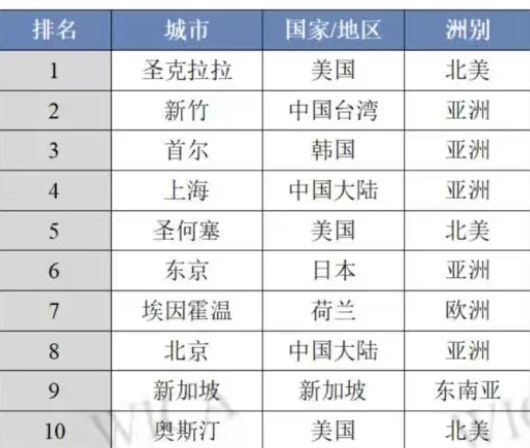
Core Insights - Shanghai has seen a surge in AI chip companies going public, with TianShu ZhiXin (09903.HK) recently listing on the Hong Kong Stock Exchange, following MuXi Co., Ltd. (688802.SH) and BiRan Technology (06082.HK) [2] - The integrated circuit industry in Shanghai is projected to generate revenue of 391.2 billion yuan in the period from January to November 2025, marking a year-on-year growth of 23.72%, with an expected total industry scale exceeding 460 billion yuan for the entire year [2] - The city has established itself as a hub for integrated circuit innovation, housing over 1,200 companies and attracting approximately 40% of the nation's talent and nearly 50% of its innovation resources [2] Company Insights - TianShu ZhiXin is the first domestic company to independently develop general-purpose GPUs, having completed the entire process from core technology development to commercialization [2] - The company boasts a research and development team of 480 members, with an average of over 20 years of industry experience, and more than one-third of its R&D personnel having over 10 years of experience in chip design and software development [3] Industry Landscape - Shanghai ranks fourth globally and first in mainland China in the latest Global Integrated Circuit Industry Comprehensive Competitiveness Rankings by the World Semiconductor Association [4] - The city has built a comprehensive integrated circuit industry chain that includes design, manufacturing, packaging, testing, equipment, materials, and EDA/IP, fostering a number of leading enterprises in various segments [5] - Shanghai's focus on the integrated circuit sector as one of its three key industries has led to the emergence of several innovative AI chip companies, supporting the development of new productivity models [5]
上海又一GPU“四小龙”上市
第一财经· 2026-01-08 02:27
Core Viewpoint - The article highlights the rapid growth and success of Shanghai's AI chip industry, particularly with the recent IPO of TianShu ZhiXin, marking a significant milestone for the local semiconductor sector and showcasing the emergence of several key players in the GPU market [3][5]. Group 1: Industry Growth and Performance - Shanghai's integrated circuit industry achieved a revenue of 391.2 billion yuan from January to November 2025, reflecting a year-on-year growth of 23.72%. The total industry scale is expected to exceed 460 billion yuan for the entire year, marking a 24% increase [3]. - The city has over 1,200 integrated circuit companies, accounting for approximately 40% of the national talent and nearly 50% of the industry's innovation resources [3][7]. - The integrated circuit sector is recognized as one of Shanghai's three key industries, with a complete industrial chain and a focus on innovation and talent development [7][8]. Group 2: Key Players and Innovations - TianShu ZhiXin is noted as the first domestic company to independently develop general-purpose GPUs, completing the entire process from core technology development to commercialization [3][4]. - The article mentions the "Four Little Dragons" of Shanghai's GPU sector: BiRan Technology, MuXi Co., TianShu ZhiXin, and SuiYuan Technology, all of which have made significant strides in the capital market [3][5]. - The city has established a comprehensive integrated circuit industry chain, including design, manufacturing, packaging, and testing, with 35 companies listed on the Science and Technology Innovation Board, leading the nation [7].
上海又一GPU“四小龙”上市,集成电路第一城规模超4600亿
Di Yi Cai Jing Zi Xun· 2026-01-08 02:01
Core Insights - Shanghai has successfully listed another AI chip company, TianShu ZhiXin, on the Hong Kong Stock Exchange, following the listings of MuXi Co. and BiRan Technology, marking a significant milestone for the local GPU industry [1] - The integrated circuit industry in Shanghai is projected to achieve a revenue of 391.2 billion yuan from January to November 2025, reflecting a year-on-year growth of 23.72%, with an expected total industry scale exceeding 460 billion yuan for the entire year [1] - The city has over 1,200 integrated circuit companies, accounting for approximately 40% of national industry talent and nearly 50% of innovation resources [1] Company Insights - TianShu ZhiXin is the first domestic company to independently develop general-purpose GPUs, having completed the entire process from core technology development to commercialization [1] - The R&D team at TianShu ZhiXin consists of 480 members, with an average of over 20 years of industry experience, and more than one-third of the team having over 10 years of experience in chip design and software development [2] Industry Insights - Shanghai ranks fourth globally and first in mainland China in the latest ranking of integrated circuit industry competitiveness by the World Semiconductor Association [2][3] - The integrated circuit industry in Shanghai has developed a comprehensive ecosystem that includes design, manufacturing, packaging, and testing, with a focus on nurturing leading enterprises in various segments [4] - The city has established a full industry chain system that supports chip design, manufacturing, and advanced packaging, with 35 companies listed on the Sci-Tech Innovation Board, leading the domestic market [5] - Shanghai aims to further enhance its integrated circuit industry by focusing on innovation breakthroughs, nurturing leading enterprises, and attracting high-level talent, with the goal of creating a world-class integrated circuit industry cluster [5]
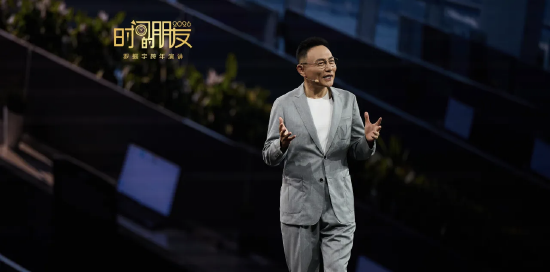
得到App创始人罗振宇:AI不是工具,AI是伙伴
Xin Lang Cai Jing· 2026-01-01 04:08
Core Insights - The core message of the article revolves around the transformative impact of AI technology, as articulated by Luo Zhenyu, the founder of the "Get" app, during his New Year's speech. He emphasizes that AI is not merely a tool but a partner in exploration and creativity [3][4][6]. Group 1: AI Technology Revolution - Luo Zhenyu compares the current AI revolution to past technological revolutions, noting that unlike previous advancements which had visible societal markers, the AI revolution lacks such clear indicators [3][6]. - He expresses a sense of wonder and surprise in his interactions with AI, suggesting that it feels more like a relationship with a charismatic friend rather than just using a tool [3][6]. Group 2: Human vs. AI Capabilities - Luo challenges the notion that human qualities such as aesthetic sense, creativity, and emotional perception are inherently superior to AI, admitting that he often finds AI's outputs to be impressively insightful [4][7]. - He introduces the concept of "willpower" as a unique human trait that distinguishes humans from AI, referencing Kant's philosophical ideas about subjective and objective judgments [4][7].
新股前瞻|市占率达45.4%,境外展会龙头米奥会展年底冲刺AH股
智通财经网· 2025-12-31 02:09
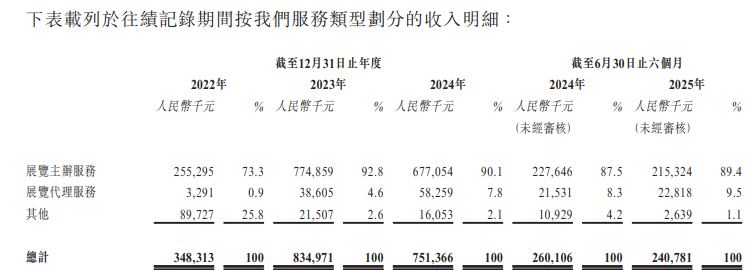
Core Viewpoint - Miao Exhibition, a leading player in the exhibition service industry in China, is facing declining revenues and profits despite holding over 40% market share in overseas exhibitions. The company is preparing for an IPO in Hong Kong while its financial performance has been negatively impacted by industry conditions [1][12]. Financial Performance - Miao Exhibition's revenues from 2022 to the first half of 2025 are as follows: 348 million RMB, 835 million RMB, 751 million RMB, and 240 million RMB, indicating a downward trend [1][3]. - Net profits for the same period are 52 million RMB, 188 million RMB, 156 million RMB, and 14 million RMB, with a significant drop in net profit margin from 22.51% in 2023 to 5.83% in 2025 [1][11]. - The company had cash and cash equivalents of 514 million RMB as of June 2025 [1]. Business Segments - Miao Exhibition operates primarily in two segments: exhibition hosting services and exhibition agency services. The hosting services account for the majority of revenue but have seen a decline, with revenue shares dropping to 89.4% in 2025 [2][4]. - The exhibition hosting services include comprehensive processes from preparation to post-event services, with a focus on independent exhibitions. The company hosted 21, 26, 21, and 9 exhibitions from 2022 to the first half of 2025 [4][10]. - The exhibition agency services have shown growth, with revenue contribution increasing to 9.5% in 2025, primarily from exhibitions in the UAE and Saudi Arabia [2][4]. Market Position - Miao Exhibition holds a dominant position in the overseas exhibition market, with a market share of 45.4% in terms of the number of exhibitions and 28.2% in terms of exhibition area [1][10]. - The company has a stable customer base, with approximately 6,000 to 9,000 clients over the years, although the number of clients dropped to 3,000 in the first half of 2025 [10]. Industry Outlook - The global exhibition market is expected to see double-digit growth from 2022 to 2024, with China being a key player, accounting for 28.3% of the total exhibition numbers by 2024 [7][10]. - The overseas exhibition market is experiencing strong growth, particularly in specialized exhibitions, but is expected to slow down after 2024 due to high base effects [10]. Technological Investment - Miao Exhibition is investing in AI and digital transformation to enhance its service offerings and competitive edge, with R&D expenditure rising to 4% in the first half of the year [5][6]. - The company has registered multiple patents and software copyrights, with its core product, AI Hui Exhibition, aimed at improving interactions between exhibitors and attendees [6].
圆桌对话 | AI大时代催生投资新叙事 多方共话变革机遇与布局路径
Shang Hai Zheng Quan Bao· 2025-12-28 19:21
Group 1 - The rapid evolution of artificial intelligence (AI) is transforming various industries, leading to changes in production efficiency, industry forms, and organizational models [2] - AI's impact on research is summarized by two keywords: "the future is here" and "embrace change," indicating that AI will replace much of the traditional labor of researchers [2] - In the financial sector, AI is reshaping services, risk control, operations, and ecosystems, moving from standardized services to personalized experiences [2] Group 2 - The investment methodology in the consumer sector is being re-evaluated under the AI wave, leading to the emergence of "super consumers" and "super entrepreneurs" [3] - AI technology is expected to drive a significant shift in consumer behavior, giving consumers more power and pushing product design to align with user needs [3] - The AI technology revolution is characterized by value, bubbles, and cycles, with 2025 being a pivotal year for AI industry value realization [3] Group 3 - The development of AI is supported by foundational hard technology, with domestic companies focusing on semiconductors and precision optics to build a self-controlled industrial ecosystem [4] - The demand for AI hardware is driving growth in the semiconductor industry, with companies like 茂莱光学 seeing over 50% of their business linked to this sector [4] - The complexity of optical technology in lithography machines requires long-term collaboration and investment, indicating a sustained development opportunity [4] Group 4 - The true barrier in AI development lies in the software ecosystem, with Chinese companies encouraged to pursue "compatible autonomy and open innovation" to create comprehensive solutions [5] - The AI narrative is far from over, with investment opportunities emerging in computing power, applications, and traditional industry transformations [6] - The A-share market is expected to experience a stable upward trend, with investment opportunities shifting towards mid-cap blue-chip stocks in sectors like cyclical consumption and biomedicine [6] Group 5 - Consumer demands will continue to evolve with AI technology, leading to new companies emerging in various niches, similar to 泡泡玛特 [7] - The investment strategy for 2026 should focus on "seeking progress while maintaining stability," with technology assets aimed at growth and financial assets for stability [7] - Long-term competitive companies still hold investment value, despite the changing landscape driven by AI [7]