AI算力中心

Search documents
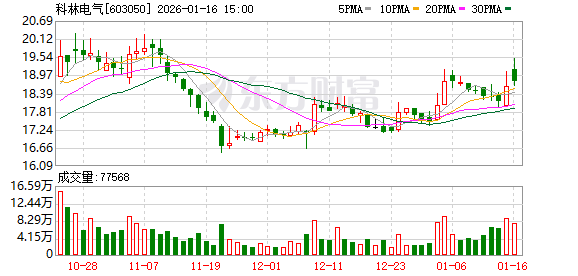
科林电气:公司将从传统的电气设备硬件制造企业逐步向新型智慧能源科技企业转型
Zheng Quan Ri Bao· 2026-01-16 12:17
Group 1 - The core viewpoint of the article is that Colin Electric aims to transform from a traditional electrical equipment manufacturer to a world-class new intelligent energy technology enterprise, focusing on technological leadership, quality assurance, cost-effectiveness, and optimal experience [2] - The company plans to solidify its foundation and prioritize the development of AI computing centers, the new energy market, and overseas markets to elevate its industry position [2]


国网投资4万亿助力电力系统发展,央企能源ETF(562850)一键布局高质量能源央企
Xin Lang Cai Jing· 2026-01-16 03:50
2026年1月16日早盘,特高压、电工电网板块拉升,截至11:07,中证国新央企现代能源指数上涨 0.70%,成分股中国电建上涨8.96%,中国能建上涨5.46%,平高电气上涨4.83%,国电南瑞上涨3.82%, 东方电气上涨3.80%。 数据显示,截至2025年12月31日,中证国新央企现代能源指数前十大权重股分别为长江电力、中国铝 业、国电南瑞、中国核电、云铝股份、三峡能源、中国海油、中国石油、国电电力、中国电建,前十大 权重股合计占比48.98%。 央企能源ETF(562850)紧密跟踪中证国新央企现代能源指数,涉及绿色能源、化石能源、能源输配等现 代能源产业的50只上市公司证券作为指数样本,以反映央企现代能源主题上市公司证券的整体表现。 没有股票账户的投资者可以通过央企能源ETF联接(019593)一键布局高质量能源央企。 消息方面,1月15日中午,国家电网公司发布消息称,"十五五"期间,公司固定资产投资预计将达到4万 亿元,较"十四五"增长40%,以扩大有效投资带动新型电力系统产业链供应链高质量发展。能源行业专 家、电力设备及新能源行业研究人士分析认为,国网公司投资4万亿元,再加上南方电网公司投资规 ...
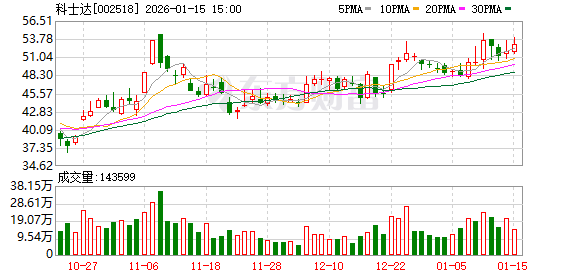
科士达:公司将继续以“数据中心+新能源”双轮驱动为核心战略
Zheng Quan Ri Bao· 2026-01-15 13:39
Core Viewpoint - The company will continue to focus on a dual-driven strategy of "data center + new energy" to capitalize on growth opportunities in both sectors [2] Data Center Sector - The company aims to leverage the accelerating global infrastructure for computing power by upgrading UPS products towards medium and large power, as well as liquid cooling technologies [2] - New product developments will include HVDC, integrated power modules, and SST to meet the high reliability and efficiency demands of AI computing centers [2] - The company plans to deepen collaboration with leading domestic internet companies and clients in finance and telecommunications, while using its Vietnam factory as a core node to expand ODM orders in rapidly growing regions like North America and Southeast Asia [2] New Energy Sector - The core growth engine will be energy storage, focusing on comprehensive energy storage solutions to strengthen its position in mature European markets and accelerate penetration into emerging markets [2] - The company will promote the integration of solar energy storage and charging solutions, enhancing supply chain resilience through partnerships with leading battery cell manufacturers [2] - The synergy between the data center and new energy businesses is expected to broaden the company's growth opportunities [2]

科士达:以“数据中心+新能源”双轮驱动为核心战略
2 1 Shi Ji Jing Ji Bao Dao· 2026-01-15 09:05
Core Viewpoint - The company will continue to focus on a dual-driven strategy of "data center + new energy" to capitalize on growth opportunities in both sectors [1] Data Center Sector - The company aims to leverage the accelerating global infrastructure for computing power by upgrading UPS products towards medium and large power, as well as liquid cooling technologies [1] - New product developments will include HVDC, integrated power modules, and SST to meet the high reliability and efficiency demands of AI computing centers [1] - The company plans to deepen collaboration with leading domestic internet companies and clients in finance and telecommunications, while using its Vietnam factory as a core overseas node to expand ODM orders in rapidly growing regions like North America and Southeast Asia [1] New Energy Sector - The core growth engine will be energy storage, focusing on comprehensive energy storage solutions to strengthen its position in mature European markets and accelerate penetration into emerging markets [1] - The company will promote the integration of solar energy storage and charging solutions, enhancing supply chain resilience through partnerships with leading battery cell manufacturers [1] - The synergy between the data center and new energy businesses is expected to broaden the company's growth space [1]
"太空光伏"狂欢: 万亿叙事焦虑与泡沫预警
2 1 Shi Ji Jing Ji Bao Dao· 2026-01-14 07:32
Core Viewpoint - The concept of "space photovoltaic" has gained renewed attention due to Elon Musk's ambitious plans for deploying solar energy satellites in space, aiming for significant advancements in solar energy capture and utilization [1][3][4] Industry Overview - Space photovoltaic technology has two levels: narrowly, it refers to solar components on spacecraft for self-powering; broadly, it involves deploying large solar arrays in space to transmit energy back to Earth [4][5] - The technology has historical applications dating back to the 1950s, with significant advancements in satellite energy supply [5][6] - Current market enthusiasm for space photovoltaic technology has shifted from traditional applications to a full-chain energy solution involving space power generation, wireless transmission, and ground reception [6][8] Market Dynamics - The surge in interest is driven by two main factors: the explosive growth of commercial space and the energy demands of AI computing centers [7][8] - The deployment of low Earth orbit satellites is creating a rigid energy demand, with projections indicating a market space of nearly 200 billion for solar wings if 10,000 satellites are launched annually [7] - The AI computing sector's energy needs are pushing infrastructure towards space, with potential market sizes reaching $500 billion if space data centers are deployed at scale [8][9] Competitive Landscape - The space photovoltaic sector is characterized by a competitive landscape where state-owned enterprises lead core space missions while private companies target commercial applications [9][10] - Major players in the domestic market include state-owned enterprises like the China Aerospace Science and Technology Corporation, which focus on high-end space equipment energy supply [9][10] - Private solar companies are entering the space photovoltaic market, aiming to capitalize on commercial space and AI energy needs [10][11] Technological Competition - The competition in space photovoltaic technology revolves around three main routes: gallium arsenide, crystalline silicon, and perovskite, each with its advantages and challenges [13][14] - Gallium arsenide is currently the dominant technology with high efficiency but faces cost challenges; crystalline silicon is cost-effective but has performance limitations in space; perovskite is seen as a potential long-term solution but requires stability improvements [13][14] Investment Sentiment - The capital market's enthusiasm for space photovoltaic technology is driven by narratives of vast market potential, with projections suggesting a market size of 295 billion by 2030 for low Earth orbit satellites [15][19] - The stock prices of companies involved in space photovoltaic have surged, reflecting speculative interest rather than fundamental performance [15][19] - The current market dynamics exhibit signs of a bubble, with stock price increases not aligned with actual revenue from space photovoltaic projects [19]

铜产业链周度报告-20260111
Guo Tai Jun An Qi Huo· 2026-01-11 10:05
1. Report Industry Investment Rating No information provided in the report about the industry investment rating. 2. Core Viewpoints of the Report - Microscopically, there is a long - term bullish view on copper, with a strong price trend. However, increased macro - level disturbance factors lead to greater price fluctuations. The macro situation includes the US December non - farm payrolls falling short of expectations, the unemployment rate increase hitting a new low since 2020, and the market expecting the Fed to cut interest rates by about 50 basis points in 2026, with the probability of a January rate cut at zero and the first cut expected in June. The US Supreme Court has not announced a verdict on Trump's tariffs, and the next ruling will be on January 14. China's December CPI year - on - year increase reached a 34 - month high, and PPI increased month - on - month for three consecutive months [7]. - Fundamentally, the short - term domestic spot driving logic has temporarily weakened, while the overseas spot logic remains strong. The global copper inventory increased this week, with a significant increase in social inventory. As of January 8, 2026, the global total inventory was 950,300 tons, an increase of 44,900 tons from January 1. The domestic social inventory increased by 39,400 tons, and the COMEX inventory increased by 15,300 tons. The domestic spot discount has narrowed to 45 yuan/ton, indicating that the decline in price has led to a rebound in downstream demand. The LME 0 - 3 premium has expanded from $38.60/ton on January 2 to $41.94/ton on January 9 [7]. - In the long term, the fundamentals still support the copper price. The port inventory of copper concentrates has continued to decline, dropping rapidly from 680,000 tons on December 26 to 428,000 tons on January 9. The long - term TC for imported copper concentrates in China in 2026 is $0/ton, significantly lower than the 2025 level, which indicates a tight supply of copper concentrates. China is preventing blind investment and disorderly construction in smelters and encouraging large backbone enterprises to implement mergers and reorganizations to improve industrial competitiveness, which may also lead to structural changes in the smelting industry. From the consumption side, the long - term consumption recovery expectation remains strong, and the consumption logic of emerging industries such as AI computing centers is constantly strengthening. Giants like OpenAI and Microsoft are increasing infrastructure investment, and many places in the US are promoting gigawatt - scale cluster projects, with single - project investment exceeding $10 billion, focusing on the deployment of high - density liquid - cooling technology. At the same time, local US governments are attracting investment through incentive policies such as tax exemptions and fee - for - tax deductions. However, policy uncertainties brought about by the mid - term elections and the Fed's leadership change may affect the industry's investment rhythm and implementation process. In addition, new energy vehicles and global power grid upgrades remain the core driving forces, and power grid renovations in Europe and the US and the expansion of the manufacturing industry in Southeast Asia continue to contribute to the increase [7]. - In terms of trading strategies, the short - term rigid replenishment of downstream enterprises provides a bottom support for prices. Based on the long - term positive fundamentals, the idea of buying copper on dips remains unchanged. Currently, the price fluctuates greatly, so it is particularly important to find a good safety margin for buying. In terms of spread trading, the current profit margin for spot exports has narrowed, so be cautious with internal - external reverse arbitrage [7]. 3. Summaries According to Relevant Catalogs 3.1 Trading End - **Volatility**: The volatility of LME, SHFE, INE, and COMEX copper has expanded. The LME copper price volatility is around 20%, and the SHFE copper volatility has reached about 25%, showing a significant rebound from the previous week [13]. - **Term Spread**: The term structure of SHFE copper has weakened marginally. The spread between SHFE 01 - 02 contracts was - 200 yuan/ton on January 9, 2026, lower than 560 yuan/ton on December 31. The LME copper spot premium has expanded, with the LME 0 - 3 premium reaching $41.94/ton on January 9, higher than $38.60/ton on January 2. The near - end C structure of COMEX copper has expanded, with the price spread between the February and March 2026 contracts being - $68.34/ton on January 9, significantly wider than - $55.12/ton on January 2 [20]. - **Position**: The positions of SHFE and INE copper have increased, with the SHFE copper position increasing by 63,900 lots to 681,600 lots, while the LME copper position has decreased [21]. - **Fund and Industry Positions**: The net short position of LME commercial enterprises has decreased, from 77,500 lots on December 24 to 72,600 lots on January 2. The net long position of CFTC non - commercial enterprises has decreased from 59,800 lots on December 30 to 57,900 lots on January 6 [27]. - **Spot Premium and Discount**: The domestic copper spot discount has narrowed, from a discount of 190 yuan/ton on December 31 to a discount of 45 yuan/ton on January 9, 2026. The Yangshan Port copper premium has declined, from $51/ton on December 31 to $42/ton on January 9. The US copper premium has remained at a high level. The Rotterdam copper premium has increased from $185/ton on January 2 to $200/ton on January 9, and the Southeast Asian copper premium has remained at $187.5/ton [34]. - **Inventory**: The global total copper inventory has increased, from 905,500 tons on January 1, 2026, to 950,300 tons on January 8. The domestic social inventory has increased, from 238,900 tons on January 1 to 273,800 tons on January 8, reaching a high level in the same period of history. The bonded area inventory has increased from 75,500 tons on December 31 to 78,800 tons on January 8. The COMEX inventory has increased and is at a high level in the same period of history, rising from 499,800 short tons on January 2 to 518,000 short tons on January 9. The LME copper inventory has decreased, from 155,300 tons on January 2 to 139,000 tons on January 9 [38]. - **Position - to - Inventory Ratio**: The position - to - inventory ratio of SHFE copper 02 contract has declined and is at a low level in the same period of history. The LME copper position - to - inventory ratio has fluctuated, indicating that the overseas spot lacks a driving logic [39]. 3.2 Supply End - **Copper Concentrates**: The import of copper concentrates has increased year - on - year. According to customs data, China's imports of copper ore and concentrates in November 2025 were 2.5262 million tons, a month - on - month increase of 3.05% and a year - on - year increase of 12.55%. The port inventory of copper concentrates has decreased, from 496,000 tons on January 2 to 428,000 tons on January 9. The processing fee for copper concentrates has remained weak, and the smelting loss has decreased from 1,988 yuan/ton on December 31 to 2,016 yuan/ton on January 9, 2026 [45]. - **Recycled Copper**: The import of recycled copper has increased. In November, the import of recycled copper was 208,100 tons, a year - on - year increase of 19.94%. In September, the domestic production of recycled copper was 97,700 tons, a year - on - year increase of 17.85%. The price difference between refined and recycled copper has expanded and is higher than the break - even point, and the import loss of recycled copper has turned into a profit [46][51]. - **Blister Copper**: The import of blister copper has increased month - on - month. In November, the import was 58,300 tons, a month - on - month increase of 5.60%. In December, the processing fee for blister copper has recovered, with the southern processing fee at 1,500 yuan/ton and the import processing fee at $95/ton [55]. - **Refined Copper**: The domestic production of refined copper has increased year - on - year. In November, the production was 1.1031 million tons, a year - on - year increase of 9.75%, and the cumulative production from January to November was 12.2545 million tons, a year - on - year increase of 11.76%. It is expected that the production in December will be 1.0955 million tons, a year - on - year increase of 6.69%. The import volume of refined copper has decreased. In November, the import was 271,100 tons, a year - on - year decrease of 24.67%. China's imports of unwrought copper and copper products in November were 430,000 tons, a year - on - year decrease of 18.87%. The loss of copper spot imports has narrowed, from a loss of 1,083.72 yuan/ton on December 31 to a loss of 981.04 yuan/ton on January 9, 2026 [58]. 3.3 Demand End - **Operating Rate**: In November, the operating rates of copper tube and copper plate and strip foil enterprises have rebounded but are at a low level in the same period of history. In the week of January 8, the operating rate of wire and cable enterprises has declined marginally [62]. - **Profit**: The processing fee for copper rods has rebounded but is at a low level in the same period of history. As of January 9, the processing fee for copper rods used in the power industry in East China was 410 yuan/ton, higher than 240 yuan/ton on December 31. The processing fee for copper tubes has rebounded and is at a high level in the same period of history. On January 9, the 10 - day moving average of the processing fee for R410A special copper tubes was 5,368 yuan/ton, higher than 5,343 yuan/ton on December 31. The processing fees for copper plates and strips and lithium - ion copper foils have remained stable and are at a low level [67]. - **Raw Material Inventory**: In November, the raw material inventory of copper rod enterprises was at a moderately low level in the same period of history, and the raw material inventory of copper tubes was at a low level in the same period of history. The weekly raw material inventory of wire and cable enterprises has continued to decline [68]. - **Finished Product Inventory**: In November, the finished product inventory of copper rod enterprises was at a high level in the same period of history, and the finished product inventory of copper tubes was at a relatively low level in the same period of history. The weekly finished product inventory of wire and cable enterprises has decreased [71]. 3.4 Consumption End - **Apparent Consumption**: The domestic actual consumption of copper has performed well. From January to November, the cumulative consumption was 14.5615 million tons, a year - on - year increase of 6.14%. From January to November, the apparent consumption was 14.6431 million tons, a year - on - year increase of 5.44%. Industries such as power grid investment, home appliances, and new energy are important supports for copper consumption. Among them, the growth rate of power grid investment has slowed down. From January to November, the cumulative power grid investment was 560.4 billion yuan, a year - on - year increase of 5.90% [78]. - **Air - Conditioner and New Energy Vehicle Production**: In November, the domestic air - conditioner production was 10.577 million units, a year - on - year decrease of 35.70%. In November, the domestic new energy vehicle production was 1.88 million units, a year - on - year increase of 20.05% [79].
“反内卷”叠加增长预期, 2026年碳酸锂能否继续“狂飙”?
Zhong Guo Jing Ying Bao· 2026-01-08 03:03
Core Viewpoint - The lithium carbonate market is expected to experience a rebound in 2025, with prices showing a V-shaped recovery after hitting a low of 59,000 yuan/ton in June, eventually surpassing 130,000 yuan/ton by December, marking an increase of over 120% from the low point [1][2]. Price Trends - In early 2025, lithium carbonate prices fluctuated around 75,200 yuan/ton, dropping below 70,000 yuan/ton by the end of April and reaching a low of 59,000 yuan/ton in June [1]. - By July 2025, prices began to rebound, breaking through 65,000 yuan/ton on July 14, 70,000 yuan/ton on July 21, and closing at 76,680 yuan on July 24, eventually exceeding 120,000 yuan/ton by December 23 [2]. - The price increase is attributed to a combination of factors, including strong demand from the energy storage sector and a reduction in market inventory [2][3]. Demand and Supply Dynamics - The global demand for lithium carbonate is projected to reach 2 million tons by 2026, driven by the growth in electric vehicles and energy storage applications [6]. - The domestic market in China accounted for 63.3% of global power battery installations from January to October 2025, with significant contributions from leading companies [3]. - The new energy storage capacity in China exceeded 100 million kilowatts by September 2025, representing a growth of over 30 times compared to the end of the 13th Five-Year Plan [4]. Industry Performance - Companies in the lithium sector, such as Tianqi Lithium and Ganfeng Lithium, have seen significant stock price recoveries, with increases of over 160% and 173% respectively since their lows in April [3]. - Ganfeng Lithium reported a 364.02% year-on-year increase in net profit for the third quarter [3]. Future Outlook - The lithium market is expected to face uncertainties in 2026, with potential price corrections if demand from the energy storage sector does not meet expectations [7]. - The development of alternative technologies, such as sodium batteries, may introduce new dynamics to the market, although current production costs and scale are not yet comparable to lithium batteries [8].




国泰君安期货所长早读-20260107
Guo Tai Jun An Qi Huo· 2026-01-07 01:30
Report Industry Investment Ratings Not provided in the content. Core Views of the Report - The 2026 China People's Bank Work Conference emphasized promoting high - quality economic development and reasonable price recovery, and planned to use various monetary policy tools such as reserve requirement ratio and interest rate cuts [8][22][28][30]. - Multiple factors drive the copper price to be strong. Supply - side concerns and long - term copper consumption recovery expectations, especially from emerging industries like AI computing centers,新能源 industries, and grid transformation, may lead to a continuous firm or rising copper price [9][10]. - For the Container Freight Index (European Line), the 2602 contract may make up the water price, and the far - month contracts should focus on the water - making up and the fermentation of geopolitical events [11][12][144]. - The silicon iron market is driven by emotions and medium - term expectations, and the price may rise, but the sustainability needs further confirmation [13]. Summary by Related Catalogs Metals Copper - **Supply - side**: Global geopolitical turmoil raises concerns about copper mine supply. The 2026 Chinese imported copper concentrate long - term TC is $0/ton, lower than in 2025. Some copper mines face potential labor disputes and production changes [9][24][26]. - **Demand - side**: Long - term copper consumption recovery expectations are strong. AI computing centers and other emerging industries, as well as the new energy industry and grid transformation, drive copper demand [9][10]. - **Price trend**: Based on the long - term positive fundamentals, the copper price may remain firm or rise [10]. Zinc - **Market performance**: The zinc price is running strongly. The prices of domestic and foreign zinc futures and spot have increased, and the trading volume and open interest have also changed [27]. - **News influence**: Policy changes and geopolitical events may affect the zinc market [28]. Lead - **Market situation**: The LME lead inventory decrease supports the lead price. The prices of domestic and foreign lead futures and spot have changed, and the trading volume and open interest have also shown corresponding trends [31]. - **News background**: Geopolitical events and corporate data influence the lead market [31]. Tin - **Market trend**: The tin price is in a range - bound oscillation. The prices of domestic and foreign tin futures and spot have increased, and the inventory has changed [34]. - **News impact**: Macroeconomic policies and corporate news affect the tin market [35]. Aluminum - **Market performance**: The aluminum price is oscillating strongly. The prices of domestic and foreign aluminum futures and spot, as well as the trading volume, open interest, and inventory, have all changed [37]. - **News influence**: Fed policy differences and geopolitical events affect the aluminum market [38]. Platinum and Palladium - **Market trend**: Platinum shows a recovery in sentiment and runs strongly, and palladium follows platinum. The prices of platinum and palladium futures and spot have increased, and the trading volume, open interest, and inventory have changed [39]. - **News background**: Geopolitical events and corporate news influence the market [42]. Nickel and Stainless Steel - **Market situation**: Nickel is in a wide - range oscillation, and stainless steel is affected by the fundamentals and Indonesian policies. The prices, trading volume, and open interest of nickel - related products have changed, and the Indonesian government has introduced relevant policies [43][44][46]. Carbonate Lithium - **Market performance**: The market sentiment of carbonate lithium is strong. The prices of carbonate lithium futures and spot have increased, and the trading volume and open interest have changed [47]. - **News influence**: The price negotiation of lithium iron phosphate and the release of new battery products affect the market [48][49]. Energy and Chemicals Industrial Silicon and Polysilicon - **Market trend**: Industrial silicon is affected by news and shows a strong performance, and polysilicon needs to pay attention to market news. The prices, trading volume, open interest, and inventory of industrial silicon and polysilicon have changed [50]. - **News background**: The proposed implementation of differential electricity prices in Shaanxi affects the industrial silicon market [51]. Iron Ore - **Market situation**: The iron ore price is fluctuating at a high level. The prices of iron ore futures and spot have changed, and the trading volume, open interest, and inventory have also shown corresponding trends [54][55]. Steel Products (Rebar and Hot - Rolled Coil) - **Market performance**: The prices of rebar and hot - rolled coil are affected by market sentiment and are in a wide - range oscillation. The prices, trading volume, open interest, and inventory of rebar and hot - rolled coil have changed, and relevant policies have been introduced [58][59][60]. Silicon Iron and Manganese Silicon - **Market trend**: The prices of silicon iron and manganese silicon are oscillating upwards. The prices of futures and spot, as well as the trading volume, open interest, and inventory, have changed. The market is affected by potential electricity price increases and other factors [63][64][65]. Coke and Coking Coal - **Market situation**: Coke and coking coal are in a wide - range oscillation with accumulating contradictions. The prices of futures and spot, as well as the trading volume, open interest, and inventory, have changed [67]. Logs - **Market performance**: The log price is oscillating at a low level. The prices, trading volume, open interest, and inventory of log futures and spot have changed [70][71][73]. p - Xylene, PTA, and MEG - **Market trend**: p - Xylene is in a short - term high - level oscillation, PTA is in a high - level oscillation, and MEG has limited upward space and medium - term pressure. The prices, trading volume, open interest, and inventory of relevant products have changed, and market news affects the market [74][75][76]. Rubber - **Market situation**: The rubber price is oscillating strongly. The prices, trading volume, open interest, and inventory of rubber futures and spot have changed, and the rubber cost support is strengthening [79][80][81]. Synthetic Rubber - **Market performance**: The short - term center of synthetic rubber moves upwards. The prices, trading volume, open interest, and inventory of synthetic rubber futures and spot have changed, and it is affected by the cost of butadiene [82][83][84]. LLDPE - **Market trend**: The LLDPE price is firm, and the standard product production decreases. The prices, trading volume, open interest, and inventory of LLDPE futures and spot have changed, and the market is affected by raw material prices and supply - demand relationships [85][86]. PP - **Market situation**: The PP price is weak. The prices, trading volume, open interest, and inventory of PP futures and spot have changed, and it is affected by cost and demand [88][89]. Caustic Soda - **Market performance**: Caustic soda is strong in the short - term and oscillating in the medium - term. The prices, trading volume, open interest, and inventory of caustic soda futures and spot have changed, and it is affected by factors such as delivery and supply - demand [90][91][92]. Pulp - **Market trend**: The pulp price is oscillating strongly. The prices, trading volume, open interest, and inventory of pulp futures and spot have changed, and the market is affected by raw material prices and demand [95][97][98]. Glass - **Market situation**: The glass price is stable. The prices, trading volume, open interest, and inventory of glass futures and spot have changed, and the market is affected by the holiday atmosphere and demand [100][101]. Methanol - **Market performance**: Methanol is strong in the short - term. The prices, trading volume, open interest, and inventory of methanol futures and spot have changed, and it is affected by geopolitical events and supply - demand expectations [103][104][106]. Urea - **Market situation**: The urea price center moves upwards. The prices, trading volume, open interest, and inventory of urea futures and spot have changed, and it is affected by factors such as demand expectations and inventory [108][109][110]. Styrene - **Market trend**: Styrene is in a short - term oscillation. The prices, trading volume, open interest, and inventory of styrene futures and spot have changed, and it is affected by factors such as valuation and supply - demand [113][114][115]. Soda Ash - **Market situation**: The soda ash market changes little. The prices, trading volume, open interest, and inventory of soda ash futures and spot have changed [117][119]. LPG and Propylene - **Market performance**: The LPG import cost is firm, and propylene demand is stable with a slight price increase. The prices, trading volume, open interest, and inventory of LPG and propylene futures and spot have changed, and relevant industry data have also been updated [121]. PVC - **Market trend**: PVC is strong in the short - term but has limited upward space. The prices, trading volume, open interest, and inventory of PVC futures and spot have changed, and it is affected by factors such as cost, supply - demand, and inventory [129][130][131]. Fuel Oil and Low - Sulfur Fuel Oil - **Market situation**: Fuel oil turns strong and is easy to rise and difficult to fall, and low - sulfur fuel oil follows the upward trend. The prices, trading volume, open interest, and inventory of fuel oil and low - sulfur fuel oil futures and spot have changed [134]. Container Freight Index (European Line) - **Market performance**: The 2602 contract may make up the water price, and the far - month contracts should focus on the water - making up and geopolitical events. The prices, trading volume, open interest, and inventory of relevant contracts have changed, and the shipping capacity and freight rates have also been affected [136][142][143]. Agricultural Products Short - Fiber and Bottle Chip - **Market situation**: Short - fiber and bottle chip are in a short - term oscillation. The prices, trading volume, open interest, and inventory of short - fiber and bottle - chip futures and spot have changed [146][147]. Offset Printing Paper - **Market performance**: It is advisable to wait and see for offset printing paper. The prices, trading volume, open interest, and inventory of offset printing paper futures and spot have changed, and the market demand is weak [149][150][152]. Pure Benzene - **Market situation**: Pure benzene is in a short - term oscillation. The prices, trading volume, open interest, and inventory of pure benzene futures and spot have changed, and the port inventory has increased [153][154]. Palm Oil, Soybean Oil, and Rapeseed Oil - **Market performance**: Palm oil is affected by macro - emotions, soybean oil is in a range - bound operation, and rapeseed oil shows corresponding price changes. The prices, trading volume, open interest, and inventory of relevant futures and spot have changed, and relevant industry data have also been updated [157][158][159]. Soybean Meal and Soybeans - **Market situation**: Soybean meal may oscillate, and soybeans are in an oscillation. The prices, trading volume, open interest, and inventory of soybean meal and soybean futures and spot have changed, and the market is affected by factors such as Chinese purchases and USDA reports [162][163][164]. Corn - **Market performance**: Attention should be paid to the corn spot. The prices, trading volume, open interest, and inventory of corn futures and spot have changed, and the market is affected by factors such as spot prices and import information [165][166][167]. Sugar - **Market situation**: Sugar is in a low - level consolidation. The prices, trading volume, open interest, and inventory of sugar futures and spot have changed, and the market is affected by factors such as production and import [169][170][171]. Cotton - **Market performance**: Cotton remains strong. The prices, trading volume, open interest, and inventory of cotton futures and spot have changed, and the market is affected by factors such as spot trading and textile enterprise operations [174][175]. Eggs - **Market situation**: The far - month sentiment of eggs weakens. The prices, trading volume, open interest, and inventory of egg futures and spot have changed, and relevant industry data have also been updated [178]. Hogs - **Market performance**: There is still inventory accumulation for hogs. The prices, trading volume, open interest, and inventory of hog futures and spot have changed, and relevant industry data have also been updated [181][183][184]. Peanuts - **Market situation**: Peanuts are in an oscillating operation. The prices, trading volume, open interest, and inventory of peanut futures and spot have changed, and the spot market price is relatively stable [187][188].
铜产业链周度报告-20260104
Guo Tai Jun An Qi Huo· 2026-01-04 08:44
1. Report Industry Investment Rating No information provided. 2. Core Viewpoints of the Report - Copper lacks obvious driving forces, with prices oscillating at high levels, and the idea of buying on dips remains unchanged. The strength analysis is neutral, with a price range of 96,000 - 105,000 yuan/ton, and the COMEX - LME price spread has fallen back to around $100/ton [3]. - Macro - and fundamental factors lack obvious driving forces for price movement. Geopolitical turmoil globally may intensify risk - aversion sentiment. In the short - term, the domestic spot driving logic is weak, while the overseas spot logic remains strong. Long - term fundamentals still support copper prices, with a significant drop in China's imported copper concentrate long - term TC in 2026 and a strong long - term consumption recovery expectation [7]. - In terms of trading strategies, the short - term upward driving force for prices is not strong, but the idea of buying copper on dips remains unchanged due to the long - term positive fundamentals. For spread trading, the COMEX - LME spread has weakened, and it is advisable to reduce positions in the LME - SHFE positive spread trading when opportunities arise. Also, be cautious with the internal - external reverse spread as the current spot export profit margin has narrowed [7]. 3. Summary by Relevant Catalogs 3.1 Trading End - Volatility: The volatilities of LME, SHFE, INE, and COMEX copper have expanded. The LME copper price volatility is around 16%, up from the previous week, and the SHFE copper volatility is around 19%, slightly up from the previous week [12]. - Term Spread: The term structure of SHFE copper has strengthened marginally, and the LME copper spot premium has expanded. The SHFE 01 - 02 spread was 560 yuan/ton on December 31, higher than - 120 yuan/ton on December 26. The LME 0 - 3 premium was $38.60/ton on January 2, 2026, higher than $19.69/ton on December 24, 2025. The COMEX copper near - end C - structure has expanded [17][19]. - Position: SHFE and LME copper positions have decreased, while INE copper positions have increased. SHFE copper positions have decreased by 37,000 lots to 617,700 lots [20]. - Capital and Industry Positions: LME commercial short net positions have increased. LME commercial short net positions increased from 76,400 lots on December 19 to 77,500 lots on December 24; CFTC non - commercial long net positions increased from 64,800 lots on December 16 to 67,100 lots on December 23 [26]. - Spot Premium: The domestic copper spot discount has narrowed, and the Yangshan Port copper premium has declined. The domestic copper spot premium narrowed from a discount of 340 yuan/ton on December 26 to a discount of 190 yuan/ton on December 31. The Yangshan Port copper premium fell from $55/ton on December 26 to $51/ton on December 31 [31]. - Inventory: The global total copper inventory has increased, with a significant increase in domestic social inventory. The global total copper inventory increased from 853,000 tons on December 25 to 905,500 tons on January 1, 2026. Domestic social inventory increased from 193,600 tons on December 25 to 238,900 tons on January 1, 2026 [37]. - Position - to - Inventory Ratio: The LME copper position - to - inventory ratio has oscillated, and the SHFE copper position - to - inventory ratio is at a historically low level for the same period [38]. 3.2 Supply End - Copper Concentrate: Imports have increased year - on - year, and processing fees have remained weak. In November 2025, China's imports of copper ore and concentrates were 2.5262 million tons, a month - on - month increase of 3.05% and a year - on - year increase of 12.55%. Port inventory decreased from 680,000 tons on December 19 to 670,000 tons on December 26 [43]. - Recycled Copper: Imports have increased year - on - year, and domestic production has increased significantly year - on - year. In November, recycled copper imports were 208,100 tons, a year - on - year increase of 19.94%. In September, domestic recycled copper production was 97,700 tons, a year - on - year increase of 17.85% [44]. - Crude Copper: Imports have increased month - on - month, and processing fees have rebounded. In November, crude copper imports were 58,300 tons, a month - on - month increase of 5.60%. In December, the southern processing fee was 1,500 yuan/ton, and the import processing fee was $95/ton [52]. - Refined Copper: Production has increased year - on - year, imports have decreased, and the loss in copper spot imports has narrowed. In November, refined copper production was 1.1031 million tons, a year - on - year increase of 9.75%. The loss in copper spot imports narrowed from 1,900.19 yuan/ton on December 24 to 1,083.72 yuan/ton on December 31 [55]. 3.3 Demand End - Capacity Utilization Rate: In November, the capacity utilization rate of copper product enterprises increased month - on - month. The capacity utilization rates of copper tubes and copper plates, strips, and foils rebounded in November but remained at historically low levels. In the week of December 25, the capacity utilization rate of wire and cable production decreased marginally [59]. - Profit: The copper rod processing fee is at a historically low level for the same period, and the copper tube processing fee has rebounded. As of December 31, the processing fee for copper rods used in the power industry in East China was 240 yuan/ton, higher than 110 yuan/ton on December 26. The 10 - day moving average of the processing fee for R410A - specific copper tubes was 5,343 yuan/ton on December 31, higher than 5,274 yuan/ton on December 26 [64]. - Raw Material Inventory: The raw material inventory of wire and cable enterprises has remained at a low level. In November, the raw material inventory of copper rod enterprises was at a slightly lower - than - neutral position for the same period in history, and the raw material inventory of copper tubes was at a historically low level. The weekly raw material inventory of wire and cable has continued to decline [65]. - Finished - Product Inventory: The finished - product inventory of copper rods is at a high level, and the finished - product inventory of wire and cable has increased. In November, the finished - product inventory of copper rods was at a historically high level for the same period, and the finished - product inventory of copper tubes was at a relatively low level for the same period. The weekly finished - product inventory of wire and cable has increased [68]. 3.4 Consumption End - Apparent Consumption: Apparent consumption is good, and power grid investment remains an important support. From January to October, the cumulative actual copper consumption was 13.2983 million tons, a year - on - year increase of 8.36%, and the apparent consumption was 13.4169 million tons, a year - on - year increase of 7.00%. Power grid investment increased by 5.90% year - on - year from January to November [76]. - Air - Conditioner and New - Energy Vehicle Production: In November, the domestic air - conditioner production was 10.577 million units, a year - on - year decrease of 35.70%, and the domestic new - energy vehicle production was 1.88 million units, a year - on - year increase of 20.05% [77].
2025年含“港”权益基金,4只业绩翻倍
Shang Hai Zheng Quan Bao· 2026-01-01 14:05
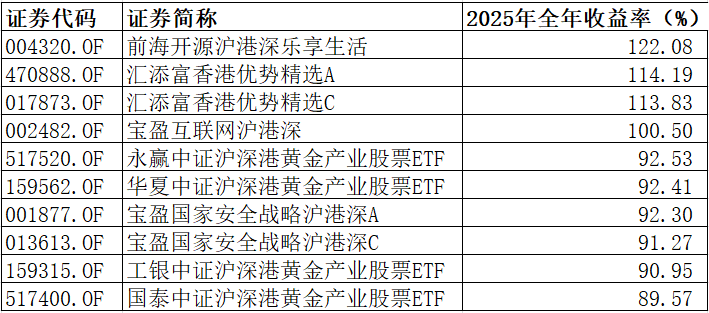
Core Insights - The average return of "Hong Kong" equity funds for the year 2025 reached 21.79%, with 106 funds exceeding a 50% return [1] - Four funds achieved over 100% returns, with the top performer being Qianhai Kaiyuan Hong Kong-Shenzhen Enjoy Life Fund at 122.08% [3] Fund Performance - The top-performing funds in 2025 included: - Qianhai Kaiyuan Hong Kong-Shenzhen Enjoy Life: 122.08% - Huatai-PB Hong Kong Advantage Selection A: 114.19% - Huatai-PB Hong Kong Advantage Selection C: 113.83% - Baoyin Internet Hong Kong-Shenzhen: 100.50% [2][3] - Several funds focused on sectors such as internet, CPO, and biomedicine, contributing to their strong performance [3] Three-Year Performance - Over the past three years, the average return for "Hong Kong" equity funds was only 13.13%, with only 53 funds exceeding a 50% return [4] - The best-performing fund over three years was Qianhai Kaiyuan Hong Kong-Shenzhen Enjoy Life with a return of 156.25% [6] Market Outlook - The Hong Kong market in 2025 benefited from ample liquidity and continuous capital inflow, supported by favorable policies and innovation [7] - Analysts suggest a "barbell strategy" for 2026, focusing on high-dividend sectors for stability and growth sectors like technology and new energy for excess returns [7]