
AI算力基建

Search documents
开年以来涨超35%!有色“2025涨幅王”指数继续狂飙
Jin Rong Jie· 2026-01-29 10:46
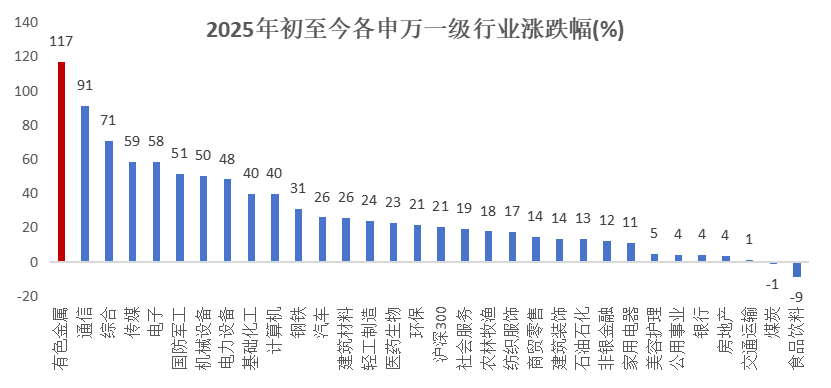
Core Viewpoint - The A-share market has seen a remarkable performance from the non-ferrous metals sector, particularly the China Securities Non-Ferrous Metals Mining Theme Index, which has surged over 35% in less than a month since the beginning of 2026, showcasing its strong momentum and dominance in the market [1][6]. Group 1: Index Performance - The China Securities Non-Ferrous Metals Mining Theme Index has outperformed other major non-ferrous indices, achieving a return of 159.49% since the beginning of 2025, compared to 145.36% for industrial non-ferrous, 141.56% for segmented non-ferrous, and 129.97% for non-ferrous metals overall [3]. - The index's unique "hardcore" compilation logic focuses on companies that own non-ferrous metal resources, allowing them to maximize profit margins during price increases, thus demonstrating higher profit elasticity compared to downstream sectors [3][4]. Group 2: Index Composition and Strategy - The index employs a balanced industry approach, covering all core metal categories such as copper, gold, aluminum, lithium, and rare earths, while ensuring that the top three companies by market capitalization in each segment are included, which helps capture various metal price movements and diversifies risk [4]. - The index is concentrated on leading companies, with a maximum of 40 constituent stocks, where the top ten account for over 55% of the total weight, ensuring strong offensive capability and elasticity during market rallies [4][5]. Group 3: Key Metal Allocations - The index's composition is strategically aligned with national priorities and future industry trends, with copper (31.48%) benefiting from global energy transitions and AI infrastructure, gold (14.33%) serving as a hedge against currency fluctuations, and aluminum (11.56%) supporting green transitions in the automotive and construction sectors [5]. - Other metals like silver (0.75%), rare earths (9.97%), lithium (8.17%), and cobalt (5.69%) are also included, reflecting a comprehensive approach to capturing cyclical fluctuations and participating in industrial transformations [5]. Group 4: Investment Opportunities - The current market environment presents a historic opportunity for the non-ferrous sector, driven by monetary easing, supply-demand dynamics, and global order changes, making the China Securities Non-Ferrous Metals Mining Theme Index and its corresponding ETF products an efficient and transparent tool for investors to gain exposure to leading companies in the upstream non-ferrous mining sector [6].



资金洪流下的“金属狂欢”:沪铜独揽151亿元!11万关口是“天花板”还是“跳板”?
Xin Lang Cai Jing· 2026-01-29 09:26
本周,金属市场掀起一场"资金风暴",铜价以摧枯拉朽之势突破历史高位,成为市场焦点。1月29日, 沪期铜主力合约强势站上11万元/吨关口,日内涨幅6.71%,创上市以来新高;伦铜三个月期货走势同样 强劲,价格飙升至14125美元/吨历史最高位,内外盘共振上演"金属狂欢"。更引人注目的是,有色板块 单日吸金170亿元,其中沪铜独占151亿元,资金疯狂涌入做多,推动铜价一路"狂飙"。这场行情背后, 是宏观、产业、资金三重逻辑的共振,而未来涨势能否延续,需从多维度拆解。 春节临近,下游加工企业陆续停工,需求进入传统淡季,高价对备货形成抑制。 上海期货交易所监测的铜库存连续七周累积,LME现货贴水扩大至93美元/吨,显示现货市场承压。 一、资金狂潮:铜为何成为"资金宠儿"? 近期商品市场呈现"普涨"格局,但铜的爆发力尤为突出。其核心逻辑在于:资金对"确定性"的追逐。 贵金属溢出效应:金银连续创历史新高,市场风险偏好升温,资金从避险资产转向工业金属,铜作 为"周期之王"首当其冲。 美联储政策"助攻":1月28日美联储暂停降息,但鲍威尔对经济"谨慎乐观"的表态,叠加美元指数一度 跌破96.2关口,削弱了持有美元计价资产的成 ...

业绩稳健增长、卡位黄金赛道,沃尔核材冲刺“A+H”意欲何为?
Zhi Tong Cai Jing· 2026-01-29 08:06
Core Viewpoint - Wolong Materials is set to launch its IPO on the Hong Kong Stock Exchange, marking a significant step in its expansion strategy as a leading manufacturer in the heat shrink materials and communication cable sectors [1][2]. Group 1: Company Overview - Established in 1998, Wolong Materials initially focused on heat shrink materials and has since expanded into the renewable energy sector, particularly in wind and solar power [1]. - The company ranks first in the global heat shrink materials market with a 20.6% market share and third in the global telecommunications cable manufacturing sector with a 12.7% market share [1]. - In China, Wolong Materials is the largest manufacturer of high-speed copper cables, holding a 24.2% global market share, and ranks fifth in the core charging products for new energy vehicles [1]. Group 2: Financial Performance - From 2022 to 2025, the company is projected to achieve revenues of 53.37 billion, 57.19 billion, and 69.2 billion yuan, respectively, indicating steady growth [3]. - Gross profit and net profit are also expected to rise, with gross profits of 16.12 billion, 17.89 billion, and 21.1 billion yuan, and net profits of 6.6 billion, 7.58 billion, and 9.21 billion yuan during the same period [3]. - For the first nine months of 2025, the company reported revenues of 60.77 billion yuan, a year-on-year increase of 26.12%, with gross profit and net profit growing by 25.63% and 24.54%, respectively [4]. Group 3: Market Opportunities - The company is strategically positioned in two high-growth sectors: AI computing and renewable energy, which are expected to drive significant demand for its products [5]. - The global telecommunications cable market is projected to grow from 105 billion yuan in 2020 to 134 billion yuan by 2024, with a compound annual growth rate (CAGR) of 6.1% [8]. - The Chinese DC charging infrastructure is anticipated to expand significantly, with over 1.6 million DC charging guns installed by the end of 2024 and a projected CAGR of 23.3% from 2025 [9]. Group 4: Competitive Landscape - The telecommunications cable industry is highly competitive, with over 100 global participants, while the heat shrink materials market has more than 800 competitors [10]. - Despite being a leader in its segments, the company faces challenges from numerous competitors in the rapidly evolving electronic communication and power transmission markets [10]. Group 5: Strategic Initiatives - The funds raised from the IPO will be allocated towards business development, enhancing research and development, and optimizing global production capacity [10]. - The company aims to strengthen its market position by focusing on core business areas such as electronic communication and renewable energy power transmission [10]. - The successful execution of its IPO strategy is crucial for the company to maintain its competitive edge in the AI and renewable energy sectors [11].

港股午评:恒指涨2.21%,恒生技指涨1.74%,金融、科技、中字头等权重集体拉升, 鸣鸣很忙首日涨超70%
Jin Rong Jie· 2026-01-28 04:32
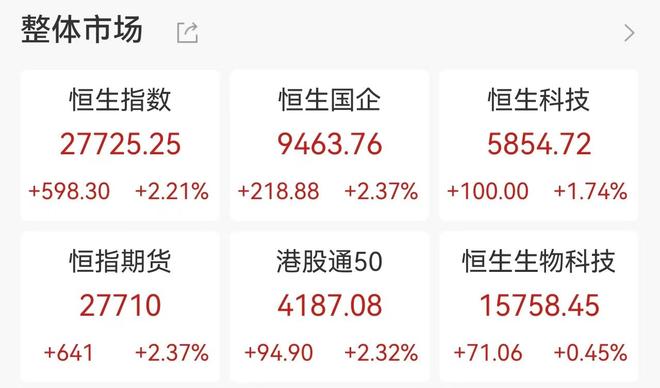
港股上午盘三大指数高开高走,大金融股、科技股、中字头股等权重集体拉升助力大市上扬,截止午 盘,恒生指数涨2.21%报27725点,创下2021年8月以来新高,国企指数涨2.37%,恒生科技指数涨 1.74%,市场做多情绪积极。 | 整体市场 [2 | | | | --- | --- | --- | | 恒生指数 | 恒生国企 | 恒生科技 | | 27725.25 | 9463.76 | 5854.72 | | +598.30 +2.21% +218.88 +2.37% +100.00 +1.74% | | | | 恒指期货 | 港股通50 | 恒生生物科技 | | 27710 | 4187.08 | 15758.45 | | +641 +2.37% | +94.90 +2.32% | +71.06 +0.45% | 金融科技表现抢眼,石油股、铝业股、半导体股、电信股等中字头股集体爆发。另外,航空股、家电 股、中医药股部分低迷。此外,零食连锁零售商鸣鸣很忙上市半日飙涨超70%,AI算力基建引爆全球光 纤需求,长飞光纤光缆盘中再创历史新高。 石油股涨幅居前,中海油涨超5%。据新华社,负责中东地区美军行动的美军中 ...
港股午盘|恒指涨2.21% 鸣鸣很忙上市半日大涨70%
Xin Lang Cai Jing· 2026-01-28 04:16
恒指涨2.21%,恒生科技指数涨1.74%。金融科技表现抢眼,石油股、铝业股、半导体股、电信股等中 字头集体爆发。另外,航空股、家电股、中医药股部分低迷。此外,零食连锁零售商鸣鸣很忙上市半日 大涨70%,AI算力基建引爆全球光纤需求,长飞光纤光缆盘中再创历史新高。 ...
港股午评:恒指大涨2.21%刷新阶段新高,金融科技中字头集体拉升上涨
Ge Long Hui· 2026-01-28 04:09
港股上午盘三大指数高开高走,大金融股、科技股、中字头股等权重集体拉升助力大市上扬,截止午 盘,恒生指数涨2.21%报27725点,创下2021年8月以来新高,国企指数涨2.37%,恒生科技指数涨 1.74%,市场做多情绪积极。金融科技表现抢眼,石油股、铝业股、半导体股、电信股等中字头集体爆 发。另外,航空股、家电股、中医药股部分低迷。此外,零食连锁零售商鸣鸣很忙上市半日飙涨超 70%,AI算力基建引爆全球光纤需求,长飞光纤光缆盘中再创历史新高。(格隆汇) (原标题:港股午评:恒指大涨2.21%刷新阶段新高,金融科技中字头集体拉升上涨) ...
AI算力基建引爆全球光纤需求 长飞光纤光缆H股盘中涨幅逼近19%续创新高
Sou Hu Cai Jing· 2026-01-28 02:24
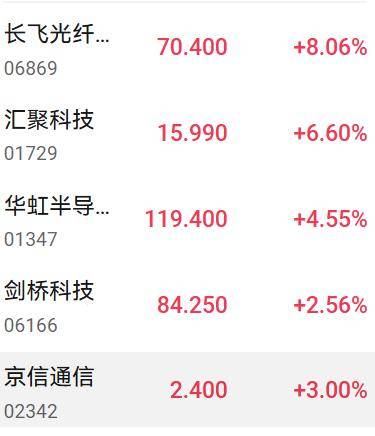
康宁光纤业务负责人迈克·奥戴坦言,当前核心挑战在于产能爬坡——仅Meta位于路易斯安那州的单体数据中心项目,即需铺设800万英里光纤。此举也成为 全球数据中心领域数万亿美元资本开支浪潮的重要注脚,凸显算力基建对基础材料的刚性需求。 长飞光纤光缆盘中最高涨幅逼近19% 受以上消息提振,长飞光纤光缆在今日迎来大涨,盘中最高涨幅逼近19%,再度刷新历史高点 智通财经1月28日讯(编辑 胡家荣)受全球AI基础设施投资加速催化,港股光通讯相关个股表现亮眼。截至发稿,长飞光纤光缆(06869.HK)涨8.06%、汇聚 科技(01729.HK)涨6.60%、剑桥科技(06166.HK)涨2.56%。 | 长飞光纤… | 70.400 | +8.06% | | --- | --- | --- | | 06869 | | | | 汇聚科技 | 15.990 | +6.60% | | 01729 | | | | 华虹半导 ... | 119.400 | +4.55% | | 01347 | | | | 剑桥科技 | 84.250 | +2.56% | | 06166 | | | | 京信通信 | 2.400 | +3.00% | ...
双赛道共振!有色金属盘初暴涨,半导体利好加持,多股创新高引爆全场狂欢
Jin Rong Jie· 2026-01-26 02:57
Group 1: A-Share Market Performance - The A-share non-ferrous metal sector experienced a strong surge at the beginning of the trading day, with both precious and industrial metals performing well, leading to significant profit-making opportunities [1] - Key stocks such as Shengda Resources, Tongling Nonferrous Metals, Guocheng Mining, and Yuguang Gold & Lead reached historical highs, indicating strong market leadership within the sector [1] - The overall market sentiment was bolstered by rising precious metal prices, escalating geopolitical conflicts, and positive spillover effects from the semiconductor industry, resulting in increased capital allocation to the non-ferrous metal sector [1] Group 2: Semiconductor Industry Developments - The domestic semiconductor equipment localization rate is projected to rise from 25% in 2025 to 35% by 2026, with key equipment like etching and thin-film deposition exceeding 40% localization, supported by a 15% procurement subsidy from the Ministry of Industry and Information Technology [2] - The National Big Fund Phase III has been launched with a total scale exceeding 350 billion yuan, with 40% of the funds directed towards equipment and materials, providing unprecedented financial support for the semiconductor sector [2] - The global semiconductor manufacturing equipment market is expected to reach $145 billion by 2026, with China projected to lead in equipment investment at approximately $39.25 billion, driving demand within the domestic semiconductor industry [2] Group 3: Demand Surge in Semiconductor Sector - The semiconductor demand is anticipated to surge due to a reversal in the storage cycle, with predictions of over 50% increase in DRAM contract prices and over 30% increase in flash memory contract prices by Q1 2026 [3] - SK Hynix has reported that its chip production capacity is fully booked, indicating a persistent supply-demand gap that will further stimulate demand in semiconductor manufacturing and packaging [3] Group 4: Benefiting Industries - The non-ferrous metal equipment industry stands to benefit directly from the surge in semiconductor equipment demand and accelerated non-ferrous metal resource development, with domestic clean extraction technology breakthroughs driving equipment upgrades [4] - The electric vehicle and energy storage sectors are expected to see continued growth in demand for lithium, nickel, and cobalt, with a projected 60% increase in lithium demand in the energy storage sector by 2026 [4] - The AI computing infrastructure sector will also benefit, as copper and tungsten are essential materials, with semiconductor chips enhancing computing power, leading to increased demand for both non-ferrous metals and semiconductors [4]


汇安成长优选四季报揭秘超额回报关键词:降高位、布低位
Cai Fu Zai Xian· 2026-01-22 07:09
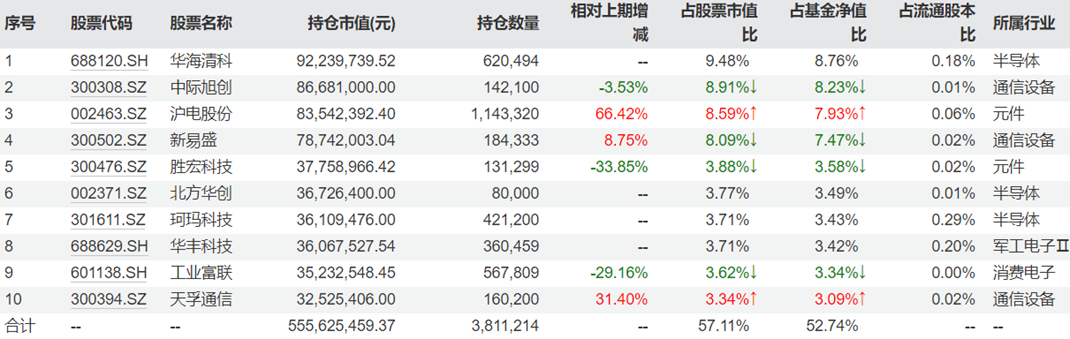
| 序号 | 股票代码 | 股票名称 | 持仓市值(元) | 持仓数量 | 相对上期增 | 占股票市值 | 占基金净值 | 占流通股本 Company of the program and | | --- | --- | --- | --- | --- | --- | --- | --- | --- | | | | | | | | ER | FR | | | 1 | 688120.SH | 华海清科 | 92,239,739.52 | 620.494 | - | 9.48% | 8.76% | 0.18% 半导体 | | 2 | 300308.SZ | 中际旭创 | 86.681.000.00 | 142.100 | -3.53% | 8.91%↓ | 8.23% | 0.01% 通信设备 | | 3 | 002463.SZ | 沪电股份 | 83.542.392.40 | 1.143.320 | 66.42% | 8.59%1 | 7.93%1 | 0.06% 元件 | | 4 | 300502.SZ | 新易醫 | 78.742.003.04 | 184,333 | 8.75% | 8.09%↓ | 7. ...
稀有金属ETF基金(561800)规模续创近1月新高,成分股西部材料10cm涨停,板块迎来产业需求与供给多重利好共振
Xin Lang Cai Jing· 2026-01-22 02:52
场内ETF方面,截至2026年1月22日 10:14,中证稀有金属主题指数(930632)上涨0.08%,成分股西部材 料10cm涨停,盛新锂能上涨5.97%,西部超导上涨5.43%,中稀有色上涨3.68%,中钨高新上涨3.14%。 稀有金属ETF基金(561800)盘中换手5.33%,成交1206.79万元。 消息面上,稀有金属板块迎来产业需求与供给的多重利好共振。产业端,供需缺口持续扩大,据国际能 源署(IEA)2025年12月发布的《全球关键矿产展望》,在能源转型驱动下,2040年锂需求将较当前增 长五倍,钴、稀土需求增长50%-60%,且铜、锂2035年供需缺口或分别达30%、40%,长期供给压力显 著。需求端,新能源与新质生产力需求双线发力,全球AI算力基建拉动PCB用钨制微型钻针需求,光伏 硅片薄片化推动钨丝金刚线替代传统钢丝线,且美国锂电储能站、中国电网消纳需求提振锂消费。 数据显示,截至2025年12月31日,中证稀有金属主题指数(930632)前十大权重股分别为洛阳钼业、北方 稀土、华友钴业、盐湖股份、赣锋锂业、天齐锂业、中矿资源、厦门钨业、中国稀土、西部超导,前十 大权重股合计占比59.5 ...
