
利率政策

Search documents
鲍威尔讲话将上演哪种剧本?一文读懂三大情景下的市场风暴
Hua Er Jie Jian Wen· 2025-08-22 09:45
Core Viewpoint - Federal Reserve Chairman Jerome Powell's upcoming speech at Jackson Hole is highly anticipated, as it will provide insights into the Fed's latest thoughts on interest rate policy [1] Group 1: Market Expectations - Investors are almost certain of a rate cut in September and are closely monitoring Powell's statements regarding the policy path for the remainder of the year [1] - The market is currently focused on rate cut expectations, as reflected in the muted response to large retail earnings and the July meeting minutes from the Fed [1] - There is a 47% probability that there will be two rate cuts before the end of the year, and any deviation from these expectations could lead to market volatility [1] Group 2: Scenario Analysis - **Scenario 1: Hawkish Surprise** If Powell indicates a more conservative rate cut path than expected, U.S. stocks may face downward pressure due to high valuations reflecting an ideal outlook, making the market sensitive to any recalibration of rate cut expectations [2] - **Scenario 2: Dovish Surprise** In the best-case scenario where Powell suggests a more accommodative rate cut path, this could provide significant support for future earnings growth of major companies, positively impacting U.S. stocks. However, this scenario is considered the least likely [3] - **Scenario 3: Meeting Expectations** If Powell's speech aligns with market expectations, confirming a September rate cut and another potential cut by year-end, market reactions could range from neutral to negative. Investors might engage in "sell the news" behavior, indicating that the outcome has already been priced in [4]
美元面临关键考验 焦点转向美联储政策信号
Jin Tou Wang· 2025-08-22 03:17
Group 1 - The core viewpoint of the articles revolves around the anticipation of Federal Reserve Chairman Powell's speech and its potential impact on the US dollar index and interest rates [1][2] - The US dollar index is currently trading around 98.60, with expectations of further upward movement if Powell does not counter the market's rising interest rate cut expectations [1] - The US Treasury market is active, with the 10-year Treasury yield rising to 4.339% and the 2-year yield to 3.798%, reflecting concerns over persistent inflation and a weak labor market [1] Group 2 - The market is closely monitoring Powell's speech at the Jackson Hole meeting for signals regarding the Fed's next rate actions, with a 77% probability of a rate cut in September indicated by futures markets [1] - The dollar's ability to maintain its upward trend largely depends on Powell's tone; a dovish stance could push the dollar index above 99.320, while a rebuttal to rate cut expectations could lead to a pullback towards the 98.317 support level [2] - The dollar index has broken through the 98.317 resistance level and is now above the 50-day simple moving average, with the next resistance levels identified at 98.950 and the major target range of 99.177-99.320 [2]
美联储,大消息!今晚,投资者屏息以待!美国宣布,15%关税!聚酯板块品种集体走强
Qi Huo Ri Bao· 2025-08-21 23:59
Federal Reserve Developments - The U.S. Department of Justice plans to investigate Federal Reserve Governor Lisa Cook, urging Chairman Powell to remove her from the board due to concerns over her financial history [2][3] - Cleveland Fed President Loretta Mester stated she would not support a rate cut if a policy decision were made tomorrow, citing persistent high inflation [2][3] - Atlanta Fed President Raphael Bostic believes only one rate cut this year is appropriate, but he is concerned about the labor market [3][4] Market Reactions - The probability of the Fed maintaining rates in September is 25%, while the probability of a 25 basis point cut is 75% [5] - U.S. stock indices fell, with the Dow down 152.81 points, as investors await Chairman Powell's keynote speech at the Jackson Hole conference [6][7] U.S.-EU Trade Agreement - The U.S. and EU have reached a framework agreement on trade, which includes a commitment to apply either the Most Favored Nation (MFN) tariff rate or a 15% tariff rate on EU goods [8][9] - The agreement aims to reduce tariffs on automobiles and parts, with a potential reduction to 15% contingent on EU legislative action [10] Polyester Sector Insights - The polyester sector has seen a rebound since August 15, driven by stable oil and coal prices, low inventory levels, and approaching demand season [11][12] - The upstream PX segment is performing well, while PTA and polyester segments are experiencing lower profits, indicating a "strong upstream, weak downstream" dynamic [13]


【环球财经】英国8月PMI数据超预期 英国央行或延长政策持稳周期
Xin Hua Cai Jing· 2025-08-21 14:20
Group 1 - The UK’s August PMI data exceeded expectations, with the composite PMI rising to 53.0, the highest level since August 2024, driven by a strong rebound in the services sector [1] - The services PMI increased from 51.8 in July to 53.6, indicating a robust outlook for business activity over the next year, the most optimistic since October 2024 [1] - Despite positive overall data, the manufacturing PMI fell to 47.3, marking a three-month low and remaining below the neutral 50 mark for the fifth consecutive month, reflecting the impact of the global trade environment [1] Group 2 - The CBI reported a worsening in industrial orders, with the balance dropping from -30 in July to -33, the lowest level since early 2025, indicating a continued decline in demand [2] - The output expectations index for the next three months fell sharply from -6 to -13, the lowest since May, highlighting pervasive pessimism in the manufacturing sector [2] - Rising costs are squeezing profit margins for manufacturers, leading to a decline in pricing power, with the sales price expectations index dropping from 21 to 9, the lowest since October 2024 [2]
黄金时间·每日论金:金价短期方向仍不明朗 暂以观望为宜
Sou Hu Cai Jing· 2025-08-21 06:43
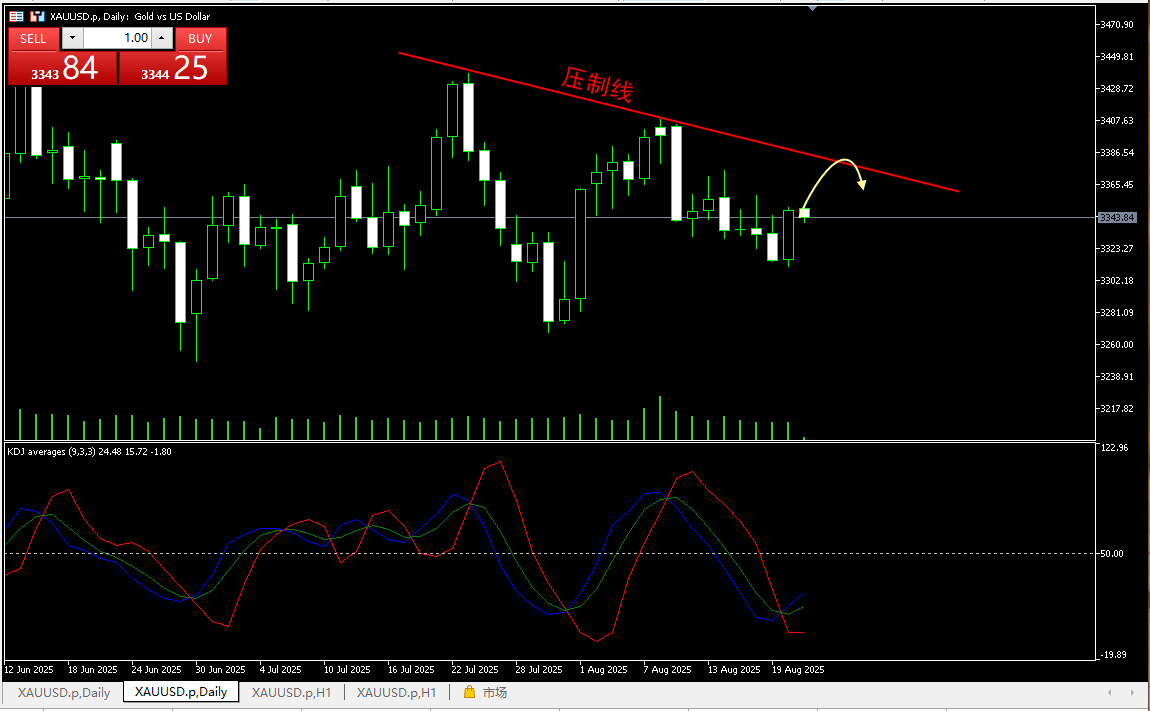
另外,黄金市场近期观望情绪较浓,主要原因在于鲍威尔将在杰克逊霍尔全球央行年会上发表演讲。而 根据过往经验,这一场合曾多次被他用于引导市场对利率政策的预期。 技术上看,金价围绕21日均线上下窄幅波动,方向并不十分明朗,本周多空分水岭在3355美元/盎司, 目前金价在该位置下方运行,说明当前市场是空头略占优势。若周内剩余时段金价能突破并重新站稳该 位置,金价周内仍有继续上行的空间。上行阻力关注3381美元/盎司附近,若金价有效突破该位置,阻 力调整至3428美元/盎司附近。下行支撑关注3309美元/盎司附近,若金价有效跌破该位置,支撑则调 整至3283美元/盎司附近,交易策略上暂时以观望为主。 转自:新华财经 新华财经北京8月21日电 随着美联储人事问题再出波澜,避险需求推动国际金价隔夜探底回升,强势收 复前一天的跌幅。不过,在市场仍在观望等待美联储主席鲍威尔讲话,情绪偏向谨慎的背景下,黄金短 时方向或仍不明朗。 基本面方面,北京时间周四(8月21日)凌晨公布的7月货币政策会议纪要显示,多数美联储官员在上月 的会议中强调,通胀风险已压倒对劳动力市场的担忧。官员们承认对通胀高企和就业疲软的担忧,但主 流观点仍将通胀 ...
香港第一金PPLI平台:8月21日影响黄金涨跌的美联储纪要
Sou Hu Cai Jing· 2025-08-21 06:26
根据今晚凌晨公布的美联储政策会议纪要,上月美联储维持利率不变的决定获得了广泛共识,尽管美联储成员仅有鲍曼跟沃勒持反对意见并支持降息,这意 味着其余16位与会成员均表示同意。该决定出台之际,白宫曾对美联储主席鲍威尔施加了明显的政治压力,呼吁降低利率。会议上,官员们对就业市场可能 转弱表示忧虑,但多数人仍认为,通胀上升的风险是"当前更主要的威胁"。曾在会上反对维持利率不变的美联储理事沃勒和鲍曼强调,政策决定不应基于由 关税带来的价格上升,因为这类上涨大概率不会持续。多数官员仍对通胀风险保持警惕,而特朗普政府的关税政策则在内部引发了更多争议。 香港第一金市场部负责人陈生: PPLDYJ 个人分析认为尽管部分官员担忧经济活动放缓可能对就业造成压力,但他们普遍认为遏制通胀仍是当前更紧迫的 任务,因此再次决定维持利率不变。纪要指出,多家企业成本上涨正逐渐转嫁至终端消费者,通胀可能将持续"在高位运行一段时间"。这一略显"鹰派"的立 场,与部分投资者此前期望的"经济疲软或促使降息"逻辑形成明显反差。中东局势方面一波未平一波又起,以色列无视哈马斯停火方案,人质家属反对,国 际社会施压,但以色列依旧选择了升级战争,开启"加沙城总 ...
凌晨重磅!美联储大消息;突发!特朗普要求她辞职;LPR连续3个月“按兵不动”
Di Yi Cai Jing Zi Xun· 2025-08-21 01:45
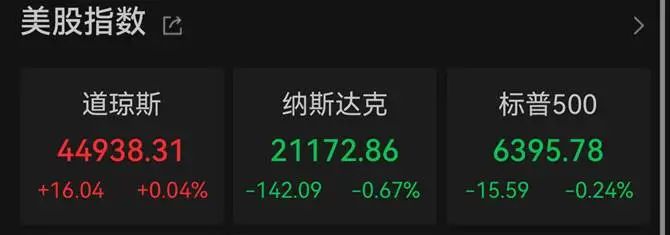
Market Overview - US stock market showed mixed results with the Dow Jones increasing by 16.04 points (0.04%) to 44938.31, while the Nasdaq fell by 0.67% to 21172.86, marking a two-week low [1] - The S&P 500 index decreased by 0.24% to 6395.78, experiencing a four-day losing streak [1] Technology Sector - Technology stocks faced selling pressure, leading to a decline in major tech companies: Nvidia down 0.1%, AMD down 0.8%, Intel down 7%, and Micron down 4% [1][2] - Notable tech giants also saw declines: Meta down 0.5%, Microsoft down 0.8%, Google down 1.1%, Amazon down 1.8%, and Apple down 2.0% [1] Corporate News - Retail giant Target's stock dropped by 6.3% following the appointment of a new CEO and the retention of its annual forecast cut made in May [1] - Estee Lauder, a cosmetics giant, fell by 3.7% due to adverse factors related to tariffs impacting its annual profit forecast [1] Federal Reserve Insights - The Federal Reserve's July meeting minutes revealed a divide among policymakers, with most members believing inflationary pressures outweigh labor market risks [2][6] - The Fed decided to maintain the federal funds rate target range at 4.25%-4.5% amid economic uncertainty [6] Oil and Commodity Prices - International oil prices rebounded significantly, with WTI crude oil rising by 1.38% to $63.21 per barrel and Brent crude increasing by 1.60% to $66.84 per barrel [2] Agricultural Sector - The president of the American Soybean Association expressed significant financial pressure on US soybean farmers due to ongoing trade disputes with China, urging prioritization of soybean issues in negotiations [5] International Trade - Germany's trade surplus with the US decreased by 12.8% in the first half of the year, attributed to US tariffs impacting the competitiveness of German products [20]

俄外长:普京已向特朗普提议提高俄乌直接谈判代表团级别;美联储会议纪要:同意维持利率不变;财政部:地方政府要优先实施具有一定收益的项目|早报
Di Yi Cai Jing· 2025-08-21 00:30
【今日推荐】 俄外长:普京已向特朗普提议提高俄乌直接谈判代表团级别 俄罗斯外长拉夫罗夫当地时间20日表示,俄罗斯已准备好以各种形式就乌克兰问题进行谈判,但高层会晤需要 周密准备,以免会谈导致局势恶化。拉夫罗夫称,普京在与特朗普通话中提议提高俄乌直接谈判代表团的级 别。 美联储会议纪要:同意维持利率不变经济前景不确定性仍然较高 当地时间8月20日,美联储公布联邦公开市场委员会(FOMC)7月29日至30日的会议纪要。会议纪要显示,美 联储同意将联邦基金利率目标区间维持在4.25%-4.5%之间。在本次会议的货币政策讨论中,委员们一致认为, 尽管净出口波动影响了数据,但近期指标表明,上半年经济活动增长有所放缓。通胀率仍然略高,经济前景的 不确定性仍然较高。 财政部:地方政府要根据经济社会发展需要、项目性质和财力状况,按照轻重缓急合理排序,优先实施具有一 定收益的项目 第一财经每日早间精选热点新闻,点击「听新闻」,一键收听。 国务院办公厅转发财政部《关于规范政府和社会资本合作存量项目建设和运营的指导意见》的通知。其中提 出,地方政府要根据经济社会发展需要、项目性质和财力状况,按照轻重缓急合理排序,优先实施具有一定收 ...
英特尔大跌!美股科技股被抛售
Zhong Guo Zheng Quan Bao· 2025-08-20 23:21
Market Performance - The three major U.S. stock indices closed mixed on August 20, with the Dow Jones up 0.04%, the S&P 500 down 0.24%, and the Nasdaq down 0.67% [2] - The S&P 500 index has declined for four consecutive trading days, driven by concerns over the high valuations of large tech stocks, leading investors to sell tech shares and seek returns in other sectors [1] Technology Sector - Major tech stocks experienced a broad decline, with the index of the seven largest U.S. tech companies falling by 1.07%. Notable individual stock movements included Apple down nearly 2%, and Amazon, Tesla, and Google each down over 1% [4] - Semiconductor stocks also faced downward pressure, with the Philadelphia Semiconductor Index dropping 0.72%. Intel saw a significant decline of 6.99%, while Micron Technology fell nearly 4% [4] Federal Reserve Insights - The Federal Reserve's FOMC meeting minutes from July 29-30 revealed a consensus to maintain the federal funds rate target range at 4.25%-4.5%. However, two members voted against this decision, advocating for a 25 basis point cut to prevent further weakening in the labor market [9] - The minutes indicated that while there were fluctuations in net exports, recent indicators suggested a slowdown in economic activity during the first half of the year, with inflation remaining slightly elevated and economic uncertainty persisting [9] Commodity Market - On August 20, international precious metal futures generally rose, with COMEX gold futures increasing by 1% to $3392.2 per ounce, and COMEX silver futures rising by 1.51% [6] - Oil prices also saw an increase, with U.S. crude oil main contract rising by 1.73% to $62.84 per barrel, and Brent crude oil main contract up by 1.76% to $66.95 per barrel, driven by a significant decrease in U.S. crude oil inventories [7]

拉加德:欧元区经济增长可能放缓 贸易不确定性仍存
Zhi Tong Cai Jing· 2025-08-20 09:12
Group 1 - The European Central Bank (ECB) President Christine Lagarde indicated that economic growth in the Eurozone may slow this quarter, despite a recent trade agreement with the U.S. reducing uncertainty, global trade conditions remain unclear [1] - Lagarde noted that the current 15% tariffs imposed by the U.S. on most European goods are slightly higher than the ECB's June assumptions but are "far below" the extreme rates envisioned by the bank [1] - The ECB is expected to maintain the deposit rate at 2% during the September meeting, following a pause in rate changes after eight consecutive cuts since June 2024 [1] - Lagarde mentioned that the ECB staff will consider the impact of the EU-U.S. trade agreement on the Eurozone economy in the upcoming September economic forecasts, which will guide future decisions [1] Group 2 - The Eurozone economy unexpectedly grew by 0.1% in the second quarter, demonstrating resilience amid trade and geopolitical pressures, with inflation hovering around the ECB's target of 2% [1] - Lagarde emphasized the Eurozone's resilience in the face of a challenging global environment earlier this year [2] - Lagarde confirmed her commitment to completing her term as ECB President, which will last until October 2027, amid rumors of her potential early departure [2]