
降本增效

Search documents
海通国际:维持新东方-S“优于大市”评级 降本增效战略持续显效
Zhi Tong Cai Jing· 2026-01-30 02:12
Core Viewpoint - Haitong International maintains an "outperform" rating for New Oriental-S (09901) and raises the target price from HKD 49 to HKD 52 based on upgraded performance expectations [1] Group 1: Financial Performance - In Q2 FY26, the company's total revenue increased by 15% year-on-year to USD 1.191 billion, exceeding consensus expectations by 3% and surpassing the previous guidance of 9%-12% [2] - Non-GAAP operating profit surged by 223% year-on-year to USD 89 million, exceeding consensus expectations by 62%, resulting in a Non-GAAP operating profit margin of 7.5%, which is 2.8 percentage points higher than the consensus forecast [2] - Deferred revenue reached USD 2.1615 billion, reflecting a year-on-year growth of 10.2%, consistent with the 10% growth in Q1 FY26 [2] Group 2: K12 Business Outlook - K12 business revenue is expected to accelerate in Q3 FY26, driven by improved retention rates and increased class scheduling during the winter break [2] - The company has made significant progress in enhancing product quality and teaching effectiveness, leading to a notable increase in user retention rates for high school and K9 non-academic businesses [2] - K12 revenue is projected to grow by 19% year-on-year to USD 815 million, with high school business expected to grow by 18% and K9 new business by 23% due to strong recovery in junior high [2] Group 3: Study Abroad Business Challenges - The study abroad sector remains under pressure, impacting the overall revenue of the core education segment [3] - Despite a challenging macroeconomic and international environment, the company managed to capture market share in Q2 FY26, achieving a 1% year-on-year growth [3] - The company holds a conservative outlook for Q4 FY26 due to the seasonal characteristics of the study abroad consulting business and anticipates a decline in study abroad revenue next year due to ongoing industry challenges [3] Group 4: Cost Reduction and Efficiency Improvement - The core education segment's operating profit margin improved by 3 percentage points in Q2 FY26, primarily due to effective cost reduction and efficiency measures [4] - These measures include cautious expansion of learning centers and control of marketing expenses, which are expected to continue delivering results [4] - The company forecasts a year-on-year increase in Non-GAAP operating profit margins of 1.4 and 1.6 percentage points in Q3 FY26 and FY26, respectively, reaching 13.4% and 12.9% [4]
海通国际:维持新东方-S(09901)“优于大市”评级 降本增效战略持续显效
智通财经网· 2026-01-30 02:09
Core Viewpoint - Haitong International maintains an "outperform" rating for New Oriental-S (09901) and raises the target price from HKD 49 to HKD 52 based on upgraded performance expectations [1] Group 1: Financial Performance - In Q2 FY26, the company's total revenue increased by 15% year-on-year to USD 1.191 billion, exceeding consensus expectations by 3% and surpassing the previous guidance of 9%-12% [1] - Non-GAAP operating profit surged by 223% year-on-year to USD 89 million, exceeding consensus expectations by 62%, with a Non-GAAP operating profit margin of 7.5%, up 2.8 percentage points from the consensus estimate of 4.7% [1] - Deferred revenue reached USD 2.1615 billion, a year-on-year increase of 10.2%, consistent with the 10% growth in Q1 FY26 [1] Group 2: K12 Business Outlook - K12 business revenue is expected to accelerate growth in Q3 FY26, driven by improved retention rates and increased course offerings during the winter break [2] - The K12 business revenue is projected to grow by 19% year-on-year to USD 815 million, with high school business expected to grow by 18% and K9 new business anticipated to increase by 23% [2] Group 3: Study Abroad Business Challenges - The study abroad sector remains under pressure, impacting the overall revenue of the core education segment [3] - Despite a 1% year-on-year growth in Q2 FY26, the company is expected to adopt a conservative outlook for Q4 FY26 due to the seasonal characteristics of the study abroad consulting business [3] - The company anticipates a decline in study abroad revenue next year due to the ongoing instability in the industry and the merger of exam preparation and study abroad consulting businesses [3] Group 4: Cost Reduction and Efficiency Improvement - The core education segment's operating profit margin improved by 3 percentage points in Q2 FY26, attributed to effective cost reduction and efficiency measures [4] - The company expects these measures to continue yielding results, with projected Non-GAAP operating profit margins increasing by 1.4 and 1.6 percentage points year-on-year to 13.4% and 12.9% for Q3 FY26 and FY26, respectively [4]
从“送一村”到“惠一城”,京东政企业务联手宿迁为全市2000+企业带去实惠年货
Sou Hu Wang· 2026-01-30 01:43
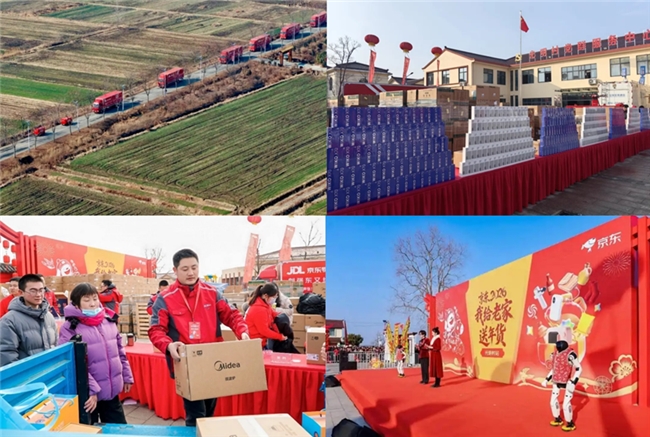
Group 1 - JD.com launched the "I Send New Year Goods to My Hometown" event in Guangming Village, Suqian City, Jiangsu Province, delivering a variety of New Year goods including smart appliances and health care devices [1] - The event featured a technology-infused "Rural Spring Festival Gala" with robots performing on stage, blending traditional customs with modern technology, enhancing the festive atmosphere [3] - JD.com collaborated with local government and organizations to create the "Hi in Suqian New Year Goods Carnival," attracting nearly 300 quality brands and over 1,000 product categories, significantly boosting local consumption [3] Group 2 - During the event, JD.com established a "Low-Price Internal Purchase" platform for local enterprises and employees, combining offline experiences with online shopping to provide exclusive discounts [5] - The carnival utilized a "union benefits + enterprise concessions" model, allowing employees to enjoy high-quality New Year goods at lower prices, meeting diverse consumer needs [6] - JD.com has been committed to supporting its hometown by establishing various key projects, including global customer service centers and logistics hubs, demonstrating its responsibility towards local development [6]


渤海钻探井下技服公司提效能 井下作业公司激活创效动力
Zhong Guo Hua Gong Bao· 2026-01-30 01:28
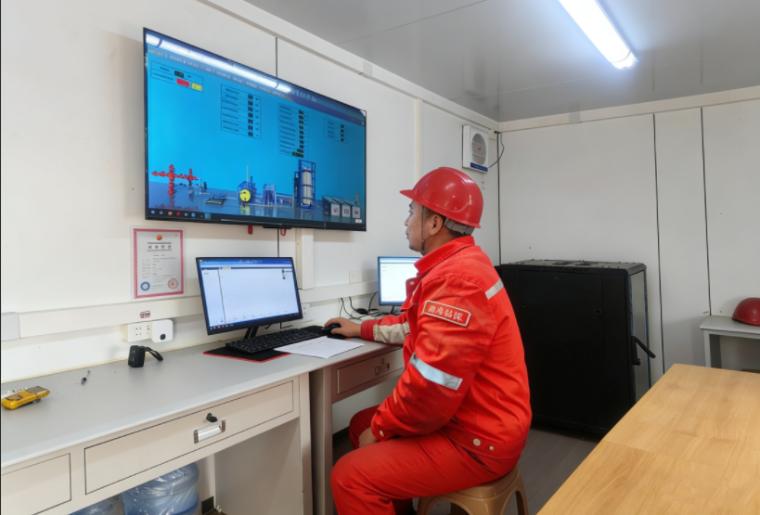
Core Viewpoint - The company is actively implementing cost reduction and efficiency enhancement strategies through various practical measures, including inventory management, equipment innovation, and digital platform utilization [1] Group 1: Cost Reduction Strategies - The company emphasizes a "tight budget" approach, focusing on maximizing resource utilization and minimizing costs through self-repair and resource activation [3] - By completing repairs on equipment such as heating furnace heads and sewage pumps, the company has avoided production disruptions and saved 18% on external repair and new equipment procurement costs [3] - The company plans to promote the "self-repair" model across all regions to optimize resource allocation and reduce operational costs [3] Group 2: Equipment Innovation - The company is enhancing safety and efficiency by optimizing equipment configurations, particularly in areas with high safety risks [4] - A total of 12 self-standing safety valve control systems have been replaced with electric controls, improving operational efficiency and standardization [4] - The implementation of a "separator trial + automatic liquid discharge device" combination process has reduced maintenance costs and addressed safety issues in pipeline operations [4] Group 3: Digital Management Advancement - The company is focusing on digital transformation by advancing the automation of testing and production platforms [5] - The successful application of an integrated measurement and control system in multiple platforms allows for precise liquid measurement and comprehensive environmental monitoring [5] - The system's integration with safety control units enhances emergency response efficiency by 30%, reducing labor intensity and improving safety levels [5] Group 4: Experience Sharing and Innovation - The company held a report meeting to share experiences on market expansion, technological innovation, and cost control among its grassroots units [6] - A resource-sharing and surplus material recovery system has been established to reduce redundancy and waste, leading to a reduction of 2.09 million yuan in material costs compared to the previous year [8] - The introduction of an integrated geological service model has significantly improved production and cost control in specific oil fields, gaining recognition from stakeholders [8]

方大特钢产品结构优化逆市赚超8亿 降本增效2025年前三季度毛利率翻倍
Chang Jiang Shang Bao· 2026-01-30 01:04
Core Viewpoint - The steel industry giant, Fangda Special Steel, is expected to achieve a significant turnaround in its financial performance for 2025, with projected net profit growth exceeding 200% compared to the previous years [1][2]. Financial Performance - Fangda Special Steel anticipates a net profit attributable to shareholders of between 835 million and 998 million yuan for 2025, representing a year-on-year increase of approximately 236.90% to 302.67% [2]. - The company also expects a non-recurring net profit of 705 million to 868 million yuan, which would increase by about 299.87% to 392.32% compared to the previous year [2]. - In the previous three years (2022-2024), the company's net profit had declined significantly, with figures of 1.062 billion, 689 million, and 248 million yuan, reflecting year-on-year decreases of 61.11%, 35.16%, and 64.02% respectively [2][3]. Operational Strategy - Fangda Special Steel has implemented a strategy focused on cost reduction and efficiency improvement, which has led to a significant increase in gross margin, reaching 10.44% in the first three quarters of 2025, compared to 4.77% in the same period last year [1][7]. - The company has adopted a differentiated business strategy, combining ordinary and special steel products, and is committed to a "low-cost, differentiated, and specialized" development path [6]. - The company has also focused on optimizing its product structure and increasing the production and sales of high-margin products, which has contributed to its performance growth [5][6]. Market Conditions - The steel market in 2025 is characterized by weak downstream demand and fluctuating steel prices, but a significant drop in upstream raw material prices has helped restore steel margins [4][9]. - Fangda Special Steel has been proactive in seizing market opportunities, particularly in the commercial vehicle sector, which has boosted demand for specific products like spring flat steel [9]. Financial Health - As of September 2025, Fangda Special Steel reported a strong financial position with cash reserves of 6.693 billion yuan and interest-bearing liabilities of only 273 million yuan, indicating a robust ability to withstand market risks [1].

浙江中欣氟材股份有限公司 2025年度业绩预告
Zheng Quan Ri Bao· 2026-01-29 23:10
2、业绩预告情况:预计净利润为正值且属于扭亏为盈情形 二、与会计师事务所沟通情况 本次业绩预告相关财务数据未经会计师事务所审计。公司就本次业绩预告有关事项与为公司提供年度审 计服务的会计师事务所签字注册会计师进行了预沟通,双方在本次业绩预告方面不存在重大分歧。 登录新浪财经APP 搜索【信披】查看更多考评等级 证券代码:002915 证券简称:中欣氟材 公告编号:2026-003 本公司及董事会全体成员保证信息披露的内容真实、准确、完整,没有虚假记载、误导性陈述或重大遗 漏。 一、本期业绩预告情况 1、业绩预告区间:2025年1月1日至2025年12月31日 1、报告期内,受全球经济增长放缓、国内需求复苏不及预期等多重因素叠加影响,化工产品市场整体 处在周期性底部。面对严峻的市场形势,公司聚焦降本增效、存量优化,向管理要效益,控费降本成效 显著,运营效率持续提升。公司通过技术改造降低能耗物耗,优化生产调度以提升装置运行效率;与此 同时,加强市场研判,灵活调整产品结构与销售策略,全力拓展高附加值细分市场。报告期内,公司营 业收入规模较2024年度同比实现双位数增长。 同时,农药行业在历经近几年的深度调整后,市场 ...

【新东方-S(9901.HK)】FY26Q2 业绩超预期增长,全年收入指引上调彰显信心 ——FY26Q2 业绩点评(陈彦彤/汪航宇/聂博雅)
光大证券研究· 2026-01-29 23:07
点击注册小程序 查看完整报告 特别申明: 本订阅号中所涉及的证券研究信息由光大证券研究所编写,仅面向光大证券专业投资者客户,用作新媒体形势下研究 信息和研究观点的沟通交流。非光大证券专业投资者客户,请勿订阅、接收或使用本订阅号中的任何信息。本订阅号 难以设置访问权限,若给您造成不便,敬请谅解。光大证券研究所不会因关注、收到或阅读本订阅号推送内容而视相 关人员为光大证券的客户。 报告摘要 FY26Q2 公司 Non-GAAP 经营利润为 8913 万美元,同比+206.9%。Non-GAAP经营利润率为 7.5%,同比 +4.7pcts,盈利能力大幅改善。利润率的提升主要得益于:一是聚焦核心经营,未盲目扩张教学点,重点 强化教学质量管控、优化市场费用投放;二是降本增效工作稳步推进。公司降本增效分两阶段推进,第一 阶段聚焦精简 FY26Q2 新东方实现净营收 11.91 亿美元,同比+14.7%;实现归母净利润 4545万美元,同比+42.3%;实 现 Non–GAAP 归母净利润 7290 万美元,同比+68.6%。 FY26Q2 核心业务多点开花,全年收入指引上调 FY26Q2 公司净营收同比增长 14.7% ...

浙江永太科技股份有限公司 2025年度业绩预告
Zheng Quan Ri Bao· 2026-01-29 23:05
Group 1 - The company expects a net profit in 2025 to be negative, indicating a challenging financial outlook for the year [1] - The company anticipates a significant reduction in losses for 2025, with a projected decrease of approximately 40,587 to 42,487 million yuan, representing a narrowing of losses by 91.44% to 95.72% [2] - The improvement in operational efficiency is driven by a rapid increase in demand for new energy vehicles and energy storage, leading to a substantial rise in sales and prices of core lithium battery materials [2] Group 2 - The company has communicated with its auditing firm regarding the performance forecast, and there are no significant disagreements on the forecasted results [1][2] - The company plans to focus on its core business and enhance market development and customer structure optimization to improve profitability and risk resistance in 2026 [2] - The financial data presented in the performance forecast is preliminary and will be finalized in the company's annual report for 2025 [3]

怒怼豆包、赞赏阿里!马化腾的AI江湖恩怨,靠游戏也赢麻了
Sou Hu Cai Jing· 2026-01-29 16:14
Core Viewpoint - Tencent's Chairman Ma Huateng openly criticized the "Doubao model" for being "extremely unsafe and irresponsible," while also praising Alibaba's AI integration efforts, highlighting the competitive landscape in the AI sector [1][3][6]. Group 1: AI Competition and Strategy - The AI sector has become highly competitive, with major players like Tencent, Alibaba, and ByteDance racing to innovate [3]. - Ma Huateng expressed a positive view on Alibaba's "Tongyi Qianwen," acknowledging its efforts in internal ecosystem integration, but cautioned that bundling AI features into all products may not meet user needs [4]. - In stark contrast, Ma Huateng condemned the Doubao model for its security risks related to user privacy, emphasizing Tencent's commitment to user safety [6]. Group 2: Tencent's Business Performance - Tencent has successfully turned around its cloud business, achieving over 37 billion yuan in revenue with a gross margin exceeding 30%, marking a significant recovery from previous losses [10]. - The gaming sector has also shown remarkable performance, with international game revenue surpassing 20.8 billion yuan, reflecting a 43% year-on-year growth [12]. - Tencent's overall business has stabilized after a challenging period, with a focus on core operations and cost efficiency leading to renewed growth [21]. Group 3: Future Directions and Challenges - Ma Huateng acknowledged Tencent's slow initial response to AI opportunities, attributing it to a focus on integrating AI with existing business lines, but emphasized a renewed commitment to accelerate AI development [14]. - The company is actively recruiting AI talent and restructuring teams to enhance collaboration between AI products and large models [14]. - Ma Huateng highlighted the need for Tencent to develop its AI capabilities without blindly following competitors, advocating for a strategy that aligns with its unique strengths [16]. Group 4: Market Dynamics and External Factors - The competitive landscape in the food delivery sector has intensified, with JD.com and Meituan engaging in aggressive market strategies, prompting Alibaba to integrate Ele.me into its e-commerce framework [17]. - Tencent Music's market value has fluctuated significantly, reflecting broader industry challenges and the need for resilience in navigating market cycles [19]. - Ma Huateng reflected on Tencent's past struggles during the industry downturn, emphasizing the importance of focusing on core business and efficiency improvements [21]. Group 5: Upcoming Initiatives - For the upcoming Spring Festival, Tencent plans to convert substantial marketing expenditures into red envelopes, aiming to replicate the success of the WeChat red envelope campaign from 11 years ago [22].

强权总部与强化风控 房企迎密集调整
Bei Jing Shang Bao· 2026-01-29 16:07
其中,保利发展新组建"不动产运营中心",整合了原运营与产品管理职能;中建八局对其投资与运营类 业务进行系统性重构;中国武夷则新增了安全质量部与成本管控部。业内人士分析指出,3家企业的调 整路径,核心均指向在行业承压背景下,通过内部革新实现降本增效与挖掘新增长点的迫切需求。 2025年初,保利发展2024年度业绩说明会上,公司董事长刘平透露新阶段发展目标,计划未来2—3年推 进企业自我重塑,通过推动不动产投资开发全面做优、不动产经营加速做大、不动产综合服务力争做 强,加快构筑新的核心竞争力,而此次公司架构调整,正是该战略落地的表现。 2026年伊始,房企组织架构调整动作频频。据北京商报记者不完全统计,仅1月内,中建八局、保利发 展、中国武夷3家房企已相继推进组织优化,核心方向聚焦总部集权与风险管控强化,折射出行业深度 调整期对稳健经营的共同诉求。事实上,这一轮调整在2025年底已有端倪。去年12月,碧桂园、绿城中 国、建发集团等超过10家重点房企也已启动架构与人事的协同调整,显示出行业整体步入以组织变革提 质增效的关键阶段。 业绩承压下的主动调整 据北京商报记者不完全统计,保利发展、中建八局、中国武夷等房企在2 ...
