氢能

Search documents
破4000点!沪指再创10年新高,哪些行业还有补涨机会?
Xin Jing Bao· 2025-10-28 05:27
Core Points - The Shanghai Composite Index has reached 4000 points for the first time in 10 years, marking a new high since August 2015 [1] - Positive market sentiment is driven by various factors, including recent US-China negotiations and significant signals from financial regulatory authorities during the 2025 Financial Street Forum [1][2] - The "14th Five-Year Plan" emphasizes technological self-reliance, which is expected to boost market confidence [1][4] Market Performance - The market showed mixed performance with sectors like cross-strait integration rising by 6%, while daily chemicals and pharmaceuticals lagged [1] - On October 27, the index approached 4000 points, with strong gains in sectors such as semiconductors and nuclear power [2] Regulatory Developments - Key financial regulatory figures outlined priorities for the financial system, including a moderately loose monetary policy and support for hard technology and emerging industries [2] - The release of two significant documents aimed at optimizing the Qualified Foreign Institutional Investor system and enhancing protections for small investors is expected to impact market dynamics [3] Investment Insights - Analysts suggest that the "14th Five-Year Plan" has instilled strong confidence in the market, with expectations of a mid-term bull market supported by policy clarity [4] - Short-term focus remains on technology sectors, while cyclical consumption may see opportunities for catch-up growth [5][6] - Investment strategies should consider sectors like quantum technology, biomanufacturing, and hydrogen energy as highlighted in the "14th Five-Year Plan" [6]
单季盈利腰斩,雄韬股份遭遇成长瓶颈
Xin Lang Cai Jing· 2025-10-28 03:55
Core Viewpoint - In the third quarter of 2025, Xiongtao Co., Ltd. reported a significant decline in both revenue and net profit despite a booming energy storage battery industry, highlighting operational challenges and growth bottlenecks for the company [1][7]. Financial Performance - For the first three quarters of 2025, the company achieved total revenue of 2.38 billion yuan, a year-on-year decrease of 9.39%, and a net profit attributable to shareholders of 106 million yuan, down 10.40% from the previous year [1][5]. - The cash flow from operating activities plummeted by 52.04% to 219 million yuan compared to the same period last year [3][5]. - In Q3 2025 alone, revenue was 773 million yuan, a year-on-year decline of 25.8% and a quarter-on-quarter drop of 18.03% [5][7]. Profitability and Quality - The gross profit margin for the reporting period was 17.88%, down 1.26 percentage points from 19.14% in Q3 2024, while the net profit margin slightly decreased by 0.18 percentage points to 4.35% [3][5]. - The non-recurring net profit saw a significant decline of 29.44%, indicating weakened core business profitability [1][10]. Business Segments and Challenges - The company operates in multiple segments, including lead-acid batteries, lithium batteries, hydrogen fuel cells, and energy storage systems, but has not disclosed specific performance data for these segments in the Q3 report [7][9]. - The UPS power supply business, which was a key growth driver, accounted for 47% of total revenue in the first half of 2025, contributing 75% of the profits [9][10]. - The hydrogen fuel cell business has faced slow progress, with revenue dropping by 72.70% in the first half of 2025, and the overall commercialization of hydrogen energy remains sluggish [10][12][13]. Market Position and Competition - Despite the energy storage battery market experiencing a 65% year-on-year growth in Q3 2025, Xiongtao Co., Ltd. failed to capitalize on this opportunity, with energy storage revenue accounting for only 4.04% of total revenue [14][15]. - The company faces intense competition from industry leaders like CATL and BYD, which poses significant challenges for its energy storage business [14][15]. Strategic Outlook - The company is at a critical juncture, needing to optimize its business structure and enhance operational efficiency to alleviate performance pressures [15]. - Long-term success will depend on breakthroughs in core technology development, high-end market expansion, and effective integration of the supply chain [15].


沪指突破4000点,创10年新高
Xin Jing Bao· 2025-10-28 02:36
Core Points - The Shanghai Composite Index has surpassed 4000 points, reaching its highest level since August 19, 2015, on October 28 [2][3] - Positive market factors include constructive signals from the latest China-U.S. negotiations and the opening of the 2025 Financial Street Forum, where key financial regulators outlined future priorities [2][3][4] - The "14th Five-Year Plan" emphasizes technological self-reliance, boosting market confidence through clear policy expectations [2][5] Market Trends - The market is experiencing a style shift, with technology remaining a primary focus, while cyclical consumption sectors may see some catch-up opportunities [2][7] - Recent data indicates that sectors such as semiconductors, rare earths, and nuclear power are leading the market, while others like oil and gas extraction are declining [3][6] - Historical analysis shows that post-five-year plan meetings typically lead to concentrated market rallies, particularly in midstream manufacturing and consumer sectors [6][5] Policy Implications - Key financial leaders have outlined priorities, including a moderately loose monetary policy and support for hard technology and emerging industries [3][4] - The release of significant documents aimed at optimizing the Qualified Foreign Institutional Investor (QFII) system and enhancing protections for small investors is expected to further support market stability [4][5] - The focus on a modern industrial system in the "14th Five-Year Plan" is anticipated to provide a clear growth path for the A-share market, reinforcing the foundation for a bull market through technological advancements and industrial upgrades [5][6]

国金证券:看好量子计算和可控核聚变产业趋势向上
Xin Lang Cai Jing· 2025-10-27 23:57
Core Viewpoint - The report from Guojin Securities highlights the emphasis on quantum technology and nuclear fusion energy as new economic growth points in the 14th Five-Year Plan proposed by the Central Committee of the Communist Party of China [1] Group 1: Industry Focus - The 14th Five-Year Plan aims to promote industries such as quantum technology, biomanufacturing, hydrogen energy, nuclear fusion energy, brain-computer interfaces, embodied intelligence, and sixth-generation mobile communications as new economic growth drivers [1] - Quantum computing and controllable nuclear fusion are expected to receive top-level policy support and funding, indicating a positive upward trend for these industries [1]

光威复材20251027
2025-10-27 15:22
Summary of Guangwei Composite's Conference Call Company Overview - **Company**: Guangwei Composite - **Industry**: Composite Materials and Equipment Manufacturing Key Financial Performance - **Revenue**: - Total revenue for the first three quarters decreased by 32.22% year-on-year, but Q3 revenue increased by 5.24% year-on-year and 23.58% quarter-on-quarter, indicating signs of recovery [2][3] - Q3 revenue reached 1.986 billion yuan, with a net profit of 415 million yuan, down 32.55% year-on-year [3] - **Net Profit**: - Net profit for Q3 was 145 million yuan, down 41.05% year-on-year but up 26.88% quarter-on-quarter [3] - Non-recurring net profit for Q3 was 130 million yuan, down 43.45% year-on-year but up 24.66% quarter-on-quarter [3] Segment Performance - **Fiber Segment**: Revenue decreased by 12.54% year-on-year to 1.003 billion yuan [4] - **New Energy Materials Segment**: Revenue increased by 58.95% year-on-year to 652 million yuan, driven by rapid growth in wind power carbon credit business [4] - **General New Materials Segment**: Revenue decreased by 1.94% year-on-year to 180 million yuan [4] - **Auxiliary Materials Technology Segment**: Revenue decreased by 26.34% year-on-year to 60 million yuan [4] - **Equipment Business**: Traditional product shipments were below expectations, but new model products showed stable growth [5] Market Dynamics - **Production Capacity**: - The Baotou production base is affected by industry competition, leading to low product prices and high fixed costs, which negatively impacted performance [2][5] - Expected production capacity utilization in Q4 is around 60%, primarily for hydrogen energy shell products [2][11] - **Carbon Fiber Prices**: Prices are stabilizing, but the industry faces cost pressures and intense competition. High-performance fibers like T300 and T400 have stable prices, while high-end product prices have slightly decreased [2][13] Orders and Contracts - **Order Status**: - The equipment business has sufficient orders, with some clients signing long-term contracts extending to 2026 or 2027 [3][14] - The T1,000 product is in the validation stage, with promising application prospects in equipment and civil aviation [15] - **Military Procurement**: Current military contracts are annual, with no additional orders expected until existing contracts are fulfilled [10] Future Outlook - **Traditional Products**: Demand for traditional products has been declining since 2014, but is expected to stabilize in 2025 or 2026 [17][18] - **Research and Development**: Increased R&D spending is focused on optimizing fiber performance and enhancing product applications, which is crucial for future growth [23] - **Market Expansion**: The company is looking to expand into high-end aerospace, civil aviation, hydrogen energy, and other emerging fields to absorb carbon fiber capacity [26] Financial Management - **Short-term Borrowing**: Short-term loans increased to 681 million yuan to supplement working capital due to dividend payments and project loan repayments [31] Additional Insights - **Low-altitude Business**: Detailed revenue data for the low-altitude business is currently unavailable, with a more comprehensive analysis expected in the annual report [7] - **Special Equipment Materials**: The company is focusing on existing major clients in the special equipment sector, with potential for new clients as market policies evolve [30]

“十五五”规划重点布局,可控核聚变概念股掀涨停潮
Sou Hu Cai Jing· 2025-10-27 08:00
Group 1: Market Reaction - The A-share controllable nuclear fusion sector experienced a significant surge, with stocks such as Antai Technology, Xiamen Tungsten, and Dongfang Tantalum hitting the daily limit, reflecting positive market sentiment towards nuclear fusion energy development [1][4] - The market's response indicates strong investor interest and optimism regarding the future potential of nuclear fusion as a key area for economic growth [4] Group 2: Policy and Industry Development - The 24th Central Committee of the Communist Party of China approved a proposal for the 15th Five-Year Plan, emphasizing the strategic importance of industries like quantum technology, biomanufacturing, hydrogen energy, and nuclear fusion [1][3] - The clean energy transition is crucial for achieving China's dual carbon strategy, with hydrogen and nuclear fusion energy identified as complementary solutions for deep decarbonization [3][4] Group 3: Company Highlights - Western Superconducting Technologies, a leader in low-temperature superconductors, is a core supplier for major nuclear fusion projects, with significant contracts and a 65.75% year-on-year revenue growth in its superconducting business [5] - Yongding Co., a pioneer in high-temperature superconductors, reported a staggering 917.66% increase in net profit, driven by substantial orders from nuclear projects [5] - Lianchuang Optoelectronics, a global leader in high-temperature superconducting magnets, secured a 5 billion yuan order for a hybrid reactor system, showcasing its innovative technology [5][6] Group 4: Technological Advancements - Since 2025, China's nuclear fusion sector has entered a rapid development phase, marked by significant technological breakthroughs and the establishment of key companies like China Fusion Energy Co. [4] - Shanghai Electric has emerged as a comprehensive supplier for fusion equipment, successfully delivering critical components for international projects, demonstrating its manufacturing capabilities [6]

科威尔(688551):业绩符合预期,看好公司在AI测试电源和氢能产业的持续布局
China Post Securities· 2025-10-27 03:32
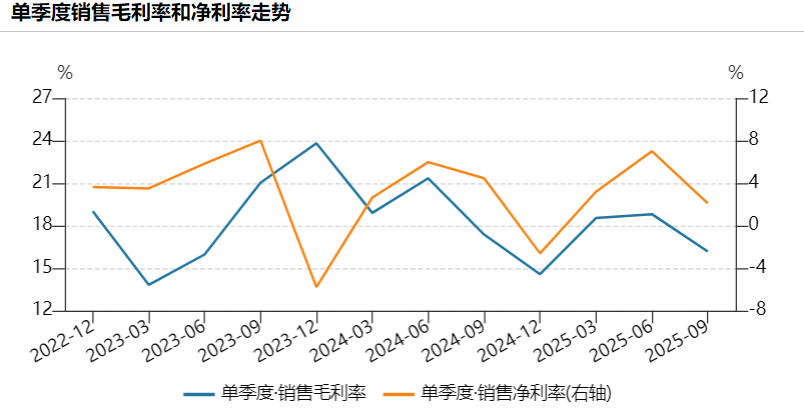
Investment Rating - The report maintains a "Buy" rating for the company, expecting a relative increase in stock price of over 20% compared to the benchmark index within six months [6][11]. Core Insights - The company reported a revenue of 370 million yuan for the first three quarters of 2025, a year-on-year decrease of 2.0%, with a net profit of 50 million yuan, down 0.1% year-on-year. However, Q3 2025 showed a revenue increase of 17.9% quarter-on-quarter and 23.8% year-on-year, with net profit rising by 110.4% quarter-on-quarter and 94.1% year-on-year, indicating strong performance in the testing power business despite underperformance in the hydrogen energy sector [4][5]. - The company is actively expanding its presence in the AI testing power sector, having secured small batch orders and completed some deliveries. It is also working on automating testing solutions for leading industry clients [5]. - The hydrogen energy industry is expected to gain momentum during the 14th Five-Year Plan, with national strategic support anticipated, which may lead to improved industry conditions and ongoing policy support [5]. Financial Forecast and Metrics - Revenue projections for 2025-2027 are 550 million yuan, 660 million yuan, and 840 million yuan, respectively. Corresponding net profits are forecasted at 70 million yuan, 90 million yuan, and 130 million yuan, leading to price-to-earnings ratios of 52, 38, and 27 times [6][9]. - The company’s gross margin and net margin for the first three quarters of 2025 were 40.8% and 13.9%, respectively, with a notable reduction in sales expense ratio to 11.6% and a slight decrease in R&D expense ratio to 15.3% [4][6].

双良节能拟定增12.9亿元押注氢能
Guo Ji Jin Rong Bao· 2025-10-25 06:36
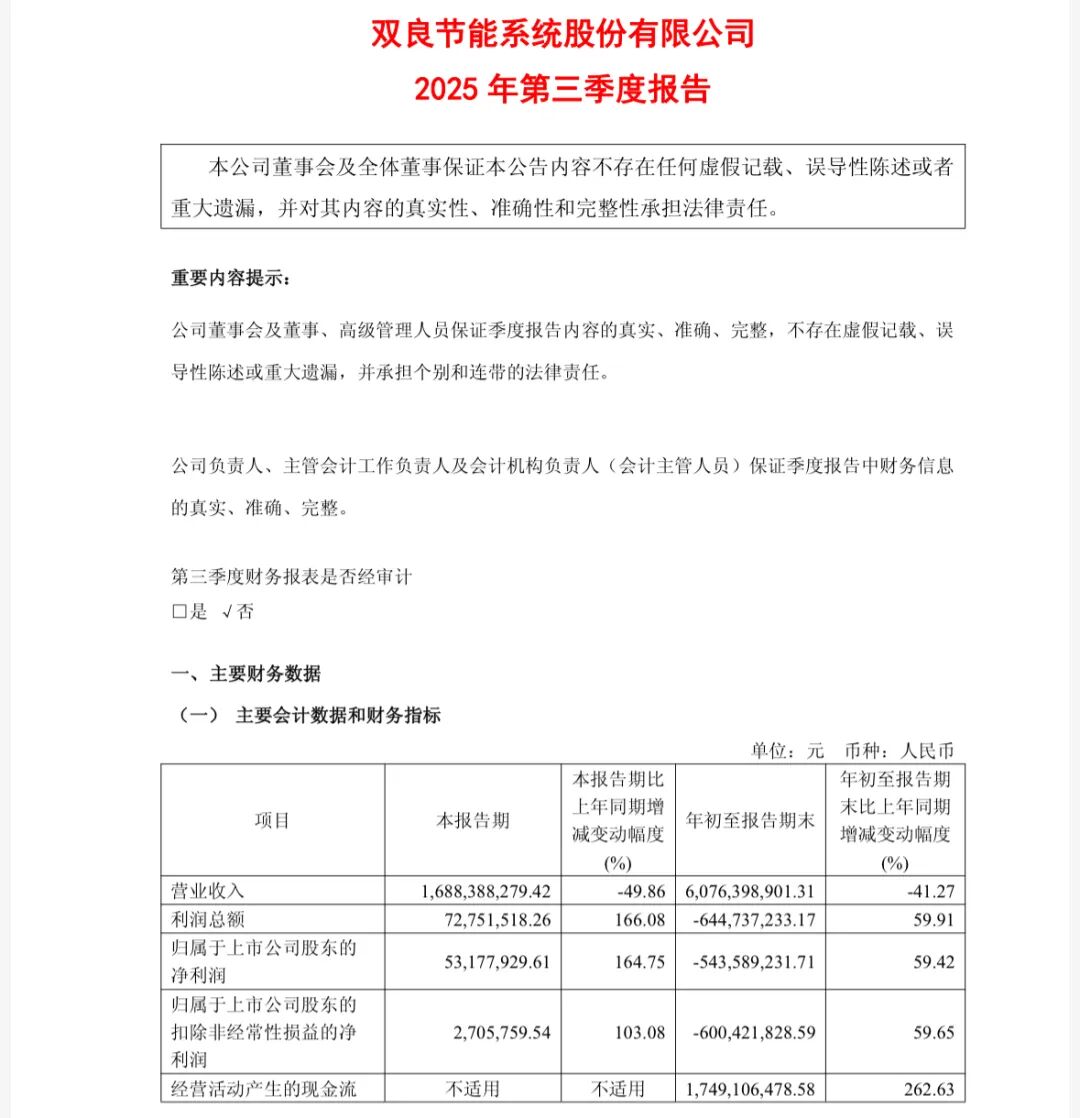
Core Viewpoint - The company, Shuangliang Energy, reported a significant decline in revenue and net profit for the first three quarters of the year, primarily due to reduced sales in the photovoltaic sector, but is focusing on cost reduction and efficiency improvements to recover profitability [3][4]. Financial Performance - For the first three quarters, Shuangliang Energy achieved a revenue of 6.076 billion yuan, a year-on-year decrease of 41.27%, and a net profit attributable to shareholders of -544 million yuan [3]. - In Q3 alone, the revenue was 1.688 billion yuan, down 49.86% year-on-year, with a net profit of 53.18 million yuan [3]. Fundraising and Investment Plans - The company announced the termination of its 2023 A-share issuance plan and introduced a new plan for 2025, aiming to raise no more than 1.292 billion yuan, which is nearly a 50% reduction from the previous fundraising plan [4]. - The planned fundraising will focus on four main areas: construction of a zero-carbon intelligent manufacturing factory, production of green hydrogen equipment, R&D projects, and supplementing working capital [5]. Debt and Financial Health - As of the end of Q3, Shuangliang Energy's debt-to-asset ratio was 81.91%, reflecting a high level of leverage due to aggressive expansion since 2021 [7]. - The company has faced challenges in supporting its expansion plans through borrowing, with total debt reaching 15 billion yuan by 2024, while interest expenses have surged from 35 million yuan in 2021 to 548 million yuan in 2024 [7][8]. Strategic Focus on Hydrogen Energy - Shuangliang Energy is pivoting towards the hydrogen energy sector, having signed contracts for hydrogen production equipment and aiming to capitalize on the demand for green hydrogen [9][10]. - The company has developed advanced alkaline electrolyzers and has received orders for hydrogen production systems, indicating a strategic shift in its business model [10].

账面资金高达43亿 却要募集13亿 这家老牌企业差不差钱?
Guo Ji Jin Rong Bao· 2025-10-24 14:33
Core Viewpoint - The company, Shuangliang Energy, is raising up to 1.292 billion yuan through a private placement to fund projects in zero-carbon manufacturing, green hydrogen equipment, R&D, and to supplement working capital [2][4]. Financial Performance - As of Q3 2025, the company reported a revenue of 6.076 billion yuan, a year-on-year decrease of 41.27%, and a net loss of 544 million yuan [4]. - Despite a quarterly profit of 53.18 million yuan, the overall performance remains low due to reduced sales in photovoltaic products [4]. - The company has cash reserves of 4.335 billion yuan but still seeks to raise additional funds [4]. Debt and Financing Strategy - The company's debt ratio has increased from 68.49% at the end of 2022 to 81.91% by September 2025, indicating rising financial pressure [5]. - The planned fundraising will be allocated to four key areas: 493 million yuan for zero-carbon manufacturing, 200 million yuan for green hydrogen equipment, 214 million yuan for R&D, and 385 million yuan for working capital [5][6]. Hydrogen Energy Focus - Shuangliang Energy has been involved in the hydrogen energy sector since 2018 and officially entered the market in 2022 [6]. - The company has developed the world's largest alkaline water electrolysis unit with a hydrogen production capacity of 5000 Nm³/h [6]. - Since 2025, the hydrogen business has seen explosive growth, with order amounts exceeding 800 million yuan, a 300% year-on-year increase [6].
苏州都羡慕:榆林,何以成为中西部最强地级市?
3 6 Ke· 2025-10-24 07:46
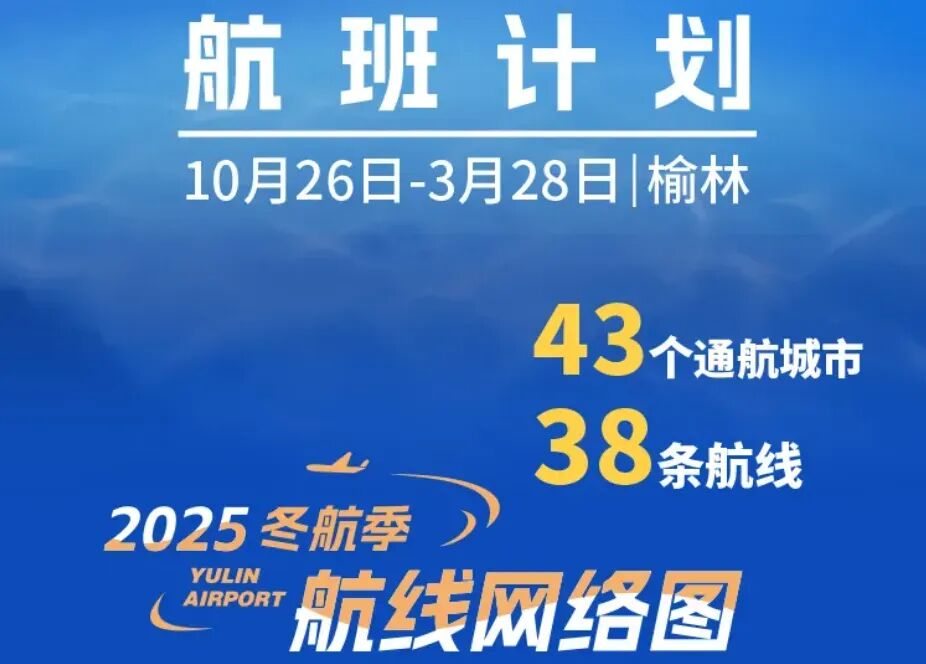
Core Insights - The article highlights Yulin, Shaanxi as the strongest prefecture-level city in China's central and western regions, surpassing other notable cities in terms of GDP and development [2][3]. Economic Performance - Yulin's GDP for the first half of this year reached 348.5 billion yuan, ranking it first among central and western prefecture-level cities, even higher than cities like Jinhua, Luoyang, and Zhuhai [3]. - In 2023, Yulin's per capita GDP reached 196,300 yuan, ranking fifth nationally, and is projected to rise to 209,300 yuan in 2024, nearing Shanghai's 216,800 yuan [32][33]. Infrastructure and Development - Yulin has invested heavily in education and healthcare, offering 15 years of free education and universal healthcare in certain areas since 2008 [4][5]. - The city has developed significant transportation infrastructure, including an airport with 38 flight routes and connections to international destinations [7][8][30]. Resource Wealth - Yulin is rich in natural resources, particularly coal, with the Shenfu coalfield containing 87.7 billion tons of coal reserves, making it a key player in China's energy sector [14][19]. - The city has a diverse range of mineral resources, including natural gas, oil, and rock salt, positioning it as a major energy and chemical production hub [27][49]. Industrial Transformation - Yulin has shifted from a coal-dependent economy to a more diversified industrial base, focusing on high-end energy products and chemical manufacturing [40][46]. - The city is leveraging its coal resources to develop hydrogen energy, positioning itself as a future energy incubator [51][62]. Social Development - Yulin's public budget for last year was 122.47 billion yuan, with 83.6% allocated to education, social security, and healthcare, reflecting a commitment to improving living standards [67].