通胀预期
Search documents
【UNforex财经事件】金价突破4000美元 全球贸易缓和点燃市场信心
Sou Hu Cai Jing· 2025-10-31 03:43
Group 1 - The core viewpoint is that gold has regained its status as a preferred safe-haven asset amid rising global economic uncertainty, with prices surpassing $4000, reflecting strong market demand for safety [1][2] - Multiple factors are driving the rise in gold prices, including increased global economic risks, a weakening dollar, and heightened inflation expectations [1] - The recent meeting between Chinese and U.S. leaders has generated optimism in the market, particularly regarding trade discussions and potential tariff reductions, which could positively impact global economic activity [1] Group 2 - Despite short-term optimism from trade discussions, gold prices remain strong, supported by ongoing global economic uncertainty and the interplay of loose monetary policies and geopolitical risks [2] - The current market sentiment indicates that gold may experience fluctuations at high levels, with a solid support base as long as risk appetite does not significantly improve [2] - Investors are advised to remain cautious and monitor Federal Reserve policy developments and the progress of U.S.-China negotiations, as these factors could influence gold price movements [2]
特朗普赚大了,达成协议签下9000亿美元订单,但消费信心却三连降
Sou Hu Cai Jing· 2025-10-30 18:22
Group 1: Economic Pressure on South Korea and Japan - Trump is demanding a total of $900 billion from Japan and South Korea, with Japan expected to contribute $550 billion and South Korea $350 billion, framing it as a "prepayment" rather than investment or cooperation [1][12] - South Korean President Lee Jae-myung expressed concerns that the pressure for such large investments could lead to systemic risks reminiscent of the 1997 financial crisis, as the country lacks robust foreign exchange reserves and economic growth [3] - Japan's investment list includes major companies like SoftBank and Hitachi, focusing on energy and AI, with most investments backed by government institutions [3] Group 2: Declining Consumer Confidence in the U.S. - U.S. consumer confidence index fell to 94.6 in October 2025, marking the lowest level since April of the same year, with short-term expectations dropping to 71.5, indicating potential economic recession [3][14] - A significant 43% of U.S. respondents reported that high prices are affecting their living standards, an increase of 4 percentage points from July [3] - The retail sales growth in April 2025 slowed to 0.1%, a stark decline from 1.7% in March, reflecting the impact of declining consumer confidence [5] Group 3: Impact of Tariff Policies - Trump's tariff policies are identified as a major factor contributing to the decline in consumer confidence, with the U.S. trade deficit widening by 22.1% to $103.6 billion in July [5] - The Atlanta Federal Reserve revised the U.S. GDP growth forecast for Q3 down to 2.2% due to the economic impact of tariffs [5] - The frequency of the term "tariff" mentioned in earnings calls has reached a ten-year high, indicating growing concern among companies about economic uncertainty [6] Group 4: Inflation and Economic Outlook - Inflation expectations among U.S. consumers rose to 4.9% for the next year, significantly above the Federal Reserve's comfort zone [8] - The average tariff rate is projected to increase from 10% to approximately 15%, further straining consumer prices [8] - The U.S. CPI rose by 2.7% year-on-year, with core CPI nearing a 3.1% annualized growth rate, impacting the quality of life for middle and low-income families [11] Group 5: Employment and Consumer Behavior - The U.S. job market shows signs of structural weakness, with only 22,000 non-farm jobs added in August, below market expectations [8] - There is a notable shift in consumer behavior, with more Americans opting for personal loans over high-interest credit card debt, as personal loan issuance surged by 18% year-on-year [9] - Retailers are facing tough decisions, with companies like Walmart and Target adapting differently to rising costs due to tariffs, impacting their profit margins [15]
刚刚宣布:利率不变!
中国基金报· 2025-10-30 14:04
Group 1 - The European Central Bank (ECB) has decided to maintain the deposit facility rate at 2%, aligning with market expectations, marking the third consecutive meeting without changes [2][4] - The Eurozone is currently experiencing a period of low inflation alongside stable growth, with the ECB indicating no urgency to adjust policies as inflation has reached target levels [3][4] - Recent data shows that the Eurozone's GDP grew by 0.2% in Q3, slightly above market expectations, with annual growth at 1.3%, driven mainly by Spain and France, while Germany and Italy's economies stagnated [5][6] Group 2 - The Eurozone's Purchasing Managers' Index (PMI) improved from 51.2 in September to 52.2 in October, indicating economic expansion and alleviating concerns about economic downturn risks [5][6] - Inflation in the Eurozone for September was reported at 2.2%, slightly above the ECB's target of 2%, with expectations for a minor decrease to 2.1% in October [6][7] - ECB President Christine Lagarde has not ruled out the possibility of future interest rate cuts, emphasizing that the central bank remains prepared for various scenarios despite the current favorable economic conditions [7]
日本央行维持基准利率不变 植田和男强调数据依赖与外部风险
Xin Hua Cai Jing· 2025-10-30 07:57
Core Viewpoint - The Bank of Japan (BOJ) maintained its benchmark interest rate at 0.5%, aligning with market expectations, while indicating that future rate hikes will depend on economic data rather than a predetermined schedule [1] Monetary Policy Decisions - The BOJ's decision was passed with a vote of 7 in favor and 2 against, with dissenting members advocating for a 25 basis point increase [1] - BOJ Governor Kazuo Ueda stated that the Japanese economy is experiencing a moderate recovery but still shows signs of weakness, particularly due to high uncertainty in overseas trade policies [1][2] External Pressures and Policy Independence - Ueda highlighted the potential impact of U.S. trade policies on the Japanese economy, noting that tariff costs could be passed on to consumers, affecting inflation and consumption [2] - Ueda reaffirmed that monetary policy is not influenced by political situations and emphasized the importance of close cooperation with the government [2] Inflation and Wage Dynamics - Japan's inflation has exceeded the BOJ's 2% target for 41 consecutive months, driven mainly by temporary factors affecting food prices [3] - The upcoming spring wage negotiations in 2025 will be crucial for assessing the sustainability of consumption and inflation, particularly in the automotive sector [3] Market Expectations and Future Rate Hikes - Despite maintaining the current interest rate, the BOJ reiterated its policy path, indicating potential rate increases if economic and price trends align with expectations [3][4] - Market analysts view the December meeting as a possible window for a rate hike, with expectations of gradual action from the BOJ in the coming year [3][4] Fiscal and Monetary Policy Coordination - New Prime Minister Hamada is seen as a supporter of "Abenomics," advocating for loose monetary policy and large-scale fiscal spending, while emphasizing the need for coordination between the BOJ and the government [4][5] - There is an inherent tension between fiscal expansion plans and the international demand for a stronger yen, with current exchange rates significantly lower than perceived fair value [5]
贵金属早报-20251030
Da Yue Qi Huo· 2025-10-30 02:38
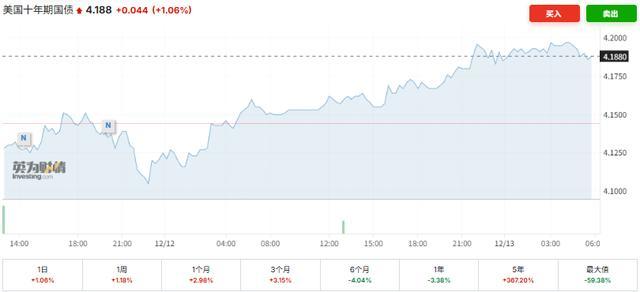
1. Report Industry Investment Rating No information provided in the report. 2. Core Views of the Report - Despite the Fed's 25 - basis - point rate cut and the end of QT, Powell's hawkish stance on the December rate - cut outlook led to a significant drop in the December rate - cut expectation. Gold prices rebounded and then declined, while silver prices followed gold in giving up gains, but silver was stronger than gold under an optimistic trade scenario. Today, the progress of China - US trade negotiations should be monitored, and both gold and silver prices face pressure, though the pressure on silver is more limited [4][6]. - With Trump's inauguration, the world has entered a period of extreme turmoil and change. Inflation expectations have shifted to economic recession expectations. Gold and silver prices are difficult to fall, and gold is still prone to rising and hard to decline [10][13]. 3. Summary According to the Directory 3.1. Previous Day's Review - **Gold**: After the Fed's 25 - basis - point rate cut and the end of QT, Powell's hawkish remarks on the December rate - cut outlook caused gold prices to rebound and then fall. US and European stock indices closed mixed. US Treasury yields rose collectively, with the 10 - year Treasury yield up 9.82 basis points to 4.074%. The US dollar index rose 0.43% to 99.16, and the offshore RMB depreciated slightly against the US dollar to 7.0968. COMEX gold futures fell 1.04% to $3941.7 per ounce [4]. - **Silver**: Silver prices followed gold in rebounding and then falling due to Powell's hawkish comments. The December rate - cut expectation dropped significantly. Under an optimistic trade situation, silver was stronger than gold. COMEX silver futures fell 0.1% to $47.275 per ounce [6]. 3.2. Daily Hints - **Gold**: The gold futures price was 910.88, the spot price was 908.1, and the basis was - 2.78, indicating that the spot was at a discount to the futures, which was bearish. Gold futures warehouse receipts increased by 801 kilograms to 87816 kilograms, also bearish. The 20 - day moving average was upward, and the K - line was below the 20 - day moving average, showing a neutral signal. The main net position was long, but the main long positions decreased, which was bullish [5]. - **Silver**: The silver futures price was 11338, the spot price was 11311, and the basis was - 27, indicating a neutral situation. The Shanghai silver futures warehouse receipts decreased by 3599 kilograms to 653828 kilograms, which was bullish. The 20 - day moving average was upward, and the K - line was above the 20 - day moving average, showing a neutral signal. The main net position was long, and the main long positions increased, which was bullish [6]. 3.3. Today's Focus - Time - pending events include a state leader's visit to South Korea for the 32nd APEC Economic Leaders' Meeting and a state visit to South Korea, the closing of the 2025 Financial Street Forum Annual Conference, and the Moore Threads' first MUSA Developer Conference. Other key events include the Bank of Japan's interest - rate decision and economic outlook report, a press conference by the Bank of Japan's governor, the preliminary GDP data for the third quarter in France, Germany, and the Eurozone, the German unemployment figures and unemployment rate for October, the preliminary CPI data for Germany in October, the European Central Bank's interest - rate decision, a press conference by the ECB's president, and a speech by a Fed official [15]. 3.4. Fundamental Data - **Gold**: Bullish factors include the global turmoil and the shift from inflation expectations to economic recession expectations after Trump's inauguration, and the ongoing verification process between the expected and actual policies of the US new government, which keeps gold prices high and makes them prone to rising. Bearish factors are not clearly stated in the context. The risk points include Trump's new policies, an improved outlook for the US economy, a significant interest - rate hike by the Bank of Japan, the end of the Russia - Ukraine conflict, and black - swan events [10][11]. - **Silver**: Bullish factors are similar to those of gold, with the additional support from concerns about non - ferrous metal tariffs. Bearish factors include the end of rate cuts, an improved economic outlook, insufficient fiscal expansion in Europe, a resurgence of risk aversion, and the end of the Russia - Ukraine conflict. The risk points are the same as those for gold [13][14]. 3.5. Position Data - **Gold**: On October 29, 2025, the long positions of the top 20 in Shanghai gold increased by 222 to 170,205, a 0.13% increase; the short positions decreased by 1223 to 64,463, a 1.86% decrease; and the net long position increased by 1445 to 105,742, a 1.39% increase [29]. - **Silver**: On October 29, 2025, the long positions of the top 20 in Shanghai silver increased by 38 to 322,427, a 0.01% increase; the short positions decreased by 4394 to 246,819, a 1.75% decrease; and the net long position increased by 4432 to 75,608, a 6.23% increase [31].
美国贸易压力下,加拿大央行宣布降息25个基点
Sou Hu Cai Jing· 2025-10-29 17:31
Group 1 - The Bank of Canada lowered the benchmark interest rate by 25 basis points to 2.25%, marking the second consecutive rate cut to address economic weakness and trade tensions with the U.S. [1] - The Canadian economy contracted by 1.6% in the second quarter, primarily due to declines in exports and weak business investment [1] - The Bank of Canada expects inflation pressures to ease in the coming months, maintaining the inflation rate near the 2% target, and has revised its inflation forecast for 2025 down to 2.0% from 2.3% [1] Group 2 - Despite the rate cut, the Canadian dollar unexpectedly strengthened against the U.S. dollar, with the USD/CAD exchange rate dropping to approximately 1.3893, the lowest level since September 25 [2] - The Bank of Canada indicated that the current policy rate is considered appropriate if inflation and economic activity develop as expected, suggesting that the rate cut may signal the end of the easing cycle [2] - The Bank of Canada projects GDP growth of 1.2% in 2025, 1.1% in 2026, and 1.6% in 2027, with trade friction and weak external demand continuing to suppress Canadian exports and manufacturing activity [2]
贵金属早报-20251029
Da Yue Qi Huo· 2025-10-29 01:41
1. Report Industry Investment Rating There is no information provided regarding the report industry investment rating in the given content. 2. Core Viewpoints of the Report - Market waits for the Fed's interest rate decision on Wednesday. Gold prices first declined and then rebounded, while silver prices slightly recovered. There is still support from easing expectations, but gold prices face pressure due to optimistic trade negotiations. The downward pressure on gold prices persists with the return of optimistic trade expectations. The impact of the Fed's meeting on prices may be short - term [4][6]. - Gold: Despite the end of the decline in gold prices before the Fed's decision, the pressure from trade optimism remains. The premium of Shanghai gold remains at 1 yuan/gram. The Fed's meeting may bring back the support of easing, but the impact time is short [4]. - Silver: Silver prices follow gold prices. The premium of Shanghai silver has slightly expanded to 420 yuan/gram, and the domestic sentiment remains strong. Silver prices may be supported by the Fed's decision, but the impact is short - term [6]. 3. Summary According to the Directory 3.1. Previous Day's Review - **Gold**: The US three major stock indexes rose across the board, European three major stock indexes had mixed closing results. The 10 - year US Treasury yield fell 0.01 basis points to 3.976%, the US dollar index fell 0.09% to 98.73, and the offshore RMB appreciated against the US dollar. COMEX gold futures fell 1.28% to $3968.10 per ounce [4]. - **Silver**: Similar to gold, the market waited for the Fed's decision. The US three major stock indexes rose across the board, European three major stock indexes had mixed closing results. COMEX silver futures rose 0.78% to $47.14 per ounce [6]. 3.2. Daily Tips - **Gold**: - **Fundamentals**: Market sentiment is neutral. The Fed's decision is awaited, and there are both support from easing expectations and pressure from trade optimism [4]. - **Basis**: The basis is - 3.24, with the spot at a discount to the futures, which is bearish [5]. - **Inventory**: Gold futures warehouse receipts are 87,015 kilograms and remain unchanged, which is bearish [5]. - **Technical Chart**: The 20 - day moving average is upward, and the K - line is below the 20 - day moving average, indicating a neutral situation [5]. - **Main Position**: The main net position is long, but the long position of the main force has decreased, which is bullish [5]. - **Silver**: - **Fundamentals**: Market sentiment is neutral. The Fed's decision is awaited, and silver prices are slightly recovering. Silver is stronger than gold under the current situation [6]. - **Basis**: The basis is - 14, with the spot at a discount to the futures, indicating a neutral situation [7]. - **Inventory**: Shanghai silver futures warehouse receipts increased by 9,784 kilograms to 657,427 kilograms, which is bullish [7]. - **Technical Chart**: The 20 - day moving average is upward, and the K - line is below the 20 - day moving average, indicating a neutral situation [7]. - **Main Position**: The main net position is long, but the long position of the main force has decreased, which is bullish [7]. 3.3. Today's Focus - **Events**: At 08:30, Australia's Q3 CPI; throughout the day, the Hong Kong stock market is closed; time to be determined, US President Trump visits South Korea and attends the APEC leaders' summit; at 12:05, New Zealand's central bank governor Hawkesby talks about central bank independence; at 20:30 (possibly), the US September merchandise trade balance; at 21:45, the Bank of Canada announces the interest rate decision; at 22:00, the US September pending home sales index; after the European stock market closes, Deutsche Bank releases its earnings report; at 02:00 the next day, the Fed releases the FOMC monetary policy meeting's resolution statement; at 02:30 the next day, Fed Chairman Powell holds a regular press conference [16]. 3.4. Fundamental Data - **Gold**: The logic for gold is that after Trump's inauguration, the world has entered a period of extreme turmoil. The inflation expectation has shifted to the economic recession expectation, and gold prices are difficult to fall. The verification between the new US government's policy expectations and the reality continues, and the sentiment for gold prices is high, still prone to rise and difficult to fall [11]. - **Silver**: Silver prices mainly follow gold prices. The concern about tariffs has a stronger impact on silver prices, and there is a risk of an enlarged increase. The influencing factors include both bullish factors such as global turmoil, increased expectation of interest rate cuts, tense situations in Russia - Ukraine and the Middle East, and bearish factors such as the end of interest rate cuts and the improvement of economic expectations [14][15]. 3.5. Position Data - **Gold**: The long position of the top 20 in Shanghai gold increased by 0.25% to 169,983, the short position decreased by 2.02% to 65,686, and the net position increased by 1.73% to 104,297 on October 28 compared to October 27. The SPDR gold ETF position continues to decrease [30][34]. - **Silver**: The long position of the top 20 in Shanghai silver decreased by 7.41% to 322,389, the short position decreased by 0.46% to 251,213, and the net position decreased by 25.71% to 71,176 on October 28 compared to October 27. The silver ETF position continues to decrease but is higher than the same period in the past two years. The Shanghai silver warehouse receipts stop falling and are at the lowest level in the past six years, while the COMEX silver warehouse receipts continue to decrease [31][37][40].
贝森特“指导”日本政府“少干预”,日本央行加息在望?
Hua Er Jie Jian Wen· 2025-10-29 01:04
Core Viewpoint - The recent statements by U.S. Treasury Secretary Bessent have stirred market expectations regarding Japan's monetary policy, emphasizing the need for the Japanese government to provide the Bank of Japan (BOJ) with sufficient policy space to stabilize inflation expectations and exchange rates [1][3][6]. Group 1: Market Reactions - Bessent's comments have been interpreted as external support for the BOJ to tighten monetary policy, increasing expectations for an interest rate hike [3][6]. - Following Bessent's post, the yen strengthened against the dollar, moving from 152.12 to approximately 151.54 [3]. - Despite expectations that the BOJ would maintain interest rates at the upcoming meeting, Bessent's remarks have added weight to the view that a rate hike may be imminent [6][9]. Group 2: Government and Central Bank Dynamics - Bessent's statements directly challenge the monetary policy stance of Japan's new Prime Minister, who advocates for low interest rates and has previously urged the BOJ to collaborate with the government to boost demand [7]. - The Japanese government is attempting to downplay the impact of Bessent's comments, with Finance Minister Katayama asserting that the meeting did not directly address BOJ's monetary policy [8]. - There appears to be a divergence within the Japanese government regarding the implications of a weak yen, with some officials viewing it as beneficial for the economy [8]. Group 3: Economic Indicators and Predictions - Japan's core inflation rate has remained above the BOJ's 2% target for over three years, raising concerns among policymakers about potential second-round price effects [9]. - Most economists predict that the BOJ will raise interest rates again in December or January [9][10]. - Analysts suggest that if Japan aims to correct the yen's weakness, it must consider monetary intervention or policy adjustments [10].
金价是否会重现上世纪80年代到上世纪末的最长熊市?
Ge Long Hui· 2025-10-28 22:30
Core Viewpoint - International gold prices fell below the $3,900 mark on October 28, raising concerns among investors about the potential for a prolonged bear market similar to the longest one experienced from the 1980s to the late 1990s [1] Group 1: Market Analysis - Short-term downward pressure on gold prices is expected due to multiple factors diminishing its appeal as a safe-haven asset [1] - The current economic environment and monetary policies differ significantly from those in the past, suggesting that a repeat of the long-term decline in gold prices is unlikely [1] Group 2: Future Outlook - The likelihood of a long-term weakening of the US dollar is high, which may lead to increased global liquidity [1] - Continuous gold purchases by central banks, geopolitical risks, and inflation expectations are factors that could stabilize gold prices after the short-term pressures are released [1]
事件点评:央行重启国债买卖或是一次性利好
KAIYUAN SECURITIES· 2025-10-28 14:13
Report Industry Investment Rating No relevant content provided. Core Viewpoints of the Report - The central bank's restart of treasury bond trading only affects the rhythm of the bond market, not its direction, similar to the impact of the stamp duty cut on the stock market in August 2023 [5]. - Against the backdrop of revised economic expectations, bond yields are expected to rise trend - like. For stock - bond allocation, it is maintained that in the second half of 2025, the economic growth rate may not decline significantly, structural issues such as prices are expected to improve trend - like, and there will be a continued switch between stock - bond allocation with bond yields and the stock market expected to rise [6][7]. Summary by Related Catalogs Central Bank's Reasons for Restarting Treasury Bond Trading - The central bank's trading of treasury bonds is mainly to enrich the channels for base money injection, and the channel for long - term base money injection is gradually shifting from foreign exchange purchases and reserve requirement ratio cuts to treasury bond trading. This change is in line with the central bank's established goals, and restarting treasury bond trading within the year is a reasonable arrangement. Also, it is a common and mature base money injection method in developed countries like the US and Japan [6]. Changes in the Central Bank's Treasury Bond Trading Method - In 2024, the central bank's bond purchases significantly affected the short - end market. Banks actively bought short - term bonds in the secondary market during the yield decline to meet purchase quotas, leading to a significant drop in short - term treasury bond yields. In 2025, since May, banks have restarted bond purchases with a similar volume to 2024, but short - term treasury bond yields did not decline abnormally. It is speculated that the bond purchase method has changed to passive buying, similar to a market - maker role. The impact on bond yields has shifted from pushing down short - end yields to curbing their upward movement. In 2025, the central bank may mainly buy bonds previously purchased by large banks, with large banks first stocking up bonds and then the central bank buying their existing bonds [3][6][7]. Impact of Central Bank's Treasury Bond Trading on the Bond Market - Historically and internationally, the central bank's selling of treasury bonds does not necessarily lead to an increase in bond yields, and buying does not necessarily lead to a decrease. For example, in August 2024, the central bank sold treasury bonds when the 10 - year treasury bond yield was low, but long - end and ultra - long - end bond yields still declined significantly. In recent years, central banks in the US and Japan have continuously bought bonds, but their long - term treasury bond yields have been rising, with 30 - year treasury bond yields above 3%. Inflation expectations are considered the key factor affecting bond yields. If inflation or inflation expectations rise, long - term yields should follow. For instance, in the first half of 2009, long - term treasury bond yields rose significantly due to rising inflation expectations despite low short - term yields [4]. - The central bank's announcement of treasury bond trading is likely to have a one - time impact. From international experience, central bank bond purchases do not change the bond market's direction. However, market expectations of central bank bond purchases have restricted the rise of bond yields. Since the central bank did not announce an interest rate cut simultaneously, the probability of future interest rate cuts is not high after this treasury bond trading. After yields decline, some investors may sell, pushing yields up again [4].