
金融强国

Search documents
刚刚,重磅刷屏!全文来了
中国基金报· 2025-12-06 10:18
加快打造一流投资银行和投资机构 更好助推资本市场高质量发展——吴清主席在中国证券业协会第八 次会员大会上的致辞 各位会员代表、各位来宾,同志们: 大家好!很高兴参加中国证券业协会第八次会员大会,我谨代表中国证监会,对大会的召开表示 热烈祝贺,向与会的各位代表和全行业同仁致以诚挚的问候!党的二十届四中全会着眼于中国式 现代化全局,对金融强国建设和资本市场高质量发展作出了重要部署。证券机构是资本市场上连 接投融资各方最重要的桥梁纽带,对于市场功能发挥和生态完善至关重要。下面,我重点围绕推 进证券行业高质量发展,同大家作个交流。 一、充分肯定近年来证券行业发展取得的成绩 第七次会员大会召开的四年多来,恰逢"十四五"从开局到即将收官。这期间,面对世纪疫情严重 冲击、地缘政治冲突延宕起伏、国际经贸环境急剧变化等一系列突发性超预期风险挑战,在党中 央、国务院坚强领导下,证监会深入贯彻落实习近平总书记重要讲话和关于资本市场的重要指示 批示精神,坚持稳中求进、以进促稳,会同市场参与各方,统筹推进资本市场防风险、强监管、 促高质量发展,系统重塑市场基础制度和监管逻辑;建设建强防波堤防浪堤,从政策、资金、预 期对冲等方面打好稳市 ...


吴清发声!明确证券业未来五年发展要求
Zhong Guo Zheng Quan Bao· 2025-12-06 08:36
12月6日,中国证监会党委书记、主席吴清在中国证券业协会第八届会员大会上发表题为《加快打造一 流投资银行和投资机构更好助推资本市场高质量发展》的主题演讲。 对于近年来证券行业发展取得的成绩,吴清表示,证券行业积极融入经济社会发展全局,主动服务国家 重大战略,深入落实以客户为中心的发展理念,业务结构、创新发展、风险管理能力等都发生了深刻的 变化,呈现出良好的发展态势。 吴清认为,在新征程上,证券行业作为直接融资的主要服务商、资本市场的重要看门人、社会财富的专 业管理者,发展空间广阔、大有可为,未来五年需要自觉担负起四个方面的使命: 一是在服务实体经济和新质生产力发展方面强化使命担当。证券公司连接资本市场和实体企业,拥有扎 实完备的研究体系、专业化的价值评估和风险定价能力,具备得天独厚的优势,在发掘企业的创新潜 力、匹配投融资发展需要、支持产业并购整合等方面都发挥了不可替代的关键作用,这些很大程度上也 构成了资本市场价值发现、资源配置等功能发挥的微观基础。 三是在加快建设金融强国方面强化使命担当。强大的金融机构是金融强国的关键要素,对资本市场来 说,更需要有国际一流的投资银行。证券行业每一家机构都要对标金融强国建 ...
“十五五”深度研究系列报告(七):如何建立“金融强国”?
ZHESHANG SECURITIES· 2025-12-05 07:26
Group 1: Central Bank Objectives - The "14th Five-Year Plan" emphasizes the need to "improve the modern central banking system," with a notable shift to explicitly include "economic growth" as a primary goal alongside currency stability and financial stability[1] - The dual-pillar framework will provide tools and institutional support for both currency stability and financial stability, marking a significant evolution in the central bank's objectives[3] - The adjustment in primary objectives reflects a structural recalibration, aligning legal requirements with modern central banking discourse, enhancing consistency between law and practice[19] Group 2: Macro-Prudential Management - The macro-prudential framework is expected to evolve along three main lines: objectives, tools, and mechanisms, focusing on systemic stability rather than individual risk management[3] - The macro-prudential toolbox will be systematized, with increased attention to stock, bond, and foreign exchange markets, enhancing the central bank's ability to manage systemic risks[3] - The central bank's focus will shift from temporary crisis management to regular expectation management and emergency arrangements, improving its crisis response capabilities[26] Group 3: Interest Rate Marketization - China's interest rate marketization has progressed through three stages: price liberalization, establishment of a rate transmission system, and refined price control[31] - The future evolution of the interest rate corridor is expected to tilt operational target rates from DR007 towards DR001, enhancing liquidity management and tool innovation[38] - The central bank is likely to explore conditional liquidity tools for non-bank institutions to provide support during extreme market fluctuations, preventing irrational spikes in short-term rates[5] Group 4: Capital Market Development - The "Five Major Articles" will shift focus towards three main lines: from tool coverage to institutional construction, from credit-led to a balanced approach between equity and debt financing, and from central bank-led initiatives to collaborative efforts across multiple policies[8] - The emphasis on direct financing through equity and bond markets aims to enhance the capital market's functionality, aligning it with the needs of the real economy[9] - The development of a direct financing system centered on technology enterprises will focus on deepening equity financing and thickening bond markets[9]
证券ETF(512880)涨超3%,券商行业并购重组加速
Mei Ri Jing Ji Xin Wen· 2025-12-05 06:15
Core Viewpoint - The securities sector is experiencing a strong surge, with the Securities ETF (512880) rising over 3% and trading volume increasing significantly. The industry is expected to see investment opportunities by 2026 due to ongoing policies supporting capital market activity and a shift towards a more concentrated market structure [1]. Group 1: Industry Outlook - The current valuation of the brokerage sector remains at historical lows, indicating potential for growth [1]. - By 2026, the industry is anticipated to move away from homogeneous competition, with a clearer distinction between leading brokerages and smaller, specialized firms [1]. - Expectations for capital market reforms are strengthening, with regulatory support for quality brokerages to enhance their capabilities through mergers and acquisitions, likely increasing industry concentration [1]. Group 2: Market Performance - The Securities ETF (512880) has seen a substantial inflow, with an increase of over 25 billion shares this year, bringing its total size to nearly 60 billion yuan, making it the largest in its category [1]. - Despite a slow bull market outlook, brokerages, as the "flag bearers" of the bull market, are currently underperforming, suggesting a need for increased attention and portfolio allocation [1].
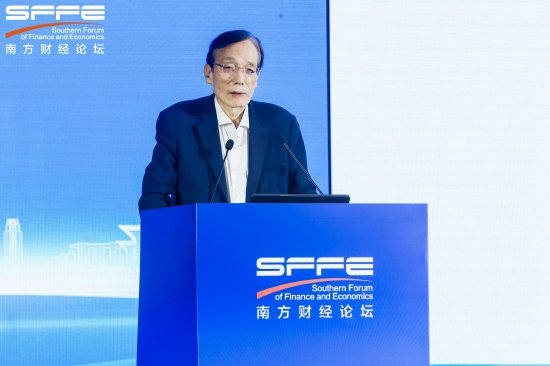
刘世锦:金融强国是实现制造强国和消费强国目标的桥梁
Xin Lang Cai Jing· 2025-12-05 03:23
Core Insights - The "Southern Finance Forum 2025" held in Guangzhou focuses on the theme "The Power of Consensus - Innovation Surge, China's Asset Revaluation" [1][7] - Liu Shijun, a key speaker, highlighted three major advantages of China's economy: catch-up potential, new technology revolution, and super-large market economy [3][10] Economic Advantages - **Catch-up Potential**: This refers to opportunities in areas where developed economies have already advanced, such as service industry development driven by consumption structure upgrades and the transformation of traditional manufacturing and agriculture [3][9] - **New Technology Revolution**: Emphasis on digital and green technologies as focal points for economic advancement [3][9] - **Super-large Market Economy**: While China has 400 million middle-income groups, there are 900 million low-income individuals who could transition to middle-income status, potentially creating a consumption market of 800 to 900 million [3][10] Strategic Goals - **Manufacturing Power**: Aim to cultivate large innovative enterprises at the global forefront [10] - **Consumer Power**: Target to become the largest consumer market globally [10] - **Financial Power**: Financial strength is essential for achieving the first two goals, acting as a bridge for development [10] Financial Development - Liu emphasized the need for a robust capital market and strong currency to support high-quality development, focusing on selecting viable projects to enhance resource allocation efficiency [10][11] - The importance of a strong currency is highlighted, with historical examples of the British pound and the US dollar being tied to strong economic and financial systems [11] Currency Internationalization - Current GDP contribution of China's economy is 18% globally, with manufacturing at 30%, but the currency's functional role is below 10% [11] - Liu proposed increasing offshore RMB supply to achieve scale economy and enhance RMB's international use [11][12] - Suggested adjustments to foreign trade strategy to balance imports and exports while using RMB for transactions, potentially converting a trade surplus of nearly $1 trillion into offshore RMB [12] Recommendations for RMB - Advocated for RMB appreciation to allow consumers to access more international products at better prices, supporting the goal of becoming a consumer powerhouse [12] - Suggested expanding the ecosystem of offshore RMB financial products to improve liquidity and convenience, accelerating the process of RMB internationalization [12]
中证1000ETF(159845)开盘一小时成交额超5亿元,远超同标的指数产品,盘中探底回升翻红
Sou Hu Cai Jing· 2025-12-05 02:46
12月5日,A股三大指数集体下跌,其中沪指下跌0.15%。小盘成长指数活跃,截至10:32,中证1000ETF (159845)探底回升涨0.10%。其他宽基指数中,上证50跌0.04%,沪深300跌0.16%,中证500跌 0.06%。 从个股表现来看,中证1000ETF(159845)前50只权重股中,涨幅靠前的有,应流股份涨5.1%,中钨高 新涨4.13%,惠城环保涨3.58%,东睦股份涨3.39%;然而和而泰、东芯股份表现不佳,分别跌9.36%、 4.46%。 从行业表现来看,中证1000ETF前几大重仓行业中,电子下跌0.52%,电力设备上涨0.47%,医药生物下 跌0.43%,计算机下跌0.06%,机械设备上涨0.93%。 资金面来看,中证1000ETF(159845)近五个交易日资金净流入2.43亿元,近十个交易日净流入2.98亿 元,最新规模达443.45亿元。今日盘中成交额5.01亿元,远超同类指数产品,近一周平均日成交高达8.3 亿元,流动性较好。 政策方面,12月3日,中央金融办副主任王江在《人民日报》发表文章《加快建设金融强国》,强调"加 快建设金融强国是推动高质量发展的必然要求"。一 ...
媒体视点 | 吴清:提高资本市场制度的包容性适应性(学习贯彻党的二十届四中全会精神)
证监会发布· 2025-12-05 01:47
Core Viewpoint - The article emphasizes the importance of enhancing the inclusiveness and adaptability of the capital market as a strategic deployment by the central government to achieve the goals of the 15th Five-Year Plan, aiming for a well-functioning capital market that coordinates investment and financing [2][3]. Group 1: Significance of Enhancing Capital Market Inclusiveness and Adaptability - The enhancement of capital market inclusiveness and adaptability is crucial for better serving the development of new productive forces, as a vibrant capital market is essential for promoting technological and industrial advancements [4][5]. - It is also necessary to ensure that the benefits of development reach the general public, as the capital market serves as a platform for over 200 million stock investors and 700 million fund investors to share in the economic growth [5][6]. - This enhancement is a requirement for promoting high-quality development of the capital market and building a strong financial nation, as it will improve market structure and quality, thereby increasing the core competitiveness and international influence of China's capital market [6][7]. Group 2: Understanding the Connotation and Principles of Enhancing Capital Market Inclusiveness and Adaptability - The capital market has a solid foundation for stable and healthy operation, but challenges remain, including the need for structural optimization and increased long-term capital inflow [7][8]. - The principles for enhancing inclusiveness and adaptability include maintaining political integrity, coordinating investment and financing, leveraging reform and opening up, and ensuring market stability [8][9]. Group 3: Key Tasks and Measures for Enhancing Capital Market Inclusiveness and Adaptability - The development of direct financing through equity and bonds is a key measure, with a focus on supporting innovative enterprises and enhancing the service capabilities of the capital market [11][12]. - There is a need to cultivate more high-quality listed companies, optimize their structure, and enhance their investment value through reforms in mergers and acquisitions [12][13]. - Creating an attractive environment for long-term investments is essential, which includes establishing mechanisms for long-term capital and promoting the development of public funds [12][13]. - Improving the scientific and effective regulation of the capital market is necessary to adapt to rapid market changes and enhance stability [13][14]. - Expanding high-level institutional openness in the capital market is vital for enhancing international competitiveness and facilitating efficient capital flow [14][15]. - Finally, fostering a regulated, inclusive, and vibrant capital market ecosystem is crucial, which includes strengthening legal frameworks and investor protection mechanisms [15].

关键词读懂“十五五”丨首次写入五年规划建议 “金融强国”建设向实向新
Yang Guang Wang· 2025-12-05 01:44
央广网北京12月4日消息(记者 牛谷月)党的二十届四中全会审议通过的《中共中央关于制定国民经济 和社会发展第十五个五年规划的建议》(以下简称"十五五"规划建议)提出,加快建设金融强国。这 是"金融强国"首次被写入五年规划建议。 作为国民经济的血脉、国家核心竞争力的重要组成部分,"金融"一词在"十五五"规划建议中被17次提 及,肯定了金融业在国家发展中的重要作用。"金融强国"的首次写入,更是体现了中国金融业发展目标 从大到强的深刻跃迁。 中国经济靠实体经济起家,也要靠实体经济走向未来。田利辉表示,只有让金融资源更加精准地流向实 体经济的关键领域和薄弱环节,引导金融聚焦制造业特别是高端制造、产业链供应链的稳定与升级、小 微企业与乡村振兴等,才能让金融"活水"润泽实体经济沃土,为实现经济高质量发展添动力、增活力。 如果说"向实"是脚踏实地、深植根基,那么"向新"就是引领未来。业内人士指出,科技创新是高质量发 展的核心驱动力。建设金融强国,必须打造一套能够高效支撑创新、敢于承担创新风险的金融体系。 中信证券有关负责人向记者表示,金融机构要围绕新质生产力等关键领域,持续提升对实体企业的全链 条、全生命周期金融服务能力, ...
吴清最新发声
清华金融评论· 2025-12-05 01:03
Core Viewpoint - The article emphasizes the importance of enhancing the inclusiveness and adaptability of China's capital market system as a strategic deployment by the central government to achieve high-quality development and modernization goals [4][5]. Group 1: Significance of Enhancing Capital Market System - The enhancement of the capital market's inclusiveness and adaptability is crucial for better serving the development of new productive forces, as a vibrant capital market is key to promoting technological and industrial advancements [6]. - It is essential for ensuring that the benefits of development reach the broader population, as the capital market serves as a platform for over 2 billion stock and fund investors to share in economic growth [7]. - This enhancement is a necessary requirement for promoting high-quality development of the capital market and building a strong financial nation, as it will improve market structure and quality, thereby increasing the capital market's core competitiveness and international influence [8]. Group 2: Understanding the Content and Principles - The capital market's long-term positive trends and strong foundations must be recognized, while also addressing existing quality issues, such as the need for better optimization of listed company structures and increased participation of long-term funds [9]. - The approach should focus on supporting technological innovation, meeting diverse investor needs, and enhancing regulatory efficiency to ensure a stable and healthy capital market [9][10]. Group 3: Key Tasks and Measures - Actively develop direct financing methods such as equity and bonds, with a focus on supporting high-quality enterprises and enhancing the service capabilities of the capital market [13]. - Foster more high-quality listed companies by optimizing their structures and encouraging cash dividends and buybacks to enhance investor returns [14]. - Create an attractive environment for long-term investments by improving conditions for various types of long-term capital and promoting public fund reforms [15]. - Enhance the scientific and effective regulation of the capital market to adapt to rapid financial innovations and ensure market stability [15]. - Gradually expand the capital market's openness to improve international competitiveness and facilitate efficient capital flow [16].

渤海证券研究所晨会纪要(2025.12.05)-20251205
BOHAI SECURITIES· 2025-12-05 00:25
Market Review - In the past five trading days (November 28 to December 4), major indices mostly rose, with the Shanghai Composite Index slightly up by 0.01% and the ChiNext Index up by 1.19% [2] - The trading volume decreased, with a total of 8.27 trillion yuan traded, averaging 1.65 trillion yuan per day, a decrease of 145.3 billion yuan compared to the previous five trading days [2] - Among the sectors, non-ferrous metals, telecommunications, and defense industries saw the highest gains, while media, beauty care, and computer sectors experienced the largest declines [2] Policy Insights - On December 3, the Deputy Director of the Central Financial Office emphasized the necessity of accelerating the construction of a financial powerhouse to promote high-quality development [3] - Key directions for capital market development include enhancing inclusivity and adaptability, and improving the coordination between investment and financing functions [3] - The focus will be on building a stable long-term investment ecosystem and increasing financing support for key industries and technologies during the 14th Five-Year Plan period [3] Strategy Insights - The A-share market is entering a phase of oscillation and waiting, with an emphasis on policy and technology as key themes for future investment [4] - Investment opportunities are identified in the TMT sector and robotics due to ongoing capital expansion by domestic and international cloud vendors and the acceleration of domestic computing power substitution [4] - The power equipment and non-ferrous metals industries are highlighted as having investment potential due to high global energy storage demand and the ongoing industrialization of solid-state batteries [4] - There are also opportunities in social services and resource sectors driven by policy adjustments focusing on structural changes and "anti-involution" [4] - The banking sector is noted for its investment potential due to a low interest rate environment and a shift in public fund holdings towards performance benchmarks [4]