
AI产业链

Search documents
帮主郑重:中长线布局几个靠谱方向及回调入场信号
Sou Hu Cai Jing· 2025-11-13 04:08
Industry Directions - The AI industry chain, particularly B-end application sectors such as AI programming and industrial intelligence, is seeing real monetary investment from companies, indicating a solid long-term growth potential [3] - The demand for renewable energy storage, including solar and energy storage solutions, continues to rise, supported by favorable policies; leading companies with stable orders and sufficient capacity present good entry points after market corrections [3] - Consumer upgrade-related sectors, such as high-quality food and smart home products, are expected to benefit from economic recovery, with reasonable valuations [3] - High-end manufacturing, including humanoid robotics and low-altitude economy support, represents future trends, making early investments advantageous [3] Entry Signals After Corrections - Two out of three signals should be met for entry: First, valuation metrics such as the CSI 300 price-to-book ratio falling below 1.4 or leading stocks in desired sectors correcting by 10%-15% to reach reasonable valuation levels [3] - Second, technical indicators showing market stabilization after sideways movement, such as two consecutive trading days without new lows and increasing trading volume [3] - Third, during corrections, a gradual decrease in trading volume indicates that selling pressure is diminishing; a subsequent increase in volume during price rises signals a good entry point [3]


持仓大幅回升,锚定AI与新技术 | 投研报告
Zhong Guo Neng Yuan Wang· 2025-11-13 01:27
以下为研究报告摘要: 核心观点 2025Q3持仓市值环比大幅回升。选取截至2025年09月30日全市场主动偏股型公募基金, 包括普通股票型、偏股混合型、灵活配置性、平衡混合型人民币基金共8244支公募基金作为 研究对象,合计总规模7.40万亿元,分析公募基金前十大重仓股中机械行业公司的变化情 况。今年三季度GDP增速4.8%,较二季度小幅回落;制造业投资高基数下走弱,三季度PMI 指数仍处荣枯线之下,1-9月制造业固定资产投资增速边际下滑1.1pct至4%。2025Q3机械板 块基金配置比例环比回升,偏股型基金重仓机械行业持仓市值合计1368.82亿元,环比大幅 增长35.69%,创23Q4以来新高;在基金总规模中占比4.17%,环比提升0.22pct,低配程度略 有扩大。 中国银河近日发布机械行业2025Q3基金持仓分析:今年三季度GDP增速4.8%,较二季 度小幅回落;制造业投资高基数下走弱,三季度PMI指数仍处荣枯线之下,1-9月制造业固 定资产投资增速边际下滑1.1pct至4%。2025Q3机械板块基金配置比例环比回升,偏股型基 金重仓机械行业持仓市值合计1368.82亿元,环比大幅增长35.69%, ...
A股总市值今年多了20万亿元
Shen Zhen Shang Bao· 2025-11-12 23:27
Group 1 - The A-share market has experienced significant growth in 2023, with the Shanghai Composite Index surpassing 4000 points and a cumulative increase of nearly 20% year-to-date, leading to a total market capitalization exceeding 108 trillion yuan, an increase of over 2 trillion yuan from the end of last year [1][2] - The total market capitalization of A-shares reached 108.27 trillion yuan as of November 11, 2023, marking a 26.37% increase from approximately 85.68 trillion yuan at the end of last year, the highest growth rate for the same period in nearly a decade [1][2] - The electronics, AI industry chain, and semiconductor sectors contributed over 80% of the market capitalization increase, highlighting the strong driving force of the "technology bull" market [1] Group 2 - Historical growth of A-share market capitalization can be divided into four phases: the initial phase (1990-2005), explosive phase (2006-2007), turbulent phase (2008-2018), and reform dividend phase (2019-present), with the current phase characterized by the implementation of the registration system and a surge in technology IPOs [2] - The electronics sector has become the largest industry by market capitalization in A-shares, surpassing the banking sector with a market value of 12.97 trillion yuan, an increase of 4.76 trillion yuan or 58% from the end of last year [2] - The current market capitalization of A-shares has surpassed levels not seen during previous peaks in 2007 and 2015, with the Shanghai Composite Index maintaining a position above 4000 points [2] Group 3 - The continuous rise in A-share market capitalization is driven by multiple favorable factors, including policy support, improving economic fundamentals, and favorable funding conditions [3] - The implementation of comprehensive reforms in the capital market, including the registration system and measures to attract long-term capital, has significantly enhanced the appeal of quality assets in the A-share market [3] - Economic growth is projected to remain strong, with GDP growth expected at 5% in 2024 and 5.2% in the first three quarters of 2025, providing robust support for the market [3]
招商证券:港股调整后仍有空间 配置上重回哑铃策略
Zhi Tong Cai Jing· 2025-11-12 08:40
Group 1 - The core viewpoint of the report is that the recent fluctuations in the Hong Kong stock market present investment opportunities, despite external volatility and investor sentiment leaning towards securing profits [1] - The report suggests that the market is expected to recognize various positive factors and discrepancies, leading to potential upward movement after a period of consolidation [1] - The recommended investment strategy is a "barbell strategy," focusing on aggressive investments in technology (AI chain) and non-ferrous metals, while defensive investments should concentrate on high-dividend stocks and turnaround situations [1] Group 2 - The "turnaround" strategy focuses on essential consumer goods, which are showing signs of supply-demand inflection after four years of difficulties, with valuations still at historical lows [2] - Companies with competitive advantages are expected to increase market share and profit margins, leading to alpha growth, and the industry competitive landscape is anticipated to improve [2] - The high dividend strategy highlights the Hang Seng High Dividend Yield Index, which has a dividend yield of 6%, supported by stable dividend capabilities and increasing demand for dividend stocks due to the growth of southbound capital [2]

招商证券:外部流动性预期存在向上修正空间 配置上建议重回哑铃策略
智通财经网· 2025-11-11 22:33
Core Viewpoint - The recent fluctuations in the Hong Kong stock market present investment opportunities, driven by external volatility and investor sentiment to secure profits. The market is expected to recognize various positive factors, leading to potential upward movement after a period of consolidation [1]. Group 1: Macroeconomic and Policy Insights - The macroeconomic environment in China continues to show marginal slowdown, but the new economy, particularly technology, is experiencing strong growth with a half-year profit growth rate of 31.7%, providing robust support for the stock market [2]. - There are signs of easing tensions in US-China relations, with recent high-level talks resulting in several temporary measures, supporting the view of "competition without conflict." The government's upcoming policies are expected to focus on technology innovation, expanding domestic demand, and macroeconomic adjustments [2]. Group 2: Liquidity and Valuation - Continuous net inflows from foreign and southbound funds are observed, with the Federal Reserve expected to lower interest rates by 25 basis points in December and three additional cuts next year, totaling 75 basis points [3]. - The end of the Fed's balance sheet reduction in December is anticipated to alleviate liquidity pressures, further encouraging overseas capital to flow into the Hong Kong stock market [3]. - The combination of fundamental support, favorable policies, and improved liquidity positions the Hong Kong stock market in a valuation trough, which is expected to drive a rebound [3]. Group 3: Investment Strategy - The recommended investment strategy is a return to a "barbell strategy," focusing on offensive positions in technology (AI chain) and non-ferrous metals, while defensive positions should emphasize dividend stocks and turnaround opportunities [4]. - The AI industry chain is highlighted as a resilient growth sector with significant long-term potential, with recommendations for investments in internet-related AI, humanoid robots, autonomous driving, and electric power [4]. - Non-ferrous metals are expected to benefit from a combination of dollar depreciation, low interest rates, and liquidity, with gold also gaining from global central bank purchases and safe-haven demand [4]. Group 4: Defensive Strategies - The "turnaround" strategy focuses on essential consumer goods, which are showing signs of supply-demand inflection after four years of challenges, with valuations still at historical lows [5]. - Companies with competitive advantages are expected to increase market share and profit margins, suggesting a phased buying approach for long-term holding [5]. - High dividend strategies are emphasized, with the Hang Seng High Dividend Yield Index offering a stable dividend yield of 6%, driven by increasing demand for "fixed income plus" products from southbound funds [5].
纠结于进退之间 公私募的“4000点时刻”
Shang Hai Zheng Quan Bao· 2025-11-11 02:16
Core Viewpoint - The market is experiencing upward fluctuations, with the Shanghai Composite Index frequently surpassing 4000 points, leading to a critical decision-making moment for professional investors [1][2] Group 1: Market Sentiment and Investor Behavior - There is an increase in the number of public and private funds facing restrictions, indicating a rise in cautious sentiment among investors [1] - Despite some investors considering profit-taking, many are choosing to hold their positions, reflecting confidence in the market's upward trajectory [2][4] - The stock private equity position index reached 80.16% as of October 31, marking a new high for the year [4] Group 2: Sector Focus and Investment Strategies - The technology sector has been a significant contributor to excess returns for public and private funds, prompting a strategic focus on optimizing portfolios within this sector [6][7] - Fund managers are shifting their strategies from valuation expansion to performance verification, emphasizing the importance of profit-taking and rotation in investments [6][8] - Key areas of interest include AI hardware, semiconductor equipment, and sectors benefiting from global demand [9][10] Group 3: Future Outlook and Investment Directions - Looking ahead, fund managers are optimistic about sectors such as AI and innovative pharmaceuticals, which are seen as foundational to national competitiveness and security [9] - The cyclical industry is expected to improve due to supply-side adjustments and increasing demand for materials like rare earths and lithium driven by AI development [9] - The market is anticipated to continue its upward trend, supported by factors such as the Federal Reserve's interest rate cuts and ongoing technological advancements [4][10]
创业板指跌超2%,资金却独宠它?揭秘红利低波ETF(512890)背后的“长钱”暗流
Xin Lang Ji Jin· 2025-11-10 04:15
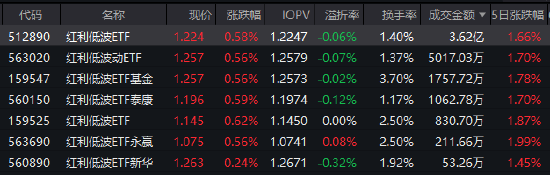
Core Viewpoint - The A-share market experienced a collective decline, with the ChiNext index dropping over 2%, while the Dividend Low Volatility ETF (512890) rose by 0.58%, indicating its resilience in a bearish market environment [1][2]. Fund Performance - The Dividend Low Volatility ETF (512890) achieved a price of 1.224 yuan with a trading volume of 3.62 billion yuan, leading its category in terms of trading activity [1][2]. - Over the past five trading days, the ETF saw a net inflow of 570 million yuan, with a total of 4.02 billion yuan over the last 20 days and 3.38 billion yuan over the last 60 days, highlighting strong investor interest [2][4]. - The fund has maintained positive returns for six consecutive years from 2019 to 2024, establishing itself as the only stock ETF in the A-share market to achieve this milestone [2][4]. Holdings and Sector Focus - The top ten holdings of the Dividend Low Volatility ETF mostly saw price increases, with notable performances from COFCO Sugar and Chengdu Bank [4]. - The ETF's holdings include significant positions in major banks, reflecting a strategy focused on stable dividend-paying stocks [4]. Market Outlook - Huatai Securities recommends a "barbell" investment strategy, suggesting that market focus will shift towards next year's profit expectations following the third-quarter reports [5]. - The advanced manufacturing sector is currently in a proactive inventory replenishment phase, with potential investment opportunities in technology and dividend assets [5]. - Guosen Securities anticipates rapid rotation of market hotspots, with structural highlights emerging from the third-quarter reports, indicating a resilient market outlook [5].

华富基金戴弘毅:二级债基迎接“优势时段”
Shang Hai Zheng Quan Bao· 2025-11-09 15:26
Core Viewpoint - The secondary bond fund market is experiencing significant growth and performance, driven by favorable market conditions and strategic asset allocation by fund managers [1][2]. Group 1: Market Performance - The secondary bond fund market has shown a "volume and price increase" trend this year, with rapid expansion in product scale and multiple new products launched [2]. - High-volatility secondary bond funds have attracted substantial inflows, particularly from institutional investors, due to their strong performance and ability to provide equity-like returns [2][3]. - As of the end of September, the "Hua Fu An Xin Bond" fund managed by Dai Hongyi achieved over 26% return in the past year, benefiting from precise positioning in high-growth sectors [2][3]. Group 2: Investment Strategy - The Hua Fu An Xin Bond fund has focused on three key sectors: the AI industry chain, innovative pharmaceuticals, and new consumer segments, capitalizing on emerging opportunities [2][3]. - The fund manager employs a flexible asset allocation strategy, adjusting stock and convertible bond positions based on market conditions to optimize returns [3]. - A self-developed macro quantitative model is utilized to enhance investment decisions, incorporating various economic factors and industry analyses to manage risks effectively [3]. Group 3: Market Outlook - The bond market is expected to benefit from improving macroeconomic conditions, with signs of recovery and potential inflows from equity markets [4]. - The fund manager anticipates that the equity market's long-term cycle remains intact, though short-term volatility may increase, prompting a balanced investment approach [5]. - Focus areas for equity investments include the AI industry chain, innovative pharmaceuticals, and emerging sectors like solid-state batteries and controllable nuclear fusion [5].
顶尖交流!全球知名机构与中国优秀上市公司重磅论坛
Zhong Guo Ji Jin Bao· 2025-11-07 09:58
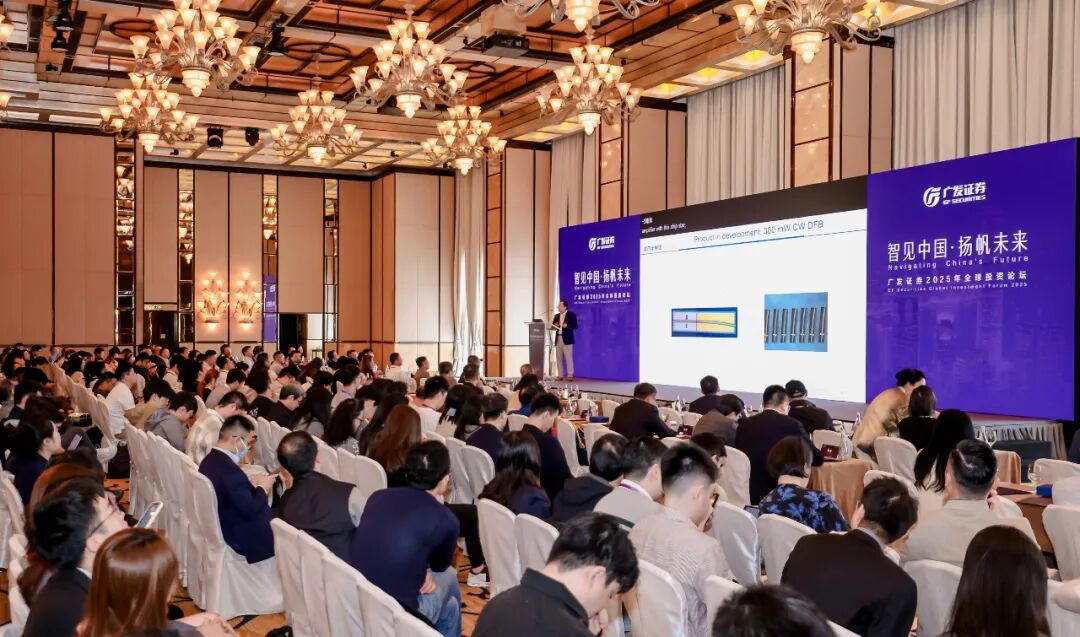
Core Insights - The "Intelligent China: Setting Sail for the Future" Global Investment Forum hosted by GF Securities in Hong Kong on November 6-7, 2023, attracted over a thousand participants, including top leaders from domestic listed companies and renowned global investment institutions [1][3][4] - The forum focused on key sectors such as AI, robotics, new energy, innovative pharmaceuticals, and new consumption, featuring around 80 well-known listed companies and approximately 30 industry leaders engaging in deep discussions with investors [3][4] - GF Securities is enhancing its international business efforts, positioning itself to compete with top global investment banks, driven by the need for internationalization and transformation of sell-side research [5][6] Group 1: Forum Highlights - The forum showcased insights from prominent figures such as Zheng Hongmeng (Industrial Fulian), Zhou Qunfei (Lens Technology), and Zhang Xinga (Yuanjie Technology), discussing trends in AI and innovative pharmaceuticals [3][4] - The event attracted significant interest from international investors, including sovereign funds and long-term funds, indicating a strong global interest in high-quality Chinese companies [4][6] Group 2: GF Securities' Strategy - GF Securities is committed to an international development strategy, using Hong Kong as a key hub to deepen its operations and enhance its brand influence in overseas markets [6][7] - The company aims to integrate domestic and international research efforts, providing seamless services to clients and leveraging its strong research capabilities to support cross-border business [7][10] Group 3: Research and Development - As of June 2025, GF Securities' stock research covers 28 industries and 997 A-share listed companies in China, along with 207 overseas listed companies, emphasizing its commitment to digital transformation in research [8][9] - The company is developing an English research product system to enhance its global research brand influence and is focusing on building overseas research teams in key sectors like TMT, new energy, and innovative pharmaceuticals [9][10]

英大证券晨会纪要-20251107
British Securities· 2025-11-07 01:48
Core Views - The A-share market has shown resilience against external market fluctuations, with the Shanghai Composite Index surpassing the 4000-point mark again, indicating a short-term recovery in market sentiment [2][11] - The report suggests that while the probability of maintaining the 4000-point level has increased, fluctuations are expected due to historical psychological pressure and a lack of strong catalysts in the short term [2][11] - Long-term positive forces remain, supported by macroeconomic policies and resilient corporate fundamentals, particularly from the third-quarter reports [3][12] Market Overview - On Thursday, the three major indices opened higher and the Shanghai Composite Index rose above 4000 points, with significant gains in sectors such as chemicals, non-ferrous metals, and semiconductors, while tourism and media sectors declined [5][6] - The total trading volume exceeded 20 trillion yuan, with the Shanghai Composite Index closing at 4007.76 points, up 0.97%, and the Shenzhen Component Index rising 1.73% [6][11] Sector Analysis - **Chemicals**: The chemical sector, particularly fertilizers and fluorochemicals, has seen significant gains, indicating a recovery phase after a cyclical downturn, supported by policy and demand growth [7][11] - **Non-Ferrous Metals**: The non-ferrous metals sector, especially aluminum, is experiencing new demand opportunities driven by the global data center construction boom, leading to a projected supply-demand gap [7][11] - **Robotics**: The robotics sector has shown substantial growth, with a notable increase in stock prices since early January. The sector is expected to benefit from strong internal growth and supportive government policies [8][11] - **Semiconductors**: The semiconductor sector is anticipated to continue its upward trajectory, driven by national policy support and increasing global demand for AI and high-performance computing [9][10][11] Investment Strategy - Investors are advised to focus on structural opportunities rather than getting overly concerned about index stability. Key investment themes include technology growth sectors like AI, semiconductors, and robotics, as well as high-dividend defensive sectors [3][12] - Caution is advised in the technology growth sector to avoid speculative stocks lacking performance support, while emphasizing the selection of companies with actual earnings [3][12]