新兴产业

Search documents
A股策略周报:关注“十五五”产业指引和三季报景气信号-20251026
Ping An Securities· 2025-10-26 11:23
Core Viewpoints - The A-share market experienced a rebound, with the technology sector regaining momentum, driven by improved risk appetite due to easing geopolitical tensions and favorable U.S. inflation data [2][16] - The "14th Five-Year Plan" development goals were clarified during the Fourth Plenary Session, emphasizing technological self-reliance and the cultivation of emerging industries [2][6] - The report suggests focusing on three main investment themes: technology growth sectors, industries benefiting from policy support, and consumer sectors with low valuations [2][16] Recent Economic Data - The GDP growth rate for Q3 was reported at 4.8%, a decrease from 5.4% in Q1 and 5.2% in Q2, indicating a marginal slowdown in economic growth [3][4] - Industrial production showed a year-on-year increase of 6.5% in September, with high-tech industries growing at 10.3% [3][4] - Retail sales growth slowed to 3.0% in September, reflecting the diminishing effects of the "trade-in" policy [3][4] Policy Tracking - The Fourth Plenary Session outlined major goals for the "14th Five-Year Plan," including significant improvements in high-quality development and technological self-reliance [6][7] - The session emphasized the importance of addressing rural issues and promoting urban-rural integration, with an estimated market space of around 10 trillion yuan over the next five years [6][7] - Financial policies will focus on maintaining stability in capital markets and enhancing the resilience of the financial system [6][7] Market Performance - The A-share market saw significant gains, with the Shanghai Composite Index rising by 2.9% and the ChiNext Index increasing by 8.0% [2][16] - Among 31 sectors, 28 reported positive returns, with telecommunications, electronics, and power equipment sectors leading the gains [2][16] - The average daily trading volume in the A-share market decreased to 1.8 trillion yuan, a drop of 18.04% from the previous week [2][16] Investment Recommendations - The report recommends focusing on sectors that are expected to benefit from both domestic and external demand, particularly in technology and traditional cyclical industries [2][16] - It also highlights the potential for improvement in sectors driven by policy support and those currently undervalued in the consumer space [2][16] - The report notes the importance of monitoring the upcoming "14th Five-Year Plan" guidelines and quarterly earnings reports for further investment insights [20]
硬科技投向标|科技部:持续加强“十五五”人工智能顶层设计 沐曦股份科创板IPO过会
Xin Lang Cai Jing· 2025-10-25 00:29
Policy - The Ministry of Science and Technology emphasizes the need to strengthen the top-level design and systematic deployment of artificial intelligence during the 14th Five-Year Plan, focusing on developing new model algorithms and high-performance computing chips [1] - The Fourth Plenary Session of the Central Committee highlights the importance of cultivating and expanding emerging and future industries, aiming to build a modern industrial system and strengthen the foundation of the real economy [1] Industry Growth - In Shanghai, the manufacturing output of the three leading industries increased by 8.5% year-on-year in the first three quarters, with artificial intelligence manufacturing growing by 12.8% [2] - The total output value of strategic emerging industries in Shanghai's manufacturing sector rose by 7.3%, with the new energy industry growing by 19.6% [2] Regional Initiatives - Guangdong Province has launched an action plan to support high-quality development in manufacturing through artificial intelligence, including the establishment of an industrial model evaluation system and financial support for enterprises [3] - Zhejiang Province aims for over 90% penetration of intelligent applications by 2030, with plans to develop leading intelligent platforms and high-value scenarios [3] IPO and Financing - Domestic GPU manufacturer Muxi Co., Ltd. has received approval for its IPO, aiming to raise 3.904 billion yuan for various AI-related projects [5] - Robotics company Leju Robotics completed a 1.5 billion yuan Pre-IPO financing round, with plans for an upcoming IPO [5] - New Stone Technology announced over 600 million USD in Series D financing, led by UAE-based investors [6] - Eagle Semiconductor completed over 700 million yuan in Series B+ financing, setting a record for VCSEL startups in China [7] - Jiushi Intelligent raised 100 million USD in Series B4 financing, led by Ant Group [8] - Zhongzhi Keyi completed over 100 million yuan in Series A financing, focusing on fast imaging technology [9] - Renxin Technology raised over 100 million yuan in Series A+ financing for automotive chip production [10] - Suzhou Xien Technology completed several hundred million yuan in Pre-A+ financing, focusing on servo systems and chips [11] Market Movements - Hu Silicon Industry announced plans for a share reduction of up to 2% by its largest shareholder, the National Integrated Circuit Industry Investment Fund [12] - Tailin Micro plans to reduce its shares by up to 2% due to operational needs [13] - Lixin Micro's major shareholder intends to reduce its stake by up to 3% [14] - Yandong Micro reported a 1% reduction in shares by the National Integrated Circuit Fund [15] - Cambrian announced a specific issuance of shares to raise approximately 3.985 billion yuan [16] - Shunwei Storage is accelerating the expansion of its advanced packaging and testing center to enhance competitiveness [16]


中共中央新闻发布会:加快新能源发展,推动氢能和核聚变能成为新的经济增长点
中关村储能产业技术联盟· 2025-10-24 11:55
Core Insights - The most significant outcome of the 20th Central Committee's Fourth Plenary Session is the approval of the "Suggestions on Formulating the 15th Five-Year Plan for National Economic and Social Development" [3] Group 1: Economic Development Strategy - The "15th Five-Year Plan" emphasizes the importance of innovation and nurturing new industries, with a target for the "three new" economy's contribution to GDP exceeding 18% by 2024 [5] - The plan aims to develop strategic emerging industries such as new energy, new materials, aerospace, and low-altitude economy, which are expected to create several trillion-yuan markets [5] - Future industries like quantum technology, biomanufacturing, hydrogen energy, nuclear fusion energy, brain-computer interfaces, embodied intelligence, and sixth-generation mobile communication are identified as new economic growth points [5]

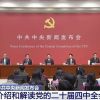
“未来10年将再造一个中国高技术产业”
FOFWEEKLY· 2025-10-24 10:01
Group 1 - The core viewpoint of the article emphasizes the importance of fostering new and emerging industries as part of China's economic strategy, with a target for the "three new" economy's contribution to GDP exceeding 18% by 2024 [1] - The article outlines the strategic focus on developing new pillar industries, including new energy, new materials, aerospace, and low-altitude economy, which are expected to create several trillion-yuan markets [1] - It highlights the forward-looking layout of future industries such as quantum technology, biomanufacturing, hydrogen energy, nuclear fusion, brain-computer interfaces, embodied intelligence, and sixth-generation mobile communication, which are anticipated to become new economic growth points over the next decade [1]

25家A股“分拆”提速,新兴产业成主力军
Huan Qiu Wang· 2025-10-24 07:55
Group 1 - The core viewpoint of the articles highlights the increasing trend of spin-off listings among A-share companies, with 25 companies updating their capital operation plans this year, reflecting a market-driven characteristic of steady progress and strategic adjustments [1][2] - Among the 25 companies, 5 have successfully completed spin-off listings, while 9 have terminated their plans due to market changes or strategic shifts, and 11 are in various stages of review and approval [1] - The spin-off listings are primarily concentrated in high-tech industries such as information technology, advanced equipment manufacturing, and new materials, indicating a strong recognition of technological innovation and industrial upgrading by the capital market [1][5] Group 2 - The "A拆A" model has diversified listing paths across multiple capital market platforms, including the main board, Sci-Tech Innovation Board, Growth Enterprise Market, and Beijing Stock Exchange, enhancing the success rate of spin-off listings [2] - The selection of listing locations also includes "A拆H," with 8 companies planning to list their subsidiaries on the Hong Kong main board, which helps enhance international influence and optimize financing structures [4] - Regulatory reforms since 2025 have provided a solid institutional guarantee and favorable market environment for the orderly advancement of spin-off listings, allowing companies to better implement their development strategies [4][5]

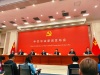
郑栅洁:未来十年再造一个中国高技术产业,适度超前建设新基建
2 1 Shi Ji Jing Ji Bao Dao· 2025-10-24 05:20
Core Viewpoint - The Fourth Plenary Session of the 20th Central Committee of the Communist Party of China emphasized the importance of building a modern industrial system and strengthening the foundation of the real economy as a strategic task for national development [3]. Group 1: Modern Industrial System - The session highlighted the need to focus on the real economy, advocating for intelligent, green, and integrated development to accelerate the construction of a manufacturing powerhouse, quality powerhouse, aerospace powerhouse, transportation powerhouse, and cyber powerhouse [3]. - The proposal aims to maintain a reasonable proportion of manufacturing and establish a modern industrial system centered on advanced manufacturing [3]. Group 2: Key Tasks - The four key tasks outlined in the proposal are: solid foundation upgrading, innovation nurturing, capacity expansion and quality improvement, and strengthening the foundation and efficiency [4]. Solid Foundation Upgrading - This involves optimizing and upgrading traditional industries, which currently account for about 80% of the value added in manufacturing [4]. - The proposal anticipates a market space of approximately 10 trillion yuan to be created over the next five years, providing significant development momentum and benefits to people's livelihoods [4]. Innovation Nurturing - The focus is on cultivating and expanding emerging and future industries, with the "three new" economy's value added expected to exceed 18% of GDP by 2024 [4]. - Strategic emerging industries such as new energy, new materials, aerospace, and low-altitude economy are to be developed, potentially creating several trillion-yuan markets [4]. - Future industries like quantum technology, biomanufacturing, hydrogen energy, and sixth-generation mobile communication are identified as new growth points for the economy [4]. Capacity Expansion and Quality Improvement - The proposal emphasizes the need for high-quality and efficient development of the service industry, which still has significant room for expansion and improvement [5]. - Actions to enhance the integration of modern services with advanced manufacturing and modern agriculture are proposed to create new economic growth spaces [5]. Strengthening Foundation and Efficiency - The plan includes constructing a modern infrastructure system, leveraging China's existing extensive infrastructure network [5]. - It calls for coordinated planning and moderately advanced construction of new-type infrastructure to enhance connectivity and safety [5].
刚刚,利好引爆!集体飙涨,刷新十年新高!
天天基金网· 2025-10-24 05:20
Market Overview - On October 24, A-shares saw a collective rise in the three major indices, with the Shanghai Composite Index reaching a nearly ten-year high, up 0.42% [3][4]. - The Shenzhen Component Index increased by 1.3%, the ChiNext Index rose by 2.09%, and the STAR Market 50 Index surged by 2.98% [4]. - The total market turnover reached 1.24 trillion yuan, showing a significant increase compared to the previous day, with over 2900 stocks rising [4]. Sector Performance - The technology sector, particularly memory chips, commercial aerospace, satellite internet, and semiconductors, led the gains in the morning session [4][9]. - Conversely, sectors such as ice and snow tourism, coal mining, oil and gas extraction, real estate, liquor, and steel experienced pullbacks [4][5]. Notable Stocks - In the Hong Kong market, the Hang Seng Index rose by 0.59%, with notable gains in semiconductor stocks like Hua Hong Semiconductor, which surged nearly 12% [6][7]. - The A-share electronic sector saw significant increases, with stocks like Purun Co., Kexiang Co., and Shengyi Technology hitting the daily limit of 20% [9][10]. Coal Sector - The coal sector faced a notable decline, with companies like Antai Group and Yunmei Energy hitting the daily limit down, and others like Shaanxi Black Cat and Liaoning Energy experiencing significant drops [14][15]. - Daya Energy, which previously had a strong performance, saw a sharp decline of nearly 8% in early trading [15]. Future Industry Outlook - The National Development and Reform Commission emphasized the importance of nurturing emerging industries and future industries, projecting that the "three new" economy will account for over 18% of GDP by 2024 [11][12]. - Strategic emerging industries such as new energy, new materials, and aerospace are expected to create several trillion-yuan markets, with a focus on advanced technologies like quantum science and bio-manufacturing [12]. - Reports indicate that major suppliers like Samsung and SK Hynix plan to raise prices of DRAM and NAND flash memory by up to 30% by Q4 2025, signaling a shift towards a "super cycle" in the memory chip industry [12].




利好引爆!刚刚 集体飙涨
Zhong Guo Ji Jin Bao· 2025-10-24 04:55
Market Overview - On October 24, A-shares saw a collective rise in the three major indices, with the Shanghai Composite Index reaching a nearly ten-year high, closing up 0.42% [1][2] - The ChiNext Index rose by 2.09%, and the STAR 50 Index increased by 2.98%, indicating strong market performance [1][2] Sector Performance - The technology sector, including memory, commercial aerospace, satellite internet, and semiconductors, experienced significant gains, while sectors like ice and snow tourism, coal mining, oil and gas extraction, real estate, liquor, and steel saw pullbacks [2][4] - The total market turnover reached 1.24 trillion yuan, showing a noticeable increase compared to the previous day, with over 2,900 stocks rising [2] Notable Stocks - In the electronics sector, stocks related to memory, HBM, circuit boards, semiconductors, and advanced packaging surged, with companies like Puzai Co., Kexiang Co., and Shengyi Technology hitting the daily limit of 20% [4][5] - Honghua Semiconductor led the Hang Seng Technology Index with a nearly 12% increase, while other notable gainers included ASMPT and SMIC [3][4] Coal Sector - The coal sector faced a significant pullback, with companies like Antai Group and Yunmei Energy hitting the daily limit down, and others like Shaanxi Black Cat and Liaoning Energy experiencing substantial declines [10][11] Company Highlights - Zhujiang Piano experienced a dramatic trading session, initially hitting the daily limit down before rebounding to close at the daily limit up, marking its third consecutive limit-up day [12] - The company confirmed stable operational conditions and no significant changes in the internal or external business environment, following a notice of abnormal stock trading fluctuations [12] Future Economic Outlook - The National Development and Reform Commission indicated that the "three new" economy's contribution to GDP is expected to exceed 18% in 2024, highlighting the growth potential of emerging industries [7][8] - Strategic emerging industries such as new energy, new materials, and aerospace are anticipated to create several trillion-yuan markets, with significant investments in quantum technology and other high-tech sectors over the next decade [8]


利好引爆,A股集体飙涨
Zheng Quan Shi Bao· 2025-10-24 04:52
Market Overview - On October 24, the A-share market saw all three major indices rise, with the Shanghai Composite Index reaching a nearly ten-year high, closing up 0.42% [1] - The Shenzhen Component Index increased by 1.3%, the ChiNext Index rose by 2.09%, and the STAR 50 Index surged by 2.98% [2] Trading Volume and Stock Performance - The total trading volume across the market reached 1.24 trillion yuan, showing a significant increase compared to the previous day, with over 2,900 stocks rising [2] - The electronic sector experienced a notable surge, particularly in memory, commercial aerospace, satellite internet, and semiconductor stocks, which led the gains [2][4] Sector Performance - The memory sector saw a rise of 6.40%, with HBM up 4.95% and semiconductors up 3.92% [3] - Conversely, sectors such as coal mining, real estate, and tourism experienced declines, with coal stocks notably retreating [9][10] Notable Stocks - Individual stocks like Huahong Semiconductor rose nearly 12%, leading the Hang Seng Technology Index [3] - Stocks such as Puran Co., Kexiang Co., and Shengyi Technology hit the daily limit up of 20% [5][6] Policy and Future Outlook - The National Development and Reform Commission emphasized the importance of nurturing emerging industries, projecting that the "three new" economy will account for over 18% of GDP by 2024 [7] - The recent announcement from major suppliers like Samsung and SK Hynix indicates a potential price increase of up to 30% for DRAM and NAND flash memory by Q4 2025, signaling a shift towards a "super cycle" in the memory chip industry [8] Specific Company Movements - On the same day, Zhujiang Piano experienced a dramatic price movement, initially hitting the limit down before rebounding to a limit up, closing at 6.81 yuan per share [12][17]


利好引爆!刚刚,集体飙涨
Zhong Guo Ji Jin Bao· 2025-10-24 04:45
Market Overview - The A-share market experienced a collective rise on October 24, with the Shanghai Composite Index reaching a nearly ten-year high, closing up 0.42% [2][3] - The Shenzhen Component Index increased by 1.3%, while the ChiNext Index rose by 2.09%, and the STAR 50 Index saw a gain of 2.98% [2][3] Sector Performance - The technology sector, particularly in memory chips, commercial aerospace, satellite internet, and semiconductors, showed significant gains, leading the market [3][4] - The overall market saw a trading volume of 1.24 trillion yuan, with over 2,900 stocks rising [3] Notable Stocks - Honghua Semiconductor surged nearly 12%, leading the Hang Seng Technology Index [4] - Several stocks in the electronics sector, including Puran Co., Kexiang Co., and Shengyi Technology, hit the daily limit of 20% increase [6][7] - The stock of Zhujiang Piano initially dropped to the limit down but then surged to hit the limit up, closing at 6.81 yuan per share [13][18] Coal Sector - The coal sector faced a notable decline, with companies like Antai Group and Yunmei Energy hitting the limit down, while others like Shaanxi Black Cat and Liaoning Energy also saw significant drops [10][11] Future Industry Outlook - The National Development and Reform Commission emphasized the importance of nurturing emerging industries, projecting that the "three new" economy will account for over 18% of GDP by 2024 [8][9] - Strategic emerging industries such as new energy, new materials, and aerospace are expected to create substantial market opportunities in the coming years [9]