
智能网联汽车

Search documents
豫见•郑州 | 解码郑州汽车产业:黄河之滨,千亿“引擎”正轰鸣
Zheng Zhou Ri Bao· 2025-11-06 07:25
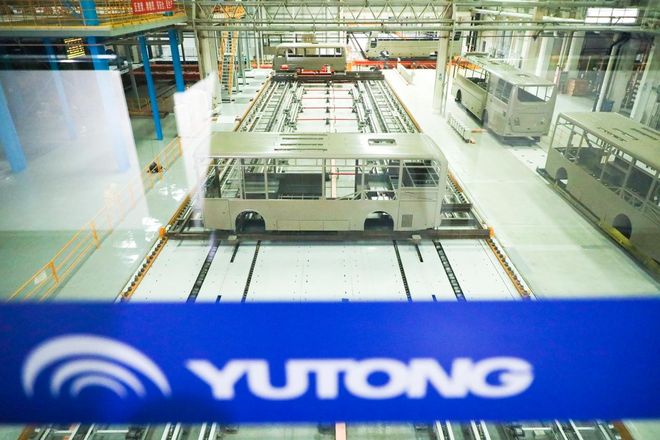
Core Insights - Zhengzhou's automotive industry is experiencing significant growth, particularly in the new energy vehicle (NEV) sector, with production expected to exceed 1.1 million vehicles in 2024, marking a historic milestone [1][3]. Industry Growth - In 2023, Zhengzhou's automotive production reached 830,000 units, a year-on-year increase of 61.7%, with NEV production at 316,000 units, up 350% [1]. - By 2025, the city aims to achieve a production capacity of over 3 million vehicles, reflecting a substantial increase from 700,000 units in 2012 [11]. Strategic Development - The shift towards NEVs began in 2014 when Zhengzhou identified the sector as a strategic priority, leading to the establishment of a trillion-yuan industry cluster [3]. - A series of supportive policies have been implemented, including action plans and implementation opinions to enhance the automotive manufacturing industry [4]. Project Efficiency - The efficiency of project execution is highlighted by the rapid development of the BYD project, which began construction just 37 days after signing in 2021 and produced over 1 million NEVs within 17 months [6]. Supply Chain and Ecosystem - Zhengzhou has developed a comprehensive supply chain, with over 150 core automotive parts manufacturers located in the city, ensuring that more than 60% of a vehicle's components can be sourced locally [6]. - The city has established a "4+N" development pattern for NEV parts, enhancing the local industrial ecosystem [6]. Logistics and Infrastructure - The logistics sector is also advancing, with the establishment of a multi-modal transport and logistics base for automotive exports, alongside the development of charging infrastructure, including 32 hydrogen stations and 200,000 charging piles [8]. Innovation and Long-term Vision - Continuous innovation is emphasized as a key theme, with significant investments in research and development, resulting in the establishment of 16 national-level technology platforms and 39 provincial-level R&D platforms [11]. - Zhengzhou's leadership is actively involved in fostering innovation, recognizing its importance for the city's future in the automotive sector [11].

11.6犀牛财经早报:“史上最长”春节假期激发A股旅游行情 OpenAI首席财务官称尚不准备进行IPO
Xi Niu Cai Jing· 2025-11-06 01:37
Group 1: Fund Purchase Restrictions - Recent increase in fund purchase restrictions, particularly for quantitative small-cap funds and QDII funds due to strong performance and overseas investments [1] - Fund companies are proactively limiting purchases to manage inflow and emphasize long-term performance stability [1] Group 2: A-share Tourism Market - A-share tourism sector shows active performance following the announcement of the longest Spring Festival holiday in history, lasting 9 days in 2026 [2] - Increased ticket search volume and travel interest noted, with expectations for a more balanced daily passenger flow during the holiday [2] Group 3: Non-Performing Asset Transfers - Multiple banks are actively announcing non-performing asset transfers, with nearly 90 banks reporting such actions since October, involving over 10 billion yuan [2] - Personal housing loans, consumer loans, and operational loans are the primary categories being transferred [2] Group 4: Hong Kong IPO Market - Hong Kong IPO market has reached 216.47 billion HKD in 2025, marking a significant recovery since 2021 [2] - Continued strong interest in IPOs is expected, with many companies waiting to list [2] Group 5: Financial Distress and Self-Rescue Measures - 178 companies in the A-share market are facing potential delisting risks due to financial indicators, with Q4 performance critical for survival [2] - Companies are taking self-rescue actions, including mergers, asset sales, and restructuring [2] Group 6: Electric Vehicle Industry Transformation - The number of new energy vehicles in China reached 36.89 million by mid-2025, indicating a shift towards smart and connected vehicles [3] - Consumer preferences are evolving, with increased focus on smart driving assistance and interactive experiences [3] Group 7: Low-altitude Logistics Development - Low-altitude logistics is gaining traction, with several provinces launching new policies and routes to enhance industry growth [4] - This emerging logistics method is seen as a cost-effective solution for improving logistics efficiency [4] Group 8: Controlled Nuclear Fusion Investment - Significant capital is flowing into the controlled nuclear fusion sector, with related indices showing over 65% growth this year [4] - The industry is expected to enter a capital expenditure acceleration phase during the 14th Five-Year Plan [4] Group 9: Puma's Restructuring Efforts - Puma reported a 10.4% decline in sales to 1.9557 billion euros in Q3 2025, leading to a net loss of 62.3 million euros [6] - The company plans to cut approximately 900 jobs globally by the end of 2026 as part of cost-reduction measures [6] Group 10: Apple’s Market Strategy - Apple plans to launch a low-cost MacBook and a foldable iPhone in 2026 to address declining sales in the Greater China region [7] - The company is also tightening control over its offline distribution channels to stabilize pricing and order [7] Group 11: Country Garden's Debt Restructuring - Country Garden's offshore debt restructuring plan has received approval from a majority of creditors, with a court hearing scheduled for December 4, 2025 [7] Group 12: Stock Market Movements - U.S. stock indices collectively rose, with the Nasdaq up 0.65% and the Dow Jones up 0.48%, driven by positive economic data and tech stock performance [13] - Bitcoin and Ethereum rebounded significantly after recent declines, indicating a recovery in the cryptocurrency market [13]
世界主流车企赴约 智慧出行和新能源科技亮相进博会
Shang Hai Zheng Quan Bao· 2025-11-05 18:41
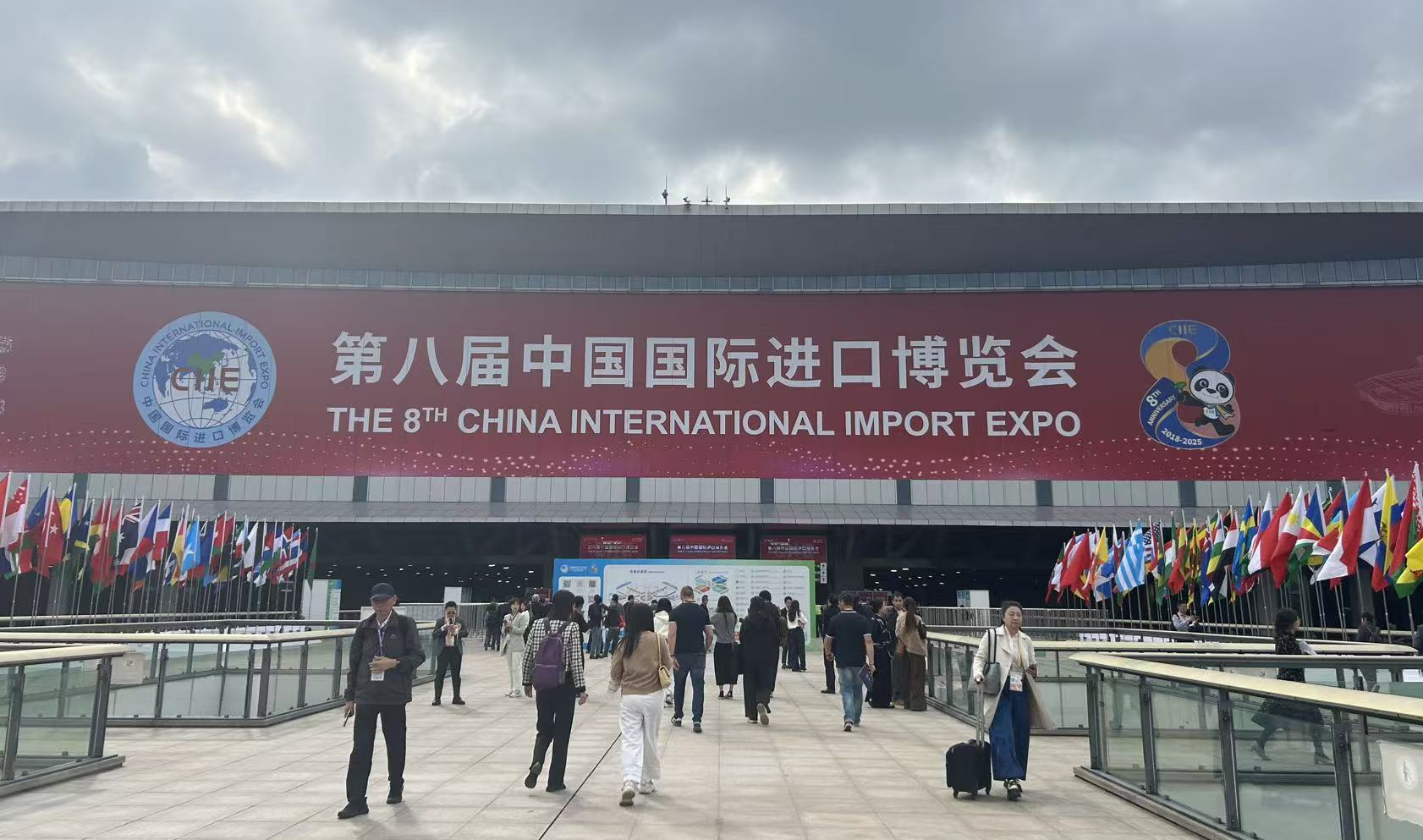
Core Insights - The 8th China International Import Expo (CIIE) opened in Shanghai on November 5, showcasing major global automotive companies and their advancements in smart mobility and new energy technologies [1] Group 1: International Automotive Companies' Participation - Major global automotive companies, including Volkswagen, Tesla, BMW, and Nissan, have participated in all eight editions of the CIIE, indicating their commitment to the Chinese market [1] - The term "full attendance" was frequently mentioned by executives from international car manufacturers, highlighting their ongoing engagement with the Chinese market [4] Group 2: Technological Innovations and Collaborations - Tesla showcased its latest electric vehicle models, including the Cybercab, which features a fully autonomous driving system without a steering wheel or pedals, set to begin mass production in Q2 2026 [2] - Volkswagen presented its new generation of smart connected vehicles, developed in collaboration with Chinese partner XPeng Motors, emphasizing its commitment to local development [2] - BMW introduced its new generation models equipped with advanced AI capabilities and is collaborating with Chinese tech firms to enhance user experience and smart driving solutions [3] - Nissan unveiled the world's first fuel vehicle equipped with Huawei's HarmonyOS cockpit, aiming to create a "smart fuel vehicle" [3] Group 3: Commitment to the Chinese Market - Volkswagen's chairman emphasized the company's long-term investment strategy in China, aiming to strengthen local R&D capabilities and promote high-quality industry development [4] - BMW's CEO highlighted the importance of the CIIE as a platform for global companies to innovate and collaborate with Chinese partners, focusing on sustainable and high-quality development [4] - Bosch's president in China reiterated the company's commitment to integrating with China's industrial development and supporting local innovations to connect with global markets [5] Group 4: New Developments - Nissan is set to establish its first joint venture vehicle import and export company in China, marking a significant step in its strategy to enhance local operations and global outreach [6]


小米集团-W(01810):手机加速高端化,汽车交付量提升
GOLDEN SUN SECURITIES· 2025-11-05 12:11
Investment Rating - The report maintains a "Buy" rating for Xiaomi Group [3][5]. Core Views - Xiaomi is accelerating its high-end smartphone offerings, with the recent launch of the Xiaomi 17 series achieving record sales within minutes of release. The company aims to mitigate storage cost pressures through product structure optimization [1]. - The automotive segment is showing promising growth, with 400,000 units delivered within a year and monthly deliveries exceeding 40,000 units in September and October 2025. The company is expected to achieve breakeven in quarterly automotive operations [2]. - Despite a slowdown in national subsidies for IoT products, Xiaomi's competitive edge in the IoT sector remains strong due to product quality and supply chain management [2]. Financial Projections - Revenue is projected to grow from 270.97 billion CNY in 2023 to 748.7 billion CNY by 2027, with year-on-year growth rates of -3%, 35%, 29%, 31%, and 22% respectively [4][10]. - Non-GAAP net profit is expected to increase from 19.27 billion CNY in 2023 to 79.53 billion CNY in 2027, with significant growth rates of 126%, 41%, 55%, 46%, and 29% [4][10]. - The company anticipates maintaining a gross margin of approximately 11% for Q3 and Q4 2025, despite rising storage costs [1]. Market Position - Xiaomi holds a 14% market share in the global smartphone market, ranking among the top three manufacturers. In China, it has a 15% market share, placing it fourth [1]. - The company has successfully entered the high-end smartphone market, with the Xiaomi 17 Pro Max leading sales in the new series [1]. Automotive Business - Xiaomi has delivered 400,000 vehicles since the launch of its automotive products, with a strategy to provide tax subsidies to enhance consumer benefits [2]. - The automotive division is expected to reach a quarterly breakeven point as delivery volumes increase [2]. IoT and Consumer Products - The IoT business is projected to maintain robust competitiveness despite reduced national subsidies, supported by Xiaomi's product quality and supply chain capabilities [2].

解码未来产业|北京“智造”新动能崛起 产业升级路径聚焦新高地
Xin Jing Bao· 2025-11-05 12:05
Group 1: Smart Manufacturing in Beijing - The smart manufacturing sector is becoming a new hallmark of Beijing's economy, driving the transformation of traditional manufacturing into advanced manufacturing [1][2] - Beijing's automotive industry is undergoing significant transformation towards electrification and intelligence, with a focus on optimizing industrial structure and enhancing competitiveness [4][5] - The number of new energy vehicles in Beijing has reached 1.2 million, nearly tripling since the end of the 13th Five-Year Plan, with production expected to reach 300,000 units in 2024 [4] Group 2: Key Companies and Innovations - Guanglian Technology is a pioneer in digital construction solutions, launching the AecGPT model and AI platform to empower the construction industry [2] - Beijing Off-road Vehicle Company exemplifies smart manufacturing with its fully automated factory and digital management across the production chain [2] - HeLiShi Group has developed an integrated intelligent system for production control, enhancing factory flexibility and resilience [3] Group 3: Policy and Development Initiatives - Beijing is promoting technological innovation in commercial aerospace, with the establishment of a strategic plan to accelerate the development of this sector [3][6] - The city aims to achieve a 70% CNC rate in key processes of major industries by 2026, alongside the establishment of numerous smart factories and digital workshops [6] - The implementation of the "Beijing Manufacturing Digital Transformation Plan (2024-2026)" aims to support the digitalization of manufacturing enterprises [6]
直击第八届进博会:特斯拉Cybercab迎来亚太首秀 12家知名外资车企探索出行新答案
Mei Ri Jing Ji Xin Wen· 2025-11-05 11:56
Core Insights - The 8th China International Import Expo (CIIE) commenced in Shanghai on November 5, featuring a prominent automotive and smart mobility exhibition area themed "Mobility, Infinite Possibilities" [1] - Major global automotive companies showcased their latest products, technologies, and solutions, indicating the expo's role as a platform for innovation and future mobility exploration [2] Group 1: Automotive Innovations - Tesla's Cybercab made its debut in the Asia-Pacific region, featuring a fully autonomous design without a steering wheel or pedals, aimed at addressing the 92% of U.S. travel scenarios that involve 1-2 passengers [3] - Volkswagen Group presented eight new intelligent connected vehicles, including concept cars like ID. AURA and ID. ERA, alongside showcasing its local software capabilities through CARIAD China [5] - Jaguar Land Rover introduced the new Defender OCTA, equipped with a pioneering 6D intelligent dynamic chassis, enhancing all-terrain capability and driving comfort [5] Group 2: Safety and Technology - Honda displayed advancements in passive safety technologies, including the Honda pedestrian dummy Polar III and a new ACE body structure designed to reduce impact on other vehicles [7] - Michelin showcased innovative products such as rigid inflatable boats made with FCG composite coating and the Haoyue 5E tire, while other suppliers highlighted their contributions to low-altitude economy technologies [9] Group 3: Commitment to the Chinese Market - Automotive executives emphasized their commitment to deepening local R&D and integrating local suppliers, with Volkswagen announcing a joint venture to develop system-level computing solutions in China [12] - Audi's CEO highlighted China as a crucial market, reaffirming the company's focus on investment in the region despite challenges [12] - General Motors expressed confidence in the Chinese market, showcasing models that reflect its deepening localization efforts and technological advancements [12]

大众中国启动智驾芯片自研,加速本土化落地
半导体芯闻· 2025-11-05 10:30
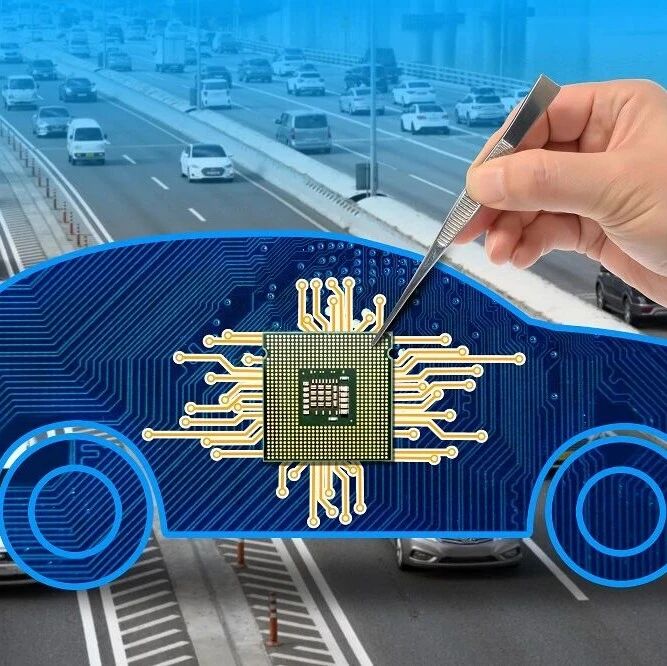
Core Viewpoint - Volkswagen Group (China) announced the establishment of a joint venture, CARIZON, with Horizon Robotics to design and develop system-on-chip (SoC) for smart connected vehicles in China [2][4]. Group 1: Joint Venture and Chip Development - The newly established joint venture, CARIZON, will focus on creating SoC specifically for Volkswagen's next-generation smart connected vehicles, featuring a powerful computing capability of 500 to 700 TOPS [4]. - The SoC will enhance advanced driver assistance systems (ADAS) and autonomous driving functions, improving decision-making efficiency and safety during high-frequency usage [4]. - The first ADAS solution from CARIZON is expected to be mass-produced within this year, marking the completion of the first phase of Volkswagen's autonomous driving R&D in China [4][6]. Group 2: Strategic Goals and Future Plans - Volkswagen Group is accelerating its "In China, For China" strategy, aiming to establish a comprehensive local R&D system covering chips, software, systems, and vehicles [8]. - Starting in 2026, the first models equipped with the new regional control electronic architecture (CEA) and CARIZON's advanced driving assistance features will be delivered to Chinese consumers [10]. - By 2027, Volkswagen plans to launch over 20 electrified models, and by 2030, approximately 30 pure electric models, significantly advancing its transition to the smart connected vehicle era [10].
如何做好新能源智能汽车产业?首都侨智发展大会上专家建言
Bei Jing Ri Bao Ke Hu Duan· 2025-11-05 09:21
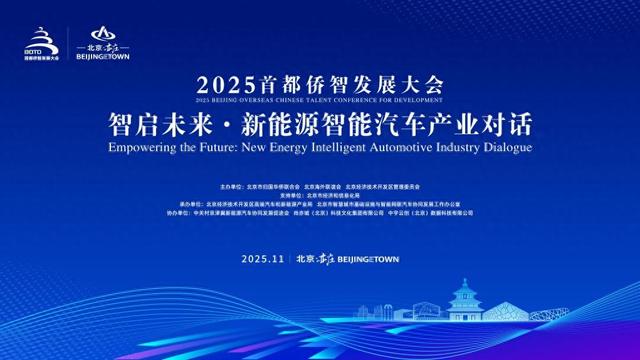
Core Insights - The 2025 Capital Overseas Intelligence Development Conference focused on the dialogue of the new energy intelligent vehicle industry, emphasizing breakthroughs in core technologies, industrial ecosystem construction, and international cooperation for high-quality development in Beijing's intelligent connected vehicle sector [1][8] Industry Overview - Beijing has established a complete industrial chain in the intelligent connected vehicle sector, from core technology research and development to vehicle manufacturing and application scenarios [3] - The city aims to enhance its policy support system and invites overseas Chinese and enterprises across the supply chain to collaborate for the high-quality development of the automotive industry [3] Technological Advancements - Experts discussed the transition from L2 level intelligent driving assistance to L3 conditional automated driving, highlighting the technical challenges and commercialization keys [3] - The conference featured insights on AI technology's role in reshaping cabin interaction experiences, addressing three core issues: rational definition, standardized design, and maintaining international leadership [4] - A focus on "vehicle-road-cloud integration" technology was presented, showcasing its potential to solve safety and cost challenges in advanced automated driving [4] Collaborative Opportunities - The conference highlighted the synergy between intelligent connected vehicles and embodied robots, with the potential to create a trillion-level new industry [5] - Leading enterprises shared their experiences in optimizing user experience in intelligent driving, large-scale production paths for L3, and innovations across various dimensions such as regulations, AI systems, and safety frameworks [7] Future Directions - The event served as a platform for multi-party exchanges, linking international resources and supporting the breakthrough of technological bottlenecks in Beijing's intelligent connected vehicle industry [8] - Beijing aims to integrate innovation chains, industrial chains, capital chains, and talent chains to build a global leading intelligent connected vehicle industry hub, contributing to the globalization of China's automotive industry [8]
北汽新能源10月销量破3万 同比大增112%
Yang Shi Wang· 2025-11-05 09:08
Core Insights - In October, BAIC New Energy achieved a remarkable sales milestone, with monthly sales reaching 30,542 units, a year-on-year increase of 112% and a month-on-month increase of 48.7% [1] - Cumulatively, sales for the first ten months reached 142,043 units, reflecting a year-on-year growth of 73% [1] Sales Performance - The direct reason for the sales increase is the precise layout of the "Arcfox + Xiangjie" dual-brand strategy and a strong user-centric approach [3] - The Arcfox brand alone sold 23,387 units in October, marking a year-on-year surge of 110%, with cumulative sales of 111,198 units from January to October [3] Product Highlights - The Arcfox T1, launched in September, offers a spacious A+ class with a wheelbase of 2,770mm and advanced safety features [3] - The Xiangjie brand, in collaboration with Huawei, sold 6,700 units in October, becoming the top-selling luxury electric sedan priced above 300,000 [5] - The Xiangjie S9T, launched in September, features a 3,050mm wheelbase, 1,677L storage space, and a pure electric range of 801km, achieving over 20,000 pre-orders within 25 days of launch [5] Technological Advancements - BAIC New Energy focuses on transforming its technological advantages into visible product strength, emphasizing safety and health in its offerings [7] - The company has obtained L3 road testing licenses and recently launched the L4-level Alpha T5 Robotaxi in collaboration with Pony.ai [7] - The "BAIC Yuanzhi Intelligent" system was officially released, showcasing the company's latest achievements in smart connected vehicles [7] Marketing and User Experience - The marketing strategy for the Arcfox T1 launch included a stand-up comedy format to engage younger audiences and highlight product features [8] - BAIC New Energy is enhancing its online and offline service networks, with over 580 stores nationwide and access to more than 1.2 million public charging stations [8] - The company aims to improve user experience by optimizing the entire service process and focusing on user satisfaction as a key metric for brand development [8]
地平线与大众汽车集团深化战略合作
Bei Jing Shang Bao· 2025-11-05 08:39
据了解,此次系统级计算方案的开发,将整合大众汽车集团在工程体系与系统集成方面的全球经验,与 地平线软硬结合技术能力和本地量产优势,联合打造中国新一代智能网联汽车的"智慧大脑"。该计算方 案将以"智能高效"为目标,通过算法优化实现算力功耗与系统性能的最佳平衡,进一步提升大众汽车集 团在华智驾系统的安全性与可扩展性。 北京商报讯(记者 刘晓梦)11月5日,大众汽车集团(中国)宣布,旗下软件公司CARIAD与地平线联 合成立的合资公司——酷睿程 (CARIZON) ,将在中国自主设计与研发系统级计算方案,为大众汽车集 团的高级驾驶辅助和自动驾驶系统提供支持。 ...