
科技自立自强

Search documents
爽!涨疯了
Xin Lang Cai Jing· 2026-01-06 01:07
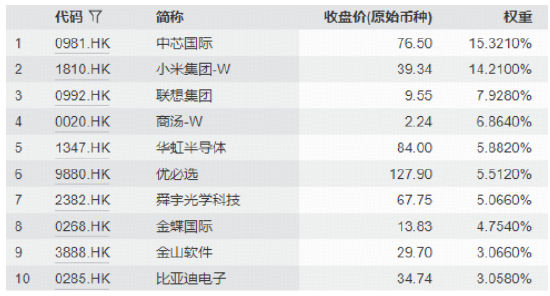
Market Overview - The A-share market opened strongly on January 5, 2026, with the Shanghai Composite Index breaking through 4000 points, while the Hang Seng Index maintained its gains after a 2.76% increase on January 2 [1][7] - Chinese Ping An saw a significant increase, reaching a peak of 72.85 with a rise of 6.51%, which could lead to increased buying volume in index funds due to its large market capitalization [2][8] Investment Strategies - The analysis suggests that investment opportunities in the Hong Kong market are greater than in the A-share market due to the passive appreciation of the RMB, recommending the selection of leading stocks and index funds [2][8] - For technology investments, the Hong Kong Information Technology ETF (159131) is highlighted as a unique product that tracks the only on-market index fund focused on the "Hong Kong chip" industry chain [2][10] ETF Composition - The top ten components of the Hong Kong Information Technology ETF include: - Semiconductor International (15.32%) - Xiaomi Group (14.21%) - Lenovo Group (7.93%) - SenseTime (6.86%) - Others including UBTECH and Sunny Optical Technology [3][9] - The ETF's composition is 70% hardware and 30% software, focusing on semiconductors, electronics, and computer software, which enhances its ability to capture trends in AI and hard technology in the Hong Kong market [4][10] Additional Investment Options - For investments in soft technology, the Hong Kong Internet ETF (513770) is recommended, which tracks the China Securities Hong Kong Internet Index and focuses on core AI assets in the Hong Kong market, with a current scale of 12.342 billion [6][10]

【省知识产权局】激活创新“密钥” 赋能三秦发展
Shan Xi Ri Bao· 2026-01-06 00:26
Core Viewpoint - The 20th National Congress of the Communist Party of China emphasizes "significantly improving the level of technological self-reliance and self-improvement" as a key goal for the 14th Five-Year Plan, highlighting the importance of independent innovation to seize technological high ground and foster new productive forces [1] Group 1: Strategic Goals and Framework - The 14th Provincial Congress of Shaanxi has approved the 14th Five-Year Plan, focusing on building a modern industrial system with Shaanxi characteristics, leveraging rich educational resources and addressing regional development imbalances [1][2] - Knowledge property rights are identified as a legal carrier of innovation results and a key support for building a modern industrial system, essential for activating corporate innovation vitality [1][2] Group 2: Knowledge Property Rights and Innovation - Knowledge property rights are crucial for protecting innovation, clarifying ownership, and ensuring reasonable returns for innovators, thus stimulating innovation among enterprises, universities, and research institutions [3][4] - The Shaanxi Provincial Knowledge Property Bureau has made significant progress in building a strong knowledge property province since the 14th Five-Year Plan, with a focus on enhancing the legal and policy support system [4][5] Group 3: Implementation and Policy Measures - The Shaanxi Provincial Knowledge Property Bureau plans to deepen institutional supply innovation during the 14th Five-Year Plan, implementing targeted policies to support different regions based on their unique characteristics [5][9] - The province aims to enhance the cultivation of high-value patents and improve the efficiency of patent examination to support original and disruptive innovations [5][9] Group 4: Economic and Industrial Development - The transition from a knowledge property importing country to a knowledge property creating country is underway, with a focus on high-value patents as a core element for enhancing industrial quality and efficiency [6][8] - Shaanxi is working towards building a trillion-level industrial cluster characterized by intelligence, greenness, and integration, supported by high-value patents and well-known brands [6][8] Group 5: Future Directions and Goals - The Shaanxi Provincial Knowledge Property Bureau will continue to strengthen the role of enterprises as the main body of innovation, enhancing their ability to utilize knowledge property rights effectively [10][11] - Future initiatives will include establishing a high-value patent conversion special zone and improving financial services related to knowledge property rights to support innovation and economic development [12][13]
经典常谈丨科技创新应当面向人的需要
Zhong Yang Ji Wei Guo Jia Jian Wei Wang Zhan· 2026-01-06 00:13
Core Viewpoint - The articles emphasize the importance of technology innovation in meeting people's needs and improving their quality of life, as highlighted by Xi Jinping's focus on making technology serve the public good [1][4]. Group 1: Historical Context of Technology Innovation - The widespread application of machinery in the 19th century led to explosive growth in productivity, with significant breakthroughs in textiles, mining, and transportation [1]. - Engels noted that the introduction of the steam engine in the textile industry increased cotton output by seven times, illustrating the transformative power of technology [1]. - Marx and Engels argued that technological advancements should be driven by human needs, as seen in their works that reflect this perspective [2]. Group 2: The Role of Technology in Society - Marx and Engels recognized that scientific and technological advancements are essential tools for human production and understanding of the world [2]. - They highlighted the role of innovations like steamships, railways, and telegraphs in advancing social progress, while also critiquing the alienation of workers under capitalism [2][3]. - The relationship between human needs and technological innovation is further explored, with Marx stating that without needs, there can be no production [3]. Group 3: Modern Implications and Future Directions - In the new era, the Chinese government aims to integrate a people-centered development approach into the entire process of technological innovation, focusing on urgent needs in health, education, employment, and ecology [4]. - The emphasis is on transforming technological achievements into driving forces for economic and social development, ultimately enhancing people's well-being [4]. - The ongoing technological revolution is reshaping lives at an unprecedented pace, with applications ranging from AI-assisted driving to green energy, underscoring the commitment to improving living standards through innovation [4].
郑栅洁:积极发展新质生产力 扎实推进高质量发展
Ren Min Ri Bao· 2026-01-05 23:54
Core Viewpoint - The report emphasizes the strategic importance of developing new quality productivity to achieve high-quality development during the 14th Five-Year Plan period and beyond, as articulated by key leaders in the Chinese government [2][3]. Group 1: Importance of New Quality Productivity - Developing new quality productivity is crucial for advancing high-quality development and achieving substantial progress in technological innovation and economic structure optimization [2][3]. - The 14th Five-Year Plan has seen significant achievements in economic strength and technological capabilities, marking a new historical stage for China's comprehensive national power [2][3]. - The concept of new quality productivity is a distinctive element of Xi Jinping's economic thought, providing scientific guidance for high-quality development in the new era [2][3]. Group 2: Theoretical Guidance for High-Quality Development - A new productivity theory is needed to guide high-quality development, as traditional theories must evolve to meet the challenges of the new development stage [3]. - The emphasis is on transforming and upgrading traditional momentum while fostering new momentum through localized development of new quality productivity [3]. Group 3: Strategic Advantages for Development - China possesses strategic advantages in developing new quality productivity, including institutional mechanisms, innovation ecosystems, and industrial systems [6][7][8][9][10]. - The institutional mechanism advantage includes effective national planning and macroeconomic governance that aligns various policies to support productivity growth [7]. - The innovation ecosystem is characterized by a concentration of advanced production factors and a vibrant environment for collaborative innovation [8]. - The industrial system advantage focuses on enhancing traditional industries and accelerating breakthroughs in emerging sectors, contributing to the overall development of new quality productivity [9]. Group 4: Key Actions for the 14th Five-Year Plan - The government plans to accelerate high-level technological self-reliance and strengthen the integration of technological and industrial innovation [11]. - Building a modern industrial system involves optimizing traditional industries and promoting strategic emerging industries [12][13]. - Enhancing the domestic market and expanding high-level opening-up are essential for fostering new quality productivity [14][15]. - Regional economic layout optimization and promoting green transformation are also prioritized to support sustainable development [15][16]. - Ensuring common prosperity through investment in human capital and improving living standards is a key focus area [16].
积极发展新质生产力 扎实推进高质量发展——访国家发展改革委党组书记、主任郑栅洁
Ren Min Ri Bao· 2026-01-05 22:49
编者按:近日,中央宣传部、中央和国家机关工委、教育部、中央军委政治工作部、北京市委联合举办 形势政策系列报告会。2025年12月25日,国家发展改革委党组书记、主任郑栅洁作了"积极发展新质生 产力扎实推进高质量发展"的专题报告,现以问答形式摘要刊发。 "十五五"时期,必须把因地制宜发展新质生产力摆在更加突出的战略位置 记者:习近平总书记强调,推动高质量发展,最重要是加快高水平科技自立自强,积极发展新质生产 力,在推动科技创新、加快培育新动能、促进经济结构优化升级上取得实质性、突破性进展。我们应如 何认识发展新质生产力的重要战略意义? 郑栅洁:"十四五"时期,以习近平同志为核心的党中央团结带领全党全国各族人民,迎难而上、砥砺前 行,推动经济运行稳中有进,新质生产力稳步发展,高质量发展取得新的历史性成就,我国经济实力、 科技实力、综合国力跃上新台阶。习近平总书记站在党和国家事业发展全局高度,对发展新质生产力的 理论和实践、内涵和外延、方法和路径,作出全面阐述、系统部署,有力有效引领我国经济社会高质量 发展。事实充分印证,发展新质生产力是习近平经济思想中最富有原创性、标识性的概念之一,深化了 我们党对于生产力发展规 ...
高盛力荐中国股票:2026年起年涨20%的底气何在?
Sou Hu Cai Jing· 2026-01-05 16:02
翻开高盛的分析框架,"政策支持"四个字反复出现。在基础设施投资方面,国家发改委已明确2024年将推动"十四五"规划重大工程实施;在产业政策上,中 央经济工作会议特别强调发展数字经济、人工智能等战略性新兴产业。更值得关注的是消费刺激政策——延长假期、落实带薪休假等制度设计,瞄准的正是 中等收入群体巨大的服务消费潜力。这些政策组合拳,正在为经济注入确定性增长动能。 当全球投资者都在寻找下一个增长引擎时,国际投行高盛的一份报告激起千层浪——建议高配中国股票,并预言2026年起中国股市将实现每年15%-20%的涨 幅。这究竟是华尔街的又一次唱多,还是确有真金白银的逻辑支撑?让我们揭开这份重磅报告背后的投资密码。 出口韧性构筑第一道防线 高盛报告中最关键的判断,在于指出中国出口将保持"结构性上行空间"。在全球产业链重构的背景下,中国制造业正在完成从"世界工厂"到"高端制造中 心"的蜕变。数据显示,2023年中国新能源汽车、锂电池、光伏产品"新三样"出口增长近30%,这种产业链升级带来的价值提升,正在改写中国出口的内 涵。正如报告所言,经常账户稳健态势有望延续,这为资本市场提供了最基本的安全垫。 政策工具箱里的增长动能 ...
博览宏图20260105
2026-01-05 15:42
Summary of Key Points from the Conference Call Industry Overview - The conference call discusses China's economic planning and development strategies for the "15th Five-Year Plan" (2026-2030), which is crucial for achieving a per capita GDP level comparable to that of moderately developed countries by 2035 [2][4]. Core Insights and Arguments - **Economic Growth Targets**: China's economic growth targets are expected to be moderately adjusted downwards, with the 2026 target likely set between 4.5% and 5% to alleviate debt expansion pressures and avoid over-reliance on stimulus policies, aiming for a more sustainable long-term growth rate of around 4% [2][6]. - **Strategic Opportunities and Risks**: The next five years will present a mix of strategic opportunities and challenges, emphasizing the need to leverage China's large market, complete industrial chain, rich talent resources, and institutional confidence to navigate external complexities [2][8]. - **Supply-Side Reform Focus**: The supply-side reforms will prioritize high-quality development and technological innovation, aiming to build a modern industrial system and strengthen the real economy while enhancing self-sufficiency in technology [2][9]. - **Manufacturing Sector Importance**: Maintaining a reasonable proportion of the manufacturing sector is critical for national competitiveness, avoiding premature deindustrialization, and ensuring a stable economic foundation [2][10]. - **Digital Economy Role**: The digital economy is expected to play a significant role in empowering various industries, enhancing productivity, and driving overall economic growth through technological innovation [2][12]. Additional Important Content - **Consumer Spending Strategies**: The plan emphasizes increasing the resident consumption rate, which is currently around 39.6%, aiming for approximately 48% by 2035. This will involve a combination of investments in goods and services and increasing public service spending [2][13][14]. - **Service Consumption Growth**: Service consumption is becoming a new economic growth engine, with significant potential in sectors such as childcare, education, elderly care, and healthcare, reflecting the diverse needs of different age demographics [2][15]. - **Fiscal Policy Adjustments**: To promote service consumption, fiscal policies will shift to support public service supply, creating job opportunities and enhancing overall social purchasing power through improved income distribution mechanisms [2][16]. - **Financial System's Role**: The financial system will focus on preventing financial risks while supporting the real economy, with an emphasis on regulatory oversight and participation in global governance to enhance risk management capabilities [2][17].
建筑材料行业跟踪周报:建筑业PMI回升符合季节性规律,值得关注-20260105
Soochow Securities· 2026-01-05 09:19
Investment Rating - The report maintains an "Overweight" rating for the construction materials industry [1]. Core Insights - The construction industry PMI has rebounded, aligning with seasonal trends, indicating a potential turning point for the real estate chain in 2026. The stability of infrastructure investment is deemed necessary amidst declining real estate investment expectations [4][5]. - The report highlights the importance of supply-side adjustments in the cement industry, with a focus on the exit of outdated capacities and the potential for improved profitability in 2026 [8][19]. - The glass market is experiencing price fluctuations, with a notable decline in average prices compared to the previous year, suggesting ongoing challenges in demand and supply dynamics [46][51]. Summary by Sections 1. Cement Market Overview - The national average price for high-standard cement is 352.8 RMB/ton, down 1.2 RMB/ton from last week and down 53.8 RMB/ton from the same period in 2024. Regions with price increases include Guangdong (+5.0 RMB/ton) and Central South (+1.7 RMB/ton), while declines were noted in the Yangtze River Basin (-2.1 RMB/ton) and Southwest (-9.0 RMB/ton) [14][15]. - The average cement inventory ratio is 60.4%, down 1.4 percentage points from last week but up 1.3 percentage points year-on-year. The average cement shipment rate is 40.3%, down 1.1 percentage points from last week and down 1.2 percentage points year-on-year [19][21]. 2. Glass Market Overview - The average price for float glass is 1121.3 RMB/ton, a decrease of 18.8 RMB/ton from last week and down 270.4 RMB/ton from the same period in 2024. The inventory of float glass in 13 provinces is 53.78 million heavy boxes, down 155,000 boxes from last week but up 1.361 million boxes year-on-year [46][51]. - The report indicates that the supply of float glass is under pressure, with production lines being shut down due to losses, which may lead to price rebounds in the future as demand stabilizes [45][46]. 3. Fiberglass Market Overview - The fiberglass market is expected to see stable growth in demand, particularly in wind power and thermoplastic applications, with effective capacity projected to reach 759.2 million tons in 2026, a year-on-year increase of 6.9% [8]. - The report suggests that the profitability of leading companies in the fiberglass sector may improve due to structural demand and new applications, enhancing their competitive advantages [8].
“十五五”科技自立自强开局:中科环保以创新构筑长期价值护城河
Sou Hu Wang· 2026-01-05 08:14
Core Viewpoint - The article emphasizes the importance of technological innovation in driving industrial transformation and enhancing the long-term value of companies in the environmental protection industry, particularly highlighting the achievements of Zhongke Environmental Protection in developing advanced waste gas purification technology [1][6]. Group 1: Policy and Industry Context - The "14th Five-Year Plan" and "15th Five-Year Plan" stress the need for high-level technological self-reliance and innovation-driven development, aiming to foster new productive forces and promote high-quality growth [1]. - The State Council's recent meeting outlined a comprehensive solid waste management action plan, focusing on building a harmless and resource-efficient governance system to enhance the circular economy [1]. Group 2: Technological Innovation and Cost Efficiency - Zhongke Environmental Protection's "multi-effect gas purification technology" has been recognized for its ability to significantly reduce operational costs by approximately 15%-20% while exceeding national ultra-low emission standards [2]. - The company has increased its R&D investment, with a 37.80% year-on-year growth in R&D funding in the first half of 2025, and has set a minimum R&D investment intensity of 3.5% as a performance indicator [3]. Group 3: Application and Market Potential - The gas purification technology can be applied not only in waste incineration and biomass power generation but also in industries such as coking, glass manufacturing, and cement production, with an estimated future market size of 7.5 billion [4]. - Zhongke's previous technology for low-temperature waste heat utilization has demonstrated commercial viability, generating additional electricity and profits, and has been recognized as a benchmark case in the industry [4]. Group 4: Industry Trends and Competitive Advantage - The environmental protection industry is entering a phase of optimization, with over 100,000 patent applications in environmental technology expected by 2025, indicating a shift towards refined and standardized development [5]. - Zhongke's sustained investment in R&D and its growing influence in the professional field contribute to its increasing revenue certainty and competitive edge in the market [5].
平安证券(香港)港股晨报-20260105
Ping An Securities Hongkong· 2026-01-05 05:21
Market Overview - The Hong Kong stock market experienced fluctuations, with the Hang Seng Index closing at 23,831 points, down 145 points or 0.61% [1] - The market saw a net inflow of funds through the Stock Connect, totaling 484 million HKD, with 283 million HKD from Shanghai and 201 million HKD from Shenzhen [1] - The semiconductor sector in Hong Kong showed strong performance, with the Wind Hong Kong Semiconductor Index rising by 7.87% [1] US Market Performance - The US stock market opened the year with mixed results; the Dow Jones increased by 0.66%, the S&P 500 by 0.19%, while the Nasdaq fell by 0.03% [2] - The semiconductor sector in the US saw significant gains, with the Philadelphia Semiconductor Index rising by 4% [2] - TSMC received a yearly license from the US government, allowing it to export chip manufacturing equipment to its Nanjing plant in 2026 [2] Investment Outlook - The Hong Kong market is expected to continue experiencing wide fluctuations, but southbound capital remains a significant net inflow, totaling 1,404.8 billion HKD in 2025, surpassing the 807.9 billion HKD inflow in 2024 [3] - The report emphasizes the importance of "technological self-reliance" as a core theme for future investments in Hong Kong stocks, particularly in sectors like semiconductors and robotics [3] - Recommendations include focusing on sectors supported by policies for "expanding domestic demand," such as sports apparel and non-essential services, as well as undervalued state-owned enterprises with high dividends [3] Key Company Highlights - Baidu Group's stock rose over 9% as it submitted a mainboard listing application for its subsidiary Kunlun Chip [1] - Netease-S saw a 6.6% increase, with its game "Yanyun" topping the iOS game sales chart in China [1] - In the US market, Micron Technology surged over 10%, while Nvidia and Intel also saw significant gains [9] Electric Vehicle Market - BYD surpassed Tesla in global electric vehicle sales in 2025, with a total of 4.6024 million units sold, a year-on-year increase of 7.73% [9] - Tesla's production and delivery numbers for Q4 2025 showed a decline, with production at 434,400 units, down 5.46% year-on-year [9] - The report suggests monitoring companies involved in the electric vehicle supply chain, including XPeng Motors and BYD [9]