美元贬值

Search documents
中美流动性共振的投资机遇
2025-09-10 14:35
Summary of Key Points from Conference Call Records Industry or Company Involved - The discussion primarily revolves around the global financial market, with a focus on the Chinese and American stock markets, monetary policies, and investment strategies. Core Insights and Arguments 1. **Global Liquidity and Asset Prices** Current resonance in monetary policies between China and the U.S. has led to global liquidity easing, benefiting various assets. However, there is a divergence between asset prices and economic fundamentals due to the forward-looking nature of asset prices and abundant liquidity [1][2][3] 2. **Chinese Stock Market Dynamics** The Chinese stock market is experiencing high liquidity, indicated by elevated financing balances, account openings, and turnover rates. This liquidity is primarily driven by the transfer of household deposits into the stock market, referred to as "residential deposit migration" [1][4][5] 3. **U.S. Dollar Downtrend** The U.S. dollar is entering a long-term downtrend, with diminishing relative economic advantages for the U.S. This trend is expected to lead to a depreciation of the dollar, creating a favorable investment environment for various assets globally [1][7] 4. **Impact of U.S. Treasury Issuance** The peak issuance of U.S. Treasuries is not expected to significantly impact dollar liquidity or financial markets this year. The overall trend remains one of increasing global liquidity, benefiting various capital forms [1][8] 5. **Inflation and Economic Pressures in the U.S.** The U.S. economy faces dual pressures of slowing growth and rising inflation, increasing the risk of stagflation. The Federal Reserve may face political pressure to lower interest rates, which would favor gold and Chinese stocks [1][11][22] 6. **Investment Recommendations** It is advised to prioritize allocations in gold, Chinese A-shares, and Hong Kong stocks due to favorable conditions in the current liquidity environment. The recommendation is to maintain a positive outlook and increase allocations during market fluctuations [1][12][31] 7. **Future of U.S. Inflation** U.S. inflation is expected to continue rising due to the disappearance of seasonal distortions and the ongoing effects of tariffs. The inflation rate could reach between 3.5% to 4% in the near term [1][18][21] 8. **Market Volatility and Investment Strategy** The global stock market is currently experiencing volatility, but September and October are seen as favorable investment periods. Investors are encouraged to adopt a proactive approach, increasing allocations in response to market dips [1][28][33] Other Important but Potentially Overlooked Content 1. **Quality of U.S. Inflation Data** The quality of U.S. inflation data is compromised by statistical biases and inconsistencies in data collection, which may obscure the true inflationary pressures [1][15][16] 2. **Trade War Impacts** The ongoing U.S. trade war is unlikely to resolve tax burdens completely, with most costs ultimately borne by U.S. consumers and businesses rather than foreign exporters [1][20] 3. **Future Policy Considerations** The future of liquidity in the Chinese market is contingent on government policies and fiscal measures, with potential downturns in liquidity expected if new policies are not introduced [1][26][27] 4. **Investment in Commodities** A cautious approach is recommended for commodity investments due to weak global demand and economic conditions, although specific sectors like rare earths may present opportunities [1][32]
美国经济衰退风险加剧,美元“失宠”,全球投资者“囤金”
Zhong Guo Jin Rong Xin Xi Wang· 2025-09-10 14:35
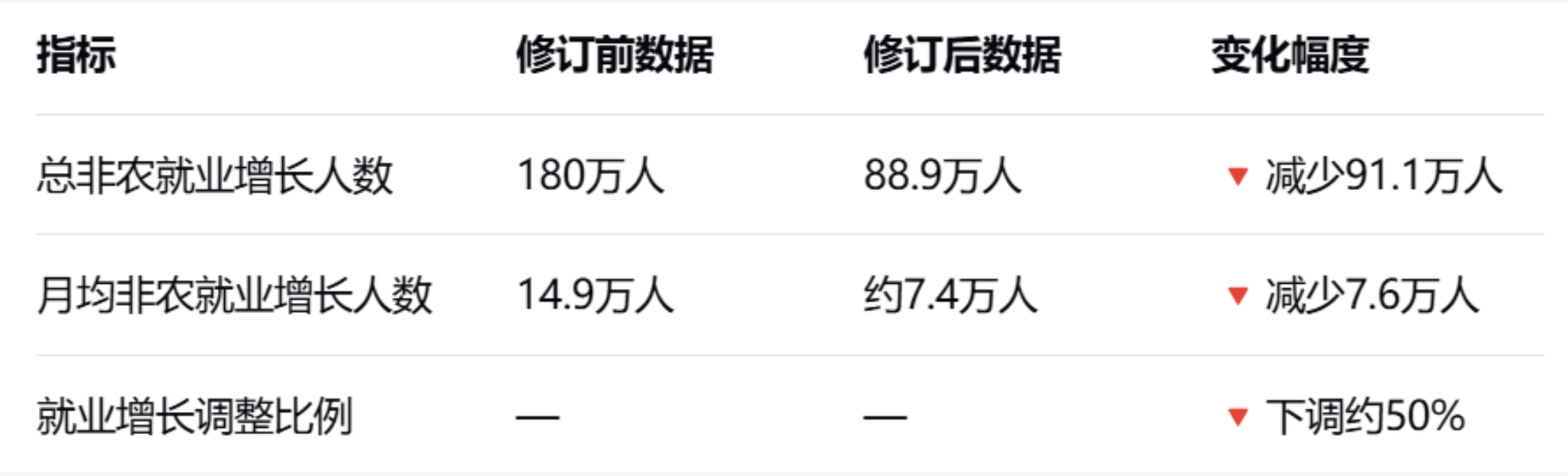
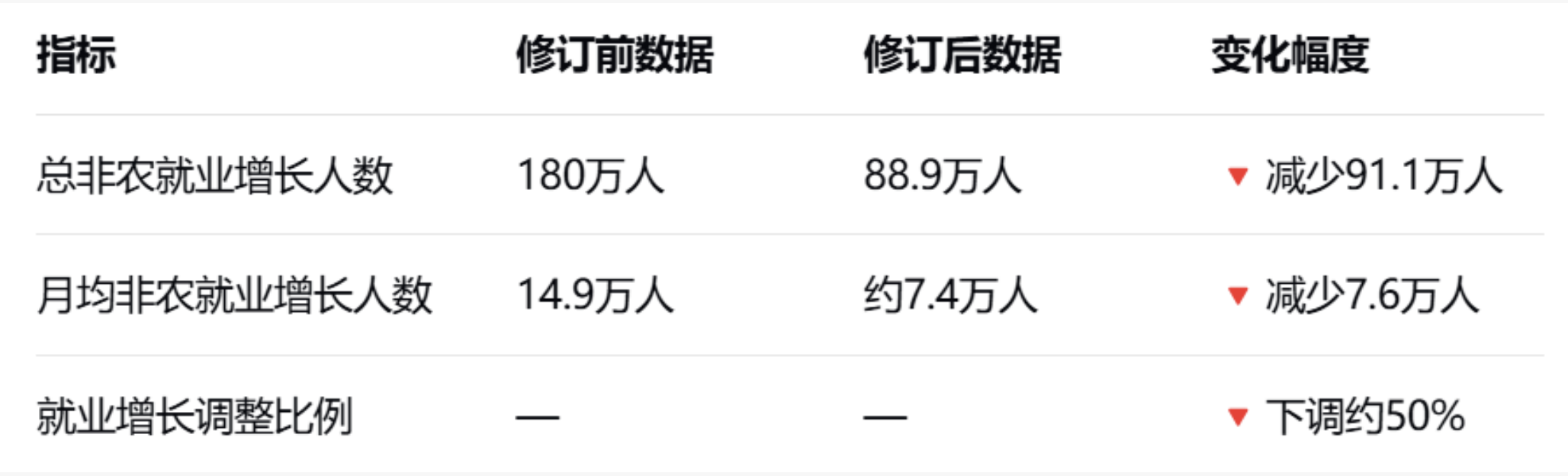
Core Viewpoint - The significant downward revision of the U.S. non-farm employment data has intensified market expectations for a potential quick or sustained interest rate cut by the Federal Reserve, leading to a surge in gold prices, which briefly surpassed $3,700 per ounce [1][2]. Economic Outlook - The U.S. Labor Department's annual non-farm employment benchmark revision revealed a downward adjustment of 911,000 jobs, indicating a monthly average decrease of nearly 76,000 jobs, reinforcing the expectation of an economic slowdown [2][5]. - Analysts suggest that the labor market's deterioration has been underestimated, with historical data indicating that a continuous drop in non-farm employment below 100,000 often signals an impending recession [5][8]. Market Reactions - The revision has raised concerns about the quality of official employment statistics and the potential "politicization of data," driving increased risk aversion and investment in traditional safe-haven assets like gold [8][9]. - Gold prices have shown a strong upward trend, with six out of seven trading days in September reaching new highs, reflecting the market's response to economic uncertainties and geopolitical tensions [9][10]. Federal Reserve Policy Expectations - The probability of a 25 basis point rate cut by the Federal Reserve in September is at 91.8%, with a 50 basis point cut at 8.2%. For October, the cumulative probabilities for a 25 basis point cut are 24.1%, while a 50 basis point cut stands at 69.8% [6][7]. - The ongoing economic challenges and inflationary pressures suggest that the Fed may continue to adopt a gradual approach to rate cuts, potentially reaching a neutral rate range of 3.0-3.5% by next year [6].

美国经济衰退风险加剧 美元“失宠” 全球投资者“囤金”
Xin Hua Cai Jing· 2025-09-10 14:29
Group 1 - The U.S. non-farm payroll data has been significantly revised downwards, indicating a worsening economic outlook and strengthening expectations for potential interest rate cuts by the Federal Reserve [2][5] - The revised report shows a downward adjustment of 911,000 jobs over the past year, leading to an average monthly increase of nearly 76,000 jobs, which is a significant reduction from previous estimates [2][5] - Analysts suggest that the labor market's deterioration may challenge previous optimistic views on a "soft landing" for the economy, with implications for future monetary policy [5][6] Group 2 - The international gold price has surged, breaking the $3,700 per ounce mark, driven by increased market uncertainty and a shift towards safe-haven assets [1][8] - Analysts expect gold and silver prices to maintain a strong upward trend in the medium to long term, supported by interest rate cut expectations and geopolitical risks [1][8] - The recent economic data and geopolitical tensions have led to a renewed focus on gold as a "ultimate store of value," with significant inflows into precious metals [7][8]
见证历史!深夜,全线大涨!
Sou Hu Cai Jing· 2025-09-04 03:20
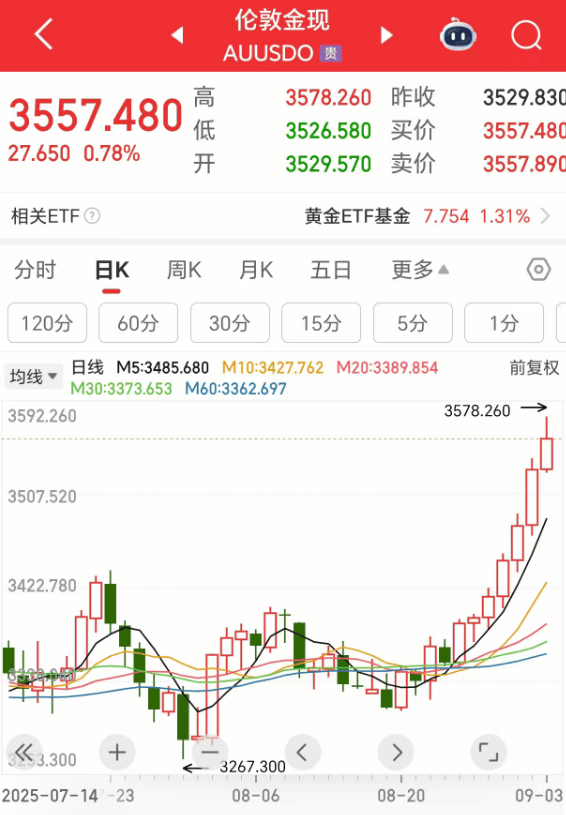
Group 1 - Spot gold prices reached a historic high of $3,570 per ounce, peaking at $3,578 per ounce, leading to significant gains in the gold sector [1] - The U.S. Labor Department reported that July JOLTS job openings were 7.181 million, below expectations, indicating a weakening demand for labor [3][6] - The decline in the dollar index, which fell by 0.26% to 98.0684, is seen as beneficial for gold and other precious metals priced in dollars [6] Group 2 - Major U.S. tech stocks, including Google, saw substantial gains, with Google's stock rising over 8% and its market cap surpassing $2.76 trillion [3] - The performance of gold stocks was notably strong, with Harmony Gold rising over 8% and other companies like AngloGold and Coeur Mining also experiencing significant increases [4] - The overall market showed mixed results, with the Dow Jones down 0.05%, while the Nasdaq and S&P 500 indices rose by 1.02% and 0.51%, respectively [5] Group 3 - Morgan Stanley predicts that the ongoing depreciation of the dollar, along with multiple favorable factors, will support gold prices, setting a year-end target of $3,800 per ounce [6] - UBS reiterated its forecast for gold prices to reach $3,700 per ounce by June 2026, with a possibility of prices hitting $4,000 in case of geopolitical or economic risks [6] - The Federal Reserve's Beige Book indicated moderate inflation and stable employment levels, with expectations of potential interest rate cuts in the near future [7]
黄金“再创新高”的动力:特朗普要让“美联储和美元听话”
Hua Er Jie Jian Wen· 2025-09-04 00:38
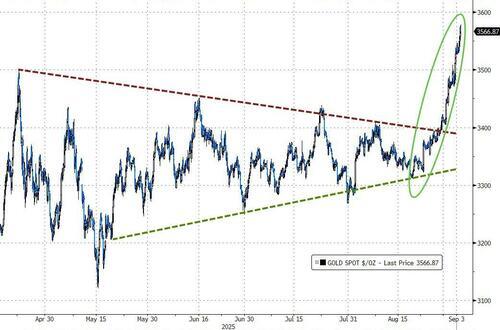
Core Viewpoint - Gold is becoming one of the hottest assets this year amid waning confidence in dollar assets and rising inflation risks [1] Group 1: Market Dynamics - The surge in gold prices is synchronized with Trump's tariffs and unprecedented actions aimed at influencing Federal Reserve decisions, leading to a weaker dollar and declining short-term Treasury yields [3][5] - Gold prices have surpassed $3,500 per ounce, reaching a historical high, as markets anticipate imminent interest rate cuts by the Federal Reserve [5][10] - The Federal Reserve's independence is under challenge, with Trump's pressure seen as a strong support for gold's record price surge [6][10] Group 2: Investor Sentiment - Investors increasingly view Trump's attacks on the Federal Reserve as a potential path to a dimmer economic outlook, which could enhance gold's appeal [6] - The current market sentiment is not in panic mode, but there is a significant increase in bets on interest rate cuts, with traders anticipating a 25 basis point cut in the upcoming Federal Reserve meeting [9] - Wall Street is generally optimistic about gold's future performance, with major financial institutions raising their gold price targets due to deteriorating economic conditions [10][11] Group 3: Future Projections - Analysts predict that gold prices could reach $4,000 by the end of 2026, primarily due to the loss of Federal Reserve independence [11] - Despite high current gold prices, there is still room for increased investment, as allocations in gold ETFs remain below previous peaks during the pandemic and geopolitical tensions [11] - The shift of funds from U.S. Treasuries to gold is expected to continue, indicating potential for further investment in gold as a safe haven [11]
黄金牛市挡不住!特朗普对美联储的抨击点燃黄金多头危机赌局
Jin Shi Shu Ju· 2025-09-03 23:20
Core Viewpoint - Trump's criticism of the Federal Reserve may stimulate inflation, suppress investment, and weaken confidence in the U.S. economy, while simultaneously reinforcing the bullish trend in gold, which has become one of the hottest assets this year [1]. Group 1: Gold Market Dynamics - Gold prices have recently surpassed $3,500 per ounce, marking a new high, with spot gold rising for seven consecutive days and nearing $3,580 [1]. - The price of gold has increased by over one-third this year, outperforming global stocks, commodities, and Bitcoin, driven by expectations of imminent interest rate cuts by the Federal Reserve and aggressive gold purchases by central banks [1][2]. - The volatility in policies, particularly from the White House, is seen as beneficial for gold as it weakens the dollar [1]. Group 2: Economic Implications - Investors are increasingly betting that Trump's attacks on the Fed will lead the U.S. economy down a darker path, with historical evidence suggesting that independent central bank decisions help maintain low inflation and stable growth [2]. - A scenario where inflation rises while the Fed is forced to cut rates could lead to a significant depreciation of the dollar, enhancing the appeal of gold as a safe-haven asset [2][5]. - The expectation of aggressive rate cuts could lead to a mass outflow of investments from U.S. Treasuries to gold and other defensive investments [5]. Group 3: Future Projections - Analysts predict that if the Fed executes three to four rate cuts by the end of the year, gold prices could reach $3,800, although significant work remains to achieve this target [4]. - The anticipated "big and beautiful" tax cuts proposed by Trump could increase the U.S. deficit by $3.3 trillion over the next decade, raising concerns about the government's ability to service existing debt [4]. - The consensus on Wall Street is that gold prices will continue to rise, with major financial institutions like UBS and Citigroup adjusting their short-term outlooks positively due to deteriorating economic conditions [7][10].

历史新高!黄金,卷土重来?
Sou Hu Cai Jing· 2025-09-02 13:37
Core Viewpoint - Gold prices are experiencing a significant upward trend, driven by expectations of interest rate cuts from the Federal Reserve, with predictions of further increases in the coming months [1][2][4]. Group 1: Gold and Silver Market Performance - London spot gold has surpassed $3,500 per ounce, reaching a peak of $3,508.49 per ounce, marking a new historical high after six consecutive days of increases [1]. - COMEX gold and silver futures also hit record highs, with COMEX gold peaking at $3,578.4 per ounce and COMEX silver reaching $41.99 per ounce, the highest levels since 2012 [1]. - Domestic gold and silver futures in China also saw significant gains, with the main gold contract closing at 804.32 yuan per gram, up 1.21%, and the main silver contract at 9,824 yuan per kilogram, up 2.33% [1]. Group 2: Federal Reserve and Economic Indicators - Financial institutions indicate that the Federal Reserve's potential interest rate cuts are the primary short-term drivers for gold prices, with a 89.7% probability of a 25 basis point cut in September [2]. - The market is reacting to macroeconomic policies and political risks, with expectations of renewed interest rate cuts enhancing the appeal of precious metals as safe-haven assets [2][3]. Group 3: Investment Strategies and Predictions - Analysts predict that the breakout above $3,500 per ounce for gold will initiate a new upward trend, with silver expected to follow suit due to its industrial applications [3]. - The UBS report suggests that gold prices will continue to reach new highs in the coming quarters, supported by low interest rates and rising geopolitical risks [4]. - Morgan Stanley has set a year-end target price for gold at $3,800 per ounce, emphasizing the inverse relationship between gold and the US dollar as a key pricing factor [5].
黄金破3500美元创历史新高:普通人如何抓住这波“财富密码”?
Sou Hu Cai Jing· 2025-09-02 12:25
Group 1 - The core viewpoint is that gold prices are surging due to a combination of factors including high expectations for interest rate cuts by the Federal Reserve, geopolitical tensions, and a weakening dollar [1][3][5] - The probability of a 25 basis point rate cut by the Federal Reserve in September has reached 89.7%, which could lead to significant increases in gold prices historically [3] - Geopolitical risks from ongoing conflicts, particularly in Ukraine and the Middle East, are driving global demand for safe-haven assets like gold [5] Group 2 - Historical analysis indicates that gold prices typically rise by an average of 19% within six months following the initiation of a rate cut cycle by the Federal Reserve [3] - The dollar index has fallen below 102, reaching a five-week low, which historically correlates with an increase in gold prices, averaging a 0.85% rise for every 1% depreciation of the dollar [5] - The China Gold Association reports that global central bank net gold purchases are expected to exceed 1,000 tons for the third consecutive year, with China's gold reserves increasing for nine months straight [5] Group 3 - Current market conditions resemble a "main rising wave mid-stage," similar to previous bull markets in 2011 and 2020, with potential price targets for gold reaching around $3,800 [7] - The global gold ETF holdings still have a 15% growth potential compared to historical peaks, indicating room for further investment [7] - The domestic gold shop premium has reached 7%, reflecting strong physical demand, while professional institutions are increasing long positions in COMEX gold futures [7] Group 4 - Professional investors are advised to consider futures cross-period arbitrage, as the current price spread between December and February contracts is at an annual high, suggesting mean reversion opportunities [8] - A pyramid accumulation strategy is recommended, where positions are reduced as gold prices rise, and stop-loss measures are implemented if prices fall below the 20-day moving average [9]
除了大A,又一个资产即将迎来爆发!
大胡子说房· 2025-09-02 12:23
Core Viewpoint - The article highlights the recent strong performance of the A-share market while also indicating a significant upward trend in gold prices, suggesting that investors should pay attention to gold as a potential investment opportunity alongside the A-share market [1][10]. Group 1: A-Share Market Performance - In August, the Shanghai Composite Index surpassed 3,800 points, reaching a 10-year high, while the ChiNext Index saw a monthly increase of over 24% [1]. - The A-share market has been the best-performing market in recent years, attracting significant investor attention and capital [1][8]. Group 2: Gold Price Movement - Gold prices have steadily increased from a low of $3,268 per ounce on July 31 to around $3,448 per ounce by August 30, marking an increase of nearly $200 per ounce within a month [3][5]. - The upward trend in gold prices is expected to accelerate in September, driven by anticipated interest rate cuts from the Federal Reserve [5][10]. Group 3: Factors Influencing Gold Prices - The Federal Reserve's upcoming meeting on September 18 is expected to result in a rate cut, which is seen as a key driver for gold price support [5]. - Despite a decrease in unemployment claims in the U.S., which typically signals economic improvement and is negative for gold, the price of gold continued to rise, indicating a shift in market sentiment towards gold as a safe haven [5][6]. - The depreciation of the U.S. dollar has been correlated with the rise in gold prices, as the dollar index fell from 100 to a low of 97 during the same period [6][7]. Group 4: Market Dynamics - The article notes that Asian traders have been less active in the gold market due to the capital being drawn towards the A-share market, leading to a lack of upward movement in gold prices during Asian trading hours [8]. - In contrast, European and American traders have been more active in the gold market during their trading hours, contributing to the price increases observed in the evening [8][9]. Group 5: Investment Recommendations - The article suggests that investors should consider diversifying their portfolios to include gold and related assets, as the A-share market may not sustain its rapid growth, creating opportunities in other asset classes like gold [10].

贵金属上行周期来袭,黄金剑指3800美元,白银能否意外爆发?
Sou Hu Cai Jing· 2025-09-02 08:27
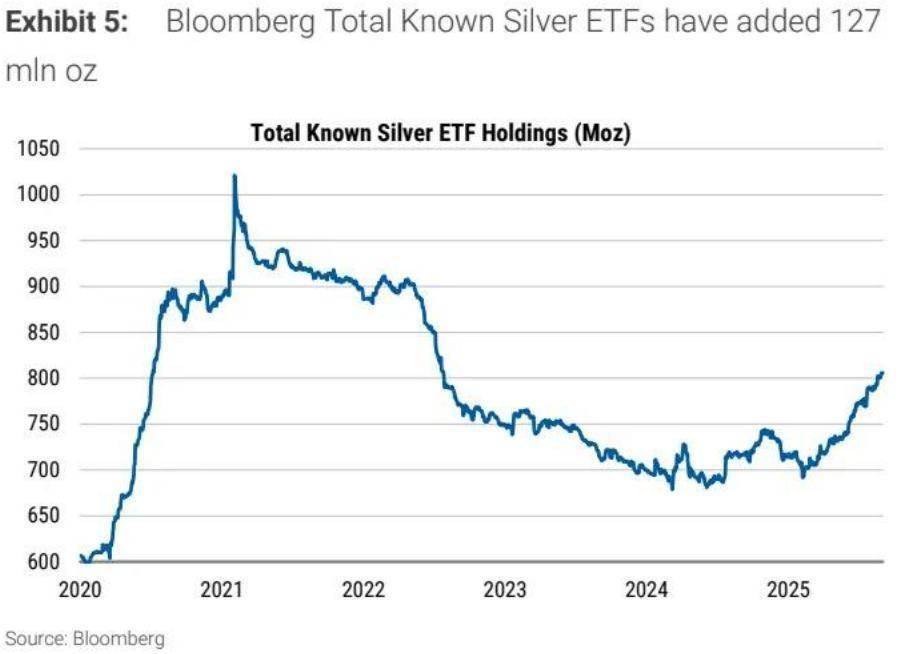
Core Insights - Morgan Stanley's report indicates that gold and silver are entering an upward cycle driven by multiple positive factors, particularly influenced by the Federal Reserve's interest rate cuts and changes in the macroeconomic environment [1][3]. Group 1: Price Predictions and Historical Data - Historically, gold tends to rise significantly after the Federal Reserve cuts interest rates, with an average increase of 6% within 60 days, and up to 14% at its peak. Silver shows an average increase of 4% in the same period [1]. - Morgan Stanley sets a year-end target price for gold at $3,800 per ounce, driven by the ongoing Fed rate cut cycle, potential weakening of the dollar index, and a possible recovery in jewelry consumption in emerging markets [3]. - For silver, the target price is set at $40.9 per ounce, with analysts expressing caution due to the balance needed between industrial demand and speculative trading [3]. Group 2: Demand and Market Dynamics - Global gold ETF holdings have increased by approximately 440 tons this year, reversing a four-year trend of net outflows, indicating a resurgence in institutional demand for gold [1]. - Silver ETF holdings have also risen by 127 million ounces, although there are warnings about speculative trading potentially leading to excessive price increases [1]. - Despite a decline in India's jewelry demand in Q2, improvements in July's gold import data suggest a potential recovery, supported by anticipated reforms in the Goods and Services Tax (GST) that may enhance consumer purchasing power [3][5]. Group 3: Correlation and Market Factors - The report emphasizes the strong negative correlation between gold and the dollar, suggesting that a continued depreciation of the dollar index would benefit gold prices [5]. - The report highlights the need for investors to monitor the Federal Reserve's policy direction, dollar movements, and signs of consumer recovery in the Indian market to better capture structural opportunities in the precious metals market [7].