
首发经济

Search documents
名创优品(09896):“IP+大店+体验”,重构零售渠道
CAITONG SECURITIES· 2025-11-27 06:37
Investment Rating - The investment rating for the company is "Buy" (maintained) [2] Core Views - The report emphasizes the company's competitive advantages in "high quality and low price + supply chain efficiency + IP emotional value" and forecasts revenue growth from 2025 to 2027 [8] - The company is expected to achieve revenue of 213.2 billion, 252.1 billion, and 300.8 billion RMB, with corresponding net profits of 25.4 billion, 33.8 billion, and 42.6 billion RMB for the same period [8] Financial Performance Summary - Revenue projections for the company are as follows: - 2023A: 11,473 million RMB - 2024A: 16,994 million RMB - 2025E: 21,324 million RMB - 2026E: 25,213 million RMB - 2027E: 30,076 million RMB - The revenue growth rates are projected at 13.76%, 48.12%, 25.48%, 18.24%, and 19.29% respectively [7] - The net profit forecasts are: - 2023A: 1,769 million RMB - 2024A: 2,618 million RMB - 2025E: 2,542 million RMB - 2026E: 3,381 million RMB - 2027E: 4,262 million RMB - The net profit growth rates are projected at 177.19%, 47.97%, -2.88%, 33.01%, and 26.05% respectively [7] Business Strategy Summary - The company is restructuring consumer experiences through scenario-based and curated large stores, with three core store formats: 1. MINISO LAND: 1,000-2,000 square meters, with 70-80% IP products 2. MINISO SPACE: 400-600 square meters, with 90-100% IP products 3. MINISO FRIENDS: 400-1,000 square meters, with 70-80% IP products [8] - The company is expanding its presence in core cities domestically and initiating international expansion, with plans to open 25-30 new stores in key cities by the end of 2025 [8]
商务部:将推进汽车流通消费改革试点
Xin Jing Bao· 2025-11-27 03:51
Core Viewpoint - The Ministry of Industry and Information Technology, along with five other departments, has issued a plan to enhance the adaptability of supply and demand for consumer goods, aiming to further stimulate consumption in China [1] Group 1: Automotive Sector - The Ministry of Commerce will promote reforms in automotive circulation, expand the second-hand car market, and develop the automotive aftermarket, including modifications, rentals, events, and RV camping [1] - Retail sales of passenger cars increased by 7.9% from January to October this year, indicating a sustained growth trend in the automotive sector [1] Group 2: Home Appliances and Furniture - Retail sales of home appliances, furniture, and communication equipment have grown by approximately 20% year-on-year for the same period, highlighting strong consumer demand in these categories [1] Group 3: New Consumption Models - The government will actively promote the "first launch economy," encouraging companies to release new products, open flagship stores, and host debut events [1] - There is a focus on developing health consumption and enhancing the quality of health-related goods and services [1] - The initiative also aims to foster digital and green consumption, integrating artificial intelligence with consumer trends to create new growth points [1]
汽车消费、首发经济、适老化产品研发……这场发布会回应诸多热点
Di Yi Cai Jing Zi Xun· 2025-11-27 03:25
Group 1 - The core viewpoint of the news is the introduction of policies aimed at enhancing the adaptability of supply and demand in consumer goods to stimulate consumption and promote economic circulation [1][2]. Group 2 - The Ministry of Industry and Information Technology emphasizes the importance of aligning production supply with changing consumer trends to maximize consumption potential and ensure quality and suitability of products [2]. - The Ministry plans to collaborate with relevant departments to enhance the development of elderly care products, including service robots and age-friendly standards [3]. - The Ministry of Commerce will promote reforms in the automotive circulation sector, expanding the second-hand car market and related services to boost automotive consumption [4]. - The Ministry of Commerce encourages the "first launch economy," supporting businesses in releasing new products and establishing new stores to foster healthy consumption and new growth points [5]. - The National Development and Reform Commission will strengthen the planning and construction of parking facilities and charging infrastructure to improve convenience for consumers [6]. - The Ministry of Culture and Tourism will support the introduction of high-quality cultural and tourism products and promote innovative cultural experiences to enhance consumer engagement [7].
商务部:积极推进首发经济,鼓励企业发新品、开首店、办首秀
Zheng Quan Shi Bao Wang· 2025-11-27 02:51
人民财讯11月27日电,11月27日,国新办举行国务院政策例行吹风会,介绍增强消费品供需适配性进一 步促进消费政策措施有关情况。商务部市场运行和消费促进司负责人杨枿表示,当前消费领域新业态、 新模式、新场景不断涌现,为经济发展注入了新动能。商务部将积极推进首发经济,丰富首发平台载 体,鼓励企业发布新品、开设首店、举办首秀等,发展健康消费,培育人工智能+消费,打造更多消费 新增长点。 ...
21社论丨增强消费品供需适配性,促进扩内需稳增长
21世纪经济报道· 2025-11-27 02:34
Core Viewpoint - The article discusses the implementation plan aimed at enhancing the adaptability of supply and demand in consumer goods, with a focus on optimizing the supply structure and promoting high-quality development in consumption by 2027 and 2030 [1][2]. Group 1: Current Challenges in Consumer Goods Market - The fundamental issue in China's consumer goods market is the structural problem where the supply side has not timely responded to the trend of consumption upgrading [2]. - There is a significant need to improve the supply of high-quality, high-value-added products and brand premium capabilities, particularly in sectors like home appliances and new energy vehicles [2]. - Service consumption still has considerable room for upgrade, with restrictions in sectors such as education, healthcare, and elderly care limiting the supply of quality services [2]. Group 2: Key Tasks and Strategies - The plan outlines five areas with 19 key tasks to promote positive interaction between supply and consumption [2]. - Emphasis is placed on technological empowerment to drive industrial upgrades, focusing on sectors like automotive, home furnishings, and consumer electronics [3]. - The establishment of unified service standards and monitoring systems in service sectors is crucial for enhancing service quality and promoting brand protection [3]. Group 3: Market Activation and Channel Optimization - The plan calls for the continuous implementation of policies to expand market access and open up service sectors, addressing local protectionism and market segmentation [4]. - There is a need to enhance government investment structures to improve accessibility to quality supply, particularly in rural areas, to unleash rural consumption potential [4]. Group 4: Innovation and Supply Expansion - The article highlights the importance of scenario innovation and the integration of various business formats to expand supply space, promoting deep integration of culture, tourism, and technology with consumption [5]. - Support for the construction of international consumer center cities and the enhancement of consumer finance policies are essential for fostering a conducive environment for consumption [5].

发力“消费新三样”,深圳这样干!
Sou Hu Cai Jing· 2025-11-26 23:23
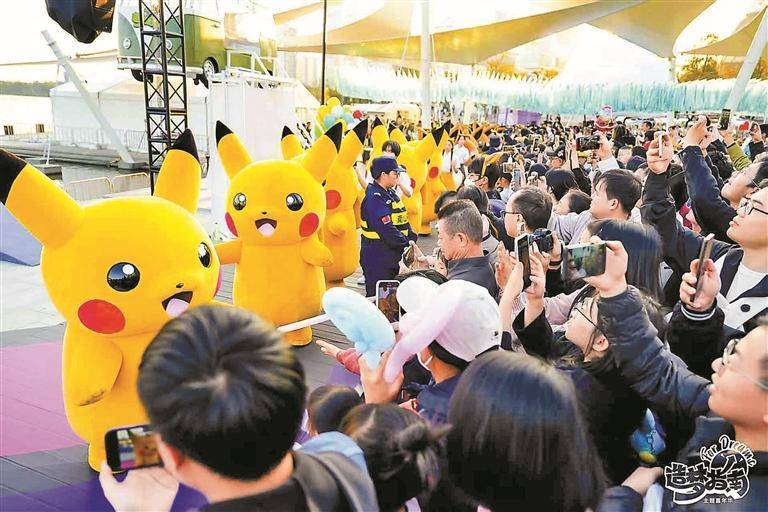
Core Insights - Shenzhen's innovative "IP+ integration model" has been recognized as a typical case by the Ministry of Commerce, igniting a new consumption wave in the city [2] - The Ministry of Finance and the Ministry of Commerce announced a pilot list for new consumption formats, with Shenzhen among 50 cities selected for funding support [2] - The pilot program will provide financial assistance based on city size, with major cities receiving up to 400 million yuan in total [2] Group 1: New Consumption Formats - Shenzhen's "first store economy" is becoming a key driver for enhancing commercial competitiveness and activating urban consumption [3] - In Q3 2025, Shenzhen saw an explosive growth in first stores, with 222 new openings, a 34.5% increase year-on-year [3] - Major shopping centers like Shenzhen Bay MixC have attracted numerous new brands, significantly boosting foot traffic and sales [4] Group 2: Service Consumption - The city is actively promoting service consumption across various sectors, including dining, accommodation, and elder care, to enhance consumer experiences [5] - A set of measures was introduced to stimulate high-quality service consumption, focusing on expanding and improving basic service offerings [5] - Economic experts suggest that as income levels rise, the demand for service consumption will continue to grow, particularly in lifestyle sectors [5] Group 3: IP and Consumption Integration - The "IP+ consumption" model is gaining traction, with Shenzhen encouraging collaborations between commercial districts and quality IPs [6] - Initiatives like the Bit City and themed events have turned Shenzhen into a hub for cultural and immersive experiences, attracting significant foot traffic [6] - Policies supporting IP brand development aim to create diverse and integrated consumption scenarios, enhancing the city's commercial landscape [6]
21社论丨增强消费品供需适配性,促进扩内需稳增长
2 1 Shi Ji Jing Ji Bao Dao· 2025-11-26 22:40
Core Viewpoint - The implementation plan aims to enhance the adaptability of supply and demand in consumer goods, with a goal of optimizing the supply structure by 2027 and establishing a high-quality development framework by 2030, contributing steadily to economic growth [1][2]. Group 1: Supply and Demand Challenges - The current challenges in China's consumer goods market stem from structural issues on the supply side that fail to respond timely to the upgrading of consumption trends [2]. - There is a pressing need to improve the supply of high-quality, high-value-added products, as evidenced by the projected retail sales of household appliances exceeding 1 trillion yuan in 2024, while core technologies and high-end capabilities still require significant enhancement [2]. - The service consumption sector also has substantial room for improvement, particularly in areas like education, healthcare, and elderly care, where entry restrictions remain and quality service supply is lacking [2]. Group 2: Key Tasks and Strategies - The plan outlines five key areas with 19 specific tasks to promote positive interaction between supply and consumption [2]. - Emphasis is placed on leveraging technology to drive industrial upgrades, focusing on sectors such as automotive, home furnishings, and consumer electronics, while supporting the development of personalized and intelligent products [3]. - The establishment of updated standards for safety, performance, and sustainability in consumer goods is crucial, alongside the creation of unified service standards in sectors like tourism and elderly care to enhance service quality [3]. Group 3: Market Activation and Innovation - The plan advocates for the removal of barriers to market access, particularly in the service sector, and aims to create a unified national market to facilitate the free flow of quality consumer goods and services [4]. - Encouraging the integration of various sectors, such as culture, tourism, and technology with consumption, is essential for expanding supply opportunities and fostering new economic scenarios [4]. - The enhancement of consumer finance policies and products is necessary to improve the adaptability and convenience of financial services, thereby promoting a mutually beneficial relationship between supply and consumption [4].
西藏开展提振消费工作 今年1至10月社会消费品零售总额实现逾893亿元
Zhong Guo Xin Wen Wang· 2025-11-26 17:14
Core Insights - The total retail sales of consumer goods in Tibet reached 89.317 billion RMB from January to October this year, with a growth rate of 4.3% [1] - In October alone, the retail sales amounted to 12.47 billion RMB, showing a year-on-year increase of 3.4%, which is 0.5 percentage points higher than the national average [1] Group 1: Policy Measures - The Tibet Autonomous Region's Commerce Department, in collaboration with relevant departments, has introduced five support policies aimed at boosting consumption, including measures for e-commerce and night economy [1] - A comprehensive policy system has been established with 43 detailed measures to guide local governments in implementing various consumption promotion policies [1] Group 2: Consumption Promotion Activities - The government has optimized the "old for new" policy for consumer goods, expanding the categories eligible for subsidies to 22, including items like fans and electric hot pots [1] - A combination of online and offline strategies has been employed to promote the "old for new" policy across enterprises, communities, and rural areas, resulting in 4.3 billion RMB in subsidies and 580,000 transactions, driving a consumption increase of 2.61 billion RMB [1] Group 3: Event Initiatives - The Commerce Department has organized a series of promotional activities under the theme "Happy Tibet, Enjoy Life," including food competitions and product exhibitions, achieving a multiplier effect with over 61 billion RMB in direct consumption stimulation [2] - More than 230 million people have benefited from government subsidies through these activities, enhancing the sense of gain among various ethnic groups [2]
工信部等六部门发文进一步促进消费:到2027年形成3个万亿级消费领域
Mei Ri Jing Ji Xin Wen· 2025-11-26 14:17
Core Insights - The Ministry of Industry and Information Technology, along with five other departments, has issued a plan to enhance the adaptability of supply and demand in consumer goods, aiming for significant optimization of the supply structure by 2027 and a high-quality development pattern by 2030 [1][2] Group 1: Consumption Supply and Demand - The plan aims to create three trillion-level consumption sectors and ten hundred-billion-level consumption hotspots by 2027, focusing on high-quality consumer goods with cultural significance [1] - The initiative emphasizes the importance of new demand leading to new supply and vice versa, as highlighted in the recent Fourth Plenary Session of the 20th Central Committee [1][2] Group 2: Low-altitude Consumption - The plan encourages the expansion of low-altitude consumption supply, including areas such as low-altitude tourism, private flying, and consumer-grade drones, while ensuring safety [2] - Cities like Wuhan and Nanjing are already developing low-altitude consumption infrastructure, with Wuhan establishing over 220 low-altitude takeoff and landing points [3] Group 3: New Consumption Scenarios - The plan promotes the establishment of flagship stores and new concept stores, as well as the hosting of product launches and exhibitions to cultivate new consumption scenarios [4] - It also encourages the development of platform consumption, including live e-commerce and instant retail, leveraging digital technologies to enhance consumer experiences [4][5] Group 4: Financial and Policy Support - The plan emphasizes the need for financial support to enhance the quality of consumer goods, including policies for equipment upgrades and trade-in programs [6] - It highlights the importance of digital technology in empowering new consumption models, advocating for user-friendly implementations to facilitate broader adoption [6]
11月26日主题复盘 | 光通信产业链大涨,医药持续活跃,消费再迎政策催化
Xuan Gu Bao· 2025-11-26 08:25
Market Overview - The Shanghai Composite Index experienced narrow fluctuations, while the ChiNext Index rose over 2% with strong performance in the pharmaceutical sector, including stocks like Guangji Pharmaceutical and Peking University Pharmaceutical hitting the daily limit [1] - The CPO and computing hardware stocks also saw significant gains, with Zhongji Xuchuang surging over 10% to reach a historical high [1] - The consumer sector rallied towards the end of the trading day, with stocks such as Guoguang Chain and Sanjiang Shopping hitting the daily limit, while the military industry faced collective adjustments with stocks like Jiuzhiyang and Jianglong Shipbuilding dropping over 10% [1] Hot Topics Optical Communication - The optical communication sector saw substantial gains, with stocks like Tefa Information achieving four consecutive limits, and Zhongji Xuchuang rising over 13% to set a new historical high [4] - The demand for continuous wave (CW) lasers is expected to grow significantly, with major suppliers likely to benefit from this trend [5] Pharmaceutical Sector - The pharmaceutical sector remained active, with Guangji Pharmaceutical achieving three consecutive limits and Peking University Pharmaceutical and Jindike reaching two consecutive limits [6] - The demand for flu medications such as Oseltamivir and Marbofloxacin has surged, with sales growth rates of 237% and 180% respectively over the past week [6] - The current flu season is expected to be more severe than in previous years, prompting a focus on the entire flu prevention and treatment process, which may lead to structural opportunities in the vaccine and antiviral drug markets [8] Consumer Sector - The consumer sector showed positive performance, with stocks like Maoye Commercial and Sanjiang Shopping hitting the daily limit [9] - The Ministry of Industry and Information Technology, along with five other departments, issued a plan to enhance the adaptability of consumer goods supply and demand, promoting the opening of flagship stores and new concept stores [10][11] - The "first launch economy," characterized by its trendy and high-quality offerings, is expected to accelerate under supportive policies, with technology such as AI and AR enhancing consumer engagement [13] Notable Stocks - Zhongji Xuchuang (300308.SZ) reached a price of 543.22 with a rise of 13.25% and a market cap of 600.53 billion [5] - Guangji Pharmaceutical (000952.SZ) achieved a price of 9.47 with a rise of 9.99% and a market cap of 3.26 billion [7] - Tefa Information (000070.SZ) reached a price of 13.92 with a rise of 10.04% and a market cap of 12.37 billion [5]


