
人工智能(AI)

Search documents
AI或将深入基层医疗 提高农村公共服务便利度
Zhong Guo Jing Ying Bao· 2026-02-06 07:55
"围绕解决农村群众上学、看病、养老等急难愁盼问题,文件提出了不少有含金量的政策举措。"近日, 在国新办举行的新闻发布会上,中央财办副主任、中央农办副主任祝卫东表示。 日前,2026年中央一号文件——《中共中央国务院关于锚定农业农村现代化扎实推进乡村全面振兴的意 见》正式发布,该文件中提及的诸多内容,引发业界、学界高度关注,并认为在高科技引导的改革举措 下,农业农村有望迎来全新的改变,其中,涉及AI、医疗、养老问题,尤其受到关注。 以AI弥补医疗差距 祝卫东在国新办新闻发布会上介绍:"医疗方面,强调实施医疗卫生强基工程,稳步提高医保基金在县 乡村医疗卫生机构使用比例,实施大学生乡村医生专项计划。" 记者了解到,当前人工智能(AI)相关投入更多集中在大型医院,社区医院、基层诊疗机构在AI应用 与配套投入方面相对薄弱。多位业内人士认为,随着基层医疗服务能力建设持续推进,AI未来或将更 深度进入县乡村医疗场景,以助力提升基层诊疗水平与服务效率。 一位卫健系统人士向记者表示:"对医生而言,AI是对专业知识以及其他学科知识的重要补充,这一点 对基层医疗卫生机构医生来说尤为重要。"该人士进一步解释称,基层医生接触的病例多以 ...
"软件-PE"死亡循环的中心,美国PE三巨头持续重挫,KKR和Blue Owl电话会承认财务挑战
硬AI· 2026-02-06 06:44
受AI颠覆软件行业的担忧影响,美国私募巨头陷入融资放缓、退出延迟和赎回压力的多重困境。KKR警告推迟资产出售 将影响2026年收益,Blue Owl费用增长预期从20%骤降至"温和"水平。核心原因在于SaaS资产的"类债券"稳定性逻辑崩 溃,不良贷款风险上升。 硬·AI 作者 | 董 静 编辑 | 硬 AI 在AI颠覆软件行业的担忧下,美国私募资本巨头正陷入融资放缓、资产退出延迟和赎回压力上升的多重困 境。过去十年软件资产一直是私募股权投资的核心领域,如今这一基础正在动摇,威胁着行业的增长逻辑 和盈利模式。 2月5日,KKR和Blue Owl在财报电话会议上对2026年财务前景发出警告。KKR首席财务官Robert Lewin 表示,若市场环境恶化,公 司可能推迟今年部分资产出售,这将减少现金流并导致2026年收益下降。 Blue Owl则披露其 信贷基金赎回请求上升,导致公司未能达成长期增长目标 ,预计 2026年费用增长仅 为"温和"水平 ,较2025年约20%的资产和费用增长大幅放缓。 周四,美国PE三巨头股价全线下跌。Ares暴跌超11%至121.87美元,KKR下跌5.5%至99.19美元,Blue ...


亚马逊电话会:2000亿开支吓崩股价!卫星项目单季烧10亿,CEO辩护“产能即变现”,AWS订单激增40%
硬AI· 2026-02-06 06:44
Core Viewpoint - Despite a 40% surge in AWS backlog orders to $244 billion, the market reacted negatively to Amazon's projected capital expenditure of $200 billion for 2026, leading to an 11% drop in stock price. The CFO warned of an additional $1 billion cost from the low Earth orbit satellite project, which would significantly impact profit guidance. However, the CEO defended the substantial investment, asserting that AI capacity can be monetized quickly and betting on AI agents to transform the e-commerce experience [2][5][14]. Group 1: Capital Expenditure and AWS Growth - The projected $200 billion capital expenditure for 2026 is primarily allocated to AWS, especially for AI infrastructure, with the CEO stating that demand far exceeds supply, alleviating concerns about overcapacity [6][34]. - AWS reported a 24% year-over-year revenue growth in Q4, reaching $35.6 billion, with an annualized run rate of $142 billion. The backlog of orders surged to $244 billion, indicating high revenue certainty for the future [22][56]. - The CEO emphasized that the investment in AWS is not a reckless pursuit of revenue but is based on years of experience in forecasting demand signals, ensuring strong capital returns [6][63]. Group 2: AI and Chip Development - The CEO highlighted the high costs of AI chips in the market, indirectly criticizing competitors for their lack of urgency in reducing prices, which justifies Amazon's push for its custom chips, Trainium and Graviton, which have seen significant revenue growth [7][8]. - Amazon's self-developed chips have surpassed $10 billion in annual revenue, growing at triple-digit percentages, with Trainium 2 being the fastest ramping chip in Amazon's history [8][40]. - The CEO introduced the concept of "agentic shopping," suggesting that consumers will prefer retailers' AI agents over general AI models, as they provide better selection, pricing, and delivery [23][25]. Group 3: Satellite Project and Cost Implications - The CFO disclosed that costs associated with the Amazon Leo satellite project are expected to increase by approximately $1 billion year-over-year, impacting Q1 profit guidance [15][57]. - Amazon plans over 20 satellite launches in 2026 and 30 in 2027, with costs primarily expensed as incurred, leading to immediate profit pressure [15][57]. Group 4: Workforce and Legal Expenses - The CFO confirmed that a total of $2.4 billion in special expenses, including $730 million for severance costs, impacted operating profit, reflecting ongoing workforce restructuring [16][52]. - Additional costs include $1.1 billion related to tax disputes and litigation settlements, further straining profitability [18][52]. Group 5: E-commerce and Customer Experience - The CEO praised the AI shopping assistant Rufus, which has been used by over 300 million customers, resulting in a 60% higher conversion rate for users [24][47]. - Amazon's grocery business has become a significant revenue driver, with daily essentials growing at nearly double the rate of other categories, making Amazon a leading grocery destination for over 150 million Americans [43][54]. - The company continues to innovate in delivery services, achieving record speeds and expanding same-day delivery options, which have significantly increased customer shopping frequency [44][46].


利空突袭!科技巨头,暴跌
证券时报· 2026-02-06 04:29
Core Viewpoint - Amazon's significant capital expenditure plan for 2026, projected at $200 billion, has raised concerns among investors, leading to a notable decline in its stock price despite exceeding revenue expectations for Q4 2025 [1][6]. Financial Performance - In Q4 2025, Amazon reported total revenue of $213.39 billion, surpassing analyst expectations of $211.33 billion, while earnings per share (EPS) were $1.95, slightly below the forecast of $1.97 [4]. - Amazon Web Services (AWS) revenue reached $35.58 billion, marking a 24% year-over-year growth, the fastest in 13 quarters [4]. - Advertising revenue was $21.32 billion, exceeding expectations and growing 23% year-over-year [4]. - North America sales grew 10% to $127.1 billion, while international sales increased 17% to $50.7 billion, with a growth rate of 11% when excluding currency fluctuations [4]. Capital Expenditure Plans - Amazon's capital expenditure for 2026 is expected to reach approximately $200 billion, significantly higher than the $131 billion spent in 2025 and exceeding analyst expectations of $146.6 billion [5]. - CEO Andy Jassy attributed the large investment to strong demand for existing services and opportunities in AI, chips, robotics, and low Earth orbit satellites, primarily focusing on AWS infrastructure [5]. - The company has initiated a $11 billion AI data center project, "Project Rainier," to support workloads for Anthropic [5]. Market Reaction - Following the earnings report, Amazon's stock fell 4.56% during regular trading and dropped over 11% in after-hours trading due to concerns about short-term profit pressures and the long-term return on the substantial investment [6]. Future Outlook - For Q1 2026, Amazon expects sales between $173.5 billion and $178.5 billion, indicating a year-over-year growth of 11% to 15%, slightly above analyst expectations [8]. - The company is focusing on integrating AI technology across its business segments, with its AI shopping assistant, Rufus, having 300 million users and a 60% higher conversion rate for users [8]. - Jassy introduced the concept of "Agentic shopping," suggesting that retailers with extensive product offerings and customer trust will have a competitive edge in the AI era [8]. Strategic Initiatives - Amazon is promoting its self-developed chips to address high costs in the AI chip market, with the Trainium series showing rapid deployment and significant revenue growth [10]. - The company is also optimizing its cost structure through workforce reductions, announcing layoffs of approximately 16,000 employees following a previous reduction of 14,000 [12].

汽车芯片巨头,集体唱衰
3 6 Ke· 2026-02-06 04:17
Core Insights - The automotive chip industry is experiencing a prolonged and complex adjustment period, with major companies expressing caution about market stability and demand recovery [1][2][3][4] - A new crisis is emerging as memory chip manufacturers shift capacity to higher-margin products, leading to a rapid depletion of previously abundant memory chip supplies for the automotive sector [1][6] Financial Performance - NXP's automotive chip revenue for Q4 2025 was $1.88 billion, a mere 4.8% year-over-year increase, falling short of analyst expectations [2] - STMicroelectronics reported a significant operating loss of $133 million in Q2 2025, indicating a lack of clear recovery timeline despite a forecasted revenue exceeding analyst expectations [2][21] - Texas Instruments highlighted a 6%-9% year-over-year growth in its automotive segment for Q4 2025, but downplayed its contribution to overall performance [3] - Infineon's automotive business revenue for Q1 2026 was €1.821 billion, showing a 5% quarter-over-quarter decline, with cautious outlook on demand recovery [3][4] Supply Chain Challenges - The DRAM price surged by 172% year-over-year in Q3 2025, driven by strong demand from AI infrastructure, leading to a significant supply shortage for the automotive sector [6][7] - Analysts predict that DRAM prices could increase by 70%-100% in 2026, severely impacting the cost structure for automotive manufacturers [7][32] - By 2028, the supply of older generation DRAM is expected to rapidly decline, posing a risk to automotive manufacturers relying on these components [8][32] Strategic Responses - Texas Instruments is adopting a conservative strategy, focusing on maintaining inventory levels and capitalizing on its robust production capabilities [16][17] - NXP is restructuring by laying off 5% of its workforce and making strategic acquisitions to enhance its position in the software-defined vehicle market [18][19] - STMicroelectronics is concentrating resources on automotive microcontrollers (MCUs) to stabilize its market position amid ongoing adjustments [21][22] - Infineon is heavily investing in AI-related technologies, aiming for significant revenue growth in this sector while also adjusting its automotive strategies [23][24] Market Outlook - The automotive chip market is facing a dual challenge of cyclical downturns and structural constraints, with recovery timelines uncertain [11][30] - The transition to electric vehicles and the increasing complexity of automotive electronics are expected to drive long-term growth, despite current market challenges [27][28] - Companies are exploring new growth avenues, such as data center markets and industrial IoT, to mitigate risks associated with the automotive sector [29][30]


如何成为AI无法淘汰的人?答案藏在你的判断力里
3 6 Ke· 2026-02-06 04:11
Core Insights - The article highlights a critical issue regarding the impact of AI on professional development, specifically the potential loss of the "trial-and-error" learning process essential for developing judgment skills in the workplace [1][4][11] - It emphasizes that while AI can enhance efficiency, it may inadvertently hinder the growth of essential decision-making abilities among less experienced employees [3][10][19] Group 1: AI's Impact on Judgment Development - AI tools can assist experienced professionals in completing complex tasks more efficiently, but they may not provide the same benefits to novice employees, who struggle to assess the quality of AI-generated outputs [3][11] - The reliance on AI for basic tasks diminishes the opportunities for employees to engage in the hands-on experiences that traditionally foster judgment skills [10][18] - The paradox exists where AI increases the demand for judgment while simultaneously eroding the experiential foundation necessary for its development [4][11] Group 2: Definition and Importance of Judgment - Judgment is defined as the ability to make wise decisions in the absence of clear guidelines, encompassing various forms such as evaluative, situational, trade-off, predictive, and accountability judgments [6][7] - The development of judgment typically occurs through practical experience and feedback in the workplace, which is increasingly compromised by AI automation [8][10] Group 3: Organizational Risks and Challenges - Organizations face a leadership and succession risk as the pool of individuals capable of making sound decisions in uncertain situations shrinks due to the automation of foundational tasks [17][18] - The cultural shift towards managing upwards rather than making decisions may arise when employees are deprived of critical learning experiences early in their careers [19][20] Group 4: Solutions for Rebuilding Judgment Skills - Organizations need to redesign work processes to ensure that judgment skills can continue to develop in the AI era, focusing on identifying decision-making points and the necessary knowledge and skills for those roles [20][21] - Learning from fields like healthcare and military, which utilize case studies and simulations to build judgment skills, could provide valuable insights for creating alternative training mechanisms [20][21]

苹果召开全员大会,库克罕见提及退休
3 6 Ke· 2026-02-06 04:06
当地时间2月5日,在苹果公司即将迎来创立50周年之际,库克主持召开了一场全体员工大会,描绘了人 工智能(AI)将如何重塑苹果的未来,同时罕见地深入谈及了退休和继任规划。 库克在会议中将人工智能定义为苹果历史上"最深远的机遇之一"。 库克补充道:"大家都清楚,人到了一定年纪,有些人会选择退休,这是很自然的事。" "我花很多时间思考5年后、10年后,甚至15年后谁会坐在这个房间里。思考这些事情并制定计划,是领 导力的重要组成部分。"关于继任者的安排,库克说。 目前,新任首席运营官萨比·汗(Sabih Khan)已全面接手运营工作,并正致力于解决行业内普遍面临的 内存芯片短缺问题。库克对此表示信心十足,称苹果拥有"世界上最好的团队"来应对供应链挑战。 在谈到业务增长时,库克特别强调了印度、马来西亚等新兴市场的重要性。他指出,尽管目前在这些地 区的市场份额尚存巨大增长空间,但其潜力将是苹果未来十年的重要引擎。 大会最后,库克重申了苹果的长期愿景:通过技术赋能个人,并保持公司文化的连续性。随着50周年纪 念日的临近,这场全员大会无疑为步入"知天命"之年的苹果公司注入了新的动力。 他向员工表示,尽管市场竞争日益激烈,但他 ...

大溃败!谁杀死了加密市场的科技溢价?
Xin Lang Cai Jing· 2026-02-06 02:57
文章来源:麦通MSX研究院 作者:程智鹏 2026 年 2 月,全球资本市场呈现出一幅充满张力的双轨图景。纳斯达克指数在 AI 浪潮余温中维持着结 构性韧性,而加密货币市场却正在经历一场无声却深刻的出清。 这不是一次简单的周期性回调。根据 Coinglass 数据,仅 2 月初的 48 小时内,全网爆仓金额突破 25.8 亿美元,比特币价格一度击穿 7.6 万美元关口,较历史高点回撤超 41%。然而,相比于屏幕上跳动的红 色数字,一个更为隐秘且关键的信号正在华尔街的交易台上传递——历史性的相关性背离。 过去五年,加密资产曾被视为'带杠杆的纳斯达克指数',与科技成长股如影随形。但在 2026 年初的这 场调整中,这种锚定关系被打破。加密资产正在被系统性剥离出'风险资产'的组合,其波动特征开始呈 现出与黄金、大宗商品趋同的特征。这一信号暗示市场正在重新评估加密货币的属性,它不再被单纯视 为代表未来的科技革命,而是被降级为一种更多依附于供需博弈的另类商品。 麦通MSX研究院认为,在原生叙事枯竭与机构去杠杆的双重压力下,加密行业正在被迫告别那个试图 构建平行金融体系的草莽时代,转而开启一场残酷的'物种演化'——从颠覆 ...
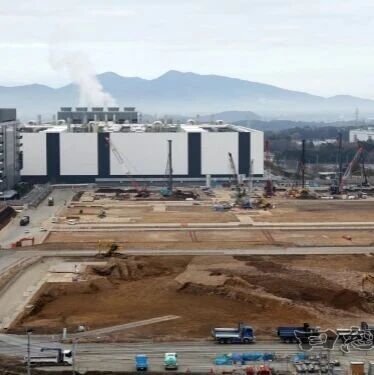
台积电熊本改产3纳米,日本供应链厚度增加
日经中文网· 2026-02-06 02:52
Group 1 - TSMC is constructing a new factory in Kumamoto, Japan, aimed at producing cutting-edge chips for artificial intelligence (AI) [2] - Rapidus plans to mass-produce 2nm products in Hokkaido, enhancing Japan's semiconductor supply chain with stable AI semiconductor production from both northern and southern bases [2] - The Japanese semiconductor equipment and materials sectors are expected to benefit significantly from these developments, as Japan holds a substantial market share in these areas [2] Group 2 - TSMC's CEO, Wei Zhejia, is considering adjustments to the production plan for the Kumamoto factory to manufacture 3nm semiconductors, which may increase the originally estimated investment of $12.2 billion [4] - The 3nm semiconductors will be utilized in NVIDIA's GPUs, highlighting the importance of ensuring a stable supply of advanced semiconductors as new data centers for AI are established in Japan [4] - Japan's semiconductor equipment market holds approximately 30% of the global share, while the materials sector accounts for about 50%, indicating a strong domestic capability to support advanced semiconductor production [4] Group 3 - Tokyo Electron plans to invest 700 billion yen in equipment over the next five years, with a new facility in Kumamoto set to begin operations in spring 2026, increasing development capacity by four times [5] - Canon is investing 50 billion yen by September 2025 to establish a new facility for photolithography equipment used in AI semiconductor assembly [6] - Ibiden plans to invest 500 billion yen over three years starting in 2026 to expand production capacity for packaging substrates used in AI server chips, expected to increase by 2.5 times by 2028 [6] Group 4 - The Japanese government aims to support the semiconductor and AI sectors with over 10 trillion yen by 2030, accelerating the establishment of a cutting-edge semiconductor supply chain [6] - Japan has provided approximately 1.2 trillion yen in subsidies to TSMC's factories and about 2.9 trillion yen to Rapidus, with conditions for TSMC to increase semiconductor production during supply shortages [6] - The competitive landscape for attracting investment in advanced semiconductor manufacturing is intensifying globally, necessitating a comprehensive approach to develop the domestic semiconductor industry, including equipment, materials, and design engineering [6]

结构分化,重点关注AI及盈利兑现度:2026年港股互联网&科技策略前瞻
Guohai Securities· 2026-02-06 01:43
Core Insights - The report emphasizes a structural differentiation in the Hong Kong internet and technology sector, highlighting a focus on AI and profitability realization as key investment themes for 2026 [4][5][6]. Valuation Perspective - Since early 2025, the valuation of the Hang Seng Technology sector has been on the rise, with the Hang Seng Technology PE-TTM at 20.05 times as of December 31, 2025, which is 0.77 standard deviations below the historical average [4][9]. - The Hang Seng AH premium index stood at 123.46 as of December 31, 2025, below the historical average of 193.92, indicating a low valuation environment [9]. Funding Perspective - There has been a significant acceleration in southbound capital inflows since 2025, with notable increases in allocations to consumer, technology, and pharmaceutical sectors [5][13]. - The proportion of Hong Kong Stock Connect holdings in internet companies has increased, with Tencent's share rising from 10.1% to 11%, Kuaishou from 11.61% to 16.64%, Meituan from 10.4% to 20.76%, and Kingdee from 24.22% to 28.22% by December 31, 2025 [5][18]. - The anticipated interest rate cuts by the Federal Reserve are expected to provide a liquidity floor for Hong Kong stocks, leading to a market characterized by strong indices, structural differentiation, and increased concentration among leading firms [5][19][21]. Internet Sector Dynamics - User traffic in the internet sector is stabilizing, with a strategic shift towards high-quality growth, driven by generative AI technologies that are penetrating high-frequency demand scenarios [22][28]. - The user base for AI applications is growing robustly, with significant increases in monthly active users (MAU) for various AI apps and platforms [28][30]. - Major internet companies are focusing on AI as a strategic direction, with substantial capital expenditures planned for AI development, including Alibaba's projected capex of 1,252 billion RMB, ByteDance's 1,600 billion RMB, and Tencent's 863 billion RMB for FY2026 [6][35]. AI and Advertising Integration - AI is becoming a critical driver for revenue generation, with domestic companies like Tencent and Alibaba leveraging AI in advertising to enhance efficiency and effectiveness [41][43]. - The report highlights the positive feedback loop between capital expenditure on AI and revenue generation, as seen in global leaders like Google, which is expected to invest between 910 to 930 billion USD in AI-related capital expenditures in 2025 [37][38]. Recommendations - The report maintains a "recommended" rating for the technology sector, focusing on companies such as Tencent, Alibaba, Bilibili, NetEase, Kuaishou, JD Health, and XPeng Motors as key investment targets [7].