
出海

Search documents
上海给民营经济“加满油”
Guo Ji Jin Rong Bao· 2025-10-21 11:58
Core Points - The private economy in Shanghai has reached 3.2 million entities, accounting for over 90% of the total in the city [1] - The "Shanghai Private Economy Promotion Regulations" officially took effect on October 20, aiming to boost the private sector as a key driver for employment, innovation, and international expansion [1][2] - Shanghai is enhancing its business environment through a series of measures, including the release of the 8.0 version of the business environment and the introduction of new policies to support high-quality development of the private economy [2] Group 1: Legislative Impact - The new regulations address key concerns and challenges faced by the private economy, providing a legislative boost to its development [3] - The regulations encourage the establishment of innovation alliances and aim to enhance collaboration between upstream and downstream enterprises [4] - The regulations also emphasize the importance of high-level talent in technology innovation and support partnerships between educational institutions and private enterprises [5] Group 2: Financial Support - The regulations include a dedicated chapter on financing services, aiming to resolve financing difficulties and create a multi-faceted financing service system [5] - Key measures include ensuring fair credit practices, promoting inclusive finance, and optimizing financing credit services for private enterprises [5] - The Shanghai government is committed to providing a better business environment and focusing on the needs of private enterprises to support their high-quality development [5] Group 3: International Expansion - From 2015 to the end of last year, the average annual growth rate of import and export volume for private enterprises in Shanghai was 11.1%, surpassing the city's average growth rate by 7 percentage points [6] - As of the first half of this year, private enterprises accounted for 38.1% of the city's total import and export volume, with a year-on-year growth of 23.6% [6] - The regulations aim to enhance the overseas service system for private enterprises, improve customs facilitation, and optimize cross-border financial measures [6][8] Group 4: Industry Perspectives - Companies like Xiying Technology are leveraging the new regulations to navigate international challenges and enhance their global competitiveness [8] - The regulations provide clear guidance for private enterprises in establishing global supply chain management centers and improving overseas service systems [7][8] - The government is encouraged to facilitate overseas investment approvals and provide professional guidance to support private enterprises in their international endeavors [6][7]


创业者要活下来,最难的有三变
创业家· 2025-10-20 10:08
Core Insights - The article emphasizes the importance of survival and profitability for entrepreneurs, highlighting three critical transformations: securing an initial investment of one million, converting that investment into revenue, and ultimately turning revenue into profit [1] Group 1: Event Overview - The "Black Horse Mountain and Sea Plan" event will take place from November 20 to 22, 2025, in Huangshan, Anhui, led by Niu Wenwen and Feng Weidong, focusing on brand positioning, securing investment, and managing cash flow [2][4] - The event aims to enhance entrepreneurial leadership and explore scientific methods for brand positioning, assisting brands in navigating market cycles [4][10] Group 2: Learning Outcomes - Participants will gain insights into the new definitions of entrepreneurial leadership in the context of AI, international expansion, and market penetration [10] - The program includes collaborative learning on brand positioning, with a focus on enhancing brand strength through methodology and group projects [10][11] Group 3: Itinerary Highlights - The itinerary includes activities such as a welcome dinner, nature exploration, and discussions on entrepreneurial leadership and brand positioning [11][12] - Participants will engage in group assignments and receive feedback from mentors, culminating in a summit at the peak of Huangshan [12][13] Group 4: Pricing and Registration - The event is priced at 15,800 yuan per person, with an early bird discount of 12,800 yuan, excluding transportation and optional activities [13]

极飞科技“对决”大疆:二次IPO,“农业无人机老二”有啥新故事?
3 6 Ke· 2025-10-20 03:04
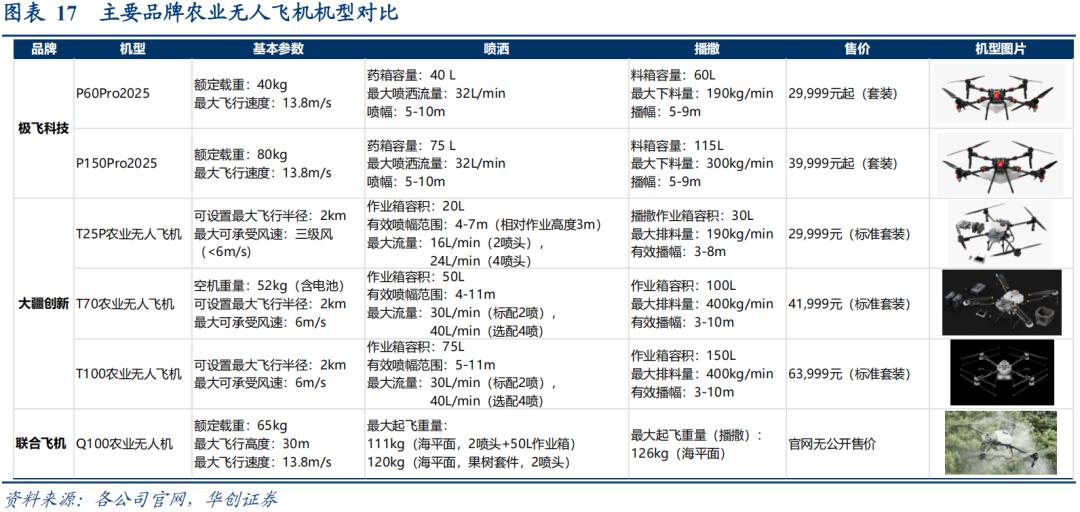
Core Insights - DJI Agriculture holds a global market share of 59% in agricultural drones, maintaining its leading position, while XAG Technology ranks second with a market share of 17.1% [1][4] - The revenue gap between the two companies is significant, with DJI's estimated revenue around 3.5 times that of XAG Technology [4] - The global agricultural drone market is projected to reach 24.8 billion yuan by 2029, with a growth potential exceeding 19 billion yuan [5] Market Position - DJI's market share in China's agricultural drone market reached 63.9% in 2024, while XAG Technology's share was 20.8% [9] - XAG Technology's revenue for 2024 is reported at 1.066 billion yuan, with a net profit of 70.4 million yuan [4][13] Product and Technology Comparison - XAG Technology's P60Pro 2025 model has a rated load of 40 kg and a spray capacity of 40 liters, while DJI's T25P model has a maximum load of 25 kg and a spray capacity of 20 liters [9] - DJI has over 10,000 invention patents globally, compared to XAG Technology's 1,000+ invention patents [7] International Expansion - XAG Technology's overseas revenue has shown significant growth, increasing from 146 million yuan in 2022 to 371 million yuan in 2024, a growth of 154% [14] - However, in the first half of 2025, XAG Technology's overseas revenue growth slowed to 7.1%, raising concerns about sustaining international growth [14][16] Research and Development - XAG Technology's R&D expenses have been declining, with a drop from 1.94 billion yuan in 2022 to 1.59 billion yuan in 2024, indicating a decrease in R&D intensity [18] - Quality issues have been reported with XAG Technology's drones, affecting customer satisfaction and potentially impacting its market position [22][25] Competitive Landscape - The competition between DJI and XAG Technology is intensifying, especially in international markets where DJI holds a significant market share in countries like Brazil and Thailand [16] - XAG Technology aims to differentiate itself through a multi-product strategy and international partnerships, but faces challenges in overcoming DJI's established dominance [5][14]
阿里巴巴与蚂蚁联合投资66亿元设立香港总部;理想汽车首个海外零售中心开业|36氪出海·要闻回顾
36氪· 2025-10-19 13:35
Core Insights - Alibaba Group and Ant Group jointly invested 9.25 billion USD (approximately 66 billion RMB) to establish their Hong Kong headquarters, aiming to expand international business [5] - Alibaba Cloud launched its second data center in Dubai to meet the growing demand for cloud and AI services in the Middle East, expanding its global presence to 29 regions and 92 availability zones [5] - AliExpress announced the schedule for its overseas Double 11 and Black Friday sales events, focusing on "commission incentives + overseas hosting + brand expansion" strategies [5] Group 1: Alibaba and Ant Group Developments - Alibaba and Ant Group's investment in Hong Kong is a strategic move to enhance their international business footprint [5] - Alibaba Cloud's new data center in Dubai is part of a broader strategy to cater to increasing cloud service demands in the region [5] Group 2: E-commerce and Logistics Initiatives - AliExpress will kick off its overseas Double 11 sales on November 8, with a seamless transition to Black Friday sales starting November 20 [5] - Cainiao announced its global logistics guarantee plan for the 2025 year-end promotion, offering various delivery options to enhance customer experience [6] Group 3: Automotive Industry Expansion - Li Auto opened its first overseas retail center in Tashkent, Uzbekistan, focusing on selling three range-extended electric models [6][7] - XPeng Motors launched a digital parts warehouse in Dubai, marking a new phase in its after-sales service network in the Middle East and Africa [7] Group 4: Technology and Innovation - Pony.ai passed the Hong Kong Stock Exchange hearing and is actively expanding its international operations, including partnerships in Luxembourg and Singapore [8] - New Stone Technology and K2 Group formed a strategic partnership to accelerate the deployment of autonomous delivery technology in the UAE [8] Group 5: Renewable Energy and Financing - Canadian company Aypa Power signed a battery storage system supply agreement with Canadian Solar's subsidiary, totaling 2.1 GWh capacity [9] - AI video company Aishi Technology completed a 100 million RMB B+ round financing, with a user base exceeding 100 million globally [10] Group 6: Robotics and Automation - Yunji Technology went public on the Hong Kong Stock Exchange, raising approximately 590 million HKD and achieving a market valuation close to 10 billion HKD [10] - Qianjue Robotics completed a Pre-A round financing of over 100 million RMB, focusing on multi-modal tactile perception technology [11] Group 7: Global Trade and Exports - China's exports of holiday goods, dolls, and animal-shaped toys exceeded 50 billion RMB in the first three quarters, showcasing the influence of traditional culture and manufacturing strength [13] - The 2025 Global Mobile Game Manufacturers Top 50 list included nine Chinese companies, highlighting the country's growing presence in the gaming industry [13]



重视出海、西域、地产链、反内卷的积极变化
SINOLINK SECURITIES· 2025-10-19 12:06
Investment Rating - The report indicates a preference for low valuation and high dividend yield styles in the current market environment, with a focus on sectors such as banking and coal, which have shown positive performance [1][2]. Core Views - The report emphasizes the importance of adhering to fundamentals and resisting uncertainties as market conditions become more challenging. It suggests focusing on four key areas: overseas expansion, AI new materials, western border regions, and real estate chain leaders [2][3]. - The report highlights the potential for significant growth in companies involved in overseas expansion, AI new materials, and those operating in western regions of China. It also notes that real estate chain leaders are beginning to recover from the impacts of first-hand housing market influences [2][3]. Market Performance - The construction materials index experienced a decline of 4.11%, with various sub-sectors such as glass manufacturing and fiberglass showing significant drops [17]. - The report notes that the national average price for cement is 347 RMB/t, down 62 RMB/t year-on-year and 2 RMB/t month-on-month, with an average shipment rate of 45.2% [14][25]. - The average price for float glass is reported at 1300.97 RMB/ton, reflecting a slight increase of 11.16 RMB/ton, with inventory levels rising [14][33]. Price Changes - Cement prices have shown a downward trend, particularly in northern regions due to seasonal weather impacts, while southern regions are facing tight market conditions [25][26]. - The float glass market is experiencing increased inventory levels, leading to price adjustments, with manufacturers facing pressure to manage stock effectively [33][47]. - Fiberglass prices remain stable, with the average price for 2400tex non-alkali yarn at 3524.75 RMB/ton, unchanged from the previous week [53][54].
美团旗下Keeta将于10月30日登陆巴西;XREAL眼镜入选《时代》2025最佳发明丨Going Global
创业邦· 2025-10-19 10:48
Key Points - Meituan's Keeta will officially launch operations in Brazil on October 30, with an investment commitment of $1 billion over the next five years [5][6] - Temu's pre-tax profit in the EU market doubled to nearly $120 million last year, with revenues increasing from $758 million to $1.7 billion [9] - Shein reported a revenue increase of nearly 20% year-on-year, reaching over $37.04 billion, with total assets in Singapore rising by over 70% to $15.27 billion [10] - XREAL's AR glasses were selected as one of TIME's Best Inventions of 2025, highlighting China's technological advancements [11] - Kingsoft Office signed a strategic cooperation agreement with Oman Telecom to promote WPS 365 in the Middle East [14] - Chery's chairman stated that overseas market revenue will surpass domestic contributions in the future [15] - Alibaba and Ant Group jointly invested $925 million to establish their Hong Kong headquarters [17] - DJI is appealing against the U.S. Department of Defense's decision to list it as a "Chinese military enterprise" [19] - Seres Group has passed the Hong Kong Stock Exchange hearing, moving closer to a dual listing [20] - BYD won a bid for Singapore's L4 autonomous bus pilot project, marking a significant entry into the overseas public transport system [21] - XPeng Aeroht secured an order for 600 flying cars in the Middle East, setting a record for overseas orders in this sector [22] - Apple plans to cut iPhone Air production by about 1 million units due to poor market performance [25] - SpaceX's Starship successfully completed its 11th test flight, achieving a controlled landing [29] - Boeing received FAA approval to increase its 737 production rate from 38 to 42 units per month, signaling a recovery [32] - Oracle announced a potential 35% gross margin for its AI cloud services, with $65 billion in new contracts signed [33]

天风医药细分领域分析与展望(2025H1):骨科耗材行业及个股2025半年度回顾与展望
Tianfeng Securities· 2025-10-19 08:42
Industry Investment Rating - The report maintains an investment rating of "Outperform" for the orthopedic consumables sector [2]. Core Insights - The orthopedic consumables sector experienced significant performance improvement in H1 2025, with a positive trend in overseas expansion and accelerated corporate layouts [3][5]. - The overall revenue of the A-share orthopedic consumables sector increased by 16% year-on-year in H1 2025, with net profit attributable to shareholders rising by 70% and non-recurring net profit increasing by 75% [5][11]. - The gross profit margin for the sector was 66% in H1 2025, reflecting a year-on-year increase of 1.95 percentage points, attributed to ongoing cost control and optimization [5][11]. - The report highlights a favorable trend in overseas business, which is expected to become a significant growth driver for companies in the sector [5][35]. Summary by Sections 1. Orthopedic Consumables H1 2025 Report Analysis - The orthopedic consumables sector saw a revenue increase of 16.24% in H1 2025, with a gross profit margin of 66.07% [9][11]. - The second quarter of 2025 showed a revenue growth of 23% year-on-year, with net profit growth of 84% [11]. 2. Segment Analysis - The joint business segment benefited from the implementation of centralized procurement policies, leading to a sustained increase in both volume and price for leading companies [22]. - The spinal segment is experiencing stable execution of centralized procurement, with significant room for domestic companies to increase market share [29]. 3. Related Company Summaries - **Dabo Medical**: Achieved a revenue of 12.1 billion yuan in H1 2025, a year-on-year increase of 25.55%, with a net profit of 2.44 billion yuan, up 76.69% [41]. - **Weigao Orthopedics**: Reported a revenue of 7.41 billion yuan in H1 2025, a slight decrease of 1.28%, but net profit increased by 52.43% [57]. - **Aikang Medical**: Generated a revenue of 6.94 billion yuan in H1 2025, reflecting a growth of 5.65% year-on-year [47]. - **Chunli Medical**: Recorded a revenue of 4.88 billion yuan in H1 2025, up 28.27% year-on-year [52]. - **Sanyou Medical**: Achieved a revenue of 2.50 billion yuan in H1 2025, a year-on-year increase of 17.77% [61].



闯千亿级“出海”赛道,这个县底气何在?
Hai Nan Ri Bao· 2025-10-19 02:03
Core Insights - The 2025 China Chengtai International Economic and Trade Fair aims to promote "going global" for Chinese enterprises, positioning Chengtai as a key gateway for international expansion [1][2] - The event builds on the success of the first fair held in 2024, which attracted over a thousand companies, highlighting the growing importance of international trade for long-term business development [1][2] Summary by Sections Event Overview - The second fair is larger and more mature, featuring 173 signed projects with an intended signing amount of approximately 67.36 billion yuan, covering various sectors including energy trade, oil services, and cross-border e-commerce [3] - The event includes nine thematic activities, evolving from a single event to a multi-month industry ecosystem cultivation initiative, enhancing the depth of the "going global" theme across different sectors [3] Government Initiatives - Two complementary government-guided funds were launched, with a total scale of 35 billion yuan, indicating a shift from "fund attraction" to "industry ecosystem co-construction" [4] - The fair introduced three major industry ecosystem scenarios related to the gaming industry, along with a comprehensive service list to support local operations and talent development [4] Competitive Advantages - Chengtai leverages the advantages of the Hainan Free Trade Port, including zero tariffs and low tax rates, to reduce operational costs and facilitate global resource allocation [5][6] - The geographical location of Chengtai, with access to major ports and airports, enhances its logistics capabilities, attracting notable logistics companies to the region [6] - The region has a solid industrial foundation with significant clusters in digital culture, gaming, and cross-border e-commerce, fostering a vibrant "going global" ecosystem [6] Impact and Future Prospects - The fair's influence extends beyond the event itself, with significant investment projects and partnerships emerging, such as the Zhejiang-Qiong Cooperation Industrial Park, which has attracted multiple high-value projects [7][8] - The ongoing efforts to promote Chengtai as a key player in the global supply chain demonstrate the potential for county-level regions to contribute uniquely to the Hainan Free Trade Port's development [8]
这场主题对话会,“出海”是焦点
Hai Nan Ri Bao· 2025-10-19 01:37
Group 1: Cross-Border E-commerce and Game Industry - The "Chengmai Economic and Trade Conference" highlighted the importance of cross-border e-commerce and game industry, focusing on the theme of "Going Global" [1] - Chengmai has established a public service platform for game exports, with 40 companies currently onboard and 114 games launched on the PlayOL platform, achieving over 3.6 million overseas registered users and 200,000 daily active users as of September [1] - The success of cross-border e-commerce relies on continuous service post-sale, with policies facilitating the attraction of high-level foreign talent to Hainan [2] Group 2: New Energy Vehicles and Collaborative Ecosystems - The new energy vehicle industry in Chengmai emphasizes the need for a collaborative ecosystem, advocating for a "cluster export" model to reduce costs and enhance competitiveness in global markets [2] - Hainan Qinglan Intelligent Technology Co., Ltd. has initiated a project to create an AI-native, co-creation industrial internet platform, shifting from single product exports to comprehensive service exports in the new energy vehicle sector [2] Group 3: Zero Carbon Development Opportunities - The conference discussed the historical opportunities for zero-carbon development in Hainan post-island closure, aiming to establish a "zero-carbon free trade port" as an international benchmark [3] - The role of artificial intelligence in data governance was emphasized, highlighting its dual function as a security measure and a catalyst for business value creation [3]
跨境出海周度市场观察-20251018
Ai Rui Zi Xun· 2025-10-18 09:32
Investment Rating - The report does not explicitly provide an investment rating for the industry Core Insights - The report highlights the shift of Chinese companies' overseas strategies from market expansion to building cross-cultural influence, emphasizing brand development and cultural integration in the AI era [2] - Southeast Asia is identified as a key battleground for businesses seeking growth, with the e-commerce GMV in the region projected to reach $128.4 billion by 2024 [4] - The report discusses the increasing global presence of Chinese brands in various sectors, including digital trade, electric vehicles, and cultural exports [8][10][12] Industry Environment - **Cross-Cultural Influence in the AI Era**: Chinese companies are focusing on building soft power and cultural resonance through localized strategies and community engagement, leveraging AI to enhance efficiency and address local needs [2] - **Digital Trade Expo**: The fourth Global Digital Trade Expo saw procurement amounts exceeding 30.9 billion yuan, with AI, cultural exports, and cross-border e-commerce leading the orders [2] - **Southeast Asia as a Market**: The region's e-commerce market is rapidly growing, with major platforms like TikTok Shop, Shopee, and Lazada dominating [4] - **Cultural Exports**: Chinese web literature is evolving from simple content export to creating ecosystems around IP, utilizing AI for content adaptation and market expansion [4] - **Gaming Industry Trends**: The gaming sector is witnessing strong performance in overseas markets, with significant revenue growth and a diverse range of successful titles [4] - **Smart Connected Vehicles**: The report outlines the landscape of the smart connected vehicle industry, emphasizing the importance of collaboration and local compliance for successful overseas ventures [6] - **Home Appliance Expansion**: Major Chinese home appliance brands are establishing manufacturing bases in Thailand, marking a shift from mere exports to full-scale operations [7] - **Short Video Content**: The short video format is gaining traction globally, driven by the demand for quick, engaging content, particularly among younger audiences [8] - **Electric Vehicle Market**: Chinese electric vehicles are reshaping the global automotive landscape, leveraging competitive pricing and advanced technology to gain market share [9] - **Pool Cleaning Robots**: Chinese brands are making strides in the overseas market for pool cleaning robots, focusing on brand awareness and technological advancements [10] Top Brand News - **柚香谷 (Youxianggu)**: The juice brand is expanding into Southeast Asia and the Middle East, aiming for over 1 billion yuan in sales by 2024 [13] - **华为 (Huawei)**: The company is launching smart transportation solutions in international markets, enhancing operational efficiency [14] - **名创优品 (Miniso)**: The brand's toy division is preparing for an IPO, aiming to strengthen its IP development capabilities [14] - **美团 (Meituan)**: The company is rapidly expanding its international food delivery service in the Middle East, targeting high-growth markets [14] - **阅文集团 (Yuewen Group)**: The company is transitioning from content export to experiential offerings, launching an IP-themed attraction in Singapore [18] - **中文在线 (Zhongwen Online)**: The platform is leveraging AI to enhance content production but faces challenges in profitability due to high overseas investment [18] - **Rockbros**: The cycling brand has achieved over 1 billion yuan in sales by focusing on product development and localization strategies [19] - **阿里 (Alibaba)**: The company is implementing new strategies across its platforms to enhance brand presence and compete with Amazon [22]

