美元指数

Search documents
【2026年汇市展望】美元或进一步走弱 非美货币走势或分化
Sou Hu Cai Jing· 2026-01-04 08:26
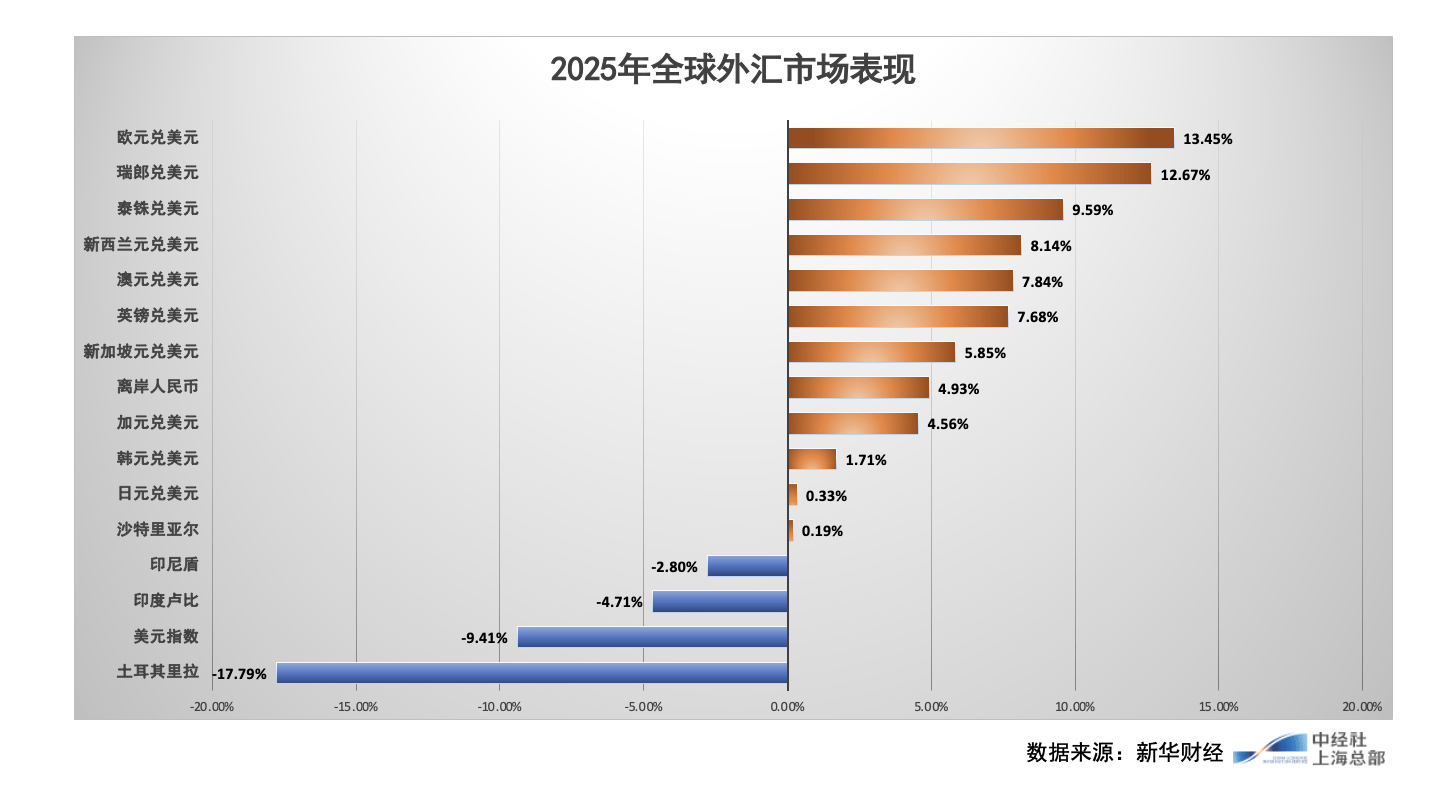
Group 1: Core Insights - The US dollar index is expected to decline further in 2026, following a significant drop of 9.41% in 2025, the largest annual decline since 2017, influenced by a weakening US economy, tariff policies, and ongoing interest rate cuts by the Federal Reserve [1][5] - Analysts predict that the dollar will weaken against major currencies such as the euro, yen, and pound, with an estimated additional decline of about 3% by the end of 2026 [5][6] - The divergence in monetary policy among major central banks is expected to continue, with the Federal Reserve likely to maintain a loose monetary stance while other central banks may raise rates or keep them stable, further pressuring the dollar [4][8] Group 2: Currency Performance - The euro is projected to strengthen significantly, with an increase of over 13.4% against the dollar in 2025, reaching levels above 1.17 USD per euro, supported by improved economic conditions in the Eurozone [1][8] - The Australian dollar is expected to perform well in 2026, benefiting from stable economic growth and potential interest rate hikes, following a 7.84% appreciation in 2025 [9][11] - In contrast, the Japanese yen and British pound are anticipated to face weaker performance in 2026, with the yen potentially falling below the 160 mark against the dollar due to persistent low interest rates and economic uncertainties [10][13]

资产配置系列:人民币交易指南2026
Guolian Minsheng Securities· 2026-01-04 08:07
Group 1 - The report addresses three core questions regarding the RMB exchange rate in 2026: 1) How to assess the rise of the RMB? 2) How will the exchange rate rise and how will the central bank regulate it? 3) What impact does RMB appreciation have on stocks and bonds? [2][8] - The current appreciation of the RMB is deemed reasonable, supported by a decline in the US dollar index (over 10%), a narrowing of the China-US interest rate differential (approximately 110 basis points), and a decrease in the attractiveness of the RMB as a financing currency [2][7][10]. - The expected central level for the RMB exchange rate is around 6.8, with the central bank's regulation being crucial to avoid unnecessary overshooting [2][23]. Group 2 - The central bank's regulation follows a "symmetrical principle," meaning that just as it previously prevented excessive depreciation, it should also focus on regulating excessive appreciation to balance the economic impact of exchange rate fluctuations [2][23]. - Key regulatory measures include the use of the counter-cyclical factor in the central parity rate, guiding expectations through official channels, and reducing the reserve requirement for forward foreign exchange purchases [2][23][44]. - The report suggests that the RMB's appreciation can be divided into "non-overshooting" and "overshooting" phases, with historical data indicating that after overshooting, the central bank tends to gradually open the door to rate cuts, aiding in the return of liquidity to a neutral environment [2][47]. Group 3 - In the non-overshooting phase, the stock market benefits from cyclical recovery, favoring cyclical sectors, while the bond market may face pressure unless driven by overseas quantitative easing [2][56]. - Conversely, in the overshooting phase, economic expectations may suffer negative impacts, leading to generally subdued stock market performance, while the bond market may see increased probabilities of appreciation [2][56]. - Historical data shows that during non-overshooting phases, the stock market, represented by indices like the CSI 300, tends to perform well, while the bond market may not necessarily decline [2][56].
「UNForex下周展望」美元与宏观数据主导下周贵金属走势
Sou Hu Cai Jing· 2026-01-03 14:13
Core Viewpoint - The precious metals market is expected to be influenced by fluctuations in the US dollar and upcoming economic data, with gold likely to maintain a high-level consolidation and silver exhibiting more pronounced volatility [9] Group 1: Economic Data Impact - Key US economic data, including December non-farm payrolls, ISM manufacturing index, and housing sales, will be released next week, affecting market expectations for the Federal Reserve's future interest rate decisions, which in turn will directly or indirectly impact precious metals [2] - Strong economic data may suppress safe-haven demand for precious metals in the short term, while weak data could boost gold and silver prices [2] Group 2: Gold Market Analysis - In an uncertain macro environment with limited dollar fluctuations, gold is likely to continue its high-level consolidation, with key support around $4,380–$4,400 and resistance at the psychological level of $4,500–$4,520 [3] - Short-term volatility is expected, but the medium to long-term trend remains bullish [3] Group 3: Silver Market Analysis - The silver market is more sensitive to dollar and macro data fluctuations, showing higher volatility this week, which may continue into the next week [4] - Support for silver is noted around $75–$76, with resistance near $78 [4] Group 4: Capital Flows - While macro data and dollar trends are key short-term factors, capital behavior remains the core underlying logic for precious metal prices, with capital inflows and structural adjustments potentially creating short-term volatility [5] Group 5: Technical Indicators - Daily and weekly technical indicators show that both gold and silver are above major moving averages, with short-term RSI close to high levels but not yet in the overbought zone, suggesting that prices may maintain a consolidation phase rather than a trend reversal [6] Group 6: Geopolitical Risks - Global geopolitical events, including the Russia-Ukraine situation, Middle East conflicts, and US-Latin America relations, continue to affect market sentiment, with risk events potentially leading to short-term inflows into gold and silver, amplifying price volatility [7] Group 7: Trading Recommendations - Traders should focus on short-term opportunities around the release of macro data, while considering support and resistance levels for operations [8] - Long-term investors should pay attention to the interplay between dollar trends and capital flows to assess the likelihood of trend continuation [8]
美元指数涨0.21%
Mei Ri Jing Ji Xin Wen· 2026-01-02 23:13
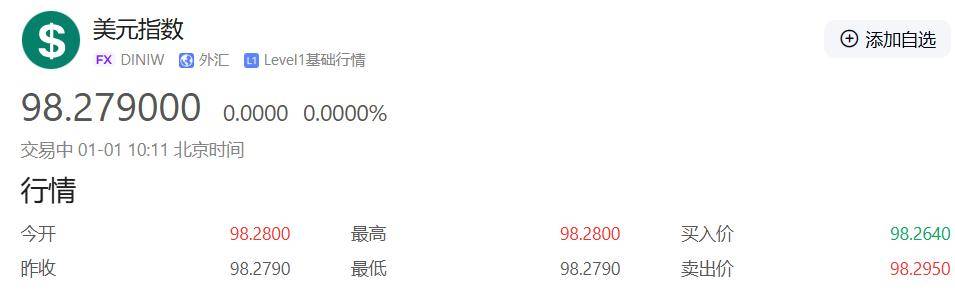
Core Viewpoint - The US dollar index increased by 0.21% to 98.46, indicating a mixed performance among non-US currencies [1] Currency Performance - The euro depreciated by 0.26% against the US dollar, trading at 1.1719 [1] - The British pound saw a slight increase of 0.03%, reaching 1.3459 against the US dollar [1] - The Australian dollar appreciated by 0.36%, with a value of 0.6694 against the US dollar [1] - The US dollar rose by 0.07% against the Japanese yen, trading at 156.8575 [1] - The US dollar increased by 0.09% against the Canadian dollar, reaching 1.3732 [1] - The US dollar decreased by 0.09% against the Swiss franc, trading at 0.7923 [1]
纽约汇市:美元指数开年走高 澳元跑赢G-10货币
Xin Lang Cai Jing· 2026-01-02 21:46
Group 1 - The Bloomberg Dollar Index rose by 0.1% on the first trading day of the new year, marking its fifth consecutive day of increase, following a decline of 8.1% in 2025 [1][7] - The S&P Global US Manufacturing Purchasing Managers' Index (PMI) for December reported at 51.8, meeting expectations [8] - The US 10-year Treasury yield increased by 2.5 basis points to 4.19% [9] Group 2 - The Australian dollar (AUD) appreciated by 0.2% to 0.6685 against the US dollar, outperforming other G-10 currencies, supported by improved risk appetite and rising silver and gold prices [9] - Gold and silver prices continued to rise, extending their best annual performance since 1979, while aluminum prices surpassed $3,000 per ton for the first time in over three years [9] - InTouch Capital Markets indicated that the strength of the Australian dollar in early 2026 suggests investors may be betting on a divergence in policies between the Reserve Bank of Australia and the Federal Reserve [2]
从恐慌到淡定,人民币三次“破7”对比,藏着啥不一样的信号?
Sou Hu Cai Jing· 2026-01-02 07:09
Core Viewpoint - The Chinese yuan has appreciated against the US dollar, officially breaking the 7 mark, while depreciating against the euro, highlighting a divided currency market in 2025 [1][5][12]. Group 1: Currency Performance - The yuan appreciated by 4% against the US dollar in 2025, with the exchange rate moving from 72,000 RMB for 10,000 USD in March to 69,800 RMB in December, resulting in a gain of 2,200 RMB for exporters [3][12]. - Conversely, the yuan depreciated nearly 10% against the euro, with the exchange rate shifting from 70,000 RMB for 10,000 EUR to 78,000 RMB, negatively impacting exporters dealing in euros [5][12]. Group 2: Market Dynamics - The decline of the US dollar index by nearly 10% in 2025, the worst performance since 2003, was influenced by the Federal Reserve's interest rate cuts, leading to a decrease in the dollar's value [8][10]. - The Chinese trade surplus reached a record high, bolstering the yuan's strength as companies had more dollars to convert, increasing demand for the yuan [12][22]. Group 3: Future Outlook - Predictions for 2026 suggest the yuan could strengthen to 6.8 against the dollar if the Federal Reserve continues to lower interest rates, but a rebound in the dollar could lead to a depreciation of the yuan [15][29]. - The stability of the trade surplus and the recovery of demand from Europe and the US are critical for maintaining the yuan's strength in the future [19][22]. Group 4: Policy and Economic Factors - The Central Economic Work Conference emphasized a dual investment strategy focusing on infrastructure and human capital, which could support economic growth and strengthen the yuan [22][24]. - The increase in actual foreign investment by 26% year-on-year in November is a positive indicator for the yuan's future value [24]. Group 5: Recommendations for Businesses - Exporters should consider settling transactions in RMB to mitigate exchange rate risks, especially when dealing with European clients who are increasingly open to RMB settlements [25][34]. - Companies are advised to engage in hedging strategies to protect against currency fluctuations while individuals should exchange currency based on actual needs rather than speculation [34].
人民币2025年升值4.2%,2026年汇率如何走?继续涨但大幅升值可能性小
Sou Hu Cai Jing· 2026-01-01 04:28
Core Viewpoint - The trend of the RMB exchange rate has become a central topic of concern as the global economic landscape continues to evolve in 2025, with a moderate annual appreciation setting the stage for further gains in 2026 [1] Group 1: RMB Exchange Rate Performance - On the last day of 2025, the onshore RMB to USD exchange rate closed at 6.994, appreciating significantly by 4.2% compared to 7.299 at the end of 2024 [2] - The appreciation of the RMB in 2025 is attributed to multiple factors, primarily the depreciation of the USD, which saw a decline of 9.4% as indicated by the USD index [2] - The controlled pace of RMB appreciation is likely a result of proactive adjustments by the People's Bank of China (PBOC) to mitigate the impact on export competitiveness [3] Group 2: Economic and Policy Implications - The PBOC aims to maintain a moderate appreciation of the RMB to avoid exacerbating cost pressures on Chinese exporters, especially in light of increased tariffs under the Trump administration's "reciprocal tariff" policy [3] - The moderate appreciation of the RMB in 2025 is expected to create broader space for future gains, supported by the Federal Reserve's shift towards a more accommodative monetary policy starting December 2025 [5] - The depreciation of the USD as a global reserve currency is anticipated to contribute to the relative appreciation of other currencies, including the RMB [5] Group 3: Future Outlook - There is a solid foundation for continued RMB appreciation in 2026, although significant gains are unlikely due to expected limited rate cuts by the Federal Reserve [7] - The RMB exchange rate is projected to fluctuate within a range of 6.7 to 7.1 throughout 2026, with potential for a brief dip to around 6.6 in extreme scenarios [9] - The accuracy of these predictions will depend on various intertwined factors, including economic fundamentals, policy adjustments, and international financial market dynamics [11]
今年以来美元指数已跌超9%美元或创8年来最大跌幅
Xin Lang Cai Jing· 2025-12-31 12:29
【今年以来#美元指数已跌超9%##美元或创8年来最大跌幅#】隔夜最新公布的美联储12月会议纪要显示 出,此前美联储降息25个基点的决定,内部的讨论远比最终投票结果呈现的要更艰难。《金融时报》形 容,这可能是近几十年来分歧最为严重的一次货币政策投票之一。有分析人士感叹,以前美联储纪要传 递出的态度都很清晰,但这一次纪要传递出的特点是:官员们各说各话,信息松散。这其实也反映了美 联储当下面临的复杂局面,政府停摆导致数据不足,关税导致通胀存在不确定性。美联储的利率决议和 美元走势密切相关。今年美元或创下自2017年以来最大年度跌幅。今年迄今为止,衡量美元对六种主要 货币的美元指数已经下跌约9.45%。目前分析人士认为:由于美联储明年可能继续降息,而预计包括欧 洲央行在内的其他央行可能会维持甚至提高利率,这将导致美元继续走软。(央视财经) 来源:@中新经纬微博 ...
ATFX:美联储会议纪要发布,暗示2026年或降息两次
Sou Hu Cai Jing· 2025-12-31 11:50
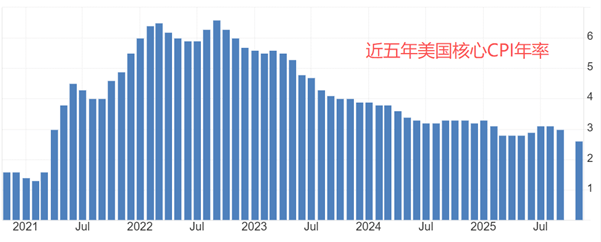
▲ATFX图 会议纪要中对通胀形势的判断,基本符合当前市场的主流预期。上图是近五年美国的核心CPI年率柱状 图。2022年9月份创出阶段性高点6.6%,随后因为货币政策收紧而一路下降。今年11月份跌至最低点 2.6%,非常接近2%的美联储既定目标。如果趋势不变,美国的通胀率大概率在2026年达到2%,也就是 会议纪要中提到的"逐渐降至2%"。 来源:ATFX ATFX:今日3:00,美联储发布会议纪要,对应12月9日~10日的两次利率决议。会议纪要中提到了美 国宏观经济发展和货币政策执行中的诸多问题,焦点在于通胀、失业率、利率走向。 通胀 会议纪要中提到:短期内通货膨胀率仍将处于较高水平,随后会逐渐降至 2%;关税对核心商品通货膨 胀的影响将会减弱;通货膨胀的风险仍倾向于上行;高通胀的情况可能会比预期的更为持久。 5月份发生了什么标志性事件?答案就是特朗普的激进移民政策。特朗普从5月份开始,大规模驱逐非法 移民,一时间移民群体人心惶惶,求职意愿大幅下降。 会议纪要中提到的人口老龄化、劳动参议与降低、经济因素等等,在中短期内,影响力均不及特朗普对 非法移民的强硬政策。 利率 会议纪要中提到:调查结果以及期权定价 ...