AI数据中心

Search documents
禁令之下,中国比特币挖矿算力回升,重返全球第三大挖矿国?
Sou Hu Cai Jing· 2025-11-26 22:12
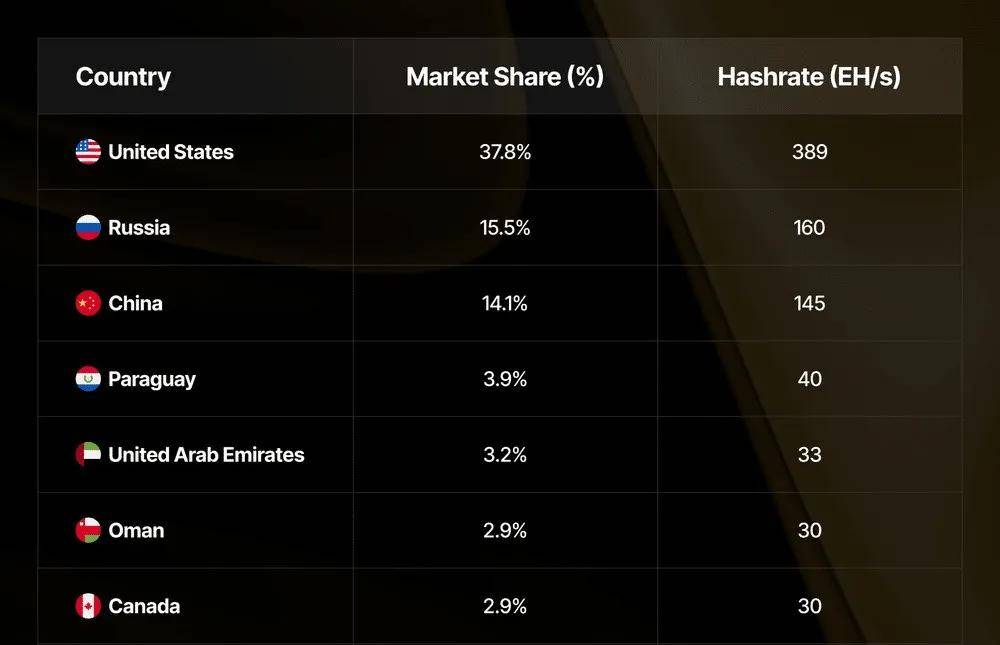
Core Viewpoint - China's Bitcoin mining activities have surprisingly revived four years after a comprehensive ban, with its hash rate now ranking third globally, driven by economic incentives, local agreements, and technological realities [1][2]. Group 1: Market Share and Hashrate - As of October 2025, China's Bitcoin network hash rate has rebounded to approximately 14.1%, equating to 145 EH/s, making it the third-largest mining country after the United States (37.8% or 389 EH/s) and Russia (15.5% or 160 EH/s) [2]. Group 2: Factors Driving the Resurgence - The resurgence of Bitcoin mining in China is attributed to three core factors: 1. **Cheap Electricity**: Regions like Xinjiang, Sichuan, and Inner Mongolia offer industrial electricity prices as low as 0.2 to 0.35 RMB per kWh, significantly below the international average, creating a cost advantage for miners [4]. 2. **AI Data Centers' Unintentional Support**: The construction of AI and cloud computing data centers has led to idle facilities and power quotas, allowing local governments to tacitly permit these facilities to pivot to Bitcoin mining, thus utilizing excess electricity and generating local tax revenue [5]. 3. **High Bitcoin Prices**: Bitcoin prices surged to a historical high of $126,000 in 2025, with subsequent prices stabilizing between $80,000 and $90,000, providing substantial profit margins for miners, which incentivized their return despite regulatory risks [5][6]. Group 3: Historical Context and Global Dynamics - The expulsion of Chinese mining companies and engineers in 2021 led to their migration to the U.S., particularly Texas, where they adapted to local energy markets and became crucial in addressing the electricity demands of AI data centers [8][9]. - The irony lies in the fact that while China aimed to enhance energy security and financial sovereignty by banning mining, the displaced capacity and expertise have become vital assets for U.S. AI strategies [9]. Group 4: Regulatory Environment and Future Outlook - Despite the thriving underground mining activities, the Chinese government's ban on cryptocurrency mining remains in effect, posing risks of sudden crackdowns and penalties [11]. - Analysts suggest that as long as Bitcoin prices remain high and local governments face fiscal pressures, the ongoing "cat-and-mouse" game between regulation and market activity will continue, with the future direction remaining uncertain [11].

Meta被曝考虑采用谷歌TPU,美银:英伟达(NVDA.US)商用GPU优势仍难撼动 重申“买入”评级
智通财经网· 2025-11-26 06:52
智通财经APP获悉,在市场传闻Meta(META.US)正考虑使用谷歌(GOOGL.US)的TPU(线程处理单元) 来补充其现有的英伟达GPU供应后,美国银行重申了对英伟达(NVDA.US)、AMD(AMD.US)和博通 (AVGO.US)的"买入"评级。 阿利亚补充道:"商用GPU芯片具有诸多优势:现成可用、多云可移植性、英伟达的全栈软件和开发者 生态,以及面向不具备定制芯片专业知识的政府和企业本地客户的更大可寻址市场。此外,紧张的供应 链和英伟达的规模优势使得抢占过多份额变得更加困难,因为近中期内零部件供应不足,因此份额变化 本质上是渐进的。对于特定范围的内部工作负载,定制芯片可能成本更低,这可能适合像谷歌和Meta 这样拥有大量内部工作负载的客户。然而,它们在微软Azure或亚马逊AWS等公有云或100多个需要高 度灵活性的新云中用途较小,这就是为什么即使谷歌也在其公有云中使用GPU。" 美国银行分析师维韦克·阿利亚在给客户的一份报告中写道:"昨日晚些时候,市场消息称谷歌可能在明 年将其TPU出租给Meta,随后可能在2027年进行本地化部署。两家公司均未对此类交易发表任何官方评 论,但如果属实,这可能 ...



全球电网升级迫在眉睫,全市场唯一的电网设备ETF(159326)单日涨超1.68%
Mei Ri Jing Ji Xin Wen· 2025-11-26 02:32
Core Viewpoint - The market sentiment is improving, with the electric grid equipment sector continuing its rebound, highlighted by the performance of the only electric grid equipment ETF (159326), which rose over 1.68% on November 25, with a daily trading volume of 210 million yuan [1] Group 1: ETF Performance - The electric grid equipment ETF (159326) has a solid long-term investment logic, attracting significant capital inflow, with over 1.6 billion yuan raised in the last 20 trading days, bringing its total size to 1.866 billion yuan, making it the largest electric grid equipment ETF in the market [1] - The ETF tracks the CSI Electric Grid Equipment Theme Index, with a strong representation in sectors such as transmission and transformation equipment, grid automation equipment, cable components, and distribution equipment [1] Group 2: Industry Demand and Growth - There is a pressing need for grid upgrades in Europe and the U.S., as indicated by the American Society of Civil Engineers (ASCE), which reports that 70% of transformers have exceeded their 25-year design life, and transmission lines have an average lifespan of 40 years [1] - A report from China Merchants Securities highlights that the demand for overseas grid upgrades supports performance elasticity, with a year-on-year increase of 37.8% in cumulative exports of electrical equipment in October, driven by new power system construction policies and the power demand from AI data centers [1] - The industry is transitioning from traditional equipment to an "energy internet," with high growth potential in segments such as ultra-high voltage, smart distribution, and energy storage converters [1] Group 3: ETF Composition - The ETF has a high weight of 64% in ultra-high voltage components, the highest in the market, and includes leading companies such as State Grid NARI, TBEA, Sifang Electric, and Trina Solar among its top ten holdings [1]
英伟达800V架构重塑AI数据中心:31家产业链核心企业大起底
中关村储能产业技术联盟· 2025-11-25 06:22
Core Insights - The article discusses the significant energy demands of AI data centers, which can consume as much electricity as a small city, and highlights the need for advanced energy storage systems to manage power fluctuations effectively [2][4] - NVIDIA's recent release of the 800V DC architecture white paper indicates a shift towards integrating rapid-response energy storage systems in AI data centers, suggesting a potential explosive growth opportunity for the energy storage industry driven by AI [4][10] Group 1: Energy Architecture Evolution - The industry leaders, led by NVIDIA, have outlined a clear three-step evolution plan towards the 800V DC architecture for AI data centers [6] - The first step involves a transitional solution using "side-mounted power cabinets" to physically separate power modules from core computing areas [6] - The second step focuses on transitioning from a "distributed" to a "centralized" architecture [7] - The final step aims for a direct conversion from 10kV medium voltage AC to 800V DC using Solid State Transformers (SST) [9] Group 2: Hybrid Energy Storage Systems - To effectively manage power fluctuations, "hybrid energy storage" is identified as a necessary technological core, combining supercapacitors, high-rate batteries, and large-scale energy storage systems [10] - The new architecture requires advanced semiconductor technologies, such as silicon carbide (SiC) and gallium nitride (GaN), to meet the stringent demands of 800V high voltage [11] Group 3: Market Dynamics and Key Players - The surge in energy demand from AI and data centers has led to strategic competition among energy storage companies, including UPS suppliers and thermal management solution providers [16] - Major players in the energy storage market include: - **Sungrow Power Supply**: Actively developing power solutions for AI data centers, with plans to launch products by 2026 [19] - **Huawei**: Emphasizing energy digitalization for AI data centers, aiming for a secure, reliable, and low-carbon future [20] - **Kehua Data**: Focused on building data centers and HVDC solutions, with significant market presence [21][23] - **DuanDeng Co.**: Recognized as a "hidden champion" in data center energy storage, leading in battery shipments [24] - **Zhongtian Technology**: Engaged in lithium battery storage systems, with a strong production capacity [25] Group 4: Technological Innovations - The introduction of Solid State Transformers (SST) is highlighted as a revolutionary product that efficiently converts medium voltage AC to 800V DC, significantly reducing energy loss and saving substantial electricity annually for large data centers [11][12] - SSTs improve power quality and reduce the footprint of power systems, allowing for better space utilization in data centers [15] Group 5: Future Trends and Strategic Directions - The competition in the energy storage sector is shifting from hardware specifications to the intelligence of energy management systems, emphasizing the need for predictive capabilities and smart coordination among different energy storage units [15] - The article anticipates a transformation in business models, where the winners will be those who can provide integrated smart energy solutions rather than just hardware [15]
卫星互联网或迎商业化爆发期
2025-11-25 01:19
Summary of Key Points from Conference Call Records Industry Overview - The conference call discusses the **satellite internet and commercial aerospace industry** in China, highlighting the potential for commercialization and growth in satellite production and launch capabilities [1][3][5]. Key Insights and Arguments 1. **Cost Reduction in Launch Services**: Successful testing of China's reusable rocket could reduce launch costs from 30,000-40,000 RMB per kilogram to below 20,000 RMB, enhancing competitiveness in space transportation [1][3]. 2. **Demand for Low Earth Orbit (LEO) Satellite Constellations**: China plans to deploy over 30,000 satellites, with significant projects like the StarNet and Qianfan constellations, posing challenges for satellite and rocket manufacturing capabilities [1][4]. 3. **Increased Satellite Production Capacity**: Domestic small satellite production capacity has exceeded 3,000 units annually, with integrated production facilities like the Hainan Satellite Super Factory improving efficiency and reducing costs [1][6]. 4. **New Generation of Long March Rockets**: The introduction of new Long March rockets (5, 6, 8, 12) supports the anticipated increase in LEO launches, with private companies also developing reusable rockets [1][6]. 5. **Commercial Launch Facilities Expansion**: Multiple commercial launch sites are being developed, with an expected operational capacity of 7-8 launch sites by next year, each capable of 10-16 launches annually [1][6]. Gas Turbine Market Insights 1. **Growth in Gas Turbine Market**: The gas turbine market is expected to grow significantly due to increased electricity demand from AI data centers, with a projected global installed capacity of 60 GW by 2024 [7][9]. 2. **Major Suppliers**: The gas turbine market is dominated by Mitsubishi Power, Siemens Energy, and GE, which collectively hold over 75% of the market share [8]. 3. **Profitability Forecasts**: Siemens Energy anticipates a rise in profit margins for its gas turbine business, projecting a pre-tax margin of 14%-16% by 2026 and 18%-20% by 2028, indicating strong future profitability [2][11]. Company-Specific Insights 1. **AVIC Xi'an Aircraft Industry Group (中航西飞)**: The company is the sole producer of the Y-20 strategic transport aircraft, which has unique advantages in military trade and is involved in civil aviation projects like the C919 [2][13][14]. 2. **Military Trade Potential**: The Y-20's scarcity and the ongoing demand for large transport aircraft in smaller countries present significant military trade opportunities for AVIC Xi'an [15]. 3. **Civil Aviation Growth**: The company is heavily involved in the C919 program, with expectations for steady growth in civil aviation business as production ramps up [16][17]. 4. **Management Changes**: The new management team, primarily composed of younger individuals, is expected to bring fresh perspectives and improvements, particularly in investor relations [18]. Additional Considerations - The conference highlights the importance of monitoring developments in space asset construction and related enterprises, as they will play a crucial role in the accelerated industrialization of the aerospace sector [5]. - The gas turbine industry is recommended for long-term investment tracking due to its anticipated growth driven by technological advancements and increasing energy demands [7].

湖南裕能:公司对行业需求前景坚定看好
Zheng Quan Ri Bao· 2025-11-24 09:07
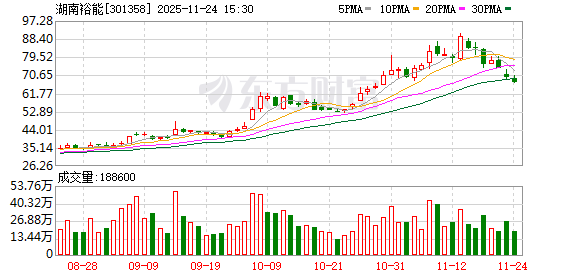
(文章来源:证券日报) 证券日报网讯湖南裕能11月24日发布公告,在公司回答调研者提问时表示,基于下游旺盛的需求,公司 对行业需求前景坚定看好。在动力电池领域,乘用车和商用车电动化渗透率提升,以及新能源汽车单车 平均带电量逐步提高,动力电池市场有望继续保持增长。在储能领域,随着大电芯技术应用进一步提升 储能系统经济性,电力市场化改革及容量电价补偿等政策支持,AI数据中心等新兴应用场景对配储需 求增强,叠加海外储能需求快速提升等,多重积极因素共同推动储能市场进入高速发展通道。磷酸盐正 极材料作为锂电产业链的关键环节,有望在动力及储能电池需求的驱动下延续强劲增长态势。 ...

英伟达CEO预测25年全球AI数据中心市场规模超2000亿美元,数字经济ETF(560800)调整蓄势
Sou Hu Cai Jing· 2025-11-24 02:22
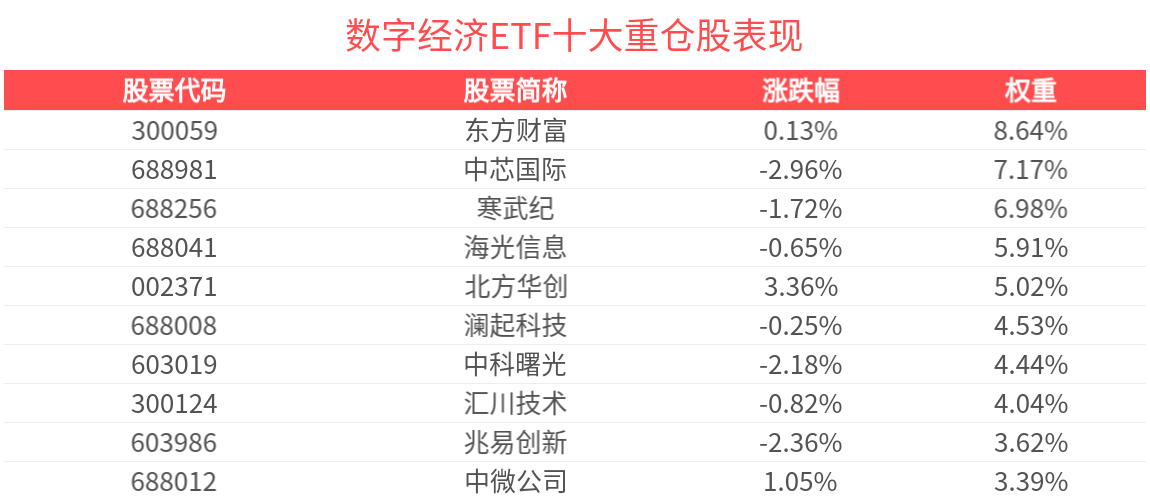
Core Insights - The China Securities Digital Economy Theme Index has decreased by 0.59% as of November 24, 2025, with North China Huaneng leading the gains and Runhe Software experiencing the largest decline [1][2] - AMD's CEO Lisa Su predicts that the global AI data center market will exceed $200 billion by 2025 and grow to $1 trillion by 2030, with a compound annual growth rate (CAGR) of over 40% [1] - Shanghai Securities forecasts a significant shift in China's AI server market, with the proportion of imported chips from companies like NVIDIA and AMD decreasing from 63% in 2024 to 42% by 2025, indicating a substantial advancement in domestic chip supply [2] Market Performance - The Digital Economy ETF (560800) experienced a turnover rate of 0.55% with a transaction volume of 3.4648 million yuan, and its shares increased by 2 million over the past week [1] - In the last 10 trading days, there were net inflows of funds on 8 days, totaling 23.8595 million yuan [1] Index Composition - As of October 31, 2025, the top ten weighted stocks in the China Securities Digital Economy Theme Index account for 53.93% of the index, with Dongfang Wealth, Cambricon, and SMIC being the top three [2][4] - The index includes companies involved in digital economy infrastructure and high levels of digitalization, reflecting the overall performance of listed companies in this sector [2]
数据中心配套电力设备趋势&伊顿业绩后交流
2025-11-24 01:46
Summary of Key Points from the Conference Call Industry Overview - The data center industry is experiencing a significant shift towards liquid cooling technology, which has transitioned from being an optional feature to a necessity for data center construction. The demand for data centers is expected to continue until 2039, with high-voltage direct current (DC) 800-volt products gaining attention [1][2] - The global liquid cooling market is projected to grow from over $2 billion to between $15 billion and $18 billion by 2030, driven by increasing power density and voltage that traditional air cooling cannot meet [1][5] Company Insights: Eaton - Eaton's acquisition of BOYD positions the company as the only provider of a complete solution from substations to liquid cooling systems, enhancing its leadership in the North American data center market. BOYD's sales are expected to reach $1.7 billion by 2026, with $1.5 billion coming from liquid cooling [1][4] - Eaton's data center business grew by 50% in the first three quarters of the year, surpassing last year's growth of 45%. The company maintains a conservative growth forecast of approximately 17% for the coming years, although this may be exceeded based on capital expenditure plans from major clients like Hyper Scalers [1][6][7] - The company is optimistic about the future of data center construction, citing strong order growth in North America of about 30% year-over-year [3][19] Liquid Cooling Technology - Liquid cooling technology is becoming increasingly important due to rising power density and voltage requirements. Currently, only about 10% of data centers utilize liquid cooling, but this is expected to rise significantly as demand for high-performance computing increases [5][8] - The value of AI data center equipment has surpassed that of traditional data centers, with AI data center equipment valued at approximately $1.2 to $2.9 per watt, potentially exceeding $3 per watt with BOYD's liquid cooling technology [3][11] Market Dynamics and Challenges - The construction of data centers in the U.S. faces challenges related to power generation, labor shortages, distribution, and government approvals. These complexities may benefit Eaton's software and smart devices in the grid sector [3][17][18] - The U.S. market is experiencing strong demand, with prices remaining high and lead times increasing by 30% to 40% compared to last year due to ongoing capacity expansions [22] Strategic Focus - Eaton's strategic focus on data centers is driven by stable demand from major clients like Amazon and Microsoft, who have shifted from transactional relationships to strategic partnerships. This allows for better capacity planning and utilization [20] - The company is also exploring opportunities in energy storage systems, which may become standard in data centers to address power supply issues [12] Future Outlook - The global trend towards data center construction is recognized as a national strategy in various countries, including the U.S., China, and EU nations. Eaton's global business grew by 8% year-over-year, with data center business growth exceeding 40% in the third quarter [21] - The integration of BOYD's technology and products into Eaton's offerings is anticipated, with new products expected to be launched at an appropriate time [26] Conclusion - Eaton's acquisition of BOYD and its focus on liquid cooling technology position the company favorably in a rapidly evolving data center market. The anticipated growth in liquid cooling and data center construction presents significant opportunities for Eaton in the coming years [1][4][5][21]

最新!订单爆棚的公司名单来了,12家获机构扎堆关注
Zheng Quan Shi Bao· 2025-11-24 00:07
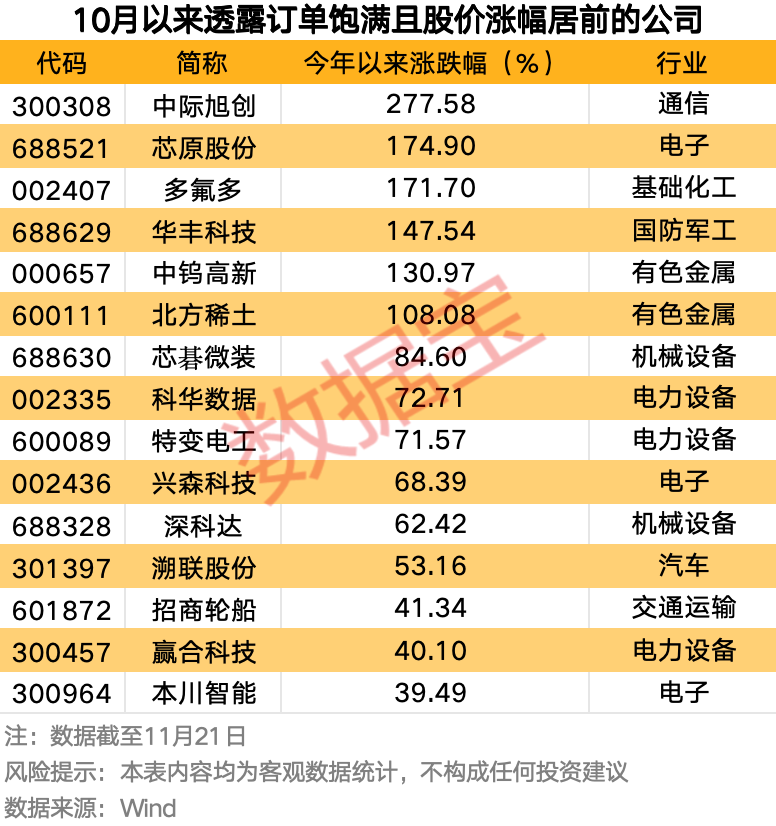
Core Insights - Sufficient orders are expected to directly drive company performance growth [1][5] - A total of 50 companies have reported strong order conditions, indicating a broader trend across various industries [2][5] Group 1: Company Performance and Orders - SMIC indicated that its Q4 revenue guidance is flat or up 2%, with a capacity utilization rate of 95.8% in Q3, reflecting high demand and a supply-demand imbalance [1] - Among the 50 companies, nearly 40 have explicitly stated they are experiencing full orders, including TBEA, Boke New Materials, and Sunlord Electronics [2] - TBEA plans to enhance R&D efforts and accelerate product customization and intelligent upgrades to maintain and improve market share in high-end segments [2] - Sunlord Electronics has reported robust growth in AI server-related orders, with faster growth in overseas markets [3] Group 2: Market Performance - The average stock price increase for the 50 companies this year exceeds 40%, with seven companies, including Zhongji Xuchuang and Chipone, seeing increases over 100% [3][4] - Specific companies like TBEA and Boke New Materials are experiencing significant stock performance due to their strong order books [3][4] Group 3: Profit Forecasts - Institutions predict that the net profit for 43 of the 50 companies will exceed 58.5 billion yuan in 2025, with a projected growth rate of over 75% [5][6] - Individual companies such as Tongda Co. and Daikin Heavy Industries are expected to see net profit growth exceeding 100% in 2025 [6] - Twelve companies have received attention from over ten institutions, with predicted net profit growth exceeding 30% for 2025 and 2026 [7][8] Group 4: Sector Analysis - The 50 companies span ten industries, with notable representation in power equipment, machinery, and electronics [2] - Companies like Boke New Materials and Kew Data have reported significant increases in orders and production capacity, driven by strong market demand [8][10]


用AI视角看灿谷,矿企重估的开始
Tai Mei Ti A P P· 2025-11-22 08:16
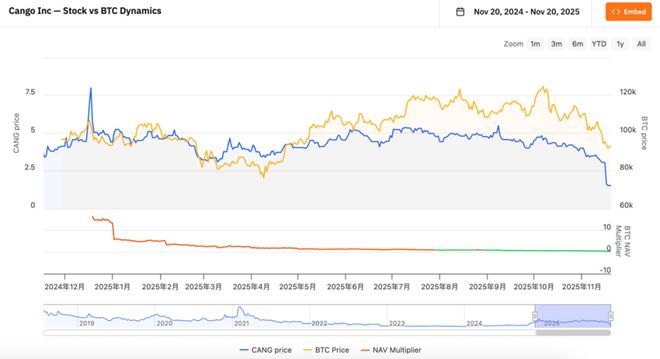
Core Viewpoint - The market perception of the company has shifted from being viewed as a traditional mining enterprise to being recognized as a potential player in the AI and HPC (High-Performance Computing) data center space, with management emphasizing the transition towards energy and AI/HPC business models [1][6][11]. Group 1: Market Position and Valuation - The company's stock price has closely followed Bitcoin's price movements, and its market capitalization of $500 million is currently less than the value of its 6,644 BTC holdings [3]. - The market assigns a NAV (Net Asset Value) multiple of 0.6-1.2 for mining companies, while companies with more owned mining facilities can achieve multiples of 1.5-2.5 [5]. Group 2: AI/HPC Data Center Transition - The company is positioning itself as a future AI data center platform, with a focus on energy and HPC, which is gaining traction in the market [6][11]. - The construction costs for AI data centers have risen to $9.3-15 million per MW, leading developers to relocate to secondary and tertiary markets [9]. - The company has been acquiring assets that align with AI data center requirements, such as large-scale power supply and cooling capabilities, exemplified by its recent acquisition of a 50MW facility in Georgia [14]. Group 3: Operational Advantages - The company possesses operational capabilities that are advantageous for AI/HPC, such as high-density power management and advanced cooling systems, which are critical for AI data centers [12][15]. - The transition to AI data centers is facilitated by the company's existing infrastructure and operational expertise, allowing for a smoother shift from mining to AI applications [18]. Group 4: Strategic Moves and Future Outlook - The company has made strategic moves, including direct listing on the NYSE and restructuring its shareholder base, to enhance its appeal to AI clients and energy funds [17]. - The asset structure is evolving to resemble that of an infrastructure company, positioning the company for long-term contracts in the AI/HPC space [16][18].