
新型工业化

Search documents
向新求质 向绿而行 建行广东省分行多维支持新型工业化高质量发展
2 1 Shi Ji Jing Ji Bao Dao· 2025-12-10 23:11
锚定高质量发展,我国制造业加速向"新型工业化"战略高地攀升,而金融力量的托举显得越发重要。 在广东,制造业第一大省围绕"制造业当家"发展战略,扎实推进新型工业化,广东金融系统则以前所未 有的服务深度和广度,成为推动产业转型升级的"金引擎"。 其中,中国建设银行广东省分行(下称"建行广东省分行")紧扣"新型工业化"战略主线,以智能化、绿 色化、协同化为抓手,构建起多层次、全周期的金融服务体系,助力南粤大地书写高质量发展新篇章。 "数"筑根基,构建工业数字化新底座 广州市普同实验分析仪器有限公司(下称"普同公司")的数字化生产车间里,机械手臂上下挥舞,一台 台薄膜拉伸试验机整装待发。企业的快速发展、车间的繁忙景象,背后离不开金融活水的精准浇灌。 企业相关负责人坦言:"研发用于生产高分子材料的设备并不容易,除了要突破技术问题,还要解决资 金问题。" 建行广州分行了解到企业准备进一步扩大生产经营,急需筹集资金后,运用"信用+抵押+核心知识产权 质押"作为授信方案,最终成功为企业申请到1000万元贷款,有效解决了设备智能化改造、产品技术研 发、生产规模扩大等资金问题,在建行的资金支持下,企业加快创新步伐、加大研发力度, ...
铁建重工:公司深度践行“新型工业化”发展内涵
Zheng Quan Ri Bao Wang· 2025-12-10 14:13
Core Viewpoint - The company focuses on high-end equipment manufacturing, particularly in tunnel boring machines, rail transit equipment, and specialized equipment, emphasizing intelligent and green upgrades in its operations [1] Group 1: Company Overview - The company is an application unit for industrial mother machines in the high-end equipment manufacturing sector [1] - It specializes in the design, research and development, manufacturing, sales, leasing, and service of tunnel boring machines, rail transit equipment, and specialized equipment [1] Group 2: Strategic Initiatives - The company is committed to the concept of "new industrialization," promoting the intelligent and green upgrade of industries such as tunnel boring machines and specialized equipment [1] - It integrates artificial intelligence and digital twin technology to achieve digitalization in research and design, as well as intelligent operation and maintenance [1] - The company adheres to green development principles by building green factories and expanding electric product offerings, fully aligning with the national strategy for a strong manufacturing nation [1]

工信部:所属7所高校均获批建设国家卓越工程师学院,首届毕业生1/3以上在联培企业就业
Huan Qiu Wang· 2025-12-10 09:05
Core Viewpoint - The Ministry of Education emphasizes the importance of reforming the training of outstanding engineers to support the development of a strong education, technology, and talent nation, aligning with the national strategic talent cultivation goals [1][3]. Group 1: Policy and Strategic Initiatives - The "14th Five-Year Plan" suggests a comprehensive approach to advancing education, technology, and talent development, highlighting the need for more outstanding engineers [1]. - The Ministry of Industry and Information Technology (MIIT) has implemented various policies to enhance the training of outstanding engineers, including the "Manufacturing Talent Support Plan" which selects around 300 advanced manufacturing technology talents annually [3][4]. - MIIT has established a collaborative framework with educational institutions and industries to ensure that talent policies align with industrial needs, thereby enhancing the effectiveness of engineer training [3][4]. Group 2: Educational Framework and Industry Collaboration - MIIT has developed a "1+5+N" working system to promote practical training for engineers, focusing on key areas such as new materials and new energy vehicles [4][5]. - The establishment of national engineering practice bases and innovation centers aims to improve students' practical skills and facilitate collaboration between universities and specialized enterprises [4][5]. - The MIIT has initiated strategic cooperation with the Ministry of Education to enhance data sharing and talent supply-demand matching [4][5]. Group 3: Future Directions and Talent Development - MIIT plans to continue implementing the Manufacturing Talent Support Plan and host national technology skill competitions to elevate the recognition of engineers in society [6]. - The focus will be on predicting talent needs in key sectors like artificial intelligence, ensuring that educational programs align with high-quality industrial development [6]. - MIIT aims to guide universities in closely aligning their engineering programs with national strategic needs, thereby fostering a robust pipeline of outstanding engineers [6].

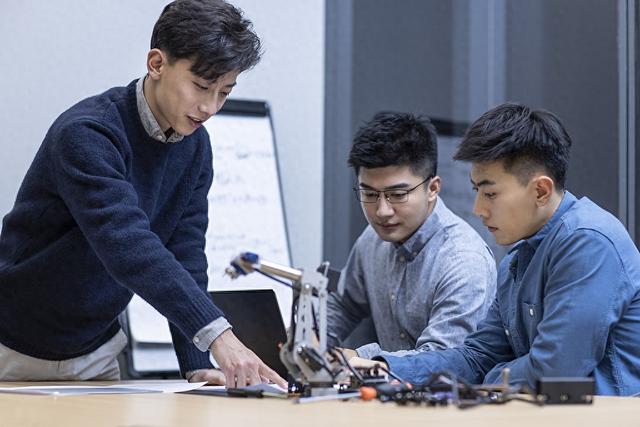
工信部印发《产业技术基础公共服务平台管理办法》
Zheng Quan Shi Bao Wang· 2025-12-10 06:52
Core Viewpoint - The Ministry of Industry and Information Technology (MIIT) has revised and issued the "Management Measures for Public Service Platforms of Industrial Technology Foundation" to accelerate the advancement of new industrialization and strengthen the foundation of industrial technology [1] Group 1: Key Industries and Fields - The service focus industries and fields include equipment, petrochemical, steel, non-ferrous metals, building materials, light industry, textiles, food, pharmaceuticals, new generation information technology, biotechnology, new energy, new materials, new energy vehicles, instruments and meters, safety and emergency, civil explosives, civil aviation, shipbuilding and marine engineering, green environmental protection, artificial intelligence, metaverse, brain-computer interface, quantum information, and new energy storage [1] Group 2: Service Scope - The main service scope includes metrology and testing, standard verification and testing, quality reliability testing and inspection, certification and accreditation, industrial information, intellectual property, and technology achievement transformation [1]
“十四五”时期,山东工业经济实现规模与质效同步跃升
Zhong Guo Fa Zhan Wang· 2025-12-10 06:51
Core Viewpoint - Shandong Province is accelerating the construction of an advanced manufacturing powerhouse during the "14th Five-Year Plan" period, focusing on new industrialization and aiming to lead in national industrial and economic development [1][2]. Group 1: Industrial Economic Growth - The industrial economy in Shandong has achieved a scale and quality leap, with the industrial added value growing at an average annual rate of 7.5%, surpassing the national average by approximately 1.6 percentage points [2]. - The total industrial added value is projected to increase from 2.3 trillion yuan to 3.3 trillion yuan, representing a growth of over 40% [2]. - The number of large-scale industrial enterprises and their revenue have increased by 54.7% and 42.9% respectively since 2020 [2]. Group 2: Innovation and Technology - Shandong has emphasized the integration of technological and industrial innovation, with the coverage of R&D institutions in large-scale industrial enterprises rising from 13.3% in 2020 to nearly 40% [3]. - The province has implemented over 3,000 provincial-level technology innovation projects annually, achieving a nearly 90% self-research rate [3]. - Significant technological breakthroughs include the development of high-efficiency diesel engines and smart tunneling machines, contributing to the "Shandong manufacturing" reputation [3]. Group 3: Structural Transformation - The province is focusing on creating a modern industrial system centered on advanced manufacturing, with traditional industries undergoing significant upgrades [4]. - Investment in industrial technological transformation projects has averaged around 12,000 annually, with over 50% of industrial investment directed towards these upgrades [4]. - The chemical industry has seen a transformation with over 60% of enterprises now operating in industrial parks, and energy consumption per unit of industrial added value has decreased by 25.8% [4]. Group 4: Digital Economy Integration - By the end of the "14th Five-Year Plan," the digital economy is expected to exceed 50% of the total economy, with core digital industries projected to account for 10% [5]. - The province has established 27,000 5G base stations and created national-level internet backbone points, enhancing digital infrastructure [5]. - The digital transformation coverage among large-scale industrial enterprises has reached 95.1%, with a deep transformation rate of 47.8% [5]. Group 5: Industrial Ecosystem Development - Shandong has built a robust industrial ecosystem by fostering quality enterprises and enhancing collaboration across various sectors [6]. - The province has over 420,000 small and medium-sized enterprises, with an annual growth rate of 15.6% during the "14th Five-Year Plan" [6]. - The government has initiated a "chain leader" system to oversee key industrial chains, promoting coordinated development and resource integration [6]. Group 6: Future Outlook - Looking ahead to the "15th Five-Year Plan," Shandong aims to focus on high-quality development, smart, green, and integrated industrial growth, establishing itself as a significant economic growth hub in Northern China [7].
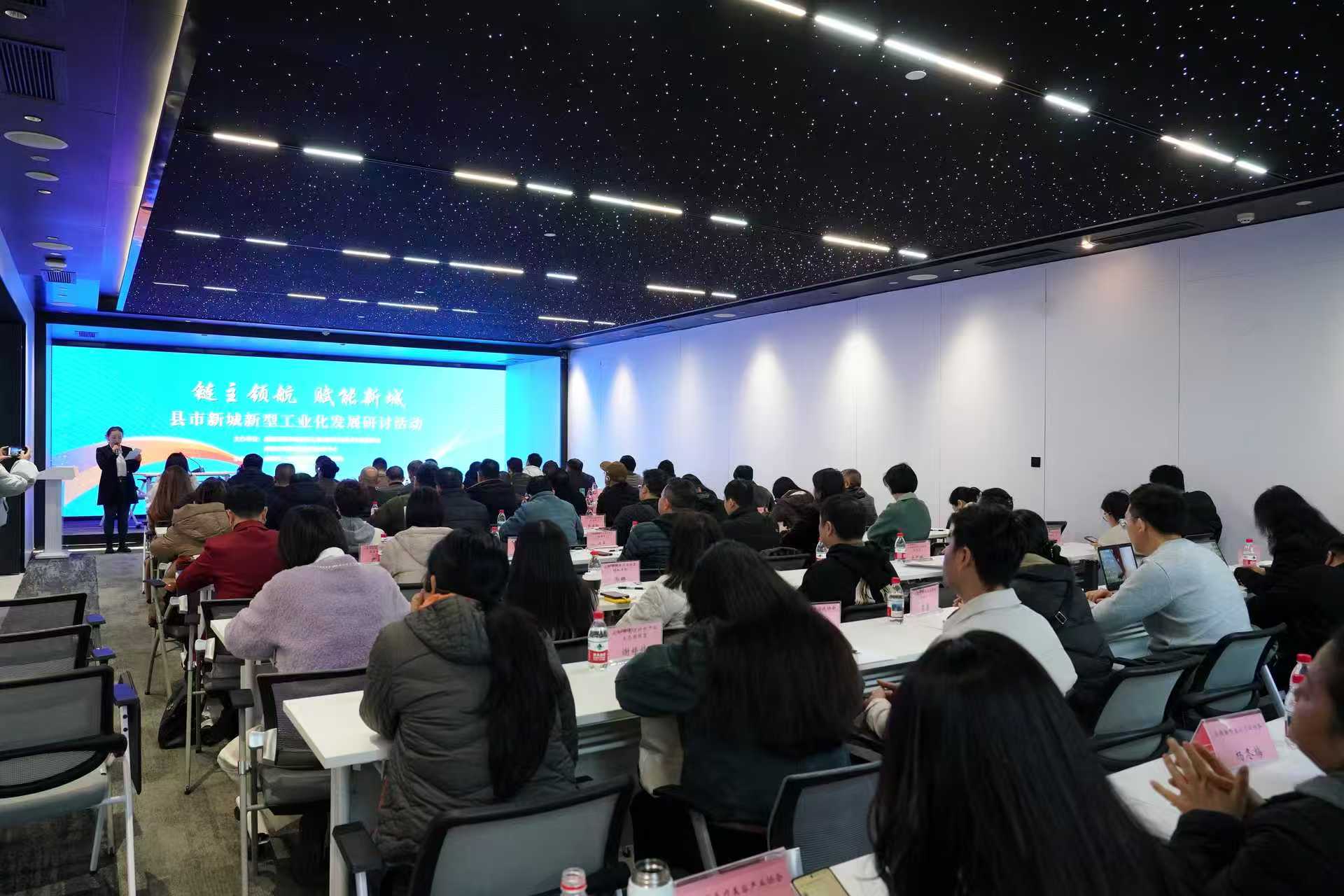
链主领航强协同 场景赋能铺就县市新城工业化“提质新途”——县市新城新型工业化发展链接活动顺利举行
Zhong Guo Jin Rong Xin Xi Wang· 2025-12-09 09:50
Core Insights - The event "Chain Master Navigation Empowering New Cities" was successfully held, focusing on the core role of leading enterprises in driving new industrialization in county-level cities [1] - The initiative aims to enhance the quality and efficiency of Chengdu's economic and information sectors by fostering collaboration among various stakeholders [1] Group 1: Event Overview - The event was co-hosted by the Chengdu Economic and Information Bureau and the Chengdu Private Economy Development Promotion Center, gathering around 80 representatives from local economic and new economy sectors [3] - The focus was on key directions for scene empowerment, discussing practical paths and upgrading measures to integrate new scene cultivation with industrial development [3] Group 2: Expert Contributions - Industry experts and local association representatives shared practical experiences, emphasizing the critical support role of business associations in scene empowerment [3] - The Secretary-General of the Shenzhen Battery Industry Association highlighted the importance of aligning services with enterprise needs amid changes in international trade rules [4] Group 3: Future Directions - The event aimed to build a comprehensive service network for enterprises to facilitate international market entry and ensure resource connectivity [4] - Chengdu plans to strengthen the leading role of chain master enterprises and improve the linkage mechanism between business associations and county-level cities [4]
“十四五”山东工业增加值将由2.3万亿元提升至3.3万亿元
Da Zhong Ri Bao· 2025-12-09 01:02
五年来,山东加力突破创新壁垒,发展动能竞相奔涌释放。规上工业企业研发机构覆盖率从2020年 13.3%提升至现在的近40%,创建国家制造业创新中心4家、工业设计中心54家,数量均居全国前列。引 育泰山产业领军人才730名,培育人才引领型企业60家。累计培育推广"四首"新产品4700余项,高热效 率柴油机、"山河号"智能盾构机、8K画质处理芯片等一批打破国外垄断、填补国内空白的重大技术实 现突破,C919大飞机、"蓝鲸一号"等国之重器都有"山东制造"的贡献。 发展人工智能是实现新型工业化的必答题。山东一手抓好产业培育、一手抓好赋能应用,2025年, 全省人工智能核心产业营收预计突破1200亿元,占全国10%左右,正加快构建起从智能算力、数据语 料、模型算法到智能应用的全栈式人工智能产业链。其中,纳入全省重点监测范围的大模型企业已达 170家、大模型产品249个,29个生成式大模型通过人工智能服务备案,预计今年完成大模型业务收入60 亿元。(记者 付玉婷) "十四五"山东工业增加值将由2.3万亿元提升至3.3万亿元 省政府新闻办12月8日召开新闻发布会,介绍"十四五"时期山东加快建设先进制造业强省相关情 况。"十 ...
18个制造业大类营收居全国前五
Qi Lu Wan Bao· 2025-12-08 21:47
12月8日,省政府新闻办举行新闻发布会,邀请省工信厅主要负责同志等介绍"十四五"时期山东加快建设先 进制造业强省情况。作为全国工业版图中的重要一极,山东的每一次脉动,都关乎国家实体经济的根基与 活力。"十四五"时期,山东将工业经济视为"头号工程",加快推进新型工业化,制造业增加值占GDP比重稳 定在28%左右,全省工业增加值将跨过1个万亿元台阶。 记者闫聪济南报道 制造业增加值 占GDP比重稳定在28%左右 工业整体实力走在全国前列。紧紧扭住稳增长这个"牛鼻子",充分发挥"链长制"、制造强省建设领导小 组、省工业运行指挥部等牵总作用,全力做足增量、遏制减量、应对变量,工业经济实现规模与质效同步 跃升。规模体量稳步扩大。规上工业增加值年均增长7.5%,高于全国1.6个百分点左右;全省工业增加值 将跨过1个万亿元台阶,由2.3万亿元提升至3.3万亿元、增长4成以上。其中,制造业增加值占GDP比重稳定 在28%左右,规上工业企业数量和营收较2020年分别增长54.7%、42.9%。体系完整优势日益凸显。拥有 41个工业大类、197个工业中类和603个工业小类,是工业门类最为齐全的省份之一,18个制造业大类营收 居全 ...




工业和信息化部研究谋划“十五五”举措
Zheng Quan Ri Bao Wang· 2025-12-08 11:21
12月7日,工业和信息化部党组书记、部长李乐成主持召开务虚会,深入学习贯彻党的二十届四中全会 精神,研究谋划"十五五"及开局之年工作思路和举措。 全面发力,就是要聚焦推进新型工业化的目标任务协同发力,推动科技创新和产业创新深度融合,大力 推进智能化、绿色化、融合化发展,加快建设以先进制造业为骨干的现代化产业体系,推动制造业实现 从重点突破向全面领先的战略性跨越,推动工业和信息化高质量发展取得显著成效。 强化产业链供应链稳健性,既是国家战略导向,亦是经济迈向高质量发展的必由路径。党的二十届四中 全会审议通过的《中共中央关于制定国民经济和社会发展第十五个五年规划的建议》提出,"推动重点 产业提质升级,巩固提升矿业、冶金、化工、轻工、纺织、机械、船舶、建筑等产业在全球产业分工中 的地位和竞争力。提升产业链自主可控水平,强化产业基础再造和重大技术装备攻关,滚动实施制造业 重点产业链高质量发展行动,发展先进制造业集群。" 萨摩耶云科技集团首席经济学家郑磊对记者分析指出,提升产业链韧性已成为国家经济战略的关键支点 之一,"十五五"这一关键五年,以夯实基础之举筑牢产业根基,以全面发力之势激发创新活力,不仅要 让产业链韧劲十 ...
“十五五”深度研究系列报告(八):财政投资于人、投资于物如何结合?
ZHESHANG SECURITIES· 2025-12-08 10:58
Group 1: Investment in Physical Capital - China's capital stock reached approximately $93 trillion in 2024, accounting for about 503% of GDP[29] - The average growth rate of capital stock from 1961 to 1993 was about 5.2%, while from 1994 to 2016 it was approximately 10.8%, and is projected to decline to 5.8% by 2024[29] - In 2024, the total capital formation in China is estimated to be around 54.8 trillion yuan, contributing approximately 25.2% to GDP growth[2] Group 2: Investment in Human Capital - Investment in human capital focuses on enhancing capabilities across the entire population, including education, healthcare, and skills training[47] - The proportion of public spending on social welfare in China was 53.7% in 2023, compared to 60%-70% in developed countries, indicating significant room for improvement[6] - The government aims to increase the share of public investment in social welfare during the "14th Five-Year Plan" period, particularly in areas like education and healthcare[44] Group 3: Economic and Social Development - The urbanization rate in China is expected to reach 70% within five years, with a projected rate of about 67% in 2024, driving infrastructure and public service improvements[42] - The report emphasizes the need for a balanced approach between investment in physical and human capital to foster sustainable economic growth[1] - The government plans to enhance public services in nine key areas, including education, healthcare, and social security, to ensure equitable access for all citizens[52]