
电动化

Search documents
柳工(000528):公司深度研究:装载机+挖掘机比翼双飞,电动化+全球化勇立潮头
Guohai Securities· 2025-11-29 15:14
Investment Rating - The report maintains a "Buy" rating for the company [1] Core Insights - LiuGong is positioned to benefit from the recovery in the excavator and loader markets, with a strong focus on electrification and globalization [2][6] - The company aims to achieve a revenue target of 60 billion yuan by 2030, with international revenue accounting for over 60% and a net profit margin of no less than 8% [29] Summary by Sections Company Overview - LiuGong has been a leader in the loader market and has a strong presence in the excavator sector, with a history of over 67 years in the engineering machinery industry [14][15] - The company has expanded its product offerings and established a global presence, with subsidiaries in North America, Latin America, Europe, Asia-Pacific, and the Middle East [15] Market Performance - As of November 28, 2025, LiuGong's stock price is 11.95 yuan, with a market capitalization of approximately 24.29 billion yuan [4] - The company's performance over the past 12 months shows a 10.5% increase, outperforming the Shanghai and Shenzhen 300 index, which declined by 3.5% [4] Product Analysis - LiuGong's main products include loaders and excavators, with a comprehensive product range that includes electric models and various specifications [18] - The domestic market share for loaders is expected to remain the highest in 2024, while the excavator market share is gradually increasing [18] Industry Trends - The excavator market is expected to enter a new cycle driven by domestic recovery factors, including policy stimulation and large-scale engineering projects [6] - The electric loader market in China is projected to grow rapidly, with an expected compound annual growth rate of 50.1% from 2023 to 2028 [6] Financial Projections - Revenue forecasts for LiuGong from 2025 to 2027 are estimated at 345 billion, 403 billion, and 460 billion yuan, representing year-on-year growth rates of 15%, 17%, and 14% respectively [8] - The projected net profit for the same period is expected to reach 17 billion, 23 billion, and 31 billion yuan, with growth rates of 31%, 35%, and 32% respectively [8] Strategic Initiatives - LiuGong's "15th Five-Year Plan" outlines strategic goals to enhance its operational capabilities and product competitiveness, focusing on sustainable growth engines [29][32] - The company has implemented a stock incentive plan to motivate key personnel and align their interests with the company's long-term performance [30][31]

零跑推出纯电两厢车 Lafa5发力中欧双市场
Jing Ji Guan Cha Wang· 2025-11-29 03:25
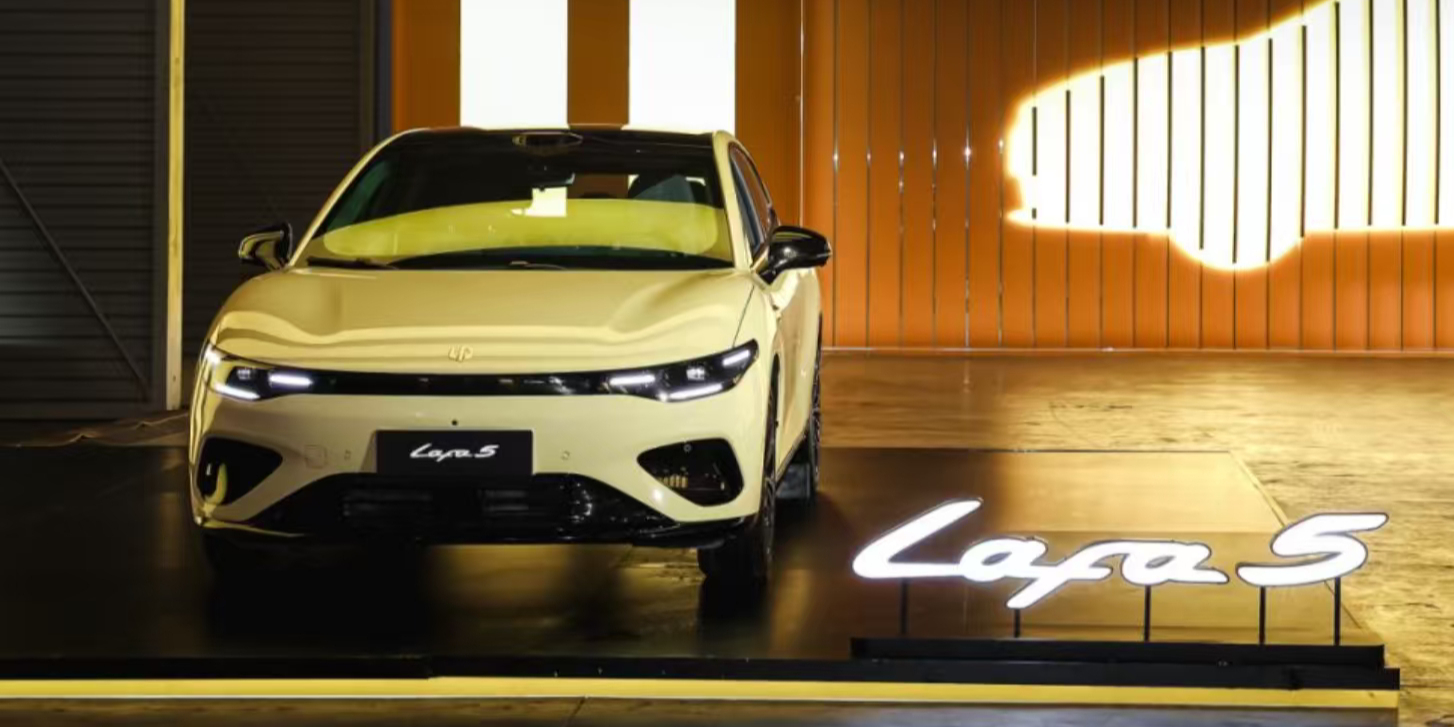
Core Insights - Leap Motor has launched its new two-door electric sedan, Lafa5, targeting the personalized market priced between 92,800 to 116,800 yuan, with plans to enter the global market by 2026 [2] - The two-door car market is developing differently in China and Europe, with electric two-door cars rapidly replacing fuel models in China, while Europe still favors fuel cars [2][3] - The shift in consumer attitudes in China, particularly among younger buyers, is leading to increased acceptance of two-door cars due to their practicality and economic advantages [2][3] Market Dynamics - The current popular electric two-door cars in China are priced between 50,000 to 100,000 yuan, with a range of 200 to 400 kilometers, suitable for urban activities [3] - By October 2025, sales of two-door cars in China reached 415,000 units, with the top five models being electric, while traditional fuel models have seen a significant decline in sales [3] - Leap Motor's Lafa5 must find a competitive edge in a concentrated market where the top ten electric two-door cars hold over 40% market share, primarily in the 50,000 to 100,000 yuan price range [3] European Market Challenges - In Europe, two-door cars are popular due to their compact size, which suits narrow streets and limited parking [4] - However, the European electric vehicle market faces challenges such as declining demand, policy uncertainties, and inadequate charging infrastructure [4] - The rise of SUVs in Europe is expected to reduce the market share of two-door cars, with projections indicating that SUV sales will reach 58% in Western Europe by the end of 2025 [4] Strategic Considerations - Leap Motor's entry into the European market with Lafa5 will test its ability to adapt to local consumer preferences and market conditions [4] - The future of two-door cars will depend on balancing electric vehicle adoption with practical usability across different markets [4]

载誉前行!南京依维柯领跑商用车高质量赛道
Zhong Guo Qi Che Bao Wang· 2025-11-28 09:40
Core Viewpoint - Nanjing Iveco has reaffirmed its leadership position in the Chinese light commercial vehicle sector by winning accolades for its electric vehicles, showcasing its commitment to innovation and market responsiveness [1][17]. Group 1: Electric Vehicle Innovations - The Iveco Juxing electric vehicle is positioned as a leader in the electric light commercial vehicle market, emphasizing safety, efficiency, and intelligence, which are critical for the transformation of urban transportation [2][4]. - The Juxing offers various configurations, including battery options of 51.5kWh, 77kWh, and 88.8kWh, with a fast-charging capability that allows charging from 20% to 80% in just 36 minutes, addressing user concerns about range and charging [4][6]. - The vehicle's operational efficiency is enhanced by a high-performance electric motor, achieving a maximum power of 150kW and a peak torque of 330N·m, resulting in significant cost savings over time compared to diesel counterparts [6]. Group 2: Safety and Comfort Features - The Juxing is equipped with advanced safety features, including an electronic handbrake, four-wheel disc brakes, and a Bosch ESP stability system, which collectively enhance vehicle safety [8]. - The vehicle includes a 12.3-inch touchscreen with an intelligent interaction system, providing a modern and comfortable user experience [8]. Group 3: Customization and Versatility of the De Yi Series - The De Yi series focuses on customized development, showcasing strong adaptability to meet diverse user needs in the light commercial vehicle market [9][10]. - The De Yi models feature a robust non-bearing chassis structure and a fourth-generation SOFIM engine, balancing power and fuel efficiency while optimizing emissions [12]. - The series offers a variety of body configurations, allowing for numerous customization options to cater to different operational scenarios, enhancing its market competitiveness [16]. Group 4: Strategic Vision and Market Position - Nanjing Iveco's recognition in the industry reflects its long-term commitment to technological innovation and market leadership in the light commercial vehicle sector [17]. - The company has developed a comprehensive product matrix covering various applications, including electric, intelligent, and customized solutions, positioning itself for future growth in the evolving market landscape [19].

中国工程机械行业以绿色和数智化“破局”出海
工程机械杂志· 2025-11-28 09:38
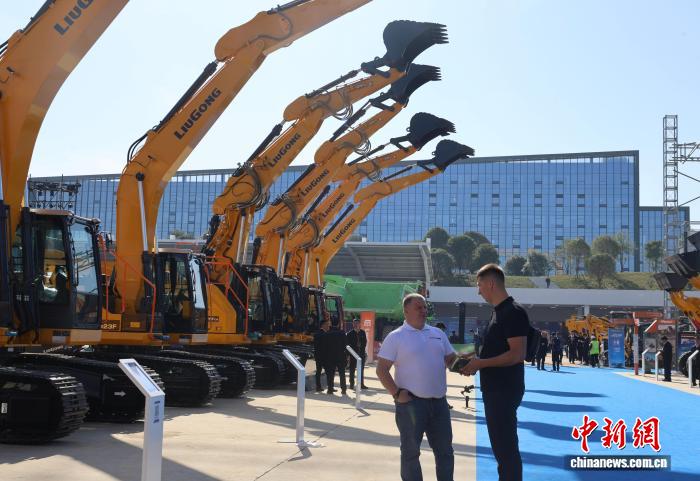
Core Insights - The article highlights the significant advancements in electric construction machinery by Guangxi Liugong Machinery Co., Ltd. (Liugong), showcasing its innovative electric products and energy supply solutions [2][4]. Group 1: Electric Product Innovations - Liugong has launched over 100 electric products, establishing a comprehensive electric product matrix [2]. - The company introduced three main energy supply paths for electric products: mobile power supply, rapid battery swapping, and external power sources, aimed at achieving quick and flexible energy replenishment [2]. - An African customer noted that the operating costs of electric products are nearly 70% lower compared to traditional fuel products, indicating strong interest in procurement [2]. Group 2: International Market Performance - Liugong's overseas performance reached a historical high in the first three quarters of the year, with electric products being particularly well-received in international markets [4]. - The Chinese construction machinery industry is increasingly focusing on overseas markets as a key growth direction, with electric machinery aligning well with the trends in Europe and the U.S. [4]. - Data from the China Construction Machinery Industry Association shows that from January to September 2025, China sold 174,039 excavators, marking an 18.1% year-on-year increase, with exports accounting for 48.4% of total sales [4]. Group 3: Industry Trends and Collaborations - The article discusses the competitive landscape of the construction machinery industry, emphasizing the shift from price competition to innovation capability as a means to drive growth [4]. - Leading companies in the industry are collaborating to enhance their international presence and are focusing on digital transformation to reshape industry value [4]. - The article mentions that major players like SANY Heavy Industry have developed over 100 electric products and invested heavily in smart excavators and unmanned technologies [4].

大众同时发布两款插混新车,加速迈入电动化时代
Guan Cha Zhe Wang· 2025-11-28 09:34
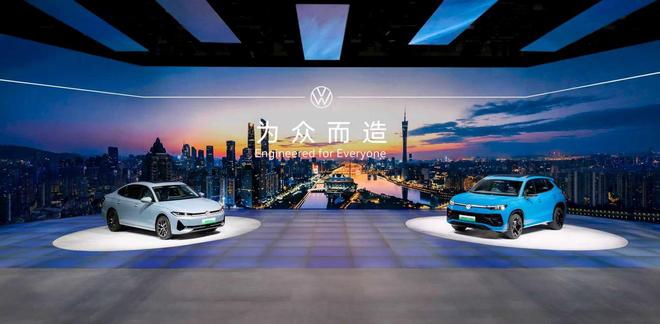
Core Insights - Volkswagen plans to launch 21 new energy models by 2027, expanding to 31 models by 2029, showcasing its commitment to electrification [1][10] Group 1: New Model Launches - At the 2025 Guangzhou Auto Show, Volkswagen unveiled two new plug-in hybrid models: the SAIC Volkswagen Passat ePro and the FAW-Volkswagen new Tayron L, marking a significant step towards electrification [1][3] - The Passat ePro is built on a new generation plug-in hybrid platform and features a 1.5T EVO II hybrid engine, emphasizing its new energy characteristics while retaining the classic design [3] - The new Tayron L plug-in hybrid version is designed to meet diverse user needs, combining a 1.5T engine with a new high-voltage battery for both urban commuting and complex driving conditions [3] Group 2: Concept Cars and Future Strategy - Three concept cars, ID. EVO, ID. ERA, and ID. AURA, were showcased, representing Volkswagen's future design direction and technological capabilities in the Chinese market [5] - These concept cars are expected to have production versions launched by 2026, with each model targeting different market segments through unique positioning strategies [5] - Volkswagen aims to differentiate these models in a competitive market, focusing on family-oriented values, user identity, and technology-driven younger consumers [5] Group 3: Technological Advancements - Volkswagen and Xpeng Motors are jointly developing a new electronic and electrical architecture (CEA), set to be mass-produced next year, which will integrate advanced driving assistance systems [6] - Starting from next year, the CEA will serve as the "brain" for all models, ensuring synergy and scalability in the next generation of smart connected vehicles [6] - Volkswagen emphasizes that during the transition period, models may utilize different architectures, but all will adhere to Volkswagen's stringent standards for core functions and safety [6] Group 4: Marketing and Collaboration - Volkswagen introduced special edition models in collaboration with Disney's "Zootopia 2," aimed at enhancing interaction and entertainment for family and young users [8][10] - This collaboration is part of a global project leading up to the film's release, with China being the first market to launch these themed activities [8][10] - The overall presentation at the Guangzhou Auto Show reflects Volkswagen's strategy of "electrification + localization" in the Chinese market [10]
基建投资有望带动机械设备需求,机床ETF(159663)涨1.15%
Sou Hu Cai Jing· 2025-11-28 06:28
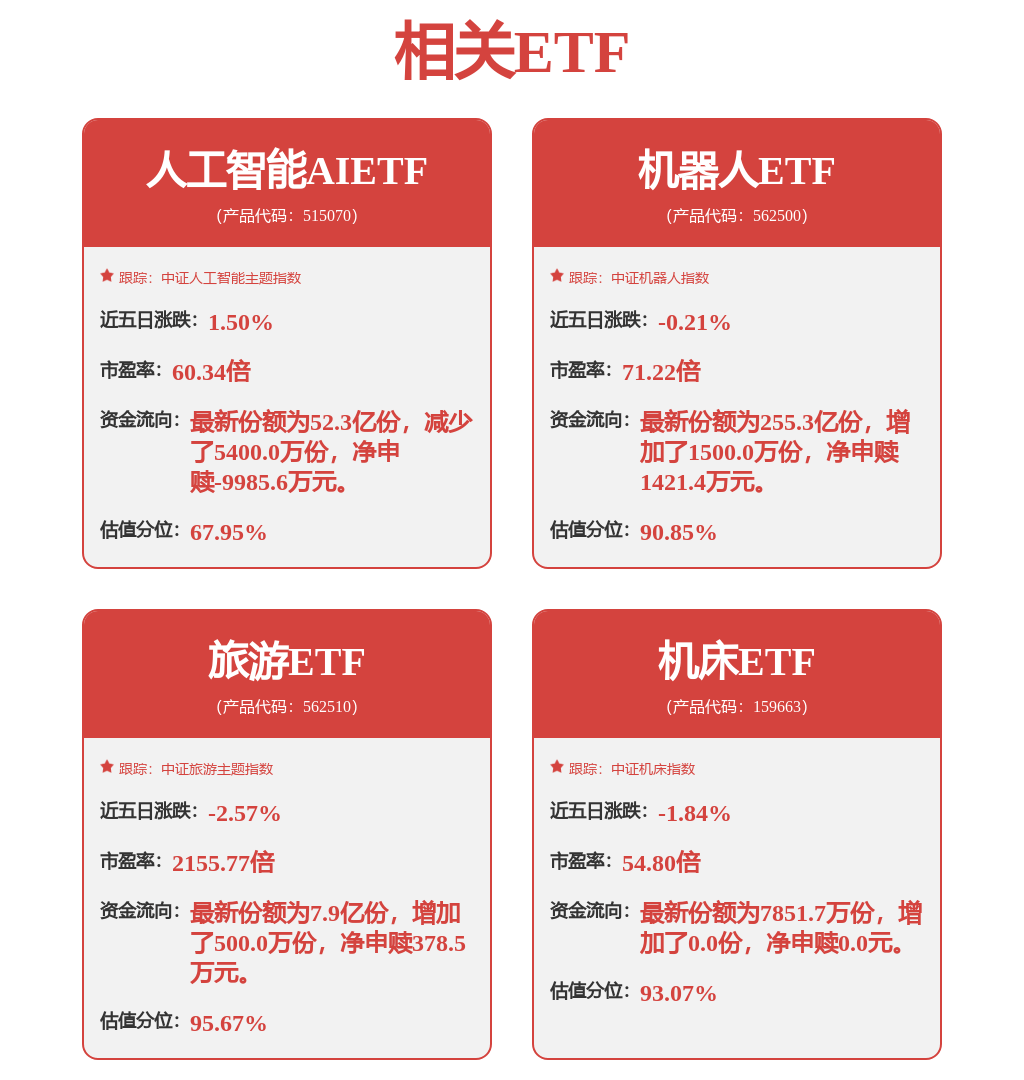
Group 1 - The core viewpoint is that the CNC machine tool market in China is experiencing rapid growth driven by downstream demand, with a projected market size of approximately 432.5 billion yuan in 2024 and expected to exceed 450 billion yuan by 2025 [1] - The domestic production rate of high-end CNC machine tools is only 6%, indicating significant room for domestic production growth in this segment [1] Group 2 - Increased policy support is expected to boost equipment demand, particularly with infrastructure investments, such as the commencement of the Yaxia hydropower project, which will drive demand for large excavators and other equipment [2] - The internationalization, electrification, and intelligentization processes are advancing, with electric loader sales increasing by 157.2% year-on-year, and intelligent applications like unmanned forklifts and mining equipment are anticipated to break through first [2] - The nuclear fusion industry is entering a phase of capital expenditure expansion, focusing on high-value components such as magnet systems, vacuum chambers, and power systems [2] - The low-altitude economy policy emphasizes safety, health, and high-quality development, with a positive outlook on infrastructure construction and low-altitude equipment research and application [2]
中国银河证券:双轮驱动下的行业变革 2026年Robotaxi迈入规模化商用拐点 @李程
Zhi Tong Cai Jing· 2025-11-28 05:41
Core Insights - The report from China Galaxy Securities highlights that by 2026, the Robotaxi sector is expected to reach a commercialization turning point driven by policy support, technological advancements, and cost reductions [1][3] - The automotive industry in China is projected to experience stable volume and gradual price increases in 2025, with a dual drive from exports and new energy vehicles [1][2] Group 1: 2025 Overview - In 2025, the Chinese automotive industry is expected to achieve a pattern of "stable volume and gradual price increase," supported by the effective recovery of domestic demand due to vehicle replacement policies [1] - Both wholesale and retail sales are anticipated to grow year-on-year, with an increasing penetration rate of new energy vehicles [1] - The industry is facing continued price wars, leading to further pressure on profitability, with revenue growth outpacing profit growth [1] Group 2: 2026 Outlook - The exemption of the new energy vehicle purchase tax is expected to continue until the end of 2025, with a reduction to half in 2026-2027, potentially impacting sales significantly, especially for vehicles priced below 300,000 yuan [2] - Major automakers like Hongmeng Zhixing, Leap Motor, Geely, and JAC are entering a period of intensive new product launches, which may enhance their sales and market share [2] - The mainstream automakers' pure electric platforms are expected to be validated by 2025, with new models being launched at scale in 2026 [2] - The rollout of L3-level intelligent driving technology is imminent, becoming a key driver for new model launches in 2026 [2] Group 3: Emerging Business Opportunities - The Robotaxi sector is benefiting from policy support, technological progress, and cost reductions, leading to a commercial breakthrough, with major manufacturers and tech giants expanding their operations [3] - Low-speed unmanned logistics vehicles and mining trucks are moving towards scale due to policy support and economic advantages [3] - The integration of the intelligent automotive supply chain with the robotics industry is creating multiple advantages, including technological migration and resource consolidation [3] Group 4: Investment Recommendations - The report recommends focusing on leading passenger vehicle manufacturers, the intelligent industry chain, and humanoid robotics industry, highlighting companies like Geely and Great Wall Motors as key players [3] - Beneficiary stocks include JAC Motors and Leap Motor in the passenger vehicle sector, and companies like SUTENG and Desay SV in the intelligent sector [3] - In the humanoid robotics sector, companies such as Top Group and Aikodi are identified as beneficiaries [3]




技术落地叠加本土化提速奔驰持续押注中国豪华车市场
Zhong Guo Zheng Quan Bao· 2025-11-27 20:21
Core Insights - Mercedes-Benz showcased its dual focus on "technological prowess and product renewal" at the 2025 Guangzhou International Auto Show, highlighting its commitment to electrification and intelligent transformation [1] - The company aims to navigate market cycles with determination and patience, emphasizing a long-term value approach that prioritizes quality over quantity [1] Group 1: Technological Innovations - The AMG GT XX concept car features three innovative axial flux motors, achieving the same power output as traditional motors while being only 30% of their weight and volume, enabling speeds over 360 km/h [2] - The vehicle's high-performance battery system, inspired by F1 technology, boasts an energy density of 300 Wh/kg and includes an intelligent cooling system for stable power output under high loads [2] - The VISION EQXX concept's technologies have been integrated into the new Mercedes-Benz pure electric CLA, achieving an energy consumption of 10.9 kWh/100 km and a CLTC range of 866 km [2] Group 2: Product Strategy - Mercedes-Benz adheres to a "dual fuel" strategy, offering both fuel and electric models that meet diverse consumer needs, with significant upgrades to core fuel models showcased at the auto show [3] - The long-wheelbase C-Class and E-Class models now feature enhanced comfort and intelligent upgrades, while the S-Class includes advanced navigation and air suspension across all variants [3] Group 3: Localization and Market Strategy - The company has established a local R&D system in China, collaborating with partners like Tencent and CATL to enhance product relevance and innovation [4] - The introduction of a virtual assistant for the new pure electric CLA, developed with ByteDance, reflects a focus on user-friendly technology tailored to Chinese consumers [4] - Mercedes-Benz plans to launch seven new models exclusive to the Chinese market between 2026 and 2027, aiming to strengthen its position in the luxury automotive sector [5]
中国工程机械行业以绿色和数智化“破局”出海
Zhong Guo Xin Wen Wang· 2025-11-27 14:02
Group 1 - The core viewpoint of the article highlights the significant advancements in electric construction machinery by LiuGong, showcasing its appeal to international customers and the potential for cost savings in operations [1][3][5] - LiuGong introduced a comprehensive electric product charging solution, which includes three main charging paths: mobile power supply, rapid battery swapping, and external power sources, aimed at enhancing energy supply flexibility [3][5] - The company has launched over 100 electric products, establishing a complete electric product matrix, and is advancing automation and artificial intelligence in its operations, including regular operations of unmanned electric loaders [3][5] Group 2 - LiuGong's overseas performance reached a historical high in the first three quarters of the year, with electric products being particularly popular in international markets, contributing to sustained growth in overseas business [5] - The Chinese construction machinery industry is facing intense competition, with overseas markets seen as a crucial avenue for growth. The industry has established advantages in the electric product supply chain, aligning with the accelerating trend of electrification in Western markets [5][6] - Data from the China Construction Machinery Industry Association indicates that from January to September 2025, China sold 174,039 excavators, marking an 18.1% year-on-year increase, with exports accounting for 48.4% of total sales [6]
聚焦2025广州车展 电动化与智能化双轮驱动 自主品牌改写豪华车生态
Ren Min Wang· 2025-11-27 11:54
Core Insights - The luxury car market in China is experiencing a shift, with luxury brands historically holding a significant market share now facing increased competition from domestic brands [1][2] - The sales of luxury passenger cars in China are projected to account for 12.9% of total new car sales by the third quarter of 2025, down from a previous higher percentage [1] - Domestic brands have seen a significant rise in sales, with 480,000 units sold in the 300,000 yuan and above segment from January to September this year, achieving a market share of 40.7% [1] Industry Trends - The definition of "luxury" in the Chinese automotive market is evolving, moving away from traditional luxury brand dominance to a more consumer-driven perspective that emphasizes product experience [2] - Consumers are increasingly prioritizing product features such as economic efficiency, environmental sustainability, diversity, and personalization over brand prestige [1][2] - The integration of electric vehicle technologies, including electric motors, control systems, and battery platforms, along with smart connectivity, is enhancing user experience in the automotive sector [1] Company Developments - Yangwang Auto showcased its global limited supercar U9 Xtreme, full-size luxury SUV U8L, and flagship electric sedan U7 at the 23rd Guangzhou International Auto Show [1][2] - Yangwang has established a comprehensive product lineup covering supercars, flagship SUVs, and luxury sedans, maintaining a leading position in the global new energy vehicle sector [2] - The company has introduced new color options for the U7 and launched the U8L, which has officially started deliveries [2]