国产化替代

Search documents
德昌股份发布“提质增效”行动方案,汽车EPS电机、机器人双赛道布局升级
Zheng Quan Shi Bao Wang· 2025-11-28 04:15
EPS电机作为电动助力转向系统(EPS)的动力源,是汽车转向系统的核心零部件。受技术壁垒与起步较 晚影响,EPS电机市场主要被以日电产(Nidec)为代表的国际巨头占据。在此背景下,德昌股份凭借深厚 的技术积累与产品实力,持续推动国产化替代,抢占市场份额,显示出了广阔的增长空间。据2025年半 年报披露,公司上半年汽车零部件业务实现营收2.81亿元,同比增长89.86%,新增定点项目8项,预期 全生命周期总销售金额将超过19亿元。 11月26日,德昌股份(605555)(605555.SH)董事会审议通过《"提质增效重回报"行动方案》,提出将 继续深耕新能源汽车与人形机器人驱动领域,从制造型向技术型平台企业转型。公司聚焦高水平业务突 破,既表示了公司创造核心价值、积极回报股东的决心,更展现了公司清晰长远的发展战略。 德昌股份是国产EPS电机头部企业,中国十大吸尘器出口企业。自2017年创办"德昌科技"切入汽车零部 件领域以来,经过近十年的技术攻坚与客户沉淀,公司汽车EPS无刷电机、制动电机产品受到市场的广 泛认可,客户覆盖耐世特、采埃孚等国内外知名转向、制动系统供应商。 针对公司远期发展,行动方案锚定了"全球 ...

搭载国芯科技核心应用双芯片的国内首款100%国产化智能新能源汽车——广汽昊铂GT-攀登版下线
Zheng Quan Shi Bao Wang· 2025-11-27 11:16
在集成化与扩展性上,CCFC3007BCT表现亮眼。芯片集成了电源系统、多种通信接口(MCAN、 LIN、FlexRay、DSPI等)及千兆TSN高速以太网接口,支持CANFD,可实现多设备高速互联与跨域数 据转发。同时配备12MB Flash与1.5MB SRAM大容量存储,以及GTM、eTPU、PIT计时器单元和 EQADC、SDADC高精度ADC模块,为整车智能化功能升级预留充足空间,其综合性能完全对标国际同 类高端产品,部分核心指标实现超越。 安全关键:安全气囊点火驱动芯片GH-02 域控核心:ZCU集成化域控芯片CCFC3007BCT 广汽昊铂GT-攀登版的中央域控单元搭载国芯科技自主研发的车规级高性能多核架构MCU芯片 CCFC3007BCT,该芯片作为整车域控系统的"神经中枢",承担着多域数据处理、指令调度与设备协同 的核心职责,成功丰富了国产高端域控芯片在复杂场景的应用。 据介绍,CCFC3007BCT采用先进PowerPC多核架构设计,主频高达300MHz,能够高效处理来自整车传 感器、执行器的海量数据,保障智能驾驶、座舱交互等多场景的流畅运行。在安全性能上,该芯片满足 功能安全ASIL-D ...



半导体设备ETF(159516)涨超1.1%,行业需求复苏与存储涨价受关注
Mei Ri Jing Ji Xin Wen· 2025-11-27 04:34
Group 1 - The core viewpoint of the article highlights the continuous rise in storage prices, with TrendForce adjusting the price increase forecast for general DRAM in Q4 2025 from 8%-13% to 18%-23% [1] - The demand for storage chips is primarily driven by large technology companies building computational infrastructure in the AI era, indicating strong sustainability in demand [1] - The significant increase in storage prices is putting pressure on the consumer electronics sector, with TrendForce predicting a 5%-7% rise in overall smartphone costs next year, and the cost share of notebook storage exceeding 20% [1] Group 2 - There is a differentiation in the expansion structure of storage manufacturers, with Samsung and SK Hynix accelerating the construction of 1c DRAM capacity, potentially leading to tighter supply and demand for consumer-grade storage [1] - The rise in storage prices provides a favorable environment for domestic storage manufacturers to expand production, benefiting both original manufacturers and related semiconductor equipment suppliers [1] - The semiconductor equipment ETF (159516) tracks the semiconductor materials and equipment index (931743), focusing on the upstream materials and equipment sectors of the semiconductor industry, reflecting the overall performance of the foundational support segments of the semiconductor industry [1]
趋势研判!2025年中国硅光智能制造设备行业发展形势分析研判:行业正在快速增长,国产化趋势凸显[图]
Chan Ye Xin Xi Wang· 2025-11-27 01:35
Core Insights - The silicon photonics intelligent manufacturing equipment industry is experiencing rapid growth, with a projected market size of 2 billion yuan in 2024 and a compound annual growth rate (CAGR) of 46.9% from 2020 to 2024, expected to reach 2.6 billion yuan by 2025 [1][3][11] Industry Definition and Classification - Silicon photonics intelligent manufacturing equipment refers to a complete set of automated and intelligent equipment used for the research, packaging, and mass production of silicon photonic chips, utilizing advanced manufacturing technologies such as intelligent sensing and artificial intelligence [2][3] Current Development Status - The demand for high-performance computing and high-speed data transmission, driven by the rapid development of artificial intelligence, is catalyzing innovation in the silicon photonics intelligent manufacturing equipment sector [3] - The downstream applications of silicon photonics intelligent manufacturing equipment are primarily concentrated in data communication and telecommunications, accounting for over 90% of the silicon photonic chip market demand [3] Industry Chain - The upstream of the silicon photonics intelligent manufacturing equipment industry includes materials, components, and software; the midstream involves the production and integration of the equipment; and the downstream consists of manufacturers of photonic and silicon photonic products [4] Competitive Landscape - The complexity of technology in the silicon photonics manufacturing equipment field requires suppliers to possess specialized technology, global capabilities, and the ability to build ecosystems with key customers [6] - Domestic companies are increasingly developing competitive silicon photonics equipment, with Robotech leading the market in terms of share and technology [7][11] Key Companies - Robotech is a leading supplier of high-precision intelligent manufacturing equipment, focusing on assembly and testing equipment for silicon photonic devices, and has acquired ficonTEC to enhance its technological capabilities [8][9] - Wuxi XianDao Intelligent Equipment Co., Ltd. is another significant player, providing competitive intelligent equipment products and services across various sectors [9] Industry Development Trends - The silicon photonics intelligent manufacturing sector is becoming a critical subcategory within the broader photonic device market, driven by advancements in AI and high-speed communication systems [10] - Future developments in the industry will focus on low energy consumption and sustainable materials, with a growing emphasis on green manufacturing practices [10][11]



深圳华强20251126
2025-11-26 14:15
Summary of Shenzhen Huaqiang Conference Call Company Overview - Shenzhen Huaqiang is benefiting from the sustained high growth of HiSilicon, its largest agency, which has achieved high double-digit growth for two consecutive years, significantly driving the company's performance, especially in a weak computing power demand environment [2][3][6] Key Points Industry and Market Dynamics - The company is actively expanding its diversified business lines, including mobile phones, medical, aesthetic medicine, and computing power, which, despite currently being small in scale, show significant growth potential and are expected to become important drivers of future performance [2][6] - In the first three quarters of 2025, Shenzhen Huaqiang's revenue grew by over 35% year-on-year, attributed to a stable income from a quality customer base and the company's long-term competitiveness [2][6] - The domestic semiconductor industry is rapidly developing, with the domestic product line accounting for nearly 60%, moving away from low-margin states to profitability [2][7] Financial Performance - The net profit for the third quarter of 2025 increased by nearly 40% year-on-year, driven by enhanced competitive strength, continuous high double-digit growth in HiSilicon's business, and rapid development in new agency lines [3][6] - The company has managed to maintain a relatively small decline in revenue and profit during industry downturns, with significant increases during recoveries [6] Product Pricing and Inventory - Prices for analog products, MCUs, and power devices have been declining since early 2022, with expectations that the rate of decline will further slow in 2024, indicating they are at a bottom range [9][11] - The memory market has not fully bottomed out, with price recovery contingent on clear demand resurgence. The fourth quarter of 2025 is expected to see price increases, continuing into the first quarter of 2026 [4][12] - As of the end of the third quarter, inventory was close to 2.1 billion, primarily consisting of customer orders, with a focus on reducing potential bad debts rather than product category structure [4][13] Strategic Partnerships and Future Outlook - Shenzhen Huaqiang is currently a partner of Ascend but has not yet become an agency due to Ascend's limited capacity and direct supply model. Future agency opportunities may arise as Ascend's ecosystem matures [5] - The company is strengthening collaborations with leading domestic companies, including Huawei and HiSilicon, while also expanding partnerships with other domestic chip manufacturers [5][6] - The company aims to maintain its leading position in the domestic electronic component distribution industry, with a revenue target beyond 30 billion, focusing on genuine profitability and risk reduction [18] M&A and Growth Strategy - Shenzhen Huaqiang is considering overseas acquisitions but prefers joint ventures or partnerships domestically. The company is also exploring new directions in the AI sector rather than simply acquiring competitors [17][18] Conclusion - Shenzhen Huaqiang is positioned for continued growth through strategic partnerships, diversification of its product lines, and a focus on maintaining competitive advantages in a rapidly evolving semiconductor market [2][6][18]

昂瑞微(688790) - 昂瑞微首次公开发行股票并在科创板上市招股意向书
2025-11-26 12:33
退市风险高等特点,投资者面临较大的市场风险。投资者应充分了解科创板的投资风险 及本公司所披露的风险因素,审慎作出投资决定。 北京昂瑞微电子技术股份有限公司 (北京市海淀区东北旺西路 8 号院 23 号楼 5 层 101) (北京市朝阳区安立路 66 号 4 号楼) 首次公开发行股票并在科创板上市 招股意向书 保荐人(主承销商) 本次发行股票拟在科创板上市,科创板公司具有研发投入大、经营风险高、业绩不稳定、 北京昂瑞微电子技术股份有限公司 招股意向书 声 明 中国证监会、交易所对本次发行所作的任何决定或意见,均不表明其对发行 人注册申请文件及所披露信息的真实性、准确性、完整性作出保证,也不表明其 对发行人的盈利能力、投资价值或者对投资者的收益作出实质性判断或保证。任 何与之相反的声明均属虚假不实陈述。 根据《证券法》规定,股票依法发行后,发行人经营与收益的变化,由发行 人自行负责;投资者自主判断发行人的投资价值,自主作出投资决策,自行承担 股票依法发行后因发行人经营与收益变化或者股票价格变动引致的投资风险。 1-1-1 北京昂瑞微电子技术股份有限公司 招股意向书 北京昂瑞微电子技术股份有限公司 致投资者的声明 ...
维峰电子:公司高度重视产品研发与精密制造
Zheng Quan Ri Bao Zhi Sheng· 2025-11-26 11:37
Core Viewpoint - Weifeng Electronics emphasizes its commitment to product research and precision manufacturing, aiming to enhance its core competitiveness through innovation and market expansion, particularly in high-end precision connector localization [1] Group 1: Company Strategy - The company identifies Japanese connector manufacturers such as Sumitomo, Hirose, and JAE as benchmarks for its operations [1] - Weifeng Electronics is focused on driving product innovation and market expansion to solidify its competitive edge [1] Group 2: Industry Positioning - The company is actively promoting the localization of high-end precision connectors to replace imports [1]
利安隆(300596):业绩稳健增长,新兴领域有序推进
Orient Securities· 2025-11-26 07:28
Investment Rating - The report maintains a "Buy" rating for the company with a target price of 49.50 CNY, based on an average P/E ratio of 18 times for comparable companies in 2026 [3][5]. Core Insights - The company's main business is gradually recovering after hitting a low point, leading to a slight downward adjustment in revenue and profit forecasts. The projected net profits for 2025, 2026, and 2027 are 542 million CNY, 631 million CNY, and 716 million CNY respectively [3][4]. - The company achieved a revenue of 4.509 billion CNY in the first three quarters of 2025, representing a year-on-year increase of 5.72%, with a net profit of 392 million CNY, up 24.92% year-on-year [9]. - The company is actively expanding into new business areas, including a partnership with Jima Gene for bioblock products and the acquisition of IPITECH INC. to enter the electronic-grade PI materials market [9]. Financial Performance Summary - Revenue projections for the years 2023 to 2027 are as follows: 5,278 million CNY (2023), 5,687 million CNY (2024), 6,297 million CNY (2025), 6,862 million CNY (2026), and 7,414 million CNY (2027), with respective growth rates of 9.0%, 7.7%, 10.7%, 9.0%, and 8.1% [4][11]. - The company's gross profit margin is expected to improve from 19.8% in 2023 to 24.0% in 2027, while the net profit margin is projected to increase from 6.9% to 9.7% over the same period [4][11]. - The earnings per share (EPS) are forecasted to rise from 1.58 CNY in 2023 to 3.12 CNY in 2027 [4][11].
永新光学召开业绩说明会 各项业务多点突破
Zheng Quan Ri Bao· 2025-11-26 07:07
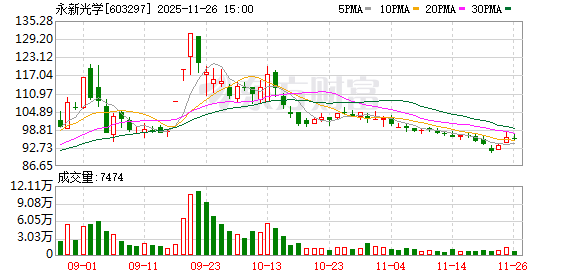
Core Insights - Yongxin Optical achieved a revenue of 674 million yuan in the first three quarters of 2025, representing a year-on-year growth of 3.59%, and a net profit attributable to shareholders of 151 million yuan, up 7.69% year-on-year [2] - The company attributed its steady growth in revenue and net profit to optimized product structure and meticulous cost control [2] - The medical optics segment saw significant revenue growth, particularly in high-end microscope sales, which now account for over 40% of the company's overall microscope sales [2] Financial Performance - Revenue for the first three quarters of 2025: 674 million yuan, a 3.59% increase year-on-year [2] - Net profit for the same period: 151 million yuan, a 7.69% increase year-on-year [2] - The company effectively controlled operational costs through product optimization and expense management [2] Product Development and Market Position - The sales proportion of medical optical products and high-end microscopes is expected to continue increasing due to ongoing product upgrades and accelerated domestic substitution [2] - The high-end microscope business is characterized by high technical and complexity barriers, maintaining a high gross margin and stable profit performance [2] - Yongxin Optical focuses on technological innovation, planning to continuously iterate superior products in the high-end microscope field and develop high-value core components in the medical optics sector [2] Industry Collaboration - Yongxin Optical is a key partner for companies like Hesai Technology and Tudatong Intelligent Technology in the LiDAR sector [3] - The company's products are widely used in high-growth markets such as mobile robots, delivery robots, cleaning robots, and lawn mowing robots [3] - Yongxin Optical has established close partnerships with leading companies in the robotics industry [3]

行业聚焦:全球探针卡用陶瓷基板行业头部企业市场份额及排名情况(附厂商名单)
QYResearch· 2025-11-26 01:49
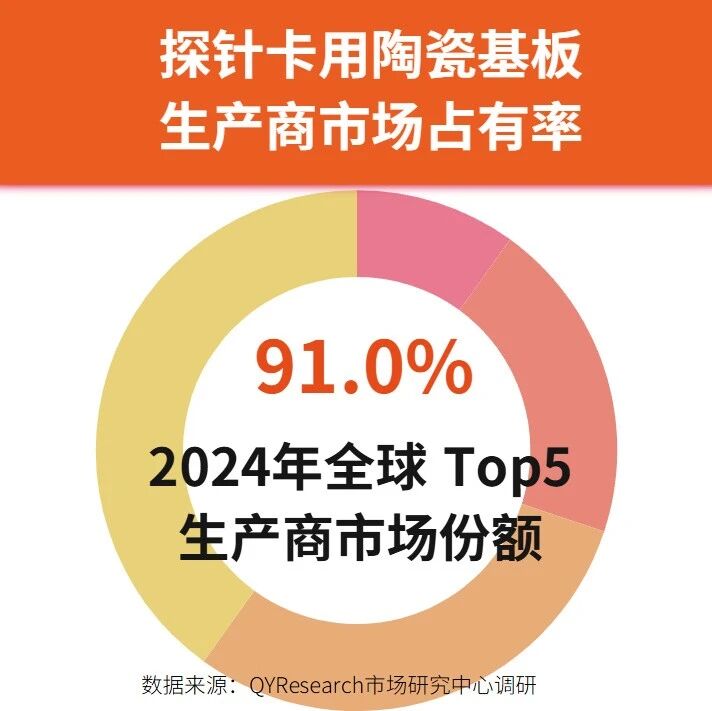
Core Viewpoint - The global market for ceramic substrates used in probe cards is projected to reach $280 million by 2031, with a compound annual growth rate (CAGR) of 8.6% over the coming years [4]. Market Overview - The ceramic substrate market for probe cards is characterized by high rigidity, high insulation, and low thermal expansion, essential for wafer electrical testing [2]. - Major manufacturers include Kyocera, SEMCNS Co., Ltd, Niterra (NTK), and IMTech Plus, with the top three companies holding approximately 91.0% market share in 2024 [7]. - The 300mm semiconductor test probe card substrates dominate the market, expected to account for 89.42% of the market share by 2031, up from 83.96% in 2024 [9]. Application and Demand - NAND flash memory is the primary demand source, representing about 45.5% of the market share [11]. - North America is the largest consumer market, projected to hold 29.06% of the sales market share in 2024, followed by Japan and South Korea [13]. - The domestic market in China is expected to grow rapidly due to localization and self-research efforts, with a CAGR of approximately 17.00% from 2025 to 2031 [13]. Market Drivers - The rise of AI/HPC and 5G/IoT is driving the need for increased wafer testing parallelism and I/O density, leading to advancements in ceramic substrates [15]. - Structural demand and technological upgrades are supported by government initiatives for key material localization and supply chain security [15]. Future Trends - Higher testing density is anticipated due to advancements in integrated circuit technology, necessitating substrates that support more probes [21]. - Miniaturization and high integration are expected to enhance testing efficiency and reduce space requirements [22]. - Multi-functional integration may include features like temperature monitoring and automatic adjustments for improved testing stability [23]. - New materials, including composite substrates, are likely to emerge to enhance thermal management and reduce production costs [24]. - Automation and smart technology integration will improve testing accuracy and efficiency [25]. - Cost optimization and domestic production are becoming increasingly important as the industry shifts towards localization [26].