中美关系

Search documents
中方回应特朗普涉华言论:如何解决台湾问题是中国人自己的事
Zhong Guo Xin Wen Wang· 2025-10-21 09:38
Core Viewpoint - The Chinese government maintains a consistent and clear stance on the Taiwan issue, asserting that Taiwan is an inseparable part of China and that the resolution of the Taiwan issue is a matter for the Chinese people alone [1] Group 1: Taiwan Issue - The Chinese government expresses its commitment to peaceful reunification regarding Taiwan, while firmly opposing any attempts to separate Taiwan from China by any individual or force [1] - The Chinese government emphasizes that the Taiwan issue is purely an internal matter of China [1] Group 2: Diplomatic Relations - The Chinese government highlights the irreplaceable strategic role of summit diplomacy in guiding China-U.S. relations [1] - There is a mention of close communication and interaction between the leaders of China and the United States [1]
黄金价格为何持续上涨?现在还能上车么?
Xin Lang Cai Jing· 2025-10-21 06:11
10月21日11:06,国内现货黄金Au9999涨1.86%,报992.41元/克,国际现货伦敦金现跌0.20%,报 4346.31美元/盎司。 近期黄金市场的表现可谓一枝独秀,价格持续上涨的背后究竟有何逻辑?未来这种上涨态势能否延续? 两大因素共同推动黄金价格的持续上涨! 同时,也特别提醒投资者,未来金价的上涨路径可能会与过去有所不同。随着国际关系的动态变化,金 价很可能呈现"波浪式前进"的特征,在上涨过程中会出现较大的波动。中美关系的紧张与缓和将成为影 响金价短期走势的重要变量。 对于投资者该如何操作? 对于普通投资者而言,我建议采取中长期的投资视角,避免过度关注短期价格波动。黄金在资产配置中 仍然具有重要价值,但需要根据个人风险承受能力合理配置比例。在低利率和地缘政治不确定性并存的 宏观环境下,黄金的配置价值值得重视,但也要对市场波动保持理性预期。 国际金价处于上涨大周期,建议黄金把作为重要资产配置部分去考虑,避免频繁交易。 过去一年黄金价格的强劲表现主要得益于两大因素的共同推动。一方面,美联储开启降息周期导致市场 利率持续走低,这使得不产生利息的黄金资产相对吸引力大幅提升。另一方面,中美关系出现的新变 ...


FICC日报:中美关系风险缓释,股指反弹-20251021
Hua Tai Qi Huo· 2025-10-21 05:57
1. Report Industry Investment Rating - No relevant information provided. 2. Core View of the Report - The most impactful phase of Sino - US relations on the market may have passed, and market risk appetite is gradually recovering, driving the rebound of the CSI 500 and CSI 1000 indices, while the SSE 50 and SSE Composite 300 indices maintain a stable operation trend [2] 3. Summary by Relevant Catalogs 3.1 Market Analysis - **Macro - economic situation**: The Fourth Plenary Session of the 20th Central Committee was held in Beijing on October 20. China's GDP grew 5.2% year - on - year in the first three quarters, with 5.4% in Q1, 5.2% in Q2, and 4.8% in Q3. In September, the added value of industrial enterprises above designated size increased by 6.5% year - on - year, and total retail sales of consumer goods increased by 3%. Fixed asset investment decreased by 0.5% year - on - year in the first three quarters, but increased by 3% after excluding real estate development investment. Per capita disposable income of residents was 32,509 yuan, with a real growth of 5.2% after deducting price factors. Trump said the US would list rare earths, fentanyl, and soybeans as the three major issues to raise with China [1] - **Spot market**: A - share indices rose and then fell. The Shanghai Composite Index rose 0.63% to close at 3863.89 points, and the ChiNext Index rose 1.98%. Most sector indices rose, with communication, coal, power equipment, and machinery leading the gains, while non - ferrous metals, agriculture, forestry, animal husbandry, and beauty care sectors led the losses. The trading volume of the Shanghai and Shenzhen stock markets dropped to 1.7 trillion yuan. Overseas, the three major US stock indices all closed higher, with the Nasdaq rising 1.37% to 22,990.54 points [1] - **Futures market**: In the futures market, the basis of stock index futures declined, and the trading volume and open interest of stock index futures decreased simultaneously [1] 3.2 Strategy - The most impactful phase of Sino - US relations on the market may have passed, and market risk appetite is gradually recovering, driving the rebound of the CSI 500 and CSI 1000 indices, while the SSE 50 and SSE Composite 300 indices maintain a stable operation trend [2] 3.3 Charts **3.3.1 Macroeconomic Charts** - Include charts showing the relationship between the US dollar index and A - share trends, US Treasury yields and A - share trends, RMB exchange rate and A - share trends, and US Treasury yields and A - share style trends [5][8][10] **3.3.2 Spot Market Tracking Charts** - **Stock index performance**: The Shanghai Composite Index rose 0.63%, the Shenzhen Component Index rose 0.98%, the ChiNext Index rose 1.98%, the SSE Composite 300 Index rose 0.53%, the SSE 50 Index was flat, the CSI 500 Index rose 0.76%, and the CSI 1000 Index rose 0.75% on October 20, 2025 [12] - Also include charts of trading volume in the Shanghai and Shenzhen stock markets and margin trading balance [5][13] **3.3.3 Stock Index Futures Tracking Charts** - **Trading volume and open interest**: The trading volume and open interest of IF, IH, IC, and IM contracts all decreased. For example, the trading volume of IF decreased by 57,144 to 112,287, and the open interest decreased by 8,343 to 257,451 [14] - **Basis**: The basis of stock index futures decreased. For example, the basis of the current - month IF contract decreased by 43.79 to - 18.42 [37] - **Inter - delivery spread**: The inter - delivery spreads of stock index futures showed different changes. For example, the spread between the next - month and current - month IF contracts increased by 30.80 to - 13.00 [42] - Also include charts of contract open interest, open - interest ratio, foreign - capital net open interest, basis, and inter - delivery spread of different contracts [5][15][17]
集运指数欧线周报(EC):宏观扰动及旺季预期先行,带动EC主力止跌反弹-20251020
Guo Mao Qi Huo· 2025-10-20 06:35
1. Report Industry Investment Rating - The investment view is "oscillating", specifically "oscillating weakly" [3] 2. Core View of the Report - The EC of the container shipping index shows a pattern of near - term strength and long - term weakness due to factors such as the Gaza peace talks and the deterioration of Sino - US relations. The spot freight rate has a mixed impact, with price increases planned but also uncertainties. Political and economic factors are complex, including the progress of the Gaza cease - fire agreement, potential tariff adjustments, and diplomatic meetings. The supply of shipping capacity is neutral, with changes in weekly average capacity deployment in different months and overall loading rates lower than in previous years. The demand is also neutral, with a differentiation in loading rates among shipping alliances. The first round of price support in late October has initially stopped the decline, and the market has entered the second round in early November, with more price - support attempts in the next two months. However, future trends still depend on changes in Sino - US relations, end - of - month loading conditions, and the situation of empty sailings in November [3] 3. Summary According to Relevant Catalogs 3.1 Main Views and Strategy Overview - **Influencing Factors and Their Impacts** - **Spot Freight Rate**: It has both positive and negative impacts. In late October, the overall price increase was expected to be between 1800 - 2000, but finally landed at 1500 - 1800, and the price increase notice for November is around 2500 [3] - **Political and Economic Factors**: There are many uncertainties. For example, the implementation of the Gaza cease - fire agreement has core issues to be resolved, Egypt has suffered shipping losses due to Houthi attacks, the US may adjust tariffs, and there are diplomatic meetings to prevent the escalation of the Sino - US tariff war [3] - **Shipping Capacity Supply**: It is neutral. The weekly average capacity deployment in September was 305,000, 250,000 in October, 280,000 in November, and 290,000 in December. The overall loading rate is lower than in previous years [3] - **Demand**: It is neutral. There is a differentiation in loading rates among alliances. PA + MSC has a relatively low loading rate and a higher probability of price cuts, while GEMINI's loading rate is gradually increasing at low prices [3] - **Investment View**: Oscillating weakly [3] - **Trading Strategy**: For unilateral trading, it is oscillating; for arbitrage, it is on hold. Risks to focus on include geopolitical disturbances and domestic and foreign macro - policy disturbances [3] 3.2 Price - **Spot Market**: There are data charts showing the trends of European line index, US West line index, US East line index, and Mediterranean line index, as well as the spot quotes of Maersk's European line [6][7][8][9][11] 3.3 Static Shipping Capacity - **Order Volume**: There are data charts showing the order volume and new - order volume of container ships with different loading capacities over the years [14] - **Delivery Volume**: There are data charts showing the delivery volume of container ships with different loading capacities over the years [17][19] - **Demolition Volume**: There are data charts showing the demolition volume of container ships with different loading capacities over the years [18][20] - **Future Delivery**: There are data charts showing the future delivery volume of container ships with different loading capacities in different time periods [23][25][26] - **Ship - Breaking Price**: There are data charts showing the ship - breaking prices of container ships with different loading capacities and the new - building price index and its year - on - year change [30] - **New - Building Ship Price**: There are data charts showing the new - building price index and the new - building prices of container ships with different loading capacities [30][32] - **Second - Hand Ship Price**: There are data charts showing the second - hand ship price index and the second - hand prices of container ships with different loading capacities and ages [36][38][40][42] - **Existing Shipping Capacity of Container Ships** - There are data charts showing the total existing shipping capacity, the existing shipping capacity by loading capacity, the existing shipping capacity of ships over 25 years old, the proportion of idle and retrofitted ships, the average age, and the average age by loading capacity [45][46][48][49][52][54] 3.4 Dynamic Shipping Capacity - **Shipping Schedule (Shanghai - European Base Ports)** - There are data charts showing the total shipping capacity deployment from Shanghai to European base ports, the shipping capacity deployment of PA + MSC, GEMINI, MSC, and OCEAN in different weeks [60][62][64][66][68] - **Container Ships with Desulfurization Towers** - There are data charts showing the number and proportion of container ships with installed desulfurization towers, the number and proportion of container ships being installed with desulfurization towers, the average age and duration of retrofitting desulfurization towers, and the average speed of container ships [71][74][75][77] - **Idle Shipping Capacity** - There are data charts showing the idle shipping capacity of container ships in terms of TEU, number of ships, and proportion, the idle shipping capacity by loading capacity, the hot - idle shipping capacity, and the shipping capacity of ships being retrofitted with desulfurization towers [79][80]
航运衍生品数据日报-20251020
Guo Mao Qi Huo· 2025-10-20 05:21
Report Summary 1. Report Industry Investment Rating - There is no information about the industry investment rating in the report. 2. Report's Core View - The shipping market shows a volatile trend. The European main - contract prices have increased due to the impact of the news that the Ministry of Commerce has taken counter - measures against Hanwha Ocean Co., Ltd. and its US - related subsidiaries. The European shipping line is in the year - end price - holding stage, with the first round of price - holding in late October showing initial results, and it has entered the second round in early November. The market is concerned about the impact of Sino - US relations and relevant policies on the shipping capacity supply. The recommended strategy is to wait and see [6]. 3. Summary by Relevant Content 3.1 Shipping Freight Index - **Spot Freight Index**: The Shanghai Export Container Freight Index (SCFI) is currently at 1310, up 12.92% from the previous value; the China Export Container Freight Index (CCFI) is at 973, down 4.11%. SCFI - US West is at 1936, up 31.88%; SCFIS - US West is at 862, down 1.60%; SCFI - US East is at 2853, up 16.35%; SCFI - Northwest Europe is at 1145, up 7.21%; SCFIS - Northwest Europe is at 1031, down 1.43%; SCFI - Mediterranean is at 1613, up 3.53% [4]. - **Contract Freight Index**: For contracts such as EC2506, EC2608, etc., the price fluctuations are relatively small, with the highest increase of 2.99% (EC5602) and the largest decrease of 0.36% (EC2510) [4]. - **Position and Change**: Positions like EC2606, EC2608, etc., have different changes. For example, EC2606 position decreased by 2, while EC2608 increased by 28 [4]. - **Monthly Spread**: The 10 - 12 monthly spread is currently - 557.8, down 7.6 from the previous value; the 12 - 2 spread is 182.7, down 39.2; the 12 - 4 spread is 530.7, down 0.5 [4]. 3.2 Market News - US Vice - President J.D. Vance is expected to visit Israel next Tuesday to promote the implementation of the Gaza war cease - fire agreement. There are still uncertainties about "Hamas disarmament" and "Gaza demilitarization" [5]. - Egypt claims to have lost over $9 billion due to Houthi attacks on Red Sea shipping [5]. - The US may soon announce a tariff exemption list, and lobbying for tariff exemption or inclusion of certain goods is expected to intensify [5]. - US Treasury Secretary Scott Bessent plans to meet with Chinese Vice - Premier He Lifeng in Malaysia next week to prevent the escalation of the Sino - US tariff war [5]. - The White House envoy Steve Witkoff will go to the Middle East on Sunday evening to follow up on the implementation of the Gaza cease - fire agreement [5]. - The International Maritime Organization (IMO) has postponed the discussion of the "Net Zero Framework" (NZF) by one year [6]. 3.3 Market Situation and Strategy - **Market Situation**: The market is in a volatile state. Affected by the news of counter - measures against relevant companies and concerns about Sino - US relations, the European shipping line is in the year - end price - holding stage. The first round of price - holding in late October stopped the decline, and it has entered the second round in early November. Future price - holding actions are also expected [6]. - **Strategy**: The recommended strategy is to wait and see, and it is necessary to pay attention to the changes in Sino - US relations, end - of - month loading conditions, and November blank sailings [6].
【策略】短期调整,无需悲观——策略周专题(2025年10月第2期)(张宇生/王国兴)
光大证券研究· 2025-10-19 23:04
Core Viewpoint - The A-share market has experienced a pullback due to declining risk appetite, increased uncertainty in US-China relations, and a general market sentiment decline, with major indices showing a downward trend [4][5]. Market Performance - The A-share market saw a significant decline this week, with the STAR Market 50 index dropping the most at 6.2%, while the Shanghai 50 index fell the least at 0.2%. The overall valuation of the market is at a historically high level since 2010 [4]. - Market styles have diverged, with value stocks performing better. Large-cap value stocks increased by 2.1%, while mid-cap growth stocks decreased by 5.8% [4]. Short-term Market Outlook - The A-share market has shown notable volatility, with the Shanghai Composite Index briefly surpassing 3900 points, a level not seen since August 2015, before falling back below that threshold [5]. - Increased market volatility is attributed to high valuations and rising uncertainties in US-China relations, with the VIX index also showing a significant increase [5]. - Historically, pullbacks during bull markets are common, typically occurring after 60-80 trading days into a bull market, with a usual retracement of 6-7% before resuming upward movement [5][6]. Current Market Phase - The market is likely still in a bull phase, although it may enter a wide-ranging fluctuation stage in the short term. The maximum drawdown observed so far is 4.01%, which is within historical norms [6]. Sector Focus - In the short term, the focus should be on defensive and consumer sectors, as historically, these sectors perform better during market fluctuations. High-dividend stocks and consumer sectors such as food and beverage, social services, and beauty care are expected to benefit from increased domestic demand [7][8]. - In the medium term, attention should be directed towards TMT (Technology, Media, and Telecommunications) and advanced manufacturing sectors, which may gain traction due to liquidity-driven trends and ongoing developments in AI [8].


中美破冰倒计时!一通电话两场会晤,贝森特为特朗普打前站?
Sou Hu Cai Jing· 2025-10-19 16:43
Group 1 - The article discusses the evolving dynamics of US-China relations, highlighting the US's inching approach and China's establishment of an ecological sanction system that exposes US weaknesses [1][5] - The upcoming fifth round of US-China trade negotiations is anticipated to address key issues, including tariffs on rare earths and agricultural products like soybeans [3][7] - Trump's administration shows internal divisions regarding trade strategies, with some officials believing in the potential for a mutually beneficial agreement with China [5][10] Group 2 - The article emphasizes that the root causes of the US-China trade war involve multiple contentious issues, including rare earths, soybeans, tariffs, and geopolitical concerns [7][9] - The Fentanyl issue and the associated 20% tariff are highlighted as critical points in negotiations, with the US reluctant to remove the tariff due to implications for domestic accountability [9] - The article concludes that US-China relations are characterized by a complex interplay of cooperation and conflict, with both sides needing to navigate their differences while seeking common ground [10]
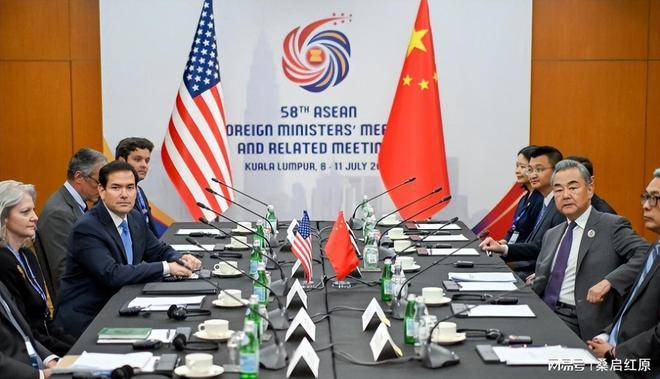
当着全世界的面,坎贝尔突然发声,微妙时刻,王毅在北京会见另一位美国客人,事情果然不简单
Sou Hu Cai Jing· 2025-10-19 11:36
一天之内,接连两场高规格会见,对象都是在美国商界举足轻重、在中国也家喻户晓的人物,这绝不是巧 合。当前,特朗普政府刚刚挥起新一轮关税大棒,中方也出台了稀土管制等反制措施,贸易战大有升级失 控的风险。全世界都在担心,这两个经济巨头的碰撞会殃及池鱼。 就在中美贸易战火气腾腾、两边互相加码关税的节骨眼上,美国外交圈的一位重量级人物——坎贝尔,突 然站出来说了句大实话:特朗普心里其实"非常想去中国"。他预测,明年年初,特朗普很可能就会访问北 京。 这个声音之所以引人注目,是因为它点破了当前中美关系一个心照不宣的驱动力:双方表面上吵得凶,但 台面下都在忙着为未来几个月的高层会谈,尤其是可能的元首会晤搭桥铺路。坎贝尔直言,现在美国财政 部(而不是传统上的白宫或国务院)成了对华外交的主角,这说明特朗普政府更倾向于从"做生意"的角度来 看待中美关系。 微妙时机的高规格会见 就在坎贝尔发声的几乎同一时间,北京也做出了动作。10月16日,中共中央政治局委员、中央外办主任王 毅在北京会见了美国金融巨鳄——黑石集团的董事长苏世民。无独有偶,中国商务部部长王文涛也在同一 天会见了苹果公司的CEO库克。 总而言之,坎贝尔的直言和王毅的会 ...
美政府停摆超一周,中国官方喊话特朗普,再牛也扛不住这局面!
Sou Hu Cai Jing· 2025-10-19 01:52
Core Points - The U.S. government shutdown has lasted over a week, leading to a near-total halt of federal operations, with significant implications for international relations and domestic governance [1][10] - The shutdown has frozen U.S.-China negotiation mechanisms, highlighting the vulnerability of U.S. political structures and their impact on global diplomacy [14][22] - China's strategic restraint during the U.S. shutdown indicates a calculated approach to international relations, contrasting with the U.S.'s internal political struggles [21][22] Group 1: U.S. Government Shutdown - The Senate rejected a new fiscal year budget, resulting in a government shutdown that has forced most federal employees into unpaid leave [1][10] - Key departments such as the Treasury and Commerce are unable to function, disrupting essential operations and negotiations [1][14] - The political deadlock stems from a standoff between the Democratic-controlled Senate and the Republican-led White House over budgetary issues [9][12] Group 2: U.S.-China Relations - The U.S. political paralysis has effectively frozen the negotiation mechanisms with China, despite both sides expressing a willingness to engage [14][22] - China's response to the U.S. shutdown has been one of strategic restraint, emphasizing that the situation is an internal U.S. matter [21][22] - The shutdown has exposed the fragility of U.S.-China relations, which rely heavily on stable governmental operations for effective communication and negotiation [14][22] Group 3: International Implications - The U.S. government's inability to function has led to a loss of credibility on the international stage, affecting alliances and partnerships [8][19] - European countries are seeking to establish more reliable cooperation channels with China, as the U.S. struggles with its internal issues [7][15] - The ongoing shutdown could hinder U.S. participation in significant international meetings, further diminishing its global influence [9][19]
被中国暴揍后,美国风向变了,称中美关系良好,可能放弃加征关税
Sou Hu Cai Jing· 2025-10-18 01:58
Core Insights - The article highlights a significant shift in the U.S. stance towards China, indicating that unilateral tariffs are no longer effective in the current interdependent global economy [1][3] - The dynamics of U.S.-China relations are evolving from a "pressure-response" model to a long-term balance based on power principles [3][5] Group 1: U.S. Policy Changes - U.S. Treasury Secretary Bessent has expressed a more optimistic view regarding U.S.-China relations, stating that "100% tariffs do not necessarily have to happen" [3] - This change in tone follows China's firm stance in response to U.S. actions, indicating a strategic recalibration in the bilateral relationship [3][5] Group 2: Economic Interdependence - The article emphasizes the deep economic ties between the U.S. and China, illustrated by the significant market reactions such as the sharp decline in U.S. stock prices and the loss of trillions in market value [5][7] - The interdependence creates invisible boundaries for both parties in their negotiations and strategies [5] Group 3: Trade War Dynamics - The trade conflict is characterized as a process of "promoting peace through struggle," with China's countermeasures targeting critical sectors like rare earths and lithium batteries, which are vital to U.S. high-tech and military industries [5][7] - The U.S. is realizing the high costs of a complete decoupling from China, leading to a tactical retreat in its aggressive trade policies [5][7] Group 4: Future Scenarios - Several potential future scenarios for U.S.-China relations are outlined, including: 1. A fragile balance with temporary compromises [8][9] 2. A "new normal" of competitive coexistence in key technology sectors [11] 3. Long-term competition over trade and technology standards [11] 4. Strategic stability through effective crisis management mechanisms [11][13] Group 5: China's Strategic Position - China is portrayed as exhibiting impressive resolve and wisdom in its approach to the U.S., choosing to respond strategically rather than emotionally [13] - The confidence of China in this geopolitical struggle is bolstered by its large domestic market, complete industrial system, and growing technological capabilities [13]