
关税调整

Search documents
Alcoa(AA) - 2025 Q2 - Earnings Call Transcript
2025-07-16 22:00
Financial Data and Key Metrics Changes - Revenue decreased by 10% sequentially to $3 billion, with net income attributable to Alcoa at $164 million compared to $548 million in the prior quarter, resulting in earnings per share of $0.62 [10][11] - Adjusted EBITDA was $313 million, down $542 million sequentially, primarily due to lower alumina and aluminum prices and increased U.S. Section 232 tariff costs [11][12] - Year-to-date return on equity was positive at 22.5%, with cash flow from operations providing $488 million [15][14] Business Line Data and Key Metrics Changes - In the Alumina segment, third-party revenue decreased by 28% due to lower average realized prices, partially offset by increased shipments [10] - The Aluminum segment saw a 3% increase in third-party revenue due to increased shipments and favorable currency impacts, despite a decrease in average realized prices [10][11] - Adjusted EBITDA for the Alumina segment decreased by $525 million, while the Aluminum segment's adjusted EBITDA decreased by $37 million, impacted by U.S. Section 232 tariff costs [12][13] Market Data and Key Metrics Changes - Alumina prices rebounded somewhat after a sharp decline, with over 80% of Chinese refineries operating at a deficit due to high bauxite prices [27] - U.S. Midwest premium increased to $0.68 per pound but remains below the estimated $0.75 needed to fully offset tariff costs [30][55] - Demand conditions remain steady in Europe and North America, with mixed sector performance; electrical and packaging sectors are performing well, while automotive is affected by tariff-related uncertainty [32] Company Strategy and Development Direction - The company is focused on executing its 2025 priorities, enhancing operational competitiveness, and navigating market dynamics to deliver long-term value [36] - Alcoa is advocating for trade policies that support both the company and the broader U.S. aluminum industry, while also redirecting Canadian production to non-U.S. customers to mitigate tariff impacts [9][77] - The long-term demand forecast for aluminum remains robust, driven by megatrends in transportation, construction, packaging, and electrical sectors [23][24] Management's Comments on Operating Environment and Future Outlook - Management noted that while tariffs create near-term volatility, the broader outlook for aluminum demand remains strong, supported by global megatrends [23][26] - The company expects aluminum shipments to be adjusted to 2.5 to 2.6 million metric tons for the year, down from an initial estimate of 2.6 to 2.8 million metric tons due to disruptions at the San Ciprian smelter [16] - Management expressed confidence in navigating the challenges posed by tariffs and market dynamics, with plans to continue engaging with policymakers [8][77] Other Important Information - The company successfully concluded a five-year tax dispute in Australia with a favorable ruling, affirming no additional tax owed [7] - Alcoa's cash position at the end of the quarter was $1.5 billion, with plans to use proceeds from the sale of its stake in the Mauden joint ventures to pay related taxes and transaction fees [14][15] - The company is progressing with approvals for new mine regions in Western Australia, although timelines have been extended due to the complexity of the process [34][36] Q&A Session Summary Question: Impact of potential 50% tariffs on Brazil - Management indicated that the impact depends on whether alumina is excluded from the tariffs, with options to source from Western Australia if necessary [40][41] Question: Contingency plans for Western Australia - Management stated that no cost impact is anticipated for 2025 or 2026, with contingency plans in place to manage delays [42][46] Question: Tariff costs and Midwest premium offset - Management clarified that the second quarter tariff costs were approximately $115 million, with a Midwest premium uptick of about $60 million, resulting in margin compression [50][51] Question: San Ciprian cash burn expectations for 2026 - Management noted that while the smelter is expected to be profitable post-ramp-up, the refinery will likely incur losses [60][62] Question: Restarting spare capacity at Warrick - Management explained that restarting the fourth line at Warrick requires significant investment and time, making it contingent on tariff stability [68][70] Question: Discussions with the government regarding tariffs - Management emphasized ongoing advocacy efforts to educate the government on the aluminum market's tightness and the importance of U.S.-Canada supply chains [116][120] Question: Capital management and debt reduction - Management indicated progress in reducing net debt, with plans to evaluate capital allocation priorities once the target range is reached [120][121]

新闻解读20250608
2025-07-16 06:13
Summary of Conference Call Notes Industry or Company Involved - The discussion primarily revolves around the U.S. capital markets, trade negotiations between the U.S. and China, and the technology sector. Core Points and Arguments 1. **Market Sentiment and Small Positive News** The market is currently experiencing small positive news that lacks concrete outcomes, leading to a mixed sentiment among investors. Despite some minor positive developments, the market did not reflect these on the following Friday, with two out of three major indices showing slight declines and trading volumes decreasing slightly [1] 2. **High-Level Negotiations Impacting Capital Markets** Upcoming high-level negotiations between the U.S. and China are expected to address sensitive issues such as tariffs, technology restrictions, and rare earth exports. There is a significant probability that positive news may emerge from these discussions, driven by the U.S.'s need for favorable outcomes to stabilize its situation amidst internal and external turmoil [2][4] 3. **Political Climate and Its Effects** The political climate, including attacks on former President Trump and discussions about forming a third political party, is creating a chaotic environment. This situation may compel the U.S. administration to seek victories, such as successful trade negotiations with China, to divert attention from domestic issues [3][4] 4. **Potential Tariff Adjustments** There is speculation regarding the possibility of further tariff reductions, particularly on previously imposed tariffs exceeding 30%. Any concessions from the U.S. side could positively influence market sentiment in China, especially in the technology sector [5] 5. **U.S. Employment Data and Market Reactions** Recent U.S. employment data exceeded market expectations, contributing to a positive reaction in the stock market. However, there are concerns about the reliability of this data in accurately reflecting the employment situation, raising questions about the sustainability of the market's upward movement [6][7] 6. **High Valuations and Market Risks** The U.S. stock market is currently at a high valuation, which poses risks of downward corrections. The market's upward movement appears to lack substantial positive drivers, leading to a divided state in U.S. assets, particularly in the bond market [7] 7. **Sector-Specific Opportunities** There are emerging opportunities in sectors such as technology and military industries, with reports of new overseas orders. The recent warming of international relations may enhance market sentiment and trading volumes, particularly benefiting the technology sector [8][9] Other Important but Overlooked Content - The potential for a rebound in market sentiment is linked to the outcomes of U.S.-China negotiations, which could lead to increased trading volumes and sustained interest in specific sectors, especially technology [9]
飞利浦小家电采购交流
2025-07-16 06:13
Summary of Conference Call Notes Industry or Company Involved - The discussion primarily revolves around the small home appliance industry, particularly focusing on the impact of tariffs and production shifts from China to Southeast Asia. Core Points and Arguments 1. **Tariff Impact on Production Decisions** The company has not utilized temporary storage solutions in Canada to avoid high tariffs, indicating a long-term strategy despite the current U.S.-China tariff situation [1][2][3] 2. **Production Shifts to Southeast Asia** Due to significant tariff differences (e.g., 30%-40% for China vs. 10% for Southeast Asia), many products may no longer be viable to produce in China for the U.S. market, leading to a shift in production to Southeast Asia or Eastern Europe [2][3] 3. **Capacity Expansion in Southeast Asia** The company has noted that many leading brands have already established production capabilities in Southeast Asia, with some able to meet U.S. demand within a few months [2][3][4] 4. **Supplier Dynamics** The number of suppliers has decreased, leading to a focus on higher-quality suppliers in Southeast Asia. This shift is driven by the need for stability and reliability in supply chains amidst fluctuating tariffs [6][7] 5. **Market Demand and Inventory Issues** Since April, there has been a noticeable inventory crisis among major U.S. retailers for certain popular small appliance categories due to increased tariffs [9] 6. **European Market Stability** The European market has remained stable without significant fluctuations, with a steady demand for small appliances like coffee machines and kitchen products [10] 7. **Product Innovation and Market Acceptance** The company is observing trends in product innovation, particularly in smart appliances, and is assessing market acceptance in both domestic and international markets [11][12][25] 8. **Competitive Landscape** The company faces increasing competition in the high-speed hair dryer segment, where it has lost market share to brands like Dyson and Shark Ninja due to slower product development cycles [31][19] 9. **Supply Chain Considerations** The company emphasizes the importance of leveraging Chinese supply chains for cost advantages in producing small appliances, particularly in comparison to European manufacturers [14][15][21] 10. **Future Production Plans** The company is currently negotiating with suppliers in Southeast Asia to expand production capacity to meet future U.S. demand, although there are uncertainties regarding investment and capacity coverage [33][34] Other Important but Possibly Overlooked Content 1. **Regional Production Preferences** Vietnam and Thailand are preferred locations for production due to their maturity in manufacturing capabilities, while Indonesia is considered a potential third option if needed [34][35] 2. **Supplier Quality Improvement** The company is focusing on improving the quality of suppliers and expanding the range of products they can produce, indicating a strategic shift towards higher standards [7] 3. **Consumer Trends in Europe and the U.S.** There is a noted difference in consumer preferences between the U.S. and Europe, particularly regarding coffee machines, which influences product development strategies [23] 4. **Challenges in Product Development** The lengthy process of product development and approval from headquarters in the Netherlands is causing delays in bringing new products to market, impacting competitiveness [19][31] 5. **Market Share Decline** The company acknowledges a decline in market share in key categories like electric toothbrushes and hair dryers, indicating a need for strategic reassessment [31][32]

特朗普高调宣布:印尼面临19%关税,并将购买50架波音(BA.US)飞机
智通财经网· 2025-07-16 03:12
Core Points - The agreement between the U.S. and Indonesia involves a 19% tariff on Indonesian goods, while Indonesia will eliminate all tariffs on U.S. imports and purchase over $19 billion worth of U.S. products, including 50 Boeing aircraft [1] - Indonesia is the first country to reach a trade agreement with the U.S. since President Trump issued tariff notices to multiple countries [1] - The agreement is expected to alleviate market concerns in Indonesia, which relies heavily on exports to the U.S. for various sectors, including apparel and palm oil [1] Tariff and Economic Impact - The 19% tariff is significantly lower than the 32% previously threatened by the U.S. and is expected to be higher than the average 5% tariff projected for 2024 [2] - Preliminary estimates suggest that Indonesia's exports to the U.S. may decline by 25% in the medium term, posing a risk of 0.3% to its GDP [2] - The agreement is part of a series of trade frameworks announced by Trump, including agreements with Vietnam and the UK, although many details remain to be negotiated [2]

印度6月贸易逆差收窄,出口有亮点
Sou Hu Cai Jing· 2025-07-16 00:21
Group 1 - India's trade deficit narrowed significantly in June, with the goods trade deficit falling to $18.78 billion, lower than the expected $22.24 billion and the previous month's $21.88 billion, primarily due to a substantial decrease in imports [1] - Total imports in June decreased to $53.92 billion from $60.61 billion in May, with crude oil imports reducing by $1 billion to $13.7 billion and gold imports dropping by 28% to $1.8 billion [1] - Overall goods exports fell by 9% month-on-month to $35.14 billion, marking a seven-month low, although exports to the US increased by 23.53% year-on-year to $8.27 billion despite a 10% tariff hike [1] Group 2 - The decline in international oil prices and a sharp reduction in non-oil imports contributed to the improvement in the trade deficit, with expectations that the current account deficit will narrow to 0.7% of GDP in Q1 FY2026, a decrease of 20 basis points year-on-year [3] - For the first quarter of the current fiscal year (April-June), total goods trade showed a year-on-year increase of 4.2% for exports and 1.9% for imports, indicating a continuous optimization of trade structure [3] - The Indian government is negotiating a temporary trade agreement with the US to avoid potential high tariffs, in response to recent tariff adjustments by the US targeting countries with perceived trade imbalances [3] Group 3 - In the first five months of 2025, India's total exports to the US reached $47.15 billion, a significant year-on-year increase of 25.6%, while imports from the US rose by 8.2% to $18.25 billion, resulting in a trade surplus of $28.91 billion [3] - Notably, US exports to India showed a marked increase in Q2 2025, rising from ₹20.89 billion in the same period last year to ₹25.52 billion [3] Group 4 - Barclays research indicates that the average effective import tariff on Indian goods by the US increased significantly from 2.7% to 11.6% after April 2025, impacting bilateral trade relations and becoming a key topic in ongoing negotiations [4]

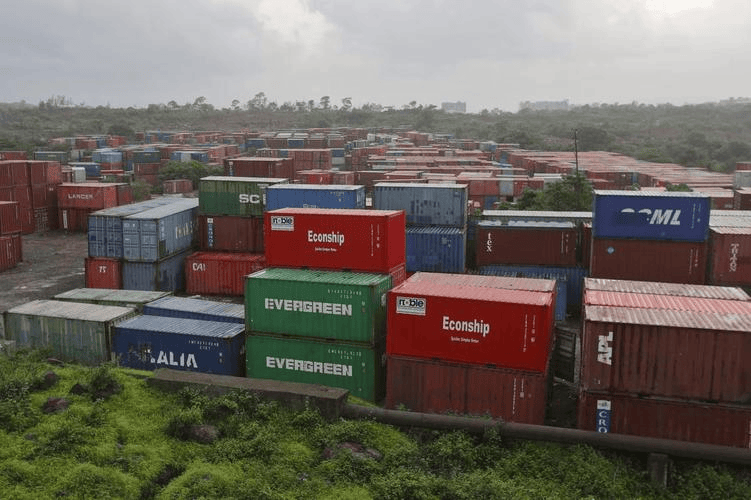
汇丰:又一轮关税_谁受影响及对全球贸易的冲击
汇丰· 2025-07-15 01:58
Investment Rating - The report does not explicitly provide an investment rating for the industry Core Insights - The US has announced new tariffs on imports from various economies, effective from 1 August, with rates varying based on trade balances [2][11] - Countries like the UK, mainland China, and Vietnam have managed to maintain their baseline tariff rates due to existing trade deals, while others like India and the EU are in negotiations [3][29] - Significant tariff rates include 25% on imports from Japan and Korea, 25-36% on several ASEAN economies, and 50% on Brazilian imports, which may distort global trade data [4][6] - The report anticipates continued volatility in global trade data due to these tariffs, with potential material slowdowns in global goods trade towards the end of 2025 and early 2026 [6][41] - There are inflationary risks for the US as higher tariffs could lead to increased import costs, impacting consumer prices [7][42] Summary by Sections New Tariff Rates - New tariffs have been announced, with specific rates for various countries, set to take effect on 1 August [11][12] - The report includes a detailed table comparing new and previously suggested reciprocal tariff rates across different economies [13] Impact on Economies - Economies with significant exposure to the US market, such as Vietnam, Bangladesh, and Cambodia, may experience substantial impacts on their growth due to these tariffs [16][19] - The report highlights that sectoral tariffs will add additional burdens, particularly in industries like copper and pharmaceuticals [20][27] Trade Deals and Negotiations - Some economies have successfully negotiated trade deals, while others are still in discussions, with the EU and India being notable examples [29][30] - The report suggests that ongoing negotiations may lead to further adjustments in tariff rates before the implementation date [33] Global Trade Volatility - The first half of 2025 has seen significant volatility in global trade data, driven by frontloading of purchases ahead of tariff announcements [34][36] - The report predicts that as frontloading subsides, global goods trade flows will slow down significantly [41][42] Inflationary Pressures - The report indicates that the trade-weighted tariff on many products could increase input prices by over 10%, leading to inflationary risks in the US [42][46] - Early signs of inflationary pressures are already evident in the US PMI data, diverging from global trends [42][46]
摩根大通:焦点_解放日 2.0_更新关税率
摩根· 2025-07-15 01:58
Investment Rating - The report indicates an expectation that the US effective tariff rate will settle closer to 18% rather than the current 13.4% [1] Core Insights - The new tariff measures are projected to raise the average effective US tariff rate to 16.9%, significantly higher than the 2.3% at the end of 2024, but below the 22.4% in force on April 2 [10] - The report highlights that the effective tariff increases scheduled for August 1 will include a 50% tariff on copper and a potential 200% tariff on pharmaceuticals [5][17] - The ongoing trade tensions and tariff adjustments are expected to have a direct impact on global GDP growth, with a projected drag increasing from 0.5 percentage points to 0.7 percentage points under the new tariff regime [23] Summary by Sections Tariff Rates - The effective US tariff rates are expected to increase significantly, with specific rates such as 50% on copper and reciprocal tariffs on various countries [5][10] - The report outlines that the effective tariff rates for several countries will revert to the April "Liberation Day" levels if no new tariff letters are issued [14] Economic Impact - The report estimates that the direct GDP impact for the US from the new tariffs could be around -0.8 percentage points, with emerging markets in Asia, particularly those excluding China, facing the highest exposure [24][32] - Global GDP growth is projected to expand at a sub-potential rate of 1.8%, with a notable downgrade in expectations since the US election [18] Sector-Specific Insights - The report discusses potential sectoral tariffs on pharmaceuticals, semiconductors, and critical minerals, indicating that these sectors are under active investigation and may face significant tariff increases [15][17] - Exemptions for certain sectors still imply lower effective tariff rates for many countries, but the risk of higher tariffs remains elevated due to ongoing investigations [17]
华泰证券今日早参-20250714
HTSC· 2025-07-14 03:56
Macro Insights - The recent tariff adjustments by the Trump administration have raised concerns about global trade dynamics, with tariffs ranging from 20% to 50% imposed on multiple countries, including major trading partners like Japan, South Korea, and the EU [2][3] - The U.S. manufacturing sector showed marginal improvement, with global manufacturing sentiment returning above the threshold, but the renewed tariff threats cast uncertainty on future growth [3] - The U.S. CPI and PPI data releases are anticipated to provide further insights into inflation trends, with the market closely monitoring these indicators [3] Industry Analysis - The real estate sector is experiencing weaker transaction volumes despite increased travel demand during the summer, influenced by adverse weather conditions [4] - The chemical industry is expected to benefit from supply-side adjustments due to government policies aimed at reducing overcapacity, with a potential recovery in the second half of 2025 [14] - The heavy truck market is projected to see significant growth, with sales expected to exceed one million units, driven by the "old-for-new" policy [15] Company-Specific Insights - Gu Ming, a leading fresh beverage company, is expected to expand its market presence with a target price of 35.27 HKD, supported by a robust store network and efficient supply chain [16] - Si Yuan Electric, a leader in the power equipment sector, reported a 37.80% year-on-year revenue increase for H1 2025, indicating strong growth potential in both domestic and international markets [17] - China Shenhua's H1 2025 net profit is projected to decline by 13.2% to 20.0% year-on-year, primarily due to reduced business scale amid falling coal prices, yet the company maintains a strong position due to high long-term contract ratios [18] - Ecovacs is expected to see a significant recovery in profitability, with a projected net profit increase of 57.64% to 62.57% for H1 2025, driven by the "old-for-new" subsidy and competitive product offerings [19]