工业互联网

Search documents
【公告臻选】航天卫星+人形机器人+电机铁芯+专精特新+氢能!公司拟3.5亿元投建具身智能机器人项目
第一财经· 2025-12-14 14:37
Core Viewpoint - The article emphasizes the importance of efficiently filtering and interpreting key announcements in the market to identify investment opportunities, enabling investors to grasp market dynamics quickly before trading begins [1]. Group 1: Recent Highlights - On December 7, the article highlighted advancements in supermaterials and their application in aerospace, leading to a 7.19% increase in Guangqi Technology's stock over several days [2]. - Snowman Group's stock rose significantly after being linked to the "Hualong One" nuclear power project, with consecutive gains following the announcement [2]. - Jingce Electronics saw a nearly 10% increase in stock price after signing a contract worth 433 million yuan for semiconductor testing equipment [2]. - Xingfu Electronics announced a 480 million yuan investment in an electronic-grade phosphoric acid project, resulting in a 12.79% stock price increase [2]. - Zhaoxin Co. gained attention for its acquisition of a leading company in the new energy operation sector, leading to a stock price surge [2]. - Jerry Holdings increased its stock price by 4.69% after announcing a significant increase in its share buyback price limit [2]. Group 2: Today's Overview - A company plans to invest 350 million yuan in a humanoid robot project, indicating a focus on advanced robotics and AI [3]. - Another company is leading a national major science and technology project related to AIGC and industrial internet, showcasing a commitment to innovation and domestic substitution [3]. - A company intends to invest 2.366 billion yuan in two wind power projects with a total capacity of 450 MW, reflecting a strong push towards renewable energy [3].

海尔集团与歌尔集团达成战略合作
Bei Jing Shang Bao· 2025-12-14 11:31
Core Viewpoint - Haier Group has officially signed a strategic cooperation agreement with Goer Group, focusing on deep collaboration in smart home appliances, industrial internet, new energy, and artificial intelligence fields [1] Group 1 - The partnership aims to leverage both companies' strengths in technology and innovation to enhance product offerings and market competitiveness [1] - The collaboration is expected to drive advancements in smart home solutions and industrial applications, aligning with current market trends towards digitalization and sustainability [1]


合肥智锂科技有限公司成立 注册资本6.6万人民币
Sou Hu Cai Jing· 2025-12-13 00:45
Core Viewpoint - Hefei Zhi Lithium Technology Co., Ltd. has been established with a registered capital of 66,000 RMB, focusing on various sectors related to new energy vehicles and technology development [1] Group 1: Company Overview - The legal representative of Hefei Zhi Lithium Technology Co., Ltd. is Ge Yaoyao [1] - The company has a registered capital of 66,000 RMB [1] Group 2: Business Scope - The business scope includes sales of new energy vehicle production testing equipment and electrical accessories [1] - The company is involved in the retail of automotive parts and manufacturing of instruments and meters [1] - It engages in research and development of emerging energy technologies and sales of electronic products [1] - The company also focuses on manufacturing new energy power devices and photovoltaic equipment [1] - Services offered include technical services, consulting, and various forms of leasing, including battery and charging control equipment [1] - The company is involved in internet data services and industrial internet data services [1] - It provides artificial intelligence application software development and information technology consulting services [1]
探访格力:“领航级”工厂智能协同构建产业转型
Nan Fang Du Shi Bao· 2025-12-12 13:49
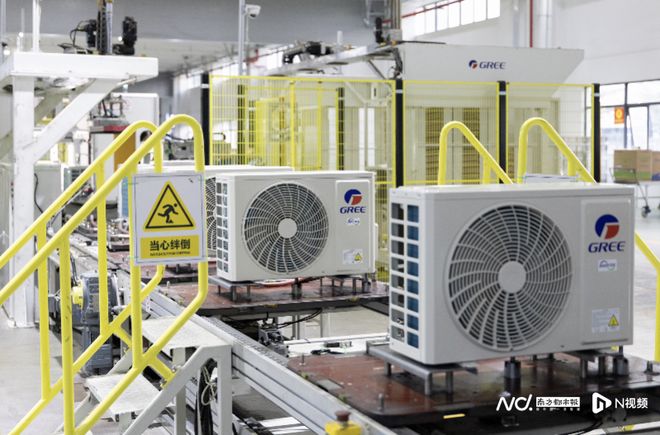
Core Viewpoint - Gree Electric's Zhuhai Jinwan Intelligent Manufacturing Factory has been recognized as one of the first "Leading" intelligent factories in China, showcasing significant advancements in smart manufacturing capabilities and automation levels [1][9]. Group 1: Factory Recognition and Achievements - The factory was selected as the only representative from Guangdong Province in the first batch of "Leading" intelligent factories by the Ministry of Industry and Information Technology and five other departments [1]. - Gree Jinwan's intelligent manufacturing factory achieved a remarkable transition from "Excellent" to "Leading" level within just six months, demonstrating its advanced smart manufacturing capabilities [1]. - The factory has an annual production capacity of 12.3 million units and an annual output value of 18 billion yuan, with the first phase of the project expected to break even in 2024 [1]. Group 2: Automation and Technology - The overall automation rate of the factory exceeds 80%, with 86 out of 103 processes on the assembly line automated, reducing the workforce from over 70 to approximately 20 [4]. - Gree's self-developed robots play a crucial role in production, achieving unmanned operations in key processes such as inspection, welding, and packaging [2][4]. - The factory employs advanced technologies like visual recognition and environmental perception, allowing robots to operate with high precision and flexibility [4]. Group 3: Intelligent Manufacturing Model - Gree has introduced the "Gree Collaborative House" intelligent manufacturing model, which integrates industrial internet platforms, data centers, and AI algorithms to enhance operational efficiency across the value chain [7]. - The production planning system allows for precise scheduling down to individual machines, enabling the factory to operate like an "intelligent brain" for automated and accurate production management [9]. - The factory aims to serve as a "mother factory" to promote its intelligent manufacturing model to new bases in various cities, enhancing collaboration and innovation across the industry [9].

新财观 | 坚持内需主导,宏观政策更加积极有为
Xin Hua Cai Jing· 2025-12-12 07:44
Group 1 - The central economic work conference emphasizes the implementation of more proactive macro policies to enhance domestic demand and optimize supply, aiming for qualitative and quantitative economic growth in 2026 [1][2] - The focus on domestic demand is reinforced, with a goal to build a strong domestic market, addressing the current issue of insufficient effective demand, as consumer spending in 2023 accounted for only 39.57% of GDP, significantly lower than global and regional averages [2] - The conference highlights the importance of innovation-driven growth, aiming to cultivate new economic drivers, with a focus on sectors like artificial intelligence and semiconductor technology to enhance productivity and address structural challenges [3] Group 2 - The macroeconomic policy is set to be more proactive, with a focus on quality and efficiency, indicating confidence in the resilience of the domestic economy and a reduced need for extraordinary stimulus measures [4] - Fiscal policy is expected to maintain a certain degree of expansion, with a projected fiscal deficit rate between 3.5% and 4% for 2026, emphasizing the integration of existing and new policies to enhance economic governance [5] - A moderately loose monetary policy is anticipated, with expectations for interest rate cuts and reserve requirement ratio reductions to support economic stability and reasonable price recovery [6] Group 3 - The real estate sector is shifting from being an economic engine to a cornerstone of people's livelihoods, with policies aimed at promoting quality housing and new development models [7] - The capital market is expected to maintain a stable upward trend, supported by ongoing reforms in investment and financing, contributing to wealth preservation and economic transformation [8]
记者去哪儿·迈向“十五五” 从“车轮上的变化”看中国制造强链突围
Ren Min Wang· 2025-12-12 03:32
坚持把发展经济的着力点放在实体经济上,坚持智能化、绿色化、融合化方向。 "几年前,谁能想到中国汽车在产品形态、能源结构和全球地位上会发生如此巨变?'十五五'时期同样 充满想象空间。"在东风日产汽车销售有限公司市场部部长孙豪看来,真正的无人驾驶、氢能源的实用 化进程、固态电池的快速突破……这些前沿领域,正是中国汽车人凭借拼搏精神,有望持续引领全球的 关键赛道。 市场的理性化与法规的完善化,被视为产业健康发展的"好兆头"。上汽大众汽车有限公司党委书记、总 经理陶海龙说,作为产业中的一分子,有责任从自身做起,不仅助力发展,更要引导行业健康前行。这 份自觉,正是产业走向成熟的重要标志。 车展勾勒的蓝图,正在一座座"超级工厂"里变为现实。以人工智能、大数据、工业互联网为代表的数字 技术,已成为驱动产业变革的核心力量。在吉利汽车位于湖州长兴的"新四化"高端制造工厂,已实现每 分钟下线一台车的高效产能,这背后,是现代化产业体系的强力支撑。 吉利汽车集团长兴公司总经理赵德刚介绍,这主要得益于三点:一是数字化赋能全链路,实现精准决策 与管理;二是数字化系统打通上下游,与供应商实现产能共享与无缝协作;三是柔性化制造能力,既能 大 ...

京东工业于港交所主板上市 领跑中国工业供应链领域 助力产业数智化升级
Sou Hu Cai Jing· 2025-12-11 14:03
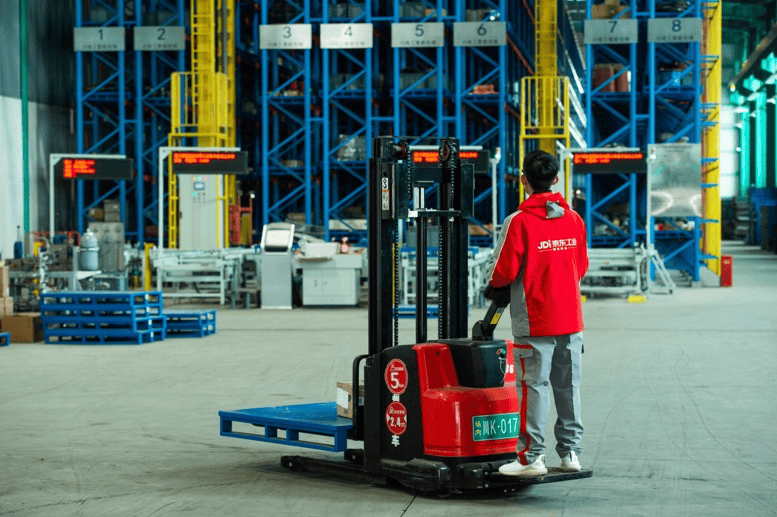
此次在香港上市,标志着京东工业进入新的发展阶段,募集资金预计重点用于增强工业供应链能力、跨地域业 务拓展、潜在战略投资或收购等领域,持续助力客户提升供应链效率、降低运营成本。 京东工业表示,"我们将依托京东超级供应链,持续强化数智供应链技术和服务能力,为产业、为上下游伙伴 和客户创造更大价值,为投资者带来长期回报。" 北京时间12月11日,京东工业股份有限公司(简称"京东工业")正式于香港联交所主板上市,股票代码为 7618。据港交所公告,京东工业公开发售价定为每股14.1港元,若不行使超额配股权,全球发售募集资金净额 约28.27亿港元。 根据招股书,京东工业的持续经营业务总收入主要为商品销售、服务收入。2022-2024年,商品销售收入分别 为129亿元、161亿元、192亿元,复合年增长率为21.7%;服务收入均稳定在约12亿元。公司的持续经营业务 总收入由2022年的141亿元增至2023年的173亿元,并进一步增至2024年的204亿元,复合年增长率达到 20.1%。根据最新的信息,京东工业披露其2025年截至8月31日总营收达141亿元,同比增长18.9%。盈利表现 方面,京东工业2025年上半年 ...
花35亿港元在香港买楼后,刘强东迎来第6个IPO,年内持续活跃在大众视野
Sou Hu Cai Jing· 2025-12-11 11:42
Core Viewpoint - JD Industrial, under the leadership of Liu Qiangdong, has successfully listed on the Hong Kong Stock Exchange, marking the sixth company in the "JD System" to go public, with a market capitalization of HKD 37.748 billion at the closing price of HKD 14.1 per share [1][4]. Group 1: Company Overview - JD Industrial is recognized as a leading provider of industrial supply chain technology and services in China, originating from JD Group's enterprise business launched in 2013 [3][4]. - The company has over 8.1 million SKUs across 80 product categories, projecting revenues of RMB 141.35 billion, RMB 173.36 billion, and RMB 204 billion for the years 2022, 2023, and 2024, respectively, with a compound annual growth rate of 20.13% [4]. Group 2: Financial Performance - In the first half of this year, JD Industrial achieved revenues of RMB 103 billion, representing an 18.9% year-on-year growth, and a net profit of RMB 4.5 billion, up 55.2% year-on-year [5]. - After a loss of approximately RMB 1.3 billion in 2022, the company turned profitable in 2023, with a projected net profit of RMB 762 million in 2024 [4]. Group 3: IPO Journey - JD Industrial's IPO journey faced multiple challenges, with four submissions to the Hong Kong Stock Exchange before successfully listing on December 11, 2023 [5]. - Prior to the IPO, JD Group invested nearly HKD 3.5 billion in real estate in Hong Kong, indicating a strategic commitment to the region [5]. Group 4: Strategic Partnerships and Expansion - JD Industrial has established strategic collaborations with various entities, including partnerships with Nanjing's industrial development platforms to enhance industrial internet and smart procurement services [6][8]. - The company has also expanded its footprint in Suzhou and launched its first physical store, JD Hardware City, in Kunshan [10].


烟台将加快实施359个数字化转型项目,总投资8.3亿元
Qi Lu Wan Bao· 2025-12-11 10:53
12月11日,烟台市人民政府新闻办公室举办新闻发布会。会上,烟台市工业和信息化局党组成员、副局 长、新闻发言人张正功介绍,下一步烟台市在加快企业"智改数转网联"、推动制造业数智化转型方面将 采取措施。 据介绍,下一步,全市工业和信息化系统将持续深化工业互联网与人工智能等新一代信息技术集成应 用,大力实施智能制造提升工程,推动制造业数智化转型扩面提质,为先进制造业发展注入强劲动能。 加强服务供给。实施"人工智能+制造"提升行动,围绕全市主导产业开发垂直大模型,推进"工业互联网 平台+大模型"融合发展,构建面向细分行业领域的新型智能底座。广泛汇聚工业软件、智能制造、大 模型等领域优质服务商资源,建立不少于200家服务商和1000个"小快轻准"数字化解决方案的资源池, 积极发展垂直领域行业和场景大模型,推动供需精准对接。 推进普及应用。每年为不少于200家企业提供诊断服务,精准摸清企业需求,"一企一策"提供数字化转 型定制方案,打消企业顾虑,真正解决不敢转、不会转的问题。每年线上线下(300959)组织不少于30 场供需对接活动,以承担国家中小企业数字化转型城市试点为契机,围绕纳入试点范围的670家重点企 业,加快 ...
数智赋能制造!全市规上工业企业数字化转型覆盖率96%!
Sou Hu Cai Jing· 2025-12-11 09:37
Core Viewpoint - Yantai City is accelerating the digital transformation of its manufacturing industry to support high-quality industrial economic development, with significant progress in digital infrastructure and policy support [2][5]. Group 1: Policy Coordination and Framework Improvement - Yantai has initiated digital economy legislation, with the "Yantai City Digital Economy Promotion Regulations" officially implemented to provide legal support for manufacturing digital transformation [5]. - The city has launched the "Individual Ten Hundred Thousand Trillion" digital transformation action plan, outlining goals, tasks, and support measures for digital transformation [5]. - A "chain-based" approach is being adopted to cultivate industrial ecosystems, integrating industrial internet ecosystems into 16 key industrial chains, with city leaders overseeing these chains [5][6]. Group 2: Platform Development and Support Capacity - Yantai has built nearly 25,000 5G base stations, achieving an 84% penetration rate among 5G users, and has created a national "Gigabit City" [8]. - The city has developed over 140 industrial internet platforms, including 1 national "dual-cross" platform and 3 national specialized platforms, enhancing service capabilities [8][9]. - The establishment of data centers and digital transformation platforms is underway, with over 1,600 registered companies and nearly 90 billion registration resolutions [9]. Group 3: Integrated Efforts and Transformation Effectiveness - Yantai is leveraging its status as a national pilot city for small and medium-sized enterprise digital transformation to create a comprehensive digital transformation framework [10]. - The city is promoting intelligent manufacturing models, with significant improvements in R&D cycles (40% reduction), production efficiency (35% increase), and operational costs (over 25% reduction) [10]. - The implementation of provincial and municipal digital transformation projects is fostering collaboration across the manufacturing supply chain [10]. Group 4: Service Assurance and Ecosystem Acceleration - Yantai is focusing on enhancing national and provincial digital transformation support centers, establishing a resource pool for service providers, and managing over 100 quality service providers [12]. - The city has compiled over 300 digital transformation application scenarios to encourage more enterprises to accelerate their transformation [12]. - Training initiatives have been conducted, with over 200 sessions organized, training around 8,000 individuals in digital roles [12].