量化宽松

Search documents
美股屡创新高背后:金融幻象、资本游戏与残酷民生
Sou Hu Cai Jing· 2025-10-09 13:52
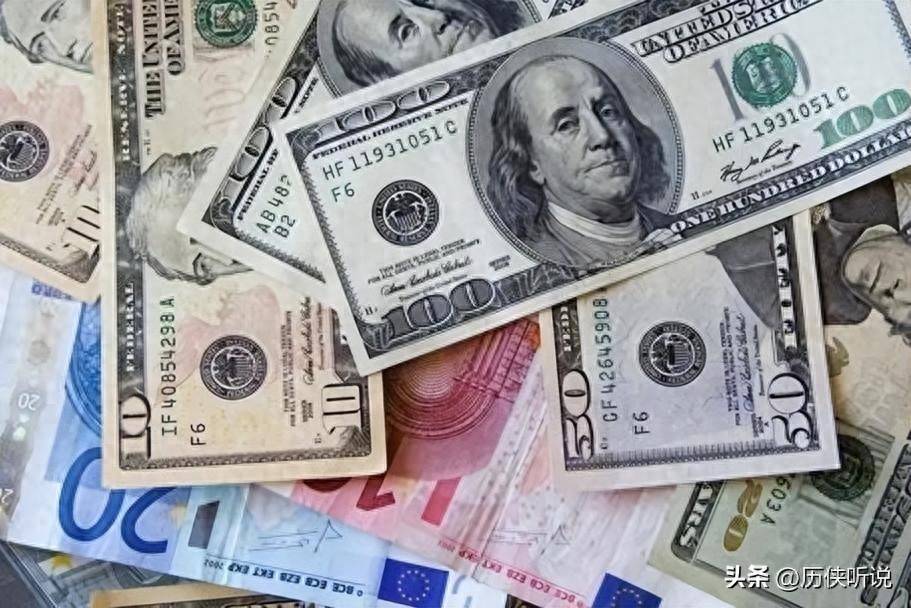
美股再创新高:繁荣的假象与残酷的现实 2025年10月8日,纽约股市再次刷新历史纪录——标普500指数上涨0.58%,收于6753.72点;纳斯达克指 数上涨1.12%,收于23043.38点。 这已经是美股在过去十八年里无数次"创新高"中的一次,以至于不少 中国股民羡慕不已,甚至有人将其视为"美国国力蒸蒸日上"的铁证。 然而, 股市的繁荣真的等于经济的繁荣吗? 如果美国经济真的如股市表现那般强劲,为何民粹主义会席卷全美?为何特朗普这样的极右翼政客能卷 土重来?为何美国社会的撕裂程度比冷战时期还要严重? 答案很简单:美股的繁荣,只是一场精心包 装的金融幻象,而非实体经济的真实写照。 一、美股的"疯牛"从何而来? 要理解美股为何能持续上涨,我们必须回到2008年。 那一年,次贷危机爆发,华尔街濒临崩溃,美国政府慌了神,美联储随即祭出"量化宽松"(QE)这一 大招。 所谓QE,本质就是印钞机开足马力,让美联储凭空创造数万亿美元,再用来购买国债和金融资 产,向市场疯狂注水。 2020年疫情爆发后,美联储更是变本加厉,直接开启第四轮QE,至今其资产负债表仍高达7万亿美元。 这些钱,并没有流入实体经济,而是像洪水一样涌 ...

欧洲央行9月利率决议会议纪要:利率维持不变 资产负债表有序缩减 通胀与增长前景趋于平衡
Xin Hua Cai Jing· 2025-10-09 13:31
Core Viewpoint - The European Central Bank (ECB) maintains key interest rates and outlines a clear path for reducing asset purchase programs, indicating a commitment to data-driven and flexible monetary policy to support economic stability in the Eurozone [1][2][7]. Interest Rate Policy - The ECB keeps the three key interest rates unchanged: deposit facility rate at 2.00%, main refinancing operations rate at 2.15%, and marginal lending facility rate at 2.40%, as current inflation levels align with medium-term targets [2]. - August inflation in the Eurozone slightly increased to 2.1%, with core inflation stable at 2.3%, indicating a controlled price environment [2]. Asset Purchase Program - The ECB will no longer reinvest the principal of maturing securities from the Asset Purchase Program (APP) and Pandemic Emergency Purchase Program (PEPP), marking a transition from quantitative easing to normalized liquidity management [3]. - The average interest rate for new corporate loans fell to 3.5%, supporting the market conditions for the balance sheet reduction [3]. Economic Growth - The ECB raised its 2025 economic growth forecast by 0.3 percentage points to 1.2%, reflecting a view of short-term pressures but long-term resilience in the Eurozone economy [4]. - The labor market remains strong, with a stable unemployment rate of 6.2%, which is expected to support consumer spending [4]. Risk Assessment - The ECB assesses that growth risks are balanced, with both upward and downward factors at play, while inflation uncertainty remains high [5]. - Downside risks include potential impacts from trade relations and geopolitical tensions, while upside risks involve unexpected increases in defense and infrastructure spending [5]. Policy Coordination - The ECB emphasizes the need for coordinated fiscal and structural reforms to enhance long-term economic resilience, focusing on growth-friendly investments [6]. - The completion of the savings-investment union and banking union is highlighted as essential for financial stability [6]. Data Dependency - The ECB reiterates its commitment to a data-dependent approach for future monetary policy decisions, ensuring flexibility in response to economic changes [7]. - ECB President Lagarde stated that the committee is prepared to adjust all policy tools as necessary to maintain inflation stability around the 2% target [7].
美联储“三把手”力挺进一步降息:宁保就业,不惧通胀!
Jin Shi Shu Ju· 2025-10-09 12:24
美联储三把手、纽约联储主席威廉姆斯表示,他支持今年进一步降息,尽管近几个月通胀已偏离美联储 2%的目标。他的理由围绕着已出现裂痕的劳动力市场,威廉姆斯希望保护这些裂痕不再继续加深。 周三,威廉姆斯在接受《纽约时报》采访时表示,他认为经济并未处于衰退边缘。但他指出,月度就业 增长放缓,加上其他迹象表明企业在招聘方面更加犹豫,这些都值得关注。 目前,美联储陷入了两难。一方面,美联储官员不希望加剧劳动力市场的放缓。但他们也希望避免无意 中助长通胀,因为美国总统特朗普的关税已导致通胀再次加速。 威廉姆斯表示,美联储有灵活性来支撑劳动力市场,因为通胀前景似乎不像今年早些时候那么严峻。威 廉姆斯说,特朗普的关税确实推高了一些消费品价格,但他预计尽管特朗普对家具和药品等产品征收了 新的进口税,但关税对通胀的影响会随着时间的推移而减弱。 威廉姆斯说:"劳动力市场进一步放缓的风险是我非常关注的问题。"他后来补充说,如果经济按预期发 展,通胀升至3%左右,失业率略高于目前的4.3%,他将支持"今年降息,但我们必须看清楚这到底意 味着什么。" 威廉姆斯表示,即使政府关门导致官方数据缺失,他也不会因此放弃在美联储即将举行的会议上采取 ...
Arthur Hayes:比特币(BTC)四年周期已死,货币政策才是价格驱动关键
Sou Hu Cai Jing· 2025-10-09 11:25
Group 1 - The core viewpoint is that the four-year cryptocurrency cycle is considered dead by Arthur Hayes, but not for the reasons most people think [2] - Hayes argues that Bitcoin price cycles are driven by money supply and quantity, primarily influenced by the US dollar and Chinese yuan, rather than arbitrary four-year patterns or institutional interest [2] - Historical cycles ended due to tightening monetary conditions rather than time factors, indicating a shift in the current cycle's dynamics [2][4] Group 2 - The current cycle is different due to the US Treasury injecting $2.5 trillion into the market through increased bond issuance and a push for looser monetary policy to stimulate growth [2] - The Federal Reserve has resumed interest rate cuts despite high inflation, with a 94% probability of a cut in October and 80% in December [3] - Previous Bitcoin bull markets were closely tied to quantitative easing by the Federal Reserve and credit expansion in China, with downturns occurring when these conditions tightened [4][5] Group 3 - Hayes notes that while China may not drive this cycle as in the past, policymakers are shifting towards ending deflation rather than withdrawing liquidity, which could support Bitcoin's rise [6] - The transition from deflationary resistance to at least neutral or mildly supportive monetary policy removes major obstacles that could stifle the cycle, allowing US monetary expansion to boost Bitcoin prices [6] - On-chain analysis from Glassnode indicates that Bitcoin's price movements still reflect previous cyclical patterns, suggesting some continuity in market behavior [8]

资讯早班车-2025-10-09-20251009
Bao Cheng Qi Huo· 2025-10-09 02:13
1. Report Industry Investment Rating No relevant content provided. 2. Core Viewpoints of the Report - A - shares are expected to maintain an upward - trending oscillation in the context of stable economic fundamentals, continuous inflow of incremental funds, global liquidity easing, and improved Sino - US relations [28][29]. - During the "Double Festival" in China, the international gold futures price reached a new historical high. Although there is a callback risk in the short term, gold will still perform well in the long - term due to the expected decline in the credibility and purchasing power of the US dollar [21][22]. - To achieve the goal of doubling the economic aggregate or per capita income compared to 2020 by 2035, China's economy needs to maintain a moderate average annual growth rate of about 4% - 4.5% during the "14th Five - Year Plan" period. Policies in various fields will focus on technological innovation and industrial upgrading [29]. 3. Summary by Directory 3.1 Macro Data Overview - In Q2 2025, GDP at constant prices grew by 5.2% year - on - year, slightly lower than the previous quarter's 5.4% but higher than the same period last year (4.7%) [1]. - In September 2025, the manufacturing PMI was 49.8%, up 0.4 percentage points from the previous month; the non - manufacturing business activity index was 50.0%, down 0.3 percentage points [1][16]. - In August 2025, social financing increment was 2566.8 billion yuan, M0 increased by 11.7% year - on - year, M1 by 6.0%, and M2 by 8.8% [1]. 3.2 Commodity Investment Reference 3.2.1 Comprehensive - Mexico launched 4 anti - dumping investigations on Chinese products such as float glass and PVC coated fabrics, and China initiated a trade and investment barrier investigation [2]. - On October 9, the A - share market started the fourth - quarter trading. Overseas stock markets generally strengthened during the holiday, and the international gold price exceeded $4000 per ounce, while domestic consumption during the Golden Week showed resilience, which may support the A - share market [2]. - The Fed showed a willingness to cut interest rates further in 2025, but many officials were cautious due to inflation concerns. The WTO raised the 2025 global goods trade growth forecast to 2.4% and lowered the 2026 forecast to 0.5% [3]. 3.2.2 Metals - During the "National Day" holiday, the global commodity market was dominated by the metal sector. The international gold price exceeded $4000 per ounce, and domestic gold jewelry prices reached new highs. The price of copper may rise due to supply shortages [5]. - The central bank's gold reserve increased for 11 consecutive months. The LME inventory of some metals changed, and the copper market is expected to shift from a surplus in 2025 to a shortage in 2026 [6][7]. 3.2.3 Coal, Coke, Steel, and Minerals - The State Council's Work Safety Committee deployed the investigation, sealing, and rectification of abandoned mines and the crackdown on illegal mining [8]. - The Xinjiang Jinghe County coal reserve project was completed and put into use, with a total construction area of 131,647.92 square meters and a new 250,000 - ton coal storage bunker [8]. - Brazil and China plan to jointly establish a $1 - billion investment fund focusing on energy transition, infrastructure, and other fields [8][9]. 3.2.4 Energy and Chemicals - On October 8, the US crude oil futures rose due to a decline in US refined oil inventories and a rise in the stock market. Azerbaijan's BTC crude oil exports in November are expected to decrease [10]. - Russia is committed to fulfilling the OPEC+ agreement, gradually increasing oil production, and its refineries have increased fuel production [10]. 3.2.5 Agricultural Products - Brazil is expected to export 1.92 million tons of soybean meal and 7.12 million tons of soybeans in October 2025 [12]. - China proposed to strengthen regional agricultural cooperation at the ASEAN - China - Japan - South Korea Agriculture and Forestry Ministers' Meeting [13]. - Ukraine approved a tax - free export mechanism for rapeseed and soybeans [13]. 3.3 Financial News Compilation 3.3.1 Open Market - On October 9, the central bank conducted 1.1 trillion yuan of 3 - month (91 - day) outright reverse repurchase operations, with an incremental roll - over of 300 billion yuan [14]. - On September 30, the central bank conducted 242.2 billion yuan of 7 - day reverse repurchase operations, with a net withdrawal of 33.9 billion yuan [14]. - This week, 2.6633 trillion yuan of reverse repurchases will mature, with 2.0633 trillion yuan maturing on October 9 [14]. 3.3.2 Important News and Information - China and the US should expand cooperation and resolve issues through equal negotiation [15]. - As of the end of June 2025, China's total external debt was 1.74437 trillion yuan, and the debt risk was generally controllable [15][16]. - In September 2025, China's manufacturing PMI was 49.8%, and the non - manufacturing business activity index was 50.0% [16]. 3.3.3 Bond Market Summary - On September 30, the bond market and futures market recovered, with yields of major interest - rate bonds in the inter - bank market generally declining [23]. - On October 8, European and US bond yields generally fell [25][26]. 3.3.4 Foreign Exchange Market Express - On September 30, the on - shore RMB against the US dollar closed at 7.1186, up 18 points from the previous trading day [27]. - On October 8, the US dollar index rose 0.27%, and most non - US currencies fell [27]. 3.3.5 Research Report Highlights - CITIC Construction Investment believes that precious metals and copper prices have risen, and A - shares are expected to rise in the future [28][29]. - Yangtze River Fixed Income analyzed the situation of the money market last week [29]. - CITIC Securities estimated China's economic growth rate during the "14th Five - Year Plan" period [29]. 3.4 Stock Market Important News - On Wednesday, the Hang Seng Index fell 0.48%, and the Hang Seng Technology Index fell 0.55%. Gold and nuclear power stocks rose, while AI and consumer stocks were weak [32]. - During the "Double Festival", overseas stock markets and Chinese concept stocks performed well, and foreign capital flowed into the Chinese stock market in September [32]. - On October 9, 23 funds were launched, and about 70 new funds are scheduled to be issued in October, mainly including active equity funds, index funds, and convertible bond funds [33].
Gold prices could reach $4,400 in the first half of 2026, says TD Securities' Bart Melek
Youtube· 2025-10-08 11:21
Gold prices clo closing above $4,000 an ounce for the first time ever. At an event in Connecticut yesterday, legendary investor Ray Dallio said that the current economic environment reminds him of the early 1970s when inflation, heavy government spending, and high debt loads eroded confidence in fiat currencies. He suggested people should consider allocating 15% of their portfolios to gold.This morning, gold is up another 1.3% of $4,056 an ounce. And joining us right now to talk talk about it is Bart Melik. ...

美国政府扛120%债务,中国居民背38.6万亿房贷,谁能笑到最后?
Sou Hu Cai Jing· 2025-10-07 06:30
Core Insights - The article discusses the historical context and implications of leverage in the U.S. and China, highlighting the differences in their economic strategies and outcomes during financial crises and recovery periods. Group 1: U.S. Leverage Dynamics - In 2008, U.S. household leverage reached a historical peak of 99.8%, signaling the onset of the financial crisis, driven by policy shifts following the dot-com bubble burst [1] - The Federal Reserve initiated a rate-cutting cycle starting in 2000, reducing the federal funds rate from 6.5% to 1% by 2003, which, along with relaxed credit standards, fueled a housing market boom [2] - Post-2008, the Federal Reserve's quantitative easing (QE) involved purchasing over $1.7 trillion in mortgage-backed securities (MBS) and more than $2.5 trillion in government bonds, effectively transferring leverage from households and businesses to the government [7] Group 2: Comparison with China - From 2012 to 2023, China's household leverage increased from 20% to 62% in just 11 years, contrasting with the U.S. which took 40 years to achieve a similar increase [5] - China's leverage strategy post-2015 focused on increasing household debt to stimulate domestic demand, with policies like lowering down payments and interest rates [8][10] - By 2023, China's household leverage reached 62%, while U.S. household leverage stabilized around 75%, indicating different economic foundations and debt burdens [10] Group 3: Current Leverage Trends - As of 2024, U.S. government leverage is projected to exceed 120%, relying on dollar hegemony and asset appreciation to manage debt [13] - In contrast, China's leverage structure shows high corporate leverage at 151.3%, with government leverage at 44.7% and household leverage at 62%, indicating a need for balance in managing risks [16] - The article warns of potential risks in China's reliance on government bonds for social financing, suggesting that if government leverage does not stimulate private investment, it could lead to inefficiencies [16] Group 4: Future Implications for China - The core of China's future leverage management should focus on controlling household leverage, enhancing the business environment, and restructuring local government debt to improve efficiency [18] - Achieving a balance between leverage and economic fundamentals is crucial for China's long-term economic transformation and potential [18]

BBMarkets:黄金储备破万亿,特朗普会按下重估键吗?
Sou Hu Cai Jing· 2025-10-05 12:07
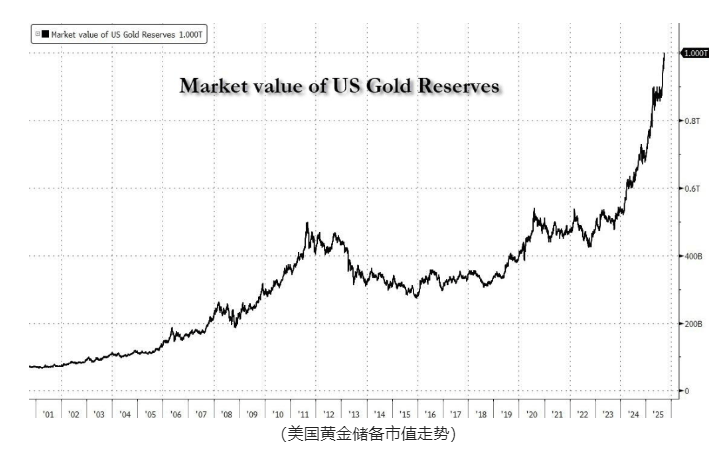
Core Insights - The value of gold held by the U.S. Treasury has reached $1 trillion for the first time, driven by a 45% increase in gold prices this year, raising the market value of 8,133 tons of gold bars to a historical high [2] - There is speculation that Treasury Secretary Yellen may consider revaluing this long-held asset, which could instantly add approximately $990 billion to the asset side of the Treasury's balance sheet without needing Congressional approval or public market operations [2] - This potential revaluation could be likened to quantitative easing, allowing the Treasury to use the funds for debt repayment, deficit filling, or establishing a sovereign wealth fund [2] Legal and Market Implications - The legal framework for revaluing gold is uncertain, as the Treasury has accounted for gold at a statutory price of $42.22 per ounce since 1973, and any change would require agreement between the Treasury Secretary and the Federal Reserve Board [3] - The current administration's willingness to consider such a revaluation is seen as a potential "black swan" event, with bullish investors betting on gold prices reaching $4,000 [3] - The act of revaluing gold could signal a depreciation of the dollar against gold, potentially leading to increased prices for gold, Bitcoin, and other re-monetized assets, while also raising long-term interest rates and inflation expectations [2][3]
美元与海:负债率将突破152%!美国印钞对中国有什么影响?
Sou Hu Cai Jing· 2025-09-30 16:46
Economic Overview - The economic situation in the US during the first half of the year is poor, with a significant decline in GDP expected for the second quarter, potentially down 7%-11% year-on-year and up to 40% on a seasonally adjusted annual rate [2][3] - The unemployment rate is severely underestimated, with official figures showing 14% in April, but actual estimates suggest it could be as high as 30% [3] Political Implications - The upcoming election influences the decision not to release negative economic forecasts, as such data could severely impact the incumbent's chances [4] - The administration's focus on "America First" and blame-shifting is a strategy to maintain support from its base, particularly among economically vulnerable groups [4] Federal Reserve Actions - The Federal Reserve has implemented four rounds of quantitative easing (QE) since 2008, with the most recent rounds aimed at stabilizing the economy and supporting government debt [5][6] - The current fiscal deficit is projected to reach $3.7 trillion, significantly higher than previous years, indicating a reliance on debt issuance to manage economic challenges [7][8] Debt and Monetary Policy - The US is expected to face a fiscal deficit exceeding $8 trillion this year, with a debt-to-GDP ratio projected to surpass 152%, the highest since World War II [8] - The Federal Reserve's bond purchasing has decreased to $50 billion daily, raising concerns about the impact of continued debt issuance without corresponding monetary support [8] Global Economic Impact - The US's monetary policy, particularly quantitative easing, may lead to asset bubbles and potential currency wars, affecting global economic stability [9][10] - The pandemic has accelerated a trend towards de-globalization, which could lead to increased competition and challenges for countries that were previously reliant on global supply chains [11]
美国靠美元当 “世界霸王”,印钱想让中国百姓买单?42国联手破局
Sou Hu Cai Jing· 2025-09-30 12:56
Core Viewpoint - The trend of de-dollarization is accelerating as emerging economies like China and Russia rise, with 42 countries working to reduce their dependence on the US dollar and promote their own digital currencies [1][19][27] Group 1: Historical Context of the Dollar's Dominance - The US dollar became the dominant global currency due to historical events, particularly during the two World Wars, which shifted the economic center to the US [3] - The Bretton Woods system established the dollar's link to gold, making it the sole reserve currency and embedding it in global trade and finance [5] - The dollar's detachment from gold in 1971 did not diminish its dominance, as the US established the petrodollar system through strategic agreements with Saudi Arabia [7][9] Group 2: Economic Policies and Global Impact - The US has leveraged its dollar dominance to attract global capital and implement quantitative easing, which stimulates its economy but can create asset bubbles in other countries [11][14] - The influx of "hot money" into emerging markets can lead to economic volatility when these funds withdraw, particularly during US economic recoveries [14][16] - Historical financial crises have shown how the US benefits from its dollar dominance while other nations suffer economic downturns [16][17] Group 3: The Shift Towards De-dollarization - Increasing awareness of the risks associated with dollar dependence has led many countries to pursue de-dollarization, exploring alternative currency systems and digital currencies [19][21][25] - Countries like Russia, Iran, and Brazil are accelerating the development of their digital currencies to reduce reliance on the dollar [21] - Efforts to establish non-dollar trade mechanisms, such as the trade settlement system between European countries and Iran, challenge US sanctions and promote alternative trade routes [21][23] Group 4: Future Implications - The move towards de-dollarization signifies a potential shift in global economic power and may lead to significant changes in the international financial system [25] - The increasing use of currencies other than the dollar in global trade, particularly in oil transactions, indicates a challenge to the dollar's status as the sole reserve currency [23][25] - The collaboration of 42 countries to develop digital currencies reflects a growing trend towards financial independence from the US dollar [27]