
价值重估

Search documents
“海南富豪”的千亿棋局:创维大分拆,再造一个“资本帝国”
Xin Lang Cai Jing· 2026-01-23 10:14
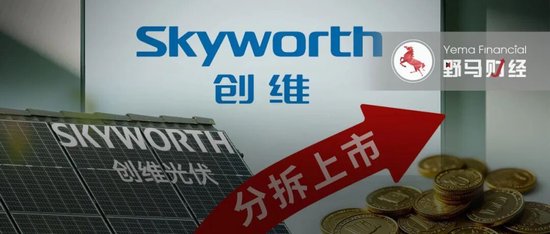
Core Viewpoint - The company is undergoing a significant transformation by initiating a share buyback, privatization, and the spin-off of its solar business, Skyworth Solar, for independent listing, aiming to highlight its independent value and attract new energy investments [1][22][23]. Group 1: Company Strategy and Financials - Skyworth Group announced plans for a share buyback and privatization while spinning off its solar business, Skyworth Solar, which is expected to enhance its independent valuation [4][6][27]. - Following the announcement, Skyworth Group's stock price surged over 43%, with a market capitalization exceeding HKD 100 billion [1][23]. - The company will distribute Skyworth Solar shares to shareholders, with an estimated value of approximately HKD 6.13 per share of Skyworth Group [4][27]. - The total value of cash and solar shares per Skyworth Group share is projected to be around HKD 10.16, representing a premium of about 96.15% compared to its last trading price before suspension [6][34]. Group 2: Business Performance and Market Position - Skyworth Solar, established in 2020, has rapidly expanded its market presence, contributing significantly to the group's revenue, with solar business revenue reaching CNY 138.36 billion, accounting for 38.2% of the total revenue [9][11][32]. - The solar business has shown strong growth, with a revenue increase of 53.5% year-on-year, making it a key driver of profit for the group [11][32]. - As of mid-2025, Skyworth Solar has constructed over 800,000 power stations, generating over 410 billion kWh of electricity [9][30]. Group 3: Future Outlook and Expansion Plans - The founder of Skyworth Group, Huang Hongsheng, indicated that the solar business is expected to surpass traditional television revenue for the first time in 2025, with plans to expand into the energy storage sector [14][35]. - The company is focusing on international markets, particularly in regions with high electricity prices and weak infrastructure, such as Europe, the Middle East, and South America [14][35]. - Skyworth Group aims to achieve a revenue target of CNY 100 billion by 2024, with a strong emphasis on global expansion and partnerships with international brands [41][42].

拐点已至!板块迅速起飞
Sou Hu Cai Jing· 2026-01-22 10:51
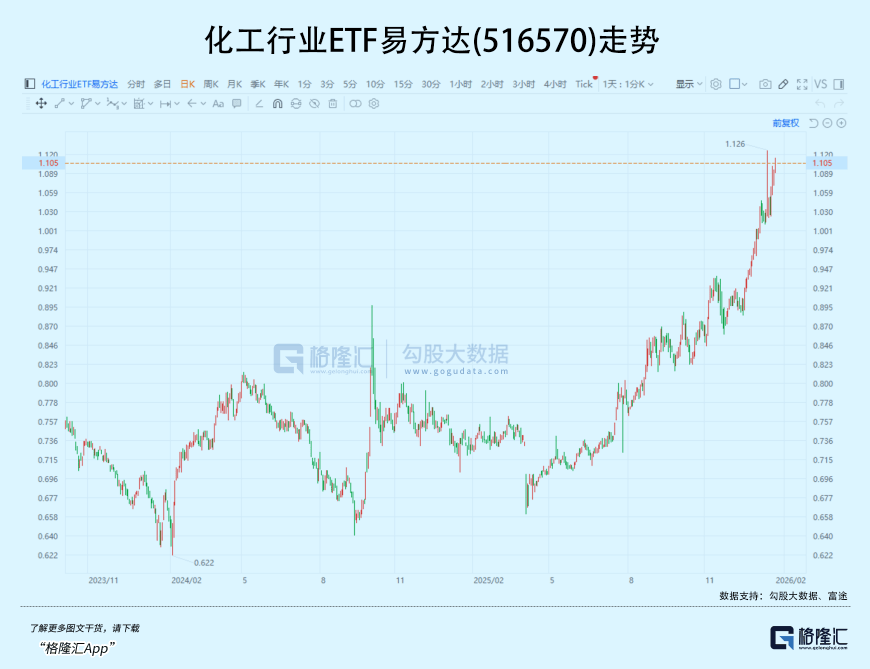
Group 1 - The A-share market experienced a collective rise, with the Shanghai Composite Index increasing by 0.14%, the Shenzhen Component Index by 0.5%, and the ChiNext Index by 1.01% [1] - The oil and petrochemical sector saw a rapid increase, with significant gains from the "three major oil companies," which boosted the chemical industry ETF E Fund (516570) by 1.92% [1] - Brent crude oil prices rose to $64.92 per barrel, up 5.85% from the beginning of the month [3] Group 2 - The chemical sector's strength is not solely attributed to oil price fluctuations; 2024 may be an optimal time for investors to position themselves in this sector [4] - The E Fund chemical industry ETF has surged over 24% in the last 25 trading days, reaching a new high since 2022, with net inflows exceeding 127 million yuan in the past 20 trading days [5] - The chemical industry has undergone a prolonged capacity digestion period over the past three years, with a significant supply pressure expected to ease by 2025 [8] Group 3 - The inventory cycle is shifting from "passive destocking" to "active restocking," with inventory levels in most segments at historical lows since Q3 2025 [11] - The central government's policy changes aim to prevent "involution-style" competition, establishing new operational principles for the industry [14] - The chemical industry is transitioning from a focus on market share to return-oriented strategies, which is expected to elevate the industry's profit margins [14] Group 4 - The phosphate and fluorine chemical sectors are experiencing a revaluation from "cyclical" to "resource" products, driven by the scarcity of phosphate rock and increasing demand from the lithium iron phosphate battery market [15][17] - The fluorochemical sector is witnessing a shift due to the implementation of third-generation refrigerant quotas, leading to a recovery from previous losses [19] Group 5 - The chemical sector is poised for valuation recovery, with the chemical industry ETF E Fund (516570) currently showing a price-to-earnings ratio of 16.09 and a dividend yield of 2.81% [20] - The overall net profit of the petrochemical industry index is expected to grow by 8.78% in 2026, indicating a stabilization in profitability [22] - The E Fund ETF offers a cost-effective investment option with a low fee structure of 0.2% per year, making it attractive for long-term investors [27] Group 6 - The chemical industry is entering a significant turning point, supported by macroeconomic recovery, stable oil prices, and supply-side reforms [27] - Each segment within the chemical industry is experiencing its unique narrative of "supply-demand rebalancing" and "value re-evaluation," indicating a promising outlook for the sector [27]
拐点已至,板块迅速起飞
Ge Long Hui· 2026-01-22 09:44
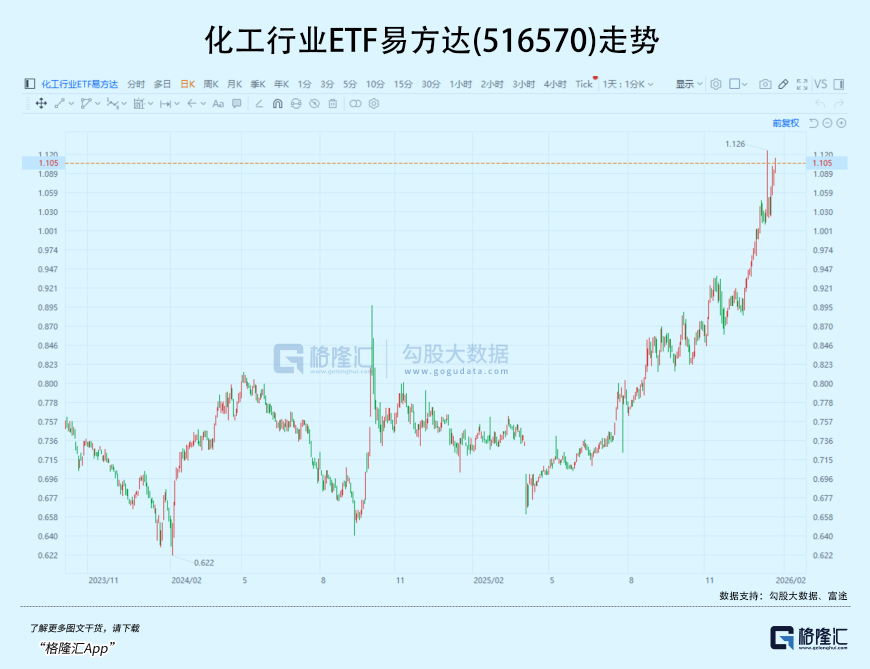
Core Viewpoint - The chemical sector is experiencing a significant turnaround driven by supply-side reforms, demand recovery, and the emergence of new productive forces, indicating a favorable investment environment for 2026 [31]. Group 1: Market Performance - The A-share market saw collective gains, with the Shanghai Composite Index rising by 0.14%, the Shenzhen Component Index by 0.5%, and the ChiNext Index by 1.01% [1]. - The oil and petrochemical sector experienced a rapid increase, with the "three major oil companies" showing significant gains, which in turn boosted the chemical industry ETF E Fund (516570) by 1.92% [1]. Group 2: Oil Price and Demand Forecast - As of January 22, the Brent crude oil benchmark price was $64.92 per barrel, up 5.85% from the beginning of the month [3]. - The International Energy Agency's report predicts that global oil demand will grow by an average of 930,000 barrels per day by 2026, exceeding previous forecasts [3]. Group 3: Chemical Sector Dynamics - The chemical sector has seen a net inflow of funds, with the E Fund ETF rising over 24% in the last 25 trading days, reaching a new high since 2022 [5]. - The industry has transitioned from a prolonged capacity digestion phase, with capital expenditure peaks established, signaling the end of a multi-year expansion cycle [8]. Group 4: Inventory and Consumption Trends - The inventory cycle is shifting from "passive destocking" to "active restocking," with inventory levels in many segments at historical lows due to recovering downstream consumption [11]. - Any minor demand fluctuations could lead to significant price volatility as the industry moves away from high inventory pressures [11]. Group 5: Policy Influence - The central government's policy shift aims to prevent "involutionary" competition, establishing new operational principles for the industry [14]. - The introduction of the "Petrochemical Industry Stabilization Growth Work Plan (2025-2026)" emphasizes strict control over new capacity and scientific regulation to prevent oversupply [14]. Group 6: Investment Opportunities - The chemical sector's valuation recovery is supported by a combination of low valuations and an anticipated earnings rebound, with the chemical industry ETF currently having a PE ratio of 16.09 and a dividend yield of 2.81% [22]. - The overall net profit of the petrochemical industry index is expected to grow by 8.78% in 2026, indicating a stabilization in profitability [24]. Group 7: ETF Advantages - The E Fund chemical industry ETF (516570) offers a cost-effective investment option with a low fee structure of 0.2% per year, significantly lower than similar products [29]. - The ETF's portfolio includes high-growth material leaders and traditional refining giants, providing a balanced strategy to capture both beta and alpha returns [27].
化工龙头ETF(516220)连续5日资金净流入超1.5亿元,传统化工企业价值迎重估
Mei Ri Jing Ji Xin Wen· 2026-01-22 04:29
Group 1 - The basic chemical industry is undergoing profound changes characterized by "supply-demand reversal, value reassessment, and industrial restructuring" [1] - By 2025, a turning point in policy and capital expenditure is anticipated, with the concept of "anti-involution" providing expectations for future industry profit improvement and long-term healthy development [1] - The restructuring of supply-demand patterns and the upgrading of industrial attributes are driving the value reassessment of traditional chemical enterprises [1] Group 2 - The chemical industry is entering a strategic window period, with high-cost marginal production capacity exiting overseas, leading to a restructuring of the global chemical order [1] - Recent market performance indicates a rise in the organic silicon market, with increased enthusiasm for downstream stocking, and some companies extending order production schedules to February [1] - The epoxy propane market is also performing strongly due to supply tightness, cost support, and demand during the policy window period [1] Group 3 - The chemical leader ETF (516220) tracks a specific chemical index (000813), which selects listed company securities from the fine chemicals and new materials sectors to reflect the overall performance of related listed companies [1]
A股银行年度盘点:2025告别普涨,2026拥抱分化
3 6 Ke· 2026-01-21 00:59
Core Insights - In 2025, A-share listed banks in China experienced a significant shift in development logic, moving from scale competition to value creation, focusing on core business and providing precise financial services to support high-quality economic development [1][2] Group 1: Market Performance - The A-share banking sector showed notable structural differentiation in 2025, with the Shanghai Composite Index and Shenzhen Component Index rising by 18.41% and 29.87% respectively, while the banking sector index increased by 12.04% [1] - By the end of 2025, the total market capitalization of A-share banks reached 14.65 trillion yuan, with 35 out of 42 listed banks seeing their stock prices rise, and 19 banks experiencing gains exceeding 10% [1] - In contrast to the broad market rally in 2024, where the banking sector index rose by 43.56%, 2025 marked a transition to a more selective investment environment [1] Group 2: Performance of Major Banks - Agricultural Bank of China led the sector with a stock price increase of 52.66% in 2025, while other major banks like Industrial Bank, China Construction Bank, and Bank of China saw increases of 21.54%, 12.87%, and 10.75% respectively [4] - The total market capitalization of the four major state-owned banks remains dominant, with Industrial Bank at 2.63 trillion yuan and Agricultural Bank at 2.61 trillion yuan [4] - The performance of other major banks was hindered by large capital increases, as several banks announced plans to raise a total of 520 billion yuan through stock issuance [4][5] Group 3: Performance of Joint-Stock Banks - Joint-stock banks exhibited further performance differentiation in 2025, with Shanghai Pudong Development Bank leading with a 24.56% increase, while banks like Huaxia Bank, Everbright Bank, and Minsheng Bank saw declines of 9.82%, 5.59%, and 3.09% respectively [6][7] - The decline in stock prices for these banks can be attributed to poor operating performance, with Huaxia Bank and Everbright Bank reporting revenue and profit declines [8] - Regulatory penalties also impacted these banks, with Huaxia Bank facing over 120 million yuan in fines, indicating ongoing compliance pressures [10][12] Group 4: Regional and Cooperative Banks - City and rural commercial banks showed mixed performance, with Xiamen Bank rising by 35.78%, while others like Zhengzhou Bank and Beijing Bank experienced declines [11] - Regulatory penalties for city commercial banks were significant, with Shanghai Bank and Beijing Bank facing fines exceeding 3.8 million yuan and 3.6 million yuan respectively [12] Group 5: Investment Outlook for 2026 - The investment logic for bank stocks is expected to evolve towards value reassessment, with a focus on performance growth and compliance levels becoming critical for individual stock performance [19] - The banking sector is anticipated to transition from a "growth weak cycle" to a "reform deep water zone," suggesting a dual strategy of holding stable, high-dividend large banks while selectively investing in high-potential regional banks [18][19] - The average price-to-book ratio for the banking sector was approximately 0.73, indicating a structural recovery, with Agricultural Bank exceeding 1.0, while others remained below this threshold [13]






银行股破净71%,铁路股跌掉31%,房地产龙头亏掉87%!抄底者遭遇腰斩
Sou Hu Cai Jing· 2026-01-19 09:49
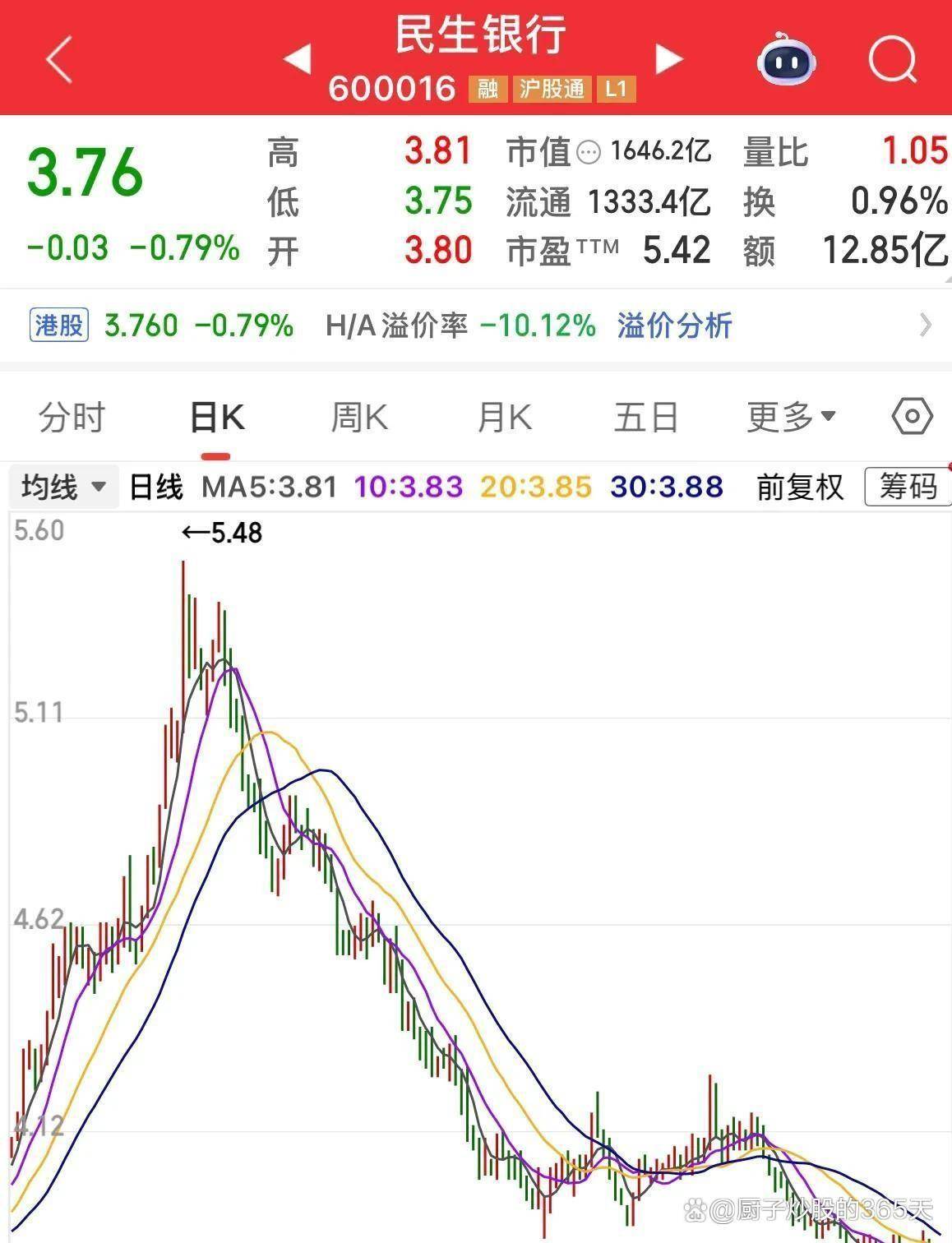
Core Viewpoint - The article discusses the significant decline in stock prices of several companies, highlighting the disconnect between attractive valuation metrics and actual market performance, leading to investor confusion and losses. Group 1: Company Performance - Daqin Railway's stock price has fallen from 7.17 yuan in July 2025 to below 5 yuan by January 2026, with a total decline of 31% over the past six months [5][12] - Minsheng Bank's stock price has dropped to 3.76 yuan, representing a 32% loss for investors who bought in the last six months, with a price-to-earnings ratio of 5.42 and a net asset value of 12.83 yuan [7][10] - Vanke A's stock has plummeted from a peak of 36 yuan to 4.7 yuan, with an 87% cumulative decline and a 52% drop in the past year [12][14] - Yongtai Energy's stock price has remained below 2 yuan, with a recent brief increase due to a buyback announcement, but quickly returned to 1.62 yuan [17][19] Group 2: Market Dynamics - The decline in these stocks is attributed to fundamental changes in their respective industries, such as the decline of coal transportation for Daqin Railway and the real estate downturn affecting Minsheng Bank [19][20] - The presence of a large number of retail investors with dispersed holdings has led to a lack of coordinated buying power, exacerbating the downward pressure on stock prices [21][22] - Investors are falling into psychological traps, misjudging the value based on past prices and static valuation metrics, leading to repeated miscalculations of the bottom [23][25] Group 3: Valuation and Future Outlook - The article emphasizes that traditional valuation metrics like price-to-earnings ratios can be misleading if future earnings are expected to decline significantly, potentially leading to a situation where a seemingly low valuation becomes high [24][25] - The market is undergoing a severe revaluation process, focusing on current realities and future expectations rather than past performance, which is causing significant pain for previously well-regarded stocks [26]



2026,预见|周期篇——价值重估:紧扣“反内卷”下的中国制造龙头
Xin Lang Cai Jing· 2026-01-16 04:05
Core Viewpoint - The year 2026 marks the beginning of a new phase for China's manufacturing sector, driven by a shift from demand-driven growth to supply-side optimization, necessitating a reevaluation of company valuations and investment strategies [2][18]. Group 1: Non-Ferrous Metals - Investment in non-ferrous metals is traditionally tied to macroeconomic variables like the Federal Reserve's interest rates, but different metals are now operating on their own "industrial clocks," presenting differentiated alpha opportunities [3][13]. - Aluminum is viewed as an energy-intensive asset with a supply constraint due to global energy structure changes and domestic production limits, while demand from green sectors like electric vehicles and photovoltaics supports long-term growth [3][13]. - Copper's long-term demand story is well-known, but current supply vulnerabilities due to declining ore grades and insufficient capital expenditure may tighten the supply-demand balance, making investments in leading companies with quality resources and cost advantages attractive [3][13]. Group 2: Chemical Industry - The chemical industry reflects a clear picture of China's supply-side reform, with policies aimed at eliminating outdated capacity to shift the focus from quantity to quality [5][15]. - The core investment dilemma has shifted from "where is the demand" to "who will clear the supply," with two main investment lines emerging for 2026: focusing on companies with cost advantages and investing in sectors where high-cost capacities are exiting the market [6][16]. - The "survivor takes all" approach is catalyzed by the "anti-involution" trend, leading to significant increases in industry concentration across various segments, such as spandex and polyester [7][16]. Group 3: Methodology - Capturing investment opportunities requires a matching investment framework, focusing on the essence of "upward revisions of corporate profit expectations" through three paths: investing in clear industry structures, reverse positioning at price bottoms, and identifying advanced capacities that will lead to profit leaps [8][17]. - The methodology emphasizes transforming deep industry knowledge into pricing power that exceeds market consensus, requiring fund managers to act as both researchers and industry observers [8][17]. Group 4: Conclusion - The year 2026 may signify a new era for China's cyclical manufacturing, with a shift in driving forces from demand to supply optimization, necessitating a reconstruction of valuation systems for related listed companies [18]. - Investors are encouraged to explore companies transitioning from "cyclical stocks" to "cyclical growth stocks" and "pattern dividend stocks," focusing on proactive value discovery rather than reactive responses to cyclical fluctuations [18].
国泰海通|策略:新兴产业空间广阔,看多中国产业龙头
国泰海通证券研究· 2026-01-07 15:07
Core Viewpoint - The Chinese emerging technology industry is in its early lifecycle stage, with high valuations, while companies with significant innovation advantages are expected to see market value growth. The manufacturing and consumption industries are more mature, and companies with solid global competitiveness are likely to see valuation increases [1]. Emerging Technology - The Chinese emerging technology sector, including semiconductors, innovative pharmaceuticals, and communication equipment, is still in its growth phase, with revenue and profitability lagging behind international leaders. However, the capital market has assigned high valuations, reflecting optimistic expectations for technological independence and industry catch-up. Companies with technological barriers and significant domestic substitution potential are expected to benefit more [2]. - Internet platform companies are projected to benefit from the rapid iteration of large models and AI applications, leading to valuation recovery and growth resonance [2]. Advanced Manufacturing - The domestic advanced manufacturing industry has developed relatively maturely, establishing solid global competitiveness due to a complete industrial system and significant efficiency cost advantages. In the new energy sector, lithium battery companies lead globally in scale and profitability, with head companies generally having lower valuations than overseas leaders, indicating a strong cost-performance advantage [2]. - Wind power profitability is weaker than that of overseas counterparts, but valuations are also low. High-end equipment and new materials industries have profitability comparable to overseas leaders, with valuations at reasonable levels, but there is substantial room for global expansion [2]. Consumer Sector - In the consumer sector, leading Chinese companies in product consumption, such as high-end liquor and beverages, have demonstrated strong profitability, but their growth heavily relies on the domestic market, resulting in lower global competitiveness compared to international leaders. The service consumption sector is still in its early development stage, with lower scale and profitability compared to overseas leaders [3]. - The consumer sector overall has a high cost-performance ratio, with potential growth opportunities in service consumption driven by structural transformation and in unique product consumption brands with global potential [3]. Investment Recommendations - Recommendations include leading companies in electric new energy, transportation equipment, communication equipment, electronics, and service consumption industries. Companies with significant innovation advantages and strong overseas expansion momentum are expected to accelerate their catch-up with international leaders or maintain their leading positions. The following sectors are highlighted for investment: 1. Advanced manufacturing leaders benefiting from strong profitability and global competitive advantages [3] 2. Emerging technology leaders benefiting from rapid improvements in Chinese innovation capabilities [3] 3. Service consumption and mass goods industries poised for growth due to structural transformation [3].

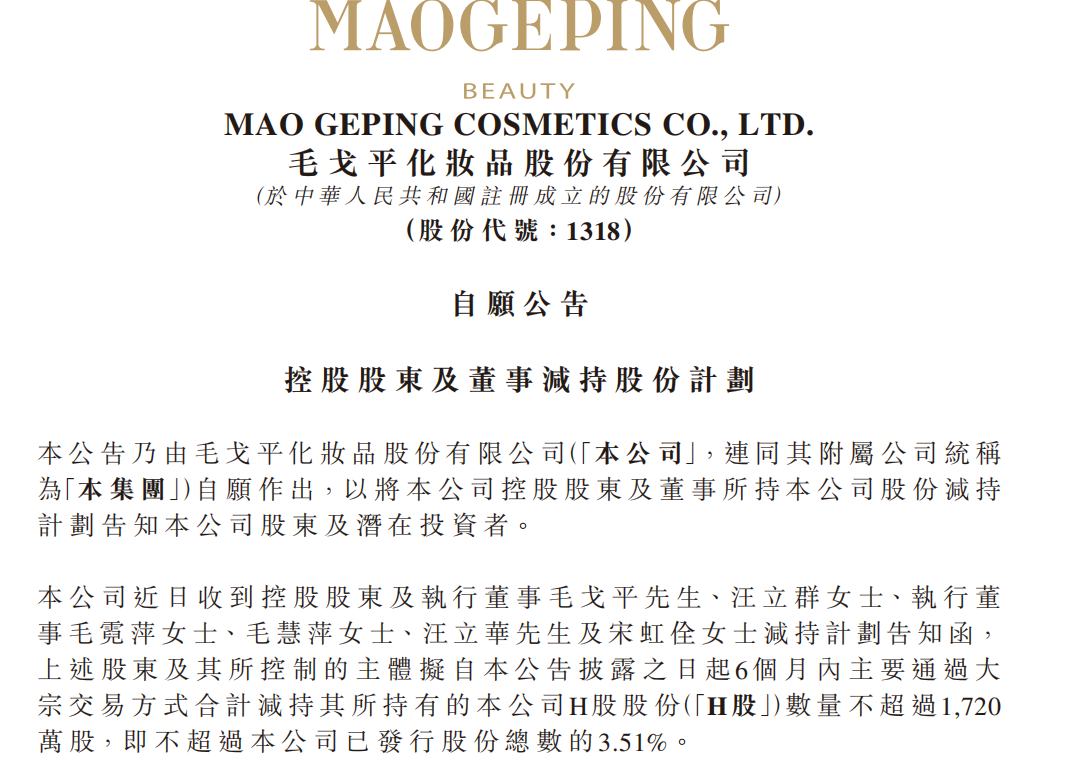
毛戈平控股股东结构性减持解析:有序资本运作下的价值重估与治理进阶
Zhi Tong Cai Jing· 2026-01-07 08:38
Core Viewpoint - The announcement of a planned reduction of up to 3.51% of H-shares by major shareholders of Mao Geping reflects a structured and controlled approach to liquidity management, emphasizing the importance of market stability [1] Group 1: Shareholder Actions - The reduction plan involves six related shareholders, including the actual controller Mao Geping, and is designed to minimize market disruption through a gradual and channelized approach [1] - The structured nature of the reduction, primarily through block trades, indicates a strategic shift in shareholding aimed at enhancing liquidity and attracting long-term capital [4][8] Group 2: Financial Planning and Governance - The orderly and gradual nature of the share reduction serves as a confidence statement, suggesting that the management believes in the company's strong cash flow and does not foresee immediate needs for significant equity financing [5][6] - The transparency of the information disclosure regarding the reduction sets a governance benchmark, reducing market uncertainty and enhancing trust [7] Group 3: Market Dynamics and Valuation - The reduction is seen as a proactive measure to optimize the shareholder structure and improve liquidity, which may lead to a more stable valuation in the capital market [8] - The actions of the founding shareholders are interpreted as a signal of the company's transition from a growth premium to a governance premium, indicating a deeper valuation logic in the market [12][13] Group 4: Business Fundamentals - Mao Geping has successfully established a differentiated competitive model, achieving a gross margin of 84.2% in mid-2025, driven by a strong product mix and effective cost management [10][11] - The company has diversified its product matrix, balancing its core makeup business with high-growth skincare and emerging fragrance categories, which supports sustainable growth [10][11] Group 5: Future Outlook - The capital market's evaluation of beauty companies is shifting towards a multi-dimensional approach, focusing not only on short-term performance but also on brand asset accumulation and product innovation sustainability [12][13] - The recent share reduction provides an opportunity for rational investors to reassess the company's value anchor, as it aligns with the evolving market dynamics favoring companies that enhance capital allocation efficiency and deepen brand moats [13]
OEXN:金价高位波动 矿业股价值重估
Xin Lang Cai Jing· 2026-01-06 10:06
Core Viewpoint - The recent surge in gold prices has broken historical records and has led to a deep debate in the capital markets regarding the investment value of physical gold and gold mining stocks [1][2] Group 1: Market Dynamics - Gold prices are supported above $4,400 per ounce, with a favorable macro environment for gold assets [3][4] - The global trend of declining interest rates and structural demand from central banks is rapidly expanding profit margins for producers [3][4] - Despite concerns about speculative overheating, the profitability of the mining sector has reached a peak not seen in years [4] Group 2: Investment Strategies - The allocation of increased cash flow by miners will be crucial in determining whether their stock prices can outperform physical gold [4] - There is a significant "price gap" in the mining sector, with leading companies like Newmont expected to see substantial earnings per share increases, yet current stock valuations have not fully reflected existing gold price levels [4] - Investors' past perceptions of miners' lax capital discipline contribute to this disconnect, but with debt levels at historical lows, balance sheet improvements lay a solid foundation for future shareholder returns [4] Group 3: Shifts in Capital Allocation - To rebuild investor confidence, mining companies should shift from stock buybacks to a higher proportion of dividend distributions [2][5] - High cash dividends are more appealing in a low cash yield and persistent inflation environment, with gold stocks offering a dividend yield of 3% to 5% that resembles fixed-income assets [2][5] - The mining sector is moving away from aggressive expansion, with management now prioritizing financial health over high-risk large projects [5] Group 4: Future Outlook - The mining sector is transitioning from a "cash is king" mentality to a "returns are king" approach, with the potential for comprehensive valuation recovery if producers can demonstrate the authenticity of their earnings through dividend policies [5]
