供应链管理

Search documents
长华化学:2025年度公司产品综合毛利率实现同比较大增长
Ge Long Hui· 2026-01-27 01:17
格隆汇1月27日丨长华化学(301518.SZ)近日接受特定对象调研时表示,2025年度公司产品综合毛利率实 现同比较大增长,一方面是公司POP、PPG等产品通过供应链管理水平提升、持续降本增效及工艺技术 优化等因素推动毛利率回升;另一方面是公司通过技术创新优化产品结构与客户结构,持续推动实施差 异化竞争策略。围绕客户需求,高性能Hiclaim®系列、抗菌防螨功能化系列聚醚等绿色新产品逐步投放 市场,特种聚醚等高附加值产品销售占比提高;叠加客户结构持续优化、加大与战略客户的深度合作及 市场拓展,共同驱动公司整体毛利率水平实现较好提升,在经营业绩上取得了较好增长。 ...
长华化学(301518.SZ):2025年度公司产品综合毛利率实现同比较大增长
Ge Long Hui· 2026-01-27 01:11
格隆汇1月27日丨长华化学(301518.SZ)近日接受特定对象调研时表示,2025年度公司产品综合毛利率实 现同比较大增长,一方面是公司POP、PPG等产品通过供应链管理水平提升、持续降本增效及工艺技术 优化等因素推动毛利率回升;另一方面是公司通过技术创新优化产品结构与客户结构,持续推动实施差 异化竞争策略。围绕客户需求,高性能Hiclaim®系列、抗菌防螨功能化系列聚醚等绿色新产品逐步投放 市场,特种聚醚等高附加值产品销售占比提高;叠加客户结构持续优化、加大与战略客户的深度合作及 市场拓展,共同驱动公司整体毛利率水平实现较好提升,在经营业绩上取得了较好增长。 ...
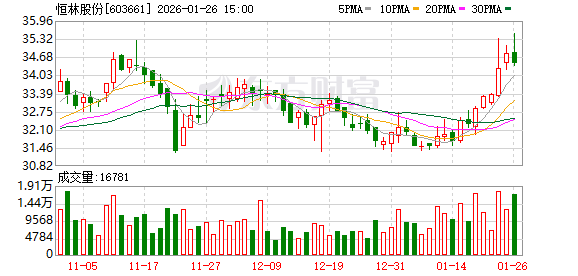
恒林股份:公司构建“越南生产——美国仓直发”供应链模式
Zheng Quan Ri Bao· 2026-01-26 13:16
证券日报网讯 1月26日,恒林股份在互动平台回答投资者提问时表示,公司通过布局海外仓,有效覆盖 主要销售区域,通过仓配一体化服务更好满足客户需求,搭建全球供应链管理体系,为出口增长注入新 动能,助推品牌出海。越南生产基地与海外仓协同运作,构建了"越南生产——美国仓直发"的供应链模 式,有效优化关税成本,增强供应链韧性。 (文章来源:证券日报) ...


2026年供应链清单:如何应对关税、人工智能和地缘政治不确定性
coenterprise· 2026-01-26 08:10
Investment Rating - The report does not explicitly provide an investment rating for the industry Core Insights - The supply chain is under relentless pressure due to tariffs, global conflicts, regulatory turmoil, and climate-related disruptions, leading to unpredictable demand and increased operational risks [4] - Organizations must anticipate shocks and integrate redundancy mechanisms to enhance resilience and agility, leveraging modern software powered by AI and machine learning [5] - A diversified supplier base is essential to mitigate risks associated with trade and supply disruptions, with 77% of supply chain leaders identifying trade uncertainty as a primary business concern [10][12] - The report emphasizes the importance of inventory agility and the need for robust inventory management to minimize disruptions and costly delays [27] Summary by Sections Supply Chain Challenges - Supply chains are facing ongoing volatility with significant impacts from tariffs and geopolitical tensions, leading to increased material costs and operational risks [4][9] - The initial impacts of tariffs are already reflected in raw material costs and consumer spending habits, with over half of consumers altering their spending on non-essential items due to tariffs [17] Strategies for Resilience - Organizations should diversify their supplier base to avoid over-reliance on a single region and consider nearshore partnerships to reduce risks and delivery times [12] - Developing alternative transportation methods and monitoring hotspots in supply regions are crucial for ensuring timely product delivery [13][14] Inventory Management - Maintaining buffer inventory can help absorb short-term fluctuations and stabilize pricing and profitability [28] - Implementing product-specific inventory strategies is necessary as different products face varying levels of risk exposure [29] Technology Integration - The integration of AI and machine learning is critical for smarter forecasting and operational efficiency, with over 80% of enterprises expected to utilize generative AI by 2026 [33] - AI can help optimize inventory levels and improve decision-making through real-time insights and alerts [34][37] Cybersecurity and Data Resilience - Cybersecurity threats are on the rise, with 72% of respondents reporting increased risks, necessitating robust security measures and backup systems [40][44] - Organizations should invest in top-tier security tools and regularly audit third-party vendors for compliance [42][43] Labor Efficiency - Enhancing labor efficiency through automation and comprehensive training is essential in the face of labor shortages and rising wages [47][48] - Organizations should prioritize cross-functional training to maximize the value of technology investments [49] Regulatory Compliance - Despite a trend towards reduced regulation, organizations must continue to prioritize compliance with existing regulations and ESG standards [50][51] - Mapping regulatory risks across the supply chain can help proactively address potential issues and strengthen partnerships [52] Financial Risk Management - Auditing financial risk exposure is crucial to identify areas contributing to increased costs and to renegotiate supplier contracts accordingly [55][56] - Organizations should consider hidden costs in pricing strategies to mitigate profit losses [59] Visibility and Software Upgrades - Enhancing end-to-end visibility is vital for addressing inefficiencies and delays, with modern software enabling real-time data integration [63] - Upgrading software platforms to share data across teams can minimize errors and improve decision-making [64]
神火集团等在海南成立供应链管理公司
Zheng Quan Shi Bao Wang· 2026-01-26 03:24
人民财讯1月26日电,企查查APP显示,近日,海南神火奥德供应链管理有限公司成立,法定代表人为 刘超,注册资本为1亿元,经营范围包含保税仓库经营;海关监管货物仓储服务;供应链管理服务;以 自有资金从事投资活动;企业总部管理等。企查查股权穿透显示,该公司由河南神火集团有限公司、山 东奥德鑫铝投资有限公司共同持股。 ...

古茗20260123
2026-01-26 02:49
Summary of Gu Ming's Conference Call Company Overview - Gu Ming operates a shelf-type platform with approximately 45 SKUs, covering fruit tea, milk tea, and coffee, with fruit tea and milk tea accounting for 88% of sales [2][4] - The company maintains a competitive edge through a complete supply chain system, including procurement, production, warehousing, and logistics, effectively controlling fresh fruit loss to under 10% [2][5] Key Points Industry and Market Position - Gu Ming's product strategy focuses on high cost-performance, with an average new product launch every 3.5 to 4.5 days, significantly ahead of competitors [2][4] - The company has expanded to 19 provinces with 14,000 stores, employing a "slow is fast" strategy for store layout, which supports cold chain costs and frequent new product launches [2][5] Growth Strategy - Gu Ming aims to increase its store count to 21,418 in the next 2-3 years, with long-term goals of reaching over 44,000 stores [3][8] - The company plans to optimize product structure and improve single-store GMV to enhance overall performance [2][6] Financial Projections - Revenue forecasts for 2025-2027 are projected at 12.9 billion, 16.41 billion, and 20 billion, with year-on-year growth rates of 47%, 27%, and 22% respectively [12] - Adjusted net profit estimates for the same period are approximately 2.27 billion, 2.96 billion, and 3.65 billion, with growth rates of 53.4%, 30.4%, and 23% [12] Competitive Advantages - Gu Ming's competitive advantages lie in product strategy, supply chain management, and store layout [4][5] - The company has established direct sourcing and strategic partnerships, including a lemon plantation in Yunnan and fresh milk partnerships, enhancing supply chain stability [5] Coffee Business Expansion - Gu Ming is actively expanding its coffee business, particularly in first-tier and new first-tier cities, with projected coffee revenues of 1.13 billion, 2.08 billion, and 3.18 billion from 2025 to 2027 [10] - The coffee segment is expected to contribute 8.8%, 12.7%, and 16% to total revenue in the same years [10] Future Plans - The company plans to enter major cities like Beijing and Shanghai and aims to become a fresh goods convenience supermarket, focusing on fresh products and cost performance [11] - International expansion is also considered a future growth direction [11] Additional Insights - Gu Ming's SKU strategy includes a diverse range of products to cater to different consumer segments and times of day, enhancing operational efficiency [9] - The company has a significant market share in various provinces, with a notable 11.8% in Zhejiang [5]
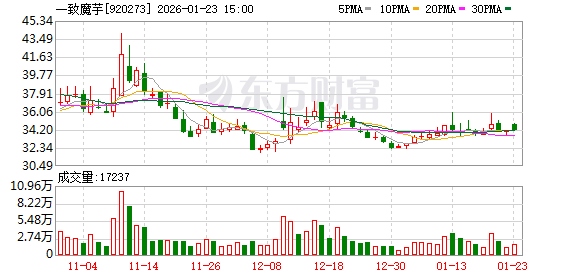
一致魔芋:公司在全国各产区建立了稳固的供应链
Zheng Quan Ri Bao· 2026-01-23 12:16
Core Viewpoint - The company has established a robust supply chain through equipment leasing, technical support, and order locking with reputable cooperatives and processing plants across various production areas [2]. Supply Chain Management - The company collaborates with cooperatives and initial processing plants that have a good reputation in the production areas to ensure a stable supply chain [2]. - The company supplements its raw material supply by importing konjac raw materials from Indonesia and other Southeast Asian countries, which enhances the stability and risk resistance of its raw material supply [2].
内存领衔、涨价潮压顶 汽车行业供应链迎成本与自主升级大考
Zhong Guo Zheng Quan Bao· 2026-01-22 23:22
Core Insights - The automotive industry is facing significant cost pressures due to a shortage of memory chips and rising prices of raw materials, which are impacting supply chain dynamics and competition rules [1][2][3] Group 1: Cost Pressures - The shortage of memory chips has escalated into a systemic issue affecting the entire automotive supply chain, with prices for automotive-grade DDR4 and DDR5 memory increasing by over 150% and 300% respectively since the second half of 2025 [2] - Global storage prices are expected to rise by an additional 40% to 50% in the first quarter of 2026, with a supply gap for general DRAM projected to remain between 15% and 20% [2] - The automotive sector is at a disadvantage in the competition for memory resources, as leading manufacturers prioritize supply to AI and cloud computing sectors, which offer higher profit margins [3] Group 2: Raw Material Price Increases - Prices for essential metals like copper and silver, which are critical for automotive electrical systems and batteries, have also seen significant increases since the second half of 2025 [3] - The competition for these raw materials between the automotive and AI industries has intensified, although current price increases have not yet fully reached end consumer prices [3] Group 3: Supply Chain Strategies - Automotive companies are implementing various strategies to mitigate cost pressures, including technological innovations and supply chain partnerships [5] - Companies like CATL are leveraging scale and technology to manage battery costs, while others are optimizing memory usage through software upgrades [5] - Long-term supply agreements and price locking strategies are being adopted by companies like Changan and Leap Motor to counteract rising costs of critical components [6] Group 4: Industry Dynamics and Competition - The memory crisis is leading to a differentiation in the automotive industry, with larger companies better able to absorb costs compared to smaller firms [7] - The ability to manage supply chains effectively is becoming a critical factor for competitiveness, with larger firms benefiting from established supply chain systems [7] - The crisis may result in a slowdown in the adoption of advanced driving technologies as companies may cut back on non-core storage configurations [7] Group 5: Future Outlook - The automotive industry is encouraged to shift from reactive measures to building autonomous systems, including securing long-term supply agreements and accelerating the validation of domestic storage chips [8] - The ongoing price increases and the transition to electric and intelligent vehicles are expected to concentrate resources among companies with core capabilities, leading to a shift in competition from hardware to integrated software and hardware solutions [8]





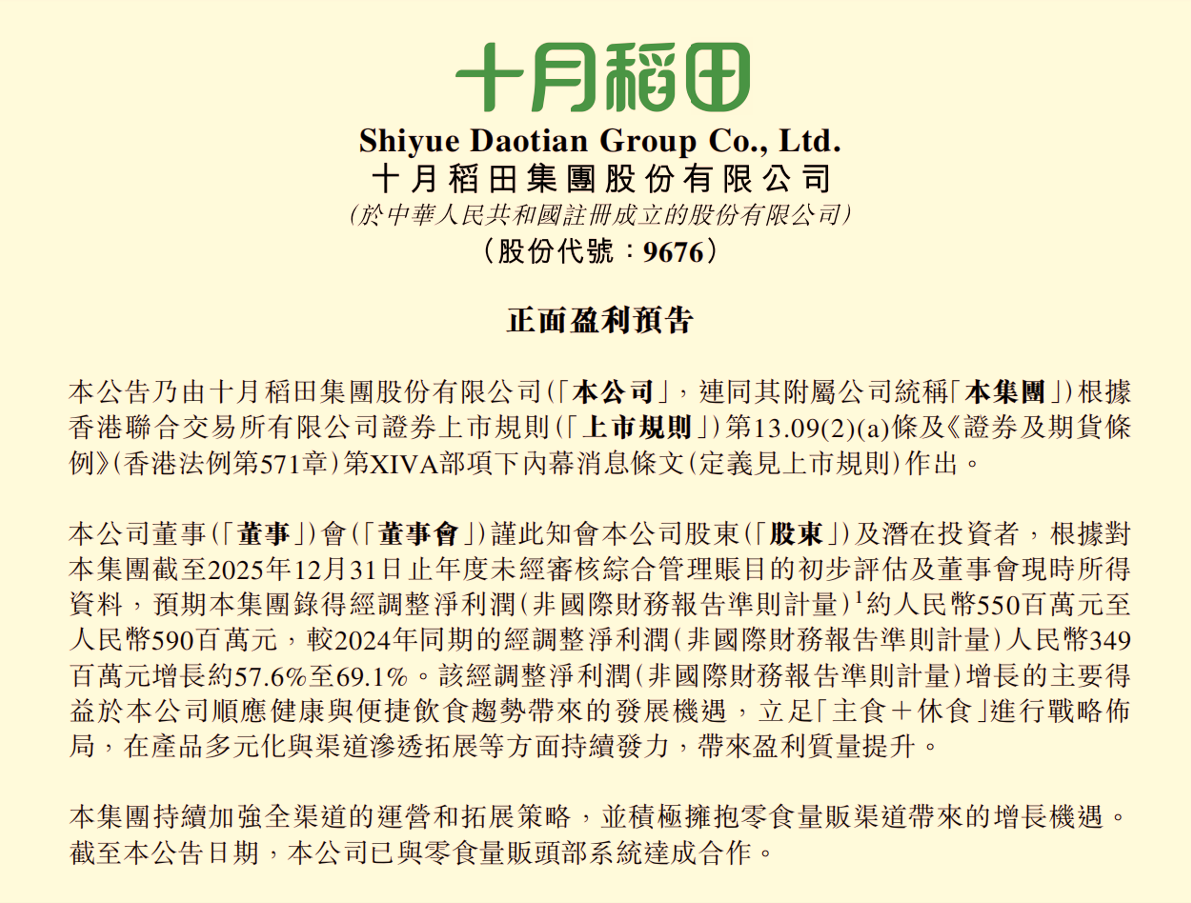
十月稻田“主食+休食”战略见成效,2025年经调整净利润同比增长约57.6%至69.1%
Zhong Guo Zhi Liang Xin Wen Wang· 2026-01-22 04:44
Core Insights - The company, October Rice Field, anticipates a significant increase in adjusted net profit for 2025, projected between RMB 550 million to RMB 590 million, representing a growth of approximately 57.6% to 69.1% compared to 2024, indicating strong growth momentum [1] Group 1: Strategic Positioning and Business Development - In 2025, the company upgraded its strategic positioning from a "kitchen food enterprise" to an "innovator in the family food industry," focusing on modern family health and convenience through a "staple + leisure food" product matrix [3] - The core rice business has seen steady revenue growth and improved profit quality through continuous optimization of product structure and an increased sales proportion of high-end products [3] - The company has successfully developed a second growth curve represented by corn products, expanding traditional staples into popular leisure foods, enhancing its resilience and laying a solid foundation for sustainable development [3] Group 2: Channel Strategy and Supply Chain Management - The company has established a robust competitive advantage through efficient omni-channel operations and solid supply chain management, integrating online and offline channels to maintain market position [4] - Strategic partnerships with premium retail terminals have expanded market coverage, demonstrating the company's keen market insight and adaptability to changing consumer purchasing habits [4] - The establishment of six industrial bases in high-quality grain-producing areas ensures stable supply and quality control, creating significant efficiency advantages and cost optimization [6] Group 3: Market Outlook and Investor Sentiment - Following the profit forecast, the company announced a share buyback plan of up to HKD 100 million, reflecting confidence in its business development and growth potential [6] - Multiple brokerage firms have expressed optimism about the company's future, highlighting its growth driven by health-conscious consumption trends and innovative operational strategies [6] - The company aims to enhance brand influence and competitiveness while providing healthy, high-quality, and safe family food to Chinese consumers, focusing on long-term sustainable growth [7]
巨亏21亿,永辉学胖东来,越学越穷
3 6 Ke· 2026-01-21 10:44
Core Viewpoint - Yonghui Supermarket has reported a projected net loss of 2.14 billion yuan for 2025, marking its fifth consecutive year of losses [1] Group 1: Financial Performance - Yonghui Supermarket's cumulative losses since 2021 have approached 10 billion yuan [2] - The company expects a net profit loss of 2.14 billion yuan and a non-recurring net profit loss of 2.94 billion yuan for 2025 [1] - The financial impact of the reform efforts, termed "learning from Pang Donglai," has resulted in over 1.2 billion yuan in losses due to store closures and renovations [11][12] Group 2: Strategic Changes - Yonghui initiated a reform plan in May 2024, aiming to emulate the successful strategies of Pang Donglai, including store renovations and employee salary increases [5][7] - The company has closed 381 stores that do not align with its new strategic direction while renovating 315 others [11] - Despite these efforts, the company has struggled to achieve profitability, with its strategic direction remaining inconsistent [10][20] Group 3: Comparison with Competitors - Pang Donglai has achieved significant success, with revenues exceeding 18 billion yuan and high customer demand, contrasting sharply with Yonghui's ongoing losses [2][12] - The success of Pang Donglai is attributed to its founder's long-term operational philosophy and focus on employee welfare, which Yonghui has failed to replicate effectively [8][13] Group 4: Operational Challenges - Yonghui's overexpansion in the 2010s has led to inefficiencies and a loss of management control, resulting in a shift to a "store closure for survival" strategy [14][15] - The company's supply chain capabilities are weak, relying heavily on third-party logistics, leading to higher costs and waste [17] - Yonghui's frequent shifts in strategic focus over the past five years have hindered its ability to establish a stable market position [18] Group 5: Future Outlook - Yonghui is planning a 3.114 billion yuan capital increase, with 77% allocated for store upgrades and further alignment with Pang Donglai's model [22] - The company is advised to focus on consolidating its strengths in traditional markets rather than pursuing widespread changes [24] - A more targeted approach in developing high-efficiency stores could be essential for reversing its financial decline [24]