出海战略

Search documents
东鹏饮料,借钱+理财+减持+融资一个不落
Xin Lang Cai Jing· 2026-01-14 06:06
文 | 老鱼儿 编辑 | 杨旭然 作为A股市场"功能饮料第一股",东鹏饮料的经营势头一直很好。 1月13日,东鹏饮料公告,其预计2025年度实现归属于母公司所有者的净利润在43.4亿元到45.9亿元之间,同比增幅为30.46%到37.97%。 根据这个数据粗略计算,从2017年到2025年这9年里,东鹏饮料累计净利润超140亿元,用"赚得盆满钵溢"来形容并不为过。 虽然"数钱到手软",东鹏饮料想要的还有更多。2025年4月和10月,东鹏饮料两次向香港联交所递交了发行境外上市外资股(H股)的申请。 根据招股书,东鹏饮料明确将把募集资金用于七大方向:完善产能布局与供应链升级、加强品牌建设与消费者互动、推进全国化战略与渠道精细化运营、 拓展海外市场与探索并购、深化各环节数字化建设、增强产品开发与品类拓展能力,以及补充营运资金与一般企业用途。 整体上看,除了拓展海外市场之外,其他六大方向都有些语焉不详。 一边是充沛的盈利能力,一边是急着赴港融资"补血",监管层和投资者显然对此会产生疑问:东鹏饮料真的缺钱吗?二次上市所融得的资金,究竟要被拿 去做什么? 借钱+理财 若单看业绩数据,东鹏饮料的增长势头足以让同行羡慕。 2 ...



野村行业观察 | 新局开启,展望2026年中国汽车行业
野村集团· 2026-01-13 04:42
Core Viewpoint - The Chinese automotive industry in 2026 will shift from price competition to focusing on product quality, design, and performance, driven by tightening government policies and regulations [1][3]. Industry Trends - The automotive market is expected to experience adjustments in 2026, as it is the first year of the "14th Five-Year Plan," laying the groundwork for future developments [3]. - The supply-demand relationship in the Chinese automotive market remains unbalanced, leading to intense domestic competition [3]. - There is a trend towards tightening policies while encouraging exports, which may slightly impact domestic demand [3][5]. Challenges - The tightening policy environment introduces uncertainty in domestic market demand, creating pressure on automotive companies [5]. - Companies face challenges in enhancing product appeal without raising prices due to reduced subsidies and anti-price-cutting measures [5]. - Rising costs of materials, including memory and battery prices, add additional burdens on manufacturers [5]. - Expanding into overseas markets presents risks and challenges for automotive companies [5]. Development Strategies - Effective management of the supply chain ecosystem and cost control are essential for automotive companies to thrive [6]. - Companies need to focus on product innovation and market share expansion to gain consumer recognition [6]. - Consumer engagement and marketing efforts are crucial for success [6]. Market Structure - The future Chinese automotive market is expected to remain diverse, with a few leading companies dominating the overall market [7]. - Successful overseas expansion could alter the ecosystem of Chinese automotive companies, with some focusing more on international channels while others strengthen their domestic presence [7]. Opportunities in Hybrid Vehicles - There are significant opportunities for hybrid and plug-in vehicles in overseas markets, particularly in regions like the EU, where export requirements are stringent [8]. - If Chinese companies can navigate the regulatory landscape, they may capture a larger market share, especially as European goals for new energy vehicles evolve [8]. Differentiation Strategies - In a market with severe product homogeneity, companies should focus on achieving better cost-performance ratios, particularly in the economy segment [9]. - For high-end and luxury brands, establishing a clear target demographic and integrating advanced technology is essential for product promotion [9]. Joint Venture Reforms - Joint venture companies are making significant reforms to better cater to the Chinese market, utilizing local supply chains to develop models favored by Chinese consumers [10]. - While improvements are possible, the focus remains on replacing declining market shares of traditional fuel vehicles with more competitive offerings from domestic brands [10]. Autonomous Driving Perspective - China has a robust support system for the autonomous driving industry, encompassing components, software, and OEM manufacturers [11]. - The recent opening of L3 pilot programs aims to define L3 standards, which will require further legal and regulatory development to foster growth in the smart driving sector [11].

高盛:中国股票今年还有20%涨幅空间
3 6 Ke· 2026-01-08 08:10
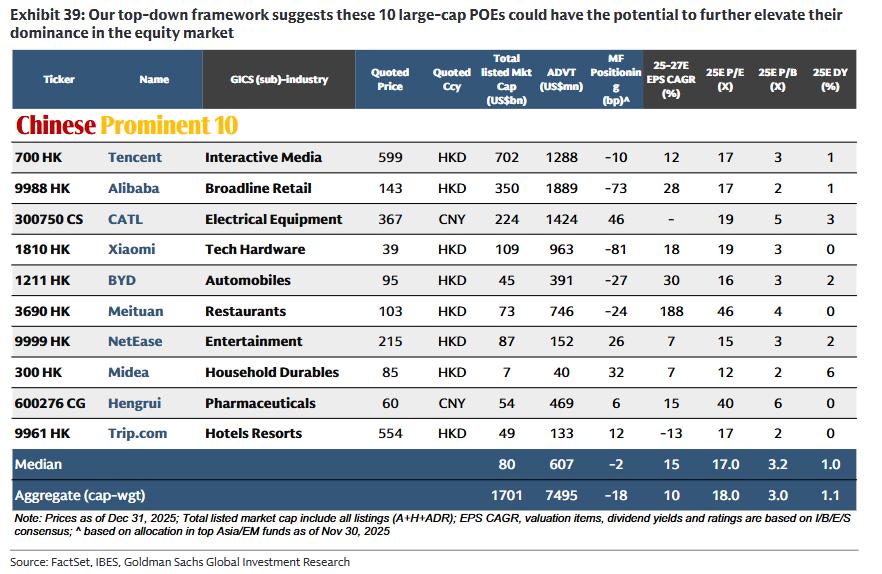
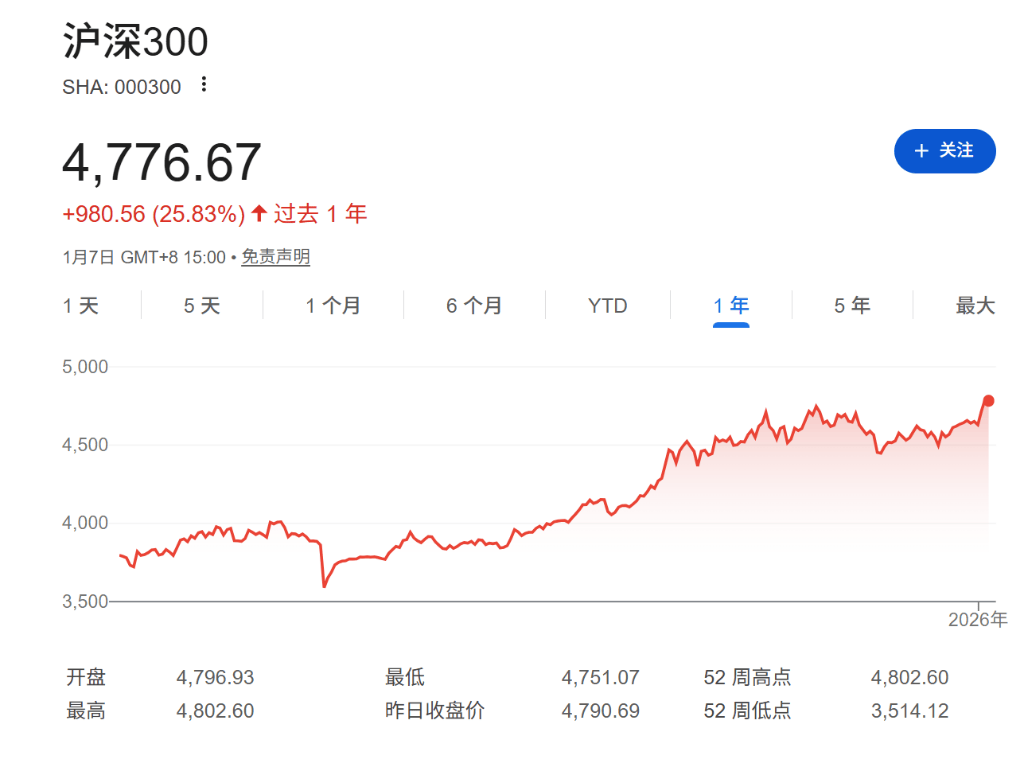
Group 1: Market Outlook - Goldman Sachs predicts that Chinese stocks will be supported by artificial intelligence and policy measures, with the MSCI China Index expected to rise by 20% by the end of 2026, and the CSI 300 Index projected to increase by 12% to 5200 points [1] - As of the first trading day of 2026, the CSI 300 Index has already risen by 3.5%, reaching a four-year high, while the MSCI China Index has increased by approximately 3.6%, outperforming the S&P 500 [1] Group 2: Earnings-Driven Growth - The core argument of Goldman Sachs' report is that returns in 2026 will be primarily driven by earnings growth, supported by artificial intelligence, "going global" strategies, and anti-involution policies [2] - Five major capital flows are expected to support the market: net southbound capital inflows potentially reaching a record $200 billion; domestic asset reallocation bringing about 3 trillion RMB into the stock market; total dividends and buybacks nearing 4 trillion RMB; global active funds possibly increasing their allocation to Chinese stocks; and IPO financing exceeding $100 billion [2] Group 3: Investment Logic - On a macro level, Goldman Sachs has raised its forecast for China's real GDP growth in 2026, citing resilient exports as a key driver, with a trend towards diversification and quality improvement in export destinations [4] - The report indicates that the valuation of the MSCI China Index and CSI 300 has recovered to mid-cycle levels, with forward P/E ratios of 12.4x and 14.5x, respectively, around or slightly above the 10-year average [4] Group 4: Sector and Company Insights - Goldman Sachs expects the TMT sector (technology, media, and telecommunications) to have the highest earnings growth forecast at approximately 20%, driven by AI-related revenue growth and increased capital expenditures [5] - The firm holds an "overweight" view on several sectors, including technology hardware, media/entertainment, internet retail, materials, and insurance, benefiting from various supportive factors [5] - A list of ten leading Chinese companies comparable to the "Big Seven" in the U.S. stock market includes Tencent, Alibaba, CATL, Xiaomi, BYD, Meituan, NetEase, Hengrui Medicine, and Trip.com, with a total market capitalization of $1.7 trillion, accounting for 40% of the MSCI China Index [6]


高盛坚定看好中国股市:AI与出海支撑盈利,MSCI中国今年有望上涨20%
Sou Hu Cai Jing· 2026-01-07 09:13
Core Viewpoint - Goldman Sachs issues a bullish outlook for the Chinese stock market in its 2026 market outlook report, predicting significant gains driven by corporate profit growth [1][2] Market Performance - The MSCI China Index and the CSI 300 Index are expected to rise by 20% and 12% respectively in 2026, with a shift from valuation-driven growth to profit-driven growth [1][2] - The profit growth rate for Chinese listed companies is forecasted to accelerate from 4% in 2025 to 14% in 2026, particularly benefiting the TMT sector [1][4] Key Drivers - The optimistic forecast is based on three main drivers: artificial intelligence (AI), outbound strategies, and anti-involution policies [4] - The TMT sector is particularly favored, with expected profit growth of around 20% due to advancements in AI monetization and increased capital expenditure [4] Fund Flows - Southbound capital is projected to reach a record net inflow of $200 billion in 2026, driven by expanded investment scope and attractive dividend yields [5][6] - Domestic asset reallocation is expected to contribute approximately 3 trillion RMB to the stock market, supported by a decline in risk-free rates [5] - Share buybacks and dividends are anticipated to total nearly 4 trillion RMB, providing substantial cash returns to investors [6] Industry Allocation - Goldman Sachs maintains an overweight rating on internet/media entertainment, online retail, technology hardware, materials, and insurance sectors [7] - The technology hardware sector is upgraded to overweight, seen as a key beneficiary of AI development and self-sufficiency strategies [7] Valuation and Policy - Current valuations for the MSCI China Index and CSI 300 Index are at 12.4x and 14.5x respectively, considered attractive compared to global markets [8] - The market is expected to benefit from supportive monetary and fiscal policies, as well as a favorable regulatory environment for the private sector [8]
高盛坚定看好A股:预计今年仍将实现双位数上涨!
Jin Shi Shu Ju· 2026-01-07 05:53
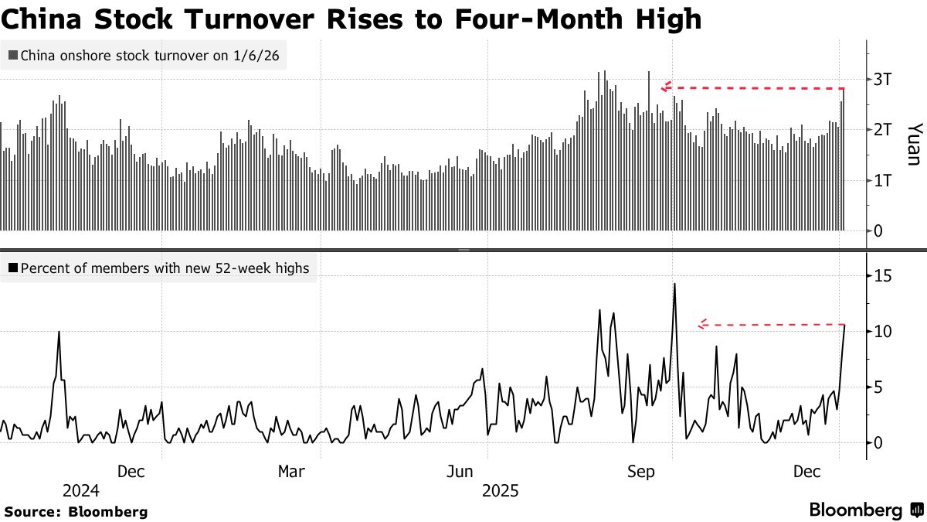
AI播客:换个方式听新闻 下载mp3 策略师们表示:"我们预测2026年股市上涨的动力,几乎完全来自企业盈利增长。"而盈利增长将"由人工智能、'出海'战略以及反内卷相 关政策提供支撑"。 A股单日成交额创4个月新高 高盛策略师预测,2026年内地投资者通过港股通净买入港股的规模有望达到2000亿美元,再创历史纪录。与此同时,海外投资者预计将 调整对中国股市的低配仓位,这或将为市场带来100亿美元的资金流入。 中国股市的上涨势头已强劲延续至新的一年。尽管中国股市2025年已经录得大幅上涨,但高盛仍与其他多家大型机构一道,维持对该市 场的积极展望。这一乐观判断,反映出市场对"盈利扩张、政策扶持、新增增长动能将持续吸引投资者入场"的信心。 2026年开年以来,沪深300指数已累计上涨3.5%,创下四年以来的最高水平;MSCI中国指数涨幅约3.6%,跑赢同期标普500指数。 市场交投热度也印证了投资者的高涨情绪:A股周二单日成交额飙升至2.8万亿元人民币(折合4010亿美元),不仅创下去年9月以来的新 高,还远超过去五年1.13万亿元的日均成交额。投资者融资融券余额同样徘徊在历史高点附近。当日沪深300指数上涨1.6 ...
球冠电缆总经理陈永直:多维布局拓增长 剑指“再造一个球冠”
Zhong Guo Zheng Quan Bao· 2026-01-05 22:13
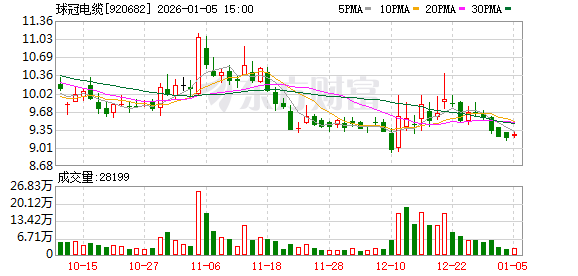
Core Viewpoint - The company views overseas markets as a core growth area and plans to achieve its strategic goal of "recreating a new Qiaoguan" through industry chain collaboration and prudent mergers and acquisitions [2][4]. Group 1: Company Overview - Qiaoguan Cable, established in 2006, is a national high-tech enterprise and a "specialized, refined, and innovative" small giant, primarily producing power cables and related products [3]. - The company’s products are widely used in various sectors, including power, energy, transportation, and construction, accounting for about one-quarter of China's electrical industry output [3]. - Since its listing in 2021, the company has significantly enhanced its brand influence and customer trust, supporting technological upgrades and equipment modernization [3]. Group 2: Financial Performance - The company has shown a strong growth trend, with revenue projected to increase from 2.688 billion yuan in 2021 to 3.585 billion yuan by 2024, and net profit expected to rise from 82.01 million yuan to 133 million yuan during the same period [3]. Group 3: Market Position and Strategy - In the first half of 2025, the company achieved a significant breakthrough by signing contracts worth 9.65 billion yuan in the Southern Power Grid's centralized bidding, reinforcing its position as a key supplier in the domestic market [4]. - The company recognizes the shift in the industry towards quality improvement and aims to leverage emerging overseas markets, particularly in Latin America, where there is a high demand for infrastructure development [4][5]. Group 4: International Expansion - The company has identified Latin America as a key area for international trade expansion and has made tangible progress, including forming a specialized foreign trade team and initiating product international certification [5]. - The company plans to collaborate with upstream and downstream enterprises in the industry chain to navigate the complexities of the international market [5][6]. Group 5: Future Outlook - The company intends to extend its industry chain through mergers and acquisitions, focusing on power equipment sectors like electric meters and transformers to enhance its overall solution capabilities [6]. - The company aims to maintain a strong domestic market presence while accelerating overseas expansion, with a focus on technological innovation and market development to ensure long-term stable growth [7].

多维布局拓增长 剑指“再造一个球冠”
Zhong Guo Zheng Quan Bao· 2026-01-05 20:05
Core Viewpoint - The company views overseas markets as a core growth area and aims to achieve the strategic goal of "recreating a new Qiaoguan" through industry chain collaboration and prudent mergers and acquisitions [1][2]. Company Overview - Qiaoguan Cable, established in 2006, is a national high-tech enterprise and a "specialized, refined, and innovative" small giant, primarily producing power cables and related products [1]. - The company’s products are widely used in various sectors, including power, energy, transportation, and construction, and account for about one-quarter of China's electrical industry output [1]. Financial Performance - From 2021 to 2024, the company's revenue is projected to grow from 2.688 billion to 3.585 billion yuan, while net profit is expected to increase from 82.01 million to 133 million yuan [1]. Market Position - In the first half of 2025, the company achieved a significant breakthrough by signing contracts worth 9.65 billion yuan in the Southern Power Grid's centralized bidding, reinforcing its position as a key supplier in the domestic market [2]. Strategic Goals - The company aims to expand internationally, particularly in emerging markets, as domestic competition intensifies and growth slows [2]. - The CEO emphasizes that "going abroad is not a choice but a necessity," highlighting the urgent demand for power infrastructure in markets like Mexico [2]. International Expansion - Qiaoguan Cable has identified Latin America as a key area for foreign trade expansion and has made tangible progress, including forming a specialized foreign trade team and initiating product international certification [3]. - The company plans to collaborate with upstream and downstream enterprises in the industry chain to navigate the complexities of the international market [3]. Mergers and Acquisitions - Mergers and acquisitions are seen as crucial for achieving the goal of "recreating a new Qiaoguan," with a focus on power equipment sectors like meters and transformers [3]. - The company is considering refinancing options based on strategic development and funding needs, while also monitoring relevant M&A opportunities [3]. Future Outlook - The company intends to continue strengthening its domestic market share while accelerating overseas expansion, particularly in the new energy vehicle charging equipment and marine energy cable markets [4]. - The dual approach of technological innovation and market development is expected to drive long-term stable growth [4].

2025年港股再融资规模略超IPO
Zheng Quan Ri Bao· 2026-01-05 17:08
Core Insights - The Hong Kong stock market's refinancing activities in 2025 were exceptionally active, with a total of approximately HKD 325.32 billion raised through various methods, significantly surpassing the previous year [1] - Placement became the primary method for refinancing, with 345 companies initiating 463 placements, raising HKD 289.62 billion, slightly exceeding the HKD 285.69 billion raised through IPOs [1] - Leading companies like BYD and Xiaomi spearheaded large-scale refinancing efforts, focusing on industry integration and technological development [2] Group 1: Refinancing Trends - In 2025, the refinancing market in Hong Kong saw significant participation from industry leaders, with BYD raising HKD 43.51 billion and Xiaomi raising HKD 42.6 billion [2] - Other notable companies included NIO and Horizon Robotics, which collectively raised over HKD 11 billion, focusing on core technology breakthroughs and operational stability [2] - The refinancing activities reflect a trend of companies engaging in multiple rounds of financing, with firms like SenseTime and China Ruoyi completing several placements throughout the year [4] Group 2: Mechanisms and Strategies - The "old before new" placement system in Hong Kong allows companies to quickly raise funds by transferring existing shares before issuing new ones, significantly shortening the financing cycle [5] - This method typically offers discounts of 5% to 12% compared to market prices, effectively attracting institutional investors [5] - New companies listed in 2025, such as Boreton and Jiangsu Hongxin, quickly initiated refinancing to leverage their post-IPO stock price advantages [6] Group 3: Strategic Focus - The funds raised through refinancing are often directed towards capacity expansion and R&D, particularly in high-growth sectors like technology and renewable energy [3] - Companies like GCL-Poly announced specific uses for their raised funds, including structural adjustments in polysilicon production and enhancing R&D capabilities [2] - The trend of "going global" is also evident, with many Hong Kong-listed companies pursuing international expansion strategies while ensuring compliance with local regulations [7]




电控下半场:三年营收翻七倍的臻驱赴港IPO,但资本要的不止是规模增速
3 6 Ke· 2026-01-04 12:42
Core Viewpoint - The article discusses the competitive landscape of the electric vehicle (EV) industry, highlighting the transition from battery competition to electric control and intelligence, with a focus on the recent IPO application of Zhenjue Technology, a differentiated electric control system supplier leveraging a "Power Brick" architecture [1][2]. Group 1: Company Overview - Zhenjue Technology has submitted an IPO application to the Hong Kong Stock Exchange, aiming to capitalize on its rapid production capabilities and market position in the EV sector [1]. - The company has established a differentiated electric control system based on the "Power Brick" architecture, which integrates power modules, control logic, and thermal management to simplify assembly and enhance cross-platform reuse [2][3]. Group 2: Market Position and Product Development - Zhenjue Technology has secured contracts with 13 automakers and 50 vehicle models, indicating strong market acceptance of its products, which are used in popular models like the AITO M7 and Changan Deep Blue [3][4]. - The company has achieved significant production milestones, with its Chongqing factory producing over 100,000 units within five months of operation, demonstrating its manufacturing agility [1][6]. Group 3: Financial Performance - Zhenjue Technology's revenue surged from 160 million yuan in 2023 to 1.159 billion yuan in 2024, marking a growth of over six times, with further revenue of 1.217 billion yuan in the first nine months of 2025 [6]. - Despite revenue growth, the company continues to face losses, with figures of 237 million yuan, 335 million yuan, and 257 million yuan for the years 2023, 2024, and the first nine months of 2025, respectively [6][7]. Group 4: Strategic Initiatives - The company is expanding its business into international markets, with plans to deliver products to over 30 countries and aims for batch shipments to North America by Q3 2025 [8]. - Zhenjue Technology's strategy includes enhancing its global market presence and improving its profitability model through international sales, which typically offer higher margins [8][9]. Group 5: Competitive Landscape - The competitive environment is intensifying, with major players like BYD, Tesla, and others advancing their integrated solutions, posing challenges for Zhenjue Technology [4][9]. - Zhenjue Technology differentiates itself by focusing on system-level integration and standardization of its Power Brick architecture, positioning itself as a hybrid of an independent Tier-1 supplier and power semiconductor capabilities [10].
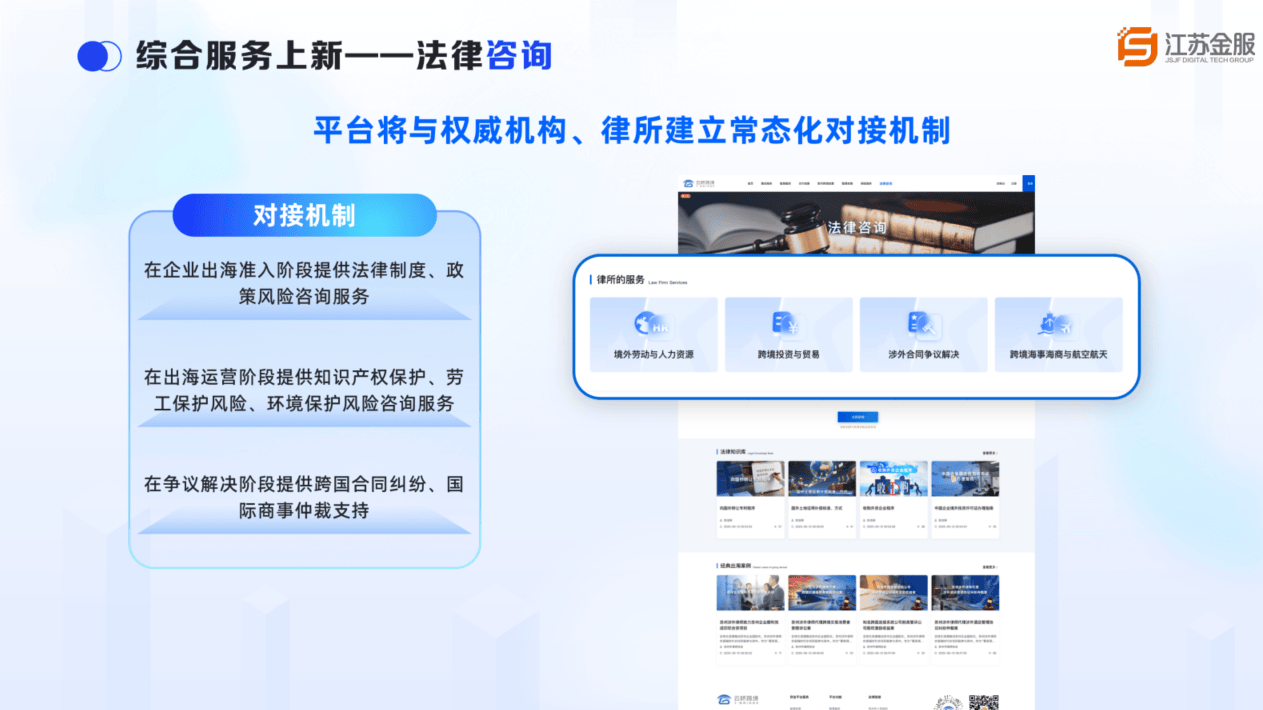
出海战略咨询
Sou Hu Cai Jing· 2026-01-02 02:43
Core Insights - The article emphasizes the importance of systematic overseas expansion strategies and professional consulting support for companies, especially small and medium-sized enterprises (SMEs), to navigate the complexities of entering international markets [1][13]. Group 1: Overseas Expansion Strategy - The core of overseas expansion consulting is to provide comprehensive guidance for companies intending to engage in international business, covering strategy to implementation [2]. - Key steps in the overseas expansion strategy include market assessment and selection, which involves rigorous analysis of the company's core competencies and potential market conditions [4][5]. Group 2: Market Assessment and Entry - Identifying target markets requires detailed analysis rather than mere intuition, focusing on market size, growth trends, competitive landscape, consumer preferences, and cultural differences [4]. - A thorough evaluation of legal regulations, industry standards, and tax policies in target markets is essential to mitigate compliance risks [4]. Group 3: Business Model and Localization - After selecting a market, companies must determine their entry mode, which could include exporting, local partnerships, or establishing overseas branches, each with different resource commitments and risk levels [5]. - Developing a localization strategy is crucial, involving adjustments to products or services, marketing approaches, and team management to align with local regulations and business practices [5]. Group 4: Operations and Risk Management - A stable operational system is vital for overseas business, encompassing international supply chain management, financial management, and IT support [6]. - Establishing a comprehensive risk management framework is necessary to address various risks such as currency fluctuations, geopolitical changes, and legal disputes [6]. Group 5: Continuous Optimization and Growth Planning - Overseas expansion is an ongoing process that requires continuous strategy adjustments based on market feedback and operational data [7]. - Consulting services should assist companies in establishing key performance indicators to monitor the health of overseas operations and plan for future growth opportunities [7]. Group 6: Financial Services for Cross-Border Trade - Cross-border trade financial services are critical for the smooth operation of international business, addressing challenges in financing, payments, and business processes faced by SMEs [9]. - Platforms like "Cloud Bridge Cross-Border" provide integrated financial services tailored for SMEs engaged in cross-border trade, offering solutions across the entire trade process [11][12]. Group 7: Advantages of Specialized Platforms - The platform aims to support companies throughout their internationalization journey, from initial preparation to ongoing operational needs [12]. - It explores innovative applications of digital currency in cross-border trade, enhancing efficiency and security in financial transactions [12]. - The platform also focuses on improving financing access for foreign trade enterprises through tailored credit scoring models [12]. Group 8: Conclusion - Successful overseas expansion requires clear strategic guidance and robust operational support, with professional consulting playing a key role in planning and risk mitigation [13]. - Specialized service platforms provide essential tools and support networks, enabling companies to navigate the complexities of international markets effectively [13].