
大规模设备更新和消费品以旧换新政策

Search documents
2026年“两新”政策发布 优化调整支持范围
Xin Lang Cai Jing· 2025-12-30 20:11
30日,国家发展改革委、财政部发布《关于2026年实施大规模设备更新和消费品以旧换新政策的通 知》,明确2026年"两新"政策的支持范围、补贴标准和工作要求。2026年"两新"政策主要做了三方面优 化。 一是优化支持范围。设备更新方面,总体延续2025年支持范围,在民生领域增加老旧小区加装电梯、养 老机构设备更新,在安全领域增加消防救援、检验检测设备更新,在消费基础设施领域增加商业综合 体、购物中心、百货店、大型超市等线下消费商业设施的设备更新。消费品以旧换新方面,进一步集中 资源,着力提升覆盖人群广、带动效应强的重点消费品"得补率"。继续实施汽车报废更新和汽车置换更 新补贴;继续实施家电以旧换新补贴,支持范围聚焦冰箱、洗衣机、电视、空调、电脑、热水器等6类 产品;同时,将数码产品购新补贴拓展为数码和智能产品购新补贴,支持范围包括手机、平板电脑、智 能手表(手环)、智能眼镜和智能家居产品(含适老化家居产品)。 二是优化补贴标准。设备更新方面,将住宅老旧电梯更新由定额补贴调整为按电梯层(站)数分档差异 化补贴;在老旧营运货车报废更新补贴中,优先支持更新为电动货车。消费品以旧换新方面,在保持汽 车补贴上限不变的基 ...
TCL科技拟逾60亿元 增持深圳华星半导体
Zheng Quan Shi Bao· 2025-12-15 18:23
Core Viewpoint - TCL Technology plans to acquire a 10.7656% stake in Shenzhen Huaxing Semiconductor Display Technology Co., Ltd. for 6.045 billion yuan, increasing its total ownership from 84.2105% to 94.9761%, which is expected to enhance the company's profitability [2] Group 1: Company Overview - TCL Huaxing focuses on semiconductor display business and operates two G11 display panel production lines, primarily producing large-size TFT-LCD display devices for applications in televisions and commercial displays [2] - The acquisition will strengthen TCL Technology's core competitiveness in the semiconductor display industry [2] Group 2: Financial Performance - As of December 31, 2024, Shenzhen Huaxing's total assets are 68.04 billion yuan, with net assets of 44.85 billion yuan, and projected revenue of 24.158 billion yuan and net profit of 2.807 billion yuan for the same year [3] - By June 30, 2025, total assets are expected to be 64.769 billion yuan, net assets at 46.564 billion yuan, with revenue of 12.023 billion yuan and net profit of 1.709 billion yuan for the first half of 2025 [3] - The asset-liability ratio is gradually decreasing, and the net profit margin is continuously increasing, indicating improving profitability and asset quality [3] Group 3: Market Outlook - The large-size semiconductor display industry is experiencing an improved market structure with healthy supply-demand dynamics, and demand for large-size displays is steadily increasing [3] - The upcoming peak season for television panel inventory is expected to boost demand, with December panel prices predicted to stabilize [3] - The "Two New" policy, which includes large-scale equipment updates and a trade-in program for consumer goods, is expected to continue into 2026, potentially driving demand for consumer electronics and upstream display panels [3] Group 4: Industry Events - The 2026 FIFA World Cup, hosted by the United States, Canada, and Mexico, is anticipated to significantly boost demand for large-size television panels, benefiting Shenzhen Huaxing's focus on large-size LCD panel production [4] - The acquisition will enhance TCL Technology's profit-sharing from Shenzhen Huaxing's economic benefits, benefiting shareholders [4]


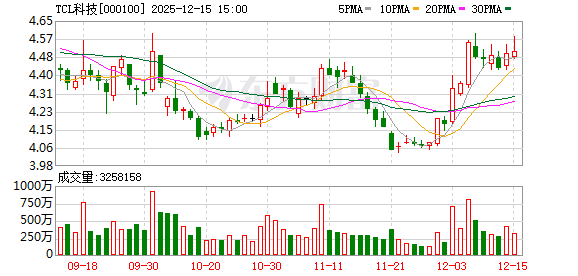
000100,大动作!拟逾60亿元加仓半导体!
Xin Lang Cai Jing· 2025-12-15 12:44
Core Viewpoint - TCL Technology is accelerating its acquisition of minority stakes in high-generation production lines, which is expected to further enhance the net profit attributable to the parent company [1][6]. Company Summary - On December 15, TCL Technology announced that its subsidiary, TCL Huaxing Optoelectronics Technology Co., Ltd., plans to acquire a 10.7656% stake in Shenzhen Huaxing Semiconductor Display Technology Co., Ltd. for cash of 6.045 billion yuan. After the transaction, TCL's total control over Shenzhen Huaxing Semiconductor will increase from 84.2105% to 94.9761%, which is anticipated to effectively improve the company's profitability [1][6]. - Shenzhen Huaxing Semiconductor focuses on the semiconductor display business and operates two G11 display panel production lines, primarily producing large-size TFT-LCD display devices. The acquisition is expected to strengthen TCL's core competitiveness in the semiconductor display industry [3][8]. Financial Performance - As of December 31, 2024, Shenzhen Huaxing Semiconductor reported total assets of 68.04 billion yuan and net assets of 44.85 billion yuan, with projected revenue of 24.158 billion yuan and net profit of 2.807 billion yuan for the same year. By June 30, 2025, total assets are expected to be 64.769 billion yuan, with net assets of 46.564 billion yuan, and revenue of 12.023 billion yuan with a net profit of 1.709 billion yuan. The decreasing asset-liability ratio and increasing net profit margin indicate a strengthening of the asset's profitability and quality [3][9]. Industry Outlook - The large-size semiconductor display industry has seen an optimization in its structure, with a healthier supply-demand relationship. The market for television panels is entering a stocking peak season, and prices are expected to stabilize in December according to TrendForce [4][9]. - The Central Economic Work Conference has outlined plans to optimize the "Two New" policy by 2026, which includes large-scale equipment updates and a "national subsidy" for consumer goods. This is expected to boost demand for consumer electronics and display panels [4][9]. - The upcoming FIFA World Cup in 2026, hosted by the USA, Canada, and Mexico, is anticipated to significantly drive demand for large-size television panels, benefiting Shenzhen Huaxing Semiconductor, which specializes in this market [5][10].

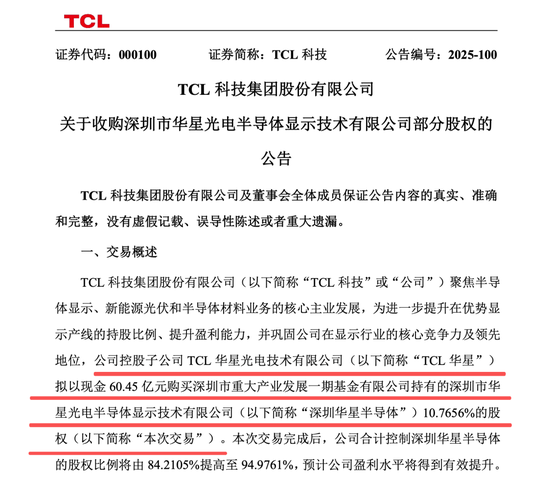
明年“国补”继续!还有优化
Sou Hu Cai Jing· 2025-12-12 14:24
年初,国家发展改革委 财政部关于2025年加力扩围实施大规模设备更新和消费品以旧换新政策的通知公布。家电、手机、平板、汽车等产品 都在覆盖范围内。 随后,多家电商平台都开启了补贴专区,想必不少小伙伴在购买符合条件的产品时,都会先看一眼是否能享受补贴。 随着时间来到2025年12月中旬,不少小伙伴都在关心随着今年的结束,"国补"是否还会继续。 近日,大家关心的这部分内容也有了确切消息。 据新华社报道,中央经济工作会议12月10日至11日在北京举行。 会议将"坚持内需主导,建设强大国内市场"摆在明年8项重点任务之首,并作出"优化'两新'政策实施""清理消费领域不合理限制措施"等一系列 部署。 参考第一财经日报的报道,"两新"政指的是指大规模设备更新和消费品以旧换新政策。其中与大家利益直接相关的消费品以旧换新政策备受关 注,被称为"国补"。 也就是说,可以确定明年还会有国补,且具体国补政策将会有所优化,想要在明年进行各种用品购置的小伙伴可以关注一下相关消息。 参考来看,2024年发行了1500亿元超长期特别国债资金用于消费品以旧换新,2025年发行3000亿元超长期特别国债资金用于消费品以旧换新。 同时,2025 ...
中央定调明年继续“国补”,具体政策或有所优化
Sou Hu Cai Jing· 2025-12-12 10:45
Group 1 - The central economic work conference held in Beijing on December 10-11 outlined the economic work for 2026, emphasizing the need to optimize the implementation of the "two new" policies, which include large-scale equipment updates and the consumer goods trade-in policy [1] - The consumer goods trade-in policy, referred to as "national subsidies," will continue in 2026 with optimized specifics, indicating ongoing government support for consumer spending [1] - In 2024, China issued 150 billion yuan in long-term special government bonds for the consumer goods trade-in program, which increased to 300 billion yuan in 2025, doubling the subsidy amount from the previous year [3] Group 2 - The scope of the "national subsidies" policy is expanding in 2025 to include new categories such as smartphones, tablets, smartwatches, and various home appliances, enhancing the program's reach [3] - From January to November this year, the consumer goods trade-in program generated over 2.5 trillion yuan in sales, benefiting more than 360 million people, with significant contributions from the automotive and home appliance sectors [3] - Experts suggest that the subsidy amount for 2026 may see a moderate increase from 2025, with a focus on optimizing funding allocation to boost service consumption and further stimulate economic growth [3]

中央定调:2026“国补”将继续!| 头条
第一商用车网· 2025-12-11 22:43
2025年12月10日至11日,中央经济工作会议在北京举行。此次会议部署2026年经济工 作,其中在部署明年"坚持内需主导,建设强大国内市场"时称,要优化"两新"政策实施。 所谓"两新"政策,是指大规模设备更新和消费品以旧换新政策。其中与老百姓利益直接相 关的消费品以旧换新政策又备受关注,被称为"国补"。 此次会议明确2026年优化"两 新"政策实施,意味着明年会继续实施国补政策,但具体政策会有所优化。 为了促进消费,中国在2024年发行了1500亿元超长期特别国债资金用于消费品以旧换新, 也就是老百姓口中的"国补"。由于当年实施效果不错,2025年中国发行3000亿元超长期 特别国债资金用于消费品以旧换新,"国补"额度较2024年增长一倍。 "国补"政策也在不断优化。2025年"国补"领域在2024年基础上扩围,比如新增了手机、 平板、智能手表手环等3类数码产品和微波炉、净水器、洗碗机、电饭煲等4类家电产品 等。 商务部数据显示,2025年1月至11月,消费品以旧换新带动相关商品销售额超2.5万亿元, 惠及超3.6亿人次。其中,汽车以旧换新超1120万辆,家电以旧换新超12844万台,手机 等数码产品购新补 ...

中央定调明年继续“国补”,具体政策将优化
Di Yi Cai Jing· 2025-12-11 10:05
多位接受第一财经采访的专家表示,2026年"国补"额度可在2025年基础上适度增加,并继续优化资金投 向领域,增加服务消费等,以进一步发挥财政资金带动消费,带动产业转型升级、提振经济。 为了促进消费,中国在2024年发行了1500亿元超长期特别国债资金用于消费品以旧换新,也就是老百姓 口中的"国补"。由于当年实施效果不错,2025年中国发行3000亿元超长期特别国债资金用于消费品以旧 换新,"国补"额度较2024年增长一倍。 "国补"政策也在不断优化。2025年"国补"领域在2024年基础上扩围,比如新增了手机、平板、智能手表 手环等3类数码产品和微波炉、净水器、洗碗机、电饭煲等4类家电产品等。 商务部数据显示,今年1~11月,消费品以旧换新带动相关商品销售额超2.5万亿元,惠及超3.6亿人次。 其中,汽车以旧换新超1120万辆,家电以旧换新超12844万台,手机等数码产品购新补贴超9015万件, 电动自行车以旧换新超1291万辆,家装厨卫"焕新"超1.2亿件。 中央经济工作会议提出明年要优化"两新"政策实施 12月10日至11日,中央经济工作会议在北京举行。此次会议部署2026年经济工作,其中在部署明年"坚 ...
一揽子增量政策实施超一年·“数”读经济“晴雨表” 多维度透视经济向好态势更稳
Yang Shi Wang· 2025-10-26 07:19
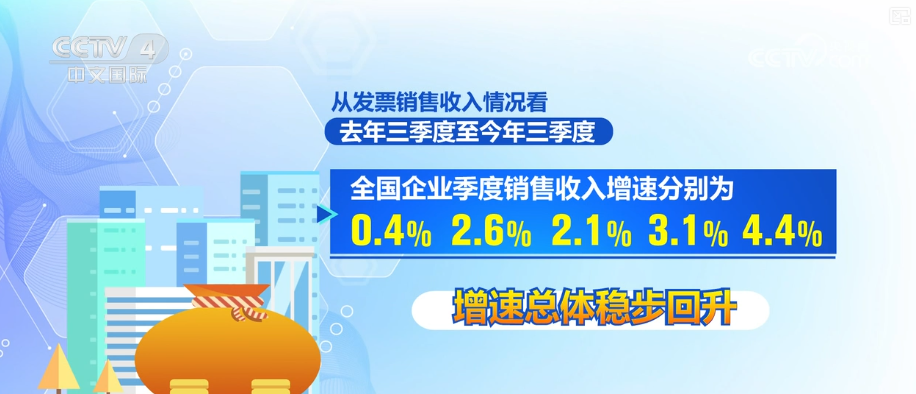
Core Insights - The implementation of a comprehensive incremental policy since September 26, 2024, has led to a steady recovery in both invoice sales and tax revenue across major industries and tax categories, indicating an overall improvement in the Chinese economy [1][21] Invoice Sales and Tax Revenue - From Q3 2024 to Q3 2025, the quarterly sales revenue growth rates for enterprises were 0.4%, 2.6%, 2.1%, 3.1%, and 4.4%, showing a steady upward trend [3] - In October 2024, tax revenue turned positive after seven months of negative growth, with a cumulative increase in tax revenue from February 2025 showing consistent positive growth for eight months [5] Capital Market Performance - The capital market has become more active, with the total market value of A-share companies surpassing 100 trillion yuan in August 2025, and the Shanghai Composite Index reaching a ten-year high in September [7] - Tax revenue from capital market services increased by 56.8% year-on-year, with securities transaction stamp duty rising by 110.5% [7] Corporate Performance and Tax Growth - The manufacturing sector saw a year-on-year tax revenue increase of 5.4%, accounting for 31% of total tax revenue, indicating a significant stabilizing effect [11] - Major tax categories showed positive growth, with domestic value-added tax increasing by 3.2% and corporate income tax rising by 4.1%, reflecting improved profitability in certain industries [14] Policy Impact and Market Dynamics - The "Two New" policies have effectively released market vitality, with significant growth in machinery and equipment purchases, particularly in high-tech manufacturing, which saw a 11.8% increase [18] - Retail sales in consumer goods, such as refrigerators and televisions, experienced substantial year-on-year growth of 55.4% and 35.3%, respectively [18]
一揽子增量政策实施效果如何?税收数据揭示经济向好态势
Yang Shi Xin Wen· 2025-10-26 03:57
Core Insights - The implementation of a comprehensive set of incremental policies since September 26 last year has led to a steady recovery in both invoice sales and tax revenue, indicating a strengthening economic outlook in China [1][2] Group 1: Tax Revenue and Invoice Sales - The growth rate of national enterprise sales revenue has shown a steady increase, with quarterly growth rates from Q3 last year to Q3 this year recorded at 0.4%, 2.6%, 2.1%, 3.1%, and 4.4% respectively [2] - Tax revenue has turned positive after seven months of negative growth, with a cumulative increase in tax revenue since February this year, showing month-on-month growth of 2.6% and 6.9% in Q2 and Q3 respectively [2][6] Group 2: Capital Market Tax Revenue - Tax revenue related to the capital market has maintained a high growth rate, with a year-on-year increase of 56.8% in capital market service tax revenue, and a 110.5% increase in securities transaction stamp duty [3] - The total market value of A-share companies surpassed 100 trillion yuan in August, and the Shanghai Composite Index reached a ten-year high in September, with average daily stock trading volumes of 2.3 trillion yuan and 2.4 trillion yuan in August and September respectively [3] Group 3: Improvement in Business Conditions - The manufacturing sector has seen a year-on-year tax revenue growth of 5.4%, accounting for 31% of total tax revenue, with high-end manufacturing sectors like railway, shipbuilding, and aerospace experiencing a tax revenue increase of 31.5% [4] - In Dalian, the automotive manufacturing sector reported a sales revenue of 68.69 billion yuan, a year-on-year increase of 21%, while equipment and raw material purchases grew by 33.6% [5] Group 4: Emerging Industries and Consumption - The information transmission, software, and IT services sectors have seen tax revenue growth of 15.3%, while scientific research and technical services have grown by 13.2% [5] - Consumer goods sectors, particularly home appliances, have experienced significant sales growth, with retail sales of refrigerators and televisions increasing by 55.4% and 35.3% respectively [7]
电力数据透视“两新”政策成效显著
Zhong Guo Neng Yuan Wang· 2025-10-15 01:24
Core Insights - The electricity consumption data from January to August indicates a strong correlation between the implementation of the "Two New" policies and economic vitality, showcasing the effectiveness of these policies in driving high-quality economic development [5][6]. Group 1: Electricity Consumption Trends - Total electricity consumption in China reached 68,788 billion kWh from January to August, reflecting a year-on-year growth of 4.6% [1]. - In August, electricity consumption in the manufacturing sector increased by 5.5% year-on-year, marking the highest monthly growth in 2025, driven by equipment upgrades [2]. - The high-tech and equipment manufacturing sectors emerged as key growth drivers, with electricity consumption from January to August increasing by 5.3%, surpassing the average growth rate of the manufacturing sector by 2.5 percentage points [2]. Group 2: Impact of Equipment Upgrades - The automotive manufacturing sector showed significant growth, with electricity consumption rising by 10.3% from January to August, and the new energy vehicle manufacturing sector experiencing an even higher growth rate of 23.0% [2]. - Traditional industries such as steel, building materials, non-ferrous metals, and chemicals also benefited from equipment upgrades, with a combined electricity consumption growth of 4.2% in August, an increase of 3.7 percentage points from July [2]. Group 3: Green Consumption and Renewable Energy - The expansion of the old-for-new consumption policy has stimulated green consumption, with new energy vehicles' production and sales exceeding 11.2 million units from January to September, reflecting a year-on-year increase of over 34% [3]. - The electricity consumption in the charging and swapping service industry surged by 44.1% from January to August, driven by the rapid adoption of new energy vehicles [3]. - Green electricity trading reached 2,050 billion kWh from January to August, marking a year-on-year growth of 43.3%, indicating a significant rise in demand for clean energy [3]. Group 4: Infrastructure Investment and Energy Security - National grid investment reached 379.6 billion yuan from January to August, representing a year-on-year increase of 14.0%, aimed at supporting the rising electricity demand from both production and consumption [4]. - In August, total electricity consumption was 10,154 billion kWh, with a year-on-year growth of 5.0%, demonstrating a stable balance between supply and demand amid high temperatures and policy-driven demand [4]. - The State Grid has completed fixed asset investments exceeding 420 billion yuan from January to September, reflecting an 8.1% year-on-year increase, which supports ongoing infrastructure upgrades [4].