家装厨卫

Search documents
2025年长沙以旧换新带动销售超423亿元,四大品类全覆盖
Sou Hu Cai Jing· 2026-01-13 23:45
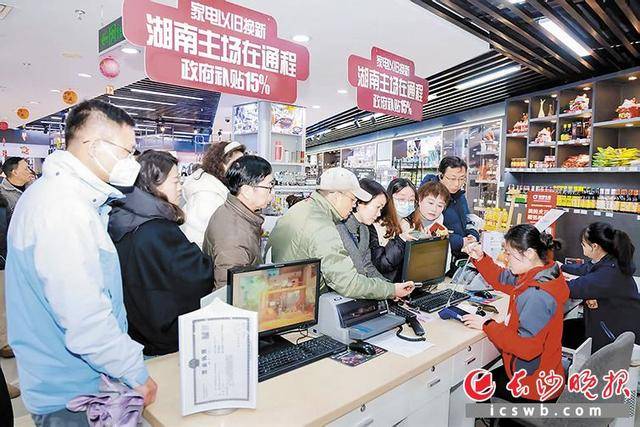
Core Insights - In 2025, Changsha's "old for new" consumption policy is expected to attract over 7.02 million participants and generate sales exceeding 42.3 billion yuan, serving as a significant driver for economic growth and consumer spending [2] Group 1: Policy Implementation - The policy will expand to include digital products such as smartphones, tablets, and smart wearables, achieving full coverage across four core categories: home appliances, automobiles, home renovation, and digital products [3] - A differentiated subsidy system will be implemented, with energy-efficient appliances receiving a subsidy of 20% of the final sales price, capped at 2,000 yuan; digital products will receive a 15% subsidy, with a maximum of 500 yuan per item [3] - The subsidy distribution method will be optimized to enhance efficiency, transitioning from daily limited vouchers to centralized distribution, simplifying the application process for consumers [3] Group 2: Market Impact - The "old for new" policy has significantly boosted various consumer sectors, with over 139,000 applications for vehicle scrapping and replacement, leading to car purchases exceeding 22.2 billion yuan, of which 55% were new energy vehicles [3] - The home appliance sector saw sales driven by the "old for new" initiative reach 10.598 billion yuan, with over 80% of replacements being energy-efficient appliances [4] - The digital products and home renovation markets also experienced strong sales, contributing over 5.4 billion yuan and 3.7 billion yuan, respectively [4] Group 3: Future Outlook - The policy's benefits are expected to continue into 2026, with a notable increase in mobile phone purchases attributed to the "old for new" subsidies [5] - Sales in early January 2026 showed a year-on-year increase of over 30%, indicating a strong market response to the new policy [6] - Changsha plans to further optimize policy services and enhance the recycling system for waste materials, aiming to release more consumer potential and support high-quality economic development [6]

财经早报:1月2日
Xin Hua Cai Jing· 2026-01-02 01:52
Group 1 - In 2025, the sales of products related to the trade-in program will exceed 2.6 trillion yuan, benefiting over 360 million people [1] - The trade-in program includes over 11.5 million cars, 129 million home appliances, 9.1 million digital products, 12 million home renovation items, and 12.5 million electric bicycles [1] - The Chinese Ministry of Commerce expressed strong opposition to the EU's carbon border adjustment mechanism, stating it imposes unfair trade restrictions on Chinese products [1] Group 2 - In 2025, China's carbon market is expected to operate smoothly, with an increase in market vitality and expanded support for voluntary greenhouse gas reduction trading [1] - The China Council for the Promotion of International Trade organized 407 outbound delegations in 2025, focusing on practical cooperation in trade and investment with Belt and Road countries [1] - The total box office revenue for Chinese films in 2025 is projected to be 51.83 billion yuan, with a year-on-year growth of 21.95% [1] Group 3 - The Jilin Province's total electricity consumption reached 101.2 billion kilowatt-hours in 2025, marking a significant milestone [1] - The number of outbound and inbound travelers through the Hong Kong-Zhuhai-Macao Bridge exceeded 31.34 million and 6.8 million vehicles, respectively, in 2025, both setting historical records [1] - The Spanish stock market index Ibex saw a nearly 50% increase in 2025, marking the largest rise since 1993 [1] Group 4 - Elon Musk announced that his brain-machine interface company, Neuralink, will begin mass production of brain-machine interface devices in 2026, focusing on streamlined and automated surgical processes [2]
新华财经早报:1月2日
Xin Lang Cai Jing· 2026-01-02 00:56
Group 1 - In 2025, the sales of products related to the trade-in program will exceed 2.6 trillion yuan, benefiting over 360 million people [1] - The trade-in program includes over 11.5 million cars, 129 million home appliances, 9.1 million digital products, 12 million home renovation items, and 12.5 million electric bicycles [1] - The Chinese government plans to respond firmly to the EU's carbon border adjustment mechanism, which it views as unfair and discriminatory against Chinese products [1] Group 2 - In 2025, China's carbon market is expected to operate smoothly, with an increase in market vitality and expanded support for voluntary greenhouse gas reduction trading [1] - The China Council for the Promotion of International Trade organized 407 outbound delegations in 2025, deepening trade and investment cooperation with Belt and Road Initiative countries [1] - The film box office in China for 2025 is projected to reach 51.83 billion yuan, a year-on-year increase of 21.95%, with domestic films accounting for 79.67% of the total [1] Group 3 - In 2025, Jilin Province's total grain production is expected to reach 164.006 billion jin, maintaining its position as the top producer in China for 16 consecutive years [1] - The number of new business entities in Hainan Province reached 11,957 by December 28, 2025, following the launch of the free trade port [1] - The passenger and vehicle flow through the Hong Kong-Zhuhai-Macao Bridge is expected to exceed 31.34 million and 6.8 million respectively in 2025, marking historical highs [1] Group 4 - The Spanish stock market index Ibex experienced a nearly 50% increase in 2025, marking the largest rise since 1993 [2] - The index reached a record high of 17,354.9 points on December 30, 2025, making it one of the best-performing indices globally [2] - The Democratic Republic of the Congo will extend cobalt export quotas from the fourth quarter of 2025 to the end of March 2026 to ensure a smooth implementation of the new quota system [2]

找准定位变身“循环枢纽”
Jing Ji Ri Bao· 2025-12-27 00:34
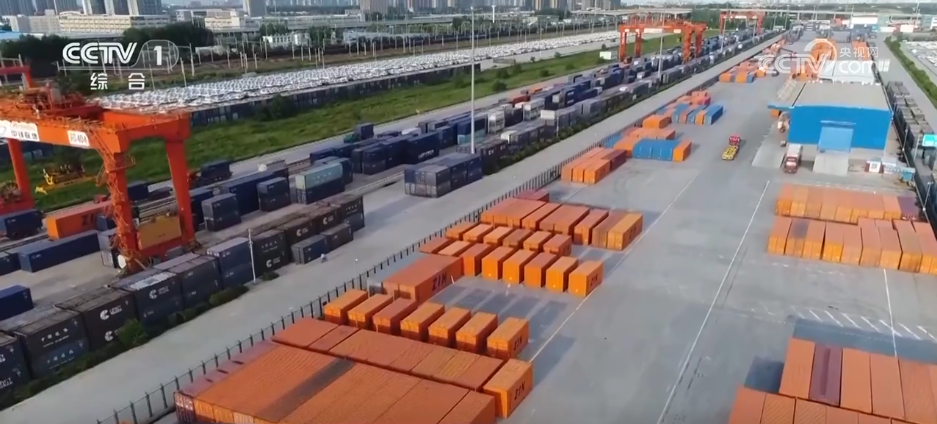
Core Viewpoint - The establishment of a unified national market is a significant initiative for constructing a new development pattern and promoting high-quality development, with Zhengzhou playing a crucial role as a key hub in this process [1]. Group 1: Hard and Soft Connectivity - Zhengzhou Airport has become a comprehensive cargo distribution center, achieving seamless connections between air, rail, metro, and road transport, with a cargo volume exceeding 820,000 tons in 2025, a 24% increase from the previous year [2]. - The logistics efficiency revolution includes the completion of new highways, increasing Zhengzhou's total highway mileage to 660 kilometers by the end of 2025, and the successful launch of four "iron-sea direct transport" routes, achieving a 20% increase in container transport [2]. - The integration of transportation and postal services has reduced logistics costs from 18% to below 12% of the total value of goods shipped from Zhengzhou to the Yangtze River Delta [3]. Group 2: Digital Empowerment - Zhengzhou is implementing a digital reform in the bidding and tendering sector to enhance market environment quality, aiming for a more efficient and transparent process [7]. - The city has streamlined the enterprise migration process, reducing the time from 21 days to under 6 days, improving efficiency by 80% [8]. - The "Zhenghao Rong" platform has provided credit support of 200 million yuan to small and medium-sized enterprises, with a total service reach of 1.1194 million enterprises and a credit scale of 99.469 billion yuan [9]. Group 3: Market-oriented Reforms - Zhengzhou has been designated as one of the national pilot cities for comprehensive market-oriented resource allocation reforms, with a focus on breaking down barriers to free flow and efficient allocation of resources [11]. - The city has implemented a "standard land" transfer policy for industrial land, resulting in the supply of over 34,000 acres of land [12]. - Zhengzhou's data resource transaction volume reached 4.877 billion yuan in 2025, positioning it among the top in the nation [12]. Group 4: Open Economy and Trade - Zhengzhou's foreign trade import and export volume reached 508.58 billion yuan in the first ten months of 2025, an 18% increase year-on-year [14]. - The city has established a cross-border e-commerce base, facilitating rapid delivery of goods, such as salmon, to local consumers within 24 hours [13]. - The cultural and tourism sectors are thriving, with over 820 micro-short film production companies and more than 30,000 employees, making Zhengzhou a key player in this industry [15].
坚持内需主导 夯实经济增长压舱石
Zheng Quan Ri Bao· 2025-12-12 16:25
Group 1 - The central economic work conference emphasized "demand-led growth" and the construction of a strong domestic market as the top priority for next year's economic tasks [1] - The conference proposed to implement special actions to boost consumption and develop urban and rural residents' income plans, aiming to enhance consumer capacity and willingness [1][2] - The focus on supply-side improvements includes expanding the supply of quality goods and services, optimizing the implementation of the "two new" policies, and removing unreasonable restrictions in the consumption sector [1][3] Group 2 - The chief economist from CITIC Securities highlighted that the emphasis on demand-side measures will be crucial for stabilizing growth, with a focus on enhancing residents' consumption capacity and willingness [2] - Data from the Ministry of Commerce indicated that from January to November this year, the trade-in of consumer goods generated over 2.5 trillion yuan in sales, benefiting more than 360 million people [2] - The macro analyst from Dongfang Jincheng noted that the "two new" policies are expected to expand in scope, with increased fiscal support for consumption, particularly in the service sector [2][3]
中央定调明年继续“国补”,具体政策或有所优化
Sou Hu Cai Jing· 2025-12-12 10:45
Group 1 - The central economic work conference held in Beijing on December 10-11 outlined the economic work for 2026, emphasizing the need to optimize the implementation of the "two new" policies, which include large-scale equipment updates and the consumer goods trade-in policy [1] - The consumer goods trade-in policy, referred to as "national subsidies," will continue in 2026 with optimized specifics, indicating ongoing government support for consumer spending [1] - In 2024, China issued 150 billion yuan in long-term special government bonds for the consumer goods trade-in program, which increased to 300 billion yuan in 2025, doubling the subsidy amount from the previous year [3] Group 2 - The scope of the "national subsidies" policy is expanding in 2025 to include new categories such as smartphones, tablets, smartwatches, and various home appliances, enhancing the program's reach [3] - From January to November this year, the consumer goods trade-in program generated over 2.5 trillion yuan in sales, benefiting more than 360 million people, with significant contributions from the automotive and home appliance sectors [3] - Experts suggest that the subsidy amount for 2026 may see a moderate increase from 2025, with a focus on optimizing funding allocation to boost service consumption and further stimulate economic growth [3]

中央定调明年继续“国补”
第一财经· 2025-12-11 10:36
Core Viewpoint - The article discusses the outcomes of the Central Economic Work Conference held on December 10-11, which outlines China's economic work for 2026, emphasizing the continuation and optimization of the "two new" policies aimed at boosting domestic consumption and market strength [3]. Group 1: Policy Implementation - The "two new" policies refer to large-scale equipment updates and the consumer goods trade-in program, which is particularly relevant to the public as it is known as the "national subsidy" [3]. - The conference confirmed that the "national subsidy" policy will continue in 2026, with specific optimizations to be made [3]. - In 2024, China issued 150 billion yuan in long-term special bonds for the consumer goods trade-in program, which will increase to 300 billion yuan in 2025, doubling the subsidy amount from 2024 [3]. Group 2: Impact on Consumption - From January to November this year, the consumer goods trade-in program has driven sales exceeding 2.5 trillion yuan, benefiting over 360 million people [4]. - The program included the trade-in of over 11.2 million vehicles, more than 12.8 million home appliances, and over 9 million digital products [4]. - Experts suggest that the subsidy amount for 2026 may see a moderate increase from 2025, with a focus on optimizing funding allocation to enhance service consumption and further stimulate economic growth [5].
专家建言明年继续实施“国补” 额度可增至5000亿元
Di Yi Cai Jing· 2025-12-05 03:36
Core Viewpoint - The continuation of the "National Subsidy" policy for consumer goods trade-in is highly anticipated, with suggestions to increase the funding from 300 billion to 500 billion yuan to further stimulate consumption and support economic transformation [1][3]. Group 1: Policy Implementation and Impact - The Chinese government plans to issue 150 billion yuan in special long-term bonds for consumer goods trade-in in 2024, with the subsidy amount increasing to 300 billion yuan in 2025, ensuring balanced fund distribution throughout the year [1]. - The "National Subsidy" policy has significantly benefited consumers and boosted sales of related products, with over 25 trillion yuan in sales generated from trade-ins, impacting more than 360 million people [1]. - The policy has led to substantial trade-in figures, including over 11.2 million cars, 12.8 million home appliances, and 9 million digital products [1]. Group 2: Future Expectations and Recommendations - Experts suggest that the funding for the trade-in policy should be increased to 500 billion yuan in 2026 to further stimulate domestic demand [3]. - There is a recommendation to shift the focus of subsidies from goods to service consumption, and to consider cash subsidies and digital currency as part of the support measures [3][4]. - The current effectiveness of the "National Subsidy" policy is declining due to previous demand being pulled forward and the need for improved supporting policies [3]. Group 3: Economic Context and Consumer Behavior - The retail sales of consumer goods increased by 4.3% year-on-year in the first ten months of this year, indicating a faster growth rate compared to the previous year [5]. - The recent guidelines from the Central Committee emphasize the need to enhance consumer spending and address the challenges of insufficient effective demand [5]. - The ongoing implementation of the "National Subsidy" policy has led to a noticeable increase in the consumption growth rate, although there are concerns about a potential decline in growth rates in the latter half of 2025 due to diminishing policy effects [3][4].
多维数据传递信心 中国经济“稳+进”动能不断释放
Yang Shi Wang· 2025-12-04 06:16
Core Viewpoint - China's economy is showing a steady and progressive development trend, with various sectors indicating positive growth and stability in recent months [1]. Group 1: Logistics Industry - In November, China's logistics industry prosperity index was reported at 50.9%, reflecting a month-on-month increase of 0.2 percentage points [4]. - The business volume index across eastern, central, and western regions of China is relatively balanced, indicating stable demand in the logistics sector [4]. - The postal and express delivery industry saw a business volume index of 70.2%, with growth driven by offline entities, social e-commerce platforms, and comprehensive e-commerce platforms [4]. Group 2: Service Trade - From January to October, China's total service trade import and export amounted to 65,844.3 billion yuan, marking a year-on-year growth of 7.5% [6]. - Service exports reached 29,090.3 billion yuan, growing by 14.3%, while the service trade deficit decreased by 2,693.9 billion yuan compared to the previous year [6]. - Knowledge-intensive service trade maintained growth, with imports and exports totaling 25,121.5 billion yuan, an increase of 6.4% [6]. Group 3: Consumer Goods - From January to November, the "old-for-new" consumption policy led to sales exceeding 25,000 billion yuan, benefiting over 360 million people [9]. - The program included over 11.2 million vehicles, 12.8 million home appliances, and 9.015 million digital products being replaced under the initiative [9]. Group 4: Telecommunications Industry - The telecommunications industry in China has shown overall stability in the first ten months of 2025, with significant growth in user numbers for 5G, gigabit broadband, and the Internet of Things [10]. - By the end of October, the number of 5G mobile phone users reached 1.184 billion, accounting for 64.7% of mobile phone users [12]. - Mobile internet traffic has also seen rapid growth, exceeding 3,200 billion GB, with a year-on-year increase of 16.8% [12].
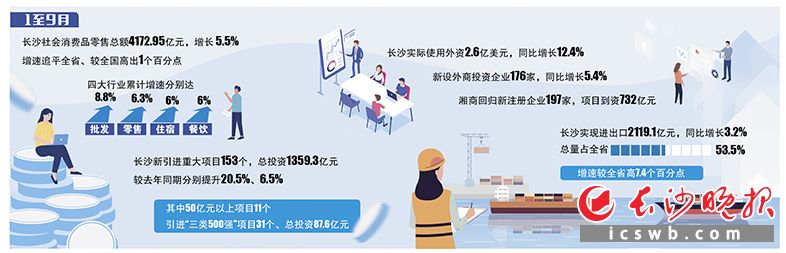
长沙社会消费品零售增速跑赢全国 总额4172.95亿元,增长5.5% 前三季度商务和开放型经济“韧性拉满”
Chang Sha Wan Bao· 2025-10-30 02:06
Core Insights - Changsha's retail sales of consumer goods reached 417.295 billion yuan in the first three quarters of 2025, growing by 5.5%, matching the provincial growth rate and exceeding the national average [2] - The city has shown resilience and vitality in its business and open economy amidst complex domestic and international environments [2] Consumer Market - The recent Hunan home appliance warehouse direct sales event attracted over 669 million participants, driving sales of 38.8 billion yuan in categories like automobiles and home appliances through the "old for new" policy [3] - The "首发长沙" consumption season during the National Day and Mid-Autumn Festival featured over 280 promotional activities and 50 million yuan in consumer vouchers, effectively releasing market consumption potential [4][5] Investment and Project Development - In the first three quarters, Changsha introduced 153 major projects with a total investment of 135.93 billion yuan, marking increases of 20.5% and 6.5% year-on-year, respectively [7] - The city has implemented a "one-number project" for investment attraction, enhancing precision in attracting businesses [6] Foreign Investment - Changsha utilized 260 million USD in foreign investment from January to September, a year-on-year increase of 12.4%, with 176 new foreign-invested enterprises established [8] - The return of Hunan merchants saw 197 new registered enterprises, with project funding reaching 73.2 billion yuan [8] Trade and Export - Changsha exported electric vehicles worth 8.06 billion yuan in the first three quarters, a significant increase of 104.7%, accounting for 93.6% of the province's total [9] - The city's total import and export volume reached 211.91 billion yuan, growing by 3.2% year-on-year, and accounting for 53.5% of the province's total [11] Future Outlook - The city aims to activate consumption, expand foreign trade, and attract investments as key strategies for the fourth quarter, contributing to the successful completion of the 14th Five-Year Plan [14]