库存管理

Search documents
《黑色》日报-20260123
Guang Fa Qi Huo· 2026-01-23 01:11
1. Report Industry Investment Ratings - No industry investment ratings are provided in the given reports. 2. Core Views of the Reports Steel Industry - Steel prices showed little fluctuation, with the night - session prices of rebar and hot - rolled coil closing at 3,124 yuan and 3,288 yuan respectively. The iron - water production is expected to decline slightly this week, rebar production will increase, and hot - rolled coil production will decrease. The industry is in a situation of both weak supply and demand. Rebar demand has a significant seasonal decline, while hot - rolled coil demand has a relatively small decline. Recent cost reduction may lead to a downward shift in the steel price center. Consider taking profits on long positions of the steel - ore ratio when the price is high and continue to hold long positions of the hot - rolled coil to rebar spread. The reference range for the May contract of rebar is 3,050 - 3,250 yuan, and for hot - rolled coil is 3,200 - 3,350 yuan [1]. Iron Ore Industry - The main iron - ore contract oscillated, with weak price rebound. Support factors for iron ore are reversing. Iron - water复产 falls short of expectations, the negotiation deadlock may change, and steel - mill restocking is gradually being realized. The supply side shows a decline in the global shipment volume of iron ore, and the shipment center has dropped. The demand side indicates that iron - water production remains flat this week, and the port clearance volume has started to decline seasonally, suppressing the pre - holiday iron - water复产 height. Steel - mill profitability has dropped significantly, and the subsequent iron - water复产 space is restricted. Port inventory continues to accumulate, and steel - mill inventory is increasing at a slower pace. Iron ore is facing a situation of both weak supply and demand, and its price is under pressure. It is advisable to short at around 800 [3]. Coke and Coking Coal Industry - Coke futures oscillated, and the spot market is currently stable. After the price adjustment, coke production is affected by coking coal, and coking profit is under pressure, with a slight decline in production. Steel mills are gradually resuming production after the New Year's Day, iron - water production has slightly increased, and steel prices have rebounded at a low level. Overall inventory has slightly increased, and coke supply - demand has improved. Some coke enterprises are starting to resist price cuts and initiate price increases, but the post - holiday market will be loose again, with a bearish view on single - side trading in the range of 1,600 - 1,800 yuan. Coking coal futures oscillated at a low level. The spot auction price in Shanxi mostly increased, and Mongolian coal prices followed the futures down. The supply side is in the复产 stage, and the demand side is at a low level. With downstream restocking, overall inventory has slightly increased. The post - holiday market supply - demand is expected to be loose, with a bearish view on single - side trading in the range of 1,000 - 1,200 yuan [5]. Ferrosilicon and Ferromanganese Industry - Ferrosilicon futures oscillated strongly. The supply side shows a slight decline in production, but the absolute value is still at a relatively low level in the same period of history. The demand side indicates that iron - water复产 may fall short of expectations, and non - steel demand has weakened. The inventory is still at a high level but is declining month - on - month. The cost side shows that alloy manufacturers are starting to replenish manganese ore, which supports the manganese ore price. The short - term supply - demand contradiction of ferrosilicon is limited, and the price is expected to fluctuate widely in the range of 5,300 - 5,800 yuan. Ferromanganese futures oscillated. The supply side shows a slight decline in production, and the demand side also shows weakness. The high inventory still exerts pressure on the price, and the price is expected to fall, with a reference range of 5,800 - 6,000 yuan [6]. 3. Summary by Relevant Catalogs Steel Industry Steel Prices and Spreads - Rebar and hot - rolled coil spot prices in different regions showed little change, while futures prices had slight increases or decreases. The spreads between different contracts also changed slightly [1]. Cost and Profit - Steel billet and slab prices remained unchanged. The cost of Jiangsu electric - furnace rebar was stable, while the cost of Jiangsu converter rebar decreased by 2 yuan/ton. The profits of rebar and hot - rolled coil in different regions showed different degrees of decline [1]. Production - The daily average iron - water production decreased slightly, the production of five major steel products increased slightly, rebar production increased by 4.9%, and hot - rolled coil production decreased by 1.0% [1]. Inventory - The inventory of five major steel products increased by 0.8%, rebar inventory increased by 3.2%, and hot - rolled coil inventory decreased by 1.3% [1]. Transaction and Demand - The building material transaction volume decreased by 6.3%, the apparent demand for five major steel products decreased by 2.0%, the apparent demand for rebar decreased by 2.5%, and the apparent demand for hot - rolled coil decreased by 1.3% [1]. Iron Ore Industry Iron Ore - Related Prices and Spreads - The warehouse - receipt costs of different iron - ore varieties increased slightly, and the basis of the 05 contract for different varieties decreased slightly. The 5 - 9 spread decreased by 2.9%, and the 1 - 5 spread increased by 6.3% [3]. Spot Prices and Price Indexes - The spot prices of different iron - ore varieties at Rizhao Port increased slightly, and the Singapore Exchange 62% Fe swap price decreased by 0.4% [3]. Supply - The arrival volume at 45 ports decreased by 8.9%, the global shipment volume decreased by 7.9%, and the national monthly import volume increased by 8.2% [3]. Demand - The daily average iron - water production of 247 steel mills decreased by 0.6%, the daily average port clearance volume at 45 ports decreased by 1.0%, the national monthly pig - iron production decreased by 2.6%, and the national monthly crude - steel production decreased by 2.4% [3]. Inventory Changes - The inventory at 45 ports increased by 1.7%, the imported iron - ore inventory of 247 steel mills increased by 3.0%, and the inventory - available days of 64 steel mills increased by 9.5% [3]. Coke and Coking Coal Industry Coke - Related Prices and Spreads - The prices of coke in different regions and contracts showed little change or slight increases or decreases. The coking profit decreased by 16 [5]. Upstream Coking Coal Prices and Spreads - The prices of coking coal in different regions remained unchanged [5]. Supply - The daily average production of all - sample coking plants decreased by 0.2%, and the daily average production of 247 steel mills increased by 0.4% [5]. Demand - The iron - water production of 247 steel mills increased by 0.0% [5]. Inventory Changes - The total coke inventory increased by 2.1%, the coke inventory of all - sample coking plants decreased by 0.4%, the coke inventory of 247 steel mills increased by 1.7%, and the port inventory increased by 4.2% [5]. Coking Coal - Related Prices and Spreads - The prices of coking coal in different regions and contracts showed little change or slight increases. The sample coal - mine profit increased by 3.84 [5]. Overseas Coal Prices - The Australian Peak Downs coking coal CIF price increased by 0.8%, and the Jingtang Port Australian prime coking coal ex - warehouse price increased by 3.9% [5]. Supply - The raw - coal production decreased by 0.3%, and the clean - coal production decreased by 0.1% [5]. Demand - The coke production of all - sample coking plants decreased by 0.2%, and the coke production of 247 steel mills increased by 0.4% [5]. Inventory Changes - The clean - coal inventory of Fenwei coal mines decreased by 2.6%, the coking - coal inventory of all - sample coking plants increased by 4.04%, the coking - coal inventory of 247 steel mills increased by 0.1%, and the port inventory decreased by 3.24% [5]. Ferrosilicon and Ferromanganese Industry Ferrosilicon Spot Prices and Spreads - The ferrosilicon main - contract closing price increased by 1.04%, and the spot prices in different regions showed different degrees of change. The spreads between different regions and the main contract also changed [6]. Ferromanganese Spot Prices and Spreads - The ferromanganese main - contract closing price increased by 0.54%, and the spot prices in different regions remained unchanged [6]. Cost and Profit - The prices of manganese ore in different origins showed little change or slight decreases. The production cost in Inner Mongolia decreased by 0.0%, and the production profit in Inner Mongolia increased by 4.4% [6]. Manganese Ore Supply - The manganese ore shipment volume increased by 35.6%, the arrival volume increased by 38.84%, and the port clearance volume decreased by 2.7% [6]. Supply - The ferrosilicon production decreased by 0.34%, and the ferromanganese weekly production increased by 0.34% [6]. Demand - The ferrosilicon demand increased by 1.2%, the ferromanganese demand increased by 0.94%, the daily average iron - water production of 247 steel mills remained unchanged, the blast - furnace operating rate decreased by 0.6%, and the production of five major steel products increased by 0.04% [6]. Inventory Changes - The ferrosilicon inventory of 60 sample enterprises increased by 5.44%, and the inventory of 63 sample enterprises remained unchanged [6].
「杭州社淘」跨境电商全域库存协同:解决海外直邮与保税备货的“断货”与“滞销”难题
Sou Hu Cai Jing· 2026-01-22 07:25
Core Insights - The article discusses the challenges and solutions for cross-border e-commerce merchants regarding two primary supply chain models: "Overseas Direct Mail" and "Bonded Warehouse Stocking" [1][3][4] - A data-driven, all-domain inventory collaboration system is proposed as a solution to optimize inventory management and mitigate the issues of stockouts and overstocking [6][16] Group 1: Challenges of Supply Chain Models - The "Overseas Direct Mail" model faces high risks of stockouts due to long uncertainty chains involving international shipping, customs clearance, and last-mile delivery, which can lead to customer dissatisfaction and platform penalties [3] - The replenishment cycle is lengthy, often taking weeks from ordering to availability, risking missed sales opportunities during peak demand [3] - The "Bonded Warehouse Stocking" model incurs significant capital occupation as it requires large upfront purchases, putting pressure on brands with tight cash flows [4] - Market prediction inaccuracies can lead to inventory backlogs, with potential high costs for storage, destruction, or return of unsold goods [4] Group 2: Proposed Inventory Management System - The proposed "All-Domain Inventory Collaboration" aims to create a real-time, data-sharing central decision-making system that dynamically allocates demand and adjusts inventory flow [6] - The system should provide global visibility of inventory status across overseas warehouses, bonded warehouses, and in-transit stock [6] - Intelligent order allocation based on product characteristics, sales forecasts, and logistics costs is essential for optimizing warehouse selection [6][11] Group 3: Implementation Steps for Inventory Collaboration - The first step involves SKU stratification, where high-selling and stable products are placed in bonded warehouses, while low-selling and uncertain demand products are shipped via overseas direct mail [9][10] - The second step focuses on technology integration, utilizing ERP/WMS systems for real-time inventory data synchronization and OMS for intelligent routing of orders [11] - The third step emphasizes refined operations, including dynamic safety stock models and rapid response mechanisms for slow-moving inventory [12] - The fourth step involves continuous optimization through rolling sales forecasts and deep partnerships with logistics providers to enhance supply chain responsiveness [14] Group 4: Strategic Importance of Inventory Management - Effective inventory management has shifted from being a cost center to a strategic core for cross-border e-commerce on platforms like JD International [16] - A well-structured inventory collaboration network can buffer market fluctuations and transform the relationship between overseas direct mail and bonded stocking into a synergistic advantage for brands [16]


华凯易佰:预计2025年净利润同比下降4.80%-22.43%
Xin Lang Cai Jing· 2026-01-21 09:28
Core Viewpoint - The company anticipates a decline in net profit for the fiscal year 2025, with projections indicating a range of 132 million to 162 million yuan, representing a year-on-year decrease of 4.80% to 22.43% [1] Financial Projections - The expected net profit after excluding non-recurring gains and losses is projected to be between 104 million and 134 million yuan, reflecting a year-on-year decline of 17.05% to 35.62% [1] - The anticipated operating revenue for 2025 is estimated to be between 9 billion and 9.2 billion yuan [1] Inventory Management Strategy - Starting from the fourth quarter of 2024, the company will actively implement an inventory optimization management plan, focusing on concentrated promotions for slow-moving, out-of-season, or low-turnover products, which may lead to short-term performance pressure [1]

零售科技初创公司Another获250万美元种子轮融资
Sou Hu Cai Jing· 2026-01-21 09:11
该公司周二宣布完成由Anthemis FIL和Westbound领投的250万美元种子轮融资。 Corina Marshall在零售数字营销领域工作了11年,她发现这个行业在技术应用方面相当落后。 具体而言,帮助零售品牌销售未售出或过剩产品(非主渠道库存)的技术并没有达到应有的先进水平。品牌通常在Nordstrom Rack等折扣零售商 处销售过剩库存,但往往亏损,因为管理未售出库存非常困难。产品分散在各个仓库中,团队只能猜测商品的价值以及最佳销售时机。 "非主渠道库存流程的每个步骤之间间隔时间过长,使得将产品转移到对品牌和零售商最有利的目的地变得困难,"Marshall告诉TechCrunch。 她决定为非主渠道市场提供技术升级。2024年,她创立了Another公司,这是一个帮助企业管理未售出或过剩产品的软件系统。销售这些商品的二 级市场通常在紧张的时间限制下运营,由于需求波动,可能出现高度动态的定价。零售商要在Nordstrom Rack等平台上取得成功,需要快速获取 实时数据和协调配合,以便服装能够高效地从零售商转移到仓库再到店铺。 Another与企业现有的软件系统(如管理客户退货的系统)连接,更好 ...

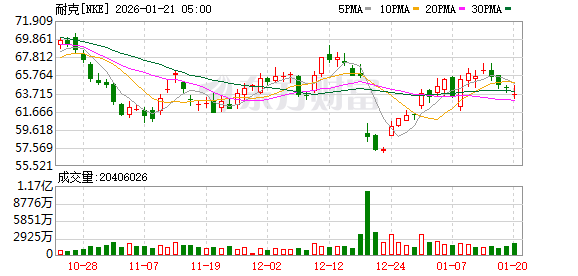
耐克中国换帅:继任者在华经验相对有限
2 1 Shi Ji Jing Ji Bao Dao· 2026-01-21 08:12
Core Viewpoint - Nike is undergoing a leadership change in its Greater China region, with Angela Dong stepping down and Cathy Sparks appointed as the new Vice President and General Manager, amid declining sales and increasing competition in the Chinese sports market [1][2][4]. Group 1: Leadership Change - Angela Dong will officially resign on March 31, 2026, after over 20 years in various leadership roles in Greater China, during which Nike witnessed significant milestones in the region [1]. - Cathy Sparks, with 25 years of experience at Nike, previously served as Vice President and General Manager for the Asia Pacific and Latin America region, and is expected to deepen consumer connections in Greater China [2][11]. Group 2: Performance Challenges - Nike's sales in Greater China fell by 16% year-on-year to $1.423 billion for the latest fiscal quarter ending November 2025, with EBIT down 49% [4]. - Direct sales dropped 18%, with digital sales down 36% and store sales down 5%, while wholesale business declined by 15% [4]. - The decline is attributed to decreased store traffic, weak seasonal product sales, and high inventory levels, leading to a perception of the brand as a discount label [4]. Group 3: Market Dynamics - The Chinese sports market is becoming increasingly competitive, with a decline in consumer spending willingness, as indicated by a drop in the percentage of consumers inclined to spend more from 23.3% in Q2 2025 to 19.2% in Q3 2025 [4]. - Other major brands like Anta and Li Ning are also facing growth pressures, with Anta's sales showing low single-digit declines [5]. Group 4: Strategic Adjustments - Nike is focusing on upgrading key stores, with a notable 25% sales increase in upgraded product categories at specific locations [8]. - The company is reducing spring product distribution and cutting summer product purchases to improve sales rates and full-price sales ratios [9]. - Recent marketing efforts include signing popular figures like G.E.M. and launching impactful advertising campaigns [9]. Group 5: Future Outlook - The leadership change raises questions about potential shifts in Nike's operational strategy in China, especially as North America shows a 9% sales increase [11]. - Cathy Sparks' global experience may help integrate resources across regions, but the unique challenges of the Chinese market require localized strategies [12].

耐克中国换帅:继任者在华经验相对有限丨消费一线
2 1 Shi Ji Jing Ji Bao Dao· 2026-01-21 08:05
Core Viewpoint - Nike is undergoing a leadership change in its Greater China region, with Angela Dong stepping down and Cathy Sparks appointed as the new Vice President and General Manager, amid declining sales and increasing competition in the Chinese sports market [2][6][15]. Group 1: Leadership Change - Angela Dong will officially resign on March 31, 2026, after over 20 years in various leadership roles in Greater China, during which Nike witnessed significant milestones in the region [3][5]. - Cathy Sparks, with 25 years of experience at Nike, previously served as Vice President and General Manager for the Asia Pacific and Latin America regions, and is expected to deepen consumer connections in Greater China [4][16]. Group 2: Performance Challenges - Nike's sales in Greater China fell by 16% year-on-year to $1.423 billion for the latest fiscal quarter ending November 2025, with EBIT down 49% [6]. - Direct sales dropped 18%, with digital sales down 36% and store sales down 5%, while wholesale business decreased by 15% [6]. Group 3: Market Dynamics - The Chinese sports market is becoming increasingly competitive, with a decline in consumer spending willingness, as indicated by a drop in the percentage of consumers inclined to spend more from 23.3% in Q2 2025 to 19.2% in Q3 2025 [8]. - Major competitors like Anta and Li Ning are also facing growth pressures, with Anta's sales showing low single-digit declines [9]. Group 4: Strategic Adjustments - Nike is implementing store upgrades and reducing inventory, with a 20% decrease in total inventory compared to the previous year, and plans to expand successful upgrade models to more stores [12][13]. - The company is adjusting its spring product distribution and cutting summer product purchases to improve sales rates and full-price sales ratios [13]. Group 5: Future Outlook - The leadership change raises questions about potential shifts in Nike's operational strategy in China, especially as the North American market shows signs of recovery with a 9% sales increase [16]. - Cathy Sparks' global experience may help integrate resources across regions, but she will face challenges from strong local brands and the need for more localized strategies [17][18].
甲醇聚烯烃早报-20260120
Yong An Qi Huo· 2026-01-20 02:00
Report Industry Investment Ratings - No relevant content found Core Views - For methanol, with the ongoing fermentation of the Iran conflict, MTO shows resistance. Some plants are shutting down or planning production cuts, waiting to restart after the situation in Iran stabilizes. Methanol has difficulty moving up or down, and the MTO profit caps the upside. Unless other downstream products increase in price, a bearish view or selling call options is more appropriate [1]. - For plastics, the market shows a volatile trend in the futures, stable spot prices, and weak basis. The supply of standard products is increasing, and the 05 PE supply is expected to be moderately pressured [2]. - For PP, the market is stable in the futures, with a weak basis. The import and export profits are negative, and the export volume has slightly declined. The supply is expected to be moderately pressured in the 05 and subsequent periods [3]. - For PVC, the basis is improving, and the trading volume is average this week. The overall inventory is moderately high, and the comprehensive profit is low. In the short - term, the seasonal production resumes, and the long - term outlook is poor due to weak real - estate demand [5]. Summary by Product Methanol - **Price Data**: The price of动力煤期货remains unchanged at 801, and the西北 - folded price has a daily change of -25 [1]. - **Industry Situation**: Iran's conflict continues to ferment. Some MTO plants are shutting down or reducing production, waiting for the normal situation in Iran to restart. The MTO profit restricts the upward movement of methanol prices [1]. Plastics - **Price Data**: The price of东北亚乙烯has a daily change of -30, and the主力 futures price has a daily change of -28. The two - oil inventory and the number of warehouse receipts are decreasing [2]. - **Industry Situation**: The futures market is volatile, the spot market is stable, and the basis is weak. The oil - based and coal - based profits are deteriorating, and the social inventory is increasing [2]. PP - **Price Data**: The price of山东丙烯remains unchanged, and the主力 futures price has a daily change of -14. The basis is stable [3]. - **Industry Situation**: The futures market is stable, the basis is weak, and the import and export profits are negative. The supply is temporarily stable in January, and the inventory is moderately high [3]. PVC - **Price Data**: The price of西北电石remains unchanged, and the主力 futures price has a daily change of -30. The basis has a daily change of +30 [5]. - **Industry Situation**: The basis is improving, the trading volume is average, and the overall inventory is moderately high. The comprehensive profit is low, and the long - term outlook is poor due to weak real - estate demand [5].
跨年窗口再看玻纤电子布粗纱涨价趋势
2026-01-19 02:29
Summary of Conference Call on Fiberglass and Electronic Fabrics Industry Industry Overview - The conference call primarily discusses the fiberglass and electronic fabrics industry, focusing on the trends in raw yarn prices and market dynamics for 2026 [1][2][4][6]. Key Points and Arguments Market Conditions - Wind power orders have seen a temporary reduction, but overall shipment volumes have narrowed. Downstream processing enterprises report slightly better orders than previous years, though the outlook remains uncertain [1][2]. - Leading companies maintain stable inventory levels, while smaller firms have slightly reduced inventory, with stock days averaging between one and two months [1][2]. Price Trends - Before the Spring Festival, some companies may transfer inventory to traders, leading to a slight price decrease of 50-100 yuan/ton. However, social inventory is expected to remain low [1][2]. - After the Spring Festival, raw yarn prices are likely to rise, with a potential increase of 50-200 yuan by the end of Q1 2026, and a minimum expected price of around 3,000 yuan in H1 2026 [1][7]. Production Capacity - In 2026, there will be a significant increase in domestic raw yarn production capacity, with a net addition of over 500,000 tons. Leading companies will continue to expand capacity, while smaller firms will maintain current levels [1][4][17]. - New production lines for both coarse and fine sand are expected to add approximately 790,000 tons of capacity, with a net addition of around 300,000 tons anticipated for 2027 [17]. Electronic Fabrics Market - The electronic sand market is performing well, driven by increased demand for high-end consumer electronics and computing servers. This has led companies to shift towards high-end product production, reducing the output of standard electronic sand and fabrics [1][9]. - Prices for electronic fabrics, such as the 7,628 fabric, have risen from 3 yuan/meter to nearly 5 yuan/meter, with thin and ultra-thin fabrics increasing from over 3 yuan to nearly 7 yuan/meter [1][10]. Inventory Levels - Current inventory levels for standard electronic yarn (7,628) are approximately 20 days, while leading companies have about one month of inventory. High-end products like 2,116 and 1,080 are in short supply, with almost no inventory available [3][13][14]. Competitive Landscape - Competition within the industry is becoming more rational, with leading companies maintaining stable production rhythms. Some smaller firms are producing differentiated products to support current price levels and avoid falling back to historical lows [8]. Future Expectations - The overall supply-demand situation is stable, with no significant fluctuations expected in the short term. Price adjustments are anticipated post-Spring Festival to ensure market stability [6][21]. - The second quarter of 2026 will be a critical observation period for price trends, as any significant changes in supply will likely influence pricing strategies [21]. Conclusion - The fiberglass and electronic fabrics industry is poised for a period of price increases and capacity expansion, driven by stable demand for high-end products and strategic inventory management. The market dynamics suggest a cautious but optimistic outlook for the upcoming year [1][4][6][18].
纺织服饰周专题:部分服饰制造公司2025年营收公布
GOLDEN SUN SECURITIES· 2026-01-18 13:12
Investment Rating - The report recommends a "Buy" rating for several companies including Shenzhou International, Huayi Group, Anta Sports, and Li Ning, with respective 2026 PE ratios of 12x and 15x for Shenzhou International and Huayi Group [2][9][26]. Core Insights - The textile and apparel industry is experiencing a mixed performance, with some companies showing resilience while others face challenges due to fluctuating orders and profit margins [1][3]. - The report anticipates a cautious improvement in downstream orders for 2026, supported by healthy inventory levels and strong sales performance from certain brands [2][20]. - The sportswear segment is expected to outperform the broader apparel market, driven by strong inventory management and long-term growth potential [3][26]. Summary by Sections Recent Revenue Performance - Several apparel manufacturers reported their 2025 revenue, with Feng Tai Enterprises, Ru Hong, and Yu Yuan Group showing year-on-year changes of -4.5%, +3.2%, and +0.5% respectively for the full year [1][12]. - In December 2025, Feng Tai Enterprises, Ru Hong, and Yu Yuan Group reported monthly revenues down by -0.6%, -3.6%, and -3.7% respectively [1][12]. Industry Outlook - The report indicates a weakening industry sentiment since H2 2025, with Southeast Asia's export performance continuing to surpass that of China [2][17]. - For 2026, the report expects cautious improvements in orders, with a focus on core brand performance and inventory management [20]. Investment Recommendations - Recommended stocks include Shenzhou International and Huayi Group, with Shenzhou International expected to achieve a 10% revenue growth in 2025 and Huayi Group's profits anticipated to recover gradually [2][25]. - Other companies to watch include Wei Xing Co., Kai Run Co., and Jing Yuan International, which are expected to benefit from the anticipated recovery in orders [2][26]. Market Performance - The textile and apparel sector has underperformed compared to the broader market, with the Shanghai and Shenzhen 300 index down by 0.57% while the textile manufacturing sector fell by 0.77% [30].




李宁(02331.HK)-第四季度流水下滑低单位数 龙店与户外店首店齐开
Ge Long Hui· 2026-01-17 06:27
Core Viewpoint - The company reported a low single-digit decline in retail sales for the fourth quarter ending December 31, 2025, with offline channels experiencing a mid single-digit decline and e-commerce remaining flat [1][2][3] Retail Performance - As of December 31, 2025, the total number of sales points in China was 6,091, a net decrease of 41 from the previous quarter, with retail business decreasing by 59 and wholesale business increasing by 33 [1] - The decline in sales was primarily due to offline channels, although the rate of decline has narrowed compared to the previous quarter [2][3] Sales and Discounts - The fourth quarter saw a low single-digit decline in sales, which improved compared to the mid single-digit decline in the third quarter, with e-commerce performing better than offline channels [3] - Discounts deepened in the fourth quarter, with the absolute level slightly above 60%, particularly in December due to increased promotional efforts for autumn and winter apparel [4] Inventory Management - The inventory turnover ratio improved to a healthier level of 4-5 months, down from 5-6 months in the previous quarter, indicating effective inventory management [4] - Direct sales channels showed better inventory turnover compared to wholesale channels [4] New Product Launches - The company launched a series of new products in the fourth quarter, including innovative running shoes designed for rainy weather and new basketball models [4] - The introduction of new store formats, such as outdoor specialty stores and "dragon stores," is expected to contribute to long-term sales growth [4][5] Financial Forecast - The company has adjusted its profit forecasts upward, expecting net profits of 26.2 billion, 28.0 billion, and 32.9 billion yuan for 2025-2027, reflecting a year-on-year change of -13.1%, +7.0%, and +17.3% respectively [5][6] - The target price has been raised to 22.1-23.3 HKD, corresponding to a PE ratio of 19-20 times for 2026, maintaining an "outperform" rating [5][6]