战略资源

Search documents
终于破案,96吨稀金被追回,13万吨订单被消除!开始跟美国算总账
Sou Hu Cai Jing· 2025-12-19 21:51
Group 1 - A significant smuggling case involving 166 tons of antimony ingots was thwarted, with 96 tons successfully recovered by customs [3][13][15] - The Shenzhen Intermediate People's Court sentenced the main perpetrator to 12 years in prison, highlighting the severity of the crime [3][19][22] - Antimony is a critical material for manufacturing thermal imaging devices and is essential in the semiconductor industry, making it a strategic resource for national security [5][17] Group 2 - The Chinese government has implemented export controls on antimony and is now approving certain export licenses for rare earth elements, indicating a structured approach to resource management [24][26][38] - Rare earth elements are crucial for various high-tech applications, including military equipment, and the U.S. heavily relies on imports from China for these materials [28][31][32] - The recent export control measures reflect China's strategy to manage its resources while ensuring compliance from legitimate exporters [38] Group 3 - Following the U.S. approval of a $111 billion arms sale, China responded by canceling a 132,000-ton wheat order, signaling its capability to leverage trade as a countermeasure [40][42][46] - The cancellation of the wheat order, while minor in terms of China's overall grain production, serves as a strategic signal to the U.S. regarding the consequences of its actions [44][54] - China's actions demonstrate its resolve to protect its strategic resources and assert its position in international trade negotiations [53][56]


钨价飙涨,战争才刚开始
3 6 Ke· 2025-12-19 06:25
Core Insights - The price of tungsten has surged at an unprecedented rate, with tungsten powder exceeding 1 million yuan per ton and an annual increase of over 216% [2][3] - This price increase has significantly impacted the entire tungsten industry chain, from mining to manufacturing, highlighting tungsten's critical role in modern manufacturing [3][4] Demand Dynamics - The recent surge in tungsten prices is fundamentally different, driven not by traditional industrial cycles but by a series of technological and industrial revolutions [7] - The demand for tungsten is now closely tied to national security and strategic capabilities, particularly in military applications [8][9] - The global industrial competition is increasingly focused on precision and efficiency, with tungsten being essential for high-end manufacturing tools [10][11] - The energy and digital revolutions are also driving demand for tungsten, particularly in the photovoltaic and semiconductor industries [12][13] - The rise of the electric vehicle industry further amplifies tungsten demand across its supply chain [14][15] - The core engine driving tungsten demand has shifted from cyclical infrastructure investments to being closely linked with global R&D investments and high-end manufacturing metrics [16][17] Supply Constraints - Over 80% of tungsten resources and nearly 85% of smelting capacity are controlled by China, which presents a significant geopolitical factor [18] - China's tightening of environmental and safety standards is seen as a direct cause of supply constraints, reflecting a strategic revaluation of tungsten as a non-renewable resource [18][19] - The concentrated supply structure has raised concerns among major consuming economies about supply chain security and cost impacts [20][21] Market Implications - The volatility in tungsten prices is prompting a reevaluation of value across the capital market and industry chain, leading to a survival of the fittest scenario [23] - Investment focus is shifting towards strategic metals like tungsten, which are experiencing supply-demand tension and a revaluation of their strategic importance [24][25] - Companies with high-quality mining rights and production quotas are positioned to benefit significantly from price surges, while downstream firms with technological advantages can pass on costs to high-end clients [26][27] - The recycling of tungsten is emerging as a lucrative business, enhancing supply chain resilience and reducing dependence on primary resources [28] - The trend of vertical integration is expected to strengthen as downstream manufacturers seek to secure supply chains and mitigate cost pressures [29] Strategic Outlook - The transition from a cyclical commodity to a technology-driven strategic resource indicates a permanent reshaping of tungsten's price dynamics and market behavior [17] - Companies must adapt their investment strategies from short-term price speculation to long-term industry positioning, focusing on firms that can innovate and maintain competitive advantages [30]
“稀世珍宝”现身我国,西方想拿先进技术来换,被我国直接拒绝
Sou Hu Cai Jing· 2025-12-07 03:51
Core Insights - The discovery of a large rhenium deposit in Shaanxi, China, with reserves of 176 tons, positions China as the fourth-largest rhenium resource country globally, leading to geopolitical tensions centered around Beijing [1] - Rhenium is essential for manufacturing single-crystal turbine blades in aerospace engines, making it a critical industrial resource [3] - The negotiation dynamics between China and Western countries involve a strategic exchange of rhenium for advanced technology, which could undermine China's aerospace industry if not handled carefully [5] Industry Dynamics - The Western military-industrial complex is attempting to leverage outdated technology blueprints to acquire valuable rhenium resources from China at low prices, potentially turning China into a raw material supplier for Western aerospace [5] - The lack of advanced single-crystal furnace technology in China poses a significant challenge for producing rhenium in single-crystal form, which is crucial for high-performance turbine blades [7] - Despite recent advancements in rhenium processing, such as Jiangxi Copper's achievement in producing 99.99% pure rhenium powder, China still lags behind in the extensive data and experience accumulated by leading global aerospace companies [7][9] Strategic Considerations - The 176 tons of rhenium is viewed as a vital resource for China's industrial advancement rather than a mere asset to be exploited [9] - There is a pressing need for China to maintain its technological independence and avoid becoming overly reliant on foreign technology, which could jeopardize its aerospace ambitions [5][9] - The innovative approaches taken by Chinese engineers, such as adapting semiconductor-grade equipment for aerospace applications, highlight the challenges and risks involved in overcoming technological barriers [7]

CPO大爆发!此前超700亿元资金抄底A股!为什么越跌越买?
Sou Hu Cai Jing· 2025-11-26 10:16
Market Overview - The Shenzhen Component Index and the ChiNext Index opened lower but rose throughout the day, with the ChiNext Index at one point increasing by over 3% [1] - The total trading volume in the Shanghai and Shenzhen markets was 1.78 trillion, a decrease of 28.8 billion from the previous trading day [1] - By the end of the trading session, the Shanghai Composite Index fell by 0.15%, while the Shenzhen Component Index rose by 1.02% and the ChiNext Index increased by 2.14% [1] Investment Trends - Despite the market downturn, many investment institutions are buying into stock ETFs, with a net inflow of 701.21 billion in stock ETFs and cross-border ETFs last week [4] - The net inflow into broad-based index ETFs was 359.31 billion, indicating a significant direction for capital inflow [4] - Institutions believe that the overall market trend remains unchanged, and the current capital inflow into ETFs suggests that many investors are taking the opportunity to buy on dips [4] External Factors - Recent adjustments in the market are attributed to external factors, including unexpected U.S. employment data and rising unemployment rates, which have created uncertainty regarding the Federal Reserve's interest rate decisions [5] - Concerns about asset price declines and the AI bubble have not fully dissipated, contributing to market volatility [5] - Ongoing geopolitical tensions are also affecting market risk appetite [5] Long-term Outlook - Institutions maintain an optimistic long-term outlook for the market, suggesting that the current short-term pullback does not alter the long-term positive trend [6] - The expectation is for a "slow bull" market to emerge, with foreign investment banks noting that while the market has priced in no further interest rate cuts this year, the possibility of a rate cut in December remains [6] Defensive Strategies - As the year-end approaches, institutions are adopting balanced allocation strategies for next year [7] - There is a strong demand for dividend-paying assets due to ongoing pressures in bank lending and deposit growth [8] - The potential for further interest rate cuts by the central bank could enhance the valuation of dividend assets [9] Growth Opportunities - The "14th Five-Year Plan" emphasizes technology as a key area for growth, presenting both opportunities and challenges [10] - Strategic resources are expected to become focal points in the market due to U.S.-China competition [11] Bond Market Insights - The bond market is showing signs of recovery, with the central bank signaling a more accommodative stance [12] - A decrease in bond supply towards year-end is leading to increased demand for early allocation from banks and insurance companies [12] Investment Strategies - Investors are encouraged to consider professional institutions for market participation and to monitor fund managers' adjustments [12] - A balanced allocation strategy, referred to as the "barbell strategy," is recommended, focusing on both technology-driven sectors and stable dividend-paying stocks [14] - Investors should lower short-term expectations and consider "fixed income plus" funds for stable returns [15] - Maintaining rationality during market downturns and seeking opportunities in corrections is advised as a long-term investment strategy [16]

倍杰特(300774.SZ):拟收购大豪矿业55%股权
Ge Long Hui A P P· 2025-11-19 11:41
Group 1 - The company Beijiete (300774.SZ) has approved the acquisition of a 55% stake in Wenshan Dahao Mining Development Co., Ltd. for a cash consideration of 224.8 million RMB [1] - The acquisition involves the assumption of Dahao Mining's total debt of 191.2813 million RMB, with Beijiete planning to handle 105.2047 million RMB of this debt through a loan [1] - Beijiete will provide a special loan to Dahao Mining at an annual interest rate of 6.5% for the construction of existing mining projects [1] Group 2 - Dahao Mining primarily holds antimony, tungsten, and lead-zinc ores, with antimony being widely used in various industrial applications [2] - Tungsten is considered a strategic resource essential for national defense and economic development, with demand driven by sectors such as automotive and aerospace [2] - The acquisition aligns with Beijiete's strategy to secure key raw material supplies and enhance the efficiency and resilience of its supply chain, contributing to the company's core competitiveness and sustainable development [2]

2026年A股仍存上行空间 新质生产力与战略资源或是投资主线
Zhong Guo Zheng Quan Bao· 2025-11-12 23:53
Group 1: Conference Overview - The 2026 Capital Market Summit and China-Saudi Investment Cooperation Forum was successfully held by CITIC Securities in Beijing, focusing on the theme "Reform and Innovation for a Better Future" [1] - The conference attracted participation from entrepreneurs and investors from Saudi Arabia and various countries, highlighting the strengthening bilateral relations between China and Saudi Arabia [2] Group 2: Economic Outlook - CITIC Securities' research team provided an outlook for 2026, predicting that China's economy will achieve qualitative improvements through deepened reforms and expanded openness, supported by policy and fundamental improvements in the A-share market [1][4] - The period of the 14th Five-Year Plan is seen as a crucial time for China's development, with 2026 expected to be a year of solid foundation and comprehensive efforts [4] Group 3: Strategic Development Goals - CITIC Securities aims to build a "Value Investment Bank," "New Quality Investment Bank," and "Digital Intelligence Investment Bank" as part of its mission to contribute to building a financial powerhouse [2][3] - The company plans to enhance its international competitiveness and integrate social value into its operations, as demonstrated by its successful participation in IPOs in Hong Kong [2] Group 4: Five Key Transformations - The chief economist of CITIC Securities outlined five key transformations expected in the next five years: a shift from traditional to innovation-driven economic growth, accelerated modernization of the industrial system, a new balance between investment in people and material, optimization of supply-demand relationships, and a new posture in China's reform and opening-up [4][5] Group 5: A-Share Market Strategy - The A-share market is anticipated to enter a critical verification phase in 2026, with a projected upward trend but potentially slower growth rates [5][6] - The focus will remain on technology growth, while resource sectors may emerge as a new mainline investment direction due to factors like global monetary easing and domestic inventory replenishment [6] Group 6: Investment Opportunities - Investment opportunities are suggested in two main areas: future industries such as AI, new energy, biotechnology, and strategic resources like rare earths and aerospace equipment, which are expected to gain value amid global competition [6]

中信建投证券:2026年A股仍存上行空间 新质生产力与战略资源或是投资主线
Zhong Guo Zheng Quan Bao· 2025-11-12 22:35
Core Viewpoint - The 2026 Capital Market Summit and China-Saudi Investment Cooperation Forum hosted by CITIC Securities highlighted the optimistic outlook for China's economy and A-share market in 2026, driven by policy support and fundamental improvements, with significant structural investment opportunities in new productivity, technological innovation, and strategic resources [1][2]. Group 1: Economic Outlook - The "14th Five-Year Plan" period is seen as a crucial phase for China's development, with 2026 expected to be a year of solid foundation and comprehensive efforts [4]. - Key transformations anticipated include a shift from traditional factor-driven growth to innovation-driven growth, accelerated modernization of the industrial system, and a new balance between investment in people and material [4]. - The external environment in 2026 is expected to be characterized by strategic counterattacks and changes in the global landscape, with domestic consumption becoming a significant focus [4][5]. Group 2: A-share Market Predictions - The A-share market is projected to maintain a slow upward trend in 2026, supported by favorable conditions such as inflows of capital, technological innovation, institutional reforms, and consumption upgrades [5]. - The long-term trend for government bond yields is expected to decline, with the RMB exchange rate remaining stable and gold retaining long-term investment value [5]. Group 3: Investment Strategies - The A-share market is entering a critical phase of verifying economic prosperity, with expectations of a fluctuating upward index but potentially slower growth rates [6]. - Technology growth is anticipated to remain a market focus, while resource sectors may emerge as a new mainline investment direction due to global monetary easing and supply-demand gaps [6]. - Investment opportunities are suggested in future industries such as AI, new energy, biotechnology, and strategic resources like rare earths and aerospace equipment, particularly in the context of global competition [6].
中信建投证券: 2026年A股仍存上行空间 新质生产力与战略资源或是投资主线
Zhong Guo Zheng Quan Bao· 2025-11-12 20:13
Core Viewpoint - The 2026 Capital Market Summit and China-Saudi Investment Cooperation Forum highlighted the optimistic outlook for China's economy and A-share market in 2026, driven by policy support and fundamental improvements, with significant structural investment opportunities in new productivity, technological innovation, and strategic resources [1] Group 1: Company Strategy - CITIC Securities aims to build a "value investment bank," focusing on international market competition and sustainable returns for stakeholders while integrating social value [2] - The company is committed to becoming a "new quality investment bank" by innovating its service model and enhancing its role as an industry partner through a comprehensive service platform [3] - CITIC Securities plans to develop a "smart investment bank" by leveraging data integration and artificial intelligence to improve efficiency in asset pricing and investment advisory [3] Group 2: Economic Outlook - The "14th Five-Year Plan" period is crucial for China's development, with 2026 expected to be a year of solid foundation and comprehensive efforts [4] - Key transformations anticipated in the next five years include a shift from traditional to innovation-driven economic growth, accelerated modernization of the industrial system, and a new balance between investment in people and material [4][5] - 2026 is projected to be a year of strategic counteroffensive, with a focus on new industries, increased domestic consumption, and a dual easing of fiscal and monetary policies [5] Group 3: A-Share Market Strategy - The A-share market is entering a critical verification phase, with expectations of a slow upward trend in the index, although growth may decelerate [6] - The focus for investment will remain on technology growth, while resource sectors may emerge as a new mainline due to global monetary easing and domestic inventory cycles [6] - Investment opportunities are suggested in future industries such as AI, new energy, and biotechnology, as well as strategic resources like rare earths and aerospace equipment [6]
李迅雷专栏 | 把握“十五五”结构性机会,四大配置主线浮现
中泰证券资管· 2025-11-12 11:32
Global Landscape - The strategic interaction and policy choices between China and the US significantly impact global trade, industrial chain layout, and capital flows [4] - China is estimated to account for over 40% of global manufacturing capacity, reinforcing its influence in trade and industry [4] - The debt-driven growth model poses challenges but also reflects China's substantial policy resources and market development potential [4] Chinese Economy - The current economic situation is characterized as "high at the front and low at the back," with a GDP growth rate of 5.2% in the first three quarters, making the annual target achievable [6] - Consumption grew by 4.5%, supported by policies like "old-for-new" exchanges, while investment saw a decline of 0.5% [6] - Exports were a highlight, increasing by 6.1%, particularly strong in emerging markets like Africa and ASEAN [6] "14th Five-Year" Plan Highlights - The plan emphasizes accelerating "technological self-reliance," aiming to build a modern industrial system with advanced manufacturing as its backbone [8] - There is a strong push for consumption and increased social welfare spending, particularly in response to an aging population [8] - The establishment of a nationwide unified market is prioritized, optimizing resource allocation in energy, public services, and data [8] Asset Allocation Strategies - In a low-interest-rate environment, high-dividend assets are highlighted as scarce and valuable, with Hong Kong stocks offering a dividend rate 30% higher than A-shares [11] - Sectors like military, gold, and rare earths are recommended as strategic allocations in response to global geopolitical tensions [11] - Focus on AI technology sectors, including computing power and robotics, is essential as they represent a significant investment opportunity [11] - New consumption trends driven by younger demographics and single-person economies present emerging investment opportunities [11]

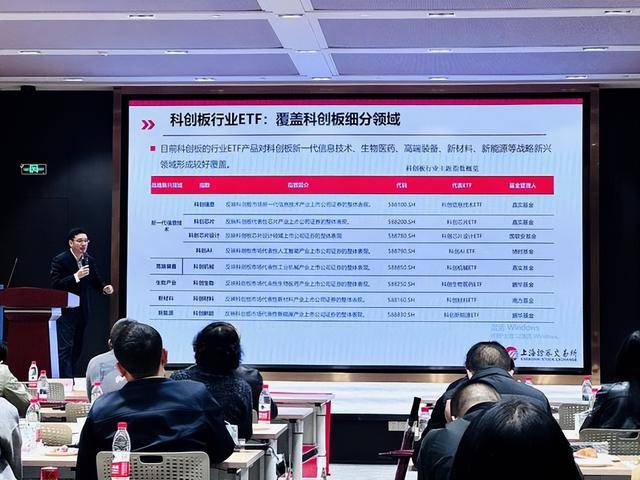
如何把握机遇,规避风险?五矿证券这场ETF大讲堂活动“干货满满”
Sou Hu Cai Jing· 2025-11-10 09:51
Core Insights - The current A-share market is experiencing fluctuations around the key 4000-point level, prompting investors to seek better asset allocation strategies and opportunities to mitigate risks [1] - An ETF seminar hosted by Minmetals Securities in Chengdu featured expert insights on ETF products, strategies, options basics, and index investments, aimed at enhancing investor knowledge [1] Group 1: ETF Advantages - The primary advantage of ETFs is risk diversification, as they consist of a basket of securities, which helps investors avoid the impact of individual stock failures, making them suitable for conservative investors [2] - ETFs generally have lower management fees compared to actively managed funds, leading to significant compounded returns over the long term; they also offer flexible trading mechanisms and are exempt from stamp duty, enhancing capital efficiency for investors [4] Group 2: Investment Strategies - Investors are advised to consider a high allocation of 70%-80% in ETFs for beginners, while more experienced investors can allocate 30%-40% to ETFs to enhance returns while maintaining stability [4] - Current market conditions suggest a "slow bull" trend in A-shares, with increased volatility; investors are encouraged to focus on sectors such as technology growth, energy transition, and strategic resources, including AI, solid-state batteries, energy storage, and nuclear energy [6] Group 3: ETF Selection Criteria - When selecting ETFs, investors should consider factors such as scale and liquidity, tracking error, and management fees; larger and more actively traded ETFs tend to have lower transaction costs and tracking errors [7] - Various investment strategies suitable for different market conditions include long-term holding of broad-based or high-dividend ETFs, dollar-cost averaging to avoid emotional trading, and a "core-satellite" approach to manage drawdowns while capturing rotation opportunities [9] Group 4: Derivative Tools and Investor Education - The use of derivative tools like ETF options can help hedge risks, enhance returns, and leverage positions; for instance, selling out-of-the-money call options during market fluctuations can generate premium income [9] - The seminar served as a platform for investor education, with the company emphasizing its commitment to enhancing financial literacy and risk awareness among investors to promote a healthy and stable capital market [9]