新零售

Search documents
烟火气里的“新”年味|物美:AI赋能保供稳价,多重新意点燃新春消费热潮
Jin Rong Jie· 2026-02-06 09:54
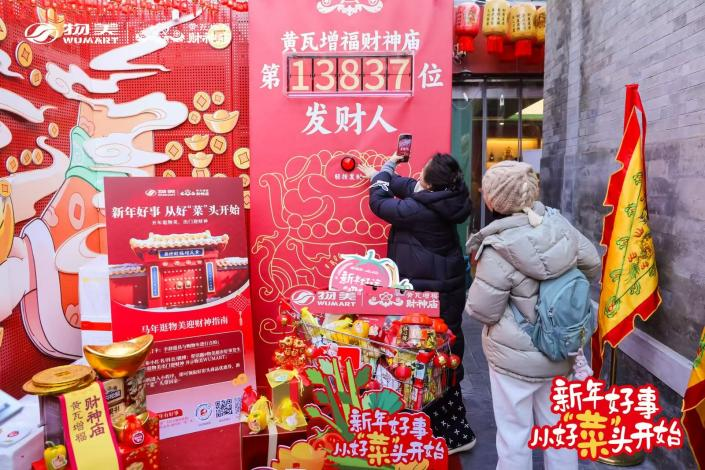
Core Insights - The article highlights the integration of traditional New Year consumption with new technologies and retail formats, emphasizing the role of Wumart in enhancing the festive shopping experience through AI and engaging activities [1] Group 1: New Retail Innovations - Wumart leverages advanced AI technology to ensure supply during the festive season, creating a warm shopping atmosphere with themed activities that blend traditional and modern consumer experiences [1] - The "Crazy 4:30" initiative caters to working individuals by offering convenient shopping options after work, featuring fresh and affordable products [3][4] - The "Daily Flash Sale" event stimulates consumer interest by providing significant discounts on various products, enhancing the overall shopping experience [6] Group 2: Supply Chain Management - Wumart has increased supply by 10% ahead of the holiday season, utilizing AI to predict consumer demand and ensure product availability [4][5] - The company maintains strict quality control and pricing strategies to prevent price gouging, particularly for essential items like meat [5] Group 3: Community Engagement and Services - Wumart's stores offer a range of community services, including free charging stations and assistance for elderly customers, transforming shopping locations into community hubs [7] - The company aims to create a festive atmosphere while ensuring essential goods are available and prices remain stable, addressing consumer concerns about the diminishing festive spirit [8]

华致酒行:公司持续助力门店接入主流即时零售平台
Zheng Quan Ri Bao· 2026-02-05 12:13
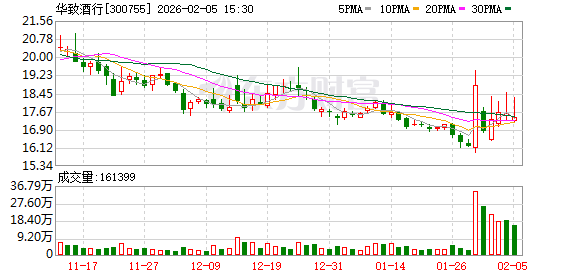
Group 1 - The company emphasizes the importance of digital channel construction and actively embraces the new retail development trend [2] - The company is committed to assisting stores in connecting with mainstream instant retail platforms [2] - Future exploration will focus on integrating online and offline, as well as in-store and out-of-store marketing models [2]

A股五张图:变脸速度越来越快了
Xuan Gu Bao· 2026-02-05 10:36
Market Overview - The market experienced significant declines, with the Shanghai Composite Index, Shenzhen Component Index, and ChiNext Index falling by 0.64%, 1.44%, and 1.55% respectively, while over 3,700 stocks declined and more than 1,600 stocks rose [4] Solar Industry - The solar sector faced a sharp decline, with major companies like Jiejia Weichuang, Dike Co., and Maiwei Co. dropping over 10%, and several others hitting the daily limit down [7][8] - The overall drop in the solar sector was 4.11% for the day, following a previous day of strong performance [8] - Companies such as JinkoSolar announced that they have not engaged in any cooperation with Elon Musk's team, clarifying that no formal agreements or orders are in place [10] - Industry analysis suggests that Musk's team may be considering purchasing HJT battery production lines for their high automation, which could lead to a shift in production strategies that may negatively impact Chinese solar component suppliers [13] - Market sentiment was heavily influenced by speculative trading and the rapid shift in hot sectors, leading to a sell-off in the solar stocks [14][15] Consumer Sector - The consumer and retail stocks showed resilience, with notable gains in companies like Hangzhou Jiebai and Maoye Commercial, both hitting the daily limit up [19] - The consumer sector rose by 1.24% and new retail stocks increased by 1.7%, driven by government initiatives and corporate strategies aimed at boosting consumption during the upcoming Spring Festival [20] - The positive performance in the consumer sector was also attributed to a shift in investor focus towards sectors with potential catalysts after previous hot sectors faced declines [21] Fujian Local Stocks - Fujian local stocks saw significant gains, with companies like Pingtan Development and Xiamen Bank hitting the daily limit up [25] - The sector rose by 1.57%, supported by news of resumed tourism from Shanghai to Kinmen and Matsu, as well as ongoing media coverage from the Taiwan Affairs Office [26][27] - Similar to the consumer sector, the rebound in Fujian stocks was influenced by prior declines and the presence of catalysts that attracted investor interest [28] Han Jian He Shan - Han Jian He Shan achieved a three-day limit up following the announcement of a major asset restructuring to acquire a 99.9978% stake in a company specializing in PEEK intermediates [31] - The acquisition aims to position the company within the high-end new materials sector, indicating a strategic shift from its traditional business [31] - The stock's rapid rise has drawn scrutiny from the exchange, which has requested further disclosure regarding the acquisition process to investigate potential insider trading [31]
A股收评:创业板指跌逾1.5%,贵金属重挫,旅游股逆市走强
Ge Long Hui A P P· 2026-02-05 07:28
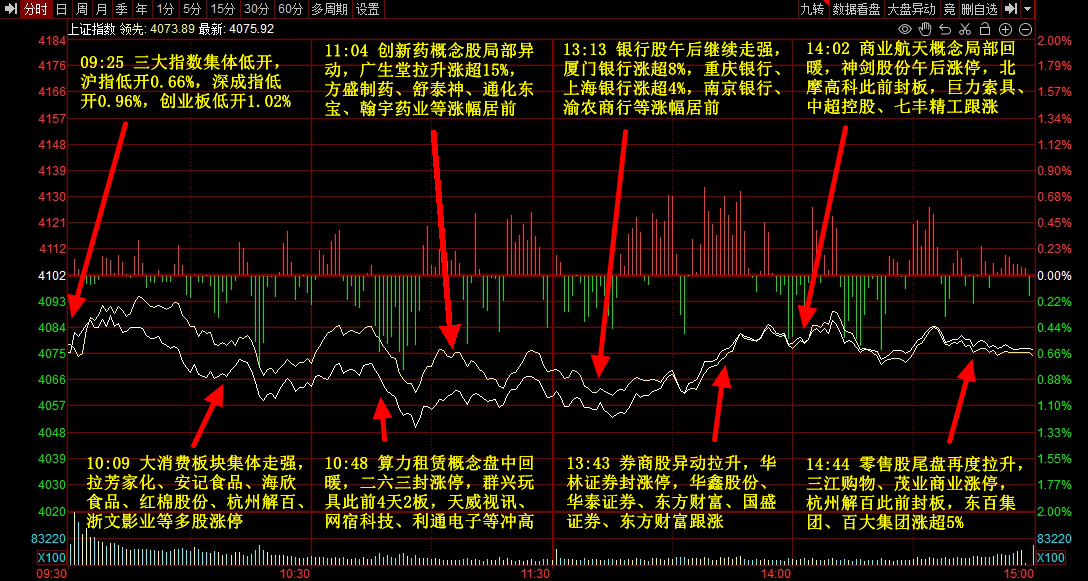
Market Overview - The three major A-share indices collectively declined, with the Shanghai Composite Index down 0.64% to 4075 points, the Shenzhen Component Index down 1.44%, and the ChiNext Index down 1.55% [1][2] - The total market turnover was 2.19 trillion yuan, a decrease of 309 billion yuan compared to the previous trading day, with over 3700 stocks declining [1] Sector Performance - Precious metals stocks experienced significant declines, with Hunan Silver and Sichuan Gold dropping over 9%, and Xiaocheng Technology falling more than 10% [4][5] - The space photovoltaic concept stocks entered a "cooling period," with several stocks, including Junda Co. and Shuangliang Energy, hitting the daily limit down [2][6] - Lithium mining stocks also saw collective declines, with Ganfeng Lithium and Tianqi Lithium both dropping over 6% [7][8] - The tourism sector showed strength, with Sanxia Tourism hitting the daily limit up and Shaanxi Tourism rising over 8% [9][10] - New retail concept stocks were active, with companies like Huangting Hotel and Maoye Commercial hitting the daily limit up [11][12] - Bank stocks performed well, with Xiamen Bank hitting the daily limit up and Chongqing Bank rising over 5% [13] Key Stock Movements - Notable declines in precious metals included Xiaocheng Technology at -10.20%, Hunan Silver at -9.97%, and Sichuan Gold at -9.79% [5] - In the space photovoltaic sector, significant drops included Optech at -12.51% and Jiejia Weichuang at -12.39% [6] - Lithium stocks saw Ganfeng Lithium at -6.31% and Tianqi Lithium at -6.27% [8] - In the tourism sector, Sanxia Tourism rose by 10% and Shaanxi Tourism by 8.57% [10] - New retail stocks like Huangting International rose by 10.11% and Maoye Commercial by 10.04% [12] - Bank stocks showed strong performance with Xiamen Bank at +9.99% and Chongqing Bank at +5.73% [13]






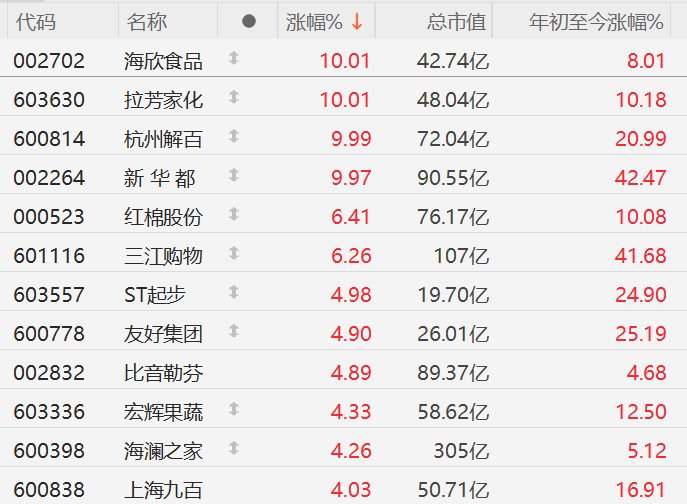
A股新零售概念股活跃,拉芳家化、新华都涨停
Ge Long Hui A P P· 2026-02-05 06:43
Group 1 - The new retail concept stocks in the A-share market are showing active performance, with several companies hitting the daily limit up [1] - Hai Xin Food, La Fang Jia Hua, Hangzhou Jie Bai, and Xin Hua Du all reached the daily limit up of 10% [1] - Hong Mian Co., San Jiang Shopping, and others saw significant increases, with Hong Mian Co. rising over 6% and San Jiang Shopping increasing by 6.26% [1] Group 2 - Hai Xin Food's market capitalization is 4.274 billion, with a year-to-date increase of 8.01% [2] - La Fang Jia Hua has a market capitalization of 4.804 billion and a year-to-date increase of 10.18% [2] - Hangzhou Jie Bai's market capitalization is 7.204 billion, with a year-to-date increase of 20.99% [2] - Xin Hua Du has a market capitalization of 9.055 billion and a year-to-date increase of 42.47% [2] - Hong Mian Co. has a market capitalization of 7.617 billion, with a year-to-date increase of 10.08% [2] - San Jiang Shopping's market capitalization is 10.7 billion, with a year-to-date increase of 41.68% [2] - Other companies like You Hao Group, Bi Yin Le Fen, and Hong Hui Guo Shu also showed positive performance with increases over 4% [1][2]


昆药集团:公司高度关注新零售渠道发展趋势,旗下牙膏系列产品已在抖音、淘宝等平台开展相关直播
Zheng Quan Ri Bao Wang· 2026-02-04 13:45
Core Viewpoint - The company is actively focusing on the development trends of new retail channels and has initiated live streaming for its toothpaste products on platforms like Douyin and Taobao [1] Group 1: Company Strategy - The company is leveraging its "Chinese Time-Honored Brand" advantage to promote channel restructuring and brand building [1] - The company is emphasizing the promotion of chain terminals while continuously optimizing its national retail channel layout [1] Group 2: Market Adaptation - The company is dynamically adjusting product distribution and inventory strategies based on regional market demand [1] - The company aims to further enhance the market circulation efficiency of its products [1]

大润发母公司高鑫零售CEO失联,履职仅两个月
Sou Hu Cai Jing· 2026-02-04 13:35
Group 1 - Gao Xin Retail's CEO Li Weiping has been taken by the police for investigation, and the company has confirmed his absence from operations since last week [2][3] - During Li Weiping's absence, the company's daily operations will be temporarily managed by Chairman Hua Yuning, and the company stated that his situation is unrelated to business operations and will not have a significant adverse impact [3][14] - Li Weiping was appointed as CEO just two months ago, marking a critical management change following a major shareholder transition at Gao Xin Retail [3][4] Group 2 - Li Weiping's appointment was part of a significant management restructuring after Alibaba's exit from Gao Xin Retail, with Dehong Capital acquiring a 78.7% stake for HKD 131.38 billion [6][9] - Li Weiping has extensive experience in the retail industry, having previously held key positions at various companies, including Hema and Lotte Supermarket, which aligns with Gao Xin Retail's strategic needs [6][7] - The company has outlined a three-year strategy focusing on health products, customer experience, and service, aiming to transform stores into community centers [7][12] Group 3 - The transition from Alibaba's involvement to Dehong Capital's management represents a fundamental shift in Gao Xin Retail's operational strategy, moving from a new retail expansion model to a focus on efficiency and returns [12][15] - Li Weiping's sudden absence may disrupt the ongoing transformation efforts, particularly in store renovations and SKU adjustments, which require strong leadership [12][14] - The incident raises concerns about internal management and may affect the company's image in the capital market, despite assurances that business operations remain stable [14][15]

先学海底捞再学胖东来,为何没一家学得会?
Sou Hu Cai Jing· 2026-02-03 03:56
Core Insights - The retail industry is facing significant challenges as companies attempt to learn from successful models like Fat Donglai, but many are failing to replicate its success [2][15][20] Group 1: Performance of Retail Companies - Yonghui Supermarket, once a leader in the retail sector, has reported continuous losses, with a projected net loss of 2.14 billion yuan for 2025, marking its fifth consecutive year of losses [2][8] - The company has closed 381 stores in 2025, averaging over one store closure per day, leading to direct losses of 1.174 billion yuan due to store renovations and closures [9][10] - Other retailers, such as Meitoh and Bubu Gao, have also struggled after attempting to adopt the Fat Donglai model, with significant declines in net profits [12][14] Group 2: Learning from Fat Donglai - Many retailers, including Yonghui, have attempted to learn from Fat Donglai's operational model, but most have failed to achieve satisfactory results, often resulting in increased losses [15][20] - The core issue lies in the inability of these companies to fundamentally restructure their business models and supply chains, leading to superficial imitation rather than genuine transformation [15][20] - Fat Donglai's success is attributed to its unique supply chain, employee welfare, and customer trust, which are difficult for larger, publicly traded companies to replicate due to their existing profit structures and shareholder pressures [16][19] Group 3: Financial Metrics - Yonghui's total revenue for 2024 was 67.57 billion yuan, down from 78.64 billion yuan in 2023, with a gross profit of 13.82 billion yuan [6] - In the first three quarters of 2025, Yonghui reported a net loss of 709.8 million yuan, significantly higher than the previous year's loss of 77.87 million yuan [9] - Bubu Gao's revenue for the first three quarters of 2025 was 3.201 billion yuan, showing a year-on-year growth of 26.45%, but its net profit dropped to 225.5 million yuan, down nearly 90% from the previous year [12][13]



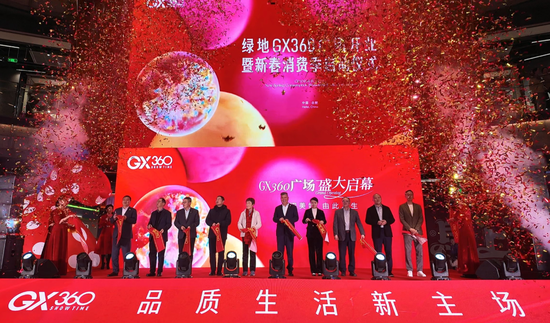
绿地GX360在合肥正式开业 助力长三角消费升级
Sou Hu Cai Jing· 2026-01-31 10:48
Core Viewpoint - The opening of Hefei Greenland GX360 Plaza marks a significant step in responding to the national strategy of boosting consumption and expanding domestic demand, aligning with the central economic work conference's directives [2][3]. Group 1: Project Overview - Hefei Greenland GX360 Plaza is the first commercial complex in Anhui Province that integrates new retail experiences, electric vehicle themes, and diverse supporting services [1][3]. - The project covers a total construction area of 106,000 square meters and features multiple business formats, including warehouse-style discount retail and electric vehicle display experiences [5]. Group 2: Strategic Significance - The project serves as a landmark for Greenland Group's transformation, focusing on three main aspects: enhancing the supply of goods and services in response to the national strategy, supporting the integration of the Yangtze River Delta, and facilitating the company's shift from development to operation [3][5]. - It aims to contribute to the construction of Hefei as a "Yangtze River Delta reception hall" and an "international new energy capital" [3]. Group 3: Consumer Engagement - During the opening period, the plaza launched a series of consumer benefits in conjunction with various brand formats, implementing subsidies and promotions to effectively benefit consumers [5]. - The GX360 Plaza will continue to optimize services and experiences through a "new retail + new energy + full support" model, aiming to activate domestic demand potential and contribute to regional economic and social development [5].


合肥绿地GX360全面开业,四大主力业态旗舰店同步启幕,打响2026“购在中国”暨新春消费季行动
Xin Lang Cai Jing· 2026-01-31 04:31
Core Viewpoint - The opening of Hefei Greenland GX360 marks a significant step in promoting consumption and economic development in the region, aligning with the "Buy in China" initiative and the New Year consumption season [1][13][22] Group 1: Project Overview - Hefei Greenland GX360 is the first commercial innovation project in Anhui, integrating new retail experiences, new energy vehicle themes, and diverse service offerings [1][13] - The total construction area of the project is 106,000 square meters, featuring a unique blend of a curated shopping mall, new energy vehicle innovation city, and various entertainment options [4][17] - The project is part of a larger development plan for the Hefei Greenland Central Plaza, which spans 740,000 square meters and aims to create a high-speed rail hub combining high-end offices, distinctive commercial spaces, and quality communities [3][17] Group 2: Business Model and Offerings - The project emphasizes "precise supply and multi-dimensional integration," creating a differentiated competitive advantage through its core retail brand, Huipin Warehouse, which offers a 20,000 square meter outlet space with over 300 global brands [6][16] - Yiche City, as Anhui's first new energy vehicle theme innovation city, features leading brands like NIO and Tesla, providing a comprehensive "car ecosystem" experience [6][16] - The project also includes high-end home decoration services from Shanshui Decoration and a banquet hotel, Oriental Guochao, which fills the gap in high-end dining and event services in the region [6][16] Group 3: Consumption Promotion Activities - The opening coincided with the launch of the New Year consumption season, featuring a collaborative mechanism among government, enterprises, and merchants to enhance consumer engagement through subsidies and promotions [8][20] - Huipin Warehouse offers exclusive discounts, while Yiche City enhances vehicle purchase incentives, and Shanshui Decoration provides special offers for home renovation and festive dining [8][20] Group 4: Strategic Importance - The project aligns with national policies aimed at boosting consumption and releasing consumer potential, transforming policy guidance into commercial momentum [10][22] - It supports the integration of the Yangtze River Delta region, revitalizing the high-speed rail business district and positioning Hefei as a "guesthouse of the Yangtze River Delta" and "international new energy capital" [10][22] - The project reflects the company's strategy to transition from traditional commercial development to high-quality operations, fostering sustainable growth through innovative business models [10][24]