
智能网联技术

Search documents
“车路云一体化”推进,多方协作构建产业生态趋势
Huan Qiu Wang· 2025-09-25 00:29
Core Viewpoint - The Chinese government, through the Ministry of Commerce and eight other departments, has issued a plan to promote digital consumption, focusing on various initiatives including the development of smart connected vehicles and the encouragement of drone logistics [1][4] Group 1: Digital Consumption Initiatives - The plan outlines 14 tasks aimed at enriching the supply in the digital consumption sector, nurturing digital consumption entities, optimizing support systems, and creating a favorable environment for digital consumption [1] - Specific initiatives include pilot programs for smart connected vehicles and the orderly development of drone delivery services in certain regions [1] Group 2: Smart Driving Industry Insights - The report from Huayuan Securities highlights the continuous technological upgrades in smart driving, moving towards higher levels of automation and accelerated adoption, with improved collaboration across the industry chain [4] - The trend of "vehicle-road-cloud integration" is emphasized, indicating a collaborative effort to build an industrial ecosystem [4] Group 3: Investment Opportunities - Huayuan Securities identifies 11 companies listed on the Beijing Stock Exchange that are part of the smart driving industry chain, including firms specializing in automotive sensors, communication testing instruments, and traffic information solutions [4] - The identified companies include Kaite Co., Audiwei, Chuangyuan Xinke, Jianbang Technology, Wanyuantong, Luqiao Information, Lifang Holdings, Weichuang Optoelectronics, Yunxingyu, Hanxin Technology, and Laisai Laser [4]

工信部等八部门印发《方案》推动智能网联产业化应用,关注北交所智能驾驶产业链:北交所科技成长产业跟踪第四十四期(20250921)
Hua Yuan Zheng Quan· 2025-09-22 12:40
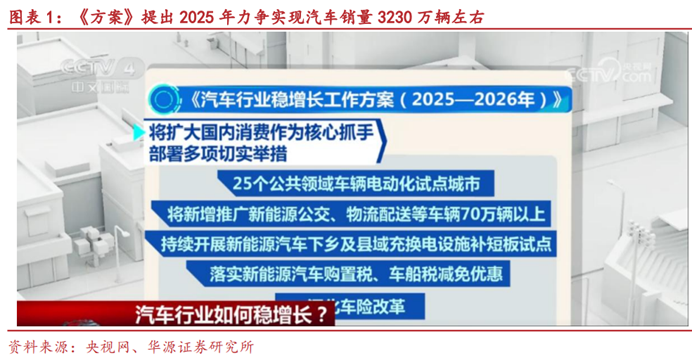
Policy and Market Trends - The Ministry of Industry and Information Technology and eight other departments issued a plan aiming for approximately 32.3 million vehicle sales in 2025, a year-on-year growth of about 3%[7] - The plan emphasizes the core position of intelligent development and promotes the industrial application of intelligent network technology, including the approval of L3 level vehicles for conditional autonomous driving[13] Industry Analysis - The market for automotive-grade SoC (System on Chip) in China is projected to reach 38.1 billion yuan in 2024, representing a year-on-year growth of 42.7%[26] - SoC chips have become the mainstream intelligent driving chips due to their enhanced computing power and data transmission efficiency, addressing the challenges faced by traditional MCU chips[21] Stock Performance - The median price change for technology growth stocks on the Beijing Stock Exchange was -1.84% from September 15 to September 19, 2025, with 43 companies (28%) experiencing an increase[45] - Notable gainers included Kaiter Co. (+33.76%), Anhui Phoenix (+19.99%), and Tianhong Lithium (+19.11%) during the same period[45] Valuation Metrics - The median TTM (Trailing Twelve Months) P/E ratio for the automotive industry increased by 2.96% to 38.2X, while the electronic equipment industry saw a decrease from 63.1X to 60.7X[45] - The median market capitalization for the automotive industry rose from 22.1 billion yuan to 22.6 billion yuan[45] Company Developments - Kaiter Co. specializes in automotive sensors and has a market capitalization of 7.728 billion yuan with a TTM P/E ratio of 47.65[44] - Aweit intends to establish a wholly-owned subsidiary in Anhui Province with a registered capital of 30 million yuan[39]
从价格博弈到价值竞争:汽车行业最新政策梳理-20250919
Dong Zheng Qi Huo· 2025-09-19 08:43
Report Summary 1. Investment Rating The provided content does not mention the industry investment rating. 2. Core Viewpoints - The automotive industry is undergoing a transformation from scale - expansion to value - creation, with anti - involution as the underlying logic. In the short term, industry supervision will focus on preventing behaviors such as below - cost dumping, shoddy workmanship, and excessive promotion. However, it is difficult to immediately stop price cuts or raise car prices due to factors like scale effects, technological upgrades, raw material price drops, intense competition, and consumer behavior changes [31]. - The new energy vehicle industry is expected to continue growing, driven by public - domain and county - level market expansion, old - for - new subsidy policies, and the industrialization of intelligent and connected vehicle technologies [2][20][23]. 3. Summary by Directory 3.1 《汽车行业稳增长工作方案(2025—2026年)》 - **Sales Targets in 2025**: The target is to achieve annual vehicle sales of about 32.3 million, a year - on - year increase of about 3%, with new energy vehicle sales reaching about 15.5 million, a year - on - year increase of about 20%. The auto export is expected to maintain stable growth, and the added value of the automotive manufacturing industry is expected to increase by about 6% year - on - year. Compared with the initial forecast, the new energy vehicle sales target has been slightly adjusted down by 500,000 units [2][8]. - **Current Sales Performance**: From January to August 2025, the cumulative vehicle sales were 21.128 million, a year - on - year increase of 12.6%, completing 65.4% of the annual target. The cumulative new energy vehicle sales were 9.62 million, a year - on - year increase of 36.7%, completing 61.9% of the annual target. The sales growth rate has slowed down since August due to the high base from the previous year [9]. - **Growth Drivers**: - Public - domain and county - level markets will bring incremental demand. The plan aims to promote over 700,000 new energy vehicles in public - domain transportation in 25 pilot cities [13]. - Old - for - new subsidy policies have been optimized in 2025 compared to 2024, but some regional subsidies have been adjusted since mid - 2025 [20]. - The industrialization of intelligent and connected vehicle technologies, with the conditional approval of L3 - level vehicle mass production, will stimulate potential consumer demand [23]. 3.2 《汽车整车企业供应商账款支付规范倡议》 - **Key Operational Standards**: It defines the standards for order confirmation, delivery acceptance, payment settlement, and contract terms. For example, vehicle manufacturers should complete acceptance within 3 working days, and the payment period should not exceed 60 natural days from the date of acceptance. It encourages cash or bank acceptance bill payments, especially for small and medium - sized suppliers, and advocates long - term stable cooperation with contract validity of at least one year [3][24]. - **Background and Significance**: The automotive industry is experiencing price cuts (about 15% in the overall market, 20% for fuel vehicles, and 8% for new energy vehicles), and the industry's profit margin has declined to 4.3% in 2024. Vehicle manufacturers have transferred cost pressure to suppliers. The initiative aims to build a positive cycle of "quality - cost - price" and a collaborative ecosystem of "vehicle - parts" [25]. 3.3 Summary and Thinking - **Industry Transformation**: The automotive industry is shifting from scale - driven to value - driven growth. In the short term, industry supervision will focus on preventing unfair competition, but it is difficult to immediately change the price - cut trend due to various factors [31]. - **Market Incentive Policies**: - Loan interest subsidies are available for personal consumer loans from September 1, 2025, to August 31, 2026, with an annual interest subsidy rate of 1 percentage point, capped at 50% of the loan contract interest rate [35]. - New energy vehicle purchase tax exemptions will be phased out. They are fully exempted from January 1, 2024, to December 31, 2025, and halved from January 1, 2026, to December 31, 2027 [36][38].
碳酸锂数据日报-20250916
Guo Mao Qi Huo· 2025-09-16 03:31
Report Summary 1. Industry Investment Rating - No investment rating information is provided in the report. 2. Core Viewpoint - The market sentiment is negative due to CATL's meeting related to the resumption of lithium mines. There is a discussion about whether eight major mines will shut down simultaneously on September 30. Fundamentally, if they shut down, the impact on the total supply will be limited as other sources can supplement. Emotionally, it will stimulate the bullish sentiment in the market. In the short - term, the futures price is expected to fluctuate, and attention should be paid to the end - of - month time node [2]. 3. Summary by Related Content Lithium Compound Prices - SMM battery - grade lithium carbonate average price is 72,450, with a change of 3,000; SMM industrial - grade lithium carbonate average price is 70,200, with a change of 0 [1]. Lithium Ore Prices - Lithium spodumene concentrate (CIF China) average price is 848, with a change of 0; lithium mica (Li₂O: 1.5% - 2.0%) price is 1075, (Li₂O: 2.0% - 2.5%) price is 1775; phospho - lithium - aluminum stone (Li₂O: 6% - 7%) price is 5975, (Li₂O: 7% - 8%) price is 7065 [1][2]. Futures Contract Prices - Carbonate lithium 2510 closing price is 72,520, with a 2.28% increase; 2511 closing price is 72,680, with a 2.31% increase; 2512 closing price is 72,880, with a 2.3% increase; 2601 closing price is 72,880, with a 2.36% increase; 2602 closing price is 72,660, with a 1.99% increase [1]. Positive Electrode Material Prices - Lithium iron phosphate (power type) average price is 33,375; ternary material 811 (polycrystalline/power type) average price is 146,450; ternary material 523 (single - crystal/power type) average price is 119,450; ternary material 613 (single - crystal/power type) average price is 123,950 [2]. Inventory Information - Total inventory (weekly, tons) change is - 1580, with a current value of 138,512; registered warehouse receipts (daily, tons) change is 338, with a current value of 38,963; smelter inventory (weekly, tons) change is - 3262, with a current value of 36,213; downstream inventory (weekly, tons) change is 3072, with a current value of 58,279; other inventory (weekly, tons) change is - 1390, with a current value of 44,020 [2]. Profit Estimation - Profit from purchasing lithium spodumene concentrate externally is - 3379; profit from purchasing lithium mica concentrate externally is - 7008 [2]. Price Difference - The difference between battery - grade and industrial - grade lithium carbonate (FOF) is 2250; the difference between battery - grade lithium carbonate and the main contract is - 230; the difference between the near - month and the first - continuous contract is - 160; the difference between the near - month and the second - continuous contract is - 360 [2]. Policy Information - Eight ministries and commissions including the Ministry of Industry and Information Technology issued the "Automobile Industry Steady Growth Work Plan (2025 - 2026)", aiming to promote the industrialization of intelligent and connected technologies, standardize the competition order in the automobile industry, and more [2].
创业板指涨超2%,预制菜、汽车产业链大爆发,宁德时代创新高
2 1 Shi Ji Jing Ji Bao Dao· 2025-09-15 04:20
Market Overview - On September 15, A-shares experienced a volatile rise, with the Shanghai Composite Index up by 8.69 points (0.22%) closing at 3879.29 points, the Shenzhen Component Index up by 137.73 points (1.07%) at 13061.86 points, and the ChiNext Index up by 64.26 points (2.13%) at 3084.68 points, briefly surpassing 3100 points during the session [1] - The half-day trading volume in the Shanghai and Shenzhen markets reached 1.52 trillion yuan, a decrease of 146.8 billion yuan compared to the previous day, with over 2000 stocks rising across the market [2] Pre-made Dishes Industry - The pre-made dishes index rose by 1.63% on September 15, with stocks like Delisi (002330) hitting the daily limit and Guolian Aquatic (300094) rising over 7%, as the market reacted to the upcoming national food safety standards for pre-made dishes [3] - The draft national standards, led by the National Health Commission, are set to include the usage of pre-made dishes in restaurant disclosures for the first time, following a notice issued by multiple departments in March 2024 emphasizing the safety regulations for pre-made dishes [3][4] - The pre-made dishes market in China reached 485 billion yuan in 2024, a year-on-year growth of 33.8%, and is expected to exceed 617.3 billion yuan in 2025, with e-commerce sales in 2023 growing by 160%, particularly among the younger demographic [3][4] Industry Growth and Challenges - As of now, there are over 74,000 registered pre-made dish companies in China, with approximately 9,500 new registrations in 2025. The registration trend shows a peak in 2024 after a decline in 2021-2022 [4] - Industry experts highlight that while government policies are promoting pre-made dishes for their standardization and efficiency, consumer trust remains a significant hurdle due to safety and nutritional concerns [4] - The new national standards are expected to reshape the pre-made dishes industry, potentially increasing costs by 15% to 30% due to stricter regulations on preservatives and cold chain logistics, which may lead to consolidation in the market [5] Battery and Energy Storage Sector - CATL (300750) saw a significant rise of 14% in A-shares, reaching new highs, supported by a Morgan Stanley report affirming its strengthened market position in the electric vehicle battery sector [6][7] - The energy storage sector is also gaining traction, with a national plan aiming for 180 million kilowatts of new energy storage capacity by 2027, driving an estimated investment of 250 billion yuan [8] Automotive Industry - Automotive stocks surged on September 15, with companies like Haon Auto (301488) rising nearly 18% following the release of a growth plan targeting 32.3 million vehicle sales in 2025, including 15.5 million electric vehicles [9][10] - The plan emphasizes the integration of smart and connected technologies in the automotive sector, promoting the development of intelligent networked vehicles and enhancing infrastructure for V2X and 5G applications [9][10]

“剑指”3230万辆!八部门联合印发汽车行业稳增长工作方案,一文速览↓
Yang Shi Wang· 2025-09-15 01:28
Group 1 - The core viewpoint of the article is the release of the "Automobile Industry Stabilization Growth Work Plan (2025-2026)" by the Ministry of Industry and Information Technology and other departments, aiming for automobile sales of approximately 32.3 million units in 2025, representing a year-on-year growth of about 3% [1] - The plan emphasizes expanding domestic consumption as a key strategy, with initiatives including the promotion of over 700,000 new energy buses and logistics vehicles in 25 pilot cities for electric vehicles, and the implementation of tax reductions for new energy vehicle purchases [3] - The plan also supports the replacement of old vehicles with new ones, encourages the expansion of the aftermarket, and suggests optimizing purchase restrictions in regions with such policies [3] Group 2 - The plan positions intelligent development at its core, focusing on the industrial application of intelligent connected technology and the construction of networked infrastructure and cloud control platforms [5] - It encourages the production approval of L3 level vehicles, which are conditionally automated driving cars, and aims to improve safety and insurance regulations [5] - The article mentions a new grading system for intelligent driving capabilities introduced by the China Automotive Engineering Research Institute, which categorizes intelligent driving into three levels based on technological maturity [9]
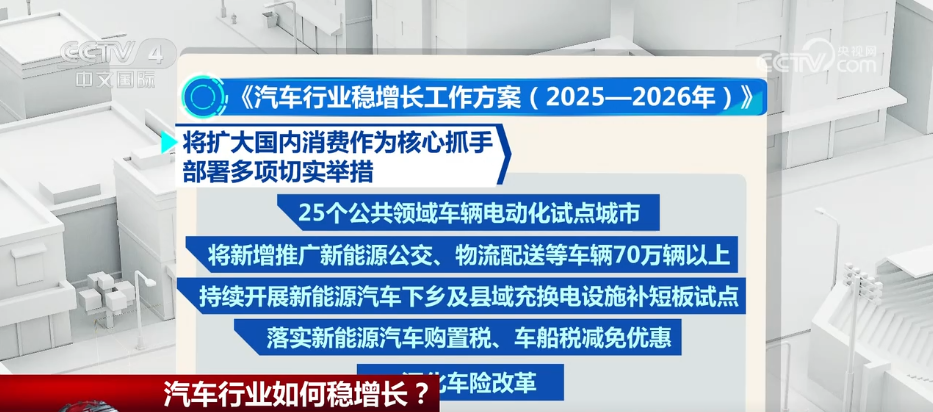
2025年力争实现 汽车销量3230万辆左右
Xin Hua She· 2025-09-15 00:30
Core Insights - The Ministry of Industry and Information Technology and seven other departments have jointly issued the "Automobile Industry Stabilization and Growth Work Plan (2025-2026)", aiming for approximately 32.3 million vehicle sales in 2025, a year-on-year increase of about 3%, with new energy vehicle sales targeted at around 15.5 million, reflecting a year-on-year growth of about 20% [1][2] - The work plan outlines major goals including stable growth in automobile exports and a 6% year-on-year increase in the added value of the automobile manufacturing industry by 2025, with a focus on maintaining a positive development trend in 2026 [1] - The plan includes 15 measures across four dimensions: expanding domestic consumption, improving supply quality, optimizing the development environment, and deepening open cooperation, along with over 60 detailed measures for implementation [1] Demand-Side Initiatives - Accelerate the comprehensive market expansion of new energy vehicles and enhance efforts to promote automobile consumption, particularly in smart and connected technology applications [2] - Promote the addition of over 700,000 new energy vehicles in 25 pilot cities across public transport, taxis, and logistics sectors; advance pilot programs for L3 level vehicle production approvals and improve relevant laws and regulations for road traffic safety and insurance [2] Supply-Side Strategies - Stimulate potential consumer demand through technological innovation and lead product quality enhancement via standard upgrades, ensuring stability in the industrial and supply chains [2] - Focus on breakthroughs in key technologies such as automotive chips, operating systems, artificial intelligence, and solid-state batteries, while continuously improving product performance in terms of economy, durability, and comfort [2]
八部门:进一步加大力度促进汽车消费 支持以旧换新与后市场消费
Shang Hai Zheng Quan Bao· 2025-09-14 23:47
Core Points - The article discusses the "Automobile Industry Stabilization and Growth Work Plan (2025-2026)" issued by eight government departments, aiming to achieve specific sales and production targets for the automotive industry [1][4][7] - The plan sets a target of approximately 32.3 million vehicle sales in 2025, a 3% year-on-year increase, with 15.5 million of those being new energy vehicles, representing a 20% growth [10][12] - The plan outlines 15 measures across four dimensions to boost domestic consumption, improve supply quality, optimize the development environment, and deepen international cooperation [1][3][13] Summary by Categories Sales and Production Targets - The plan aims for 32.3 million vehicle sales in 2025, a 3% increase year-on-year [10] - New energy vehicle sales are targeted at 15.5 million, with a growth rate of 20% [10] - The automotive manufacturing industry's added value is expected to grow by around 6% [11] Measures to Promote Growth - The plan includes measures to expand domestic consumption, enhance supply quality, and optimize the development environment [1][3] - Specific initiatives include accelerating the market expansion of new energy vehicles and promoting the consumption of automobiles through trade-in programs [13][14] - The plan emphasizes the importance of smart and connected vehicle technology and its industrial application [2][3][13] Regulatory and Competitive Environment - The plan aims to standardize competition within the automotive industry, including cost investigations and price monitoring [2][20] - It proposes to strengthen supervision of product consistency and encourage key enterprises to adhere to payment commitments [2][20] - The plan also addresses the need for a healthy market environment by combating false advertising and commercial defamation [2][20] Infrastructure and Technological Development - The plan highlights the need for improved infrastructure, including charging facilities for electric vehicles [17][18] - It encourages the integration of smart technologies in vehicles and the development of new business models based on data [2][3][17] - The plan supports the establishment of a digital transformation service system for the automotive industry [17] International Cooperation and Export Enhancement - The plan aims to enhance the quality and efficiency of automotive exports by encouraging R&D tailored to foreign markets [21][22] - It emphasizes the importance of international collaboration and participation in global automotive regulatory forums [26] - The plan seeks to improve the financing and logistics support for automotive enterprises engaged in international trade [22][23]

八部门联合印发汽车行业稳增长工作方案
Zhong Guo Zheng Quan Bao· 2025-09-14 20:14
Core Insights - The Ministry of Industry and Information Technology and seven other departments jointly released the "Automobile Industry Stabilization and Growth Work Plan (2025-2026)", aiming for approximately 32.3 million vehicle sales in 2025, a 3% year-on-year increase, with new energy vehicle sales targeted at around 15.5 million, representing a 20% growth [1][2] Group 1: Industry Goals - The plan sets a target for 2026 to maintain a stable and positive development trend in the industry, with further improvements in scale and quality [1][2] - In 2024, the automobile sales reached 31.436 million units, a 4.5% increase year-on-year, with new energy vehicle sales at 12.866 million units, up 35.5% [1] Group 2: Policy Measures - The plan includes 15 key initiatives across four dimensions: expanding domestic consumption, improving supply quality, optimizing the development environment, and deepening open cooperation [2][3] - Specific measures include promoting the consumption of new energy vehicles, supporting vehicle trade-in programs, and enhancing the second-hand vehicle market [2][3] Group 3: Technological Innovation - The plan emphasizes the industrialization of intelligent connected technology, including the integration of vehicle-road-cloud applications and the promotion of high-performance communication modules [3] - It aims to stimulate potential consumer demand through technological innovation, focusing on key technologies such as automotive chips and solid-state batteries [3] Group 4: Export and Financial Services - The plan proposes measures to enhance the quality and efficiency of automobile exports, including improving financial services for exports and optimizing logistics systems [4] - It encourages financial institutions to provide credit support and risk management services for automotive enterprises, addressing challenges such as currency fluctuations [4]
汽车行业周报(20250908-20250914):机器人产业链表现较优,关注龙头和新增机会-20250914
Huachuang Securities· 2025-09-14 09:46
Investment Rating - The report maintains a positive investment rating for the automotive industry, particularly highlighting the performance of the robotics supply chain and suggesting a focus on leading companies and new opportunities [3]. Core Insights - The automotive sector's performance is primarily driven by the robotics supply chain, with catalysts expected to persist in the second half of the year. Traditional supply chains remain weak. The Ministry of Industry and Information Technology's "Automotive Industry Stabilization Growth Work Plan (2025-2026)" emphasizes the industrialization of intelligent connected technologies, including the conditional approval for L3 level vehicle production and accelerating breakthroughs in key technologies such as automotive chips, operating systems, artificial intelligence, and solid-state batteries. This indicates a shift in industry support from total volume logic to new technology logic [3][4]. Data Tracking - In August, new energy vehicle deliveries showed significant growth, with XPeng delivering 37,709 units, a year-on-year increase of 168.7%. BYD delivered 373,626 units, up 0.1% year-on-year, while traditional automakers like SAIC and Geely also reported substantial increases in sales [5][23][26]. - The average discount rate in late August was 9.9%, a decrease of 0.2 percentage points from earlier in the month, while the average discount amount was 22,198 yuan, down 344 yuan [5][27][28]. - The report recommends continued focus on electric vehicle manufacturers and traditional automakers with potential recovery, such as Jianghuai Automobile and SAIC [7]. Industry News - The report highlights several key developments, including the listing of Chery Automobile on the Hong Kong Stock Exchange and the launch of new models by various manufacturers, such as the LYNK & CO 10 EM-P and BYD's new SUV, the Titanium 7 [32][33]. - The retail sales of passenger vehicles in August reached 1.995 million units, a year-on-year increase of 4.6%, with new energy vehicles accounting for 110,100 units sold, up 7.5% year-on-year [32]. Market Performance - The automotive sector saw a weekly increase of 1.46%, ranking 17th out of 29 sectors. The overall market indices also showed positive growth, with the Shanghai Composite Index rising by 1.52% [10][36].



