
物理AI

Search documents
五一视界(06651) - 自愿性公告 - 业务发展最新情况
2026-03-23 23:00
香港交易及結算所有限公司及香港聯合交易所有限公司對本公告的內容概不負責,對其準確性 或完整性亦不發表任何聲明,並明確表示概不就因本公告全部或任何部分內容而產生或因倚賴 該等內容而引致的任何損失承擔任何責任。 Beijing 51WORLD Digital Twin Technology Co., Ltd. 北京五一視界數字孿生科技股份有限公司 (於中華人民共和國註冊成立的股份有限公司) (股份代號:06651) 自願性公告-業務發展最新情況 本公告乃由北京五一視界數字孿生科技股份有限公司(「本公司」,連同其附屬公 司統稱「本集團」)自願作出,以知會本公司股東及潛在投資者有關本集團最新業 務發展。 董事會認為,51Claw系統的落地是本集團繼SimOne及DataOne等核心平台後的底 層技術延伸,使本集團的數字孿生系統具備直接感知並操作物理世界的能力。該 進展進一步鞏固了本集團在空間計算技術領域的佈局,並高度契合本集團致力成 為資本市場「物理AI第一股」的戰略目標,為各項業務創造潛在的商業增量空間。 北京五一視界數字孿生科技股份有限公司 1 針對物理AI的長遠發展,本集團未來計劃打造一體化的「具身智能訓練場」 ...
【重磅深度】2026年主流车企城市NOA试驾报告—3月小鹏第二代VLA专题篇
东吴汽车黄细里团队· 2026-03-23 15:41
Core Insights - The main contradiction in C-end automotive intelligence has shifted from coverage to experience optimization by 2026, with major intelligent driving manufacturers achieving urban NOA experiences in complex scenarios like roundabouts and U-turns, and enhancing high-level functions such as parking and ETC passage [2][9] - Between 2024 and 2026, the "impossible triangle" of intelligent driving was summarized, focusing on full-scene capability, human-like smoothness, and emergency handling in experience dimensions, while model dimensions include generalization, interpretability, and latency [3][29] - The second-generation VLA of Xiaopeng has shown significant improvements in road testing, including enhanced full-scene capability, smoother human-like interactions, and some remaining issues in lane selection and emergency response [4][9] Investment Recommendations - The company is optimistic about Xiaopeng Motors, believing its valuation system will transition from an automotive company to a physical AI technology company, with the second-generation VLA model accelerating its layout in C-end smart vehicles, B-end Robotaxi, and robotics [5][9] Technical Developments - The second-generation VLA model has achieved three major experience upgrades, including enhanced safety and smoothness, full-scene capability, and improved efficiency, with plans to cover all road scenarios by 2026 [38][39] - The architecture of the second-generation VLA has shifted from a standard VLA to an innovative VLA, reducing information loss and improving reasoning efficiency [34][39] Road Testing Results - The comprehensive score for Xiaopeng VLA 2.0 in road tests is 3.87, indicating it can handle most urban scenarios with an average takeover frequency of 1.66 times per session, showcasing excellent performance in complex scenarios like roundabouts [53][59] - The road testing highlighted the need for improvements in U-turn scenarios and path planning accuracy, with some instances of incorrect lane selection and navigation path execution [60][79]



【2025年年报点评/小鹏汽车-W】Q4业绩符合预期,物理AI转型可期
东吴汽车黄细里团队· 2026-03-23 15:41
Core Viewpoint - Xiaopeng Motors' 2025 annual report shows performance in line with expectations, with significant growth in revenue and a milestone of achieving quarterly profitability for the first time in Q4 2025 [3][4]. Financial Performance - Q4 2025 revenue reached 22.25 billion yuan, a year-on-year increase of 38.2% and a quarter-on-quarter increase of 9.2% [3]. - Automotive sales revenue was 19.07 billion yuan, up 30.0% year-on-year and 5.6% quarter-on-quarter, driven by the growth in new model deliveries [3]. - Service and other income surged to 3.18 billion yuan, marking a 121.9% year-on-year increase [3]. - The company achieved a net profit of 380 million yuan in Q4 2025, with a non-GAAP net profit of 510 million yuan [3]. Profitability Metrics - The overall gross margin for Q4 2025 was 21.3%, an increase of 6.9 percentage points year-on-year and 1.2 percentage points quarter-on-quarter, primarily due to the growth in service and other income [4]. - The automotive gross margin stood at 13.0% [4]. - R&D expense ratio for Q4 was 12.9%, reflecting a year-on-year increase of 0.5 percentage points [4]. Sales and Production - The wholesale volume for Q4 was 116,000 vehicles, representing a year-on-year increase of 27.0% [4]. - The average selling price (ASP) per vehicle was 164,000 yuan [4]. Strategic Initiatives - In 2026, the company plans to launch four new models, including a flagship SUV, the GX, set to debut in Q2 2026 [5]. - The target for the shipment of the Turing AI chip in 2026 is 1 million units [5]. - The second-generation VLA is expected to achieve full OTA coverage by Q2 2026, expanding navigation capabilities [5]. - The humanoid robot IRON is planned for mass production by the end of 2026, with a monthly production target of over a thousand units [5]. Revenue and Profit Forecast - Revenue forecasts for 2026 and 2027 have been adjusted to 96.2 billion yuan and 126.5 billion yuan, respectively, reflecting year-on-year growth of 25% and 32% [6]. - Net profit forecasts for 2026 and 2027 have been revised down to -1.4 billion yuan and 2.1 billion yuan, respectively [6]. - EPS estimates for 2026, 2027, and 2028 are projected at -0.71 yuan, 1.12 yuan, and 3.38 yuan, with corresponding PE ratios of 56 and 19 for 2027 and 2028 [6].

小鹏汽车-W(09868):2025年年报点评:Q4业绩符合预期,物理AI转型可期
Soochow Securities· 2026-03-23 12:02
Investment Rating - The investment rating for the company is "Buy" (maintained) [1] Core Insights - The company reported Q4 revenue of 22.25 billion yuan, a year-on-year increase of 38.2% and a quarter-on-quarter increase of 9.2%. The automotive sales revenue was 19.07 billion yuan, up 30.0% year-on-year and 5.6% quarter-on-quarter, primarily due to the growth in new model deliveries. Service and other income reached 3.18 billion yuan, a year-on-year increase of 121.9% [7] - The company achieved its first quarterly profit in Q4 2025, with a net profit of 380 million yuan and a non-GAAP net profit of 510 million yuan [7] - The overall gross margin continued to grow, with a comprehensive gross margin of 21.3% in Q4 2025, an increase of 6.9 percentage points year-on-year and 1.2 percentage points quarter-on-quarter [7] - The company is committed to its AI transformation, planning to increase R&D investment in physical AI to 7 billion yuan in 2026. It aims to launch four new models in 2026, including a flagship SUV [7] - The company has set a target of 1 million units for the shipment of its Turing AI chips in 2026 and plans to achieve full-scenario OTA coverage with its second-generation VLA by Q2 2026 [7] - The earnings forecast has been adjusted, with expected revenues for 2026 and 2027 revised to 96.2 billion yuan and 126.5 billion yuan, respectively, reflecting year-on-year growth of 25% and 31.6% [7] - The projected EPS for 2026, 2027, and 2028 are -0.71 yuan, 1.12 yuan, and 3.38 yuan, respectively, with corresponding P/E ratios of 88.44 and 56 for 2027 and 2028 [7] Financial Summary - Total revenue forecast for 2024 is 40.87 billion yuan, with a year-on-year growth of 33.22% [1] - The company expects to achieve a net profit of 2.13 billion yuan in 2027 and 6.46 billion yuan in 2028 [1] - The projected comprehensive gross margin for 2026 is 17.96%, with a net profit margin of 1.69% in 2027 [8]
小鹏汽车 | 2025Q4首次季度盈利 物理AI加速突破【国联民生汽车 崔琰团队】
汽车琰究· 2026-03-23 11:43
Core Viewpoint - The company reported its first quarterly profit in Q4 2025, with significant revenue growth and improved gross margins, driven by increased vehicle deliveries and cost reductions [2][3]. Revenue Performance - In Q4 2025, the company achieved revenue of 22.25 billion yuan, representing a year-on-year increase of 38.2% and a quarter-on-quarter increase of 9.2% [2][3]. - The automotive business revenue for Q4 2025 was 19.07 billion yuan, up 30.0% year-on-year and 5.6% quarter-on-quarter, primarily due to increased delivery volumes [3]. - The average selling price (ASP) per vehicle rose from approximately 156,000 yuan in Q3 2025 to about 164,000 yuan in Q4 2025 [3]. - Other business revenues reached 3.18 billion yuan in Q4 2025, showing a year-on-year increase of 121.9% and a quarter-on-quarter increase of 36.7%, attributed to growth in technology services, parts sales, and carbon credit business [3]. Profitability - The gross profit for the automotive business in Q4 2025 was 2.48 billion yuan, with a gross margin of 13.0%, reflecting a year-on-year increase of 3.0 percentage points [3]. - The total gross profit for Q4 2025 was 4.74 billion yuan, with an overall gross margin of 21.3%, marking a new high and an increase of 6.9 percentage points year-on-year [3]. Expense Management - R&D expenses in Q4 2025 amounted to 2.87 billion yuan, up 43.2% year-on-year and 18.3% quarter-on-quarter, with an R&D expense ratio of 12.9% [4]. - Selling and administrative expenses were 2.79 billion yuan in Q4 2025, reflecting a year-on-year increase of 22.7% and a quarter-on-quarter increase of 12.0%, primarily due to increased commissions and marketing costs [4]. Sales Network Expansion - As of Q4 2025, the company operated 721 sales centers across 255 cities, an increase of 31 centers compared to Q3 2025 [5]. Cash Position - The company had a total of 47.66 billion yuan in cash and cash equivalents, restricted cash, short-term investments, and cash deposits as of Q4 2025, indicating manageable short-term liquidity risk [6]. Future Outlook - The company anticipates Q1 2026 automotive sales to range from 61,000 to 66,000 units, with a year-on-year decline of 29.8% to 35.1%, corresponding to projected revenues of approximately 12.2 billion to 13.28 billion yuan, reflecting a year-on-year decline of 16.0% to 22.8% [6]. Technological Advancements - The company is making significant strides in physical AI technology, aiming to transition from L2+ to L4 autonomous driving and plans to launch the second-generation VLA intelligent driving system by March 2026 [8]. - The company is also focused on scaling production of advanced humanoid robots and has a strong cash position to support ongoing R&D in physical AI [8]. Global Expansion - The company has expanded its global sales network to over 1,000 locations, covering 60 countries, with a significant increase in overseas sales, which reached 45,000 units in 2025, up 96% year-on-year [8]. - The company aims to double its overseas sales in 2026 and plans to introduce seven new vehicles equipped with a super range extension system for emerging markets [8]. Financial Projections - Revenue projections for 2026 to 2028 are 110.81 billion, 138.57 billion, and 165.43 billion yuan, respectively, with net profits of 2.96 billion, 6.21 billion, and 9.997 billion yuan [10].

小鹏汽车
数说新能源· 2026-03-23 03:02
Core Viewpoint - The company has achieved significant milestones in 2025, including a 126% year-on-year increase in delivery volume, reaching 429,000 units, and a notable expansion in overseas sales, which nearly doubled to 45,000 units, contributing over 15% to total revenue [2][4][10]. Business Overview - In 2025, the company launched the MONA M03 and P7+ as sales champions in their respective price segments, with the former leading in the 100,000 to 150,000 yuan category and the latter in the 150,000 to 200,000 yuan category [2]. - The company achieved a gross margin of 18.9% for the year, an increase of 4.6 percentage points year-on-year, and reduced supplier payment terms by 50 days [4]. - Free cash flow approached 5 billion yuan, with cash on hand at 47.7 billion yuan by year-end, marking the first quarterly profit in Q4, exceeding 380 million yuan [5]. Technological Advancements - The company has successfully mass-produced the Turing AI chip, which has been delivered to partners, and is seeing significant advancements in physical AI applications, particularly in autonomous driving [3][6]. - The second-generation VLA has passed the physical Turing test for autonomous driving, indicating a significant leap towards fully autonomous vehicles within the next 1-3 years [8][13]. - The company plans to launch four new models in 2026, all designed for global markets and equipped with dual-energy capabilities and advanced autonomous driving features [9][10]. Financial Overview - In Q4 2025, total revenue reached 22.25 billion yuan (3.18 billion USD), a 38.2% increase from the same period in 2024 [25]. - Automotive sales revenue for Q4 was 19.07 billion yuan (2.73 billion USD), up 30.0% year-on-year, driven by increased delivery volumes [26]. - The gross margin for Q4 was 21.3%, compared to 14.4% in Q4 2024, with automotive gross margin at 13.0%, reflecting cost reductions and improved product mix [28][29]. Future Outlook - The company anticipates Q1 2026 automotive deliveries to be between 61,000 and 66,000 units, representing a year-on-year decrease of approximately 29.79% to 35.11% [22]. - The company expects total revenue for Q1 2026 to be between 12.2 billion and 13.28 billion yuan, a year-on-year decrease of 16.01% to 22.84% [23]. - The company aims to double its overseas sales contribution to over 20% of total revenue in 2026, with plans to expand its self-operated sales network to 680 stores globally [11][10].

小鹏汽车(9868.HK)系列点评十 2025Q4 首次季度盈利 物理 AI 加速突破
Guolian Minsheng Securities· 2026-03-23 03:00
Investment Rating - The report maintains a "Buy" rating for the company, indicating a positive outlook for its stock performance relative to the benchmark index [6][11]. Core Insights - The company achieved its first quarterly profit in Q4 2025, with a total revenue of 76.72 billion RMB for the year, representing a year-on-year increase of 87.7%. Q4 revenue alone was 22.25 billion RMB, up 38.2% year-on-year and 9.2% quarter-on-quarter [3][4]. - The automotive business gross margin reached 13.0% in Q4 2025, marking a 3.0 percentage point increase year-on-year, while the overall gross margin hit a record high of 21.3% [4][5]. - The company is focusing on technological advancements in physical AI, aiming to transition from L2+ to L4 autonomous driving, with plans for mass production of advanced humanoid robots [10][11]. Revenue and Profitability - In Q4 2025, automotive revenue was 19.07 billion RMB, reflecting a 30.0% increase year-on-year, driven by higher delivery volumes. The average selling price (ASP) per vehicle rose from approximately 156,000 RMB in Q3 2025 to about 164,000 RMB [4]. - Total gross profit for Q4 2025 was 4.74 billion RMB, with a gross profit margin of 21.3%, attributed to cost reductions and improved product mix [4][5]. Expenses and Cash Flow - R&D expenses in Q4 2025 were 2.87 billion RMB, up 43.2% year-on-year, while selling and administrative expenses were 2.79 billion RMB, reflecting a 22.7% increase year-on-year [5]. - As of Q4 2025, the company had cash and cash equivalents totaling 47.66 billion RMB, indicating manageable short-term liquidity risks [5]. Future Outlook - The company projects Q1 2026 automotive sales between 61,000 and 66,000 units, with expected revenue of approximately 12.2 billion to 13.3 billion RMB, representing a year-on-year decline of 16.0% to 22.8% [5]. - Revenue forecasts for 2026 to 2028 are 110.81 billion RMB, 138.57 billion RMB, and 165.43 billion RMB, respectively, with corresponding net profits of 2.96 billion RMB, 6.21 billion RMB, and 9.99 billion RMB [11][13].
小鹏汽车-W(09868):系列点评十:2025Q4首次季度盈利,物理AI加速突破
Guolian Minsheng Securities· 2026-03-23 00:43
小鹏汽车(9868.HK)系列点评十 2025Q4 首次季度盈利 物理 AI 加速突破 glmszqdatemark 2026 年 03 月 23 日 [Table_Author] 分析师:崔琰 分析师:完颜尚文 执业证书:S0590525110023 执业证书:S0590525110027 邮箱:cuiyan@glms.com.cn 邮箱:wanyanshangwen@glms.com.cn 事件:公司发布 2025Q4 财报:2025 年全年收入为 767.2 亿元,同比+87.7%, 其中:2025Q4 收入 222.5 亿元,同比/环比分别为+38.2%/+9.2%。2025Q4 汽 车业务毛利率为+13.0%,同比/环比分别为+3.0pts/-0.1pts。2025Q4 Non- GAAP 归母净利润为+5.1 亿元,首次实现季度盈利。 毛利率再创新高 首次实现季度盈利 营收端:2025Q4 实现单季营收入 222.5 亿元,同比/环比分别为+38.2%/+9.2%。 其中 2025Q4 汽车业务收入为 190.7 亿元,同比/环比分别为+30.0%/+5.6%, 主要由于交付量增加所致。2025Q ...
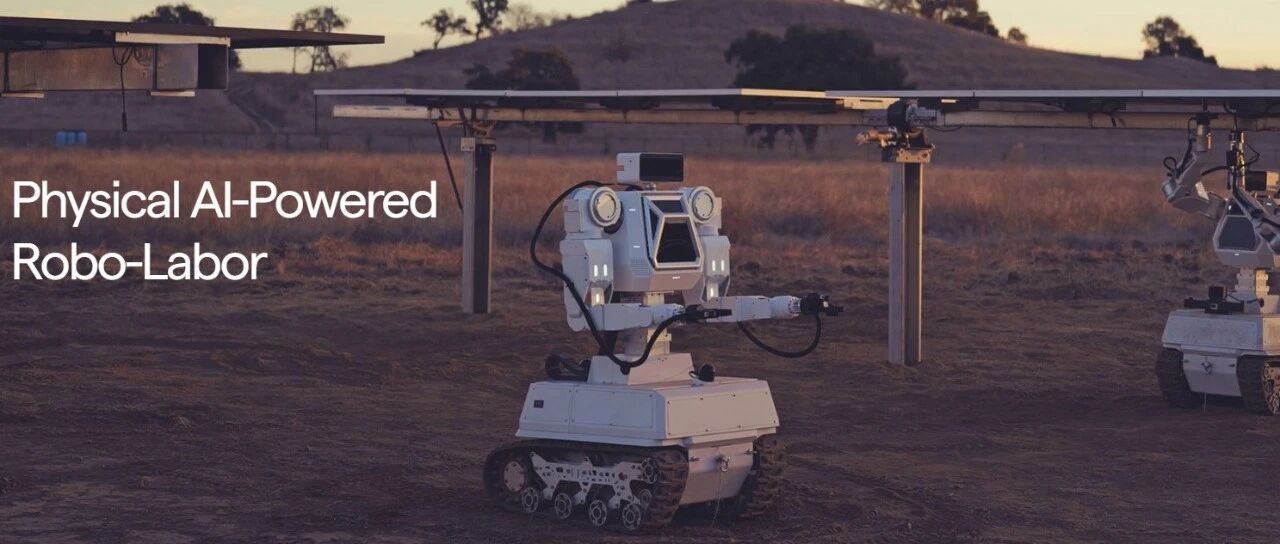
估值25亿!杨致远、诺奖得主押注,这家硅谷物理AI公司斩获1.1万意向订单!
机器人大讲堂· 2026-03-22 04:04
Core Insights - RoboForce, a company focused on physical AI, has successfully completed a $52 million Pre-A funding round, achieving a post-money valuation of $350 million, approximately 250 million RMB [1][3] - The funding round was led by YZi Labs, with participation from notable investors including Yahoo co-founder Jerry Yang and Nobel laureate Myron Scholes, highlighting the strong backing from technology, investment, and academic sectors [3][5] Funding Details - The Pre-A round raised $52 million, bringing the total funding to $67 million [4][5] - Previous funding rounds include $5 million in an angel round and $10 million in a seed round, indicating a steady growth trajectory since its inception [4] Business Model and Market Position - RoboForce has over 11,000 robot order intentions and serves clients across 12 countries, focusing on industrial applications rather than consumer-oriented tasks [5][17] - The company differentiates itself by developing robots that replace human labor in high-risk and physically demanding jobs, moving away from the emotional value of robots [5][17] Technological Collaboration - RoboForce is a key partner of NVIDIA in the physical AI sector, recognized at the 2026 GTC conference, which underscores its technological credibility [6][7] - The collaboration focuses on training robots for complex industrial tasks using NVIDIA's technology, enhancing their operational capabilities in real-world environments [9] Product Development - The company launched the TITAN robot, designed for heavy-duty industrial tasks, with a load capacity of 40 kg and precision of 1 mm, targeting sectors like solar installation and mining [10][12][13] - RoboForce emphasizes practical applications of robotics in industries facing labor shortages and high safety costs, positioning itself to address significant market needs [15][17] Team and Talent Acquisition - The founding team includes experts from leading companies and universities, ensuring a strong foundation for innovation and development [18][20] - RoboForce maintains a selective hiring process, with a low acceptance rate, to build a highly skilled research and development team [21] Future Plans - The recent funding will be directed towards enhancing the Physical AI model, accelerating the production of the TITAN robot, and expanding commercial applications across various industries [22] - The company is poised to capitalize on the growing demand for industrial automation solutions, driven by advancements in AI and a global labor shortage [25][27]
计算机行业周报:GTC后,算力与物理AI思考-20260321
Shenwan Hongyuan Securities· 2026-03-21 15:24
Investment Rating - The report maintains a positive outlook on the computer industry, particularly focusing on AI chip trends and physical AI applications [3][5]. Core Insights - The report highlights the emergence of AI chips tailored for Agentic LLMs, emphasizing the need for low-latency and high-performance computing solutions [5][7]. - NVIDIA's GTC 2026 showcased advancements in AI infrastructure, transitioning from mere computational power to comprehensive real-world applications [34][36]. - The report identifies key companies such as 合合信息, 聚水潭, and 金蝶国际, which are positioned for growth driven by AI and international expansion [55][61]. Summary by Sections AI Chip Trends - The GTC 2026 event revealed a shift towards AI chips designed for Agentic LLMs, with NVIDIA introducing new architectures that enhance collaborative inference capabilities [5][7]. - The introduction of the LPX rack and Groq3 LPU is noted as a significant technological advancement, addressing the performance needs of Agentic LLMs [12][13]. Physical AI Developments - NVIDIA's focus on physical AI is transforming its role from a hardware provider to a platform builder for real-world intelligence, integrating tools for data generation, environment simulation, and model deployment [34][36]. - The report discusses the importance of the DSX framework for optimizing AI factory operations, emphasizing efficiency in energy consumption and computational output [38][40]. Company Updates - 合合信息 reported a revenue of 1.81 billion yuan in 2025, driven by AI and international expansion, with a notable increase in C-end and B-end product offerings [55][56]. - 聚水潭 is recognized as a leading e-commerce SaaS ERP provider in China, with a market share of 24.4% in the e-commerce SaaS ERP sector, indicating strong growth potential [61][62].
