电商

Search documents
外卖、AI 2025年的阿里打赢了命运之战
新财富· 2025-12-04 08:04
Core Viewpoint - Alibaba is refocusing its strategy around e-commerce and AI cloud services, with significant investments planned for infrastructure and product development, aiming to reclaim its market position and enhance user engagement [2][3][31]. Investment and Strategic Focus - CEO Wu Yongming announced an investment of over 380 billion yuan in cloud and AI hardware infrastructure over the next three years, exceeding the total investment of the past decade [3]. - The company is prioritizing long-term investment in core businesses while seeking to monetize non-profitable segments quickly [2]. E-commerce Developments - In April, Alibaba launched "Taobao Flash Purchase," integrating various categories into a "30-minute delivery" system, marking its entry into the competitive food delivery market [4]. - By Q3 2025, the average daily order volume for Alibaba's delivery services surged to 28-30 million, increasing its market share from 18% to 32% [9][11]. AI and Technology Advancements - Alibaba's Qwen series of AI models has achieved over 600 million downloads globally, establishing itself as a leading choice for developers [4][17]. - The "Qwen" API offers competitive pricing, significantly lower than alternatives like GPT-4, enhancing its attractiveness in the market [16]. Product Launches and User Engagement - The "Qianwen" app, launched in November 2025, became the fastest-growing AI application, surpassing 10 million downloads in just one week [4][14]. - The introduction of Quark AI glasses represents a significant step in integrating AI into everyday life, allowing users to access various services seamlessly [5][27]. Market Position and Future Outlook - Alibaba's strategic shift is reflected in the rebranding of Ele.me to "Taobao Flash Purchase," emphasizing its integration into the broader Taobao ecosystem [29][30]. - The company aims to leverage both e-commerce and AI as dual engines for growth, signaling a return to its core strategic focus [31][32].


乌兹别克斯坦国家馆(中国杭州馆)开馆
Hang Zhou Ri Bao· 2025-12-04 02:32
Group 1 - The Uzbekistan National Pavilion in Hangzhou aims to establish cultural, economic, and trade exchange bridges between China and Uzbekistan, focusing on e-commerce, internet, IoT, and AI [1] - Uzbekistan officially becomes a partner country of the BRICS nations on January 1, 2025, with the BRICS Special Economic Zone China Cooperation Center inaugurated in Hangzhou in March [1] - The opening of direct cargo flights from Hangzhou to Uzbekistan and the implementation of supportive policies for the BRICS Special Economic Zone signify deepening economic ties [1] Group 2 - In 2026, two reception centers will be established in Tashkent and Samarkand to better serve Chinese enterprises visiting Uzbekistan for business [1] - The "BRICS Direct Train - Hangzhou to BRICS" series of activities will be launched in 2026 to promote economic cooperation, including monthly business events and policy promotion meetings [2] - The initiative aims to reduce cooperation costs and risks while establishing a solid connection between Hangzhou and BRICS countries [2]
沃尔玛中国靠电商带飞,流量红利能吃多久?
阿尔法工场研究院· 2025-12-04 00:06
Core Insights - Walmart's recent leadership changes and strong performance in China, particularly in e-commerce and Sam's Club, signal a strategic shift as the company prepares for future growth [4][5][9]. Financial Performance - For Q3 FY26, Walmart reported revenue of $179.5 billion, a year-over-year increase of 5.84%, with adjusted operating income rising to $7.2 billion, up 8% [7]. - Walmart China achieved net sales of $6.1 billion in Q3, marking a 21.8% increase year-over-year, significantly outperforming the international business segment's average growth of 10.84% [7][8]. - E-commerce sales in China grew by 32%, with e-commerce accounting for over 50% of total sales, reflecting a substantial increase of over 390 basis points compared to the previous year [7][9]. Leadership Changes - Doug McMillon will be succeeded by John Furner as CEO, effective February 1, 2026. Furner has extensive experience within Walmart, having served as President and CEO of Walmart U.S. since 2019 [11]. - The transition to Nasdaq from the New York Stock Exchange is a significant move for Walmart, emphasizing its technology-driven growth strategy [12]. Strategic Focus - The emphasis on AI and digital innovation is evident, with McMillon highlighting Furner's capability to lead Walmart through an AI-driven transformation [12]. - Sam's Club in China has also appointed a new president, Liu Peng, who has a strong background in e-commerce and retail, aligning with Walmart's focus on AI and online strategies [13][18]. Growth Prospects - Walmart China is expected to open 10 new Sam's Club locations in 2025, with 8 already opened, indicating a robust expansion strategy [18]. - The company aims to enhance its operational efficiency and customer value, focusing on internal capabilities rather than external trends [18].

近3900只个股下跌
第一财经· 2025-12-03 07:44
本文字数:773,阅读时长大约2分钟 作者 | 一财阿驴 2025.12. 03 12 月 3 日 , A 股 市 场 全 天 震 荡 调 整 , 截 至 收 盘 , 沪 指 跌 0.51% , 深 成 指 跌 0.78% , 创 业 板 指 跌 1.12%。 | 代码 | 名称 | 两日图 | 现价 | 涨跌 | 涨跌幅 | | --- | --- | --- | --- | --- | --- | | 000001 | 上证指数 | mon | 3878.00c | -19.71 | -0.51% | | 399001 | 深证成指 | and with | 12955.25c | -101.45 | -0.78% | | 399006 | 创业板指 | wil | 3036.79c | -34.36 | -1.12% | 盘面上,锂电池产业链全线回调,AI应用、电商、算力、消费电子、稳定币、6G、商业航天概念股 跌幅居前。超硬材料、煤炭、铝业板块逆势走强。 具体来看,煤炭板块集体拉升,大有能源、安泰集团、新大洲A涨停。 | 代码 | 名称 | 涨幅量 | 现价 | | --- | --- | --- | ...



收盘丨A股三大指数全天震荡调整,市场近3900只个股下跌
Di Yi Cai Jing· 2025-12-03 07:16
| 代码 | 名称 | 两日图 | 现价 | 涨跌 | 涨跌幅 | | --- | --- | --- | --- | --- | --- | | 000001 | 上证指数 | any and | 3878.00c | -19.71 | -0.51% | | 399001 | 深证成指 | and all | 12955.25c | -101.45 | -0.78% | | 399006 | 创业板指 | will | 3036.79c | -34.36 | -1.12% | 盘面上,锂电池产业链全线回调,AI应用、电商、算力、消费电子、稳定币、6G、商业航天概念股跌幅居前。超硬材料、煤炭、铝业板 块逆势走强。 12月3日,A股市场全天震荡调整,截至收盘,沪指跌0.51%,深成指跌0.78%,创业板指跌1.12%。 具体来看,煤炭板块集体拉升,大有能源、安泰集团、新大洲A涨停。 | 代码 | 名称 | 涨幅量 | 现价 | | --- | --- | --- | --- | | 600403 | 大有能源 | +10.05% | 9.20 | | 600408 | 安泰集团 | +10.04% | 5.59 ...

A股午盘|沪指跌0.09% 煤炭、有色金属板块走强
Di Yi Cai Jing· 2025-12-03 06:14
截至午间收盘,沪指跌0.09%,深成指跌0.19%,创业板指跌0.5%。AI应用、电商、锂矿、消费电子、 固态电池、算力题材纷纷走弱;超硬材料、煤炭、有色金属板块走强。 截至午间收盘,沪指跌0.09%,深成指跌0.19%,创业板指跌0.5%。AI应用、电商、锂矿、消费电子、 固态电池、算力题材纷纷走弱;超硬材料、煤炭、有色金属板块走强。 ...
L'Oréal (OTCPK:LRLC.F) Fireside Chat Transcript
2025-12-01 23:32
Summary of L'Oréal Fireside Chat - December 01, 2025 Company Overview - **Company**: L'Oréal (OTCPK:LRLC.F) - **Industry**: Beauty and Cosmetics Key Points Market Outlook - The overall beauty market is projected to grow by approximately **4% in 2026**, with positive signs from the U.S. and China showing steady improvement quarter over quarter [3][4] - Emerging markets, particularly in **Sub-Saharan Africa** and **India**, are expected to drive future growth due to increasing middle-class populations [5][6] - The U.S. market is considered a growth area, with a notable increase in consumer interest, especially among younger generations like **Gen Z** and **Gen Alpha** [6][7] Category Performance - **Skincare** remains the largest category for L'Oréal, accounting for nearly **40%** of sales, and is expected to continue driving sustainable growth [7] - The **Professional Products Division** has seen significant growth, driven by premiumization trends and a focus on hair care [51][52] - **Fragrances** are experiencing a slowdown but remain one of the fastest-growing categories, with L'Oréal outperforming the market [58][59] Digital Transformation - The importance of **digital and e-commerce** has increased significantly, with e-commerce sales approaching **30%** of global sales [69] - L'Oréal is leveraging new technologies and platforms, including social media like **TikTok**, to engage consumers and drive sales [17][18] Competitive Landscape - L'Oréal's growth strategies are deeply rooted in a **growth mindset** and a **multipolar model**, allowing the company to offset weaknesses in one region with strengths in another [24][26] - The company has outperformed its top 30 competitors, achieving a growth rate of **3.7%** compared to the average of **0.6%** [29] Supply Chain and Innovation - L'Oréal is investing in its supply chain capabilities, including a new **automated fulfillment center** in Suzhou, to support growth in China [49][50] - The company is also focusing on innovation, with plans to establish a new **innovation center** in China to enhance product development [43][44] Financial Performance - L'Oréal aims for a **20-30 basis points** improvement in margins annually, supported by disciplined cost management and strategic investments in advertising and promotion [74][75] - The company maintains a strong balance sheet, allowing for continued investment in growth and innovation [28] Future Strategies - The **Beauty Stimulus Plan** initiated in 2024 has positively impacted growth, with plans to continue similar initiatives in 2026 [63][64] - L'Oréal is committed to maintaining a balance between online and offline sales channels to adapt to changing consumer preferences [70][72] Challenges and Opportunities - The company faces challenges from indie brands in the e-commerce space but is focused on agility and innovation to remain competitive [30][31] - Tariffs and pricing pressures are acknowledged, but L'Oréal is managing these through strategic pricing and maintaining production in France [61][62] Conclusion - L'Oréal is well-positioned for future growth, leveraging its strong brand portfolio, digital capabilities, and commitment to innovation while navigating challenges in the competitive landscape and supply chain dynamics [28][29][50]
ETF收评| 有色板块领涨,黄金股票ETF基金涨4%
Ge Long Hui· 2025-12-01 08:30
Market Performance - The three major A-share indices opened higher and closed positively, with the Shanghai Composite Index returning above 3900 points, closing at 3914 points, up 0.65% [1] - The Shenzhen Component Index rose by 1.25%, and the ChiNext Index increased by 1.31% [1] - Total market turnover reached 1.89 trillion yuan, an increase of 291.7 billion yuan compared to the previous trading day, with nearly 3400 stocks rising [1] Sector Performance - AI mobile phones and smart wearable technology sectors were active [1] - The semiconductor industry chain saw a midday surge, with photolithography machines and MCU chips leading the gains [1] - Stocks related to 6G, satellite navigation, commercial aerospace, servers, and memory concepts showed significant increases [1] - E-commerce and lithium battery concept stocks performed poorly [1] ETF Performance - The metals sector experienced a broad rally, with Ping An Fund's gold stock ETF and Wan Jia Fund's industrial metals ETF rising by 4.09% and 3.99%, respectively [1] - The satellite internet sector also rose, with the Southern and Huatai Baichuan Fund's IoT ETFs increasing by 3.69% and 3.36% [1] - The communication equipment ETF from Fortune Fund rose by 3.48% [1] - The soybean meal ETF fell by 2.52%, and the S&P biotechnology ETF decreased by 2.3% [1] International Market - Japanese stocks declined, with the Nikkei 225 ETF from E Fund and Nikkei ETF falling by 1.78% and 1.61%, respectively [1]
3.4万亿,张一鸣的版图还在扩张
Xin Lang Cai Jing· 2025-12-01 07:22
Core Insights - The recent acquisition of ByteDance shares by investor Xu Xin for $300 million has significantly increased the company's valuation to $480 billion, making it the second-largest private company globally, surpassing SpaceX [2][15][21] - ByteDance's expansion strategy is evident through its impressive performance in e-commerce and AI, with Douyin's e-commerce GMV expected to exceed 4 trillion yuan, and its AI initiatives gaining substantial traction [3][4][9][20] Group 1: Investment and Valuation - Xu Xin's investment reflects a strong belief in ByteDance's growth potential, as the acquisition price was over 30% higher than the initial valuation of $360 billion [15][17] - The valuation of ByteDance at $480 billion corresponds to a static price-to-sales ratio of only 3 times, which is significantly lower than many AI unicorns [20] Group 2: E-commerce Performance - Douyin's e-commerce GMV has seen over 30% growth in the first ten months of the year, positioning it to approach the scale of Pinduoduo [4][6] - By 2024, Douyin is projected to surpass JD.com in e-commerce sales, marking a significant shift in market dynamics [4][20] Group 3: AI Development - ByteDance is heavily investing in AI, with capital expenditures in this area expected to reach 800 billion yuan in 2024, and potentially doubling in 2025 [10][11] - The company's AI applications are gaining market share, with its cloud service "Volcano Engine" capturing 46.4% of the public cloud model calling market in China [11] Group 4: Competitive Landscape - The competitive landscape in AI is intensifying, with Alibaba also making significant investments and launching competitive products that challenge ByteDance's market position [12][11] - The rapid growth of Alibaba's AI applications indicates a fierce rivalry that could impact ByteDance's market share in the future [12]
龙城持续举办“企业家进高校”系列活动 助力产教融合
Nan Fang Du Shi Bao· 2025-11-30 13:57
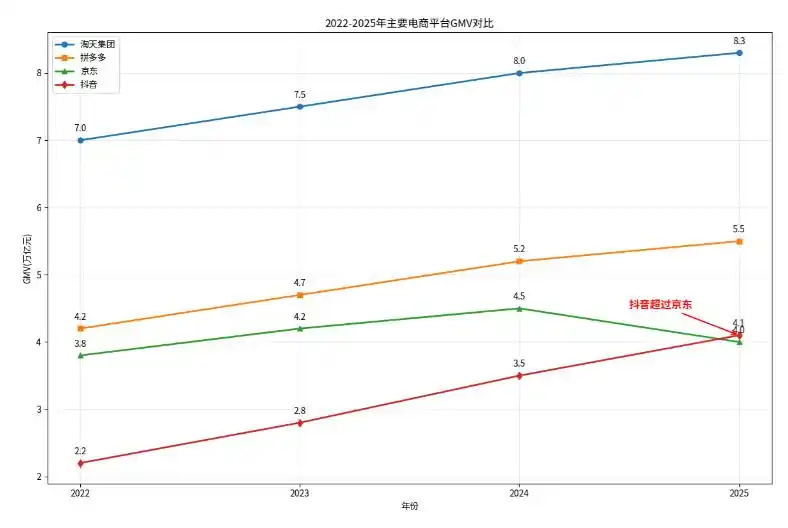
"企业家进高校"人才系列活动,第三期活动将邀请企业家们走进深圳北理莫斯科大学,为学子们带来全 新的创业故事。 此次活动是龙城街道产教融合共建人才生态的又一实践。此外,不同形式的企业人才分享活动在龙城街 道接连上演。11月27日,一场《脑机接口》主题学习会又在龙城街道大运深港国际科教城党群服务中心 举行,助力龙城人才工作从"区内联动"拓展至"国际交流"。 从组织学生深度探访企业到企业家走进校园经验分享,龙城街道正搭建一座持续的桥梁,让课堂与职场 对话,让学子与企业家共鸣,共同构筑一个更有活力的人才生态。 采写:南都N视频记者 颜鹏 "我是学生的时候,就在宿舍建了一个淘宝店。"一句开场白,瞬间拉近台上台下的距离。11月26日下 午,在龙城"企业家进高校"人才系列活动第二期现场,麦吉特奇医疗科技总经理徐传超——这位从宿舍 店主一路成长为百人工厂主的90后,正与深圳信息职业技术大学创新创业学院的学子们,分享他11年电 商沉浮提炼出的经验。 分享会从"什么是电商?"切入。在徐传超看来,当代电商已远超"线上购物"的范畴,演变为"内容电 商"与"货架电商"两大核心模式。他结合自身从C端到B端再到工厂电商的创业三部曲,阐释了 ...