
长期资本

Search documents
专访南方科技大学副校长金李: 促进“四链”融合 构建更具活力的国家创新体系
Zheng Quan Shi Bao· 2025-09-03 18:24
Core Viewpoint - China is transitioning from "catching up" to "running together" and even "leading" in the global technology innovation landscape, presenting both opportunities and challenges in areas such as research result transformation, startup financing, and high-end talent cultivation [1] Group 1: Challenges in the Integration of the Four Chains - The integration of the innovation chain, industry chain, capital chain, and talent chain faces four major challenges: insufficient linkage between the innovation chain and industry chain, a shortage of key talent, inadequate support for early-stage tech companies, and a lack of diverse application scenarios in the industry chain [1][2] - The current disconnection between research outcomes and market needs leads to low transformation efficiency, highlighting the need for better alignment between research and industry [5] Group 2: Systematic Solutions Proposed - A "tropical rainforest" ecosystem for technology innovation should be established to enhance the overall success rate of the innovation ecosystem rather than focusing solely on individual projects [2] - The talent chain support system needs optimization, including the establishment of market-oriented technology transfer personnel incentives and better integration of technology transfer roles within universities and enterprises [2][3] - A comprehensive financial service system covering the entire lifecycle of technology enterprises should be developed, including optimizing government guidance funds and encouraging financial product innovation [3][8] Group 3: Mechanisms for Effective Research Result Transformation - The low transformation rate of research results is primarily due to policy execution issues, a fragmented research ecosystem, and a lack of specialized institutions and talent [5][6] - Three key areas for improvement include optimizing policy services, enhancing the role of enterprises in the research process, and improving transformation capabilities through public service platforms [6][7] Group 4: Talent Mobility and Institutional Innovation - To facilitate talent mobility between academia and industry, flexible personnel management systems should be explored, allowing researchers to engage in entrepreneurship or part-time roles in enterprises [7] - Middle and small enterprises should be supported through institutional innovations to attract talent, such as promoting "technology vice president" roles and establishing overseas talent workstations [7] Group 5: Encouraging Long-term Capital Investment - A systematic layout for a technology finance system should focus on cultivating long-term capital and diversifying venture capital development to support technology enterprises [8][9] - Recommendations include relaxing investment limits for long-term funds in equity markets, encouraging diversified investment strategies, and developing secondary market funds to enhance investment returns [9][10]
突破4.8万亿,谁在推动ETF市场狂奔?
3 6 Ke· 2025-08-20 01:02
Core Insights - The equity market has shown significant profitability this year, with the Shanghai Composite Index up 11.20%, the Shenzhen Component Index up 13.51%, and the ChiNext Index up 21.49% as of August 19 [1] - The total scale of ETFs in the market has surged to over 4.8 trillion yuan, an increase of 1.04 trillion yuan or 27.88% compared to the end of 2024, indicating a profound shift in capital market funding dynamics [1] ETF Market Dynamics - The top 15 public fund companies dominate the ETF market, managing a total of 4.1 trillion yuan, which accounts for 85.42% of the entire market [2] - Huaxia Fund leads the industry with 111 ETFs totaling 817.63 billion yuan, driven primarily by its 105 stock ETFs, which account for 773.08 billion yuan [2][3] - E Fund follows closely with 99 ETFs managing 747.18 billion yuan, with stock ETFs comprising 95 of those, totaling 686.96 billion yuan [3] - Other significant players include Huatai-PB Fund with 50 ETFs at 535.35 billion yuan, and Southern Fund and Harvest Fund with 65 and 58 ETFs, managing 330.65 billion yuan and 303.28 billion yuan respectively [3] Growth of ETF Categories - Broad-based ETFs have emerged as the biggest winners, with the CSI 300 theme ETF surpassing 1.1 trillion yuan, marking the first trillion-level ETF category [4] - Industry-themed ETFs, particularly in hard technology sectors like AI and biomedicine, are gaining traction as essential tools for capital allocation [4] - Bond ETFs have also crossed 500 billion yuan, serving as a stabilizing factor in a declining interest rate environment, reflecting strong demand for stable returns [4] Institutional Investment Trends - Institutional allocation in broad-based ETFs has increased by 19.64 percentage points since early 2024, with institutional penetration in stock ETFs reaching 62.14% [5] - By the end of 2024, over 40% of stocks in stock funds are held through ETFs, a historical high [5] - The rise of ETFs is reshaping market ecology, pushing active funds to focus on long-term value rather than short-term rankings [5]
证监会:更大力度培育壮大长期资本;最高法发布25条指导意见促民营经济发展|每周金融评论(2025.8.04-2025.8.10)
清华金融评论· 2025-08-11 10:44
Group 1: Economic Policies and Developments - The UK central bank has lowered the benchmark interest rate by 25 basis points to 4%, marking the fifth rate cut since August 2024, aligning with market expectations [5][9] - The China Securities Regulatory Commission (CSRC) aims to enhance the attractiveness and inclusivity of domestic capital markets by promoting long-term and patient capital, focusing on reforms in the STAR Market and ChiNext [5][10] - The Supreme People's Court of China has issued 25 guiding opinions to implement the Private Economy Promotion Law, aimed at providing legal support for the development of the private economy [5][11] Group 2: Economic Indicators - In July, China's Consumer Price Index (CPI) remained flat year-on-year, while the Producer Price Index (PPI) decreased by 3.6%, indicating ongoing challenges in industrial pricing despite improvements in consumer prices [5][14] - The CSRC's initiatives are expected to stabilize the market and support economic transformation and technological innovation, with a focus on sectors like hard technology and high-dividend blue chips [10]

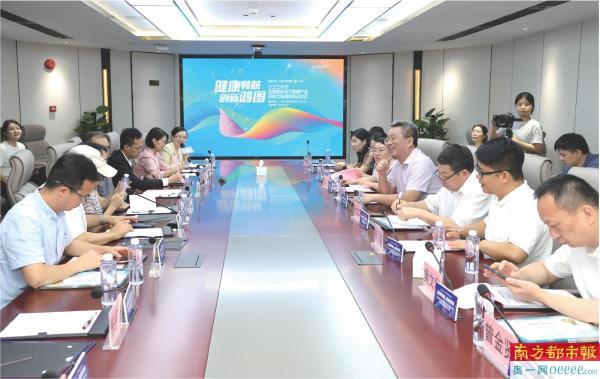
调研团队采用“三维评估模型”,对生物医药企业系统评估
Nan Fang Du Shi Bao· 2025-08-09 23:12
Core Insights - The Guangdong province is aiming to achieve a trillion-level biopharmaceutical and health industry by leveraging policy support, capital assistance, and technological innovation [3][4][6]. Group 1: Industry Development - Guangdong's biopharmaceutical industry is at a critical development stage, with Guangzhou and Shenzhen as core hubs, supported by cities like Zhuhai and Zhongshan [4]. - The province has a strong foundation in traditional Chinese medicine (TCM), with a total industrial output value of 45.71 billion yuan in 2024, of which over 33.43 billion yuan comes from traditional Chinese medicine products, accounting for over 11% of the national total [8]. - The province faces challenges such as the degradation of medicinal material sources and low rates of secondary development for high-quality traditional Chinese medicine products, with less than 35% of products undergoing secondary development [8][9]. Group 2: Policy and Investment - Guangzhou is establishing a biopharmaceutical industry investment fund with a target scale of 20 billion yuan to support enterprise growth and optimize regulatory processes [6]. - Experts emphasize the need for long-term capital support for innovative drug development, advocating for the establishment of a comprehensive mother fund system to align with social capital [12][13]. - The current investment cycle for innovative drugs is long, and there is a call for government and market-based funds to adopt longer-term capital models to better serve the biopharmaceutical industry [12][13]. Group 3: Innovation and Collaboration - The Southern Metropolis Daily has initiated a deep research project focusing on the innovation capabilities of the biopharmaceutical and health industry, covering five major regions and evaluating companies based on innovation, transformation, and collaboration [6][9]. - Experts suggest building collaborative innovation platforms and promoting industry-academia-research alliances to enhance the biopharmaceutical ecosystem [15]. - The integration of AI in healthcare and biopharmaceuticals is seen as a transformative force, although challenges such as data silos and collaborative ecosystems remain [16]. Group 4: Market Trends and Opportunities - Chinese biopharmaceutical companies are increasingly gaining international attention, with 40% of major BD transactions in the first seven months of the year involving Chinese firms, up from 4-5% four years ago [16]. - Traditional pharmaceutical companies are transitioning to innovative biopharmaceutical enterprises, with significant R&D investments, exemplified by a company that allocated 22.4% of its revenue to R&D last year [17].
证监会将更大力度培育壮大长期资本、耐心资本
Zheng Quan Shi Bao· 2025-08-08 09:17
Group 1 - The core viewpoint emphasizes the need for reforms to enhance the attractiveness and inclusiveness of the domestic capital market [1] - The China Securities Regulatory Commission (CSRC) is committed to advancing comprehensive capital market reforms and fostering long-term and patient capital [1] - The focus will be on accelerating the entry of medium- and long-term funds into the market and reforming public funds [1] Group 2 - The reforms will leverage the deepening of the Sci-Tech Innovation Board and the Growth Enterprise Market as key initiatives [1] - There will be an emphasis on developing diverse equity financing to better support the full lifecycle needs of various enterprises [1] - The regulatory framework for listed companies will be continuously improved, with a focus on mergers and acquisitions reform and enhancing shareholder returns through dividends and buybacks [1]
张晓晶:加强人工智能发展的金融支持|金融与科技
清华金融评论· 2025-08-05 08:37
Core Viewpoint - Artificial intelligence (AI) is emphasized as a strategic technology that shapes national core competitiveness and is crucial for global technological competition [4][5][6]. Group 1: Importance of AI - AI is recognized as a key driver of the new round of technological revolution and industrial transformation, with significant implications for reshaping international dynamics [5]. - The development of AI is essential for China to overcome technological bottlenecks and achieve high-level self-reliance in technology, particularly in core technologies like high-end chips and foundational algorithms [6]. Group 2: Financial Support for AI - Financial support is identified as a catalyst for transitioning AI from technological breakthroughs to industrial prosperity [7]. - A multi-layered financial ecosystem, including long-term capital, patient capital, and strategic capital, is necessary to support AI development across various stages [8][9]. Group 3: Capital Requirements at Different Stages - The capital needs of AI development vary significantly across different stages, necessitating a robust financial support system tailored to these unique requirements [13]. - Long-term capital is crucial for foundational research, while patient capital is needed to facilitate the transition from laboratory results to prototype products [14]. Group 4: Building a Financial Support System - A comprehensive financial support system for AI innovation should include mechanisms for long-term capital supply, risk mitigation, and strategic investment incentives [12][13]. - The establishment of a national-level AI scenario verification center is proposed to enhance commercial viability and reduce financial institutions' risk assessment costs [15]. Group 5: Enhancing Capital Market Structures - The development of multi-layered capital markets is essential to provide continuous and substantial funding for mature AI enterprises, supporting their ongoing innovation and global competitiveness [11][12]. - Innovations in asset securitization and the establishment of specialized equity markets for AI are recommended to facilitate financing [15][16]. Group 6: Data and Cryptocurrency Integration - The integration of data asset financing and the development of cryptocurrency are suggested as means to enhance the financial infrastructure supporting AI [16][17]. - Establishing a secure and compliant data trading system is crucial for unlocking the financing potential of data assets [17].
创投大咖闭门分享!沙丘开学精彩回顾
投资界· 2025-07-10 03:21
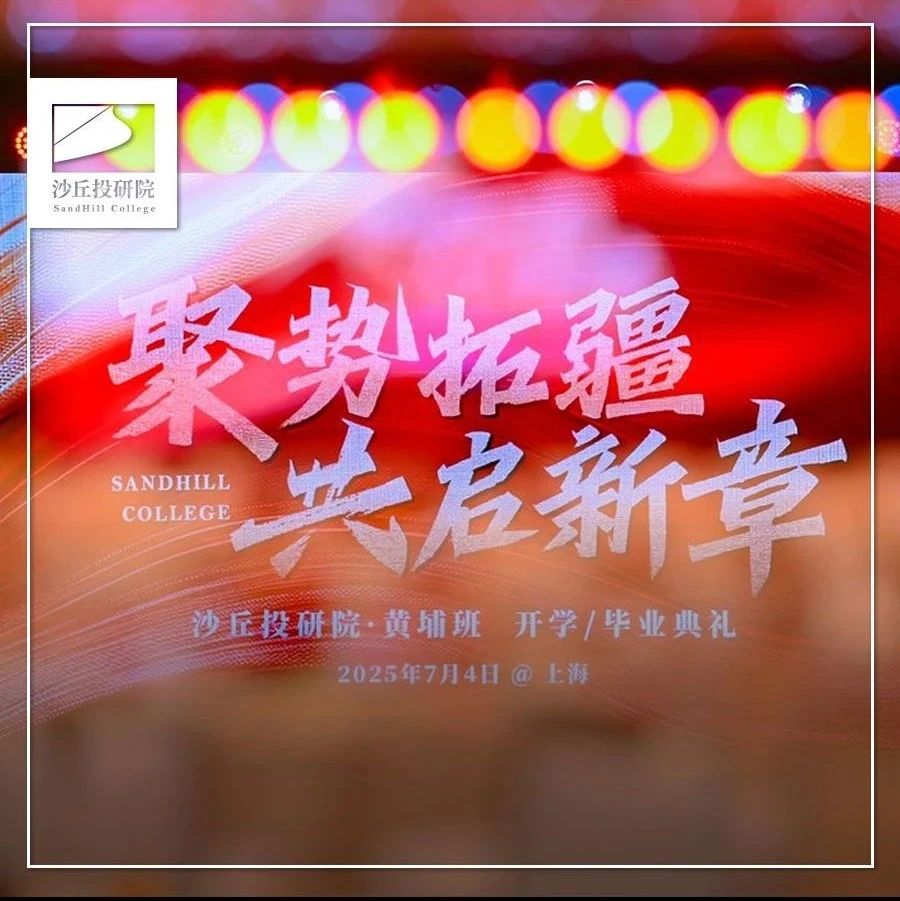
Core Viewpoint - The article emphasizes the importance of continuous learning and adaptation in the investment and venture capital industry, highlighting the recent recovery in the market and the need to identify hidden opportunities amidst uncertainty [4][6]. Group 1: Opening Ceremony - The "Sandy Dunes Research Institute Huangpu Class 15" opening ceremony and "Class 13" graduation took place in Shanghai, gathering nearly a hundred investors, entrepreneurs, and alumni to embark on a journey of theoretical and practical integration in venture capital [3][4]. - The founder and chairman of Qingke Group, Ni Zhengdong, reflects on the rapid rise of China's venture capital landscape and the shift towards "patient capital" and "long-term capital" as key themes for future development [4][6]. Group 2: Keynote Speeches - Ni Zhengdong discusses the recent recovery in the venture capital market, noting significant growth in IPOs and a resurgence in the Hong Kong stock market, emphasizing the importance of recognizing opportunities during uncertain times [6]. - Mentor Li Wei highlights the transformative impact of artificial intelligence, urging participants to embrace and harness AI for enhanced decision-making and investment strategies [9]. - Mentor Mi Lei emphasizes the golden era for hard technology investment and entrepreneurship in China, introducing the "ESK Value Investment System" which focuses on economic, social, and knowledge value [11]. Group 3: Graduation and New Class - The graduation ceremony for Class 13 and the welcoming of Class 15 encapsulated the essence of the motto "Seek Knowledge, Know Oneself, Aspire to Greatness," fostering a sense of belonging and honor among participants [13][15]. - The ceremony featured heartfelt reflections from graduates, emphasizing the importance of practical experience and the wisdom gained during their time at the institute [14][15]. Group 4: Course Content - The first class of the new term included discussions on "Investment Capability Models," covering topics such as venture capital history, track selection methods, and early-stage investment strategies, led by various mentors [56]. - Mentor Fei Jianjiang shared insights from over a decade of early-stage investment experience, providing a replicable thought framework for investment strategies [28]. - Mentor Yu Tong discussed the characteristics of "Chinese-style mergers and acquisitions," offering a valuable blueprint for navigating the current investment landscape [30]. Group 5: Alumni Association - The establishment of the "Sandy Dunes Research Institute Alumni Association" aims to enhance communication and collaboration among nearly 800 alumni, fostering a supportive ecosystem for ongoing development [36][39]. - The association's president, Ni Zhengdong, expressed optimism for the future, highlighting 2025 as a pivotal year for both the venture capital industry and the institute's growth [39].
资本市场丨科技创新和产业创新深度融合要“畅通循环”
Sou Hu Cai Jing· 2025-06-23 05:17
Core Viewpoint - The integration of technological innovation and industrial innovation is essential for driving economic growth in the context of a restructured global economic landscape. The China Securities Regulatory Commission (CSRC) emphasizes the need to activate the multi-tiered capital market to support this integration effectively [1][11]. Capital Market Development - China's capital market has shown activity in funding sectors like technology, media, communication, and consumption, but remains cautious in hard technology investments. The key to promoting the integration of technological and industrial innovation lies in ensuring efficient capital circulation across different stages and levels [3][4]. - The current capital market faces challenges such as uneven capital distribution, difficulties in early-stage project financing, long investment cycles, and insufficient exit channels [3][4][5]. Exit Channels and Liquidity - The reliance on IPOs as the primary exit strategy for venture capital institutions is problematic, as other exit methods like mergers and acquisitions (M&A) and S-fund transfers are underdeveloped [4][5]. - The development of S-funds is hindered by issues such as valuation difficulties and a lack of professional participants, which prevents the establishment of an efficient market for capital exits [4][5]. Policy Recommendations - To enhance the financing environment for technology enterprises, it is suggested to diversify exit channels beyond IPOs and M&A, and to encourage the development of equity M&A markets [4][9]. - Government initiatives, such as establishing technology guidance funds, can help direct social capital into key areas while reducing financing costs for enterprises [9][10]. - Tax incentives for long-term investments, such as tax breaks for investors holding shares for over five years, could encourage more stable capital allocation [9][10]. Market Structure and Coordination - Strengthening the coordination among various segments of the capital market is crucial. This includes improving the transfer mechanisms between different market segments to ensure that companies can access appropriate financing at various development stages [5][10]. - The capital market should function as a comprehensive, multi-tiered, and efficient "circulation network" to facilitate the flow of capital into and out of technological innovations [5][10]. Investment Trends and Data - As of June 20, 2025, the cumulative financing scale for high-tech enterprises in China's capital market reached 363.87 billion yuan, with 1,772 strategic emerging industry listed companies having a total market value of 20.80 trillion yuan, accounting for 20.47% of the total A-share market value [7]. - In 2024, A-share listed companies' R&D investment reached 1.88 trillion yuan, representing over 50% of the total social R&D investment, with a patent holding rate exceeding one-third of the national total [8].
盛世投资田辰:科创板“1+6”新政助力一级市场退出 为“投早投小投科技”注入“强心针”
Sou Hu Cai Jing· 2025-06-21 03:41
Core Viewpoint - The China Securities Regulatory Commission (CSRC) is enhancing the demonstration effect of the Sci-Tech Innovation Board (STAR Market) by introducing the "1+6" policy measures to deepen reforms, including the establishment of a growth tier and the resumption of the fifth listing standard for unprofitable companies [2][3] Group 1: Policy Measures - The "1+6" policy includes six specific reform measures aimed at supporting innovative companies, such as introducing a pre-review mechanism for IPOs and expanding the fifth standard to cover more advanced technology sectors like artificial intelligence and commercial aerospace [3] - The new policies are expected to provide significant benefits to early-stage investment firms focusing on technology, enhancing market confidence and aligning with previous investment strategies [2][3] Group 2: Market Impact - The introduction of a pre-review mechanism allows companies to communicate uncertainties with the exchange, potentially increasing the success rate of IPOs for tech-oriented firms [3] - The support for unprofitable tech companies to conduct capital increases for existing shareholders grants these firms greater flexibility in financing and strategic opportunities [3] - The regulatory emphasis on building a multi-layered capital market is expected to accelerate the development of the private equity secondary market in China, creating a more flexible exit ecosystem [4]

影石创新刘靖康:上市就像“结婚” “1+6”新政将更精准服务科创企业
2 1 Shi Ji Jing Ji Bao Dao· 2025-06-20 13:10
Core Viewpoint - The new policies reflect the government's strong support for technology companies and provide broader development opportunities for listed tech firms [1] Group 1: Policy and Market Impact - The China Securities Regulatory Commission (CSRC) announced the "1+6" policy measures to enhance the inclusiveness and adaptability of the Sci-Tech Innovation Board [1] - The establishment of a Sci-Tech Growth Tier aims to better serve high-quality tech companies with significant technological breakthroughs and ongoing R&D investments [1] - The new policies have generated positive market reactions, with companies like YingShi Innovation expressing optimism about the potential benefits [1] Group 2: Company Performance and Market Position - YingShi Innovation, known as the "first stock of smart imaging," has a current market capitalization of approximately 69 billion yuan [2] - The company has established a presence in over 200 countries and regions, with products available in more than 10,000 retail stores and over 90 airports globally [2] - According to Frost & Sullivan, YingShi Innovation holds a 67.2% market share in the global consumer panoramic camera market, leading ahead of competitors [2] Group 3: Financial Performance - YingShi Innovation's revenue and net profit have shown significant growth from 2022 to 2024, with revenues of 20.41 billion yuan, 36.36 billion yuan, and 55.74 billion yuan, and net profits of 4.07 billion yuan, 8.3 billion yuan, and 9.95 billion yuan respectively [3] - The company's gross margin for its main business was 51.27%, 55.90%, and 52.21% during the same period, with over 70% of revenue coming from overseas sales [3] Group 4: Future Development and Investment - The company plans to use the net proceeds of approximately 1.748 billion yuan from its IPO for the construction of a smart imaging equipment production base and a research and development center in Shenzhen [5] - YingShi Innovation has invested a total of 1.48 billion yuan in R&D over the past three years, representing 13.16% of its revenue [6] - The company aims to enhance technology applications and improve software efficiency while focusing on achieving higher computing power with lower energy consumption [5] Group 5: Commitment to Responsibilities - YingShi Innovation views its listing on the Sci-Tech Innovation Board as a milestone and acknowledges the increased responsibilities that come with it [4][5] - The company is committed to fulfilling its obligations as a listed entity and contributing to a healthier and more vibrant tech innovation ecosystem in China [7]