
即时零售

Search documents
海通国际2026年1月金股
Haitong Securities International· 2025-12-26 06:30
Investment Focus - Alphabet (GOOGL US) is expected to maintain strong advertising revenue due to AI integration in search functionalities and a significant increase in TPU orders, projecting over 30% growth in cloud business for the year [1] - Alibaba (BABA US) anticipates a cloud business growth rate of 28%-30%, driven by strong demand in China and synergies from its food delivery services, with a projected MAU growth of 20-30% for Taobao [1] - NVIDIA (NVDA US) is expected to achieve strong revenue growth, with projections indicating potential revenue exceeding $500 billion, supported by significant demand for its products [1] - Tencent (700 HK) is recommended for its robust growth in gaming and advertising, with a target price of 700, and is expected to benefit from AI trends [3] - Tencent Music (TME US) is expected to maintain double-digit growth in subscription revenue, supported by its long-term partnerships with top domestic artists [3] - New Oxygen (SY US) is positioned for rapid expansion in the light medical beauty sector, with plans to increase self-operated stores significantly by 2025 [3] - Trip.com (TCOM US) is projected to benefit from the recovery of domestic leisure travel and inbound tourism, with a revenue growth forecast of 14% to 71.1 billion yuan [4] - Kuaishou (1024 HK) is expected to see significant revenue contributions from its advertising solutions, with a target price of 93 [4] - Futu (FUTU US) is recognized for its strong user base and compliance advantages, with a projected PE of 17x for 2026, indicating significant valuation potential [4][5] - AIA (1299 HK) is expected to see steady growth in new business value due to its expansion strategy in mainland China and demand for traditional savings products [5] - Howmet Aerospace (HWM US) is positioned for stable revenue growth due to its strong market position in gas turbine components and a long order backlog [10]
1919已连续三年盈利,预计2025年突破140亿元规模
2 1 Shi Ji Jing Ji Bao Dao· 2025-12-26 05:05
Core Insights - Company 1919 has reported a net profit of 51.35 million yuan in 2023 and 48.12 million yuan in 2024, with 2025 also expected to be profitable, indicating a positive financial trend after three years of no financial disclosures [2] - The overall transaction scale of 1919 has grown from 11.579 billion yuan in 2023 to a projected 12.089 billion yuan in 2024, with a target to exceed 14 billion yuan in 2025, driven by a strategic partnership with Taobao Flash Purchase [2] - The company has undergone a fundamental transformation, moving towards a new development phase that emphasizes both scale and quality, largely due to strategic decisions made by founder Yang Lingjiang [2] Strategic Decisions - In 2023, 1919 decisively abandoned most of its premium liquor distribution rights, initiating a three-year inventory reduction strategy that helped avoid losses from declining liquor prices and significantly reduced financial costs associated with liquor procurement, achieving zero inventory for premium liquor [2] - The company has shifted away from heavy asset investments by reducing the number of directly operated stores and significantly increasing franchise stores, resulting in a decrease in the debt-to-asset ratio from 92% three years ago to below 20% now, leading to healthier financial and operational conditions while maintaining sales growth [3] New Business Model - Recently, 1919's founder Yang Lingjiang acquired a controlling stake of over 73% in the Hong Kong-listed company Yiyuan Wine Industry, which has led to speculation about the company's future direction [4] - The company is reportedly building a "F2B2C" (Factory to Business to Consumer) business model, utilizing the capital platform of Yiyuan Wine Industry to acquire established wineries, creating a matrix of various terminal types on the business side, and leveraging data-driven "instant satisfaction" and "lifestyle" services on the consumer side [4]

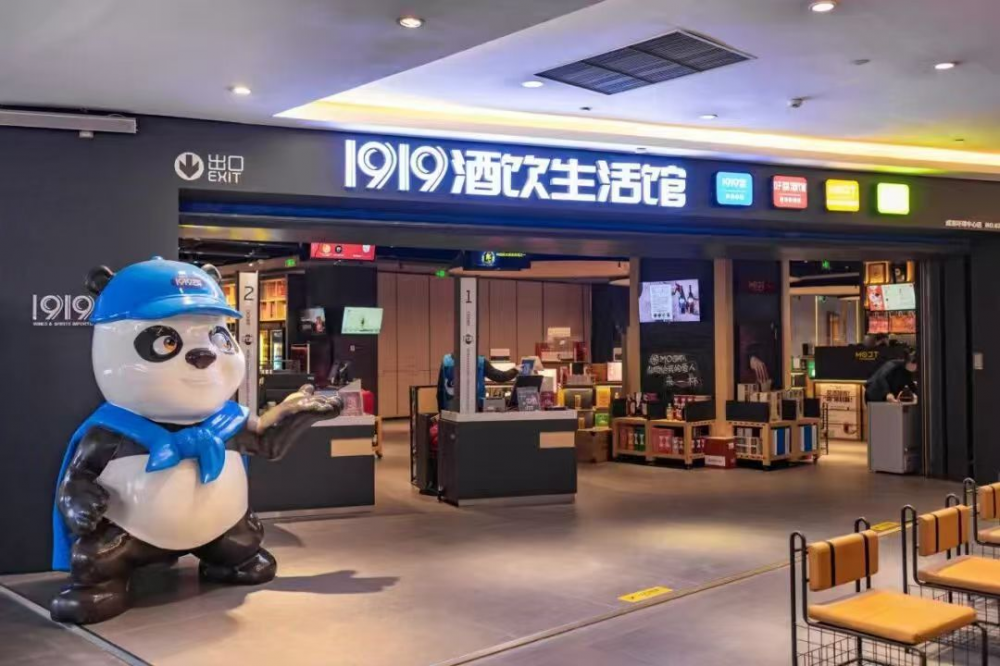
加盟商堵门讨债,杨陵江却砸1.4亿买港股酒企!1919在下一盘什么棋?
Xin Lang Cai Jing· 2025-12-26 03:34
Core Viewpoint - The acquisition of 73.63% of Yiyuan Wine Industry by Yang Lingjiang, founder of 1919 Wine Supply, for approximately 1.41 billion RMB (1.56 billion HKD) raises questions about the strategic direction of both companies amid a challenging market environment [3][11][12]. Group 1: Acquisition Details - Yang Lingjiang's acquisition of Yiyuan Wine Industry, known as the "first domestic winery stock," occurs during a period of significant operational challenges for both Yiyuan and 1919 [3][11]. - Yiyuan Wine Industry has faced financial difficulties, reporting losses of 600,000 RMB in 2022 and 41 million RMB in 2024, with a total market value of only 2.12 billion HKD prior to the acquisition [3][12]. - Despite a 151% increase in stock price this year, Yiyuan's stock remains at a low level, indicating potential for growth through strategic integration [3][12]. Group 2: Strategic Rationale - Industry expert Xiao Zhuqing suggests that the acquisition is driven by Yiyuan's asset value, integration potential, and capital operation expectations, despite its operational pressures [4][12]. - Yang's personal acquisition strategy allows for quick transaction execution and the establishment of an independent capital platform, which may help mitigate performance volatility [4][12]. - The acquisition coincides with 1919's ongoing debt issues, as franchisees have raised concerns over unpaid debts, which have been a source of public scrutiny [5][12]. Group 3: Financial Health and Transformation - Yang Lingjiang has publicly stated that 1919 has repaid nearly 6 billion RMB in debt, reducing its debt ratio from 92% to below 20%, with a net asset value of 1 billion RMB [5][13]. - The company is undergoing a significant business model transformation, shifting from traditional retail to an "instant retail + restaurant wine integration" model, which requires substantial upgrades across its 3,000 stores [5][13]. - The transition to a new business model has faced resistance from franchisees, who are concerned about the frequent changes and associated costs [6][15]. Group 4: Future Outlook - Yang has ambitious plans for 1919, aiming to establish it as a leading F2B2C company within five years and the largest global platform in the same category within ten years [7][14]. - The recent acquisition of Yiyuan Wine Industry is seen as a potential step towards simplifying the listing process for 1919, enhancing control and operational efficiency [7][14]. - However, the path to relisting is fraught with challenges, including the current downturn in the wine industry and regulatory hurdles for IPOs in Hong Kong [7][14].

从关键词读懂2025丨50万亿元关口,消费市场经历系统性“重塑”
Xin Hua Wang· 2025-12-26 02:16
Group 1: Core Insights - The Chinese consumer market is undergoing a systemic transformation driven by technological advancements, value shifts, and model innovations, aiming for a scale of 50 trillion yuan by 2025 [1] - AI is redefining the consumer decision-making process, with significant applications observed during events like "Double Eleven," where AI tools assist consumers in navigating complex shopping scenarios [2][3] - The integration of AI in e-commerce is seen as a new engine for understanding consumer needs and enhancing transaction efficiency, with generative AI projected to create significant economic value in retail and consumer goods [3] Group 2: Structural Changes - Consumer values are evolving, with a notable rise in emotional and social consumption driven by trends like "Guochao" culture and self-care, leading to a diversified market landscape [4][5] - The "emotional economy" is expected to exceed 2 trillion yuan by 2025, reflecting consumers' increasing focus on personal fulfillment and emotional resonance in their purchasing decisions [5] - The demand for quality and functionality is rising, pushing the market towards a "quality over price" structure, with a growing acceptance of the "recycling economy" among consumers [5][6] Group 3: Scene Restructuring - The instant retail market in China is projected to reach 971.4 billion yuan by 2025, driven by technological advancements and changing consumer habits [7][8] - E-commerce giants are competing not only in online traffic but also expanding into offline spaces, enhancing the integration of online and offline experiences [8] - The rise of front warehouses is crucial for instant retail, significantly improving delivery efficiency and redefining the value chain in retail [8][9] Group 4: Future Outlook - The competition in the consumer industry will increasingly focus on product quality, brand strength, and emotional connections, as the market evolves through the interplay of policy, technology, culture, and consumer behavior [9]


电商巨头入场角力 即时零售“三国杀”
Bei Jing Shang Bao· 2025-12-26 02:01
Core Insights - The article highlights the competitive landscape of instant retail among major e-commerce players, indicating that 2025 is expected to be a pivotal year for the sector as companies shift from price competition to a focus on overall business ecosystem capabilities [1][8]. Group 1: Market Dynamics - On December 25, 2023, 30 stores of Qixian Xiaochu in Beijing received over 16,000 orders, driven by promotional activities such as free chocolate for users [2]. - Major e-commerce platforms like JD.com, Meituan, and Taotian are intensifying their marketing efforts with significant discounts and promotional campaigns ahead of the New Year [3][4]. - The instant retail market in China is projected to reach 971.4 billion yuan in 2023, with expectations to surpass 1 trillion yuan in 2024 and potentially reach 2 trillion yuan by 2030, reflecting an annual growth rate of 12.6% during the 14th Five-Year Plan period [7]. Group 2: Competitive Strategies - JD.com has adopted a strategy focused on quality and zero commission, achieving over 25 million daily orders within 90 days of launching its services, while also offering social security for delivery personnel [4][7]. - Meituan has shifted its focus to instant retail by closing non-core businesses and enhancing its delivery services, with over 30,000 flash warehouses established across 2,800 counties and cities [5][7]. - Alibaba is integrating its resources to enhance its instant retail offerings, with a focus on improving user experience and increasing profitability through innovative business models like the Taobao convenience store [7]. Group 3: Future Outlook - The competition in the instant retail market is expected to evolve beyond mere subsidies and order volumes, emphasizing the importance of ecosystem collaboration, operational precision, and supply chain efficiency [8].

50万亿元关口,消费市场经历系统性“重塑”
Zhong Guo Jin Rong Xin Xi Wang· 2025-12-25 23:14
Core Insights - The Chinese consumer market is undergoing a systemic transformation driven by technological advancements, value shifts, and innovative models, with AI playing a pivotal role in reshaping the consumption chain [1][2] Group 1: AI's Role in Consumer Decision-Making - AI is redefining the connection between consumers, products, and platforms, fundamentally altering the decision-making process in shopping [2] - The 2023 "Double Eleven" shopping festival showcased AI's impact, with features like "AI shopping assistants" and "one-click optimal shopping lists" gaining popularity among consumers [2] - E-commerce platforms are rapidly integrating AI to enhance consumer engagement and streamline the shopping experience, with companies like Tmall and JD.com leading the charge [2][3] Group 2: Evolving Consumer Values - The rise of cultural confidence and self-oriented consumption is driving significant changes in consumer values, with emotional and social attributes becoming increasingly important [4] - The market for "Guochao" (national trend) products is expected to exceed 20 trillion yuan by 2024, reflecting a growing preference for domestic brands [4][5] - Consumers are also demanding higher functionality and durability from products, pushing the market towards a "quality over price" structure [5] Group 3: Instant Retail and Market Dynamics - The instant retail market in China is projected to reach 971.4 billion yuan by 2025, indicating a significant shift in consumer habits towards immediate fulfillment [7][8] - Major e-commerce players are competing aggressively in the instant retail space, leading to a surge in daily order volumes from approximately 100 million to over 200 million [7][8] - The integration of online and offline experiences is becoming crucial, with platforms expanding into physical locations to enhance service and fulfillment capabilities [8] Group 4: Future Market Landscape - The evolution of the Chinese consumer market is characterized by technological innovation, cultural confidence, and the integration of online and offline experiences, necessitating a comprehensive transformation across the entire supply chain [9] - Future competition in the consumer sector will hinge on a combination of product quality, brand strength, and emotional connections with consumers [9]
刘强东直播炒菜的那个百亿大项目,如今怎么样了?
Bei Jing Shang Bao· 2025-12-25 23:14
Core Insights - The article discusses the rapid expansion and competitive landscape of the instant retail market in China, particularly focusing on the performance and strategies of companies like JD.com, Meituan, and Alibaba in the context of the Seven Fresh Kitchen initiative [1][2][3][4][6]. Group 1: Company Expansion and Performance - Seven Fresh Kitchen has opened 30 locations in Beijing, achieving coverage within the city's Fifth Ring Road [1][2]. - JD.com plans to invest over 10 billion yuan to establish more than 10,000 Seven Fresh Kitchen outlets nationwide within three years [2]. - In less than three hours of operation, all Seven Fresh Kitchen stores in Beijing received over 16,000 orders, indicating strong demand driven by marketing activities [2]. Group 2: Competitive Landscape - The competition among JD.com, Meituan, and Alibaba in the instant retail sector is described as a "three-way battle," with each company employing various strategies to capture market share [3][4]. - JD.com has adopted a strategy focused on quality and zero commission for riders, leading to a rapid increase in daily order volume [3]. - Meituan has shifted its focus to instant retail, enhancing its service offerings and increasing the number of its flash warehouses to over 30,000 [4]. Group 3: Market Trends and Projections - The instant retail market in China is projected to reach 971.4 billion yuan by 2025, with expectations to exceed 1 trillion yuan by 2026 and potentially reach 2 trillion yuan by 2030 [7]. - The competition is shifting from acquiring new users to maximizing the value of existing users, indicating a transition to a "stock game" [7]. - Companies are increasingly focusing on operational efficiency, supply chain management, and ecosystem collaboration as key competitive factors beyond just subsidies and order volume [7].
七鲜小厨在京扩张:即时零售流量战转向效率战
Bei Jing Ri Bao Ke Hu Duan· 2025-12-25 16:32
Core Insights - The e-commerce industry is transitioning from scale expansion to efficiency and sustainability as it enters a period of stock competition in 2025 [1] - Major players like JD, Meituan, and Alibaba are intensifying their competition in instant retail, focusing on ecosystem capabilities rather than just price wars [1][5] - The market for instant retail is expected to reach 971.4 billion yuan in 2025, with a projected annual growth rate of 12.6% during the 14th Five-Year Plan period [8] Group 1: Market Dynamics - Instant retail is anticipated to explode in 2025, with significant marketing activities driving order volumes, such as the recent promotion by Seven Fresh Kitchen in Beijing [2][4] - The competition among JD, Meituan, and Alibaba has escalated, with each company employing various strategies to capture market share, including subsidies and operational adjustments [5][6] - The shift in focus from user growth to maximizing existing user value marks a significant change in competitive strategy within the industry [8] Group 2: Company Strategies - JD has launched initiatives like "Seven Fresh Kitchen" and is leveraging its supply chain capabilities to reduce costs and enhance efficiency [7] - Alibaba is integrating its e-commerce resources to enhance user experience and profitability, focusing on high-value users and expanding product categories [7] - Meituan is reinforcing its position in instant retail by enhancing its service offerings and streamlining operations, including the closure of non-core businesses [6] Group 3: Financial Performance - In Q3, Alibaba's instant retail revenue grew by 60% year-on-year, while JD's new business segment saw a 12.56% quarter-on-quarter increase [7] - Despite revenue growth, Alibaba's operating profit fell by 85% in the same quarter, highlighting the challenges of sustaining high levels of subsidies [7]
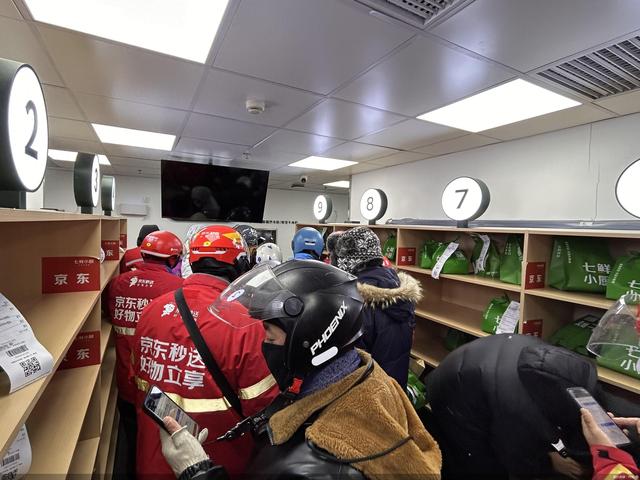
即时零售“三国杀”
Bei Jing Shang Bao· 2025-12-25 16:02
Core Insights - The article highlights the competitive landscape of instant retail among major e-commerce players, indicating that 2025 is expected to be a pivotal year for the sector as companies shift focus from price wars to enhancing overall business ecosystem capabilities [1][4]. Group 1: Market Dynamics - On December 25, 2023, 30 stores of Qixian Xiaochu in Beijing received over 16,000 orders, driven by promotional activities such as free chocolate for users [2]. - Major e-commerce platforms like JD.com, Meituan, and Taotian are intensifying their marketing efforts ahead of the New Year, with significant sales expected for gift items and festive products [2][3]. - The instant retail market in China is projected to reach 971.4 billion yuan in 2023, with expectations to surpass 1 trillion yuan in 2024 and potentially reach 2 trillion yuan by 2030, reflecting an annual growth rate of 12.6% during the 14th Five-Year Plan period [7]. Group 2: Competitive Strategies - JD.com, Meituan, and Taotian are engaged in fierce competition, with JD.com adopting strategies such as zero commission and social security for delivery personnel, resulting in a daily order volume exceeding 25 million within 90 days of launching its services [4][5]. - Meituan has shifted its focus to instant retail by closing non-core businesses and enhancing its delivery capabilities, with over 30,000 flash warehouses established across 2,800 counties and cities [5][7]. - Alibaba is integrating its resources to enhance its instant retail offerings, with a focus on improving user experience and increasing profit margins through innovative business models like Taobao Flash Purchase [7][8]. Group 3: Financial Performance - In Q3 2023, Alibaba's instant retail revenue grew by 60% year-on-year, while JD.com's new business segment, including delivery services, saw a quarter-on-quarter growth of 12.56% [7]. - Despite revenue growth, Alibaba's operating profit declined by 85% year-on-year, indicating the high costs associated with sustaining competitive advantages through subsidies [7]. Group 4: Future Outlook - The competition in the instant retail market is expected to evolve beyond mere subsidies and order volumes, focusing instead on ecosystem collaboration, operational precision, and supply chain efficiency [8].
七鲜小厨在京扩张 即时零售流量战转向效率战
Bei Jing Shang Bao· 2025-12-25 14:24
Core Insights - The e-commerce industry is transitioning from scale expansion to efficiency and sustainability as it enters a period of stock competition, with major players like JD, Meituan, and Alibaba competing fiercely in instant retail [1][8] - The year 2025 is anticipated to be a breakout year for instant retail, with significant marketing activities driving order volumes, as seen with 7Fresh's stores in Beijing [2][4] Group 1: Market Dynamics - Major e-commerce platforms are engaging in intense competition, with JD, Meituan, and Alibaba employing various strategies to capture market share in instant retail [4][5] - JD has launched initiatives such as 0 commission and social security for delivery personnel, resulting in a rapid increase in daily order volume [4][7] - Alibaba has invested heavily in subsidies to compete, with a reported 500 billion yuan allocated to capture market share in the instant retail sector [4][6] Group 2: Sales and Promotions - During the holiday season, e-commerce platforms are heavily promoting gift items, with significant sales increases expected for products like beauty gift sets and festive food items [2][3] - 7Fresh's promotional activities, including free chocolate giveaways, have significantly boosted order volumes, demonstrating the effectiveness of marketing strategies [2][3] Group 3: Financial Performance - Instant retail revenue for Alibaba grew by 60% year-on-year in Q3, while JD's new business segment, including delivery services, saw a 12.56% quarter-on-quarter increase [7] - Despite revenue growth, Alibaba's operating profit fell by 85% year-on-year, highlighting the challenges of sustaining profitability amid heavy subsidies [7] Group 4: Future Outlook - The instant retail market in China is projected to reach 971.4 billion yuan by 2025, with expectations to exceed 1 trillion yuan by 2026 [8] - The competition will increasingly focus on operational efficiency, ecosystem collaboration, and the ability to extract value from existing customers rather than just on subsidies and order volume [8]