
品牌出海

Search documents
中国汽车“带货”中国芯片
第一财经· 2025-09-18 01:16
Core Viewpoint - The resilience of Chinese brands is highlighted in the face of the "not-so-busy" fourth quarter in the European and American markets, with a notable increase in exports and a shift towards diversified market strategies [3][4][9]. Export Growth and Market Dynamics - In the first eight months of the year, China's goods exports grew by 6.9%, with August's export growth reaching 4.8%, driven by non-American exports and private enterprises [3][4]. - The Trade Desk's insights indicate that despite demand contraction, Chinese companies are increasing investments in marketing and brand building, showcasing strong craftsmanship and technological innovation [3][6]. - The U.S. holiday retail sales are projected to grow by only 1.2% in 2025, marking the lowest growth since 2009, with a significant decline compared to the previous year [5]. Competitive Edge of Chinese Electronics - At the 2025 Berlin International Consumer Electronics Show, around 764 Chinese companies participated, representing nearly 40% of exhibitors, indicating strong competitiveness in the electronics sector [6]. - Chinese brands are not only relying on manufacturing and logistics advantages but are also gaining premium capabilities in high-end markets, becoming significant choices for global consumers during the shopping season [6][12]. Diversification Strategies - Chinese brands have initiated diversification strategies in response to increased tariffs from the U.S., with exports to the EU and Japan growing by 10.4% and 6.7% respectively in August [9][10]. - The shift towards non-American markets is evident, with companies increasingly focusing on Europe and Asia-Pacific to mitigate trade war risks [10][11]. Brand Value and Consumer Trust - Chinese brands are transitioning from merely exporting products to establishing brand value and recognition in overseas markets, moving towards a model where they are seen as local international brands [12][13]. - The challenge remains for Chinese brands to balance value-for-money propositions with the need to convey brand values and ideologies to gain trust from overseas consumers [13][14].

中国品牌不惧“旺季不旺”,中国汽车还能“带货”芯片
Di Yi Cai Jing· 2025-09-17 14:01
Group 1: Market Trends and Performance - China's exports grew by 6.9% in the first eight months of the year, with August's export growth reaching 4.8%, driven by non-U.S. exports and private enterprises [1] - The global economic pressure is expected to lead to a gradual decline in export growth in the fourth quarter, with a focus on the impact of external demand on production [2] - Despite challenges, Chinese electronic consumer goods maintain strong competitiveness, with approximately 764 Chinese companies participating in the 2025 IFA, accounting for nearly 40% of exhibitors [2][3] Group 2: Brand Strategy and Innovation - Chinese brands are increasingly integrating AI technology and showcasing craftsmanship and technological innovation, enhancing their competitiveness in high-end markets [3] - The shift from product export to brand export is evident, with companies leveraging long-term R&D and industry cluster advantages to expand globally [3] - Chinese brands are transitioning from relying solely on supply chain advantages to establishing brand value and recognition in overseas markets [7] Group 3: Diversification and Market Expansion - Chinese brands have initiated diversification strategies in response to increased tariffs from the U.S., with exports to the EU and Japan growing by 10.4% and 6.7% respectively in August [4] - The trade transfer effect is strengthening, allowing for continued growth in non-U.S. exports, which is crucial for mitigating external economic fluctuations [5] - Companies are now more confident in exploring multiple markets simultaneously, moving away from a single-market focus [6] Group 4: Consumer Behavior and Brand Perception - There is a noticeable shift in consumer behavior towards more rational purchasing decisions, with many planning to complete their holiday shopping earlier [2] - Chinese brands are increasingly recognized for their value and ideology, which is essential for gaining trust and acceptance in overseas markets [7][8] - The perception of Chinese fast-moving consumer goods and cultural brands still lags behind international brands, indicating a need for greater efforts in brand recognition and cultural understanding [8]
深圳举办“企业品牌出海服务日”活动
Sou Hu Cai Jing· 2025-09-17 10:58
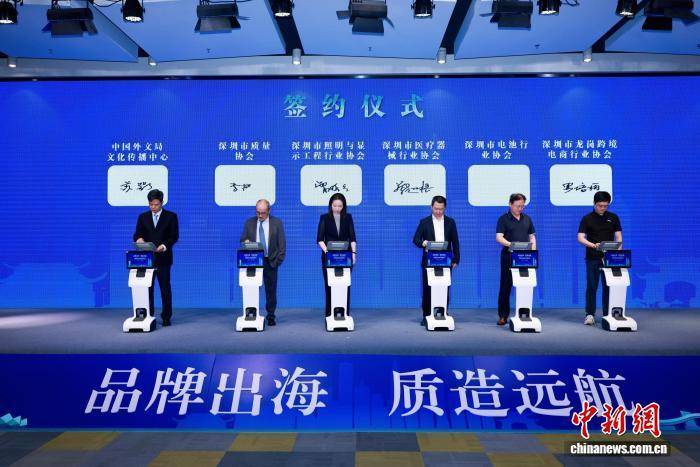
Group 1 - The event "Shenzhen Enterprise Brand Going Global Service Day" was held in Longgang District, Shenzhen, focusing on building a service platform for brands, especially for small and medium-sized enterprises (SMEs) [1][3] - Approximately 150 representatives from business organizations, experts, and industry associations from countries such as Thailand, Malaysia, Singapore, and Italy participated in the event [1] - The Shenzhen Market Supervision Administration plans to enhance policy collaboration to support brand cultivation, promotion, quality improvement, and talent development for brands [3] Group 2 - The Longgang District Committee emphasized four key areas to support brand development: showcasing creativity, transforming designs into production, upgrading products to brands, and facilitating global brand expansion [3] - The China Foreign Languages Publishing Administration is actively supporting Shenzhen enterprises in overseas brand launches, product displays, and participation in international exhibitions to enhance the global influence of Chinese brands [3][5] - A cultural communication innovation cooperation base was established in Shenzhen to create a national-level public service platform for brand going global, integrating service resources into the city [5] Group 3 - The "2025 Wonderful China - Touch Shenzhen" initiative was launched to narrate Shenzhen's brand development story to the world, aiding in the integration of Shenzhen brands into the global market [7]
一个小小的杯子,我卖了50亿
创业家· 2025-09-17 10:11
Core Viewpoint - The article emphasizes the importance of understanding user needs and perspectives in product design, illustrated through a personal experience that led to the creation of a new product aimed at preventing burns from hot water [23][28]. Group 1: Personal Experience and Product Development - The author recounts a traumatic incident where their child was burned by hot water, highlighting the emotional impact and the realization of unmet user needs [12][23]. - This experience prompted the author to question the lack of a product designed to cool hot liquids, leading to the development of the "55-degree cup," which can cool boiling water to a safe drinking temperature [26][28]. - The product quickly gained popularity, achieving nearly 5 billion in sales in its first year, demonstrating a strong market demand for innovative solutions to common problems [28]. Group 2: Product Philosophy and Innovation - The author introduces the concept of "product three views," which includes user perspective, product value, and product worldview, essential for successful product development [29][30]. - The article suggests that understanding user needs and integrating empathy into product design can lead to significant innovations and market success [24][30]. - The narrative encourages a shift from traditional product categories to innovative solutions that address specific user pain points, as exemplified by the creation of the "55-degree cup" [23][28]. Group 3: Upcoming Event and Learning Opportunities - The article promotes an upcoming immersive course focused on product innovation and brand expansion, featuring industry leaders and experts [33][41]. - The course aims to provide insights into how Japanese companies successfully transformed technology into user-perceived value, which can serve as a model for Chinese enterprises [40][42]. - Participants will learn about product development strategies, market positioning, and the integration of AI in consumer products, addressing current market challenges [41][46].

三个关键词,决定了你的赚钱能力
创业家· 2025-09-17 10:11
Core Viewpoint - The ability to generate profit is summarized as the capacity to create valuable, scarce products with barriers to entry [1][2][3] Group 1: Key Concepts - Value is defined as the ability to create products that meet consumer needs effectively, such as the design of beverage containers [1] - Scarcity is rooted in the fundamental economic principle of supply and demand, where scarcity allows for higher pricing [2] - Barriers to entry refer to unique capabilities that prevent competitors from replicating a company's offerings, such as patents or licenses [3] Group 2: Event Overview - The article promotes a three-day immersive course focused on product innovation and brand expansion in the context of the Japanese and Chinese consumer markets [11][12] - The course features industry experts who will share insights on transforming technology into consumer-perceived value and navigating the challenges of market saturation [11][15] - Key topics include product innovation, supply chain management, and strategies for global brand expansion [11][14][15] Group 3: Expert Insights - Experts will discuss how to leverage AI in consumer products and the importance of understanding local market needs for successful brand globalization [12][25][26] - The course aims to provide actionable strategies for companies facing product homogeneity and seeking to enhance their competitive edge through innovation [31][32]

“男人的衣柜”快装不下了,关店283家,金融出身二代急着“续命”
3 6 Ke· 2025-09-17 08:53
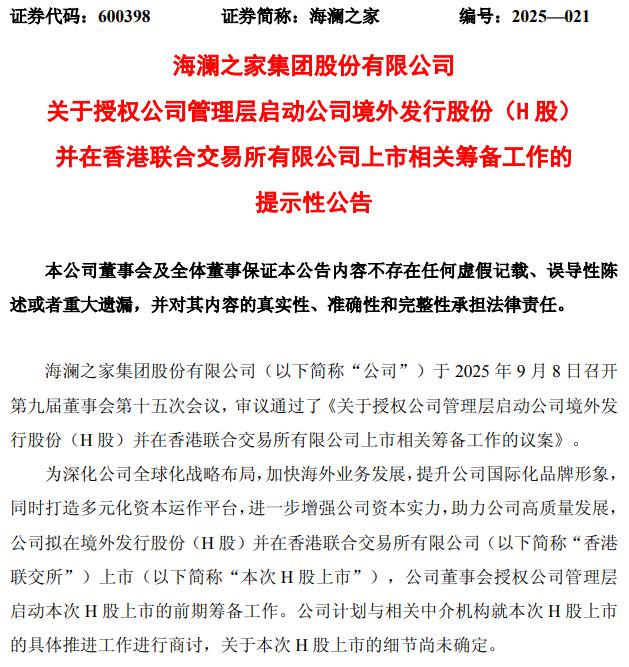
Core Viewpoint - Haier's Home, known as "the men's wardrobe," is planning to go public in Hong Kong after closing 283 stores in two years and experiencing stagnant growth, with the new chairman, Xiao Zhou, aiming to expand internationally to revitalize the company's performance [1][3][11]. Group 1: Company Overview - Haier's Home, a leading player in China's menswear industry, was established in 1988 and went public in 2014. The company has recently attempted to diversify its brand offerings beyond menswear to include younger menswear, women's wear, and children's wear [4][7]. - As of the first half of 2025, the company reported a revenue of 11.566 billion yuan, a year-on-year increase of 1.73%, while net profit decreased by 3.42% to 1.58 billion yuan. Total assets reached 33.422 billion yuan, with over 15,000 employees [7][8]. Group 2: Store Closures and Strategy - The number of stores peaked at 6,006 in mid-2023 but has since declined to 5,723, marking a closure of 283 stores over two years. However, this closure rate is relatively low compared to other fashion brands [8][10]. - The company aims to focus on "precise layout, high quality, and strong experience" for future store openings, emphasizing flagship and premium malls while enhancing operational efficiency through digital tools [10]. Group 3: International Expansion Plans - The primary goal of the Hong Kong listing is to deepen the company's global strategy, accelerate overseas business development, and enhance its international brand image. The company has already established a presence in Southeast Asia and plans to enter Central Asia, the Middle East, and Africa [12][13]. - As of the first half of 2025, Haier's Home had 111 overseas stores, with overseas revenue reaching 206 million yuan, a year-on-year increase of 27.42% [13]. Group 4: Leadership Transition and New Strategies - Founder Zhou Jianping has retired, passing leadership to his son Zhou Licheng, who has initiated a transformation strategy focusing on multi-brand, full-category, and group-oriented approaches, alongside a significant push into e-commerce and live-streaming sales [22][35]. - Zhou Licheng's strategies include updating marketing campaigns, collaborating with cultural institutions, and implementing a "new thousand-store plan" to close inefficient franchise stores and increase direct management [32][35].
研报掘金丨华源证券:维持潮宏基“增持”评级,推进H股上市,有望加速全球化进程
Ge Long Hui A P P· 2025-09-17 06:27
Core Viewpoint - Chao Hong Ji has submitted an application for the issuance and listing of overseas shares (H-shares) to the Hong Kong Stock Exchange, which is expected to advance the company's globalization strategy and enhance its international brand image and overall competitiveness [1] Group 1: Global Expansion - In 2024, Chao Hong Ji will initiate its brand overseas expansion, opening stores in Malaysia, Thailand, and Cambodia [1] - By the first half of 2025, Chao Hong Ji has established two stores in key commercial areas of Cambodia, specifically in the AEON Mall in Phnom Penh and the Umall Mall in Sihanoukville, further enhancing its overseas retail network [1] Group 2: Product Line Development - Chao Hong Ji is solidifying its product lines, with the introduction of the "Oriental Aesthetics" themed gold product line in the first half of 2025 [1] - The company is also reinforcing its "beaded string" specialty product line and launching four IP licensed product series: Pudding Dog, Mermaid Hanton, Line Dog, and Butter Bear [1] Group 3: Brand Positioning - Chao Hong Ji positions itself as an Oriental fashion jewelry brand aimed at younger consumers, capturing current aesthetic preferences [1] - The company focuses on three differentiated categories: "intangible cultural heritage," "beading," and "trending," which are expected to continuously drive brand momentum and open up performance potential [1]

一辆“小电动”,何以“卖全球”
Xin Hua Ri Bao· 2025-09-16 21:10
Core Insights - Wuxi's electric vehicle industry is rapidly growing, aiming for a scale of 100 billion yuan, with an average of 2.4 electric vehicles produced every minute [1] - Yadea, a leading electric vehicle manufacturer, has maintained the top global sales position for eight consecutive years, exporting to over 100 countries [2][3] Group 1: Production and Quality - Yadea's Wuxi facility has 14 production lines with an annual output exceeding 3 million units, showcasing efficient production processes [2] - The facility can produce a complete vehicle in just 35 seconds, while component development takes about six months [2] - Yadea holds over 2,000 patents and has ten major R&D bases, emphasizing its strong technological capabilities [2] Group 2: Market Expansion - The electric vehicle industry in Wuxi has 64 vehicle manufacturers and 91 parts suppliers, with six of the top ten domestic electric vehicle companies located there [3] - The industry is responding to the saturation of the domestic market by seeking opportunities abroad, particularly in Southeast Asia, where electric vehicles are becoming popular alternatives to traditional fuel motorcycles [3][4] - In the first half of the year, Wuxi's electric vehicle exports reached $1.9 billion, a 19.5% increase year-on-year [4] Group 3: Localization Strategies - Companies are adapting their products to meet local market demands, such as enhancing battery life for Indonesia's rough terrain and focusing on cost-effectiveness for Southeast Asia [4] - The trend is shifting from simply exporting products to establishing brand presence in international markets, with companies like Yadea opening stores in Germany and Spain [5] Group 4: Supply Chain and Infrastructure - Wuxi produces one in three electric bicycles in China, supported by a mature supply chain that includes upstream battery production and downstream vehicle assembly [6] - Over 20 production bases have been established in countries like Indonesia and Vietnam, along with 1,800 overseas marketing outlets, creating a comprehensive supply ecosystem [7] Group 5: E-commerce and Global Reach - The establishment of the Wuxi Electric Vehicle Cross-border E-commerce Industrial Park aims to enhance global market penetration through e-commerce [8] - The park has signed agreements for global public overseas warehouses, facilitating international trade for electric vehicle companies [8]


SHEIN推Xcelerator计划 拓产业出海新机遇
Nan Fang Du Shi Bao· 2025-09-16 17:47
Core Insights - SHEIN has launched the "SHEIN Xcelerator" brand incubation and support program to assist emerging and established brands, including Chinese designers, in global development and enhancing international brand recognition [1][4] - The program aims to leverage SHEIN's global reach, professional capabilities, and resources to create new opportunities for brand development and international expansion [1][4] Group 1: Program Overview - SHEIN Xcelerator is an evolution of the previous SHEIN X project, which has empowered thousands of designers since its launch in 2021 [2] - The upgraded program utilizes SHEIN's influence in brand building, efficient fulfillment systems, and market insights to accelerate the growth of emerging brands and expand the market presence of established brands [2][3] Group 2: Financial Performance - Since testing began in August 2023, nearly 20 brands have joined the program, generating approximately 3 billion yuan in revenue, with many brands experiencing a 190% average sales growth in their first year [3] - The brand Missguided is projected to achieve over 1.6 billion yuan in revenue within two years, showcasing the program's potential for significant financial impact [3] Group 3: Industry Impact - SHEIN Xcelerator emphasizes brand incubation and support, aiming to create globally influential brands and facilitate the transition from "product export" to "brand export" for domestic companies [4][5] - The program is expected to benefit upstream and downstream partners in the supply chain, leading to increased production orders and diversified manufacturing capabilities [4][5] Group 4: Digital Transformation - The inclusion of more diverse brands in SHEIN Xcelerator will contribute to broader digital transformation across industries, enhancing ecosystem services such as product management and order fulfillment [5] - The initiative is seen as a multi-win project that leverages SHEIN's success to empower brands aiming for global reach, ultimately benefiting the entire industry ecosystem [6]
阿里再出新招争抢东南亚市场,天猫商家“一键”出海
2 1 Shi Ji Jing Ji Bao Dao· 2025-09-16 13:28
(原标题:阿里再出新招争抢东南亚市场,天猫商家"一键"出海) 21世纪经济报道记者董静怡 去年,淘宝宣布出海,并在多国App下载榜斩获第一。近期,又有大量天猫 商家收到后台邀请,提示可"一键轻出海"东南亚市场。 21世纪经济报道记者获悉,这是阿里旗下东南亚电商平台Lazada首次向天猫商家全面开放东南亚本地化 运营能力,目前,蕉下、babycare、飞利浦、乐扣乐扣等多家知名品牌已确认加入。 近一年来,阿里已有多次推进国内外电商一体化的举措。这一次也不例外。通过整合内部资源,阿里将 天猫的品牌商家和供应链能力与Lazada的本地化运营能力结合,形成协同效应,盘活内部业务的同时, 也可以更好地应对东南亚市场的激烈竞争。 在电商流量见顶、低价竞争疲软的背景下,Lazada有意跳出传统价格战,转向高价值品牌赛道。对于 Lazada和中国品牌来说,新的增长空间正在打开。 当Lazada遇上天猫 Lazada"一键轻出海"上线,正向全体天猫商家开放东南亚市场。 据项目内部人士介绍,这是天猫和Lazada首次进行系统级打通。加入项目协议的商家可以马上拥有一间 和天猫一样的LazMall店铺迎接东南亚消费者,商品信息经AI ...
