
结构性货币政策工具

Search documents
田轩 | 4月中国金融市场:信心回升,韧性加强
Sou Hu Cai Jing· 2025-05-26 12:12
作者:田轩 张铧兮 导读 2025年4月,在内外政策合力作用下,市场信心回升,中国金融市场呈现明显回暖态势,道口金融晴雨指数实现环比和同比双增长。 其中,受中美贸易摩擦影响,股票市场短期承压,但在政策逆周期调节下长期潜力凸显;银行、信贷、货币、债券及非银市场在政策支持下信贷扩张、流动 性改善,活跃度显著提升。值得注意的是,中美经贸关系的结构性矛盾尚未根本性化解,未来建议持续关注实体经济清单动态等政策变量,对经贸博弈的长 期性保持战略定力。 宏观金融晴雨指数解读: 长期来看,融资规模增长、监管制度优化和险资入市等因素增强了市场信心,推动资金流向新兴产业。尽管仍需关注贸易不确定性、汇率波动和PPP项目风 险,但在政策支持和产业升级驱动下,股票市场有望延续回暖态势。 从长期看,宏观调控强调"有保有压",即在控制整体信贷扩张的同时,优先保障小微企业和制造业中长期融资需求。这类贷款增速持续高于整体水平,体现 政策在稳增长与防风险之间寻求结构优化,有助于改善杠杆结构并增强金融体系韧性。 图一:分市场指数比重累计图与拟合线(数据整理/康炜隆 施余艺) 二、宏观杠杆市场 注:图一为分市场指数堆积柱状图,配有总指数拟合线,以2 ...

小微企业融资,政策支持应与尊重市场自决并重
第一财经· 2025-05-23 00:38
21 日 国 家 金 融 监 管 总 局 等 八 部 委 联 合 印 发 《 支 持 小 微 企 业 融 资 的 若 干 措 施 》 ( 下 称 《 若 干 措 施》),从增加融资供给、降低综合融资成本等八个方面,提出23项工作措施。每一项都列出相关 负责部门,并在部门协同和责任分布方面做到精准对标,这有助精准聚焦和量化工作绩效。 2025.05. 23 本文字数:1381,阅读时长大约2分钟 导读 : 给予市场主体在市场活动中足够空间感,金融对实体的支持才能真正派生出信用杠杆。 作者 | 一财评论员 小微企业是经济的毛细血管,是经济社会的神经末梢,是经济的烟火气,更是人们的生活日常本身。 任何先进技术、惠民政策、善念的传达等,均需充分抵达小微企业,这也是打通经济内循环的必经之 路。 《若干措施》提出的金融支持是丰富多样的,对降低小微企业融资成本,改善其经营状况,盘活其现 金流,推动其跨越式发展,改善融资难、融资贵等问题的效果将是立竿见影的。 这种立竿见影能否真正有效改善小微企业处境,是一个复杂的过程。不论是刚刚施行的《民营经济促 进法》,还是《若干措施》,关键是匹配企业的所诉所愿,这样才能真正产生化学反应, ...

货币政策有效支持实体经济
Jing Ji Ri Bao· 2025-05-21 22:44
Group 1 - The Central Political Bureau meeting emphasized the need for more proactive macro policies, including effective fiscal and moderately loose monetary policies [1] - The People's Bank of China (PBOC) announced a package of 10 financial measures, including interest rate cuts and the introduction of new policy tools to support technological innovation [1][2] - The PBOC's decision to lower the reserve requirement ratio (RRR) by 0.5 percentage points is expected to release approximately 1 trillion yuan in long-term liquidity [2] Group 2 - The reduction in the RRR is aimed at meeting the long-term liquidity needs and stabilizing the financing scale growth [2] - The PBOC's measures are designed to optimize the bank's liability structure and reduce financing costs for the real economy [2][4] - The PBOC also lowered the loan market quotation rate (LPR) by 10 basis points, which is expected to lower the actual financing costs for the real economy [4] Group 3 - The PBOC has introduced a new structural monetary policy tool to support consumption and the elderly care sector, with a total of 500 billion yuan allocated [6] - The new policy tool is an upgrade from the previous inclusive elderly care special re-loan policy, aimed at stimulating service consumption and enhancing pension security [6] - The PBOC has increased the re-loan quota for technological innovation and agricultural support by 3 billion yuan each, totaling 8 billion yuan for tech innovation [7] Group 4 - The PBOC's structural monetary policy tools are designed to support key sectors of the economy, including small and micro enterprises, real estate, and technological innovation [5][6] - The current monetary policy framework includes both total quantity tools and structural tools, with a focus on addressing structural contradictions in the economy [6] - Experts suggest that future monetary policy may increasingly rely on structural tools to support domestic demand and drive economic transformation [6][7]
“适度宽松”基调稳市场稳预期
Jing Ji Ri Bao· 2025-05-21 22:31
Group 1 - The recent financial policy package includes 10 monetary policy measures aimed at stabilizing the market and expectations through a combination of tools, reflecting a moderately loose monetary policy stance to support employment, businesses, and market stability [1][2] - The measures include targeted reserve requirement ratio (RRR) cuts for large and medium-sized banks, as well as for auto finance and leasing companies, alongside interest rate reductions for policy rates and housing provident fund loans [2][3] - Structural monetary policy tools have been innovatively enhanced, with a comprehensive reduction in interest rates for various structural monetary policy tools, which will incentivize banks to increase credit to key strategic areas and weak links [3] Group 2 - New policy tools such as loans for service consumption and elderly care have been established to encourage financial institutions to support sectors like accommodation, dining, entertainment, and the elderly care industry, thereby stimulating service consumption and enhancing the pension market [3] - The structural monetary policy tools, with a balance of 5.9 trillion yuan, have become a significant channel for basic currency supply, reinforcing the policy incentives for commercial banks [3]
深度|央行新框架,对利率有何影响?——货币知识点系列之二【陈兴团队•财通宏观】
陈兴宏观研究· 2025-05-21 14:59
Core Viewpoint - The central bank's monetary policy reform has been ongoing for nearly a year, transitioning towards a "price-based" adjustment mechanism while increasing the use of structural monetary policy tools. The article explores the innovations in the monetary policy framework, the actual usage of structural tools, and the changes in market interest rates [1][4][26]. Group 1: Changes in Monetary Policy Framework - The central bank has established a liquidity supply structure that includes pledged reverse repos for short-term liquidity, buyout reverse repos for medium-term liquidity, and MLF, reserve requirements, and secondary market purchases of government bonds for long-term liquidity [12]. - The process of interest rate liberalization has accelerated since 2013, with significant milestones including the introduction of the Loan Prime Rate (LPR) and the establishment of the interest rate corridor mechanism [4][6]. - A narrower "overnight-7 days" interest rate corridor has been implemented, allowing for more flexible monetary policy adjustments and a higher tolerance for upward interest rate fluctuations [6][8]. Group 2: Current Status of Structural Tools - The transmission of monetary policy is hindered by a lack of endogenous financing demand, with funds not converting into real investments and consumption due to economic structural transformation and internal circulation of funds within the banking system [2][13]. - The usage rates of structural monetary policy tools are low, with only a few tools exceeding a 50% usage rate, while many others, particularly those targeting real estate and transportation, are below 30% [18][19]. - The challenges in utilizing structural tools stem from industry development limitations and execution difficulties, as well as the cyclical nature of industries and declining relative advantages [19][23]. Group 3: Impact of Framework Adjustments on Interest Rates - The central bank is likely to separate the policy goals of narrow and broad liquidity, maintaining a balance that does not adversely affect real financing [26]. - Market interest rates have shown three types of inversion phenomena, including the inversion between 7-day and overnight rates, indicating a mismatch in the transmission of interest rates from short to long [29][31]. - The yield curve for government bonds has flattened, with short-term rates rising sharply due to tightening liquidity, while long-term rates remain constrained by economic fundamentals and expectations of interest rate cuts [33].

回购增持贷款破1200亿!622家上市公司抢食低息资金,额度再扩至8000亿
Sou Hu Cai Jing· 2025-05-20 00:59
Core Insights - The total amount of repurchase and increase loans in the A-share market has exceeded 120 billion yuan, indicating the significant role of this financial tool [1][2] - The People's Bank of China and other regulatory bodies have introduced a policy to support low-cost financing for listed companies and major shareholders [1][2] Group 1: Loan Details - As of May 19, 622 listed companies or major shareholders have obtained repurchase increase loans totaling approximately 120.76 billion yuan, accounting for 40.25% of the initial quota of 300 billion yuan [1] - The loans are part of a policy established in October 2024, with a total quota of 300 billion yuan and an annual interest rate of 1.75% [1][2] Group 2: Recent Developments - In May, 37 listed companies or major shareholders have received repurchase increase loans, with notable examples including Yunda Holdings and Siyuan Electric [1] - On May 7, the central bank announced an increase in the total quota for stock repurchase and increase loans to 800 billion yuan, while also reducing the interest rate on structural monetary policy tools to 1.5% [2] Group 3: Industry Impact - Companies in the chemical, hardware equipment, and pharmaceutical industries have shown high enthusiasm for utilizing these special loans [1] - Large-cap and industry-leading companies account for over 40% of the applications for repurchase increase loans, covering sectors such as petrochemicals, food and beverage, home appliances, new energy, and semiconductors [1]
流动性周报:降准后的资金紧怎么看?-20250519
China Post Securities· 2025-05-19 13:49
Report Summary 1. Report Industry Investment Rating No industry investment rating is provided in the report. 2. Core Viewpoints - Maintain the conclusion that "funding may be looser than expected." Although short - term fluctuations occur in the current funding situation, the optimistic expectation for liquidity should not change, and there is still room for the funding price to decline [2]. - The bank's liability growth has returned to normal, and the objective environment for funding regulation has changed. The so - called "central bank's attitude" speculated by institutions is unreliable, and the central bank's attitude has also changed [3]. - After the RRR cut, the easing effect had been overdrawn before the actual implementation. The comprehensive impact of released funds and the overdrawn effect on the actual implementation day may not lead to an obvious change in the lent funds [3]. - The impact of government bond payments and the maturity of repurchase agreements exists, but the replacement of high - cost funds with cheaper RRR - cut funds still has an easing effect [3]. - There will be support from excess structural tools in the future, including a confirmed increase of 1.1 trillion in various re - loans and the possible re - activation of PSL, which has shrunk by 1.3 trillion since 2024 [4]. 3. Summary by Directory 1. How to View the Tightening of Funds after the RRR Cut - **Previous Views on the Bond Market and Funds**: Microscopically, the bond market is recovering; macroscopically, there are still opportunities in the bond market. The key to the subsequent bond market trend is whether the funding price center can break through 1.4%. There is a possibility that the funding will be looser than expected [10]. - **Current Situation of Funds after the RRR Cut**: The RRR cut was implemented on May 15th, and the funding tightened marginally. The funding price center dropped to around 1.5% after the RRR cut was announced in early May, but did not decline further after May 15th [11]. - **Reasons for Not Being Pessimistic about the Funding**: - **Change in the Bank's Liability Environment**: The bank's liability growth has returned to normal, and the so - called "central bank's attitude" speculated by institutions is unreliable. Even if the central bank continues to regulate, the funding center will be lower than before [14]. - **Overdrawn Easing Effect**: Before the actual implementation of the RRR cut, the easing effect had been overdrawn. The actual scale of the RRR cut may be affected by the change in the deposit base, and the lent funds may not change significantly on the implementation day [16]. - **Impact of Other Factors**: The large - scale government bond payments in the short term will consume excess reserves, and the maturity of repurchase agreements also needs to be considered. However, the replacement of high - cost funds with cheaper RRR - cut funds still has an easing effect [17]. - **Support from Structural Tools**: There will be support from excess structural tools in the future, including a confirmed increase of 1.1 trillion in various re - loans and the possible re - activation of PSL, which has shrunk by 1.3 trillion since 2024 [20]. - **Conclusion**: It is not advisable to be pessimistic about the funding. In most cases, the funding price will decline in the two weeks after the RRR cut. The bank's liability has returned to normal, and the central bank's attitude has also returned to stable and loose [22].
科技部等七部门:用好用足结构性货币政策工具
news flash· 2025-05-14 07:35
金十数据5月14日讯,《加快构建科技金融体制有力支撑高水平科技自立自强的若干政策举措》提到, 优化支持科技创新的结构性货币政策工具。发挥科技创新和技术改造再贷款等引导作用,扩大再贷款额 度规模,优化支持范围和流程机制,激励金融机构加大力度支持国家重大科技任务和科技型中小企业以 及重点领域技术改造和设备更新项目。 科技部等七部门:用好用足结构性货币政策工具 ...
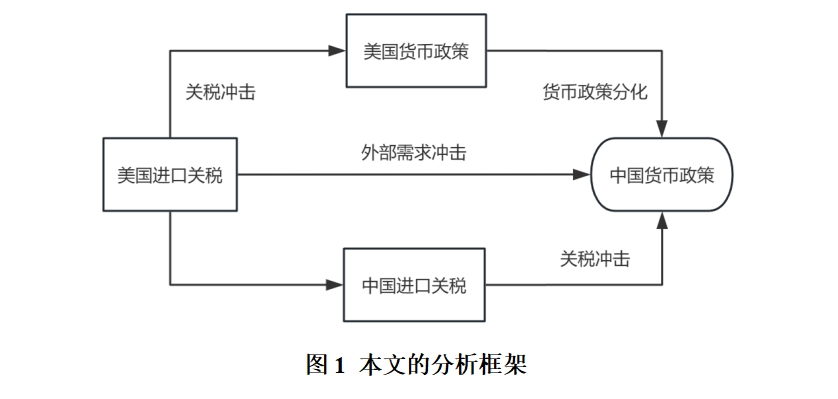
美国贸易冲击、宏观经济影响与中国货币政策选择
Sou Hu Cai Jing· 2025-05-14 04:21
Core Viewpoint - The recent announcement by the new U.S. government to impose "reciprocal tariffs" on all trade partners has triggered global reactions, with many countries seeking to restart trade negotiations, while China has implemented a series of countermeasures, including imposing equivalent tariffs on U.S. goods and placing certain U.S. companies on an unreliable entity list [1][2]. Group 1: U.S.-China Trade Policy Evolution - Since the reform and opening up, U.S.-China trade relations have developed through cooperation and competition, with U.S. trade policy evolving from "engagement and cooperation" to "strategic containment" [4][6]. - The U.S. has repeatedly initiated trade sanctions against China, particularly through "Section 301 investigations," citing issues like intellectual property infringement and unfair trade practices [6][7]. - The trade disputes intensified after China's accession to the WTO in 2001, leading to significant increases in trade volume and persistent trade surpluses for China [7][8]. Group 2: Impact of Tariff Shocks on Economies - The International Monetary Fund (IMF) has downgraded the global growth forecast for 2025 to 2.8%, with the U.S. growth rate expected to slow to 1.8%, the largest adjustment among developed economies [1][2]. - Tariff increases from the U.S. are expected to lead to a decline in demand for Chinese exports, affecting production capacity and employment in export-oriented sectors [11][12]. - The dual effects of supply-side and demand-side shocks from tariffs create a "stagflation" scenario, complicating monetary policy responses [15][20]. Group 3: Monetary Policy Adjustments - In response to external shocks, China is expected to adopt an expansionary monetary policy to stimulate demand and mitigate the negative impacts of tariff increases [18][21]. - The People's Bank of China has indicated a shift towards a moderately loose monetary policy, with potential interest rate cuts and liquidity support to stabilize the economy [18][22]. - Structural monetary policy tools are being utilized to guide credit towards specific sectors, particularly those affected by trade policies, to support economic stability [22][23]. Group 4: Future Considerations - The ongoing trade tensions and tariff impacts necessitate a balanced approach between supply-side management and monetary policy coordination in China [26]. - The effectiveness of monetary policy may be constrained by the need to manage inflation and economic growth simultaneously, particularly in the context of U.S. monetary policy tightening [21][26]. - Future structural monetary policies will focus on supporting foreign trade enterprises while ensuring that credit allocation does not lead to systemic risks in the banking sector [24][25].
央行创设货币政策新工具 5000亿元力挺消费与养老产业
Zhong Guo Jing Ying Bao· 2025-05-13 11:25
日前,中国人民银行印发《关于设立服务消费与养老再贷款有关事宜的通知》,设立服务消费与养老再 贷款,激励引导金融机构加大对住宿餐饮、文体娱乐、教育等服务消费重点领域和养老产业的金融支 持。 本报记者 谭志娟 北京报道 "服务消费与养老再贷款"工具落地。 从价格与期限来看,服务消费与养老再贷款额度5000亿元,年利率1.5%,期限1年,可展期2次,最长 使用期限不超过3年。 中国银行研究院研究员范若滢在接受《中国经营报》记者采访时表示:"随着我国居民生活水平不断提 升,近年来居民对住宿餐饮、文体娱乐、教育培训等服务消费的热情明显增强,但目前我国服务供给方 面仍存在多元化、个性化、品质化服务产品不足的问题,制约了居民服务消费潜力的进一步释放。通过 加大对服务消费的金融支持,将推动服务消费领域加快补短板的步伐。" 设立服务消费与养老再贷款 此次服务消费与养老再贷款的发放对象包括国家开发银行、政策性银行、国有商业银行、中国邮政储蓄 银行、股份制商业银行等21家全国性金融机构和北京银行、上海银行、江苏银行、南京银行、宁波银行 等5家属于系统重要性金融机构的城市商业银行(以下简称"26家金融机构")。政策执行至2027年年 ...