
绿色转型

Search documents
10万亿千瓦时!“满格”电量勾勒发展强劲脉搏
Xin Lang Cai Jing· 2026-01-18 12:17
Group 1 - The core point of the article highlights that China's total electricity consumption is projected to exceed 10 trillion kilowatt-hours by 2025, marking a historic milestone and reflecting the country's strong economic resilience and growth potential [1][2][3] - The increase in electricity consumption is indicative of the robust recovery and transformation of China's manufacturing sector, with significant growth in high-end equipment, new energy vehicles, and photovoltaic products [2] - The achievement of this electricity consumption milestone demonstrates the effectiveness of China's energy security system, showcasing the stability and flexibility of its energy supply amidst rising demand [3] Group 2 - The electricity consumption figure underscores the active engagement of various market participants, particularly in the tertiary sector and residential electricity usage, indicating a positive outcome of China's economic structural optimization [1] - The rapid growth in electricity demand from industrial parks and the overall manufacturing sector illustrates China's irreplaceable position in the global supply chain [2] - The transition towards a cleaner and more efficient energy system is evident, with increasing contributions from renewable energy sources such as wind and solar power, aligning with global energy transition goals [3]
中信证券:4万亿元投资夯实未来5年电网投资稳健偏强增长的预期 重点推荐两个方向
智通财经网· 2026-01-18 09:33
Core Viewpoint - The investment plan of 4 trillion yuan by the State Grid during the "14th Five-Year Plan" period solidifies the expectation of steady and strong growth in power grid investment over the next five years, with a focus on ultra-high voltage, direct current transmission, and digital intelligence development [1][2]. Group 1: Investment Plan - The State Grid's fixed asset investment is expected to reach 4 trillion yuan during the "14th Five-Year Plan," representing a 40% increase compared to the "13th Five-Year Plan" [2]. - The average annual investment is projected to be 800 billion yuan, with a compound annual growth rate (CAGR) approaching double digits, slightly exceeding the growth of electricity consumption [2]. Group 2: Green Transition and Carbon Neutrality - The State Grid aims to support national carbon peak goals, with an expected annual increase of around 200 million kilowatts in new wind and solar energy installations, pushing non-fossil energy consumption to 25% and electricity's share in final energy consumption to 35% [3]. - The development goals indicate a steady improvement in energy application greening and electrification levels, promoting the widespread application of intelligent devices and systems suitable for high renewable energy ratios [3]. Group 3: New Power System Construction - During the "14th Five-Year Plan," the State Grid plans to establish a new power grid platform characterized by collaborative main and distribution networks, enhancing cross-regional transmission capacity by over 30% compared to the end of the "13th Five-Year Plan" [4]. - The construction will focus on interconnectivity and digital intelligence, with significant investments in ultra-high voltage, direct current transmission, and intelligent microgrid systems expected to maintain high demand [4].

当2.8万亿能源巨无霸降临
Jing Ji Guan Cha Bao· 2026-01-18 06:11
Core Viewpoint - The merger between China Petroleum & Chemical Corporation (Sinopec) and China Aviation Oil Holding Company (China Aviation Oil) aims to create a powerful entity in the aviation fuel industry, enhancing supply chain control and competitiveness in line with China's dual carbon goals [3][24]. Industry Overview - The aviation fuel supply chain, valued at several hundred billion yuan, is undergoing significant restructuring, impacting upstream suppliers, midstream refining companies, independent traders, and downstream airlines [2][4]. - The merger is not merely a scale expansion but focuses on "professional integration," shifting competition from channel-based to efficiency and cost across the entire supply chain [4][5]. Merger Implementation - Following the merger announcement, both companies initiated the integration of production and procurement systems, aiming to optimize the supply chain from refineries to airports [3][6]. - A joint working group has been established to assess logistics, customer contracts, and supplier lists, with a focus on ensuring stable market supply during the transition [6][7]. Market Reactions - The merger has raised concerns among midstream small and medium-sized refining companies and independent traders, who fear losing business as Sinopec's capacity may cover most of China Aviation Oil's needs [13][14]. - Some companies are exploring alliances with other large refiners or considering direct supply to airports to maintain market presence [13][14]. User Perspective - Airlines, as the end users of aviation fuel, are closely monitoring the merger's impact on fuel costs, which constitute over 30% of their operational expenses [18][19]. - While the integration may enhance supply stability and reduce costs, airlines are concerned about diminished bargaining power against a unified supplier [18][19]. Future Considerations - The merger is expected to accelerate the green transition in the aviation sector, with both companies collaborating on sustainable aviation fuel (SAF) initiatives [24][25]. - Regulatory scrutiny is anticipated to ensure fair competition and prevent monopolistic practices, with the National Market Supervision Administration likely to review the merger [23][25].



电力天然气周报:国网计划“十五五”投资固定资产4万亿元,多省明确天然气关键战略能源定位-20260118
Xinda Securities· 2026-01-18 05:16
Investment Rating - The investment rating for the utility sector is "Positive" [2] Core Insights - The State Grid plans to invest 4 trillion yuan in fixed assets during the 14th Five-Year Plan, a 40% increase compared to the previous plan, focusing on green transformation and enhancing grid functionality [5] - Natural gas is recognized as a key strategic energy source in the 14th Five-Year Plan across multiple provinces, emphasizing its role in connecting traditional and new energy systems without setting consumption caps [5] - The power sector is expected to see profit improvement and value reassessment due to previous supply-demand tensions, with a gradual increase in electricity prices anticipated [5] Market Performance - As of January 16, the utility sector rose by 0.1%, outperforming the broader market, while the electricity sector increased by 0.20% and the gas sector decreased by 1.17% [4][12] - Key companies in the electricity sector showed varied performance, with Jidian Co. rising by 11.17% and Guodian Power falling by 3.24% [18] Electricity Industry Data Tracking - The price of thermal coal at Qinhuangdao Port (Q5500) was 697 yuan/ton, a weekly increase of 1 yuan/ton [4][23] - The inventory of thermal coal at Qinhuangdao Port was 5.5 million tons, an increase of 150,000 tons week-on-week [30] - The daily coal consumption of inland power plants was 4.147 million tons, an increase of 96,000 tons/day week-on-week [34] Natural Gas Industry Data Tracking - The LNG ex-factory price index in China was 3,854 yuan/ton as of January 15, a 1.29% increase week-on-week [60] - The domestic apparent consumption of natural gas in November was 36.280 billion cubic meters, a year-on-year increase of 4.1% [5] - The EU natural gas supply in the 52nd week of 2025 was 5.86 billion cubic meters, a year-on-year increase of 2.8% [67] Investment Recommendations - For the electricity sector, companies like Guodian Power, Huaneng International, and Huadian International are recommended due to expected profit improvements [5] - In the natural gas sector, companies such as Xin'ao Co. and Guanghui Energy are highlighted as potential beneficiaries of market conditions [5]
“惊人预言”?巴菲特:不出50年,日美将逐渐变强!用意何在?
Sou Hu Cai Jing· 2026-01-18 02:42
Group 1 - Warren Buffett's investment philosophy emphasizes long-term holding of quality companies, which has become a guiding principle for many investors [2] - Berkshire Hathaway's investment in Japan began in 2019, acquiring stakes in five major trading companies, increasing from an initial 5% to over 8.5% by 2024, with a current value exceeding $20 billion [4][6] - Buffett's strategy includes using low-interest yen bonds to finance stock purchases, effectively borrowing to invest while mitigating currency risk [4] Group 2 - By 2025, Berkshire's stake in Japanese companies is projected to reach nearly 10%, valued at around $30 billion, with a focus on stable dividends and prudent management [7] - The Japanese stock market has shown significant growth, with the Nikkei index reaching record highs, benefiting Berkshire's investments [6][9] - Buffett's insights highlight the importance of recognizing long-term economic dynamics and the need for diversification in investment strategies, particularly in light of emerging market challenges [9][11] Group 3 - The investment in Japan reflects a broader understanding of global economic trends, with Japan and the U.S. seen as having strong foundational strengths despite challenges [11] - Berkshire's investments have yielded over 60% returns, demonstrating Buffett's ability to identify valuable opportunities in the market [9] - The emphasis on shareholder returns and responsible management in Japanese companies contrasts with some U.S. firms, prompting Berkshire to adjust its portfolio towards Japan [9][11]

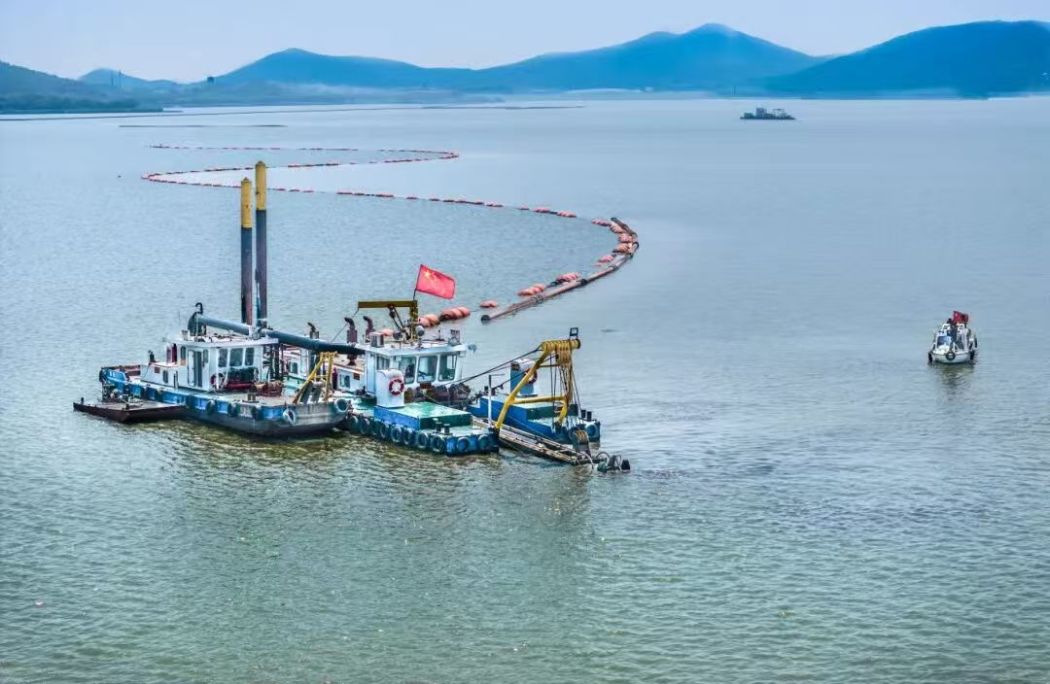
唱响新时代太湖美,常州持续贡献“上游担当”
Xin Lang Cai Jing· 2026-01-17 13:35
Core Viewpoint - The comprehensive governance of Taihu Lake in Changzhou has shown significant improvements in water quality, with total phosphorus levels improving by 4.7% year-on-year, and multiple indicators reaching their best levels since 2007 [1][4]. Group 1: Water Quality Improvement - In 2025, Taihu Lake's water quality has stabilized at Class III for two consecutive years, marking a historic breakthrough in water governance [1]. - The total phosphorus in Changzhou's water area has improved, with a 5.1% year-on-year reduction in Duhu Lake and a historic achievement of Class III water quality in Changzhou's Changdang Lake [4]. - The overall quality of the water environment in the Changzhou basin has seen multiple breakthroughs, contributing to the narrative of "New Era Taihu Beauty" [4]. Group 2: Pollution Control Measures - Since the start of a new round of comprehensive governance in 2023, Changzhou has prioritized sediment dredging to reduce internal pollution sources, completing 500 million cubic meters of dredging by the end of 2025 [4]. - The city has implemented 195 key projects focused on controlling pollution from domestic, industrial, and agricultural sources, significantly enhancing the overall water quality [7]. - The total phosphorus levels in three main rivers flowing into Taihu Lake improved by 25% year-on-year, with some rivers achieving Class III water quality for the first time [7]. Group 3: Industrial Transformation - Changzhou has established a surface treatment industrial park to centralize management and pollution control, leading to a 20% reduction in ammonia nitrogen and a 5% reduction in heavy metals in wastewater [10]. - The city is promoting green transformation in traditional industries, with 2,192 problematic enterprises undergoing remediation, resulting in a reduction of 1,193 tons of major pollutants [10]. - The "Hazardous Waste, Dispersed, Low Efficiency" comprehensive governance project has been recognized as a national model for green and low-carbon initiatives [10]. Group 4: Future Plans - Changzhou aims to continue its efforts in pollution prevention and ecological system optimization, promoting a vision of a beautiful Taihu Lake with both ecological restoration and vibrant economic development [11].
中国经济绿色高质量发展报告近日发布 系统总结中国绿色转型经验
Zheng Quan Shi Bao Wang· 2026-01-17 12:50
Core Insights - The report titled "China's Economic Green High-Quality Development Report 2025" was officially released, highlighting China's achievements and strategies in green transformation [1][2] - China has established the world's largest green energy system, with significant reductions in carbon emission intensity and ongoing optimization of economic and energy structures [1] - The report emphasizes China's commitment to international climate governance through South-South cooperation and the Belt and Road Initiative, showcasing its role as a responsible major power [1] Summary by Sections Current Status and Global Contribution - China has made substantial progress in green transformation, establishing the largest green energy system globally and reducing carbon emission intensity [1] - The country is actively participating in global climate governance, promoting green transformation in Belt and Road countries, and fulfilling international responsibilities [1] Strategic Pathways - The dual carbon goals are driving China's strategic layout, focusing on the integration of development and emission reduction while accelerating the establishment of relevant policy frameworks [1] - The report identifies four key areas: green technology and new productivity, low-carbon city construction, international climate financing, and electricity market reform [1] Challenges and Recommendations - Despite progress, challenges remain, including high reliance on traditional energy, unbalanced regional green transformation, and uncertainties in international climate cooperation [1] - Recommendations include strengthening policy coordination, promoting deep decarbonization in key industries, enhancing green technology research and application, and deepening international climate cooperation [1]
骄傲转发!中国人用10万亿度电有多牛
Xin Lang Cai Jing· 2026-01-17 12:35
来源: 央视新闻 #中国创下人类历史一个新纪录#【骄傲转发!#中国人用10万亿度电有多牛#】2025年,我国全社会用电 量突破10万亿度,创下人类历史单个国家年度电能消费新纪录,相当于欧盟、俄罗斯、印度、日本用电 量的总和。10万亿度,如何稳定供给、精准供电?[加油]2025年夏天的极高温天气下,连续两个月单月 用电量破万亿,电力负荷4次突破历史新高,中国的电力供应稳稳接住重重考验。[加油]九大清洁能源 基地列阵山海,46条特高压工程架起电力"闪送通道","西电东送、北电南供"能源输送网络进一步巩 固,全球规模最大的电力基础设施体系,为14亿多人筑牢能源安全底线。[加油]新型电力系统和新型能 源体系加快构建,北斗通信、云计算、人工智能等技术加持,电力供需精度达到"毫秒级"。全国供电可 靠性达99.924%,稳稳托起中国"智"造。[加油]奔流的电能,见证着一个大国的绿色转型与持续向前, 10万亿度,是今天的刻度,更是中国经济奔向明天的新起点!(总台央视记者刘颖 丁雅妮) ...
用电量突破10万亿度,我国是如何实现稳定、精准供电的?
Xin Lang Cai Jing· 2026-01-17 09:29
Group 1 - The core point of the article highlights that in 2025, China's total electricity consumption surpassed 10 trillion kilowatt-hours, setting a new record for any single country in history [1][3] - Over the past decade, China's electricity consumption doubled from 5 trillion kilowatt-hours to 10 trillion kilowatt-hours, indicating significant growth in energy demand [1][3] - China's electricity consumption now equals the combined total of the United States, the European Union, Russia, India, and Japan [1] Group 2 - In the summer of 2025, China faced extreme heat, with monthly electricity consumption exceeding 1 trillion kilowatt-hours for two consecutive months, and power loads breaking historical highs multiple times [2][5] - Despite these challenges, China's energy supply remained stable, showcasing the resilience of its energy system under dual pressures of safety and transformation [2][5] - The share of non-fossil energy in China's installed capacity has reached 61%, with one-third of total electricity consumption coming from green energy sources, reflecting a significant reduction in carbon footprint as the economy progresses [5] Group 3 - The article emphasizes the importance of precision in electricity supply, where fluctuations as small as 0.01 seconds can have significant impacts [7][9] - Advanced technologies such as BeiDou communication, cloud computing, and artificial intelligence are being utilized to enhance the efficiency of the electricity grid [9][11] - The construction of the world's largest energy storage facilities and complex market dispatch systems has achieved a supply-demand precision of "millisecond level," with national power reliability reaching 99.924% [11]

瑞士百达资管施义:可持续投资核心在“量化影响力” 中国绿色转型蕴含长期投资机遇
Zhong Zheng Wang· 2026-01-17 09:10
Core Viewpoint - The increasing attention of international asset management institutions towards China's ESG investment market is driven by the country's ongoing efforts to build a sustainable information disclosure system and accelerate green and low-carbon transformation [1][2]. Group 1: ESG Investment Insights - ESG investment requires measurable and quantifiable impact, and enhancing the coverage of ESG information disclosure by companies aids investment institutions in their assessments [1]. - ESG investment is positioned within a spectrum that ranges from pure return-oriented investment to pure impact-oriented investment, with traditional impact investing and ethical investing in between [1]. - Many ESG investments are still at the scoring stage, which is insufficient; true impact investing must achieve measurable and quantifiable environmental and social value [1]. Group 2: Investment Methodology - Swiss asset management applies the "Earth Boundary Framework" theory in investment practices, assessing the environmental footprint of companies throughout their product lifecycle, covering 411 supply chains, 160 countries, and 120 industry sectors, with related strategy fund sizes around $7 billion [2]. - A biodiversity impact model has been constructed, integrating 400 million data points and covering nearly 20,000 unique value chains, attracting significant attention from international institutional investors [2]. Group 3: Opportunities in China's Market - The long-term opportunities for green transformation in China are significant, and investments should focus on the entire industrial chain ecosystem rather than a single pathway [2]. - The clean energy ecosystem includes wind and solar power supply, grid infrastructure, smart transportation, green buildings, and efficient production, with energy storage and semiconductor value chains as critical supports [2]. - Core technologies like semiconductors play an increasingly important role in supporting the clean energy transition, providing support for key areas such as smart grids and green data centers [2]. Group 4: ESG Practices in A-share Market - Chinese companies are rapidly advancing in ESG information disclosure, but there is still room for improvement in data coverage and completeness [3]. - There is a need for further enhancement of corporate governance transparency in China, alongside leveraging technological advantages to improve the comprehensiveness and accuracy of ESG data collection [3]. - As a global manufacturing hub, China's green transformation will generate global spillover effects, with leading companies upgrading their ESG capabilities in response to international supply chain demands [3].