
新消费

Search documents
现制茶饮:供需共振、长坡厚雪的新消费赛道
Zhong Guo Zheng Quan Bao· 2025-11-23 20:06
Core Insights - The emergence of ready-to-drink tea has simplified the traditional tea preparation process, attracting younger consumers and leading to the popularity of products like bubble tea [1] - The ready-to-drink tea industry is experiencing structural upgrades, with high-quality ingredients and competitive pricing driving growth and attracting investor interest [1] Supply Side Analysis - The industry is shifting from powdered tea to fresh, healthy, and high-quality ready-to-drink options, with a significant increase in the use of premium raw materials [2] - The number of ready-to-drink tea stores in China has grown from 293,000 in 2019 to 448,000 in 2024, indicating increased accessibility [2] - Over 85% of new products in 2024 are priced below 20 yuan, with only 3.9% priced at 25 yuan or above, reflecting a trend towards affordability [2] Demand Side Analysis - Consumer preferences are evolving from basic thirst-quenching to higher-order needs such as emotional value, health, and social interaction [3] - Young consumers, particularly those under 30, represent a significant portion of the market, with 42% aged under 20 and 29% aged 20-30 [3] - The per capita annual consumption of ready-to-drink tea in China is 11 cups, compared to over 50 cups in Hong Kong and Taiwan, indicating substantial growth potential [3] Short-term Influences - The rise of delivery services has increased purchase frequency, with major platforms like JD, Meituan, and Taobao offering substantial subsidies to boost sales [3] - The impact of delivery subsidies on store profitability varies, with leading brands likely to benefit more than smaller brands, which may face challenges in profitability despite increased revenue [3] - Concerns exist regarding the sustainability of same-store sales growth post-subsidy, as consumer price sensitivity may increase [3]
一周新消费NO.336|「茶颜悦色」进军咖啡市场;于东来卸任胖东来总经理
新消费智库· 2025-11-23 13:04
New Products - 羴牧欧铂佳 launched a new goat milk powder with high OPO content of 4.6g/100g and a dual prebiotic combination (FOS+GOS) [7] - FILA introduced the new "4810 Peak Goose Down" series of down jackets designed for extreme weather conditions [5] - 京东 officially launched its fresh coffee brand "七鲜咖啡" [5] - Kiri released a new product combining French cheese with crispy cookies, available in strawberry and blueberry flavors [10] - 盼盼食品 launched a customized butter layer toast in collaboration with 永辉超市, featuring ≥12% butter and ≥20% fresh milk [12] - 哈根达斯 announced winter new products including various ice cream flavors and desserts [13] - "茶颜悦色" is entering the coffee market with a new sub-brand and a unique coffee menu [18] - 斯凯奇 formed a strategic partnership with 美团闪购 to expand its market presence [18] - 飞鹤's 星飞帆 product won the prestigious Italian A' Design Award [11] - 太平鸟 showcased its "PEACEBIRD Starry Realm" pop-up event in Xi'an [11] - Sony acquired the film rights for the Labubu character, expanding its entertainment portfolio [11] Industry Events - Apple plans to shift its iPhone release strategy to twice a year starting in 2026, marking a significant change in its product launch approach [16] - 名创优品 registered the trademarks MINISO FRIENDS and MINISO LAND, indicating new store formats [18] - 斯凯奇 and 美团闪购's partnership will see over 200 stores in more than 40 cities collaborating [18] - 北京's largest Sam's Club is set to open on November 21 [18] - Babycare's diapers will be available in over 170 Kids Plaza stores in Vietnam [20] - 湖南 opened its first robot 4S store, showcasing various smart robots [20] - 京东外卖 will launch a standalone app, enhancing its delivery service [21] Investment Trends - Cur sor raised $2.3 billion in D round funding with investments from major firms including Google and Nvidia [22] - 欧莱雅 invested in the Chinese skincare brand LAN, indicating a focus on local brands [24] - 运动营养品牌 "迈胜" completed nearly 100 million yuan in A round financing led by 仙乐健康 [25] - 腾迈医药 raised $22 million in A+ round funding from prominent investors [26] - "新叶 NEAVES" secured 30 million yuan in angel round financing for product development [26] - 智能耳环 brand Lumia announced $7 million in funding, bringing total funding to $17.2 million [26] - 沃兰特航空 raised several hundred million yuan in B+ round funding, positioning itself as a leader in the eVTOL sector [27] - SKIMS achieved a valuation of $5 billion after raising $225 million [28] - 婴之坊 received a 10 million yuan investment aimed at facilitating its IPO [28] - 康诺思腾 completed $200 million in D round financing with backing from various venture capital firms [28] Food Industry Developments - 果子熟了 launched a new zero-calorie, zero-caffeine barley tea [29] - 纽仕兰牧场 introduced a high-protein milk product rich in Omega-3 [29] - 沃尔玛 upgraded its private label brand, introducing nearly a thousand new or improved products [29] - 全家 Fami l yMart opened 15 new stores in Yangzhou, marking a significant expansion [29] - 妙可蓝多's cheese product was selected as a featured food for Shanghai tourism in 2025 [30] - 古茗 launched a new slow-cooked series featuring premium ingredients [30] - 飞鹤's 星飞帆 product won the Italian A' Design Award for its design excellence [31] - 王老吉's WALOVI international can was launched in Malaysia, expanding its market reach [31] - 北海牧场 will operate independently from 元气森林, indicating a strategic shift [31] - 海底捞's 小嗨爱炸 brand opened its first pizza store, diversifying its offerings [32] Beauty Industry Movements - Garmin launched two new products in its instinct series, targeting fitness enthusiasts [34] - 太平鸟's pop-up event in Xi'an showcased a blend of art, technology, and fashion [34] - Dr. Martens collaborated with Marc Jacobs to release a new boot design [37] - 泡泡玛特 introduced a new IP, expanding its product line [37] - GARCON BY GARCON opened its first store in Shanghai, emphasizing cultural dialogue through design [37] - Sony acquired the film rights for Labubu, expanding its entertainment portfolio [38] - lululemon unveiled the Canadian national team gear for the 2026 Winter Olympics [38] - Hourglass's founder plans to launch a new makeup brand, focusing on high-performance products [40] - 雅诗兰黛 acquired a minority stake in the Mexican luxury perfume brand Xinú, marking its first investment in Latin America [40] - LV's women's leather goods director Johnny Coca has stepped down after over five years [40]


财信证券宏观策略周报(11.24-11.28):短期保持谨慎,静待市场企稳-20251123
Caixin Securities· 2025-11-23 12:36
Group 1 - The report suggests maintaining a cautious stance in the short term while waiting for market stabilization signals, as the A-share market has recently experienced downward adjustments influenced by overseas market fluctuations [4][7][12] - It is anticipated that institutional funds will gradually start positioning for 2026 after mid-December, coinciding with the Central Economic Work Conference, which typically provides guidance for the following year's economic direction [4][7][12] - The report expresses confidence in the medium to long-term market outlook, asserting that the current bull market in A-shares has not ended, with expectations for a new buying opportunity window around mid-December [4][8][12] Group 2 - Investment recommendations include focusing on high-dividend large-cap blue chips, new consumption sectors, "anti-involution" industries, and AI application directions [13][12] - Specific sectors to watch include banking, insurance, public utilities, transportation, health, cultural tourism, sports, beauty care, IP economy, pet economy, and cultural entertainment [13][12] - The report highlights the rapid growth in public budget expenditures, particularly in social security and employment, energy conservation, and scientific technology, indicating a shift towards supporting livelihoods, environmental protection, and technology [8][9] Group 3 - The report notes that the A-share market has shown a wide range of fluctuations, with the Shanghai Composite Index down 3.90% and the Shenzhen Component Index down 5.13% in the last week [14][15] - The report indicates that the average daily trading volume in the Shanghai and Shenzhen markets decreased by 8.67% compared to the previous week, reflecting a decline in market activity [14][15] - The report also mentions that the market sentiment remains cautious, with large-cap stocks showing relative strength compared to smaller stocks during this period of adjustment [14][15]
纺织服装行业周报 20251123:本周重磅发布策略报告,挖掘新消费、看好全球制造-20251123
Shenwan Hongyuan Securities· 2025-11-23 09:38
Investment Rating - The report maintains a positive outlook on the textile and apparel industry, highlighting investment opportunities in new consumption and global manufacturing [4]. Core Insights - The textile and apparel sector has shown resilience, with the SW textile and apparel index outperforming the SW All A index by 0.3 percentage points during the week of November 17 to November 21, 2025 [5]. - The report emphasizes the potential for growth in the outdoor sports segment, driven by rising demand and favorable market conditions, particularly for brands like Nike and Adidas as they recover from previous challenges [11]. - The report identifies key investment opportunities in various segments, including high-performance outdoor apparel, discount retail, personal care, and sleep economy products [16]. Summary by Sections Industry Performance - The SW textile and apparel index decreased by 4.8%, while the SW apparel and home textile index fell by 4.1%, both outperforming the SW All A index [5]. - Retail sales for clothing, shoes, and textiles reached 1,205.3 billion yuan from January to October, reflecting a year-on-year growth of 3.5% [4]. Export and Pricing Trends - In October, China's textile and apparel exports amounted to 22.26 billion USD, a year-on-year decline of 12.6%, with specific declines in textile and apparel categories [40]. - The report notes a slight decrease in cotton prices, with the national cotton price B index at 14,737 yuan per ton, down 0.1% [41]. Key Investment Opportunities - The report highlights the ongoing price increase in Australian wool, with the index at 983 cents per kilogram, showing a year-on-year increase of 32.3% [10]. - The outdoor sports segment is expected to accelerate growth, particularly for brands like Amer Sports, which reported a 30% increase in revenue for Q3 2025 [13]. - The report suggests focusing on companies like Bosideng in the winter apparel sector and identifies potential recovery opportunities in the women's clothing segment [14]. Future Outlook - The report anticipates a gradual recovery in domestic demand in 2026, driven by younger consumer trends and new consumption patterns [16]. - It emphasizes the importance of global tariff negotiations and their impact on the manufacturing sector's competitiveness [17].


纺织服装行业周报:本周重磅发布策略报告,挖掘新消费、看好全球制造-20251123
Shenwan Hongyuan Securities· 2025-11-23 07:43
Core Insights - The report emphasizes the potential for investment opportunities in the textile and apparel sector, particularly focusing on new consumption trends and global manufacturing recovery [3][16][18]. Industry Performance - The textile and apparel sector outperformed the market during the week of November 17 to November 21, with the SW textile and apparel index declining by 4.8%, which was 0.3 percentage points better than the SW All A index [4][10]. - Recent industry data shows that from January to October, the total retail sales of clothing, shoes, and textiles reached 1,205.3 billion yuan, reflecting a year-on-year growth of 3.5% [3][34]. Textile Sector Insights - The Australian wool price index stabilized at 983 cents per kilogram as of November 20, 2025, with a year-on-year increase of 32.3% and a monthly increase of 5.4%, indicating a bullish trend in wool prices [10][50]. - The report suggests that the current price increase in Australian wool is in its early stages, driven by supply constraints and new demand from sports wool yarns, presenting investment opportunities [10][18]. Apparel Sector Insights - Amer Sports reported a 30% increase in revenue to $1.76 billion for Q3 2025, with a net profit increase of 161% to $190 million, exceeding previous guidance and indicating strong growth in the outdoor segment [13][15]. - The report recommends focusing on outdoor sports brands such as Bosideng, which is expected to benefit from seasonal sales and a favorable market environment [15][18]. Investment Strategy for 2026 - The investment strategy for the textile and apparel industry in 2026 focuses on consolidating positions and exploring new consumption trends, particularly targeting younger consumer demographics [16][17]. - The report highlights the importance of the global tariff landscape stabilizing, which is expected to enhance the competitiveness of core manufacturing [18]. Key Recommendations - Recommended companies in the outdoor sports segment include Anta, Bosideng, and 361 Degrees, with a focus on brands that are well-positioned to capitalize on the upcoming winter season and the Milan Winter Olympics [17][18]. - The report also identifies potential in discount retail and personal care sectors, suggesting companies like Hailan Home and Nobon Co., which are expected to benefit from changing consumer behaviors [17][18].




“始祖鸟平替”,要IPO了
投中网· 2025-11-23 07:04
Core Viewpoint - The article discusses the growth and upcoming IPO of the outdoor clothing brand "Bershka," which has gained significant market traction in China, particularly in the sub-1000 yuan segment of the market, and highlights its rapid revenue growth and strategic partnerships with various investors [6][7][10]. Group 1: Company Overview - "Bershka" was founded in 2012 and has quickly established itself in the outdoor clothing market, selling over 3.8 million pieces of jackets in three years [7][10]. - The brand is recognized for its high cost-performance ratio and professional features, earning the nickname "the alternative to Arc'teryx" [7][10]. - The company has received investments from various entities, including state-owned enterprises and venture capital firms, achieving a valuation of 2.8 billion yuan [12][14]. Group 2: Financial Performance - Revenue increased from 378 million yuan in 2022 to 908 million yuan in 2023, with projections of 1.766 billion yuan in 2024 [10]. - The gross margin improved from 54.3% in 2022 to 59.6% in 2024, indicating strong profitability [10]. - Net profit surged from 24 million yuan in 2022 to 152 million yuan in 2023, with expectations to reach 283 million yuan in 2024 [10]. Group 3: Investment and Growth Strategy - The company has completed two rounds of financing, with the latest round raising nearly 600 million yuan, further boosting its valuation to 2.8 billion yuan [14][16]. - Partnerships with influential investors like Tencent are aimed at enhancing market reach and brand recognition [16]. - The company plans to diversify its product offerings beyond jackets to include down jackets, fleece, and outdoor footwear through acquisitions [10][15]. Group 4: Market Context - The article notes a trend of consumer companies accelerating their IPOs in Hong Kong, with several brands, including "Bershka," preparing for listings [17][18]. - The competitive landscape is heating up, with other consumer brands also seeking to capitalize on favorable market conditions for IPOs [19][20].

外资看好!中国产业发展新亮点频出 新消费崛起为经济增长注入新鲜动能
Yang Shi Wang· 2025-11-23 04:00
Economic Outlook - Multiple domestic and foreign institutions predict that China's economy will maintain a steady growth trajectory in 2026, supported by policy measures, structural upgrades, and the release of potential [1][3] - Morgan Stanley anticipates moderate growth in 2026 due to appropriate easing policies and gradual rebalancing, while UBS expects more precise policy support to enhance economic resilience [3] Policy Support - The "14th Five-Year Plan" is seen as a confidence booster for foreign institutions, indicating China's commitment to enhancing advanced manufacturing competitiveness and boosting exports [7] - Targeted support measures, such as energy cost subsidies for businesses and consumer incentives, are expected to play a crucial role in sustaining economic activity [7] Export and Manufacturing - China's manufacturing and export sectors are showing strong resilience, with exports remaining a core support for economic growth [8] - Analysts note that improvements in economic structure and technological advancements are lowering trade costs, stabilizing profit margins for export enterprises [9] Domestic Demand - The potential of the domestic market is accelerating, with various consumer promotion and livelihood policies expected to be key drivers for expanding domestic demand in 2026 [11] - The government has prioritized expanding consumption, which is viewed as a direction for high-quality growth not only for 2026 but for the next decade [13] New Consumption Trends - The rise of new consumption sectors is injecting fresh momentum into economic growth, with expectations for brands to gain more market recognition and expand internationally [15][17]
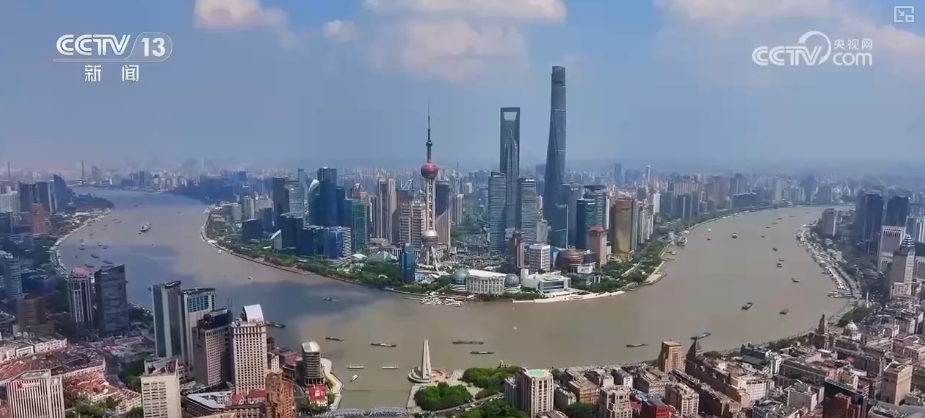
韧性、创新、稳定、开放 国内外机构看好中国经济增长前景
Yang Shi Wang· 2025-11-23 03:19
Core Viewpoint - Multiple domestic and foreign institutions have released strategy reports for 2026, indicating that China's economy will continue to show steady growth next year [1][2]. Economic Growth Outlook - There is a positive consensus among various institutions regarding China's economic trajectory in 2026, driven by policy support, structural upgrades, and the release of potential [2]. - Morgan Stanley predicts moderate growth for China's economy in 2026 under a backdrop of appropriate easing policies and gradual rebalancing [2]. - UBS expects more precise policy support in 2026, contributing to resilient economic activity [2]. Export and Manufacturing Resilience - Exports remain a core support for economic growth, with strong resilience observed in manufacturing and exports [3]. - Analysts from various institutions believe that China's "going global" strategy will further enhance profit growth opportunities for enterprises [3]. Domestic Demand and Consumption - The potential of the domestic market is accelerating, with a series of consumption-boosting policies expected to play a key role in expanding domestic demand [4]. - The rise of new consumption sectors is injecting fresh momentum into economic growth, with a focus on brands gaining market recognition and expanding overseas [5]. Key Economic Themes - Resilience, innovation, stability, and openness are identified as key themes for the Chinese economy [6]. - The shift from traditional factor-driven growth to technology-driven growth is highlighted, with a focus on emerging technologies like AI and quantum technology [6][7]. - The stability of domestic policies is seen as a solid foundation for innovation and a crucial guarantee for steady economic progress [8]. Financial Sector Insights - Institutional openness and sustainable development concepts are viewed as vital for the continuous vitality of China's economy in the context of open cooperation [9].

作为人才大国,怎么看待技能人才动态需求(读者点题·共同关注)
Ren Min Ri Bao· 2025-11-23 02:45
Core Viewpoint - The apparent contradiction regarding the abundance and shortage of skilled talent in China can be reconciled by understanding that while there is a large pool of skilled workers, specific market demands create dynamic shortages in certain areas [1][2]. Group 1: Current Talent Landscape - China has over 72 million high-skilled workers, making it a leading country in terms of talent resources and R&D personnel [1]. - Despite the large number of skilled workers, there are significant gaps in specific skill sets due to rapid labor mobility, insufficient compensation, and limited growth opportunities in certain sectors [2]. Group 2: Market Demand Dynamics - The rapid development of new technologies such as artificial intelligence and big data has created a demand for roles like AI trainers and cloud network operators [3]. - Emerging industries, such as low-altitude economy and smart manufacturing, are generating new talent requirements, exemplified by the need for drone flight planners [4]. - The diversification of consumer needs has led to a demand for specialized skills, such as travel photography and home renovation management [5]. Group 3: Government Initiatives - The government is implementing various measures to enhance skill development, including the "Skill China Action" and high-skilled talent cultivation plans [6]. - Policies are being introduced to reform skill evaluation systems and promote lifelong vocational training, aiming to align talent supply with market needs [6]. Group 4: Industry Adaptation - Educational institutions are adjusting their curricula to better align with market demands, fostering closer ties between academia and industry [7]. - The integration of talent supply chains with industry and innovation chains is accelerating, enhancing the relevance of training programs [7]. Group 5: Market Response and Opportunities - The job market is responding to the demand for skilled talent with rising wages for in-demand positions, reflecting the dynamic nature of employment opportunities [8]. - The evolving job market is prompting individuals and families to reassess career paths, aligning personal development with market needs [8].
国泰海通:增量资金流入+优质资产汇聚 调整后港股牛市仍有望延续
Zhi Tong Cai Jing· 2025-11-23 02:30
Core Viewpoint - The Hong Kong stock market has entered a correction phase since October, primarily due to previous significant gains, tightening dollar liquidity, and a decline in expectations for Federal Reserve rate cuts. However, the ongoing AI wave and the influx of incremental capital suggest that the bull market in Hong Kong stocks is likely to continue [1][2][13]. Market Adjustment - Since the beginning of the year, the Hong Kong stock market has performed well, with the Hang Seng Index and Hang Seng Tech reaching new highs in early October. However, by mid-October, the market began to adjust, with the Hang Seng Index experiencing a maximum decline of 5.1% and Hang Seng Tech a maximum decline of 8.1% [2]. - The Hang Seng Index and Hang Seng Tech recorded maximum gains of 47% and 61% respectively this year before entering the current adjustment phase [2]. Factors Influencing the Market - The tightening of dollar liquidity and the decline in expectations for Federal Reserve rate cuts have pressured the Hong Kong stock market. The U.S. government shutdown led to a temporary halt in government spending, causing dollar liquidity to tighten [3]. - Despite the end of the government shutdown, economic data remains unclear, leading to cautious Federal Reserve rate cut decisions. The market's expectation for a 25 basis point cut in December has dropped to 40% [3]. - The significant prior gains in the Hong Kong stock market, coupled with rising concerns over AI bubbles, have created selling pressure. The Hang Seng Tech Index has seen a maximum increase of 61% this year, while the Hang Seng Biotech Index has increased by 130% [3][8]. Historical Context of Market Corrections - In bull markets, adjustments are common, categorized into small corrections (average maximum decline of about 7%) and large corrections (average maximum decline of about 17%). Small corrections typically occur due to short-term market sentiment disturbances, while large corrections are often linked to liquidity tightening or external shocks [7][8]. - Historical data shows that small corrections in the Hang Seng Index average a maximum decline of 6.5% and last about 12 trading days, while large corrections average a maximum decline of 17% and last about 53 trading days [7][8]. Future Outlook - The tightening dollar liquidity is viewed as a short-term disturbance, and the AI wave is expected to continue. The release of previously accumulated liquidity following the end of the U.S. government shutdown may support the Hong Kong stock market [13]. - Incremental capital inflows and the gathering of quality assets suggest that the bull market in Hong Kong stocks may continue. The unique characteristics of Hong Kong assets, particularly in the context of the ongoing transformation in the domestic economy, enhance their attractiveness [13][14]. - Southbound capital is expected to continue flowing into the Hong Kong market, with over 1.3 trillion yuan already invested this year. This trend is likely to be supported by institutional investors, further propelling the market upward [14].

