
硬科技

Search documents
“开门红”!港股2026年首个交易日大涨
第一财经· 2026-01-02 09:09
Core Viewpoint - The Hong Kong stock market experienced a significant rally on the first trading day of 2026, driven by multiple factors including currency strength and positive market sentiment towards technology and resource stocks [3][5]. Group 1: Market Performance - The Hang Seng Index rose by 2.76% to close at 26,338.47 points, gaining over 700 points during the day [3]. - The Hang Seng China Enterprises Index increased by 2.86% to 9,168.99 points, while the Hang Seng Tech Index surged by 4% to 5,736.44 points [3]. Group 2: Sector Highlights - Insurance stocks showed strong performance, with Yunfeng Financial rising nearly 8%, China Reinsurance up nearly 6%, and China Life Insurance gaining over 5% [5]. - Resource stocks collectively soared, with Asia Pacific Resources increasing over 22%, China Silver Group up over 10%, and Lingbao Gold experiencing a rise of nearly 6% [5]. - In the technology sector, Baidu Group-SW rose nearly 10%, Kingdee International increased over 7%, and Skyworth Group surged by nearly 12% [5]. Group 3: Market Drivers - The offshore RMB to USD exchange rate broke above 6.97, reaching its highest level since May 2023, encouraging capital inflow into the Hong Kong market [5]. - The debut of "Hong Kong GPU first stock" Biran Technology, which saw its price double on the first day, boosted investor sentiment towards hard technology, semiconductors, and AI sectors [5]. - Positive news for leading Hong Kong stocks included Huahong Semiconductor's acquisition of a significant stake in Huali Microelectronics and Baidu's plan to spin off Kunlun Chip for independent listing, reinforcing market confidence in the chip and AI computing sectors [5]. Group 4: Individual Stock Movements - Despite the overall market rally, some individual stocks faced sharp declines, such as lottery concept stock Runge Interactive, which dropped over 30% and fell below 1 HKD per share, becoming a "penny stock" [6].


港股收盘|科技指数涨超4%迎“开门红” 硬科技与政策消费双轮驱动
Xin Lang Cai Jing· 2026-01-02 08:41
Core Viewpoint - The Hong Kong stock market started 2026 with a strong performance, indicating a continuation of the structural bull market from 2025, with a clear investment focus on hard technology sectors like semiconductors, AI, and smart hardware, as well as policy-driven consumption sectors like home appliances and automobiles [1][5]. Market Performance - The Hang Seng Index rose by 2.76% to close at 26,338.47 points, while the Hang Seng Technology Index surged by over 4% to 5,736.44 points, and the Hang Seng China Enterprises Index increased by 2.86% to 9,168.99 points [1]. Semiconductor Sector - The semiconductor sector saw significant gains, driven by mergers and acquisitions as well as domestic production initiatives. Notable stock performances included Huahong Semiconductor (up 9.42%), SMIC (up 5.11%), and Jingmen Semiconductor (up 3.53%) [5][6]. - Huahong Semiconductor announced a major asset restructuring plan to acquire a 97.5% stake in Huali Micro for a transaction price of 8.268 billion yuan, alongside plans to raise up to 7.556 billion yuan for technology upgrades [6][7]. Internet Technology Sector - Internet technology stocks rebounded strongly, with Baidu Group rising by 9.53%, NetEase by 6.62%, and Alibaba by 4.34%. A key catalyst was Baidu's announcement of its AI chip subsidiary Kunlun's application for a mainboard listing [9][10]. - Kunlun's expected revenue for 2025 is around 5 billion yuan, with a potential valuation of 3 to 11 billion USD for Baidu's stake in the company [11]. Home Appliances Sector - Home appliance stocks benefited from favorable policies, with Skyworth Group rising by 10.45%, Midea Group by 5.12%, and Haier Smart Home by 4.20%. The National Development and Reform Commission and the Ministry of Finance announced a new policy to support large-scale equipment updates and trade-in programs [11][12]. - The new policy is expected to alleviate sales pressure in the short term and benefit leading companies with R&D and brand advantages in the long term [13]. Automotive Sector - Several automotive stocks gained, including Li Auto (up 4.93%) and BYD (up 3.57%), supported by the implementation of the "old-for-new" vehicle trade-in policy [14][16]. - The policy allows consumers to receive subsidies for trading in eligible old vehicles for new ones, which is expected to stimulate market confidence [16]. Solar Energy Sector - Solar energy stocks saw gains, with GCL-Poly Energy rising by 20.99% and GCL-Technology by 4.72%. The market regulator is enhancing compliance guidance for price competition in the solar industry [17]. Commercial Aerospace Sector - Commercial aerospace stocks performed well, with Asia Pacific Satellite rising by 34.53% and Aerospace Holdings by 18.33%. Blue Arrow Aerospace's IPO application was accepted, marking a significant milestone in the sector [18][19]. Individual Stock Movements - Delin Holdings rose by 11.76% following the conditional approval of its subsidiary to provide virtual asset trading services [21]. - Meitu Inc. increased by 6.14% after issuing $250 million in convertible bonds to Alibaba, which could make Alibaba the third-largest shareholder in Meitu [22].




壁仞上市,连投两轮的这家大股东赚翻了
Xin Lang Cai Jing· 2026-01-02 03:06
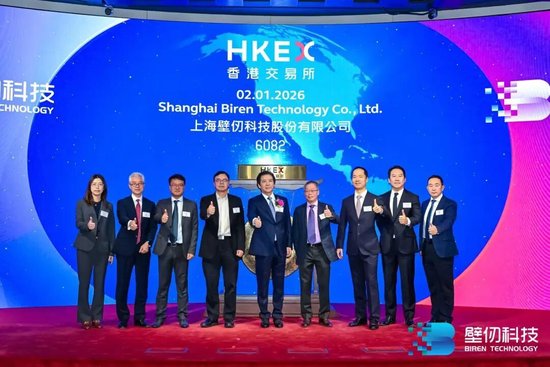
Group 1 - Wallran Technology (壁仞科技) officially listed on the Hong Kong Stock Exchange on January 2, 2026, opening with a rise of over 110%, reaching a peak of 42.88 HKD per share, with a total market capitalization of approximately 99 billion HKD [2][23] - Wallran Technology is recognized as the "first GPU stock" in Hong Kong and has the largest issuance scale since the implementation of the 18C rule [2][23] - The IPO price was set at 19.6 HKD per share, with a global offering of approximately 248 million H shares, and cornerstone investors subscribed for about 64% of the fundraising amount, totaling 372.5 million USD [2][23] Group 2 - Founded in September 2019, Wallran Technology is one of the earliest companies among the "four small dragons" of domestic GPUs, focusing on original core architecture and pioneering Chiplet high-performance chips [2][23] - As of the end of 2025, Wallran Technology has applied for over 1,500 patents globally, ranking first among Chinese general GPU companies, with over 600 patents granted and a 100% invention patent authorization rate [3][24] Group 3 - Wallran Technology's products have been deployed in key industries such as AI data centers, telecommunications, energy, and financial technology, effectively supporting the computational needs of AI training and research innovation [3][24] - The company has established a customer base that includes several Fortune China 500 and Fortune Global 500 companies, achieving large-scale commercial deployment of domestic computing clusters with the three major telecom operators [3][24] Group 4 - Early investor Songhe Capital (松禾资本) has seen significant returns from its investment in Wallran Technology, holding 1.89% of the shares as of the listing, with an estimated investment return of about 60 times based on initial valuation [4][25] - Songhe Capital has invested a total of 200 million USD in Wallran Technology through two funding rounds, becoming one of its core early investors [4][25] Group 5 - The founder of Songhe Capital, Li Wei, recognized the potential of Wallran Technology's founder, Zhang Wen, during their first meeting, leading to a decisive investment in the company [6][26] - Zhang Wen's vision for Wallran Technology was driven by the need for domestic AI companies to reduce reliance on imported GPU chips, especially in light of increasing geopolitical risks [6][26] Group 6 - Wallran Technology has achieved rapid financing success, raising a total of over 9 billion RMB through 11 rounds of financing, including a record 4.7 billion RMB in 18 months [8][29] - The company's core team includes experienced professionals from leading firms like NVIDIA and Huawei, with 83% of employees in R&D roles [9][30] Group 7 - Songhe Capital emphasizes a long-term investment strategy, focusing on companies that can "change the world" through hard technology, with a management scale exceeding 24 billion RMB and over 500 projects invested [12][33] - The firm has strategically invested in various sectors, including digital technology, precision medicine, and innovative materials, with a focus on addressing core pain points in computing power [34][36] Group 8 - The investment landscape for hard technology is evolving, with recent regulatory changes in both the A-share and Hong Kong markets facilitating the listing of innovative companies [17][37] - Songhe Capital plans to launch venture capital bonds in 2026 to support its continued investment in hard technology, emphasizing a value-oriented approach rather than a scale-oriented one [38][39]
一家深圳VC爆发:18天三个IPO
Xin Lang Cai Jing· 2026-01-02 02:55
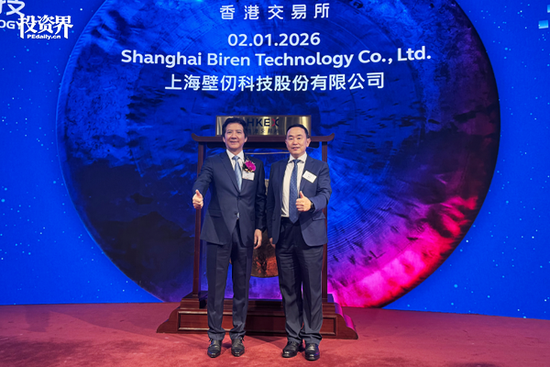
Core Viewpoint - Wall Street-backed GPU unicorn Birun Technology has officially listed on the Hong Kong Stock Exchange, becoming the first GPU stock in Hong Kong, with an IPO price of HKD 19.60 per share and a market capitalization exceeding HKD 100 billion at opening [3][17]. Company Overview - Zhang Wen, the key figure behind Birun Technology, began his career on Wall Street and returned to China to start multiple ventures, officially entering the domestic GPU wave in 2019 with the founding of Birun Technology [3][17]. - Birun Technology has attracted significant investment, leading to a financing frenzy in the domestic GPU sector, with a long list of investors [3][17]. Investment Highlights - The successful IPO of Birun Technology marks the third major IPO for Songhe Capital within 18 days, following the listings of Angrui Micro on December 16 and 51WORLD on December 30 [3][9][17]. - Songhe Capital's investment in Birun Technology began with a USD 2 million stake during its A-round financing, which set a record for the highest A-round financing in the domestic industry at RMB 1.1 billion [5][19]. - Prior to the IPO, Songhe Capital held a 1.89% stake in Birun Technology, resulting in over 60 times return on investment based on initial valuation [6][20]. Industry Context - The domestic GPU market is critical as 99.9% of GPUs were previously imported, creating a significant bottleneck for industry development [5][19]. - Songhe Capital has strategically focused on key areas within the semiconductor and artificial intelligence sectors, investing in companies that address critical pain points in the industry [21][22]. Broader Investment Strategy - Songhe Capital has built a comprehensive investment portfolio in hard technology, including investments in GPU, CPU, and DPU sectors, as well as sensor technologies [22][23]. - The firm has also invested in various AI application companies, demonstrating a commitment to supporting the growth of the AI ecosystem [22][23]. Historical Perspective - Over the past 30 years, Songhe Capital has evolved alongside the Chinese venture capital industry, maintaining a focus on hard technology and achieving significant milestones, including managing over RMB 24 billion and investing in 500 companies [24][25]. - The firm emphasizes a disciplined investment philosophy, focusing on areas of deep understanding and avoiding excessive pursuit of trends [25][26].
1000亿,开年最大IPO敲锣了
投资界· 2026-01-02 02:55
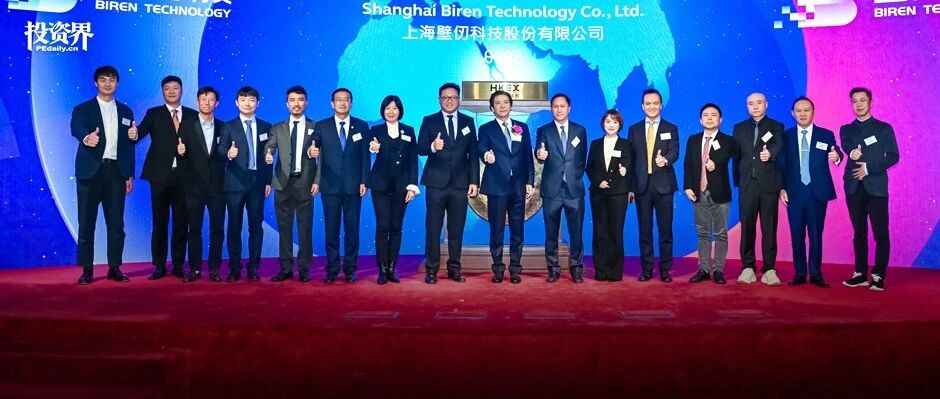
Core Viewpoint - The article highlights the successful IPO of Birran Technology, marking it as the first GPU company listed on the Hong Kong Stock Exchange, and emphasizes the significant investment journey of Huaying Capital in the hard technology sector [2][5][12]. Investment Journey - Huaying Capital made a decisive investment in Birran Technology in June 2020, when the company was still in its early stages, and followed up with additional funding in October 2022, showcasing a commitment to supporting the company through challenging times [5][6]. - The investment in Birran Technology is seen as a pivotal moment for Huaying Capital, which has since expanded its portfolio to include over 50 hard technology companies, with a focus on semiconductor and AI sectors [13][14]. Market Context - The IPO of Birran Technology, priced at HKD 19.60 per share, resulted in a market capitalization exceeding HKD 100 billion, illustrating the growing importance of GPU technology in China's computing landscape [2][12]. - The article discusses the broader implications of this IPO for the hard technology investment landscape in China, indicating a shift from soft technology to hard technology investments by Huaying Capital [12][18]. Strategic Insights - Huaying Capital's strategy involved a thorough analysis of the GPU market, recognizing the potential for growth in both graphics and computing sectors, particularly in the context of China's manufacturing capabilities [8][9]. - The firm has successfully built a diverse investment team that covers various hard technology sectors, including AI, intelligent manufacturing, and quantum computing, reflecting a comprehensive approach to investment in emerging technologies [12][13]. Future Outlook - The article suggests that the success of Birran Technology's IPO could lead to a historic year for Huaying Capital in 2026, with expectations of multiple IPOs and a focus on achieving significant market valuations [16][17]. - Huaying Capital aims to leverage its experience and insights to anticipate national strategic development trends, positioning itself as a forward-thinking investor in the hard technology space [18].
超4000亿重大基建项目获批,2026年稳投资政策靠前发力
2 1 Shi Ji Jing Ji Bao Dao· 2026-01-02 01:07
Group 1 - The Chinese government is implementing a series of policies to boost consumption and stabilize investment ahead of 2026, including a significant funding allocation for consumer goods replacement programs [1][2] - A total of approximately 295 billion yuan has been allocated for early-stage construction projects and central budget investments to facilitate the transition between 2025 and 2026 [2][3] - Major infrastructure projects have been approved, including new airports and water resource projects, with total investments exceeding 400 billion yuan, aimed at enhancing the modern infrastructure system [2][3] Group 2 - The National Venture Capital Guiding Fund has been launched with an initial investment of 100 billion yuan, expected to attract over one trillion yuan in total investment, focusing on sectors like integrated circuits and quantum technology [4] - The domestic chip industry is rapidly adapting to various applications, with significant growth potential in AI computing power chips, supported by advancements in cluster interconnection technologies [5] - The low-altitude economy is expanding, with the number of agricultural drones exceeding 300,000 and significant growth in their application across various sectors, indicating a promising investment outlook [6]
2026,致新材料人:在原子世界里,守住时间的重量
材料汇· 2026-01-01 16:02
点击 最 下方 关注《材料汇》 , 点击"❤"和" "并分享 添加 小编微信 ,寻 志同道合 的你 正文 时间: 2026 年 1 月 1 日 致: 每一位与晶格对话、同炉火守夜的你 此刻的朋友圈,正上演着一场无声的对照。 一边,是岁末年初的各种盘点与展望 —— 摩尔线程、沐曦的年度成绩单被反复刷屏, " 硬科技典范 " 的标签在字里行间闪耀;关于长鑫存储正式提交 IPO 材料的新闻下, " 五千亿估值预期 " 成为热议的焦 点;商业航天、具身智能的年度突破汇总,裹挟着人们对未来的无限想象,在指尖传递。那是一个被光 环、预期与无限可能包裹的世界,喧闹而沸腾。 而另一边,是我们。 是跨年夜仍守在扫描电镜前,等待最后一组表征数据的你; 是在元旦清晨走进车间,检查假期中设备运行状态的你; 是手握一份沉甸甸的、需要 " 再打磨三年 " 的技术方案,不知如何向家人解释为何依然忙碌的你; 也是在某个瞬间,被窗外喧嚣映照出几分孤独与困惑的我。 2026 年的阳光已然照进,但有些温度,需要穿越更厚重的云层。那一刻,一个无声的问题在寂静中格 外清晰: " 当世界在用代码和资本加速狂奔时,我们这些与原子和炉温打交道的人,手中紧握 ...

“千言万语汇成一句话”
Sou Hu Cai Jing· 2026-01-01 12:46
Group 1 - The core sentiment of investors in 2025 is a strong sense of satisfaction from profitable investments, as exemplified by the investor Xiao Gao who emphasizes results over other factors [1][2] - The capital market in 2025 has undergone significant changes, with a new focus on hard technology, moving away from traditional sectors like real estate and consumption [5][6] - The performance of funds related to hard technology has been notably strong, with many funds featuring terms like technology, innovation, and high-end manufacturing in their names [6][8] Group 2 - Investors in 2025 are more discerning, focusing on the specifics of fund products rather than the reputation of fund managers, indicating a shift towards informed investment choices [9][10] - The introduction of index products and ETFs has made it easier for investors to access specific sectors without needing in-depth knowledge of individual companies [10] - The fund industry has seen a reduction in unnecessary complexities and a focus on providing useful information, leading to a more transparent investment environment [10][11]
赓续初心·奋楫争先新苏州|县域创新加速器样本:常熟海虞正把硬科技种成一片“森林”
Yang Zi Wan Bao Wang· 2026-01-01 04:16
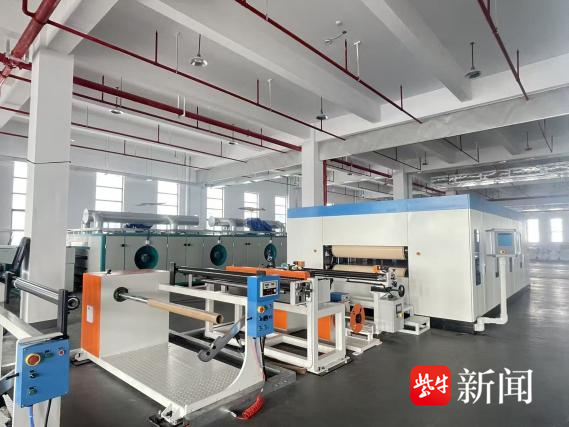
Core Viewpoint - Changshu's Haiyu Town is emerging as a hub for hard technology enterprises, focusing on high-tech projects in new materials, renewable energy, and medical devices, driven by local policies and support from TUS Star [1][2][12] Group 1: Industry Development - Haiyu Town is attracting high-tech projects that aim to break foreign monopolies in hydrogen fuel cell materials and focus on dental repair materials for Southeast Asia [1][2] - The local environment supports the development of high-tech industries, with a focus on "landable, mass-producible, and compatible" industrial conditions [6][11] Group 2: Company Highlights - Shanghai Pihang New Energy Technology Co., Ltd. has developed a biomimetic porous carbon fiber material for hydrogen fuel cells, achieving a good yield rate of over 99% and a production cost of 300 yuan per square meter, which is 60% of the import price [2][11] - Suzhou Kunliang New Materials Co., Ltd. has created a lightweight composite material that reduces the weight of wind turbine blades and drone wings by 70%, with production costs at 20% of traditional solutions [2][4] - Jiu Jia Heng Yi Biotechnology focuses on dental repair materials and has successfully entered the Malaysian and Singaporean markets, with overseas revenue expected to exceed 5 million yuan this year [4][6] Group 3: Support and Resources - TUS Star provides comprehensive support for startups, including assistance in applying for government certifications and funding, which has led to significant financial backing for companies like Pihang New Energy [7][9] - The local government demonstrates strong service awareness, quickly addressing issues such as power capacity for new energy companies [11][12] Group 4: Future Prospects - Haiyu Town aims to cultivate three new research and innovation centers and ten benchmark enterprises within five years, establishing itself as a new landmark for hard technology in the Yangtze River Delta [12]
2026年我国经济高质量发展三大看点
Guo Ji Jin Rong Bao· 2026-01-01 00:31
Group 1 - China's economy is expected to maintain steady growth in 2025, successfully achieving annual targets, with strong momentum continuing into 2026 driven by new consumption, enhanced production capabilities, and a solid export position in global supply chains [1] Group 2 - New consumption is set to expand and improve, with policies aimed at boosting domestic demand, including increased quotas for trade-in programs and an expanded range of supported products, leading to over 2.5 trillion yuan in sales benefiting more than 360 million people in 2025 [2] - The shift in consumer trends towards value-for-money and emotional value is notable, with experiential consumption in areas like culture, travel, and fitness driving growth [2] - AI is enhancing both online and offline retail experiences, with innovations like instant retail and smart shopping becoming more prevalent, expected to lead to deeper integration and quality improvements in consumption by 2026 [3] Group 3 - Core technology breakthroughs are reshaping industrial advantages, with advancements in AI, semiconductors, and commercial aerospace expected to drive high-quality upgrades in various sectors [4] - The renewable energy sector is projected to expand significantly, with an expected addition of over 20 million kilowatts of wind and solar power capacity by 2026, contributing to energy structure optimization and carbon peak goals [4] - The digital transformation of manufacturing is advancing, with a penetration rate of 68% in 2025, leading to efficiency improvements of over 25% in key industries [4] Group 4 - Export resilience is anticipated, with a focus on diversifying markets and consolidating China's leading position in global supply chains [6] - The reduction of tariff uncertainties is expected to stabilize trade with the U.S., while high-value, green products are becoming key growth drivers, with electric vehicle exports reaching 3.01 million units in 2025, a 62% increase [7] - China's trade with Belt and Road Initiative countries accounted for over 50% of exports in 2025, indicating a strong foundation for non-U.S. trade [7] - Continued high-level openness and trade innovation are expected to strengthen global supply chain positions, with rapid growth in cross-border e-commerce and digital technologies reducing trade costs [8]